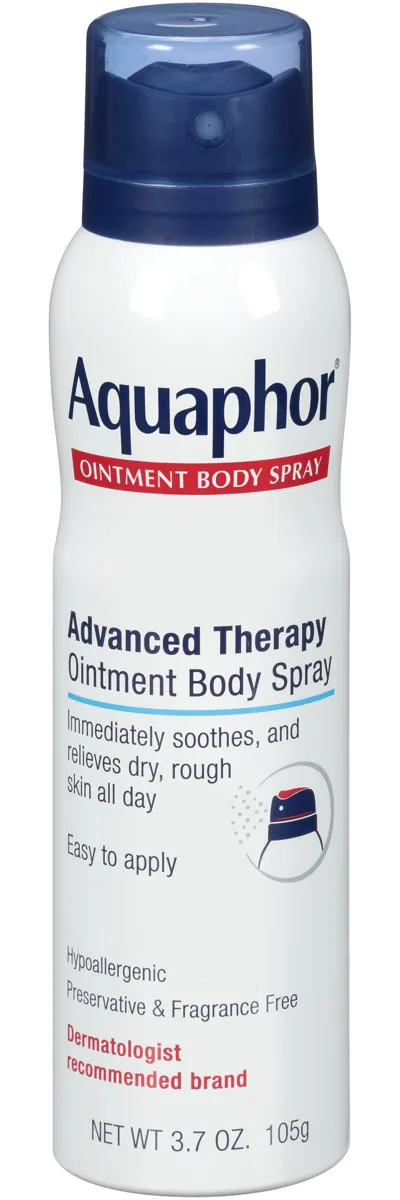
A clever delivery solution for the gold-standard Aquaphor formula — touchless application and 360-degree spraying solve the real-world problem of getting ointment onto your own back. The nozzle clogging issue and premium pricing prevent it from fully replacing the jar, but as a body-specific complement, it fills a genuine gap.
Healing Ointment Body Spray
A clever delivery solution for the gold-standard Aquaphor formula — touchless application and 360-degree spraying solve the real-world problem of getting ointment onto your own back. The nozzle clogging issue and premium pricing prevent it from fully replacing the jar, but as a body-specific complement, it fills a genuine gap.
Score Breakdown
Where this product gains points and where it loses them — broken down across the four scoring pillars.
The same trusted Aquaphor core formula (petrolatum, panthenol, glycerin, bisabolol) in an innovative spray delivery format. The convenience of touchless application to hard-to-reach areas is a genuine practical advantage. Lower value score than the jar due to significantly higher per-ounce cost and well-documented spray nozzle clogging issues.
Pros & Cons
- ✓Touchless 360-degree spray reaches back, legs, and other hard-to-reach body areas
- ✓Same trusted Aquaphor core formula — petrolatum, panthenol, glycerin, bisabolol
- ✓Lighter deposit than the jar version means less greasiness for body-wide application
- ✓Cool mist feels immediately soothing on dry, irritated, or eczema-affected skin
- ✓Fragrance-free, preservative-free with the same minimal ingredient approach
- ✓Sprays upside down for easy application to backs of legs and lower body
- ✗Spray nozzle clogs frequently, sometimes rendering the can unusable with product remaining
- ✗Significantly higher per-ounce cost than the jar format of the same formula
- ✗Uneven spray pattern requires hand-spreading for consistent coverage
- ✗Thinner deposit provides less intensive occlusion than the jar for severe dryness
- ✗Some product waste from aerosol overspray missing the target skin area
- ✗Not practical for facial application — jar or tube format needed for the face
Full Review
Ointments don't want to be sprayed. They're thick, waxy, semi-solid formulations that exist specifically because they sit on skin rather than flowing through nozzles. When Beiersdorf's engineers set out to put Aquaphor in a spray can, they were working against the fundamental physics of the product. It took them five years. And the result is both a genuine innovation and a reminder of why ointments traditionally come in jars.
The Aquaphor Healing Ointment Body Spray, launched in September 2017, is the first ointment-in-a-spray format. The core formula is identical to what's in the jar — petrolatum, mineral oil, ceresin, lanolin alcohol, panthenol, glycerin, bisabolol — with the addition of butane as the aerosol propellant. When you press the nozzle, the butane vaporizes, carrying a fine mist of ointment onto your skin. The propellant evaporates on contact, leaving the same ingredient film that Aquaphor has deposited since 1925. Just thinner. And cooler.
The practical innovation here is real. Aquaphor's biggest limitation has always been application logistics. The jar version is superb for hands, lips, and anywhere you can reach and spread manually. But your back? The backs of your legs? Eczema patches between your shoulder blades? You either need a contortionist's flexibility or a willing partner. The body spray eliminates this entirely. The 360-degree valve means you can spray upside down, sideways, at any angle — and the cool mist reaches skin that your fingers never could.
The texture that lands on your skin is noticeably lighter than what you'd scoop from the jar. This is a feature, not a shortcoming. The spray deposits a thin, even layer of petrolatum-based protection that provides meaningful occlusion without the thick, greasy coating that makes the jar version impractical for post-shower full-body application. You can spray your legs, arms, and torso, get dressed within a few minutes, and not ruin every piece of clothing you own. The reduced greasiness is the convenience trade-off for slightly less intensive occlusion.
The soothing quality on contact is immediately noticeable. The propellant creates a cooling sensation as it evaporates, and the bisabolol's anti-inflammatory properties provide genuine comfort on irritated skin. For eczema sufferers who dread the friction of rubbing ointment into inflamed patches, the touchless application is a meaningful quality-of-life improvement.
Now for the problem. The nozzle clogs. This is the single most consistent complaint across thousands of reviews, and it's significant enough to affect the product's overall rating. Users report that after a few weeks of use, the nozzle begins dispensing in spurts rather than a fine mist, and eventually stops working entirely — sometimes with half the product remaining in the can. The thick ointment solidifies in the nozzle mechanism between uses, and washing with warm water provides inconsistent relief. For a product that costs roughly $3.65 per ounce — nearly three times the per-ounce cost of the 14-ounce jar at $1.31 — having the delivery mechanism fail before the product is used up is a genuine value problem.
The spray pattern, even when working properly, is uneven enough that most users report needing to spread the product by hand after spraying. This partially negates the touchless convenience that justifies the format. You're spraying to get the ointment onto hard-to-reach areas, then finishing with manual spreading anyway. It's still more practical than the jar for body application, but it's not the frictionless experience the concept promises.
The ingredient base is the same formula that has been trusted in hospitals and prescribed by dermatologists for a century. The same petrolatum-panthenol-glycerin-bisabolol system that makes the jar version the gold standard for barrier protection works identically here. The fragrance-free, preservative-free, seven-ingredient simplicity is unchanged. For dry skin, eczema, post-procedure care, and winter skin, the active ingredients do their job regardless of delivery format.
At $13.49 for the 3.7-ounce standard size, the body spray is significantly more expensive than the jar. A 6.2-ounce large size offers slightly better per-ounce value. Travel-size 0.86-ounce cans are available for on-the-go use. The HSA/FSA eligibility applies.
The most practical approach for regular Aquaphor users is to own both: the jar for targeted facial and hand application where you need the thick, intensive occlusion, and the spray for body-wide application where convenience and reach matter more than layer thickness. The spray doesn't replace the jar — it extends the franchise to body areas the jar couldn't practically serve.
Formula
Key Ingredients
The hero actives that drive this product's performance.
| Ingredient | Function | Evidence |
|---|---|---|
| Petrolatum | The same occlusive skin protectant as the jar formulation, delivered here via aerosol spray for easier body application. Creates a semi-occlusive barrier that reduces transepidermal water loss while the spray format deposits a thinner, more even layer than manual application from the jar. | well-established |
| Panthenol (Pro-Vitamin B5) | Provides the same humectant and wound-healing support as in the jar formula, but the spray's thinner application means panthenol is distributed more evenly across larger body surface areas — particularly relevant for conditions like full-body eczema or widespread winter dryness. | well-established |
| Glycerin | Draws moisture into the skin beneath the petrolatum barrier. In the spray format, glycerin helps compensate for the thinner occlusive layer by maximizing the hydration captured under whatever amount of petrolatum the spray deposits. | well-established |
| Bisabolol | Chamomile-derived anti-inflammatory that calms irritated skin on contact. Particularly useful in the spray format for covering inflamed areas like eczema patches on the back or legs without the friction of manual spreading. | well-established |
Full INCI List
Butane, Petrolatum, Mineral Oil, Ceresin, Lanolin Alcohol, Panthenol, Glycerin, Bisabolol
Product Flags
✓ Fragrance Free✓ Alcohol Free✗ Oil Free✓ Silicone Free✓ Paraben Free✓ Sulfate Free✗ Cruelty Free✗ Vegan✗ Fungal Acne Safe
Common Allergens
Lanolin Alcohol
Compatibility
Skin Match
Best For
Works For
Not Ideal For
Addresses These Conditions
dryness eczema compromised skin barrier winter skin sensitivity post procedure
Use With Caution
Routine Step
occlusive
Time of Day
AM & PM
Pregnancy Safe
Yes ✓
Layering Tips
Spray from 4-6 inches away onto dry or damp body skin. The spray can be used upside down for hard-to-reach areas like the back and behind the legs. Apply over a body moisturizer for enhanced occlusion, or use alone on mildly dry skin. Spread with hands if needed for even coverage.
Results Timeline
Immediate moisture seal and skin softening on first application. Dry, rough body skin feels noticeably smoother within 2-3 days of daily use. Eczema patches and cracked skin show improvement within a week.
Pairs Well With
body moisturizerhyaluronic acid body serumgentle body washcolloidal oatmeal products
Conflicts With
retinoids (occlusive trapping)strong AHA/BHA body treatments
Sample AM Routine
- Gentle body wash in shower
- Pat skin mostly dry
- THIS PRODUCT on dry areas
- Get dressed
Sample PM Routine
- Gentle body wash or rinse
- Body moisturizer on damp skin
- THIS PRODUCT on extra-dry areas
Evidence
Who Should Skip
- Spray nozzle clogs frequently, sometimes rendering the can unusable with product remaining
- Significantly higher per-ounce cost than the jar format of the same formula
- Uneven spray pattern requires hand-spreading for consistent coverage
- Thinner deposit provides less intensive occlusion than the jar for severe dryness
Science & Expert Perspective
The Science
The active ingredients in this spray are identical to the Aquaphor Healing Ointment jar formulation, and the same dermatological evidence applies. Petrolatum reduces transepidermal water loss by up to 99% in research by Ghadially et al. (1992), and panthenol accelerates barrier repair as demonstrated by Proksch et al. in the Journal of Dermatological Treatment (2017).
The spray delivery format raises a relevant question: does a thinner application layer provide adequate occlusion? Research on petrolatum-based barriers shows that even thin films significantly reduce TEWL compared to untreated skin. A study by Rawlings et al. in the International Journal of Cosmetic Science established that petrolatum's efficacy comes from its ability to permeate into the intercellular lipid spaces of the stratum corneum, not merely from sitting on the surface. This suggests that even the thinner layer deposited by the spray contributes to genuine barrier repair, not just surface-level moisture trapping.
The butane propellant evaporates fully on contact with skin and does not remain as a skincare ingredient. Its inclusion is purely a delivery mechanism. Aerosol propellants have a long safety record in topical pharmaceutical delivery, and butane is classified as GRAS (Generally Recognized as Safe) for this application.
References
- Effects of petrolatum on stratum corneum structure and function — Journal of the American Academy of Dermatology (1992)
- Topical use of dexpanthenol in skin disorders — Journal of Dermatological Treatment (2017)
Dermatologist Perspective
Dermatologists view the body spray as a practical extension of the Aquaphor formula rather than a distinct product. Board-certified dermatologists note that the spray format addresses a genuine compliance issue — patients prescribed emollients for body eczema often underuse them because thick ointments are difficult to apply to large surface areas alone. The touchless application and reduced mess may improve adherence. Dermatologists caution that for acute, severe barrier damage, the jar format's thicker application may be preferable, but for daily maintenance and mild-to-moderate dryness, the spray provides adequate occlusion.
Guidance
Usage Guide
How to Use
Hold the can 4-6 inches from the skin and spray in a sweeping motion. The 360-degree valve allows spraying at any angle, including upside down. Apply to dry or slightly damp skin after showering. Spread with hands if needed for even coverage. For best results, wipe the nozzle clean after each use to help prevent clogging. Can be used morning and evening on dry or eczema-affected body areas.
Value Assessment
At $13.49 for 3.7 oz ($3.65/oz), the body spray costs nearly three times more per ounce than the 14 oz jar ($1.31/oz). The 6.2 oz large size improves this somewhat. You're paying a significant convenience premium for the spray delivery — and the nozzle clogging issue means you may not get to use all the product you paid for. For users who genuinely need touchless body application, the premium may be justified. For everyone else, the jar remains the better value.
Who Should Buy
Anyone who regularly uses Aquaphor on body areas that are difficult to reach alone — back eczema, widespread winter dryness on legs and torso, post-surgical areas. Particularly useful for people who live alone and need to apply ointment to their own backs without assistance.
Who Should Skip
Those who primarily need Aquaphor for targeted facial or hand application should stick with the jar or tube. Budget-conscious users will find the jar's per-ounce cost significantly more attractive. Anyone frustrated by product reliability issues should note that nozzle clogging is a well-documented problem.
Ready to try Aquaphor Healing Ointment Body Spray?
Details
Details
Texture
Deposits as a thin, cool, slightly oily mist that forms a lighter occlusive layer than the jar ointment. Less thick and waxy than the traditional format. Requires hand-spreading for even distribution in most cases.
Scent
Fragrance-free. Faint petroleum base scent on spraying that dissipates within seconds.
Packaging
White aerosol can with blue Aquaphor branding and yellow accent stripe. 360-degree valve allows upside-down spraying. Available in 0.86 oz travel, 3.7 oz standard, and 6.2 oz large sizes. The nozzle design has been a persistent consumer complaint.
Finish
dewyglowy
What to Expect on First Use
The spray deposits a cool, fine mist of ointment that feels lighter than expected. The immediate sensation is soothing, especially on dry or irritated skin. The layer it leaves is thinner and less greasy than what you'd apply from the jar, which is both an advantage (less mess) and a limitation (less occlusion). You may need to spread with your hands for even coverage.
How Long It Lasts
6-8 weeks with daily full-body use (3.7 oz); longer with targeted application
Period After Opening
24 months
Best Season
fall winter
Certifications
HSA/FSA EligibleSkinSAFE 91% Top Allergen FreePreservative-FreeFragrance-Free
Background
The Why
Beiersdorf spent five years developing the technology to spray an ointment — a formulation format that resists aerosolization by nature. Launched in September 2017, the Body Spray addressed the most common practical complaint about Aquaphor: applying a thick ointment to your own back, legs, and other hard-to-reach body areas is awkward at best and impossible alone at worst. The 360-degree valve that enables upside-down spraying was central to the product's concept.
About Aquaphor Legacy Brand (20+ years)
Aquaphor was developed in 1925 by Beiersdorf Inc. and has been the number-one dermatologist-recommended brand for dry, cracked skin for decades. The Body Spray, launched in 2017 after five years of R&D, represents the first ointment-in-a-spray format — a delivery innovation for the same core formula trusted in hospitals and dermatology offices for a century.
Brand founded: 1925 · Product launched: 2017
Myth vs. Reality
Myths & Misconceptions
Myth
The spray version is a different, weaker formula than the jar.
Reality
The active ingredients are the same — petrolatum, mineral oil, ceresin, lanolin alcohol, panthenol, glycerin, and bisabolol. The only addition is butane as the aerosol propellant, which evaporates on contact. The thinner application layer is a delivery characteristic, not a formula difference.
Myth
Spray-on ointments can't provide real occlusive protection.
Reality
While the spray deposits a thinner layer than manual jar application, it still creates a petrolatum-based barrier that reduces transepidermal water loss. For mild to moderate dryness, the lighter layer is sufficient; for severe barrier compromise, the jar version may provide more intensive occlusion.
FAQ
Frequently Asked Questions
Is Aquaphor Body Spray the same formula as the jar?
The core formula is the same — petrolatum, mineral oil, ceresin, lanolin alcohol, panthenol, glycerin, and bisabolol. The only addition is butane as the aerosol propellant, which evaporates on contact with skin. The spray deposits a thinner layer than manual jar application.
Why does my Aquaphor Body Spray nozzle keep clogging?
Nozzle clogging is the most common complaint about this product. The thick ointment formula can solidify in the nozzle between uses. Try running the nozzle under warm water or wiping it clean after each use. Storing the can upright may also help. Unfortunately, this is a persistent design limitation.
Can I use Aquaphor Body Spray on my face?
The formula is the same as the jar version, which is used on faces for slugging. However, the aerosol spray format makes facial application impractical and potentially dangerous near the eyes and mouth. Use the jar or tube format for facial application.
Is the Body Spray better than the jar for eczema?
For eczema on hard-to-reach body areas (back, behind legs), the spray offers the advantage of touchless application that avoids friction on inflamed skin. However, the jar provides a thicker occlusive layer that may be more effective for severe eczema patches. Many users keep both formats for different situations.
Is Aquaphor Body Spray worth the higher price per ounce?
The spray costs significantly more per ounce than the jar — roughly $3.65/oz vs $1.31/oz for the 14 oz jar. The premium buys convenience: touchless application, 360-degree spraying, and easier coverage of body areas. Whether that convenience justifies the price depends on your specific needs and whether nozzle clogging frustrates you.
Community
Community Voices
Common Praise
"Spray format makes application easy for hard-to-reach areas like the back and legs"
"Sprays upside down with 360-degree valve for versatile positioning"
"Lighter feel than the jar ointment while providing effective moisture sealing"
"Feels cool and soothing on contact with dry or irritated skin"
"Fragrance-free and gentle on eczema-prone skin"
Common Complaints
"Spray nozzle frequently clogs after a few weeks, leaving product unusable"
"Uneven spray pattern requires hand-spreading for consistent coverage"
"Significantly higher per-ounce cost than the jar format of the same formula"
"Still leaves a greasy residue, though lighter than the jar version"
"Some product waste from overspray missing the target skin area"
Notable Endorsements
Number-one dermatologist-recommended brand for dry, cracked skinUses the same core formula as the NEA Seal-holding Healing OintmentHSA/FSA eligible
Appears In
best body care for dryness best body care for eczema best ointment spray for dry skin best body care for winter skin
Related Conditions
dryness eczema compromised skin barrier winter skin sensitivity
Related Ingredients
You Might Also Like
 Eczema Gold Standard
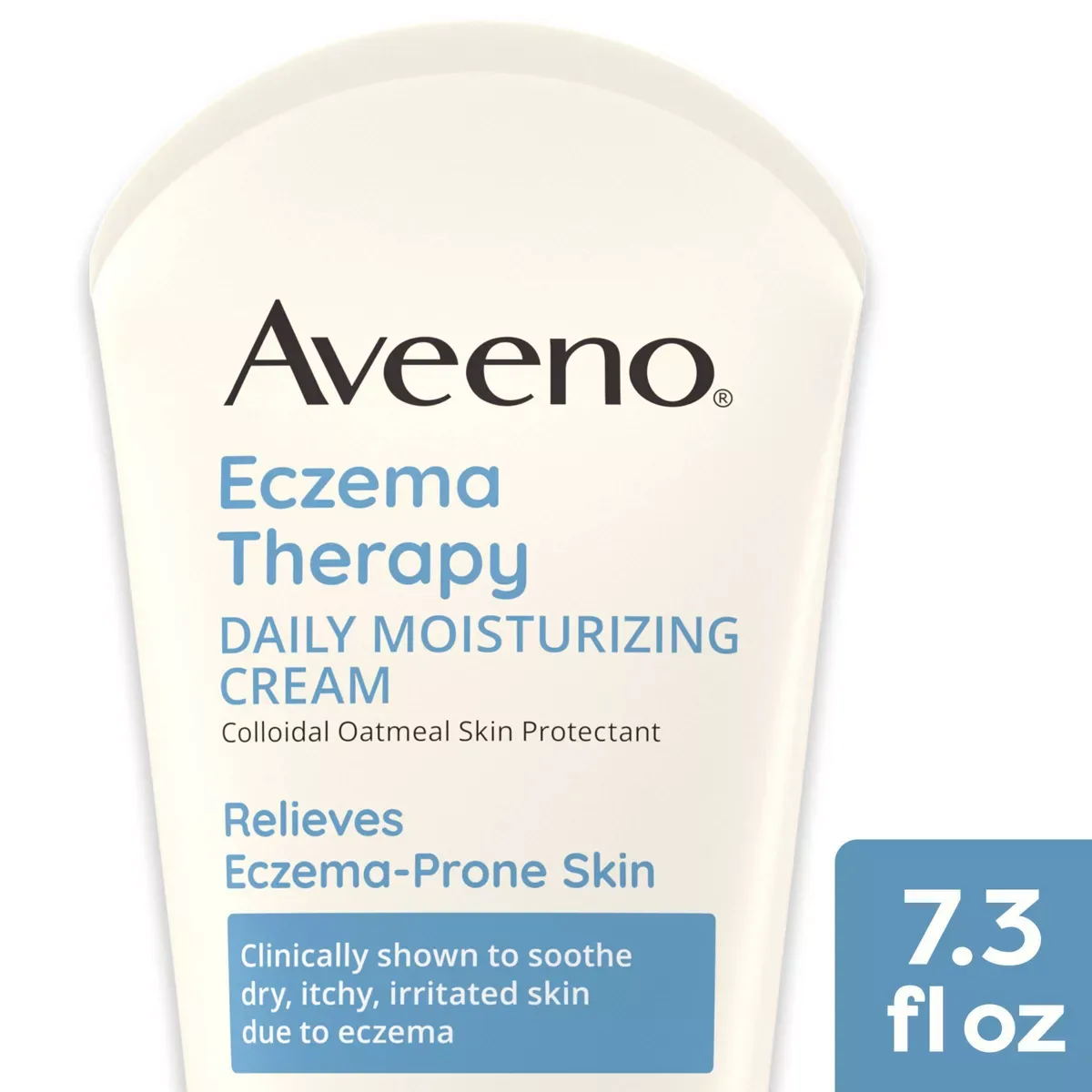
 Eczema Therapy Moisturizing Cream
The strongest formulation in Aveeno's lineup for eczema-prone skin, combining FDA-regulated colloidal oatmeal with ceramide NP and panthenol for a multi-mechanism approach to barrier repair. Steroid-free, fragrance-free, and HSA/FSA eligible — this is the drugstore eczema cream dermatologists actually recommend by name.
 Sensitive Skin MVP
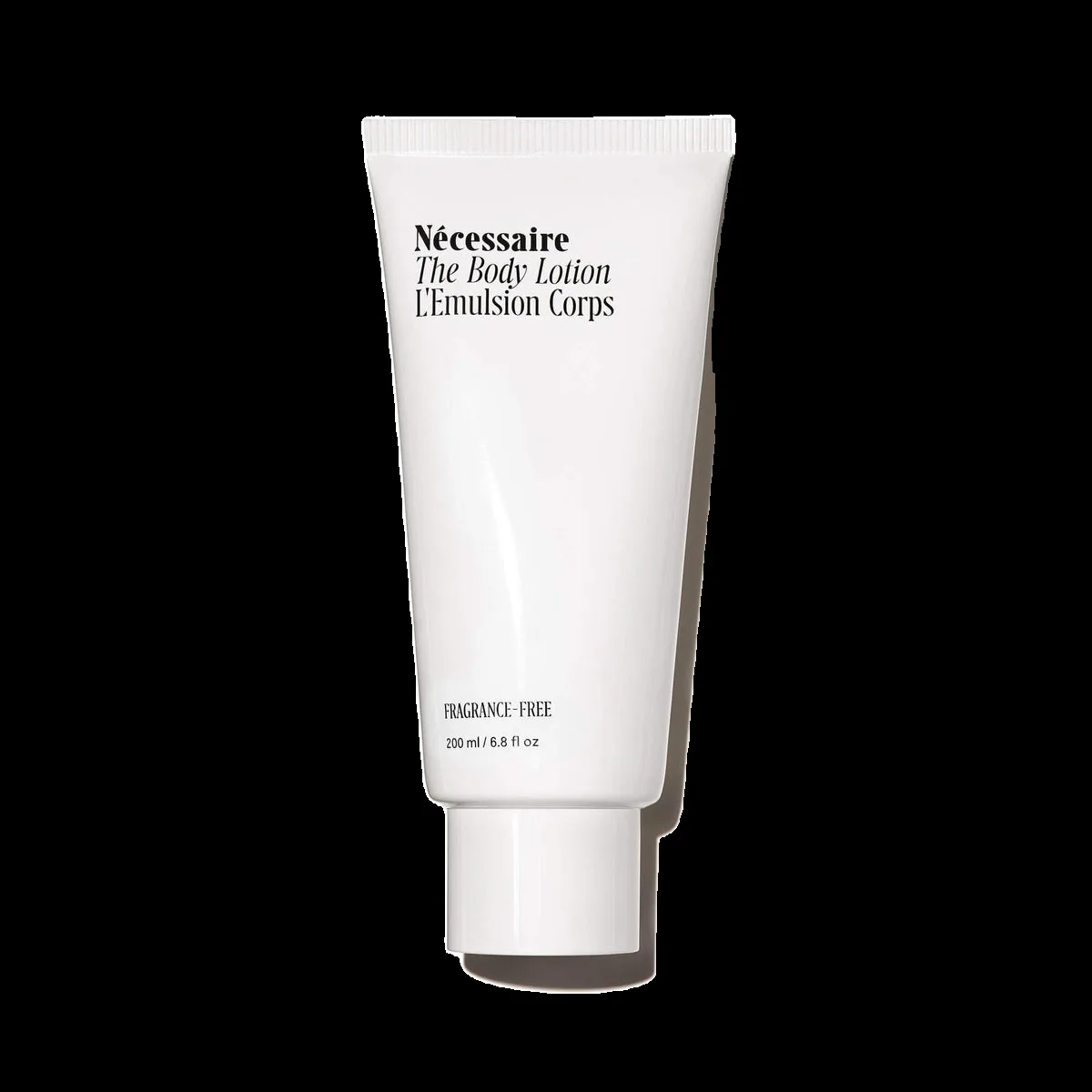
 The Body Lotion Fragrance-Free
The scented version's equal on active ingredients with none of the fragrance risk — and that makes this the better pick for sensitive skin, eczema-prone users, and anyone pregnant who wants to play it safe. At $25 it's still a premium price, but the formula genuinely earns it.
 Sensitive Skin MVP
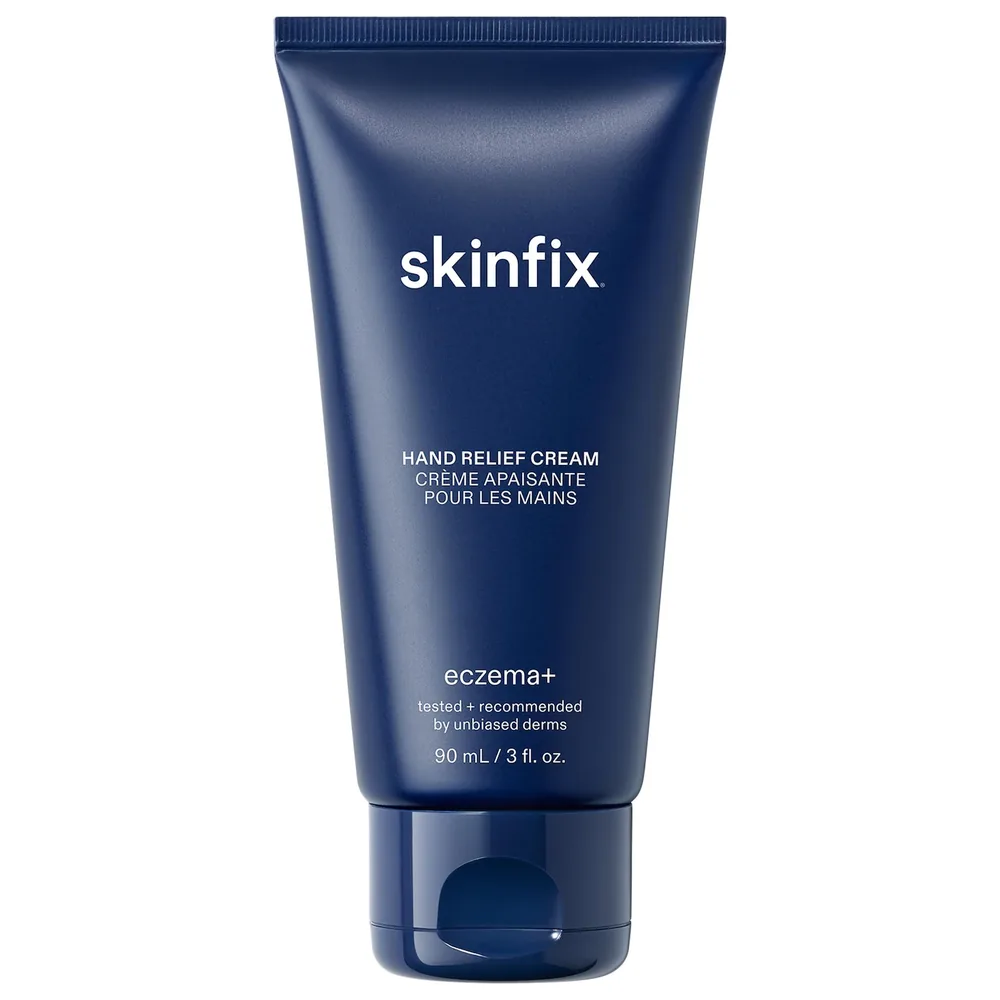
 Eczema+ Hand Repair Cream
A serious, NEA-seal-certified hand cream that treats the underlying mechanism of hand eczema rather than just coating it. Colloidal oatmeal, ceramide-cholesterol lipid repair, and panthenol combine in a texture that actually absorbs fast enough to use at the sink. At eighteen dollars it's genuinely well-priced for what it does.
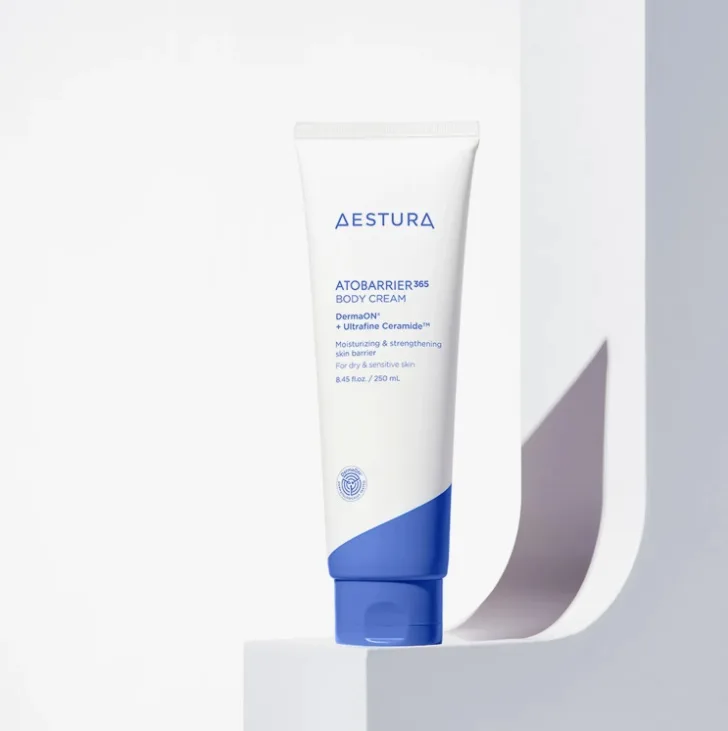 Korean Derm-Clinic Staple
 Atobarrier 365 Body Cream
A genuinely outstanding ceramide-forward body cream from a dermatologist-developed Korean brand with real clinical backing. Fragrance-free, effective for compromised body barriers, and reasonably priced for a 300ml jar — this is one of the better body moisturizers available in the barrier-repair category.
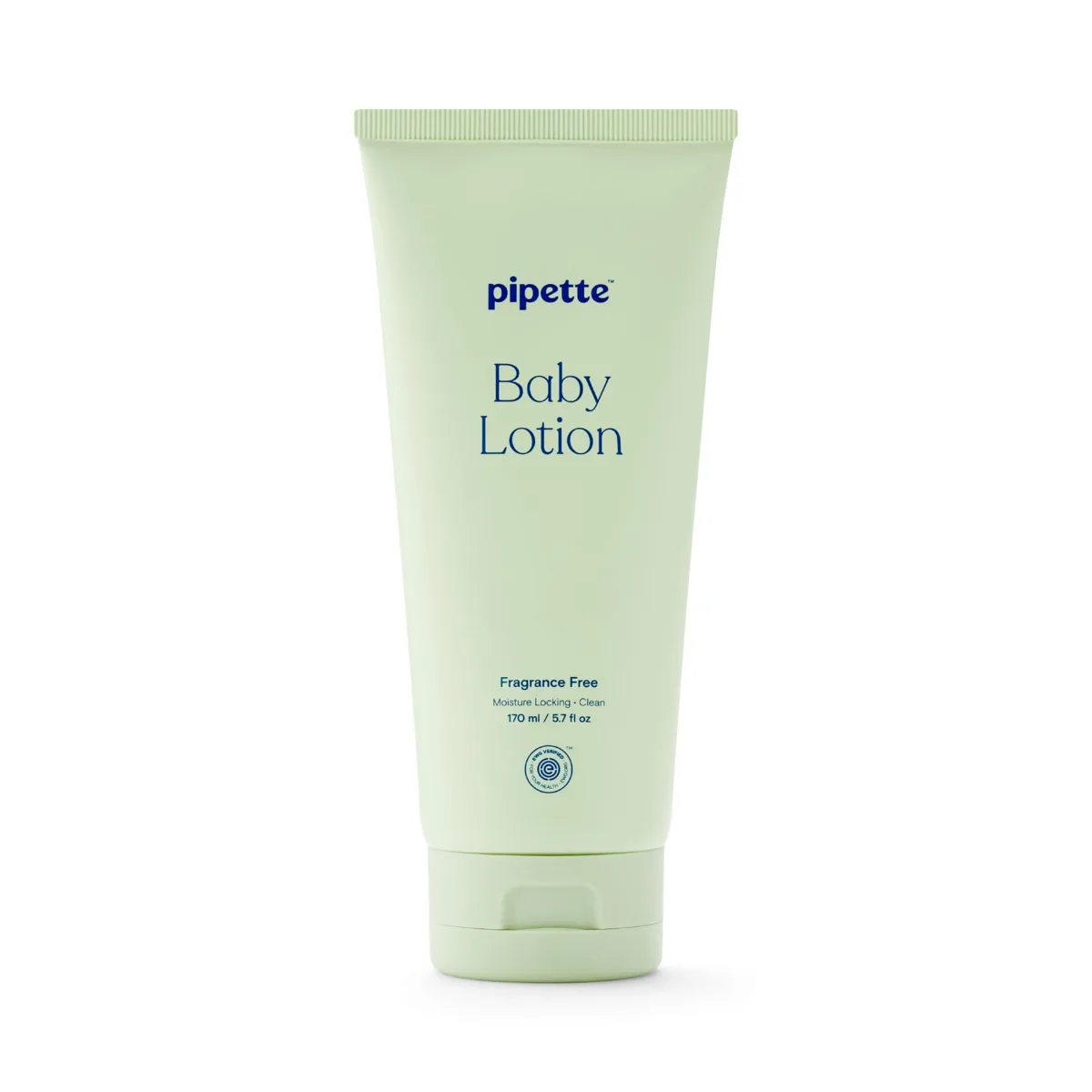 Clean Baby Staple
 Baby Lotion Fragrance Free
A lightweight, biomimetic baby lotion that proves you do not need mineral oil, silicones, or fragrances to deliver serious hydration. The squalane-ceramide-glycerin core provides evidence-based barrier support, and the olive-derived emulsifier system ensures it integrates into skin rather than sitting on top. At under $12 for 5.7 ounces with EWG Verified certification, the value is genuinely remarkable.
 Daily Atopic Companion
 Exomega Control Emollient Cream
The lighter sibling of A-Derma's Exomega Control balm — same Rhealba oat, sunflower oil unsaponifiables, and niacinamide active set, in a cream base that works better for year-round daily use and milder atopic-prone skin. For most adult users and for summer routines, this is the more practical choice of the two Exomega variants.
This review reflects our independent analysis of publicly available ingredient data, manufacturer claims, and verified user reviews. We are reader-supported — Amazon links may earn us a commission at no cost to you. We do not accept paid placements; rankings are based solely on the evidence.