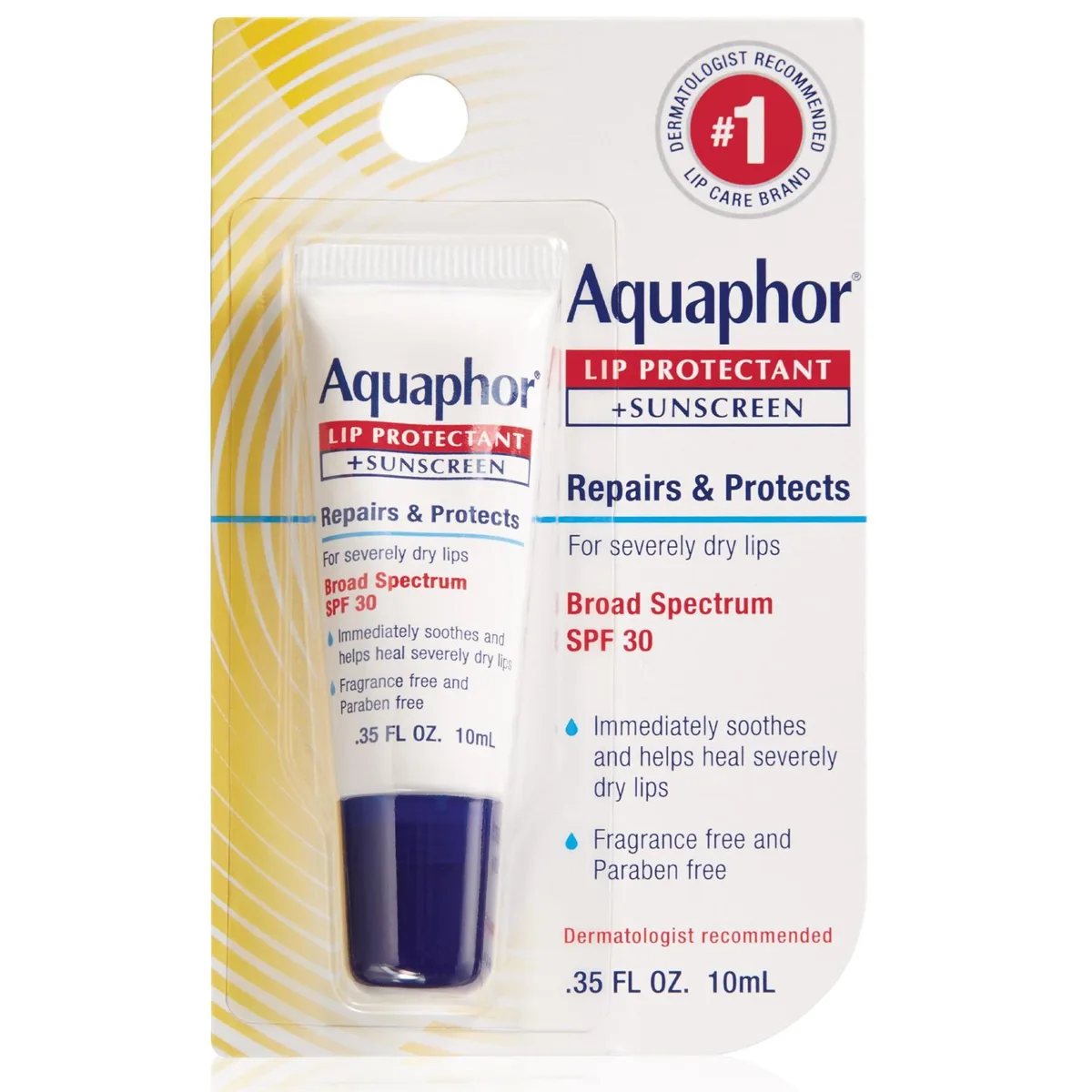
A petrolatum-powered lip sunscreen that borrows Aquaphor's healing pedigree and delivers reliable SPF 30 protection, though the inclusion of oxybenzone at 5.4% is an increasingly dated formulation choice that may give ingredient-conscious users pause.
Lip Repair + Protect SPF 30
A petrolatum-powered lip sunscreen that borrows Aquaphor's healing pedigree and delivers reliable SPF 30 protection, though the inclusion of oxybenzone at 5.4% is an increasingly dated formulation choice that may give ingredient-conscious users pause.
Score Breakdown
Where this product gains points and where it loses them — broken down across the four scoring pillars.
A solid petrolatum-based lip SPF with proven healing ingredients, but the inclusion of oxybenzone at 5.4% drags down the irritation risk score and limits its appeal for sensitive skin users. Good value for the price.
Pros & Cons
- ✓31% petrolatum base provides superior occlusive healing compared to typical wax-based lip balms
- ✓Panthenol and shea butter actively promote lip barrier repair beyond just sun protection
- ✓Broad-spectrum SPF 30 with five UV filters delivers comprehensive sun coverage
- ✓Smooth, non-sticky texture that spreads evenly without dragging on dry lips
- ✓Fragrance-free and paraben-free formulation suitable for most users
- ✓Affordable drugstore pricing with multi-pack options for additional savings
- ✓Backed by Aquaphor's century-long dermatologist-recommended healing ointment legacy
- ✗Contains oxybenzone at 5.4%, an increasingly controversial UV filter flagged for additional safety review
- ✗Chemical sunscreen taste is noticeable and frequently cited as the top user complaint
- ✗Thinner consistency than regular Aquaphor means less occlusive protection per application
- ✗Requires frequent reapplication after eating, drinking, or any lip contact
- ✗Not vegan — contains beeswax, which limits its appeal for some consumers
Full Review
The original Aquaphor Healing Ointment has lived in medicine cabinets, hospital supply closets, and dermatologist recommendation lists since 1925. When the brand launched its lip care line in 2011 and followed with this SPF 30 variant a year later, it wasn't so much entering a new market as extending a hundred-year handshake. The pitch was simple: the same petrolatum-based healing power your dermatologist already trusts, now with broad-spectrum sun protection for the most neglected real estate on your face.
The formula leads with 31% petrolatum, which is an unusually aggressive concentration for a lip SPF product. Most competing lip sunscreens build their formulas around waxes — beeswax, carnauba, candelilla — that provide structure but limited barrier repair. Aquaphor goes the ointment route instead, creating a product that functions less like a traditional lip balm and more like a therapeutic occlusive that happens to block UV. Petrolatum remains the gold standard occlusive in dermatology, capable of reducing transepidermal water loss by up to 98% according to published research, and that healing foundation gives this product a genuine edge for people whose lips are already damaged, cracked, or peeling.
Supporting the petrolatum base, you'll find panthenol (provitamin B5), which converts to pantothenic acid in the skin and has decades of clinical evidence supporting its role in wound healing and epithelialization. Shea butter contributes emollient fatty acids and anti-inflammatory triterpenes. Together with glycerin, castor oil, and caprylic/capric triglyceride, the inactive ingredient list reads like a thoughtful barrier repair formula — if you removed the sunscreen actives, you'd essentially have a very good medicated lip balm.
But the sunscreen actives are where this formula shows its age. The SPF 30 protection comes from a five-filter chemical system: avobenzone (3%) for UVA coverage, octinoxate (6.75%) and octisalate (4.5%) for UVB, octocrylene (2%) serving double duty as a UVB filter and avobenzone stabilizer, and oxybenzone at a notable 5.4%. It's the oxybenzone that raises the most eyebrows in 2026. While it remains FDA-approved and effective as a UV filter, oxybenzone has been flagged by the FDA's own 2019 and 2020 proposed rules as requiring additional safety data on systemic absorption. Hawaii, Key West, and the US Virgin Islands have banned it in sunscreens sold in their jurisdictions due to coral reef concerns. For a lip product — where some degree of ingestion is inevitable — the 5.4% concentration gives many users legitimate pause.
In practice, the product applies smoothly. The texture is thinner than you might expect if you're familiar with regular Aquaphor, somewhere between a thick lip gloss and a light ointment. It spreads evenly without the tacky drag of wax-based balms, and the petrolatum base gives it reasonable staying power, though you'll still need to reapply after eating or drinking. The finish is subtly dewy — enough sheen to look intentional without looking like you just ate a glazed donut.
The most common complaint, and it's nearly universal in user reviews, is the taste. Chemical sunscreen filters taste bitter, and oxybenzone is particularly notorious for this. If you apply the product and then drink coffee twenty minutes later, you'll know. This isn't a defect unique to Aquaphor — it's inherent to chemical SPF lip products — but it's worth flagging because it significantly affects the user experience and compliance. A lip sunscreen you stop wearing because the taste bothers you isn't protecting anything.
For severely chapped or cracked lips, this product genuinely delivers. The petrolatum base creates the kind of healing environment that dermatologists have recommended for wound care for decades, and the addition of panthenol actively promotes cell turnover underneath that occlusive seal. Users who struggle with chronic lip dryness from wind, cold, or medications like isotretinoin will find this more therapeutic than the average waxy SPF balm.
The value proposition is reasonable at approximately $6.99 for a 0.35 oz tube. This puts it at the upper end of drugstore lip SPF pricing but well below specialty and prestige options. Multi-packs are available and bring the per-unit cost down. The tube format is compact enough for a pocket or purse, and the brand also offers a twist-up stick variant for those who prefer that application style.
Here's where honesty matters: this is a legacy formula that would likely look different if launched today. A 2026 formulation would almost certainly swap oxybenzone for newer-generation filters or go mineral with zinc oxide. The five-filter chemical approach is effective but inelegant by current standards. That said, the petrolatum healing base remains genuinely excellent, the price is fair, and the SPF 30 broad-spectrum protection is real. If oxybenzone doesn't bother you, this is a reliable workhorse. If it does, the expanding market of mineral and oxybenzone-free lip SPF products offers alternatives — though few match this product's therapeutic lip repair capabilities.
Formula
Key Ingredients
The hero actives that drive this product's performance.
| Ingredient | Function | Evidence |
|---|---|---|
| Petrolatum (31%) (31%) | Forms the foundation of this formula at an unusually high concentration for a lip SPF product, creating an occlusive seal that reduces transepidermal water loss by up to 98%. In this product, the petrolatum matrix also serves as the vehicle for the five chemical UV filters, keeping them evenly distributed across the lip surface. | well-established |
| Panthenol | Converts to vitamin B5 in the skin to accelerate epithelialization and barrier repair on chapped lips. Works synergistically with the petrolatum occlusive base — panthenol promotes cell renewal underneath while petrolatum locks in moisture above. | well-established |
| Shea Butter | Provides emollient fatty acids and anti-inflammatory triterpenes that soften the lip surface and reduce irritation from the chemical UV filters in this formula. Complements the petrolatum occlusion with lipid-rich conditioning. | promising |
| Avobenzone (3%) (3%) | Primary UVA filter in this five-filter sunscreen system, providing broad-spectrum protection against the UVA rays most responsible for photoaging and lip cancer risk. Stabilized in this formula by octocrylene, which helps prevent avobenzone's photodegradation. | well-established |
| Oxybenzone (5.4%) (5.4%) | Boosts both UVA and UVB absorption to achieve the SPF 30 rating. While effective as a UV filter, oxybenzone is the most controversial ingredient in this formula — it has been flagged for potential endocrine disruption and is banned in several reef-protection jurisdictions. | well-established |
Full INCI List
Active Ingredients: Petrolatum 31.0%, Avobenzone 3.0%, Octinoxate 6.75%, Octisalate 4.5%, Octocrylene 2.0%, Oxybenzone 5.4%. Inactive Ingredients: C18-38 Alkyl Hydroxystearoyl Stearate, Octyldodecanol, Glycerin, Ricinus Communis (Castor) Seed Oil, Caprylic/Capric Triglyceride, Panthenol, Water, Polyglyceryl-3 Diisostearate, Butyrospermum Parkii (Shea) Butter, Tocopheryl Acetate, Hydrogenated Castor Oil, Beeswax, C20-40 Alkyl Stearate, Magnesium Sulfate, Magnesium Stearate, BHT
Product Flags
✓ Fragrance Free✓ Alcohol Free✗ Oil Free✓ Silicone Free✓ Paraben Free✓ Sulfate Free✗ Cruelty Free✗ Vegan✗ Fungal Acne Safe
Potential Irritants
OxybenzoneOctinoxateBHT
Common Allergens
OxybenzoneBeeswax
Compatibility
Skin Match
Best For
Works For
Not Ideal For
Addresses These Conditions
Use With Caution
Routine Step
sunscreen
Time of Day
AM
Pregnancy Safe
Unknown
Layering Tips
Apply as the final step in your lip care routine. Can be layered over a plain lip balm for extra moisture. Reapply every two hours during sun exposure and after eating or drinking.
Results Timeline
Immediate moisturizing and sun protection on application. Chapped lip relief within 1-3 days of consistent use. Full barrier repair for severely dry lips typically within 1-2 weeks of regular application.
Pairs Well With
Regular Aquaphor Lip Repair (layer underneath for extra healing)Lip scrub (use before application for smoother coverage)
Sample AM Routine
- Gentle cleanser
- Moisturizer
- Facial sunscreen
- THIS PRODUCT on lips
Sample PM Routine
- Gentle cleanser
- Moisturizer
- Plain Aquaphor Lip Repair on lips
Evidence
Science & Expert Perspective
The Science
The therapeutic backbone of this formula is its 31% petrolatum base. A landmark 2016 study published in The Journal of Allergy and Clinical Immunology demonstrated that petrolatum is far from the inert occlusive it was long assumed to be — it actively upregulates genes involved in antimicrobial defense and lipid synthesis, effectively kickstarting the skin's own barrier repair mechanisms (Czarnowicki et al., JACI, 2016). For lip tissue, which lacks sebaceous glands and has a thinner stratum corneum than facial skin, this active barrier support is particularly valuable.
The inclusion of panthenol adds a proven wound-healing accelerant. A comprehensive 2017 review marking 70 years of clinical dexpanthenol use documented its ability to stimulate epithelialization, reduce inflammation, and improve skin hydration across dozens of clinical settings (Proksch et al., J Dermatolog Treat, 2017). In the context of this product, panthenol works underneath the petrolatum seal to promote cell renewal while the occlusive layer prevents moisture loss — a complementary mechanism that makes the formula more therapeutic than a simple sunscreen.
The clinical case for lip-specific SPF is well-supported. A 2019 study in the European Journal of Dermatology found that lip photoprotection practices remain inadequate even among patients already diagnosed with actinic cheilitis, a UV-induced precancerous condition of the lip (Savage et al., EJD, 2019). A 2018 systematic review in the Journal of Investigative and Clinical Dentistry documented the progression rates from actinic cheilitis to squamous cell carcinoma, establishing that chronic UV exposure to unprotected lips represents a meaningful cancer risk (Dancyger et al., 2018). The lower lip is particularly vulnerable due to its angle of sun exposure, and the thin epithelium of lip tissue provides less inherent UV protection than surrounding facial skin.
The five-filter chemical sunscreen system provides comprehensive UV coverage. Avobenzone handles UVA absorption, while octinoxate and octisalate cover UVB wavelengths. Octocrylene serves as both a UVB filter and a photostabilizer for avobenzone, which is prone to degradation under UV exposure when used alone. The inclusion of oxybenzone broadens both UVA and UVB coverage but comes with the caveat that the FDA's 2019 and 2020 proposed sunscreen rules placed it in the category requiring additional safety data, citing studies showing systemic absorption at levels exceeding the threshold for toxicological concern.
References
- Petrolatum: Barrier repair and antimicrobial responses underlying this 'inert' moisturizer — The Journal of Allergy and Clinical Immunology (2016)
- Topical use of dexpanthenol: a 70th anniversary article — The Journal of Dermatological Treatment (2017)
- Use of lip photoprotection in patients suffering from actinic cheilitis — European Journal of Dermatology (2019)
- Malignant transformation of actinic cheilitis: A systematic review of observational studies — Journal of Investigative and Clinical Dentistry (2018)
Dermatologist Perspective
Dermatologists frequently recommend Aquaphor products for lip care, and this SPF variant addresses a persistent clinical gap: patients who protect their face from UV but neglect their lips entirely. Board-certified dermatologists note that the lower lip receives disproportionate UV exposure and that lip tissue's thin epithelium and lack of melanin make it especially vulnerable to actinic damage. The petrolatum-forward formulation aligns with what dermatologists typically recommend for barrier-compromised skin. However, many dermatologists in 2026 are increasingly steering patients toward oxybenzone-free alternatives, particularly for lip products where some ingestion is expected. This product remains a solid recommendation for patients who need combined lip repair and sun protection, with the caveat that mineral SPF lip options may be preferable for those with chemical sunscreen sensitivities.
Guidance
Usage Guide
How to Use
Apply generously to lips as the final step in your morning skincare routine. For sun exposure, apply 15 minutes before going outside and reapply every two hours, or immediately after eating, drinking, swimming, or toweling off. For severely chapped lips, layer over a plain Aquaphor Lip Repair or Healing Ointment at night, then switch to this SPF version during daytime hours. The squeeze tube format lets you control the amount precisely — a pea-sized amount covers both lips adequately.
Value Assessment
At approximately $6.99 for a 0.35 oz tube, this sits at the affordable end of the lip SPF market. Multi-packs (2-packs around $14) and the stick format (2-pack for $8.39) offer additional value. For a dermatologist-recommended brand with a genuine therapeutic base, the pricing is fair. The tube size is small but typical for lip products, and with diligent reapplication, expect 6-8 weeks of use. Where the value equation gets complicated is the oxybenzone question — if that ingredient is a dealbreaker for you, you're paying for a formula you'll ultimately replace, and the search for an oxybenzone-free alternative with comparable healing properties may push you into a higher price tier.
Who Should Buy
Anyone who needs serious lip repair alongside sun protection — especially people with chronically chapped lips, those on drying medications like isotretinoin, outdoor workers, and anyone who wants a no-fuss therapeutic lip SPF from a trusted pharmacy brand.
Who Should Skip
Those who are sensitive to chemical UV filters, particularly oxybenzone, should look elsewhere. If the taste of sunscreen on your lips is a dealbreaker, you'll likely struggle with compliance. Strict vegans should also pass, as this formula contains beeswax.
Ready to try Aquaphor Lip Repair + Protect SPF 30?
Details
Details
Texture
Thick, smooth ointment that is slightly thinner than regular Aquaphor Healing Ointment. Glides on easily without dragging or tugging on dry lips.
Scent
Fragrance-free with a faint sunscreen-chemical scent detectable on close inspection, typical of chemical UV filter formulations.
Packaging
Compact blue-and-white squeeze tube (0.35 fl oz) with orange SPF accent. Pocket and purse-friendly. Also available in a twist-up stick format (0.17 oz).
Finish
dewynon-greasy
What to Expect on First Use
Applies smoothly with immediate moisturizing relief. The petrolatum base creates a noticeable glossy film on the lips. Some users detect a mild chemical taste from the UV filters during the first few applications, though this is not unusual for SPF lip products. No adjustment period — protection begins immediately upon application.
How Long It Lasts
6-8 weeks with multiple daily applications
Period After Opening
12 months
Best Season
All Year
Background
The Why
Aquaphor introduced its lip care line in 2011, extending its century-old healing ointment legacy to the lip category. The SPF 30 variant followed in 2012, designed to address the fact that lips are among the most sun-vulnerable areas of the face yet are frequently overlooked in sun protection routines — a gap that dermatologists had been vocal about for years.
About Aquaphor Legacy Brand (20+ years)
Aquaphor was developed in 1925 and has been a pharmacy staple for a century, widely recommended by dermatologists for wound care and barrier repair. The brand is owned by Beiersdorf and claims the title of #1 dermatologist-recommended lip care brand based on IQVIA ProVoice survey data.
Brand founded: 1925 · Product launched: 2012
Myth vs. Reality
Myths & Misconceptions
Myth
Lip balm makes your lips dependent on it and dries them out over time.
Reality
Petrolatum-based lip products like this one don't cause dependency. They reduce water loss and allow the lip barrier to heal. The 'dependency' myth likely stems from flavored or menthol-containing balms that can cause mild irritation, leading to a cycle of reapplication — this fragrance-free formula avoids those irritants.
Myth
Chemical sunscreens in lip products are unsafe because you ingest them.
Reality
While the FDA has requested additional safety data on chemical UV filters including oxybenzone, the amounts potentially ingested from lip SPF products are extremely small. The UV protection benefits — particularly for preventing actinic cheilitis and lip squamous cell carcinoma — are well-documented. Those who prefer to avoid oxybenzone can opt for mineral SPF lip products instead.
FAQ
Frequently Asked Questions
Does Aquaphor Lip Repair + Protect SPF 30 contain oxybenzone?
Yes, this product contains oxybenzone at 5.4% as one of five chemical UV filters. If you prefer to avoid oxybenzone due to sensitivity concerns or environmental considerations, look for mineral-based SPF lip products that use zinc oxide or titanium dioxide instead.
Can I use Aquaphor Lip Repair SPF 30 after lip filler or lip procedures?
While regular Aquaphor Healing Ointment is commonly recommended post-procedure, the SPF version contains chemical UV filters that may irritate freshly treated lips. Consult your dermatologist before using this product on recently treated lips — they may recommend the plain Lip Repair formula initially and switching to the SPF version once healing is complete.
How often should I reapply Aquaphor Lip Repair SPF 30?
Reapply every two hours during sun exposure, and immediately after eating, drinking, or wiping your lips. The petrolatum base helps it adhere better than typical waxy lip balms, but lip products inevitably wear off faster than facial sunscreens due to the constant movement and moisture of the lip area.
Is Aquaphor Lip Repair SPF 30 the same as regular Aquaphor on lips?
No — the SPF version has a different formula built around five chemical UV filters alongside the 31% petrolatum base. Regular Aquaphor Healing Ointment contains 41% petrolatum without sunscreen actives, making it thicker and more occlusive but without UV protection. The SPF version also includes panthenol and shea butter that the original ointment does not.
Why does Aquaphor Lip SPF taste like sunscreen?
The chemical UV filters — particularly oxybenzone, octinoxate, and octocrylene — have a bitter taste that is detectable when the product transfers to food or drinks. This is a common issue with chemical SPF lip products and not unique to Aquaphor. Reapplying after meals helps maintain protection and minimizes taste interference during eating.
Community
Community Voices
Common Praise
"Effectively relieves dry, cracked, and chapped lips"
"Smooth, non-sticky application compared to waxy lip balms"
"Reliable SPF 30 broad-spectrum lip protection"
"Convenient squeeze tube format for on-the-go use"
"Fragrance-free and gentle enough for most users"
Common Complaints
"Noticeable chemical sunscreen taste when eating or drinking"
"Thinner consistency than regular Aquaphor Lip Repair"
"Requires frequent reapplication, especially after meals"
"Contains oxybenzone, which some users prefer to avoid"
"Some users report lip irritation or allergic reactions to the UV filters"
Notable Endorsements
#1 Dermatologist Recommended Lip Care Brand (IQVIA ProVoice survey)
Appears In
best lip care for dryness best lip care for sun damage best spf lip balm best drugstore lip spf
Related Conditions
Related Ingredients
You Might Also Like
 Derm Office Lip Staple
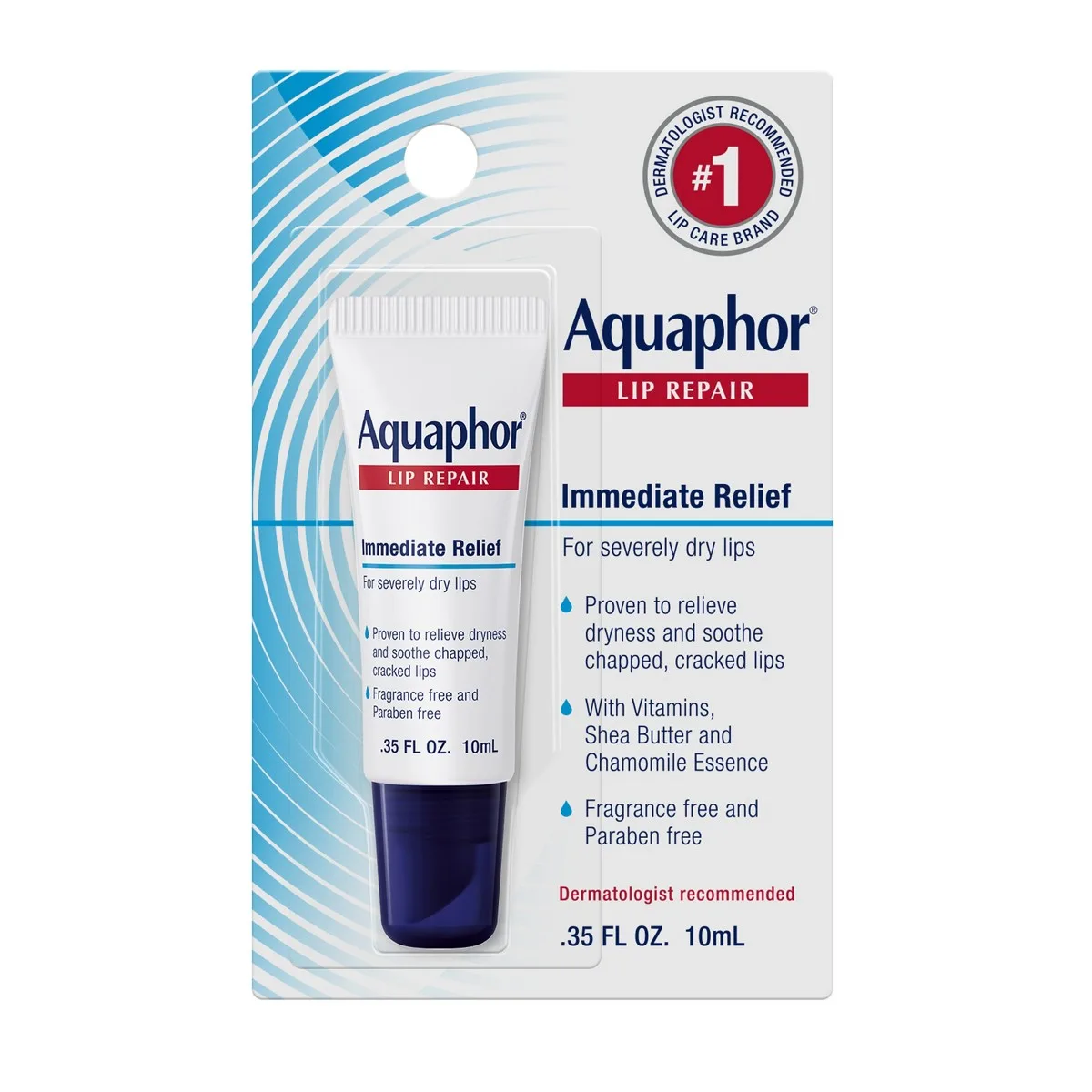
 Lip Repair
The lip balm that dermatologists actually recommend — not as marketing, but as clinical practice. Fifteen years and 50,000+ reviews have validated what the panthenol-bisabolol research confirms: this simple formula genuinely heals chapped lips rather than just coating them. The glossy finish and frequent reapplication needs are the only real drawbacks.
 TikTok Cult Lip Treatment
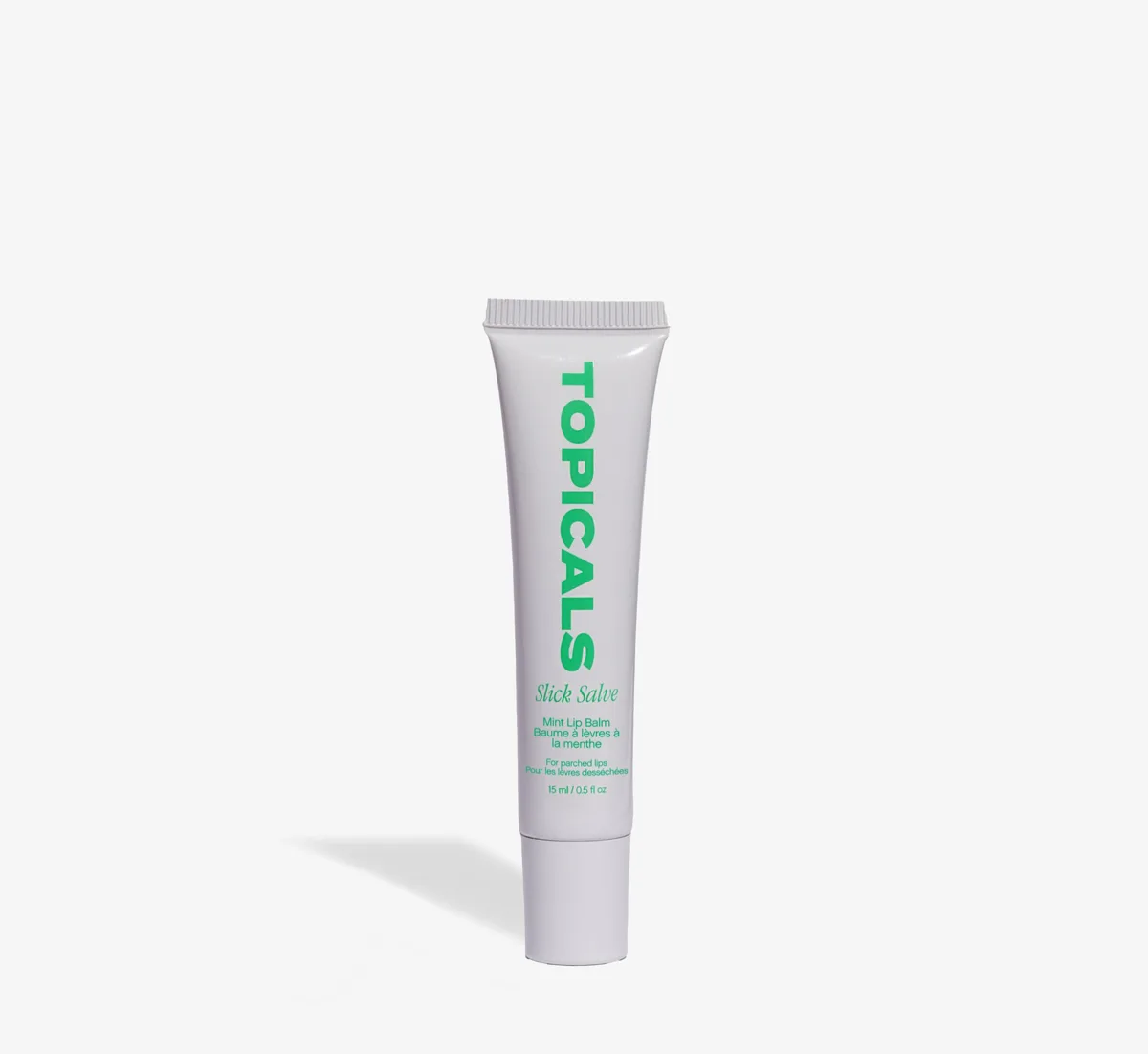
 Slick Salve Glossy Lip Balm
The viral TikTok lip balm that actually deserves the hype — built on three ceramide types, cholesterol, peptides, and ergothioneine in a glossy wet-look format that looks like a beauty product and performs like a dermatology product. The mint essential oils are the only real caveat for sensitive users.
 Ceramide Lip MVP
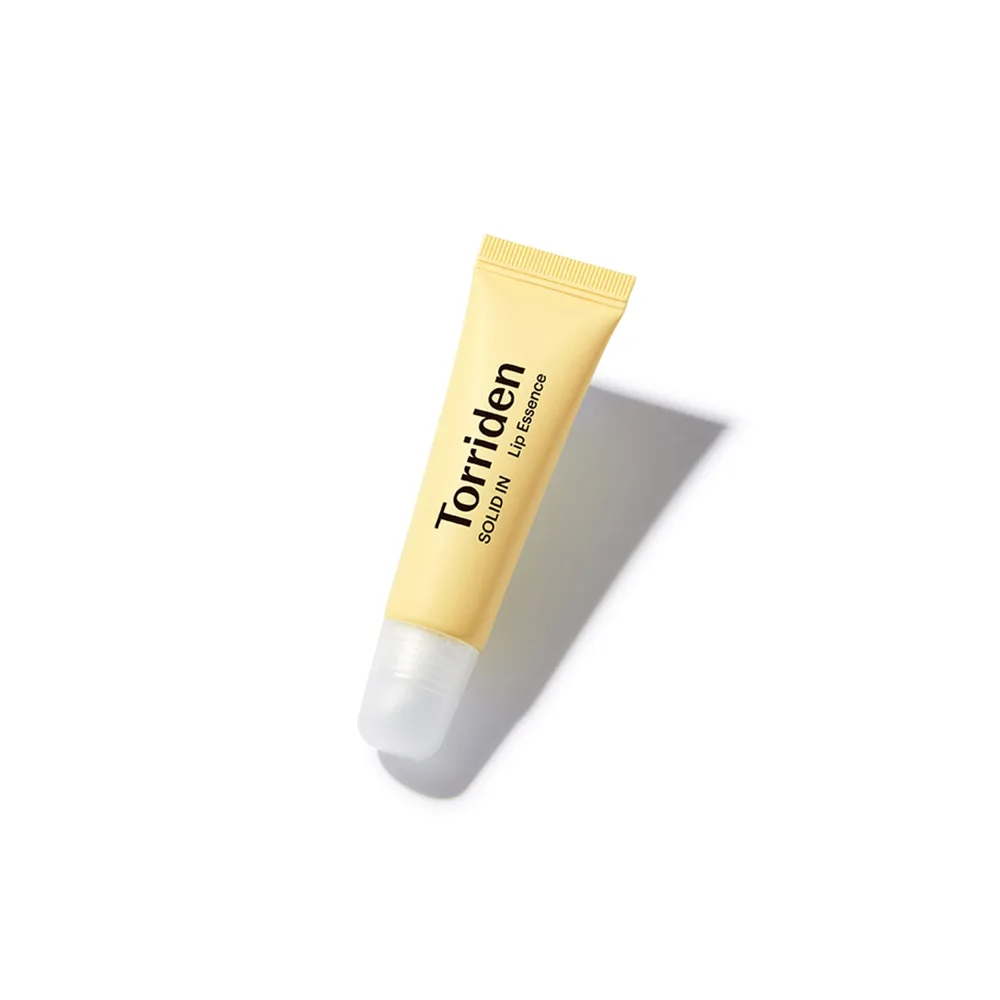
 SOLID-IN Lip Essence
Torriden ports its multi-ceramide-cholesterol repair architecture into lip-care format, producing one of the few lip products that actually addresses the underlying lipid loss behind chronically chapped lips. Fragrance-free, well-tolerated, and effective. The price feels slightly ambitious for the size, but the ingredient quality earns it.
 Sensitive-Skin Gloss MVP
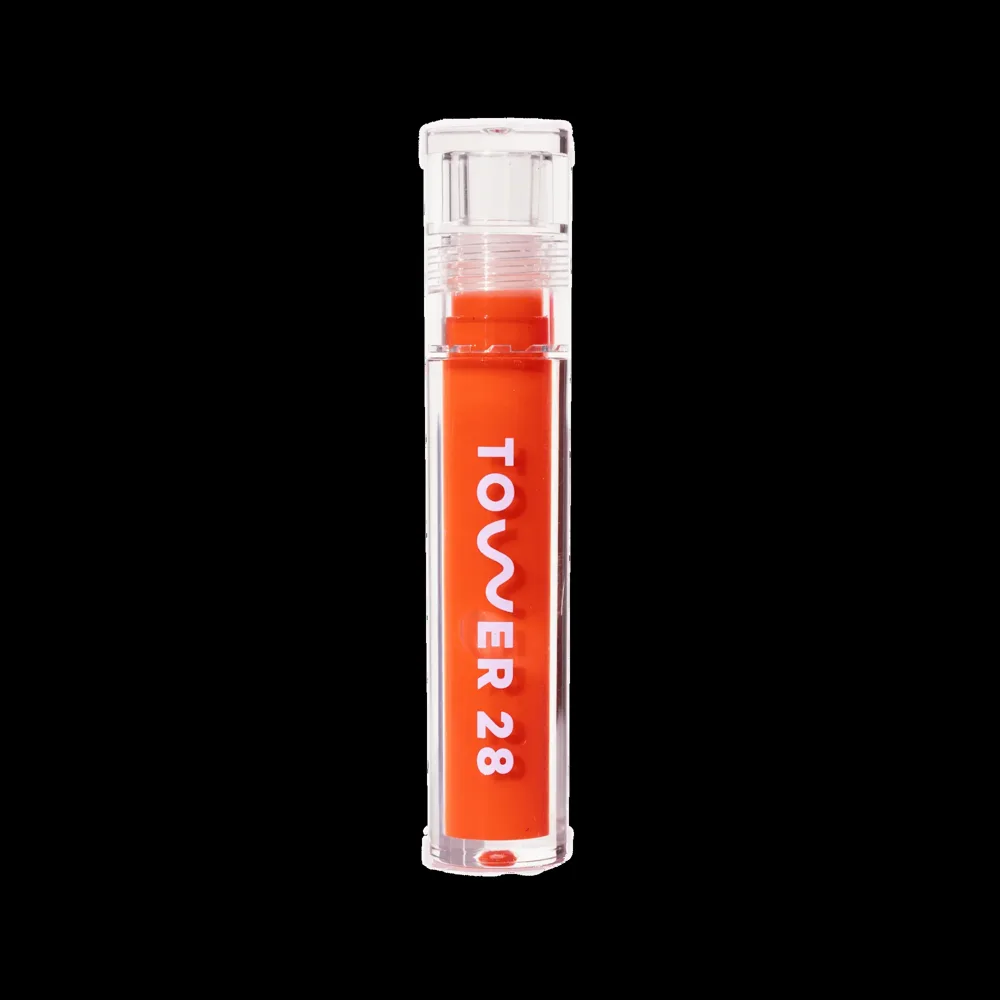
 ShineOn Lip Jelly
The product that built Tower 28's reputation: a fragrance-free, dye-free, lanolin-free lip jelly that delivers serious gloss and a sheer wash of color without stickiness, and is genuinely safe for eczema-prone lips. Sheer pigment and a Sephora price tag are the only honest gripes.
 Vegan Lip Essential
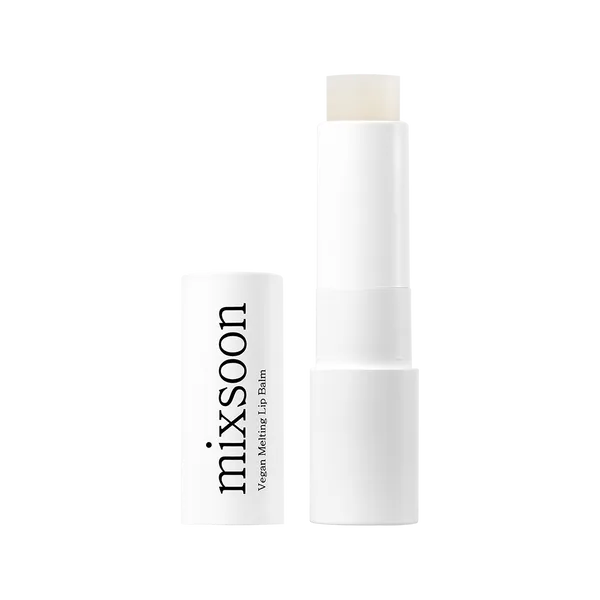
 Vegan Melting Lip Balm
mixsoon's Vegan Melting Lip Balm brings the brand's minimalist, plant-based philosophy to lip care with a genuinely unique melting texture and clean ingredient list. It's a comfortable, fragrance-free lip treatment that softens dry lips effectively, though the $16 price and need for frequent reapplication are honest limitations in a crowded lip balm market.
 Australian Sun-Smart Essential
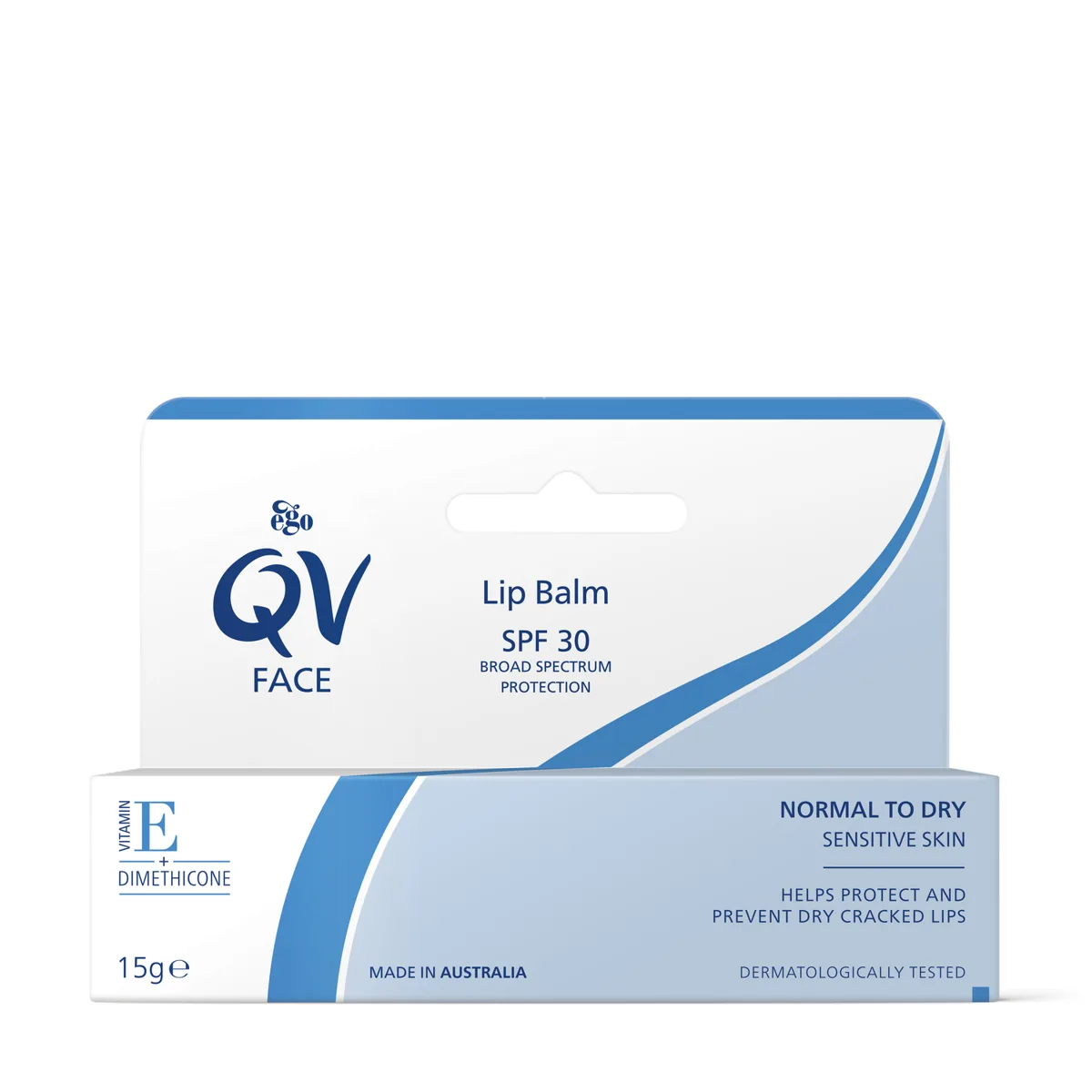
 Lip Balm SPF 30
QV's Lip Balm SPF 30 is the rare drugstore lip balm that treats SPF as the point, not a garnish. With a four-filter broad-spectrum system in a petrolatum-and-wax base, it offers genuine daily lip protection from a brand whose parent company has been formulating Australian sun care since the 1970s.