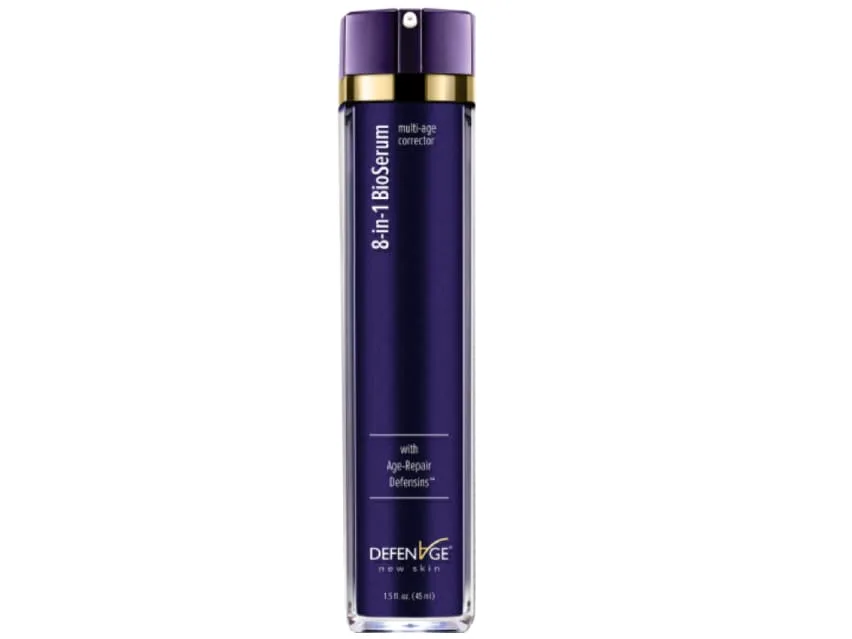
The rare peptide serum with real published clinical data behind it, built around proprietary defensin molecules that DefenAge has made its entire brand around. Thoughtful supporting cast of niacinamide, Matrixyl Synthe'6, ergothioneine, and CoQ10. Silicone-heavy base that some love and some don't. Price is the main obstacle — otherwise this is one of the more defensible premium serums on the dermatology shelf.
8-in-1 BioSerum
The rare peptide serum with real published clinical data behind it, built around proprietary defensin molecules that DefenAge has made its entire brand around. Thoughtful supporting cast of niacinamide, Matrixyl Synthe'6, ergothioneine, and CoQ10. Silicone-heavy base that some love and some don't. Price is the main obstacle — otherwise this is one of the more defensible premium serums on the dermatology shelf.
Score Breakdown
Where this product gains points and where it loses them — broken down across the four scoring pillars.
A rare skincare serum with a brand-sponsored but independently published clinical trial behind it, pairing proprietary defensin peptides with a thoughtful support cast. The price is the main obstacle — otherwise this is one of the more interesting peptide serums on the market.
Pros & Cons
- ✓Published clinical trial data comparing favorably to retinol at 12 weeks
- ✓Proprietary defensin peptides that no other brand offers
- ✓Niacinamide at meaningfully high position on INCI
- ✓Multi-angle antioxidant profile with ergothioneine, CoQ10, and vitamin E
- ✓Fragrance-free, alcohol-free, and tolerable for most sensitive skin types
- ✓Immediate silicone-based blurring effect visible on first use
- ✓Compatible with retinol, vitamin C, and other actives
- ✗Very expensive at roughly $50-70 per month of use
- ✗Clinical trial was brand-sponsored — independent replication would strengthen claims
- ✗Silicone-heavy texture isn't for everyone
- ✗Not vegan due to albumen content
- ✗Defensin mechanism is harder to verify independently than standard peptide claims
Full Review
Most peptide serums are built on the same short list of ingredients. Matrixyl. Copper peptides. Argireline. Acetyl hexapeptide-8. A dozen other signaling peptides with varying evidence behind them. The formulations differ in packaging and price tier, but the active ingredient story usually runs on the same rails. DefenAge took a different approach: the brand was built around alpha-defensin 5 and beta-defensin 3 — antimicrobial peptides originally studied for wound healing — repurposed as a claimed activator of LGR6+ stem cell populations in the skin. The 8-in-1 BioSerum is the flagship product, and in 2018 DefenAge published a double-blind clinical trial in the Journal of Drugs in Dermatology comparing their defensin-based regimen head-to-head against a retinol regimen. The study showed comparable outcomes across fine lines, texture, and pigmentation at 12 weeks. It was brand-sponsored, which is the caveat that has to accompany any discussion of the data, but peer-reviewed publication is a real bar that most competitors don't meet.
That clinical story is the entire reason this serum is worth paying attention to. Without the trial, the 8-in-1 BioSerum would be another expensive peptide product with a compelling ingredient list and no way to distinguish its claims from industry-standard marketing. With the trial, it becomes one of the few peptide-focused serums where there's actual head-to-head data suggesting the defensin mechanism does something — possibly comparable to one of the most validated anti-aging molecules in skincare. Healthy skepticism about brand-funded research is warranted. So is acknowledging that peer-reviewed publication is different from vibes.
The formulation beyond the defensins is genuinely thoughtful. Niacinamide sits unusually high on the INCI — fourth position, after water, silicone, and glycerin — at a concentration that's almost certainly doing real work. Palmitoyl tripeptide-38 (Matrixyl Synthe'6) is one of the better-studied signaling peptides and brings conventional collagen-stimulation validation to the formula. Ergothioneine, a mushroom-derived antioxidant with growing evidence behind it, pairs with ubiquinone (CoQ10) and tocopheryl acetate to build a multi-angle antioxidant profile. Sodium hyaluronate handles humectant hydration. Sea whip extract, the same marine ingredient featured in DefenAge's Reveal Masque, provides anti-inflammatory buffering. And probiotic ferments round out the supporting cast. Whether each of these eight mechanisms is at a maximally efficacious dose is a fair question — the 'eight' is a marketing label — but the formulation does legitimately combine eight distinct active pathways, which is more than many far cheaper peptide serums manage.
On the skin, the BioSerum is memorable before you even think about what the actives are doing. It pumps out as a soft white cream-serum with a distinct velvety, blurring quality that comes from the silicone base. Applied to clean skin, it melts on contact, absorbs within about forty-five seconds, and leaves behind a visibly smoothed, slightly matte finish that layers cleanly under moisturizer and makeup. The instant-gratification effect is the first thing most users notice and is probably part of why the serum gets positive reviews even from people who can't directly verify the defensin mechanism. The cumulative effect over six to eight weeks of twice-daily use is more subtle but genuinely present — skin looks firmer, tone evens out, and the kind of crepey texture around the eyes and mouth that's notoriously resistant to non-retinoid treatments typically softens.
Texture preferences matter here. If you love silicone-rich serums that feel like a blur primer, this is going to delight you. If you hate the squishy feel of dimethicones and prefer watery serums that disappear into the skin, this one is going to feel heavy. It's neither better nor worse than water-based alternatives — it's a different category. The silicone base also serves a formulation purpose: it creates a stable delivery matrix for the defensins and niacinamide, and it protects the oxidation-sensitive ingredients like CoQ10 from air exposure.
Who is this serum actually for? The ideal candidate is someone with mature skin who's either plateau-ing on conventional retinol, unable to tolerate retinol due to irritation, or looking for a well-supported complement to their existing retinoid routine. For retinol-intolerant patients — the ones who've tried tretinoin and quit because of flaking, or who reacted badly to adapalene — the defensin approach offers a plausible alternative path to similar outcomes based on the published trial data. For retinol users who already tolerate their regimen well, the BioSerum serves as a stacking addition that addresses different mechanisms: niacinamide, antioxidants, hyaluronic acid, and the proprietary defensins. Either way, it's a serum for buyers who are willing to pay premium prices for premium supporting evidence.
Let's address the price honestly. At around $206 for 1.5 oz, this is one of the more expensive serums in the dermatology-channel tier. A tube lasts three to four months with twice-daily use, putting monthly cost between $50 and $70. That's real money for a single product, and it means the BioSerum is competing not just against other peptide serums but against the entire question of whether any serum justifies that spend when cheaper alternatives exist. The defense is the clinical trial. The criticism is that clinical-trial-backed claims don't automatically translate into better outcomes for an individual user, and the cheaper peptide serums may well deliver 80% of the same benefit. Both views are defensible.
The final recommendation. If you have the budget, retinol-intolerant or retinol-plateau skin, and you value published clinical data above marketing narratives, this is one of the more defensible premium peptide serums on the market. If you're budget-conscious or skeptical of brand-funded trials, cheaper alternatives from Paula's Choice, The Ordinary, or Medik8 will likely get you most of the way there. And if you love the silicone-smoothing sensory experience and can fit this into your monthly skincare spend, the immediate visual payoff plus the gradual structural improvement makes it a genuinely enjoyable product to use — which is not nothing at this price tier.
Formula
Key Ingredients
The hero actives that drive this product's performance.
| Ingredient | Function | Evidence |
|---|---|---|
| Alpha-Defensin 5 & Beta-Defensin 3 | The brand's proprietary molecules and the entire reason the BioSerum exists — these are antimicrobial peptides that DefenAge claims activate LGR6+ stem cell populations in the skin, supported by the brand's 2018 clinical trial showing comparable outcomes to a retinol regimen over 12 weeks. | promising |
| Niacinamide | Sits unusually high on the INCI — the fourth ingredient after water, silicone, and glycerin — delivering barrier support, oil regulation, and brightening at a meaningful concentration alongside the proprietary defensin complex. | well-established |
| Palmitoyl Tripeptide-38 (Matrixyl Synthe'6) | A well-studied signaling peptide that stimulates collagen and hyaluronic acid production in the dermis, working alongside the defensins as a more conventionally validated anti-aging active. | well-established |
| Ergothioneine | A powerful mushroom-derived antioxidant with documented protection against oxidative stress and UV damage, included here as a complement to the sunflower and rosemary extracts to round out the antioxidant profile. | promising |
| Ubiquinone (Coenzyme Q10) | Provides additional mitochondrial antioxidant support and contributes to the energy-production angle the serum targets as part of its 'rejuvenation' positioning — a reasonable complement to ergothioneine and vitamin E. | well-established |
| Sea Whip Extract | The same anti-inflammatory marine extract found in the brand's Reveal Masque, included here to buffer the niacinamide and peptide activity and keep the serum comfortable on reactive mature skin. | promising |
Full INCI List
Water, Cyclopentasiloxane, Glycerin, Niacinamide, Sinorhizobium Meliloti Ferment Filtrate, Dimethicone, Polysorbate 20, Dimethicone/Vinyl Dimethicone Crosspolymer, Lauryl PEG-9 Polydimethylsiloxyethyl Dimethicone, Ammonium Acryloyldimethyltaurate/VP Copolymer, Phospholipids, Alpha-Defensin 5, Beta-Defensin 3, Palmitoyl Tripeptide-38, Sodium Hyaluronate, Arabidopsis Thaliana Extract, Sea Whip Extract, Ergothioneine, Helianthus Annuus (Sunflower) Seed Oil, Rosmarinus Officinalis (Rosemary) Leaf Extract, Tocopheryl Acetate, Ubiquinone, Leuconostoc/Radish Root Ferment Filtrate, Albumen, Alanyl Glutamine, Caprylic/Capric Triglyceride, Cetyl Hydroxyethylcellulose, Lecithin, Hydroxypropyl Cyclodextrin, Phytic Acid, Phenoxyethanol, Caprylyl Glycol, Ethylhexylglycerin, Hexylene Glycol, Sodium Chloride
Product Flags
✓ Fragrance Free✓ Alcohol Free✗ Oil Free✗ Silicone Free✓ Paraben Free✓ Sulfate Free✓ Cruelty Free✗ Vegan✗ Fungal Acne Safe
Compatibility
Skin Match
Best For
Works For
Not Ideal For
Addresses These Conditions
aging dullness compromised skin barrier hyperpigmentation
Routine Step
serum
Time of Day
AM & PM
Pregnancy Safe
Yes ✓
Layering Tips
Apply after cleansing and before moisturizer. The silicone-rich texture layers cleanly under SPF and makeup. Compatible with most routines including retinoids — apply this first on clean skin, then the retinoid.
Results Timeline
Immediate smoothing effect from the silicone base. Visible improvement in tone and firmness typically shows at 6-8 weeks. The brand's clinical trial measured significant results at 12 weeks of twice-daily use.
Pairs Well With
retinolvitamin-cpeptidesniacinamidehyaluronic-acid
Sample AM Routine
- Gentle cleanser
- Vitamin C serum
- DefenAge 8-in-1 BioSerum
- Moisturizer
- Sunscreen
Sample PM Routine
- Cleanser
- Retinol (optional)
- DefenAge 8-in-1 BioSerum
- Night cream
Evidence
Science & Expert Perspective
The Science
The science case for this serum hinges on the 2018 study published in the Journal of Drugs in Dermatology titled 'Defensins: A Novel Approach to Skin Anti-Aging' (or closely related title), which reported on a 12-week double-blind split-face comparison of the DefenAge defensin regimen against a retinol regimen. The reported outcomes showed comparable improvements in fine lines, texture, and discoloration across both arms of the trial, with the defensin regimen showing lower irritation rates. The study was sponsored by the brand, which warrants critical appraisal — industry-funded trials have systematically shown larger effect sizes than independent replications in cosmetic science — but peer review in a dermatology journal is a real bar and the raw data was made available for assessment.
The proposed mechanism involves LGR6+ stem cell activation. LGR6+ cells are a population of epidermal and hair follicle stem cells identified in developmental biology research, and the hypothesis that topically delivered defensins could reach and activate these cells is biologically plausible but also requires independent validation. Outside the DefenAge-sponsored work, the published data specifically on defensins in skincare is thin.
The supporting actives have stronger independent evidence. Niacinamide has been extensively studied for barrier function, pigmentation, and oil regulation, with published work from Procter and Gamble and independent labs showing measurable improvements at 2-5% concentrations over 8-12 weeks. Palmitoyl tripeptide-38 (Matrixyl Synthe'6) has been validated in cosmetic chemistry research for stimulating dermal collagen and glycosaminoglycan production. Ergothioneine has a growing evidence base in dermatology literature for antioxidant and photoprotective activity. Ubiquinone (CoQ10) has been studied for mitochondrial energy support in aged skin.
The realistic read is that this serum combines one novel and partially validated mechanism (defensins) with a supporting cast of ingredients that would each deliver measurable benefit independently. Even if you discount the defensin claim entirely, the formula contains enough conventional actives at reasonable positions to deliver meaningful results. The premium price is paying for the proprietary peptide complex; the underlying niacinamide-and-Matrixyl-Synthe-6 base is something you could arguably replicate at a lower cost from competing brands.
Dermatologist Perspective
Dermatologists who stock DefenAge products generally do so because of the published clinical trial, which is a rare piece of substantiation for a peptide-based brand. Board-certified dermatologists note that the 8-in-1 BioSerum is commonly recommended for patients who can't tolerate prescription retinoids or who want a peptide-based supplement to their existing routine. The serum's fragrance-free, alcohol-free formulation and silicone-rich base make it a tolerable option for most sensitive skin types. The main limitation commonly raised in dermatology practice is cost — the serum is not a first-line recommendation for budget-conscious patients, and many dermatologists suggest starting with less expensive peptide serums before scaling up to this tier unless the patient specifically wants a retinol-alternative path.
Guidance
Usage Guide
How to Use
After cleansing and any water-based toners, dispense a pea-sized amount into clean fingertips and press evenly across face, neck, and upper chest. Wait about 60 seconds for the silicone base to absorb before layering the next step. Safe to use morning and night. In the AM, follow with moisturizer and broad-spectrum sunscreen. In the PM, this pairs particularly well with retinoids — apply this serum first on clean skin, let it fully absorb, then layer the retinoid. Avoid using on broken or compromised skin until the barrier has healed. For best results, be consistent with twice-daily application for at least 12 weeks before assessing outcomes.
Value Assessment
At around $206 for 1.5 oz, this is one of the more expensive serums sold through the dermatology channel. A tube lasts three to four months with twice-daily use, putting monthly cost between $50 and $70 — real money for a single routine step. The defense is the clinical trial, which is more than most competitors offer, and the multi-active formulation that would be hard to replicate through stacking cheaper products. The criticism is that peptide serums from Paula's Choice, Medik8, or The Ordinary can deliver substantial benefit for a fraction of the price, and the marginal clinical improvement from the defensin complex is harder to quantify at the individual level. For patients prioritizing published evidence and premium formulation, the price is defensible. For optimizers, it's not.
Who Should Buy
Mature skin buyers who value published clinical data, can afford premium dermatology-channel pricing, and are either retinol-intolerant or looking for a peptide serum to complement their existing routine. Also ideal for patients whose dermatologist has specifically recommended the DefenAge regimen.
Who Should Skip
Skip if you're budget-conscious, skeptical of brand-funded clinical trials, or prefer water-based serums over silicone-rich textures. Also skip if you're already well-tolerating a retinoid and seeing good results — the marginal benefit from adding this serum is unlikely to justify the cost.
Ready to try DefenAge 8-in-1 BioSerum?
Details
Details
Texture
Silky, silicone-rich cream-serum with slight blurring effect on application
Scent
Essentially unscented
Packaging
White airless pump tube — clinical, minimalist
Finish
velvetysmoothinvisible
What to Expect on First Use
The serum pumps out as a soft white cream that melts into skin with a velvety, blur-filter finish. No tingling, no scent. Immediate visual smoothing from the silicone base. Real structural improvement is gradual and typically visible at 6-8 weeks.
How Long It Lasts
3-4 months with twice-daily application
Period After Opening
12 months
Best Season
All Year
Certifications
cruelty-free
Background
The Why
DefenAge was founded in 2015 by a team including chemists working on defensin peptide technology originally studied for wound healing. The 8-in-1 BioSerum became the brand's flagship product, and in 2018 a 12-week double-blind trial in the Journal of Drugs in Dermatology compared the DefenAge regimen against a retinol regimen — finding comparable results across fine lines, texture, and pigmentation endpoints. The study is brand-sponsored but published in a peer-reviewed journal, which is more than most peptide brands offer.
About DefenAge Established Brand (5–20 years)
DefenAge's core claim to credibility is a 2018 double-blind clinical trial published in the Journal of Drugs in Dermatology comparing the brand's defensin-based regimen against a retinol regimen. The study — though brand-sponsored — showed comparable outcomes and was one of the few independent clinical validations any peptide-focused skincare brand has received.
Brand founded: 2015 · Product launched: 2017
Myth vs. Reality
Myths & Misconceptions
Myth
Defensins are just marketing — there's no evidence they do anything
Reality
DefenAge published a clinical trial in the Journal of Drugs in Dermatology showing comparable outcomes to retinol at 12 weeks. The study is brand-sponsored, which warrants some caution, but peer-reviewed publication is a real bar that most peptide brands don't meet.
Myth
An '8-in-1' serum can't actually do eight things well
Reality
The marketing name is a stretch, but the formulation does legitimately combine defensins, niacinamide, Matrixyl Synthe'6, ergothioneine, CoQ10, hyaluronic acid, sea whip, and a probiotic ferment — eight different active mechanisms. Whether each one is at a maximally efficacious dose is a separate question.
FAQ
Frequently Asked Questions
What are defensins and do they actually work?
Defensins are small antimicrobial peptides naturally produced in immune and epithelial cells. DefenAge claims their proprietary alpha-defensin 5 and beta-defensin 3 activate LGR6+ stem cell populations in the skin, promoting cell turnover. The 2018 clinical trial published in the Journal of Drugs in Dermatology showed comparable outcomes to a retinol regimen — brand-sponsored, but peer-reviewed, which is a real datapoint.
Is this really comparable to retinol?
The DefenAge clinical trial measured equivalent outcomes on several markers at 12 weeks. That's a strong claim, and it was brand-funded. Independent replication would strengthen the case. For patients who can't tolerate retinol due to irritation, the defensin-based approach is a reasonable alternative based on current evidence.
Can I use it with retinol?
Yes — they work through different mechanisms and can be combined. Apply this serum first on clean skin, let it absorb, then layer retinol on top. The niacinamide and sea whip extract in this formula can also help buffer retinoid irritation.
Why is it so expensive?
DefenAge positions itself as a clinical brand sold primarily through dermatology offices, which generally supports higher price points. The 8-in-1 BioSerum also contains a long list of supporting actives beyond the defensins, which contributes to the cost. Whether the defensin story alone justifies the price is an individual judgment.
Is it safe for sensitive skin?
Yes — the formula is fragrance-free, alcohol-free, and the silicone-rich base minimizes the chance of irritation. The sea whip extract and niacinamide also contribute anti-inflammatory activity. It's one of the more tolerable options in the peptide serum category.
How long until I see results?
Immediate visual smoothing from the silicone base is visible on the first application. Structural improvements in tone, texture, and firmness typically show at 6-8 weeks. The clinical trial measured its primary outcomes at 12 weeks, so plan for a full quarter of use before assessing.
Is it pregnancy-safe?
Yes — the formula contains no retinoids, salicylic acid, or pregnancy-flagged actives. The peptide and niacinamide base is safe for use during pregnancy.
Community
Community Voices
Common Praise
"smooth silky texture"
"visible firmness improvement over time"
"non-irritating even with retinol"
"immediately blurs skin texture"
Common Complaints
"very expensive"
"silicone-heavy finish isn't for everyone"
"defensin claims are hard to verify independently"
Notable Endorsements
published clinical trial in Journal of Drugs in Dermatology (2018)commonly stocked in board-certified dermatology offices
Appears In
best peptide serum best clinical anti aging serum best retinol alternative serum best dermatology office serum
Related Conditions
aging dullness compromised skin barrier
Related Ingredients
You Might Also Like
 Sensitive Skin Soother
 Polyphenols In Propolis 15% Ampoule
A 15% propolis ampoule that earns its name with a real polyphenol stack — French Auvergne propolis layered over a houttuynia cordata base, with tulsi and pomegranate piling on. It's slightly sticky and not cheap by volume, but for sensitive, breakout-prone skin chasing calm, this is one of the most reliable K-beauty soothers in production.
 Budget Brightening Hero
 Chlorophyll Discoloration Serum
A quietly brilliant brightening serum that proves you do not need luxury prices or harsh actives to fade dark spots effectively. The alpha-arbutin and licorice root combination delivers genuine multi-pathway melanin inhibition, the sensitive-skin-friendly formula is impeccable, and $20 makes it accessible to virtually everyone. The chlorophyllin is more marketing differentiator than scientific powerhouse, but it does not hurt anything either.
 The People's HA Serum
 Revitalift Derm Intensives 1.5% Pure Hyaluronic Acid Serum
A masterclass in minimalist formulation — thirteen ingredients, no filler, four functional actives, and over thirty thousand glowing reviews. L'Oréal's multi-weight HA system delivers genuine hydration at every level of the skin, and the fragrance-free, alcohol-free formula is clean enough for virtually anyone. The drugstore serum that embarrasses its prestige competitors.
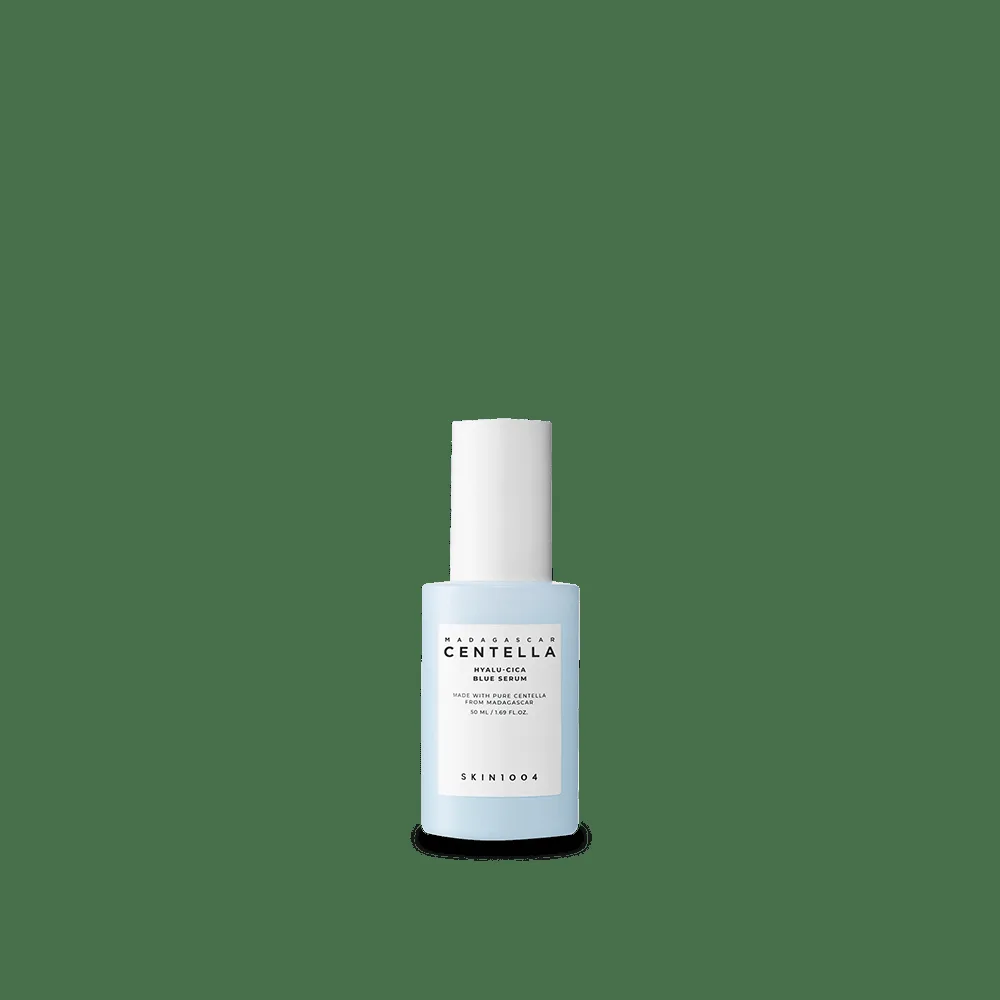 Budget Hydration Holy Grail
 Hyalu-Cica Blue Serum
A quietly excellent budget serum that stacks Centella asiatica leaf water, five types of hyaluronic acid, niacinamide, ceramide NP, and adenosine into a fragrance-free under-$20 bottle. It is genuinely one of the best hydration-plus-soothing serums at any price, and the fact that it costs less than a salad in Manhattan is the point.
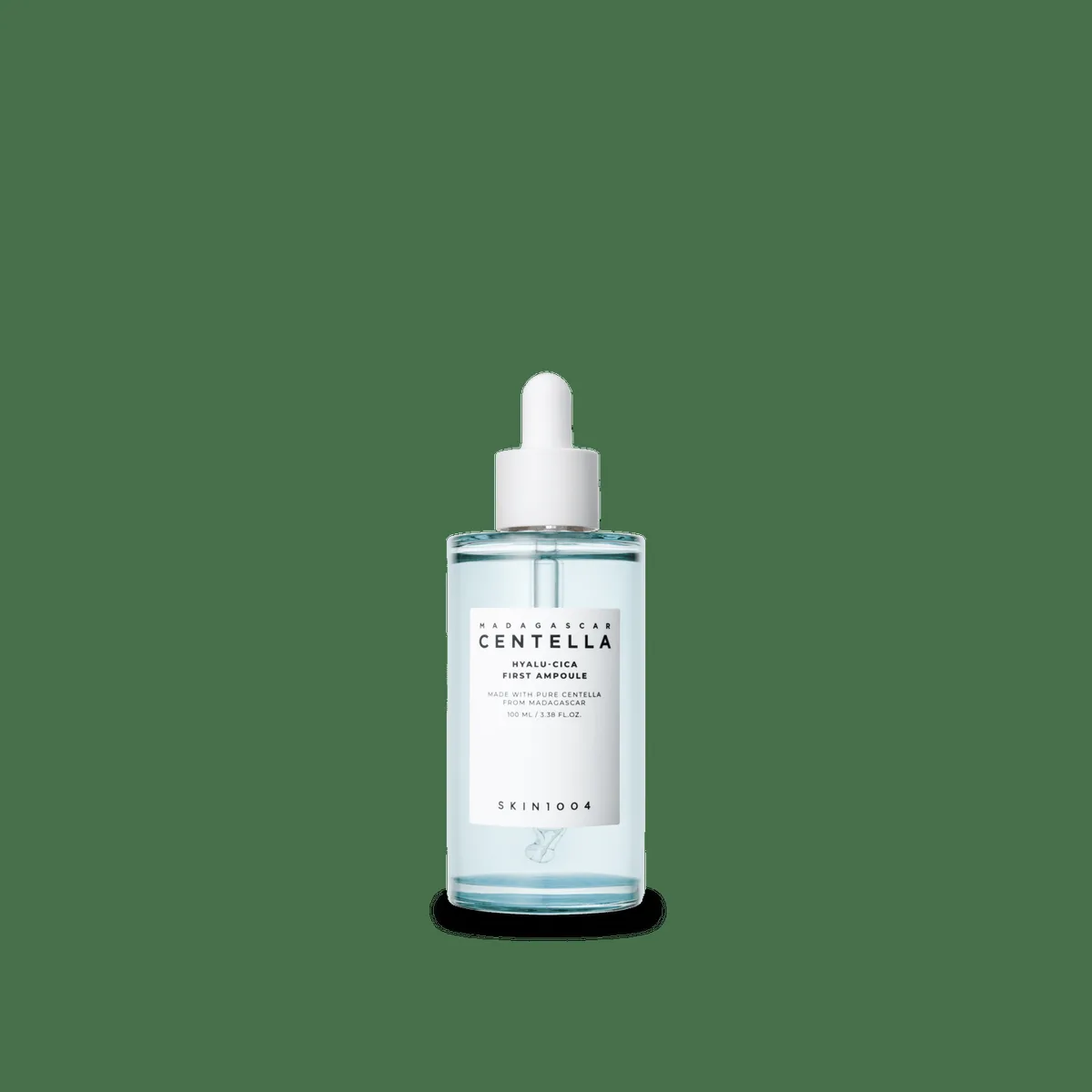 Sensitive Skin First-Line Defense
 Hyalu-Cica First Ampoule
A 92% Centella asiatica extract ampoule paired with niacinamide and a multi-weight HA complex, fragrance-free and purpose-built for sensitive, compromised, and reactive skin. At $25 for 100ml, it is one of the most justifiable skincare purchases a budget-conscious buyer can make, and it earns a place in almost any routine that needs a soothing anchor.
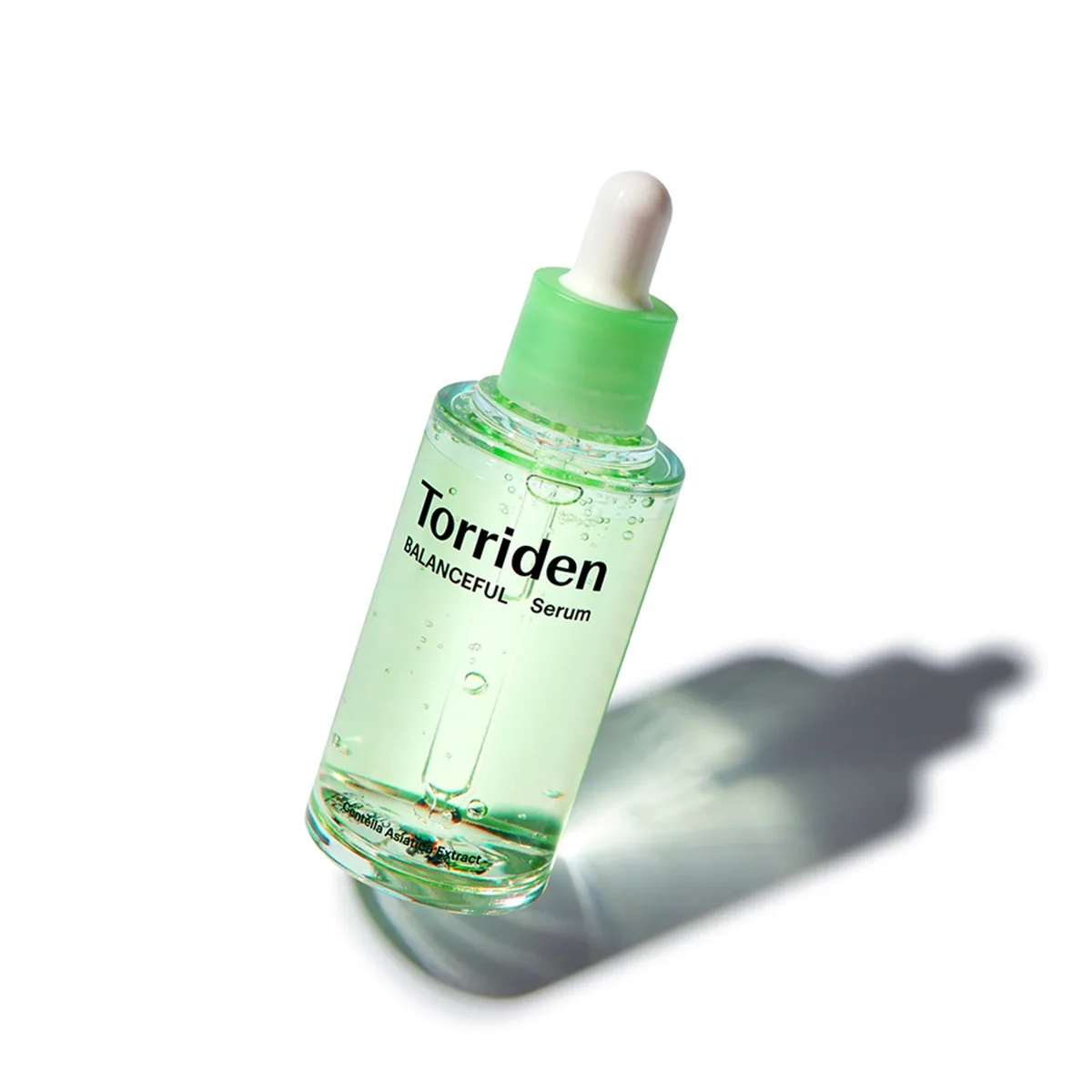 Sensitive Skin MVP
 Balanceful Cica Serum
Torriden's Balanceful Cica Serum is one of the most recommendable calming serums in K-beauty — a genuinely fragrance-free, multi-weight hyaluronic acid and 5D cica complex treatment that quietly reduces redness, supports the barrier, and buffers other actives without drama. At under $25 it's a near-automatic pick for sensitive, rosacea-prone, and barrier-compromised skin.