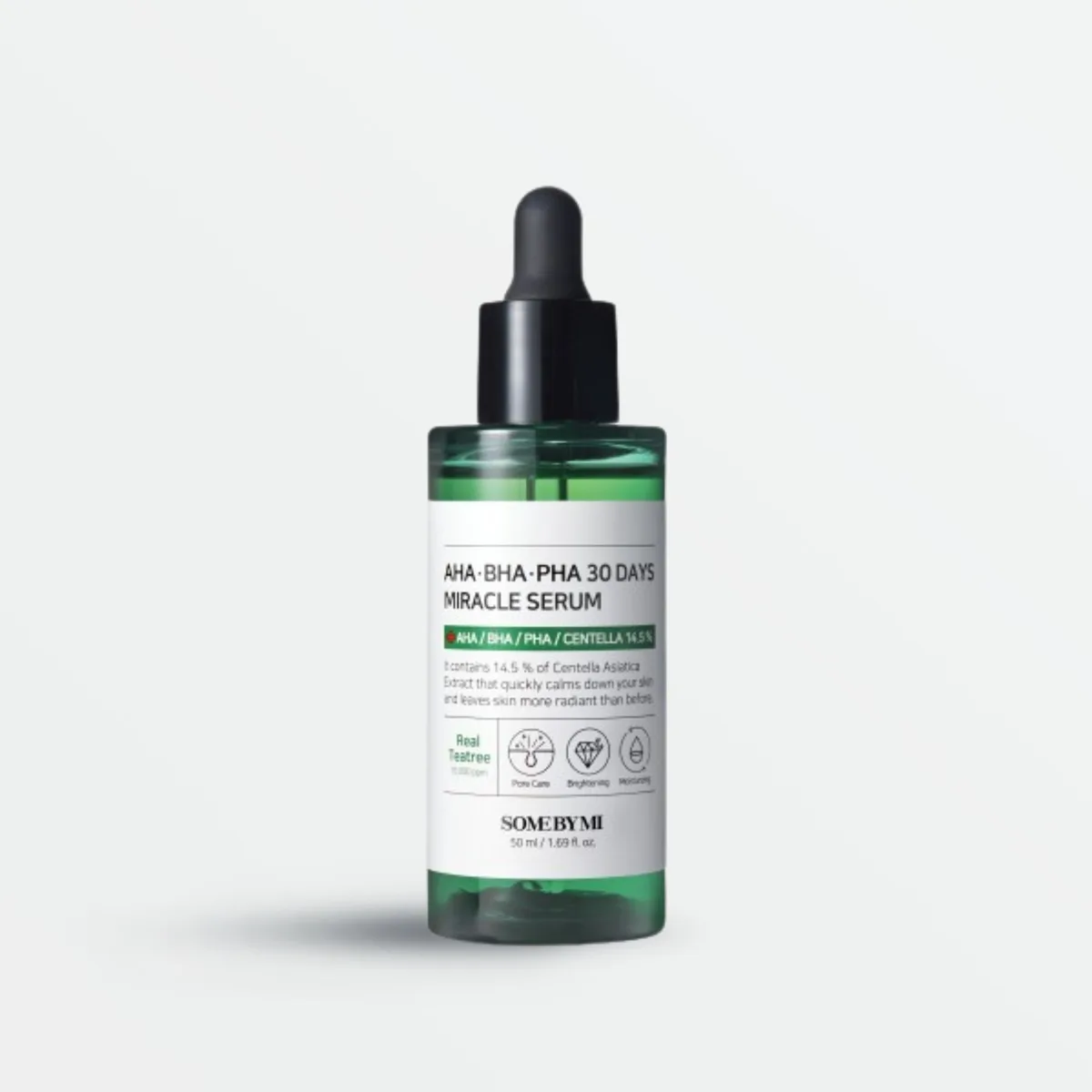
A soothing centella oil-serum disguised in triple-acid marketing clothing. The 14.51% centella content is real, but the AHA/BHA/PHA at parts-per-billion concentrations are cosmetic theater. Solid for nourishing and calming, but not the exfoliating treatment the name implies.
AHA BHA PHA 30 Days Miracle Serum
A soothing centella oil-serum disguised in triple-acid marketing clothing. The 14.51% centella content is real, but the AHA/BHA/PHA at parts-per-billion concentrations are cosmetic theater. Solid for nourishing and calming, but not the exfoliating treatment the name implies.
Score Breakdown
Where this product gains points and where it loses them — broken down across the four scoring pillars.
The centella content is genuine, but the AHA/BHA/PHA concentrations are negligible (ppb levels), the formula contains alcohol, and multiple essential/citrus oils add irritation risk without therapeutic benefit.
Pros & Cons
- ✓Disclosed 14.51% centella asiatica extract provides genuine soothing and anti-inflammatory benefits
- ✓Nourishing oil-serum base with rosehip, camellia, and rice bran oils softens and conditions skin
- ✓Tea tree water at 1% adds mild antimicrobial support for acne-prone skin
- ✓Niacinamide contributes brightening and barrier-strengthening effects
- ✓Rich botanical extract list includes genuinely interesting actives like baicalin and resveratrol sources
- ✓Reasonable price at $20 for a multi-botanical serum with disclosed active concentrations
- ✗AHA/BHA/PHA concentrations are negligible (parts per billion) — misleading for consumers expecting exfoliation
- ✗Contains alcohol which can irritate and compromise the barrier centella is trying to repair
- ✗Multiple essential and citrus oils add fragrance but increase sensitization risk
- ✗Olive oil and almond oil are moderately comedogenic for acne-prone skin
- ✗Oil-rich texture may feel too heavy or dewy for oily skin types
Full Review
Let us talk about the elephant in the dropper bottle. Some By Mi's Miracle Serum lists six different AHAs, a BHA source, and a PHA on its ingredient list. It even helpfully notes the concentrations: glycolic acid at 3000ppb, lactic acid at 3000ppb, malic acid at 3000ppb, citric acid at 7500ppb, lactobionic acid at 100ppm. If those numbers sound impressively precise, there is a reason they are listed in parts per billion rather than percentages. To put it plainly: 3000ppb is 0.0003%. An effective glycolic acid product typically contains 5-30%. The gap between those numbers is not a rounding error — it is a canyon.
This matters because the entire 30 Days Miracle line sells itself on the triple-acid premise, and this serum carries the same AHA-BHA-PHA banner across its packaging. A consumer scanning the shelf sees three types of exfoliating acids and reasonably expects an exfoliating serum. What they actually get is a centella oil-serum with trace amounts of acids that function as pH adjusters, not exfoliants.
Now, here is the twist: once you recalibrate your expectations, this is actually a decent product for what it really is.
The formula's genuine strength is its centella asiatica content at a disclosed 14.51%. That is a meaningful concentration for a soothing botanical, and centella's anti-inflammatory credentials are well-documented. Combined with tea tree leaf water at 10,000ppm (1%), niacinamide, licorice root extract, and chamomile extract, this serum has a legitimate soothing and calming profile. If you have irritated, post-breakout skin that needs comforting rather than exfoliating, the centella and botanical blend can genuinely help.
The base is an oil-serum format — caprylic/capric triglyceride and cetyl ethylhexanoate lead the ingredient list, followed by olive oil. This gives the product a lightweight, golden-tinted slip that absorbs into a dewy finish. It feels nourishing without being heavy, though truly oily skin types may find the oil base adds more dewiness than they want. The inclusion of rosehip oil, rice bran oil, and camellia seed oil adds to the emollient profile, creating a product that is genuinely good at softening and conditioning skin.
The botanical extract list is extensive and includes some interesting choices: Scutellaria baicalensis (baicalin) for antioxidant protection, polygonum cuspidatum (a resveratrol source), and houttuynia cordata, a traditional East Asian medicinal herb with anti-inflammatory properties. These are not filler ingredients — they reflect a K-beauty formulation philosophy that values layered botanical synergy.
But the formula has real drawbacks beyond the misleading acid claims. Alcohol appears in the middle of the ingredient list — not a devastating concentration, but present enough to contribute to potential irritation and barrier disruption, which is counterproductive in a product containing centella for barrier support. Multiple essential oils (grapefruit peel, orange peel, geranium, frankincense) add fragrance but also sensitization risk. For a serum that positions itself as suitable for problem skin, the fragrance load is heavier than it should be.
The comedogenic potential is also worth flagging. Olive oil and almond oil both have moderate comedogenic ratings, and their presence in a serum marketed for acne-prone skin is a questionable choice. Some users will tolerate them fine; others may find they contribute to new congestion.
The texture experience is genuinely pleasant. The dropper dispenses a golden, slightly viscous liquid that warms between fingertips and spreads into a thin, glowy layer. The herbal-citrus scent is noticeable — if you enjoy botanical fragrances, you will find it spa-like; if you prefer unscented products, it will be too much. Absorption takes two to three minutes, and the finish is dewy rather than matte. Under a final moisturizer, it creates a nourishing nighttime layer that leaves skin looking plumped and calm by morning.
At around $20 for 50ml, the price is reasonable for a centella-focused oil-serum with a dense botanical ingredient list. You are getting real centella content, genuine tea tree water, niacinamide, and a nourishing oil base. The value is there — it is just not the value the packaging advertises.
The honest recommendation: treat this as a soothing, nourishing centella serum and it delivers. Treat it as an exfoliating triple-acid treatment and you will be disappointed. The gap between those two products is entirely one of marketing, not of actual quality. If you are using the Miracle toner and cream (which contain more meaningful acid levels), this serum fills the routine as the calming, nourishing layer between them — and that is a perfectly good role for a serum to play.
Formula
Key Ingredients
The hero actives that drive this product's performance.
| Ingredient | Function | Evidence |
|---|---|---|
| Centella Asiatica Extract (14.51%) (14.51%) | Present at a disclosed 14.51% concentration, this is the primary soothing and anti-inflammatory agent in the serum. In this oil-based vehicle, the centella extract provides sustained delivery of triterpenes to calm irritation from the multi-acid blend and support barrier function between the emollient oils. | well-established |
| Tea Tree Leaf Water (10,000ppm) | At 10,000ppm (1%), provides antimicrobial activity against acne-causing bacteria. In this oil-rich serum format, the tea tree water creates an aqueous antimicrobial layer that complements the lipophilic oils, addressing both surface bacteria and providing a light astringent effect. | promising |
| Niacinamide | Contributes sebum regulation and brightening in this multi-active serum, working alongside the centella to reduce post-inflammatory hyperpigmentation. Helps strengthen the barrier against the low-level acid exfoliation present in the formula. | well-established |
| Multi-AHA Blend (Glycolic, Lactic, Malic, Citric, Pyruvic, Tartaric Acid) | A cocktail of six different AHAs present at trace concentrations (ppb to low ppm levels). While this diverse acid blend technically provides multi-angle surface exfoliation, the concentrations are so low that meaningful chemical exfoliation is unlikely — these function more as pH adjusters and mild skin-conditioning agents in this oil-serum format. | well-established |
| Lactobionic Acid (100ppm) | The PHA representative at a very modest 100ppm concentration. At this level, it functions primarily as a humectant and antioxidant rather than an active exfoliant, adding hydration support to the oil-heavy base. | promising |
Full INCI List
Caprylic/Capric Triglyceride, Cetyl Ethylhexanoate, Centella Asiatica Extract, Purified Water, Olea Europaea Fruit Oil, Glycerin, Propanediol, Butylene Glycol, Alcohol, 1,2-Hexanediol, Melaleuca Alternifolia Leaf Water, Niacinamide, Camellia Sinensis Leaf Extract, Scutellaria Baicalensis Root Extract, Polygonum Cuspidatum Root Extract, Glycyrrhiza Glabra Root Extract, Chamomilla Recutita Flower Extract, Rosmarinus Officinalis Leaf Extract, Citric Acid, Sodium Lactate, Sodium PCA, Glycolic Acid, Lactic Acid, Malic Acid, Pyruvic Acid, Tartaric Acid, Gaultheria Procumbens Leaf Extract, Lactobionic Acid, Vaccinium Macrocarpon Fruit Extract, Lavandula Angustifolia Extract, Ocimum Basilicum Leaf Extract, Syringa Vulgaris Extract, Houttuynia Cordata Extract, Angelica Keiskei Extract, Althaea Officinalis Root Extract, Rosmarinus Officinalis Extract, Madecassoside, Camellia Oleifera Seed Oil, Oryza Sativa Bran Oil, Camellia Sinensis Seed Oil, Rosa Canina Fruit Oil, Prunus Amygdalus Dulcis Oil, Limnanthes Alba Seed Oil, Sodium Chloride, Curcuma Longa Root Extract, Citrus Paradisi Peel Oil, Citrus Aurantium Dulcis Peel Oil, Melia Azadirachta Leaf Extract, Melia Azadirachta Flower Extract, Melia Azadirachta Bark Extract, Pearl Powder, Xanthan Gum, Pentylene Glycol, Moringa Oleifera Seed Oil, Ocimum Sanctum Leaf Extract, Ocimum Basilicum Flower/Leaf Extract, Pelargonium Graveolens Flower Oil, Frankincense Oil, Amyris Balsamifera Bark Oil, Disodium EDTA, Caprylyl Glycol, Ethylhexylglycerin
Product Flags
✗ Fragrance Free✗ Alcohol Free✗ Oil Free✓ Silicone Free✓ Paraben Free✓ Sulfate Free✗ Cruelty Free✗ Vegan✗ Fungal Acne Safe
Comedogenic Ingredients
Olea Europaea Fruit OilPrunus Amygdalus Dulcis Oil
Potential Irritants
AlcoholCitrus Paradisi Peel OilCitrus Aurantium Dulcis Peel OilPelargonium Graveolens Flower Oil
Common Allergens
Citrus Paradisi Peel OilCitrus Aurantium Dulcis Peel OilPelargonium Graveolens Flower OilFrankincense Oil
Compatibility
Skin Match
Best For
Works For
Not Ideal For
Addresses These Conditions
acne dullness texture dark spots
Use With Caution
Avoid With
eczema rosacea fungal acne compromised skin barrier
Routine Step
serum
Time of Day
PM
Pregnancy Safe
Unknown
Layering Tips
Apply after toner and before moisturizer. Due to the oil-rich base, this serum is best suited for evening use. A small amount goes a long way — start with 2-3 drops. The oily texture may not layer well under water-based products, so apply it as your last treatment step before a final moisturizer.
Results Timeline
Immediate skin-softening and glow from the oil base. Within 1-2 weeks, skin texture may feel smoother and more even-toned. For acne and dark spot reduction, expect 4-8 weeks of consistent nightly use, though results depend heavily on the severity of concerns.
Pairs Well With
Lightweight water-based tonersSimple barrier moisturizersSunscreen (next morning)
Conflicts With
Other leave-on acid serumsPrescription retinoids
Sample AM Routine
- Gentle cleanser
- Hydrating toner
- Moisturizer
- Sunscreen
Sample PM Routine
- Oil cleanser
- Gentle cleanser
- Hydrating toner
- Some By Mi AHA BHA PHA 30 Days Miracle Serum
- Moisturizer
Evidence
Who Should Skip
- AHA/BHA/PHA concentrations are negligible (parts per billion) — misleading for consumers expecting exfoliation
- Contains alcohol which can irritate and compromise the barrier centella is trying to repair
- Multiple essential and citrus oils add fragrance but increase sensitization risk
- Olive oil and almond oil are moderately comedogenic for acne-prone skin
Science & Expert Perspective
The Science
The most scientifically defensible claim in this serum is its centella asiatica content. At a disclosed 14.51%, the centella extract is present at a concentration where its anti-inflammatory and barrier-supporting properties can realistically contribute to skin improvement. Research has consistently demonstrated that centella's key triterpenes — asiaticoside, madecassoside, asiatic acid, and madecassic acid — promote collagen synthesis, inhibit inflammatory mediators, and accelerate wound healing.
The multi-AHA blend, however, deserves scrutiny. Effective alpha hydroxy acid exfoliation typically requires concentrations of 5-15% at a pH of 3-4. This serum's glycolic acid at 3000ppb (0.0003%) is approximately 17,000 to 50,000 times below the threshold for clinically meaningful exfoliation. At these concentrations, the acids function as buffering agents and minor humectants rather than exfoliants.
Tea tree (Melaleuca alternifolia) at 10,000ppm (1%) falls below the 5% concentration typically studied for antimicrobial efficacy against Cutibacterium acnes. However, some evidence suggests that even lower concentrations may provide mild antibacterial activity when used consistently, though the effect would be modest compared to therapeutic-strength tea tree formulations.
Niacinamide, while undisclosed in concentration here, has a robust evidence base at 2-5% for sebum reduction, barrier strengthening, and anti-inflammatory effects. Its presence adds a well-supported active to the formula's soothing profile.
Dermatologist Perspective
Dermatologists would note a significant disconnect between this serum's marketing and its formulation reality. Board-certified dermatologists emphasize that the AHA/BHA/PHA concentrations listed are orders of magnitude below therapeutic levels, making the triple-acid claims misleading from a clinical perspective. However, the centella asiatica content at 14.51% is recognized as a meaningful concentration for anti-inflammatory and barrier-support purposes. Dermatologists commonly recommend centella-based products for post-procedure recovery and irritated skin. The presence of alcohol and multiple essential oils would concern dermatologists treating patients with sensitive or reactive skin, as these ingredients can undermine the soothing benefits of the centella complex.
Guidance
Usage Guide
How to Use
Dispense 2-3 drops onto clean fingertips after toning. Gently press into the face and neck, avoiding the eye area. Best used in the evening due to the oil-rich texture. Allow 2-3 minutes for absorption before applying moisturizer. If using within the full 30 Days Miracle line, apply after the toner and before the cream. Start with every-other-night use for the first week to ensure your skin tolerates the botanical blend and essential oils.
Value Assessment
At approximately $20 for 50ml, this serum offers fair value when assessed as a centella oil-serum — not as an exfoliating treatment. The disclosed 14.51% centella content, tea tree water, niacinamide, and multiple botanical oils justify the price point. However, if you are buying this specifically for acid exfoliation (as the packaging suggests), the value proposition collapses entirely — you would be paying $20 for acids at homeopathic concentrations. Know what you are actually buying, and the price is reasonable.
Who Should Buy
This serum is best for combination and normal skin types looking for a soothing, nourishing treatment serum with genuine centella content. It works well as a calming step in an otherwise active routine, or for post-breakout skin that needs comforting rather than more exfoliation.
Who Should Skip
Skip this if you are specifically seeking an exfoliating acid serum — the acid concentrations are functionally negligible. Those with fungal acne should avoid the oil-heavy base. Sensitive skin types and anyone reactive to essential oils or citrus should also pass, as the fragrance load from grapefruit, orange, geranium, and frankincense oils is substantial.
Ready to try Some By Mi AHA BHA PHA 30 Days Miracle Serum?
Details
Details
Texture
Lightweight oil-serum with a slightly viscous, golden-tinted consistency that spreads into a dewy finish
Scent
Noticeable herbal and citrus fragrance from the multiple essential oils — grapefruit, orange, geranium, and frankincense notes
Packaging
Green-and-white dropper bottle with the 30 Days Miracle line branding
Finish
dewyglowylightweight
What to Expect on First Use
Applies with a noticeable oily slip and mild herbal scent. The oil-serum texture absorbs within a few minutes but leaves a dewy residue. No significant tingling or acid sensation, which is consistent with the trace-level acid concentrations. Most users find the texture pleasant; those expecting acid-level exfoliation from the name may be surprised by the mild, oil-forward experience.
How Long It Lasts
2-3 months with nightly use (2-3 drops per application)
Period After Opening
12 months
Best Season
fall winter
Background
The Why
Launched as part of the original 30 Days Miracle line around 2018, the serum was designed to be the treatment step between the toner and cream. While the line's other products deliver more meaningful acid concentrations, this serum pivots toward soothing and nourishing — a choice that makes sense given that users applying the toner and cream are likely getting sufficient acid exposure from those steps.
About Some By Mi Established Brand (5–20 years)
Some By Mi was founded in South Korea in 2016 and quickly became a K-beauty staple, exported to over 20 countries. The brand's 30 Days Miracle line, built around its proprietary Truecica formula, has accumulated thousands of reviews globally, though it relies more on consumer validation than peer-reviewed clinical research.
Brand founded: 2016 · Product launched: 2018
Myth vs. Reality
Myths & Misconceptions
Myth
This serum provides meaningful AHA, BHA, and PHA exfoliation
Reality
The acid concentrations are listed in parts per billion (ppb) and parts per million (ppm), which are orders of magnitude below typical exfoliating concentrations. For reference, effective glycolic acid products typically contain 5-30%, while this serum's glycolic acid is at 3000ppb (0.0003%). The acids here function as pH adjusters and minor skin-conditioning agents, not as active exfoliants.
Myth
Oil-based serums clog pores and worsen acne
Reality
Not all oils are comedogenic. The caprylic/capric triglyceride base in this serum is generally well-tolerated. However, this formula also contains olive oil and almond oil, which have moderate comedogenic potential. Acne-prone users should patch test before committing to daily use.
FAQ
Frequently Asked Questions
Does the Some By Mi Miracle Serum actually exfoliate?
Despite the AHA, BHA, and PHA in the name, the acid concentrations are measured in parts per billion — far below the threshold for meaningful chemical exfoliation. This serum functions primarily as a soothing centella oil-serum, not as an exfoliating treatment. If you need active exfoliation, look for products with acids at percentage-level concentrations.
Is this serum good for oily skin?
The oil-rich base (caprylic/capric triglyceride, olive oil, multiple seed oils) may feel too heavy for very oily skin. Combination skin and normal skin types that lean oily will likely tolerate it better, especially when used at night. If you have oily skin and prefer lightweight textures, the Miracle Toner may be a better choice from this line.
Can I use this serum with other acids?
Yes — since the acid concentrations in this serum are negligible, there is no real risk of over-exfoliation from combining it with other acid products. The main consideration is whether the oil-rich base layers well with your other serums. Apply water-based treatments first, then this oil-serum on top.
Why does this serum contain alcohol?
Alcohol (denatured alcohol) is used as a solvent to help dissolve and stabilize the botanical extracts and essential oils in the formula. While it helps with texture and absorption, it can be drying and irritating for sensitive skin. The concentration appears moderate based on its mid-list placement.
Is the Some By Mi Miracle Serum safe during pregnancy?
Consult your healthcare provider. While the acid concentrations are negligible, the serum contains multiple essential oils (citrus, geranium, frankincense) that some practitioners advise avoiding during pregnancy. The salicylic acid source (wintergreen extract) is also at trace levels but may warrant discussion with your doctor.
Community
Community Voices
Common Praise
"Gives skin a healthy, dewy glow"
"Centella content helps calm irritated skin"
"Pleasant herbal scent for those who enjoy botanical fragrances"
"Good value for a multi-ingredient serum"
Common Complaints
"Oily texture can feel heavy on oily skin"
"Acid concentrations are too low to provide real exfoliation"
"Contains alcohol which is counterproductive for acne-prone skin"
"Strong fragrance from essential oils bothers sensitive users"
Notable Endorsements
Popular in K-beauty starter routinesFrequently recommended in Asian skincare communities
Appears In
best centella serum best k beauty serum best serum for acne best soothing serum
Related Conditions
acne dullness texture dark spots sensitivity
Related Ingredients
centella asiatica tea tree niacinamide glycolic acid lactobionic acid
You Might Also Like
 Sensitive Skin Soother
 Polyphenols In Propolis 15% Ampoule
A 15% propolis ampoule that earns its name with a real polyphenol stack — French Auvergne propolis layered over a houttuynia cordata base, with tulsi and pomegranate piling on. It's slightly sticky and not cheap by volume, but for sensitive, breakout-prone skin chasing calm, this is one of the most reliable K-beauty soothers in production.
 Budget Brightening Hero
 Chlorophyll Discoloration Serum
A quietly brilliant brightening serum that proves you do not need luxury prices or harsh actives to fade dark spots effectively. The alpha-arbutin and licorice root combination delivers genuine multi-pathway melanin inhibition, the sensitive-skin-friendly formula is impeccable, and $20 makes it accessible to virtually everyone. The chlorophyllin is more marketing differentiator than scientific powerhouse, but it does not hurt anything either.
 The People's HA Serum
 Revitalift Derm Intensives 1.5% Pure Hyaluronic Acid Serum
A masterclass in minimalist formulation — thirteen ingredients, no filler, four functional actives, and over thirty thousand glowing reviews. L'Oréal's multi-weight HA system delivers genuine hydration at every level of the skin, and the fragrance-free, alcohol-free formula is clean enough for virtually anyone. The drugstore serum that embarrasses its prestige competitors.
 Budget Hydration Holy Grail
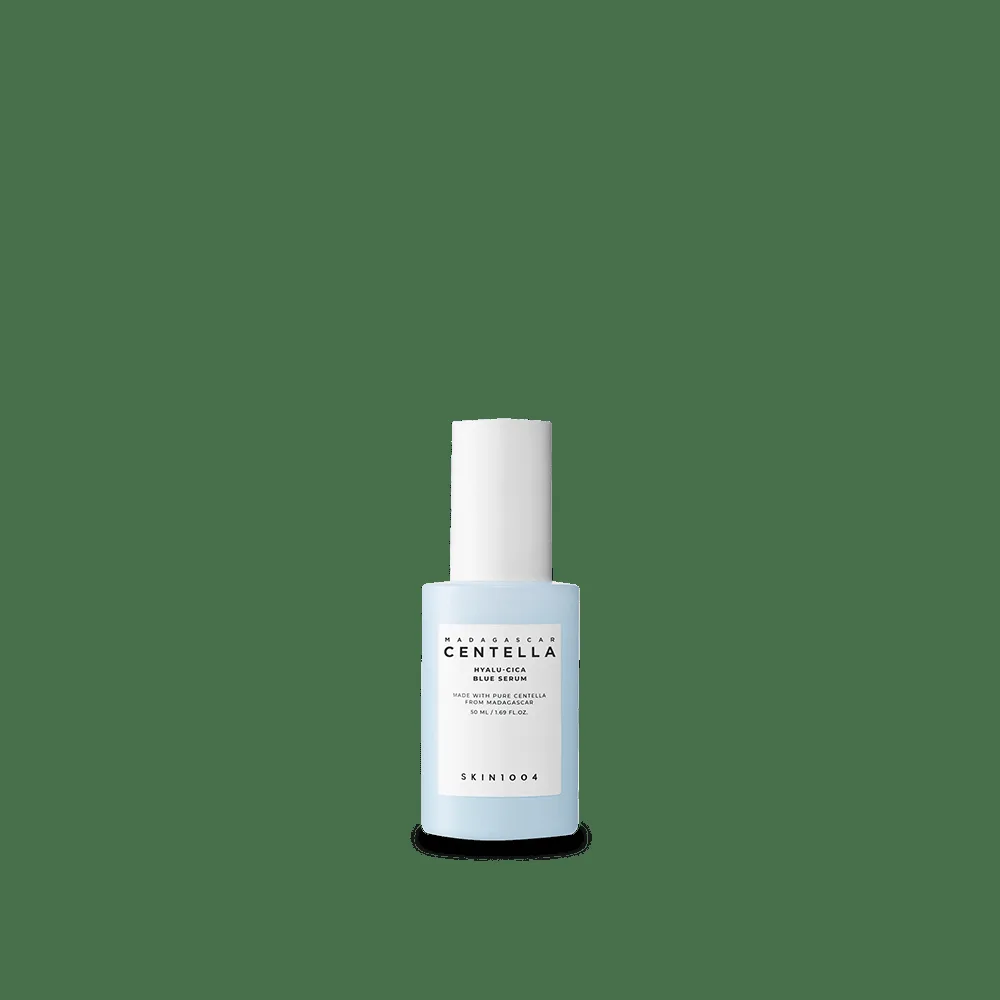
 Hyalu-Cica Blue Serum
A quietly excellent budget serum that stacks Centella asiatica leaf water, five types of hyaluronic acid, niacinamide, ceramide NP, and adenosine into a fragrance-free under-$20 bottle. It is genuinely one of the best hydration-plus-soothing serums at any price, and the fact that it costs less than a salad in Manhattan is the point.
 Sensitive Skin First-Line Defense
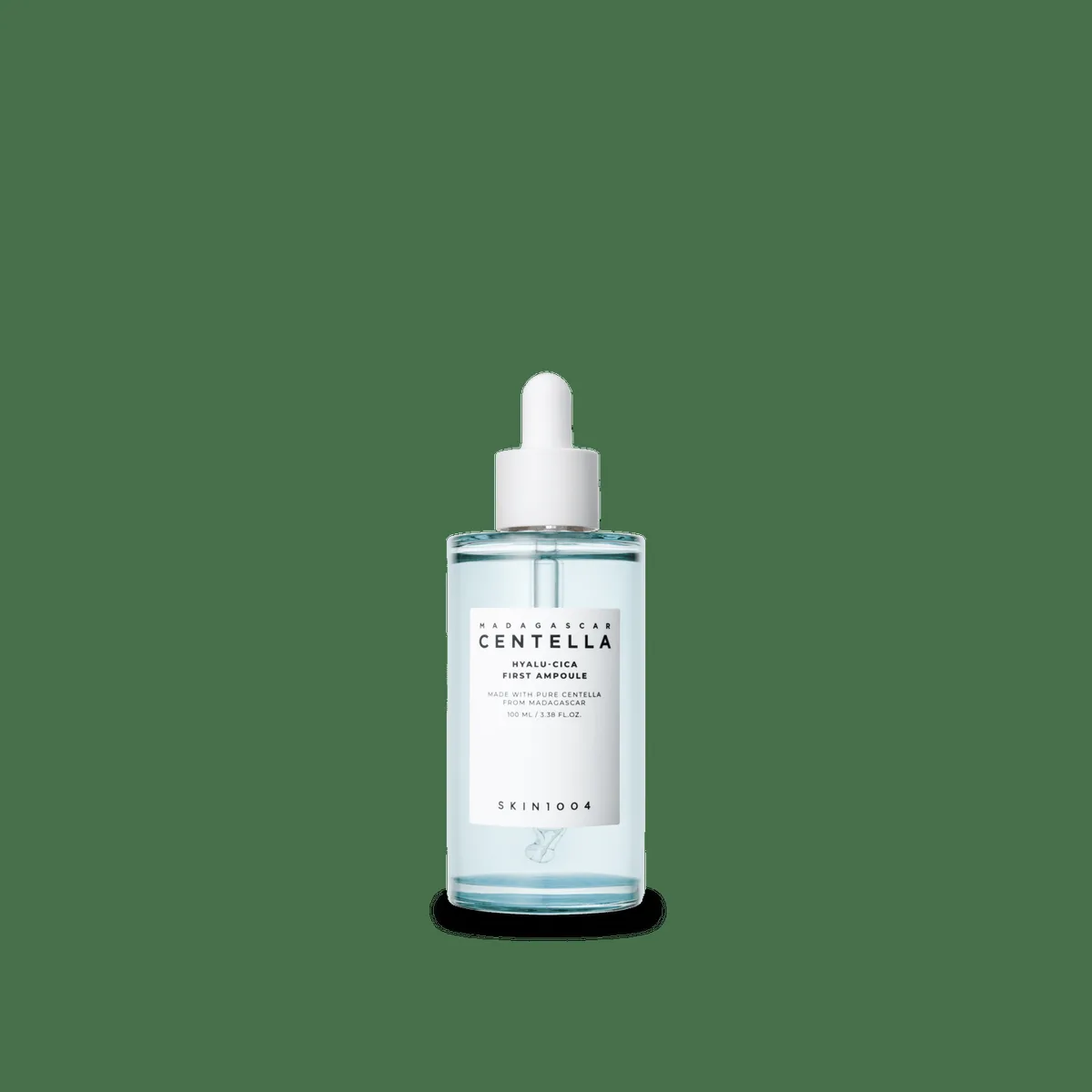
 Hyalu-Cica First Ampoule
A 92% Centella asiatica extract ampoule paired with niacinamide and a multi-weight HA complex, fragrance-free and purpose-built for sensitive, compromised, and reactive skin. At $25 for 100ml, it is one of the most justifiable skincare purchases a budget-conscious buyer can make, and it earns a place in almost any routine that needs a soothing anchor.
 Sensitive Skin MVP
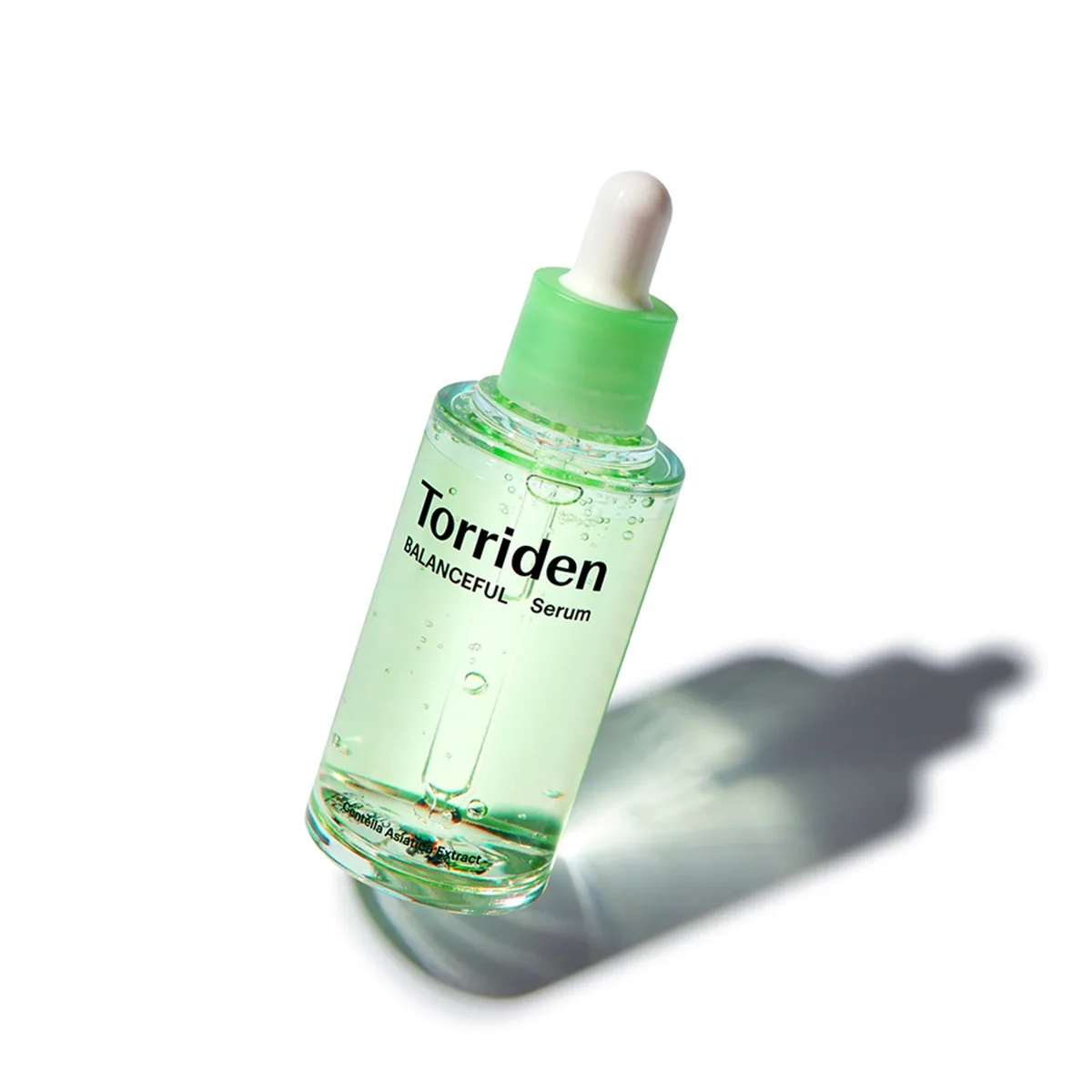
 Balanceful Cica Serum
Torriden's Balanceful Cica Serum is one of the most recommendable calming serums in K-beauty — a genuinely fragrance-free, multi-weight hyaluronic acid and 5D cica complex treatment that quietly reduces redness, supports the barrier, and buffers other actives without drama. At under $25 it's a near-automatic pick for sensitive, rosacea-prone, and barrier-compromised skin.
This review reflects our independent analysis of publicly available ingredient data, manufacturer claims, and verified user reviews. We are reader-supported — Amazon links may earn us a commission at no cost to you. We do not accept paid placements; rankings are based solely on the evidence.