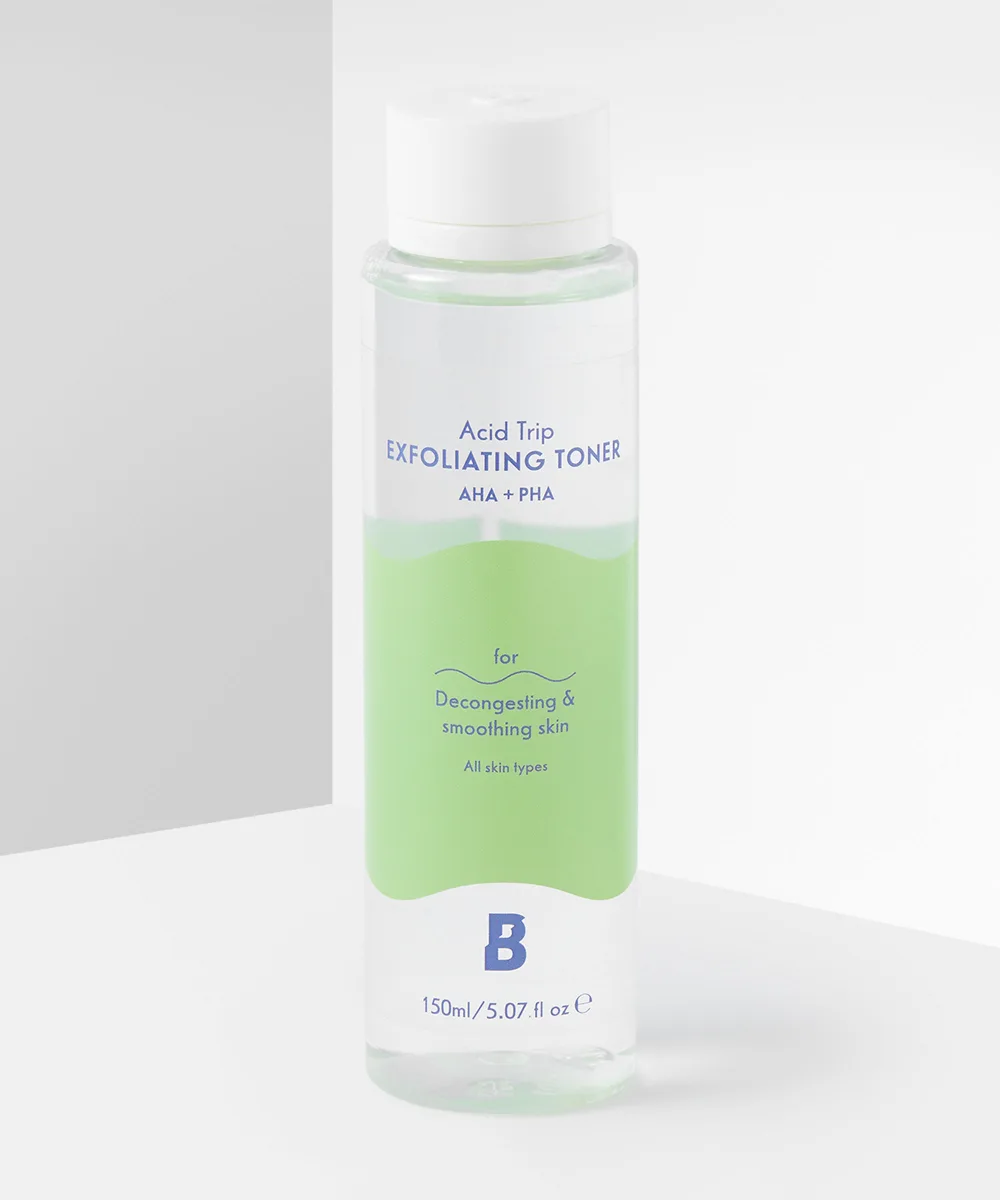
One of the best budget daily-use exfoliating toners on the UK indie shelf, thanks to the unusual-at-this-price choice to stack glycolic with gluconolactone PHA. At $14 for 200ml, it undercuts nearly every cult competitor while delivering a layered acid profile most single-acid toners can't match.
5% Glycolic Acid + 1% PHA Toner (Acid Trip)
One of the best budget daily-use exfoliating toners on the UK indie shelf, thanks to the unusual-at-this-price choice to stack glycolic with gluconolactone PHA. At $14 for 200ml, it undercuts nearly every cult competitor while delivering a layered acid profile most single-acid toners can't match.
Score Breakdown
Where this product gains points and where it loses them — broken down across the four scoring pillars.
A well-balanced AHA plus PHA toner at a genuinely cheap price point, with the daily-use-friendly concentration and layered acid profile earning most of its points through value and tolerability.
Pros & Cons
- ✓5% glycolic plus 1% gluconolactone PHA is unusual at this price
- ✓Gentle enough for 4-5 nights per week of use
- ✓200ml bottle delivers excellent per-ounce value
- ✓Water-thin texture absorbs instantly with no residue
- ✓Allantoin and fruit antioxidants soften post-exfoliation feel
- ✓Visible brightness and pore refinement within the first month
- ✗Plastic bottle feels cheap compared to premium competitors
- ✗Shipping outside the UK raises total cost meaningfully
- ✗Not suitable for rosacea, eczema or compromised barriers
- ✗Mild citrus scent is polarizing for fragrance-averse users
- ✗Lacks the supporting actives (niacinamide, peptides) of mid-tier competitors
Full Review
Pixi Glow Tonic is the product that built the daily-glycolic-toner category. Before Pixi made it culturally normal to wipe an acid across your face every morning, most glycolic products were aggressive treatments designed for once-weekly use. Glow Tonic proved there was a massive audience for a gentler, leave-on, every-day version — and it opened the door for every budget retailer with a formulation team to make their own. Beauty Bay's Acid Trip toner (rebranded in the By BEAUTY BAY line but with the formula unchanged) is a credible take on that format, and it distinguishes itself from the pack with a specific formulation move that most competitors skipped: it adds 1% gluconolactone PHA on top of the 5% glycolic and a small dose of lactic acid. The decision is quietly smart. Gluconolactone is a poly-hydroxy acid — same basic exfoliating mechanism as AHAs but a larger molecule that penetrates less deeply and causes noticeably less sting. In a daily-use toner, that matters. Most users who bounce off glycolic toners do so because the sting or the creeping dryness becomes unsustainable, and adding a PHA pushes the tolerability ceiling up without losing the core exfoliating benefit. The 5% glycolic does the real resurfacing work; the lactic adds humectant character; the PHA softens the edges. It's the same 'layered acid' logic premium brands like SkinCeuticals and Murad charge four times as much for, reduced to a recognizable budget format. In practice, this toner behaves exactly as the formulation hints. Tip a few drops onto a cotton pad — or, better, dispense into the palm and press onto the face to save product — and it goes on like water, absorbs in 15 seconds, and leaves essentially no sensory trace. No sticky film. No visible tint. A very brief, gentle tingle around the nose and chin for the first minute, which most users barely register. By morning, skin looks slightly more reflective, dullness softens, and the overall tone feels fresher. Over four to six weeks of 4-5 nights weekly use, pore clarity noticeably improves, mild bumpy texture smooths, and post-acne marks start to fade at a reasonable pace. It's not dramatic overnight — no serious daily-use glycolic should be — but it's steady and consistent. The supporting cast beyond the acids is where Beauty Bay has to choose its battles at this price. You get allantoin for soothing, glycerin for humectant hydration, bilberry fruit extract for polyphenol antioxidant activity, plus a small cocktail of fruit extracts that add a mild natural-source AHA contribution. Bitter orange flower water provides the subtle citrus note you can catch if you hold the bottle to your nose. None of this is luxury — you won't find niacinamide or peptides or centella stacked on top — but for $14 you also can't reasonably expect them. What you can expect is a well-balanced AHA/PHA toner that genuinely earns its shelf space. Where this toner loses points isn't formulation — it's presentation and context. The 200ml plastic bottle feels cheap when you're used to Pixi's signature teal design or Paula's Choice's frosted-glass aesthetic. Availability outside the UK can be inconvenient. And the fruit extract cocktail, while pleasant in the bottle, won't be to every fragrance-averse user's taste. But those are trade-offs you accept knowingly when you're shopping at this price tier. For a Western skincare shopper who wants a solid daily glycolic toner and doesn't want to drop $30+ to get one, this is one of the cleanest value picks on the market. It's not trying to be Pixi. It's trying to be cheaper than Pixi while doing slightly more on the formulation side, and on both counts, it succeeds.
Formula
Key Ingredients
The hero actives that drive this product's performance.
| Ingredient | Function | Evidence |
|---|---|---|
| Glycolic Acid (5%) | The primary exfoliant in this toner, at a concentration engineered for daily or near-daily leave-on use. Paired with the lactic acid and gluconolactone for a layered acid profile that targets different depths of the stratum corneum without pushing the irritation ceiling typical of single-acid formulas. | well-established |
| Gluconolactone (PHA) (1%) | A poly-hydroxy acid with a larger molecular structure that exfoliates more gently than glycolic or lactic. Added here specifically to soften the overall feel and lower the risk of sting, making this toner workable for slightly more reactive skin than a pure glycolic formula. | promising |
| Lactic Acid | Contributes both mild exfoliation and humectant activity, which is why this toner doesn't leave skin feeling stripped the way a pure glycolic toner often does. Works alongside the glycolic to distribute exfoliating activity across slightly different pH ranges. | well-established |
| Allantoin & Bilberry Extract | The soothing and antioxidant background that keeps this formula from feeling like a pure acid stack. Allantoin is a well-characterized barrier-soothing ingredient, and the fruit extracts add polyphenol antioxidant support that buffers the post-exfoliation environment. | promising |
Full INCI List · pH 3.8
Aqua (Water), Glycolic Acid, Citrus Aurantium Amara (Bitter Orange) Flower Water, Glycerin, Lactic Acid, Heptyl Glucoside, Gluconolactone, Polysorbate 20, Allantoin, Vaccinium Myrtillus (Bilberry) Fruit Extract, Saccharum Officinarum (Sugar Cane) Extract, Citrus Aurantium Dulcis (Orange) Fruit Extract, Citrus Limon (Lemon) Fruit Extract, Acer Saccharum (Sugar Maple) Extract, Ethylhexylglycerin, Sodium Hydroxide, Phenoxyethanol
Product Flags
✓ Fragrance Free✓ Alcohol Free✓ Oil Free✓ Silicone Free✓ Paraben Free✓ Sulfate Free✓ Cruelty Free✓ Vegan✓ Fungal Acne Safe
Potential Irritants
glycolic acidlactic acidbitter orange extract
Compatibility
Skin Match
Best For
Works For
Not Ideal For
Addresses These Conditions
dullness texture blackheads large pores hyperpigmentation
Use With Caution
rosacea sensitivity compromised skin barrier eczema
Routine Step
treatment
Time of Day
PM
Pregnancy Safe
Yes ✓
Layering Tips
Apply with a cotton pad or clean palm after cleansing, up to 3-5 nights per week. Allow to absorb fully before layering serums. Do not combine with retinoids, vitamin C acids, or other exfoliants the same night when starting.
Results Timeline
Most users notice improved smoothness and brightness within the first week. Pore clarity and texture refinement typically develop over 4-6 weeks of consistent use, with hyperpigmentation fading over 8-12 weeks.
Pairs Well With
hydrating-essenceniacinamide-serumceramide-moisturizer
Conflicts With
retinoidsvitamin-c-acidsother-ahabha-tonersbenzoyl-peroxide
Sample AM Routine
- Gentle cleanser
- Hydrating toner
- Niacinamide serum
- Moisturizer
- SPF
Sample PM Routine
- Cleanser
- Beauty Bay Glycolic Acid Toner 5%
- Hydrating serum
- Moisturizer
Evidence
Who Should Skip
- Plastic bottle feels cheap compared to premium competitors
- Shipping outside the UK raises total cost meaningfully
- Not suitable for rosacea, eczema or compromised barriers
- Mild citrus scent is polarizing for fragrance-averse users
Science & Expert Perspective
The Science
The science behind this toner sits on two well-established pillars — glycolic acid and poly-hydroxy acids — plus a set of supporting ingredients with solid if smaller evidence bases. Glycolic acid has been studied extensively since the 1990s, and its mechanism is among the best-documented in cosmetic chemistry: it loosens corneodesmosome bonds, accelerates desquamation, and reveals newer skin underneath. At 5% and pH around 3.8, the free acid percentage is in the range where regular leave-on use is both effective and reasonably tolerated in non-sensitive skin. Gluconolactone, the PHA here, has been characterized in dermatological research as having similar exfoliating mechanisms to AHAs with a significantly gentler profile due to its larger molecular size and slower penetration. A 2004 review in Cutis compared polyhydroxy acid formulations to traditional glycolic acid and found that PHAs produced comparable photoaging improvements with meaningfully lower rates of stinging and irritation — directly relevant to this toner's layered-acid design. Lactic acid rounds out the AHA phase with better humectant character. The supporting ingredients contribute smaller roles: allantoin has documented barrier-soothing activity, bilberry fruit extract contains anthocyanin antioxidants, and the citrus and sugar extracts add trace natural-source AHAs plus additional polyphenol activity. None of the supporting cast changes the fundamental mechanism, but together they help push the experience away from the strip-and-sting profile of single-acid toners.
References
- Polyhydroxy acids: next generation alpha hydroxy acids — Cutis (2004)
Dermatologist Perspective
Dermatologists commonly recommend AHA/PHA combination toners for patients who want to start or maintain a regular leave-on exfoliation practice without the irritation ceiling of a pure glycolic product. Board-certified dermatologists often describe PHAs as particularly useful for patients with slightly reactive skin or those newly returning to exfoliation after a barrier-repair period, and a 5% glycolic with 1% PHA formulation fits that general profile. Dermatologists typically emphasize that daily SPF use is non-negotiable during any acid routine, that exfoliating toners should not be combined with retinoids or vitamin C in the same evening, and that users should always follow up with a barrier-supportive moisturizer to offset the minor transepidermal water loss that comes with regular acid use.
Guidance
Usage Guide
How to Use
Apply in the evening after cleansing on fully dry skin. Dispense a small amount onto a cotton pad and sweep across the face, or press 4-5 drops into the palm and pat onto the skin to save product. Avoid the immediate eye area and lip line. Allow to absorb completely — roughly 30-60 seconds — before layering hydrating serums, niacinamide, or a ceramide moisturizer. Start at 3 nights per week and build to 4-5 as tolerated. Do not combine with retinoids, vitamin C acids or other exfoliants in the same routine. Daily broad-spectrum SPF 30+ is mandatory during use and for one week after stopping.
Value Assessment
At $14 for 200ml — roughly $2 per ounce — this is one of the best-value daily glycolic toners in the entire category. Pixi Glow Tonic runs $15 for 100ml, The Ordinary Glycolic Acid 7% runs about $10 for 240ml (but without the PHA addition), and Paula's Choice 8% AHA Gel costs $32 for 100ml. Beauty Bay undercuts Pixi's per-ounce pricing while offering a more layered acid profile and undercuts Paula's Choice dramatically. The only meaningful competitor at a lower cost is The Ordinary's glycolic toner, which trades the PHA buffer for a slightly simpler formula. For users who specifically want the PHA softening at a budget price, the math on this Beauty Bay toner is essentially unbeatable.
Who Should Buy
Normal, combination and oily skin looking for a budget-friendly daily-use AHA toner with better tolerability than a pure glycolic product. Also a strong pick for Pixi Glow Tonic fans who want a cheaper per-ounce option and PHA users who find most budget toners too harsh.
Who Should Skip
Sensitive, rosacea-prone, eczema-prone or compromised skin — even a well-balanced 5% glycolic is too active for those categories. Shoppers outside the UK who'd pay high shipping costs may find better value in locally-available equivalents like The Inkey List or The Ordinary glycolic toners.
Ready to try Beauty Bay Glycolic Acid Toner 5%?
Details
Details
Texture
Watery liquid that absorbs almost immediately with no film or tackiness.
Scent
Faint citrus from the bitter orange and fruit extracts — not perfumed.
Packaging
200ml plastic bottle with a screw cap. Not the most premium feel but the larger size offers real value.
Finish
invisiblenon-greasy
What to Expect on First Use
First application produces a mild, brief tingle that most users barely notice — softer than a pure glycolic toner. Skin typically looks slightly more luminous by the next morning. Very few users experience visible purging with this concentration.
How Long It Lasts
3-4 months with 4-5 nights per week of use.
Period After Opening
6 months
Best Season
fall winter
Certifications
vegancruelty-free
Background
The Why
Beauty Bay launched 'Acid Trip' as one of the anchor products in its first major skincare rollout, explicitly positioning it against Pixi Glow Tonic and The Ordinary Glycolic Acid 7% as a daily-use leave-on exfoliant. The PHA addition was the differentiator the brand used to justify its existence in an already-crowded category, and the toner was later rebranded as part of the core By BEAUTY BAY lineup without any formula change.
About Beauty Bay Emerging Brand (2–5 years)
Beauty Bay launched its own skincare line under the 'By BEAUTY BAY' and 'SkinHit' banners around 2019-2020, leveraging two decades of experience as a UK beauty retailer. The brand's skincare team is not dermatologist-led, and the line is positioned as affordable indie formulas aimed at the same audience that shops The Ordinary and The Inkey List.
Brand founded: 1999 · Product launched: 2020
Myth vs. Reality
Myths & Misconceptions
Myth
PHAs don't actually exfoliate as well as AHAs.
Reality
PHAs exfoliate via the same corneocyte-loosening mechanism as AHAs, just more gradually due to their larger molecular size. At 1%, gluconolactone here is a supporting exfoliant, not the main driver — it's the glycolic's job to do the heavy lifting.
Myth
Glycolic acid toners can be used every day with no risk.
Reality
Even a 5% daily-use glycolic can cause barrier compromise if used without adequate moisturization or alongside other actives. Start at 3 nights weekly and build from there.
FAQ
Frequently Asked Questions
How often can I use this toner?
Start with 3 nights per week and build to 4-5 as tolerated. Sensitive skin should stay at 2-3 nights weekly. The PHA addition makes near-daily use more feasible than with a pure glycolic product.
Can I layer this with niacinamide?
Yes. Apply this toner first and allow it to fully absorb, then follow with niacinamide serum. The old myth that niacinamide and acids can't combine has been debunked — they work fine layered, and niacinamide helps support the barrier during acid exfoliation.
Is this stronger than Pixi Glow Tonic?
Yes. Pixi Glow Tonic is 5% glycolic without the added PHA and has a higher pH, which makes it functionally gentler. This Beauty Bay toner is slightly more active at a comparable glycolic percentage because of the pH and the additional lactic and PHA.
Will it sting?
Most users describe only a brief, mild tingle. Freshly cleansed or compromised skin may sting more. If you're in an active barrier-repair phase, pause this toner until your skin is back to baseline.
Does it help with blackheads?
Glycolic acid alone isn't ideal for blackheads — salicylic acid (BHA) is the category that penetrates pore lipids better. This toner can help with surface smoothness and mild congestion, but a dedicated BHA product will be more effective specifically for blackheads.
Can I use it during pregnancy?
Glycolic, lactic and gluconolactone are generally considered pregnancy-compatible at these concentrations. Always confirm with your OB-GYN, as individual pregnancy skincare guidance varies.
How does it compare to The Ordinary Glycolic Acid 7%?
The Ordinary's version is 7% glycolic at a lower pH — technically stronger and stingier. This Beauty Bay toner is slightly more tolerable thanks to the PHA buffer and softer pH, which suits users who want near-daily acid use without the harsher feel of a single-acid product.
Community
Community Voices
Common Praise
"gentle enough for near-daily use"
"visible pore refinement"
"excellent price for 200ml"
"PHA addition reduces stinging"
Common Complaints
"plastic bottle feels cheap"
"shipping outside UK is expensive"
"subtle citrus smell polarizing"
Notable Endorsements
Beauty Bay Edited editorial
Appears In
best budget glycolic toner best aha pha toner best daily exfoliating toner under 15 best uk indie exfoliant
Related Conditions
dullness texture blackheads hyperpigmentation
Related Ingredients
You Might Also Like
 Sensitive Skin AHA Pick
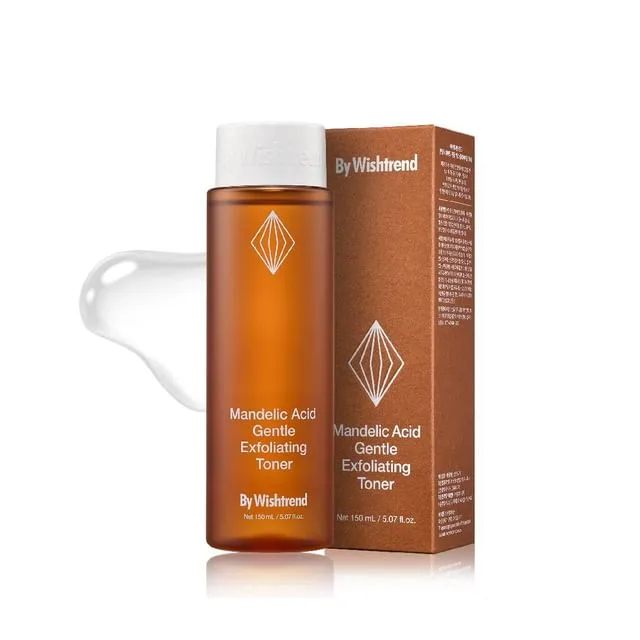
 Mandelic Acid 5% Skin Prep Water
The mandelic acid prep water that quietly converted half of K-beauty Reddit away from glycolic — and for good reason. It delivers visible texture and PIH improvement at 5% without the sting or pigment risk that derails sensitive and darker skin, and it does so for around twenty bucks.
 Gentle Glow Specialist
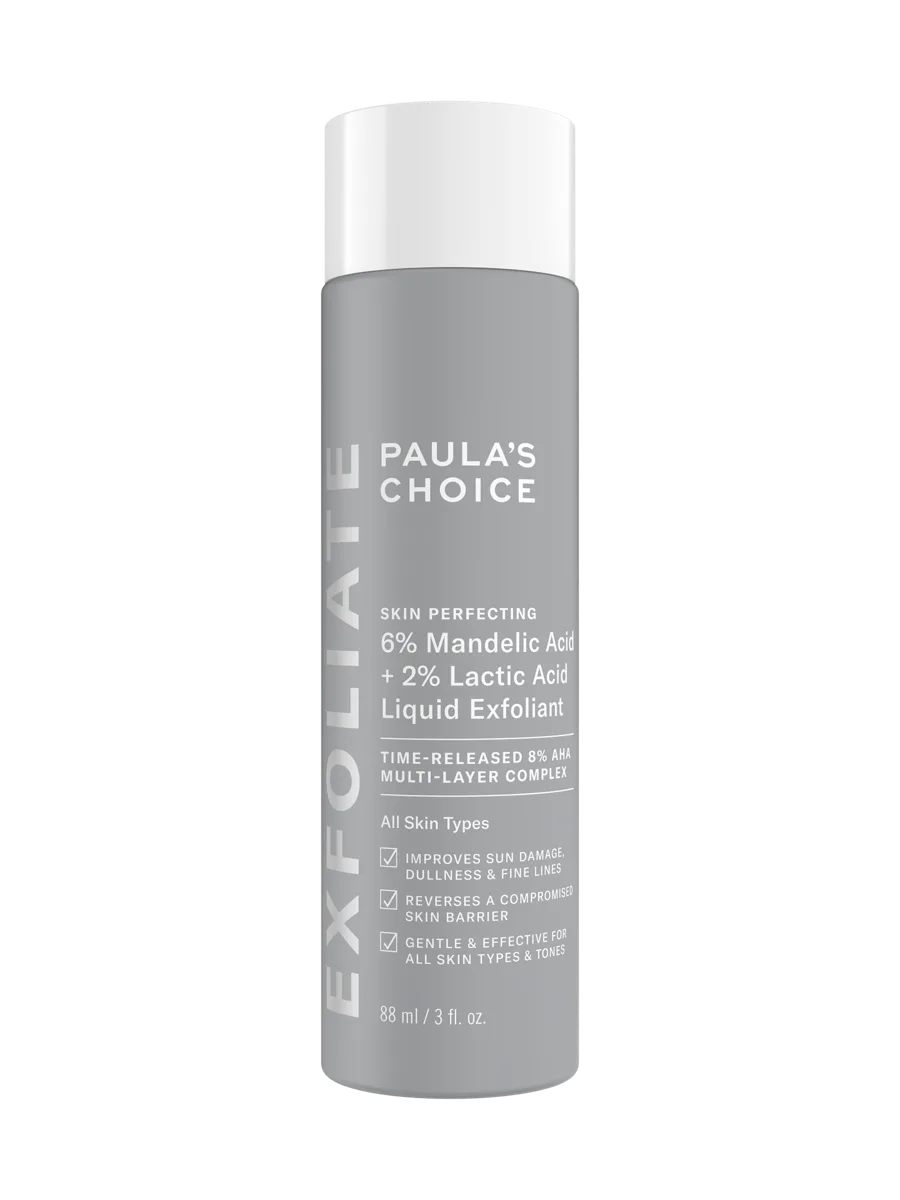
 Skin Perfecting 6% Mandelic Acid + 2% Lactic Acid Liquid Exfoliant
The exfoliant that finally treats sensitive and melanin-rich skin as the design priority rather than an afterthought. With a 4.8-star rating and 660+ reviews, this mandelic-lactic formula proves that gentleness and efficacy aren't mutually exclusive — it just requires smarter acid selection.
 The Original At-Home Peel
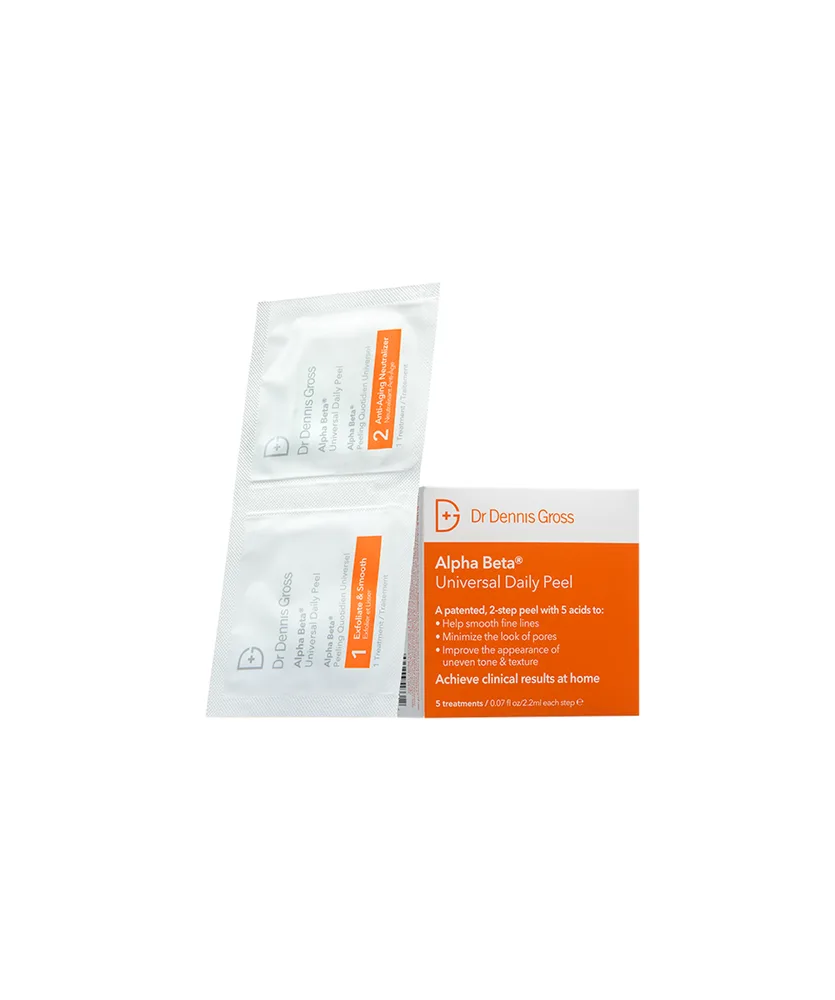
 Alpha Beta Universal Daily Peel
The product that invented the at-home daily peel category in 2002 and still sits at the top of it. The five-acid Step 1 and retinol-antioxidant Step 2 deliver genuine resurfacing and anti-aging in a single five-minute routine. Expensive, but the results and track record justify the reputation.
 Beginner Exfoliant Pick
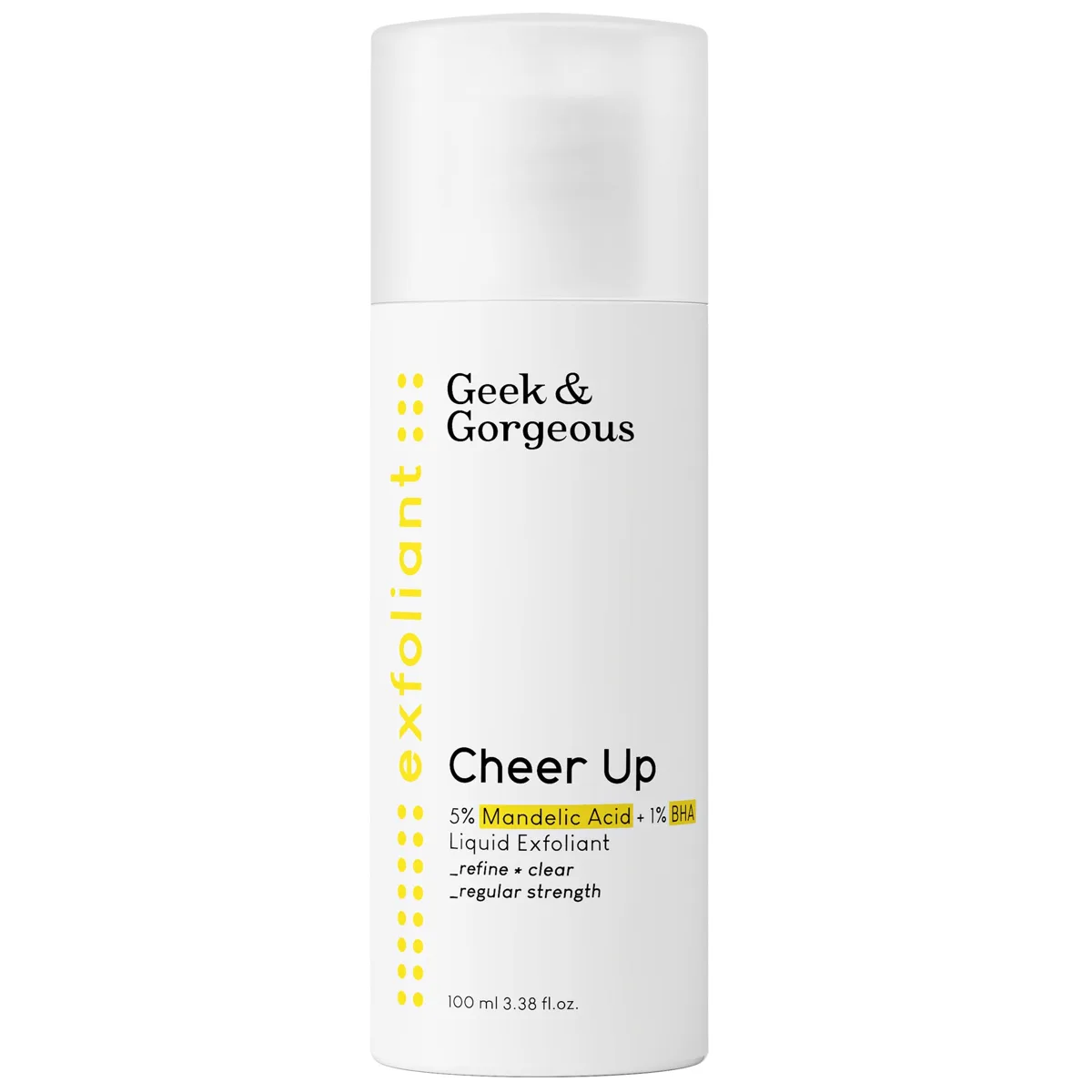
 Cheer Up 5% Mandelic + 1% Salicylic Exfoliant
A thoughtfully formulated beginner AHA/BHA exfoliant that uses mandelic acid — the gentlest mainstream AHA — in combination with low-strength salicylic, plus a sugar-humectant complex for comfort. At 100mL for around $12, the value is excellent, and the formulation choices reflect the kind of cosmetic-chemist thinking that separates this brand from typical indie exfoliants. Ideal for exfoliant newcomers and sensitive skin.
 At-Home Peel Benchmark
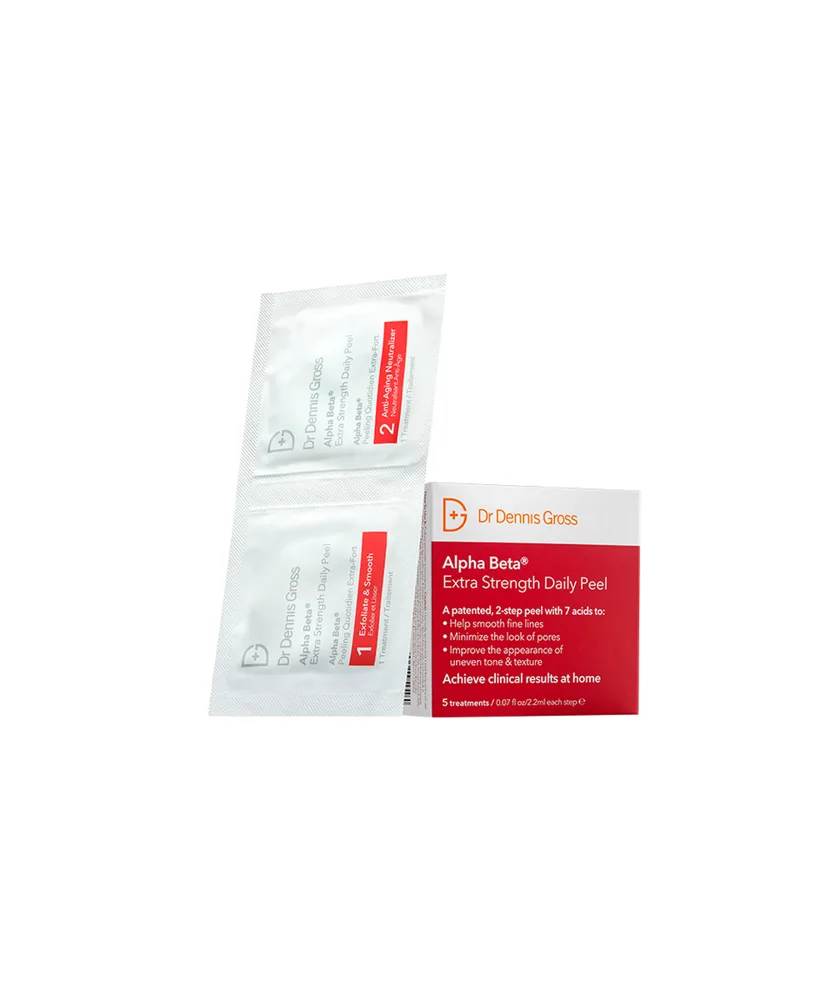
 Alpha Beta Extra Strength Daily Peel
The harder-hitting version of the at-home peel that started the category. Step 1 delivers a serious five-acid blend and Step 2 follows with retinol and antioxidants, making this a combined resurfacing and anti-aging treatment in a single five-minute routine. Expensive but genuinely effective for experienced exfoliant users.
 Pharma-Grade Budget BHA
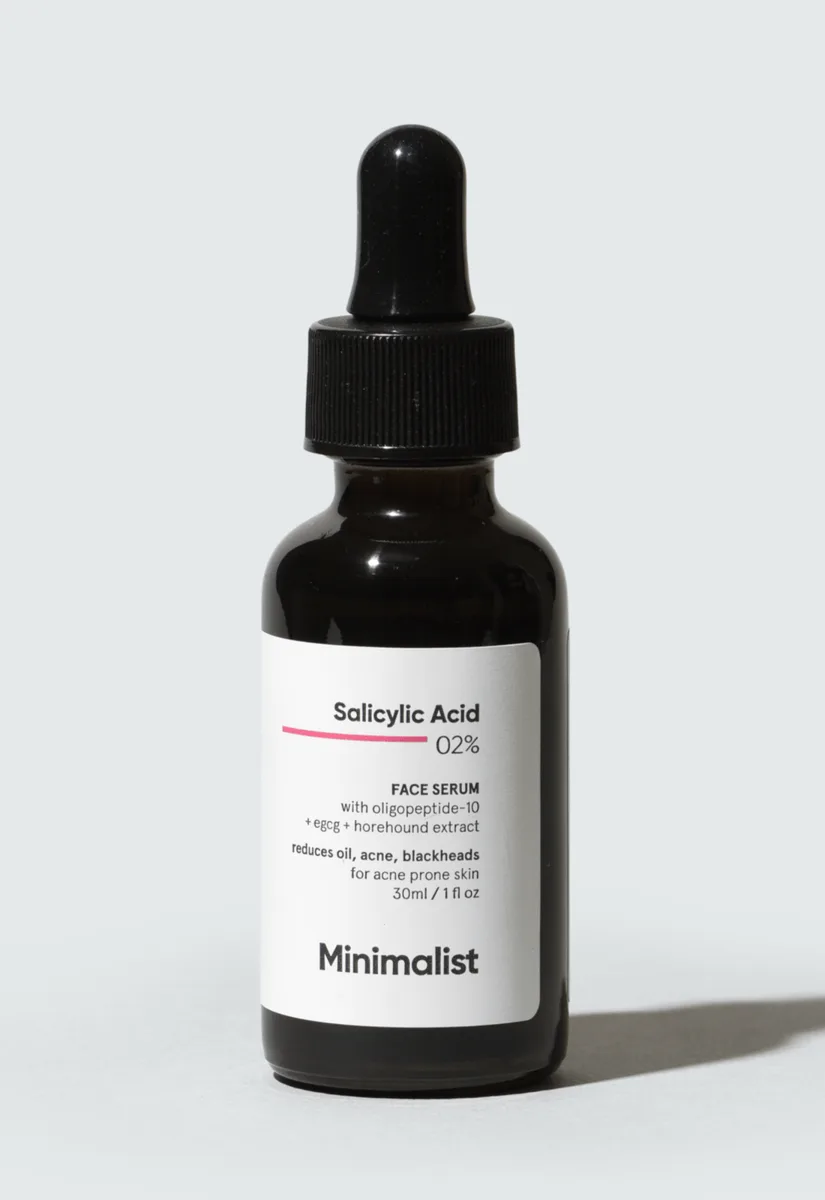
 2% Salicylic Acid Face Serum
A pharma-grade 2% BHA serum at pH 3.75, built around Merck's RonaCare salicylic acid and flanked by Marrubium Vulgare, EGCG glucoside, and Oligopeptide-10 — a supporting cast most budget salicylic serums do not bother with. At ₹599 for 30ml, it is one of the best acne serums on the Indian market and genuinely competitive with the prestige alternatives.
This review reflects our independent analysis of publicly available ingredient data, manufacturer claims, and verified user reviews. We are reader-supported — Amazon links may earn us a commission at no cost to you. We do not accept paid placements; rankings are based solely on the evidence.