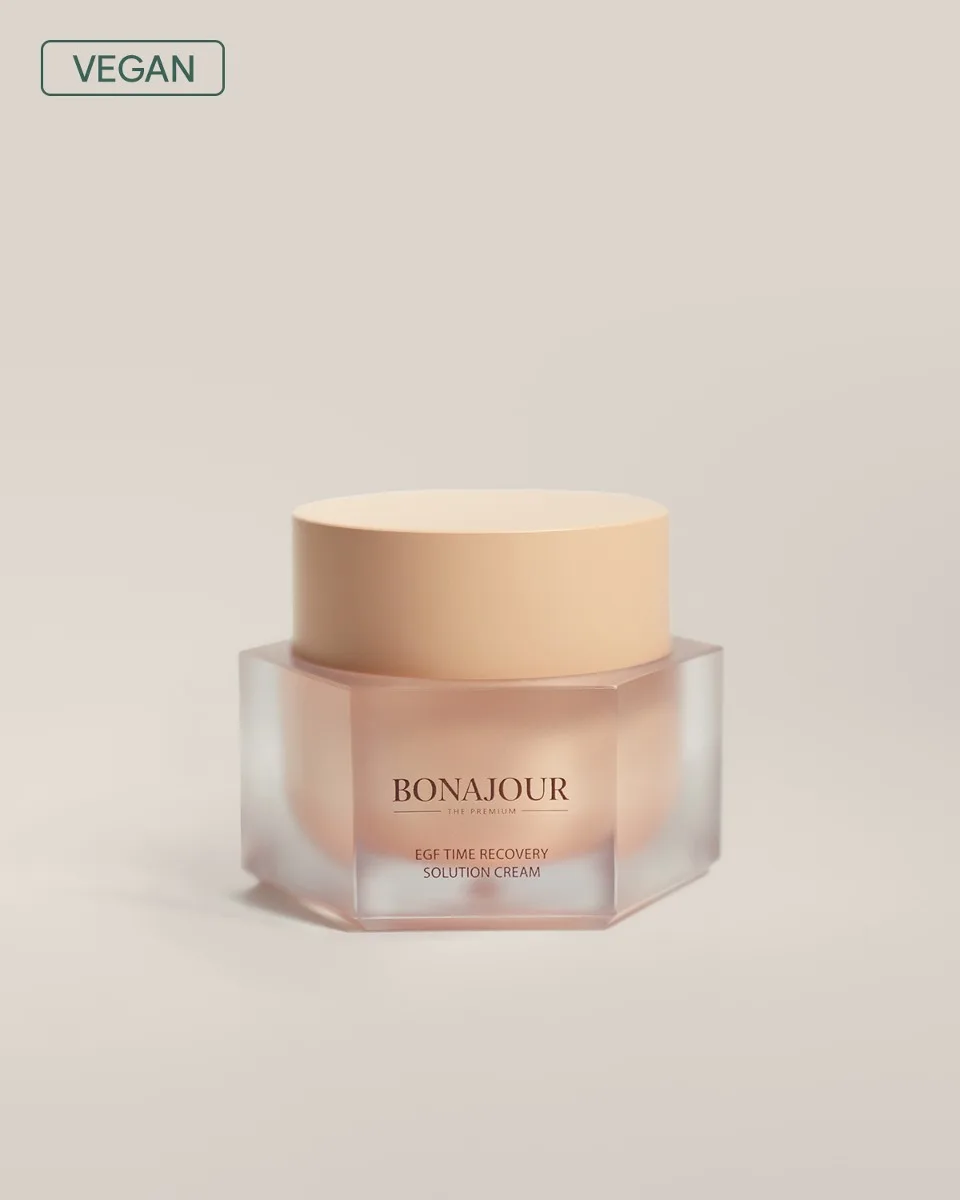
A genuinely interesting Korean vegan anti-aging cream that pairs modern biotech peptides and EGF with a lush plant-oil base most clinical competitors ignore. Lovely on dry skin, credible as part of an anti-aging routine, but priced like a flagship K-beauty product when the clinical evidence base for its hero ingredients is still emerging.
EGF Time Recovery Solution
A genuinely interesting Korean vegan anti-aging cream that pairs modern biotech peptides and EGF with a lush plant-oil base most clinical competitors ignore. Lovely on dry skin, credible as part of an anti-aging routine, but priced like a flagship K-beauty product when the clinical evidence base for its hero ingredients is still emerging.
Score Breakdown
Where this product gains points and where it loses them — broken down across the four scoring pillars.
A thoughtfully-formulated vegan K-beauty anti-aging cream with a genuine peptide-and-EGF combination on a nourishing oil-and-butter base. Loses points because the anti-aging claims rely on ingredients whose topical efficacy is still emerging, and the price is high for the evidence base.
Pros & Cons
- ✓Genuinely lush, non-greasy cream texture on dry skin
- ✓Fragrance-free and certified vegan formulation
- ✓Credible peptide stack including Acetyl Hexapeptide-8 and Oligopeptide-29
- ✓Barrier support from ceramide NP and phytosphingosine
- ✓Soothing on reactive and winter-dehydrated skin
- ✓Modern biotech EGF in a plant-forward base
- ✗Topical EGF anti-aging evidence is still emerging
- ✗Expensive for a 50ml K-beauty moisturizer
- ✗Jar packaging is suboptimal for active stability
- ✗Contains wheat protein — caution for severe wheat allergies
- ✗Too rich for oily or very acne-prone skin
Full Review
Walk into any Korean skincare aisle and you can spot the EGF creams by their packaging alone. They almost all look like pharmacy products: white tubes, clean sans-serif type, long lists of clinical-sounding actives, minimal plant ingredients. The category has a remarkably consistent visual and formulation language, built on the premise that epidermal growth factor is a biotech-science story and should be presented that way. Bonajour's EGF Time Recovery Solution Cream is the loud exception. It lists black truffle extract as its first ingredient. It contains mango seed butter, macadamia oil, palm oil, squalane, and frankincense oil. It comes in a frosted glass jar with a silver lid that looks like something you'd find on a department-store counter. And in the middle of all that, it quietly includes rh-Oligopeptide-1 — the same biotech EGF that's the star of every clinical-looking Korean EGF cream — along with Acetyl Hexapeptide-8, Oligopeptide-29, bakuchiol, ceramides, and adenosine. It's the rare product that's trying to be both a luxury-natural cream and a modern biotech anti-aging tool, and the unusual combination is both its best feature and its main source of skepticism.
The formulation is, on paper, genuinely thoughtful. Glycerin sits second, providing the humectant backbone. The oil and butter phase — macadamia seed oil, mango butter, squalane, palm oil — provides a rich but non-greasy emollient base that's particularly well-suited to dry and mature skin in cold weather. The bio-active signaling ingredients layer in mid-list: EGF for proliferation signaling, Acetyl Hexapeptide-8 (better known as Argireline) for expression-line claims, Oligopeptide-29, adenosine for anti-wrinkle support, and bakuchiol as a gentle retinol-alternative signaling compound. At the bottom of the list the formula supports the barrier with ceramide NP, phytosphingosine, and sodium hyaluronate. It's a credible modern anti-aging stack wrapped in a plant-forward base, and the fact that the whole thing is fragrance-free (no synthetic fragrance, though the frankincense oil contributes a gentle herbal note) and vegan-certified gives it a clear positioning against both clinical K-beauty and traditional luxury natural creams.
On skin, the experience is one of the nicer parts of the product. The texture is a whipped, cushiony cream that melts immediately on application without any greasy drag. The dewy finish is flattering on dry or mature skin and sits well under sunscreen in the morning. There's no adjustment period — no tingling, no purging, no stinging — which is a nice feature for sensitive users who find retinoid routines difficult. Over the first couple of weeks, most users report the cream doing what a very good moisturizer does: skin feels more cushioned, looks subtly dewier, and seems to bounce back from winter dryness more easily. The anti-aging claims are where evaluation gets harder. After four to eight weeks of consistent use, users who stick with it report smoother surface texture and softer fine lines, and this is consistent with what you'd expect from the peptide and barrier components even if you set the EGF story aside entirely. Whether the biotech EGF is doing additional work beyond what a well-formulated peptide cream would deliver is a question that independent literature hasn't convincingly answered yet, and it's honest to say so.
That brings us to the price. At around $34 for a 50ml jar, the cream is meaningfully more expensive than most well-regarded K-beauty moisturizers, and it's priced squarely in the territory of clinically validated peptide creams from brands with longer track records. Bonajour has been on the market since 2013, which is long enough to be taken seriously as an established indie but not long enough to carry the deep clinical backing of legacy derm-developed brands. The value calculation lands somewhere in the middle: if you specifically want a vegan, plant-forward anti-aging cream with modern biotech signaling ingredients and a truly lovely texture, there's not much else that ticks all those boxes, and the price is reasonable for what you're getting. If you're coming to it hoping for a retinoid-equivalent anti-aging effect, you're going to be underwhelmed, and a less expensive bakuchiol serum plus a simple ceramide moisturizer will probably do more for your skin at a lower cost. The jar packaging is also worth noting — peptides and growth factors are generally better preserved in airless pumps, so the aesthetic choice of a glass jar introduces a small but real concern about long-term active stability.
Where this cream actually belongs is in the hands of a very specific user: someone with dry or dry-combination skin who wants a vegan, fragrance-light PM moisturizer that layers nicely in a routine alongside other evidence-based actives. For that person, it's an easy recommendation with clear-eyed expectations. For everyone else, it's a lovely cream with some genuinely interesting ingredients that can't quite outrun the gap between its marketing confidence and the evidence base supporting its hero ingredient.
Formula
Key Ingredients
The hero actives that drive this product's performance.
| Ingredient | Function | Evidence |
|---|---|---|
| rh-Oligopeptide-1 (EGF) | The headline ingredient — a biotechnologically produced Epidermal Growth Factor that mimics the body's own signaling protein for keratinocyte proliferation. In this formula it sits mid-list and is positioned as the core anti-aging driver, working alongside the peptides (Acetyl Hexapeptide-8, Oligopeptide-29) and adenosine to signal repair. Real-world topical EGF efficacy is still debated in independent literature. | emerging |
| Tuber Melanosporum Extract (Black Truffle) | Unusually listed as the first ingredient — a black truffle extract positioned as a luxury humectant and amino-acid-rich skin conditioner. Its top position on the INCI is notable for a cream in this price bracket and is one of the main reasons Bonajour markets this as a premium-natural anti-aging product. | limited |
| Bakuchiol | A plant-derived compound frequently called a 'retinol alternative' that has genuine — though more limited — evidence for supporting collagen-related signaling and smoothing fine lines. In this formula it sits deep in the list at a modest level, layered under the EGF and peptide system rather than headlining as in dedicated bakuchiol products. | promising |
| Ceramide NP | Paired with phytosphingosine in this formula to rebuild the skin's lipid barrier alongside the macadamia seed oil and squalane. Low on the list, so its contribution is modest, but it adds genuine barrier support to a formula otherwise focused on signaling actives. | well-established |
| Acetyl Hexapeptide-8 | Marketed as Argireline, this is a neurotransmitter-inhibiting peptide that claims to reduce expression lines. Evidence for topical efficacy is mixed and strongly formulation-dependent. In this cream it works as part of the broader peptide-plus-EGF anti-aging package rather than as a standalone hero. | emerging |
Full INCI List
Tuber Melanosporum Extract, Glycerin, Water, Caprylic/Capric Triglyceride, Propanediol, Cetearyl Alcohol, Macadamia Ternifolia Seed Oil, Mangifera Indica (Mango) Seed Butter, Glycereth-26, Diheptyl Succinate, Cetearyl Olivate, Glyceryl Stearate, Glyceryl Glucoside, Squalane, Elaeis Guineensis (Palm) Oil, rh-Oligopeptide-1, Vegetable Oil, Dexpanthenol, Sorbitan Olivate, Capryloyl Glycerin/Sebacic Acid Copolymer, 1,2-Hexanediol, Caprylyl Glycol, Olivoyl Hydrolyzed Wheat Protein, Carbomer, Ammonium Acryloyldimethyltaurate/VP Copolymer, Arginine, Glycosyl Trehalose, Glyceryl Oleate, Dipropylene Glycol, Hydrogenated Starch Hydrolysate, Boswellia Carterii Oil, Tocopherol, Allantoin, Bakuchiol, Dipotassium Glycyrrhizate, Glyceryl Caprylate, Adenosine, Ceramide NP, Ethylhexylglycerin, Caprylhydroxamic Acid, Glucose, Sodium Hyaluronate, Lysolecithin, Phytosphingosine, Acetyl Hexapeptide-8, Oligopeptide-29
Product Flags
✓ Fragrance Free✓ Alcohol Free✗ Oil Free✓ Silicone Free✓ Paraben Free✓ Sulfate Free✓ Cruelty Free✓ Vegan✗ Fungal Acne Safe
Comedogenic Ingredients
Macadamia Ternifolia Seed OilCetearyl Alcohol
Potential Irritants
Boswellia Carterii Oil
Common Allergens
Olivoyl Hydrolyzed Wheat Protein
Compatibility
Skin Match
Best For
Works For
Not Ideal For
Addresses These Conditions
dryness aging compromised skin barrier dullness
Use With Caution
Routine Step
moisturizer
Time of Day
AM & PM
Pregnancy Safe
Unknown
Layering Tips
Apply after serums and essences, before any facial oil or occlusive. It's rich enough to double as a PM moisturizer and light enough for AM use under sunscreen. Avoid stacking with strong retinoids on the same night if your skin is not yet retinoid-tolerant — the cream is nourishing but the bakuchiol and peptide load can be a lot combined with actives.
Results Timeline
Immediate: noticeably softer, more cushioned skin and a subtle dewy finish. Short-term (2-4 weeks): improved barrier function and less visible dryness. Full benefits (8-12 weeks): users who stick with it report smoother texture and softer fine lines, though the magnitude of anti-aging effect from topical EGF remains less well-documented than retinoid results.
Pairs Well With
hyaluronic-acid-serumvitamin-c-serumgentle-cleanser
Sample AM Routine
- Gentle cleanser
- Toner
- Vitamin C serum
- Bonajour EGF Time Recovery Solution
- Sunscreen
Sample PM Routine
- Oil cleanser
- Gentle cleanser
- Essence
- Treatment serum
- Bonajour EGF Time Recovery Solution
Evidence
Who Should Skip
- Topical EGF anti-aging evidence is still emerging
- Expensive for a 50ml K-beauty moisturizer
- Jar packaging is suboptimal for active stability
- Contains wheat protein — caution for severe wheat allergies
Science & Expert Perspective
The Science
The headline ingredient in this cream is rh-Oligopeptide-1 — recombinant human oligopeptide-1, which is the biotechnologically produced form of Epidermal Growth Factor (EGF). Medical EGF has a strong evidence base in wound healing; a review in the Journal of Dermatological Science documented EGF's role in keratinocyte migration and proliferation in clinical wound care settings. Translating those results to topical cosmetic efficacy is where the evidence gets thinner. EGF is a large protein (roughly 6 kDa) that has limited skin penetration through intact stratum corneum, and independent peer-reviewed data demonstrating meaningful anti-aging benefit from topical cosmetic EGF is currently limited.
The peptide side of the formula has more varied evidence. Acetyl Hexapeptide-8 (Argireline) has shown topical effects on expression-line appearance in several small studies, though results are formulation-dependent and more modest than neuromodulator injections. A commonly cited study by Blanes-Mira et al. in the International Journal of Cosmetic Science (2002) documented measurable effects on wrinkle depth in a small trial, though subsequent independent replications have been inconsistent.
Bakuchiol is the most evidence-rich anti-aging ingredient in the formula. Chaudhuri and Bojanowski (International Journal of Cosmetic Science, 2014) demonstrated that bakuchiol functions as a retinol-like signaling molecule with documented effects on collagen and fine-line appearance, and a later comparative trial (Dhaliwal et al., British Journal of Dermatology, 2019) showed bakuchiol produced similar improvement to topical retinol with less irritation.
Finally, the ceramide NP and phytosphingosine pair in the barrier-support section of the formula has unambiguous evidence for barrier function recovery, consistent with decades of research on lipid matrix restoration in dry and mature skin.
References
- Prospective, randomized, double-blind assessment of topical bakuchiol and retinol for facial photoageing — British Journal of Dermatology (2019)
- A synthetic hexapeptide (Argireline) with antiwrinkle activity — International Journal of Cosmetic Science (2002)
Dermatologist Perspective
Dermatologists broadly consider topical EGF in over-the-counter cosmetics to be an interesting but still-unproven anti-aging technology, and board-certified dermatologists tend to recommend it cautiously — often as a supportive layer in a routine built around more evidence-rich actives like retinoids, vitamin C, and sunscreen. Bakuchiol has earned a growing amount of dermatologist support as a gentler, pregnancy-considered retinol alternative, and this cream's inclusion of bakuchiol alongside ceramides and peptides gives it a more defensible clinical profile than its EGF marketing might suggest. For patients with very dry skin who can't tolerate retinoids, this type of cream is often positioned as a comfort-plus-support option — not the primary driver of anti-aging results, but a pleasant contributor to overall skin feel and barrier health. Dermatologists generally recommend setting realistic expectations and not treating an EGF cream as a retinoid replacement.
Guidance
Usage Guide
How to Use
Use as the moisturizer step in your routine, after essences, serums, and treatments. Scoop a small pea-sized amount with the included spatula, warm briefly between fingertips, and press evenly across the face and neck. Use once or twice daily depending on your skin type — dry skin will appreciate AM and PM use, combination skin is usually fine with PM only. In the morning always follow with sunscreen. Avoid double-dipping into the jar to protect the actives; use the spatula or a clean finger each time.
Value Assessment
At around $34 for a 50ml jar, this cream is priced as a premium K-beauty product and delivers real value in texture, vegan certification, and formulation thoughtfulness. The value question depends heavily on what you're buying it for. As a luxurious, plant-forward PM moisturizer for dry mature skin that also happens to include modern signaling actives, it's fairly priced — comparable clean-beauty alternatives from Western brands often run much higher. As a primary anti-aging investment, the evidence base doesn't fully justify the price compared to a proven retinoid plus a simple ceramide moisturizer at a lower total cost. The brand's moderate track record — Bonajour has existed since 2013 with a loyal but modest international following — lands the overall value at fair rather than exceptional.
Who Should Buy
Dry to dry-combination skin that wants a vegan, fragrance-light anti-aging PM cream with a lush plant-oil base. K-beauty enthusiasts looking for an EGF product with a non-clinical aesthetic. Sensitive skin users who can't tolerate retinoids and want a supportive peptide-plus-barrier cream.
Who Should Skip
Oily or acne-prone skin — the oil and butter content is too rich and the formula isn't fungal-acne safe. Anyone expecting retinoid-equivalent anti-aging results. People with severe wheat allergies, since the formula contains hydrolyzed wheat protein. Shoppers on a tight budget who need maximum evidence-per-dollar.
Ready to try Bonajour EGF Time Recovery Solution?
Details
Details
Texture
Whipped, cushiony cream that melts into a soft, slightly dewy finish. Not greasy despite the oil and butter content.
Scent
Faintly earthy and herbal from the plant oils and truffle extract; no added fragrance.
Packaging
Frosted glass jar with a metal screw lid and internal spatula. Feels premium but jar packaging isn't ideal for peptide and EGF stability on long-term exposure.
Finish
dewysoftcushiony
What to Expect on First Use
First application is plush and immediately comfortable. There's a subtle herbal scent from the truffle extract and frankincense oil, neither of which is fragrance-grade strong. No tingling, no purging, no adjustment period. Most users describe the first few uses as simply a very good, very rich moisturizer — the anti-aging payoff is a slower burn that takes weeks to evaluate.
How Long It Lasts
A 50ml jar lasts about 2-3 months as a PM-only moisturizer.
Period After Opening
12 months
Best Season
fall winter
Certifications
VeganCruelty-free
Background
The Why
Bonajour launched in 2013 as a small Korean brand focused on naturally-derived, animal-product-free skincare at a time when vegan beauty was a minor category in Korea. The EGF Time Recovery line became its flagship anti-aging range, and the Solution Cream emerged as the richest PM option, positioned specifically for users who wanted modern peptide and growth-factor technology in a plant-forward formulation.
About Bonajour Emerging Brand (2–5 years)
Bonajour is a small Korean indie brand founded in 2013 with a focus on naturally-derived, vegan-positioning formulations. Its EGF line has built a loyal following among K-beauty enthusiasts but has limited independent clinical validation, and the brand's EGF content claims (10ppm, 4%) are difficult to verify against the published INCI position.
Brand founded: 2013 · Product launched: 2019
Myth vs. Reality
Myths & Misconceptions
Myth
Topical EGF regenerates aged skin like a growth-factor injection.
Reality
Injected or medically delivered EGF has documented effects on wound healing, but the independent evidence for meaningful topical anti-aging benefit from EGF in over-the-counter cosmetics is still emerging, not definitive. Treat this cream as a supportive addition, not a retinoid replacement.
Myth
The black truffle extract listed first means this is a luxury anti-aging ingredient.
Reality
Truffle extract is primarily a humectant and amino-acid source with an expensive-sounding name. It's a pleasant skin-conditioning ingredient but not a clinically-proven anti-aging active on its own.
FAQ
Frequently Asked Questions
Does topical EGF actually work?
Evidence for topical EGF in cosmetic use is still emerging. Medical and wound-healing applications of EGF are well-documented, but in over-the-counter creams the benefit is subtler and harder to distinguish from the accompanying peptides, humectants, and barrier ingredients. Treat this cream as supportive anti-aging, not a retinoid replacement.
Is this cream vegan?
Yes — the rh-Oligopeptide-1 (EGF) used is biotechnologically produced from microbial cultures, not from animal sources, and Bonajour is certified cruelty-free. The rest of the formula uses plant oils, butters, and glycerin without animal-derived ingredients.
Can I use it with retinoids?
Yes, if your skin already tolerates retinoids. The cream is nourishing and can actually help buffer retinoid dryness in the PM. For retinoid beginners, introduce this cream first, then add retinoid on alternate nights to avoid stacking too many actives at once.
Is it heavy enough for very dry skin?
Yes — between the macadamia oil, mango butter, squalane, and ceramides, this is legitimately nourishing for dry skin, especially in cold weather. Very oily skin types will find it too rich.
Does it contain fragrance?
No synthetic fragrance has been added, but the formula does contain Boswellia carterii (frankincense) oil, which has a natural aroma and can be a potential irritant for very reactive skin types.
Is this safe for gluten sensitivity?
The formula contains olivoyl hydrolyzed wheat protein. Topical gluten is generally considered safe for celiac disease, but individuals with severe wheat allergies or dermatitis herpetiformis should avoid or patch test.
How does this compare to a drugstore peptide cream?
It's meaningfully more expensive than most drugstore peptide creams and uses a broader vegan-natural ingredient palette. Whether that justifies the premium depends on how much you value the plant-oil base, vegan certification, and EGF positioning over a clinical-style formulation at a lower price.
Community
Community Voices
Common Praise
"Rich without feeling greasy"
"Soothing on dry, reactive skin"
"Fragrance-free and vegan formulation"
"Pleasant whipped-cream texture"
Common Complaints
"Expensive relative to comparable Korean moisturizers"
"EGF claims hard to verify"
"Contains wheat protein — not for gluten-sensitive users"
"Small 50ml size for the price"
Notable Endorsements
Featured in Korean vegan beauty roundupsYesStyle K-beauty moderate-popularity pick
Appears In
best vegan anti aging cream best k beauty egf cream best peptide cream for dry skin best k beauty anti aging moisturizer
Related Conditions
aging dryness compromised skin barrier
Related Ingredients
You Might Also Like
 Budget Holy Grail
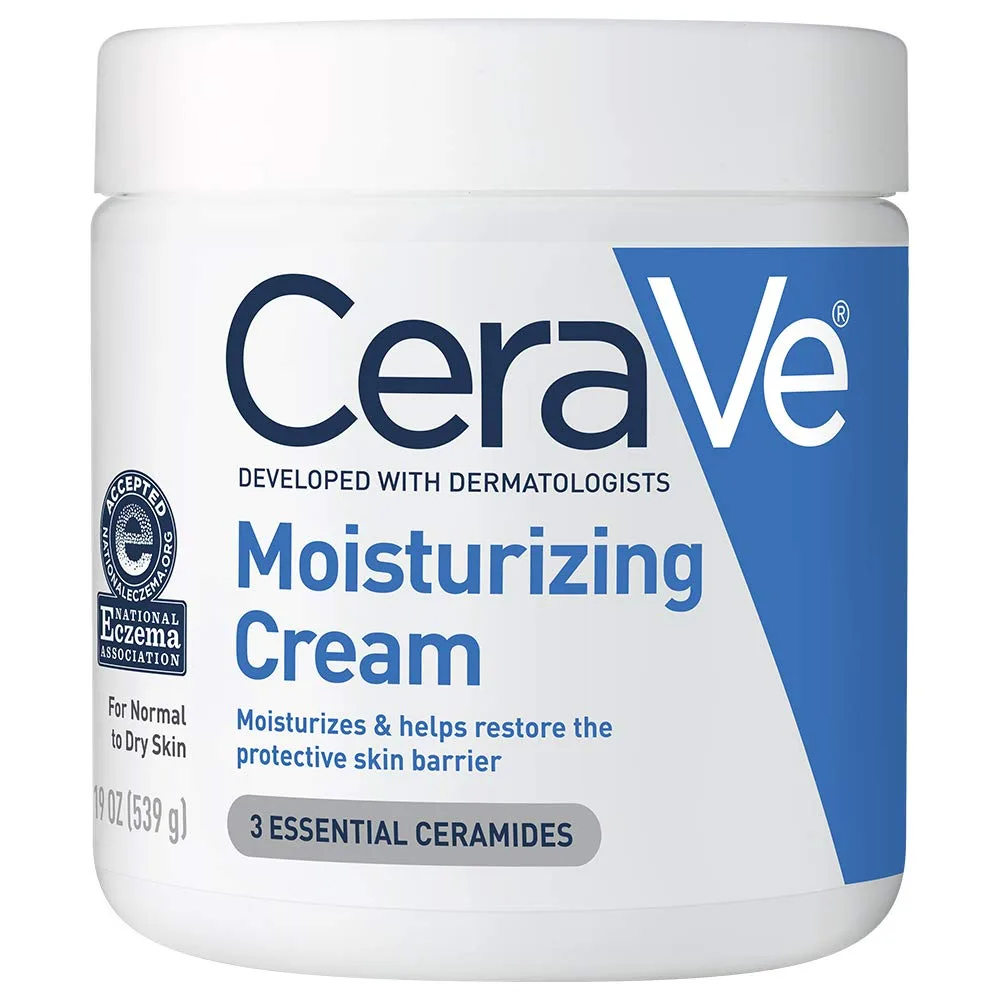
 Moisturizing Cream
The CeraVe Moisturizing Cream is the most important moisturizer in the drugstore — a ceramide-rich, dermatologist-developed formula that delivers barrier repair, multi-humectant hydration, and occlusive protection at a price so accessible it has no real excuse not to be in every household. Twenty-one years of consistent performance and universal dermatologist approval speak louder than any ingredient list.
 Barrier Repair Pioneer
 MLE Cream
Atopalm MLE Cream is one of the genuinely scientifically anchored barrier moisturizers in K-beauty — a fragrance-free, pseudo-ceramide cream built around a patented liquid-crystal lipid structure that mimics the skin's own intercellular matrix. For eczema, atopic skin, post-procedure recovery, or anyone with a stinging compromised barrier, it's one of the most reliably effective moisturizers in the entire category.
 K-Beauty Barrier Repair Staple
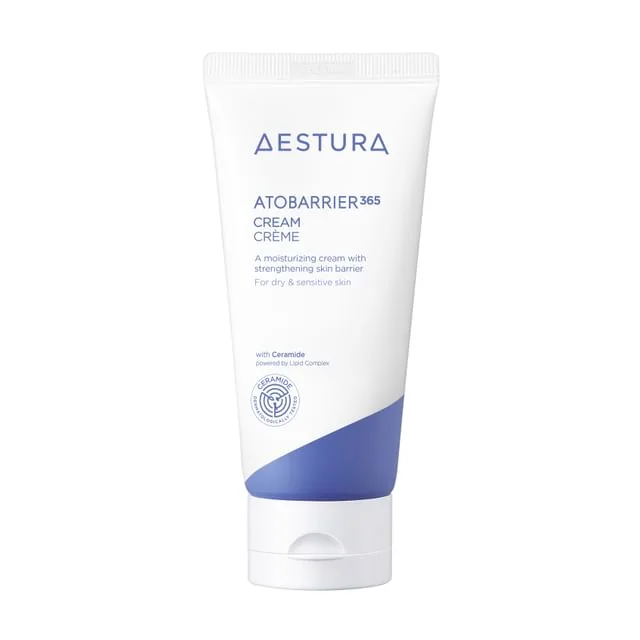
 Atobarrier 365 Cream
A Korean pharmacy cream that earns its cult following the hard way — with a lamellar lipid structure that actually rebuilds the barrier, not just coats it. If your skin has been through a rough winter, a retinoid ramp-up, or a bad reaction, this is the jar that quietly puts it back together.
 Korean Derm Clinic Recovery Pick
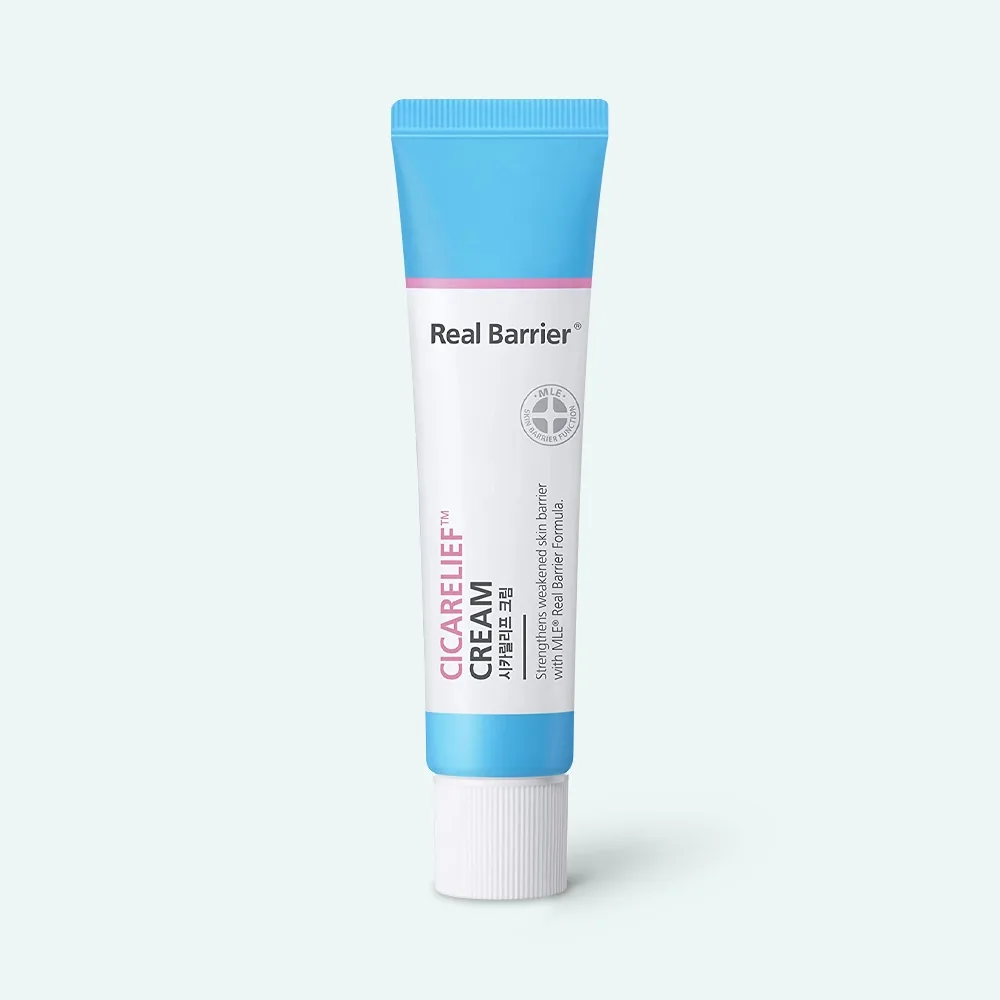
 Real Barrier Cicarelief Cream
One of the best consumer cica creams on the market, combining the full spectrum of centella actives with NeoPharm's MLE ceramide delivery and multiple complementary calming ingredients. Ideal for compromised, reactive, rosacea-prone, or recovering skin, and a staple in Korean dermatology clinic protocols. Minor limitations on packaging, but the formulation is genuinely excellent.
 Transparent 10% Panthenol Cream
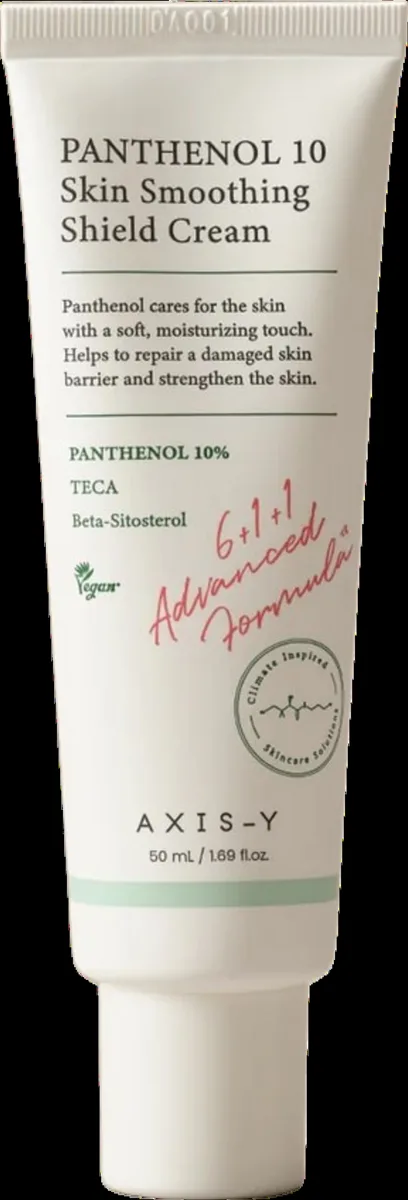
 Panthenol 10 Skin Smoothing Shield Cream
A disclosed 10% panthenol barrier cream built around a full physiological ceramide trio, a centella calming cast, and a modest shea butter occlusive. Fragrance-free, cross-season, and unusually transparent about its hero active — one of the brand's strongest moisturizer formulations.
 K-Beauty Icon
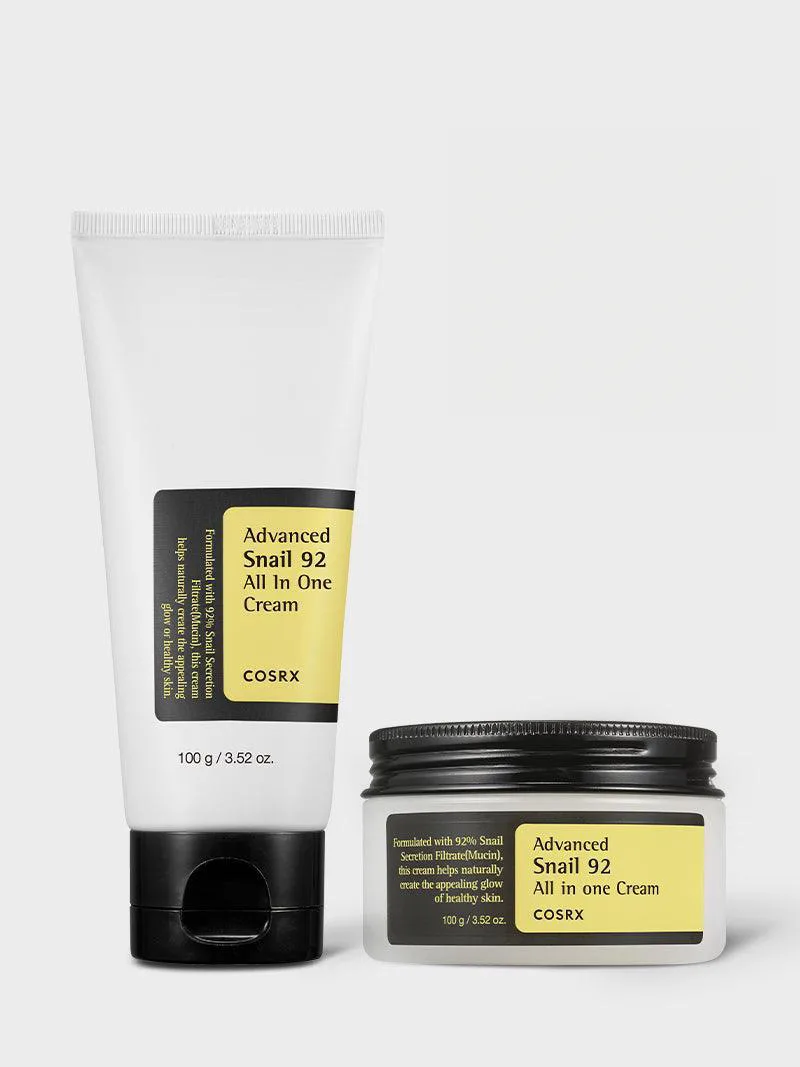
 Advanced Snail 92 All in One Cream
The cream that helped prove snail mucin to the world — and a decade later, it still deserves the reputation. At 92% snail secretion filtrate in a fragrance-free, gentle gel-cream, it delivers hydration, soothing, and gradual skin improvement across virtually every skin type. The texture takes getting used to, but 13 million sold units and 25,000+ reviews suggest most people manage.
This review reflects our independent analysis of publicly available ingredient data, manufacturer claims, and verified user reviews. We are reader-supported — Amazon links may earn us a commission at no cost to you. We do not accept paid placements; rankings are based solely on the evidence.