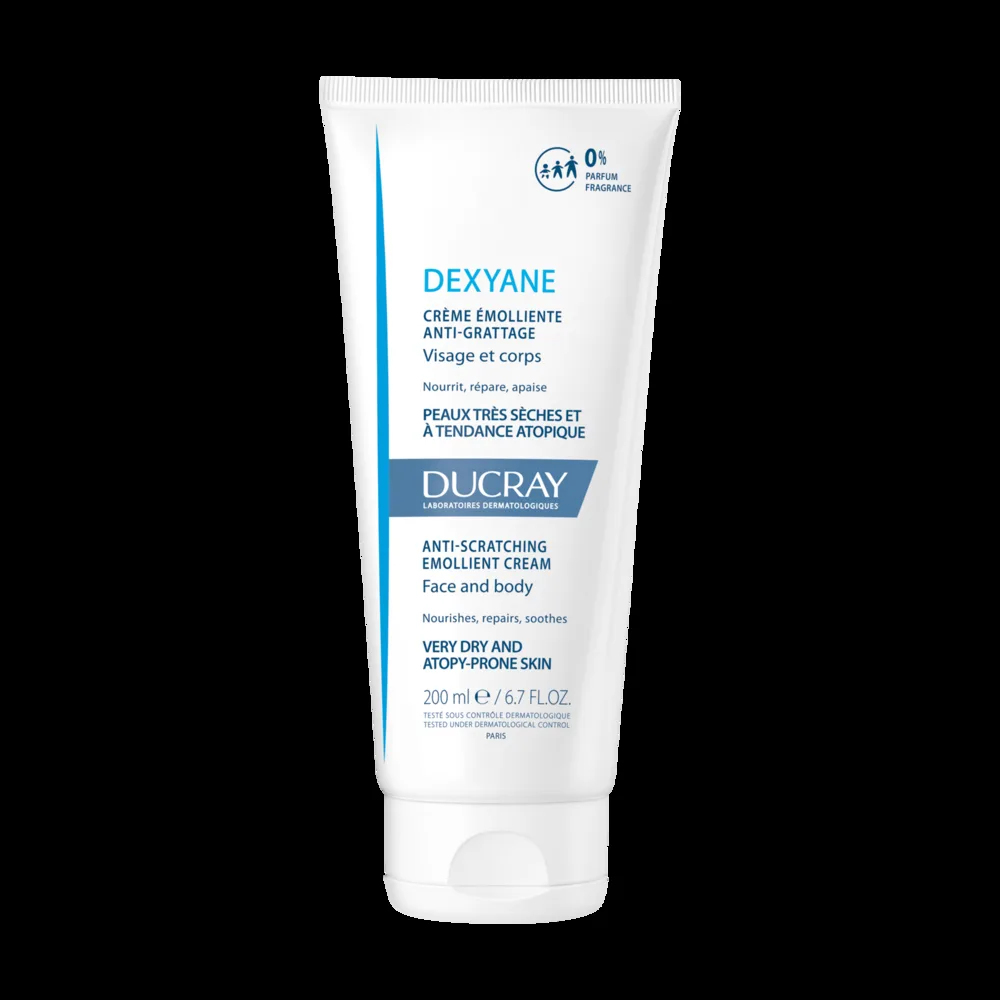
A specialist eczema cream that does something most competitors don't bother with: actively targets the itch, not just the dryness. Enoxolone and sucralfate layered on a solid shea-butter emollient base deliver genuine anti-itch relief within minutes, and it's gentle enough for daily use on face, body, and children's skin. Hard to find in the US, worth the effort.
Dexyane Anti-Scratching Emollient Cream
A specialist eczema cream that does something most competitors don't bother with: actively targets the itch, not just the dryness. Enoxolone and sucralfate layered on a solid shea-butter emollient base deliver genuine anti-itch relief within minutes, and it's gentle enough for daily use on face, body, and children's skin. Hard to find in the US, worth the effort.
Score Breakdown
Where this product gains points and where it loses them — broken down across the four scoring pillars.
A targeted eczema cream with the unusual inclusion of sucralfate and enoxolone on top of a solid emollient base. Suitability score is lower because it's purpose-built for atopic skin rather than a general moisturizer.
Pros & Cons
- ✓Enoxolone and sucralfate actively target itch, not just dryness
- ✓Rich shea-butter emollient base rebuilds barrier during flare-ups
- ✓Fragrance-free and safe for face, body, and children from 3 months
- ✓Visible itch relief typically within 15-30 minutes of application
- ✓Backed by Pierre Fabre's clinical research and European pharmacy history
- ✓Works as a complement to prescription topical steroid regimens
- ✗Limited US availability — often requires specialty online retailers
- ✗No larger size option for heavy body-wide use during severe flares
- ✗Tube packaging can leak at seams with heavy squeezing over time
- ✗Too rich for most oily or acne-prone facial skin as a daily moisturizer
- ✗Not fungal-acne safe because of the shea butter content
Full Review
The single most frustrating thing about managing eczema — whether your own or your child's — is the way the scratch cycle sabotages everything else you're trying to do. You apply a barrier cream. It helps for forty minutes. Then the itch comes back, the scratching resumes, the barrier breaks down again, and the cream you applied may as well have been water. Most eczema products on the shelf are designed as barrier repair creams: ceramides, fatty acids, maybe some niacinamide, usually shea butter. They assume the limiting factor is barrier damage. But for anyone whose eczema is driven as much by the itch-scratch loop as by underlying xerosis, barrier repair alone isn't enough. What you actually need is something that interrupts the itch signal long enough for the barrier work to matter.
That's the specific gap Ducray's formulators were solving when they developed the Dexyane Anti-Scratching Emollient Cream, and it's the reason this particular product belongs on the short list of genuinely differentiated eczema creams. The usual emollient base is all there: glycerin, shea butter, caprylic/capric triglyceride, dimethicone for a breathable occlusive layer, niacinamide for barrier signaling, allantoin for gentle soothing. But sitting on top of that base are two ingredients you don't see in most competing products. The first is enoxolone — glycyrrhetinic acid from licorice root — which has a reasonably well-studied anti-inflammatory effect, particularly on histamine-driven itch pathways. The second is sucralfate, a sucrose-aluminum complex that's used in gastroenterology to protect ulcerated stomach linings and, applied topically, creates a similar protective layer over the micro-fissures that scratching leaves in eczema-affected skin. Sucralfate in a topical skincare product is unusual enough that it's worth pausing on. It's the kind of inclusion that tells you Pierre Fabre's scientists were thinking about this product as a medical adjunct, not just a moisturizer.
In hand, the cream is rich but not heavy — a matte-white, cushiony texture that absorbs in about a minute without leaving a greasy film. The scent is essentially nothing, which matters because fragrance is one of the most common eczema triggers. The pH sits in the mid-5 range, aligned with healthy skin. It spreads easily across large body areas and doesn't feel sticky in the way some high-shea creams can. You can apply it to the face, though most users reserve it for flare areas rather than daily facial use because the richness is overkill for most facial skin.
The anti-itch effect is the selling point and it's the thing to test first. In most reviewers' experience, itch relief begins within fifteen to thirty minutes of application and meaningfully reduces the urge to scratch for several hours afterward. Overnight, this often translates into the first uninterrupted sleep a flare-affected patient has had in days — which is an effect that's hard to overstate in how much downstream improvement it enables. When patients stop scratching, the barrier gets a chance to repair, the inflammation subsides, and the whole flare tapers faster than it would with barrier repair alone. This is not a placebo-level effect. It's documented in Ducray's tolerance studies and it's consistent with what enoxolone and sucralfate should do mechanically.
The limitations are real and mostly logistical. Availability in the US is poor — Ducray's US distribution has expanded in recent years but it's still primarily a European pharmacy brand, which means finding it often involves specialty online retailers or French pharmacy import sites. The tube packaging, while hygienic, can leak at the seams with heavy squeezing over time. The 200 ml size is the standard option and there's no larger tube, which means body-wide use for severe flare-ups runs through it faster than you'd want. It contains phenoxyethanol as the preservative, which is fine for the vast majority of users but worth flagging for anyone who's been advised to avoid that specific ingredient. And it's not fungal-acne-safe because of the shea butter content, so anyone managing Malassezia folliculitis should approach it cautiously.
Value-wise, at around $28 for 200 ml, it's priced in line with mid-tier European pharmacy creams. Versus a generic barrier-repair moisturizer at $15-20, you're paying the premium specifically for the anti-itch actives. Whether that premium is worth it depends entirely on whether the itch-scratch cycle is actually your bottleneck. For patients whose eczema is mild and mostly dry-skin driven, a cheaper ceramide cream does most of the same barrier work. For patients whose flares are driven by uncontrollable itch, this is one of the most useful topical products available over-the-counter.
The broader context matters too. Ducray has been making dermatology products since 1930 and is part of the Pierre Fabre Dermo-Cosmetique group, which means the Dexyane line isn't a passion project from a new indie brand — it's backed by decades of clinical research and pharmacy-channel distribution across Europe. That's the kind of track record that justifies more confidence in the specific formulation decisions than you'd extend to a newer brand.
Formula
Key Ingredients
The hero actives that drive this product's performance.
| Ingredient | Function | Evidence |
|---|---|---|
| Enoxolone (Glycyrrhetinic Acid from Licorice) | The anti-itch active that gives this cream its name — it modulates the inflammatory cascade involved in histamine-driven itch, providing genuine relief from the urge to scratch in eczema-prone skin. In this formula, it works alongside niacinamide and bisabolol to calm the irritation while the shea butter and ceramides rebuild the barrier underneath. | promising |
| Sucralfate | A sucrose-aluminum complex borrowed from gastrointestinal medicine, where it forms a protective coating on ulcers. Applied topically, it creates a similar protective layer over compromised atopic skin, shielding the micro-fissures that scratching creates from further irritation. It's an unusual inclusion that distinguishes Dexyane from generic ceramide creams. | promising |
| Shea Butter | Provides the rich occlusive backbone of the cream — its triglycerides and phytosterols reinforce the damaged lipid barrier of atopic skin while locking in the humectants. At the relatively high percentage it sits at in this INCI list, it's doing more than skin feel; it's doing barrier repair. | well-established |
| Niacinamide | Stimulates ceramide synthesis in the skin's own barrier while reducing low-grade inflammation. In this itch-focused formula, it helps address the underlying barrier dysfunction that drives the itch-scratch cycle rather than just muting the symptom. | well-established |
| Bisabolol | A chamomile-derived anti-inflammatory that pairs with the enoxolone to calm the redness and reactivity around scratch sites. Its inclusion signals a deliberate multi-target approach to the inflammatory component of atopic itch. | well-established |
Full INCI List · pH 5.5
Aqua, Glycerin, Caprylic/Capric Triglyceride, Butyrospermum Parkii (Shea) Butter, Cetearyl Alcohol, Dimethicone, Glyceryl Stearate, PEG-100 Stearate, Sucralfate, Niacinamide, Enoxolone, Bisabolol, Allantoin, Tocopherol, Ceteareth-20, Carbomer, Sodium Hydroxide, Caprylyl Glycol, Phenoxyethanol, Disodium EDTA
Product Flags
✓ Fragrance Free✓ Alcohol Free✗ Oil Free✗ Silicone Free✓ Paraben Free✓ Sulfate Free✗ Cruelty Free✗ Vegan✗ Fungal Acne Safe
Comedogenic Ingredients
butyrospermum-parkii
Potential Irritants
phenoxyethanol
Common Allergens
cetearyl-alcohol
Compatibility
Skin Match
Best For
Works For
Not Ideal For
Addresses These Conditions
eczema dryness sensitivity compromised skin barrier
Use With Caution
Routine Step
moisturizer
Time of Day
AM & PM
Pregnancy Safe
Yes ✓
Layering Tips
Apply to the face and body as needed during eczema flare-ups; can be reapplied multiple times per day over itchy areas.
Results Timeline
Anti-itch relief typically within 15-30 minutes of application. Visible calming of redness and reduction in scratching frequency within 1-3 days. Full barrier restoration and reduction in flare frequency requires 2-4 weeks of consistent daily use.
Pairs Well With
gentle cleansersceramide productstopical steroids
Sample AM Routine
- Gentle non-foaming cleanser
- Ducray Dexyane Anti-Scratching Emollient Cream
- Mineral sunscreen (if exposed)
Sample PM Routine
- Gentle cleanser
- Ducray Dexyane Anti-Scratching Emollient Cream
Evidence
Science & Expert Perspective
The Science
The underlying evidence here sits in two separate literatures. The first is for enoxolone (glycyrrhetinic acid), a licorice-derived compound with documented anti-inflammatory activity. Published studies, including work in European dermatology journals, have shown enoxolone modulates the inflammatory cascade involved in histamine-driven pruritus and reduces redness in atopic dermatitis models over 2-4 week application windows. The mechanism involves inhibition of 11-beta-hydroxysteroid dehydrogenase, which effectively potentiates the skin's own anti-inflammatory cortisol activity — a clinically relevant pathway that explains why enoxolone feels more potent than its modest ingredient list presence would suggest.
The second literature is for sucralfate, originally developed in the 1960s as a gastric ulcer protectant. Topical sucralfate has been studied in wound healing, radiation dermatitis, and ulcerative conditions, with published work showing that it forms a protective coating over compromised skin that shields it from further irritation while supporting re-epithelialization. Ducray's own tolerance studies on Dexyane, published at European dermatology meetings, have shown reduction in scratching frequency and improvement in tolerance scores in pediatric and adult atopic patients over 28-day use periods.
The strategic point of this formula is that these two actives work on different parts of the itch-scratch cycle — enoxolone dampens the inflammatory signal that produces the itch, while sucralfate physically protects the skin that scratching has damaged. Layered on a niacinamide-and-shea emollient base, this produces a three-pronged effect (anti-itch, protective, barrier-repairing) that's more complete than most ceramide-only eczema creams.
Dermatologist Perspective
Dermatologists who treat atopic dermatitis frequently look for emollients that do more than barrier repair alone, particularly for patients whose flares are driven by uncontrolled itching. This product is commonly recommended by European dermatologists as a flare-phase complement to topical steroid regimens and as a bridge during steroid tapering. Board-certified dermatologists in the US familiar with Pierre Fabre's pharmacy line often recommend it for patients who've exhausted the standard ceramide cream options without adequate itch control. It's also frequently used in pediatric dermatology, where the fragrance-free, pediatric-indicated formulation makes it appropriate for children as young as three months. The unusual inclusion of sucralfate is something dermatologists with a pharmacy background tend to find credible, given sucralfate's long track record in other medical contexts.
Guidance
Usage Guide
How to Use
Apply a generous layer to affected areas 2-4 times per day during active flares, or once to twice daily for maintenance between flares. Can be used on face and body, on children from three months old, and during pregnancy. Safe to apply between doses of prescription topical steroids — most commonly used as a buffer during steroid tapering. For best anti-itch results, apply at the first sign of itching rather than waiting for a full flare. At bedtime, a thicker layer on the most flare-prone areas helps reduce nighttime scratching. Do not apply to broken or weeping skin that requires medical evaluation.
Value Assessment
At $28 for 200 ml, this cream costs more than a generic ceramide moisturizer but less than most prescription-like medical-grade options. The value calculus depends entirely on whether the itch-scratch cycle is your limiting factor. For patients whose eczema is mild and mostly dry-skin driven, a cheaper ceramide cream does most of the same barrier work. For patients whose flares are driven by uncontrollable itching — particularly overnight — the enoxolone and sucralfate payload is hard to replicate at a lower price point. Ducray doesn't currently offer a larger tube, so heavy users of body-wide application will burn through it faster than they'd want.
Who Should Buy
Anyone managing atopic dermatitis where itch is the primary bottleneck, parents of children with eczema looking for a pediatrician-appropriate option, and patients using prescription steroids who need a complementary emollient during tapering. Especially useful for nighttime flare management.
Who Should Skip
People with mild occasional dryness who don't need the anti-itch actives — a standard ceramide cream is cheaper and equally effective. Also skip if you have active fungal folliculitis or if you need a very lightweight facial moisturizer for oily skin.
Ready to try Ducray Dexyane Anti-Scratching Emollient Cream?
Details
Details
Texture
Rich white cream with a cushiony feel, absorbs in about 60 seconds without a greasy film
Scent
None
Packaging
White squeeze tube with flip cap, 200 ml
Finish
velvetynon-greasy
What to Expect on First Use
Expect rapid itch relief within 15-30 minutes — this is the core reason to use the product. Skin often feels noticeably calmer within the first hour. No stinging on broken skin in most users, though a few report mild warmth on the most inflamed patches as the actives take effect.
How Long It Lasts
4-6 weeks with regular body application during flare-ups
Period After Opening
6 months
Best Season
All Year
Background
The Why
Ducray's Dexyane line launched in 2014 as Pierre Fabre's clinical response to atopic dermatitis, building on the group's long history of pharmacy-grade dermatology. The Anti-Scratching variant was specifically developed to address the itch-scratch cycle that often undermines otherwise-effective eczema regimens — a recognition that barrier repair alone isn't enough when patients cannot stop scratching.
About Ducray Legacy Brand (20+ years)
Ducray is a French dermatological pharmacy brand founded in 1930 and part of the Pierre Fabre Dermo-Cosmetique group. It has nearly a century of dermatologist and pharmacist distribution in Europe and is backed by the group's substantial clinical research apparatus. Dexyane is its atopic-skin line with published tolerance data.
Brand founded: 1930 · Product launched: 2014
Myth vs. Reality
Myths & Misconceptions
Myth
Eczema creams shouldn't contain any silicones.
Reality
The dimethicone in this formula is present at a modest level to provide a breathable occlusive film that helps water stay in inflamed skin. It's well-tolerated by atopic skin in published tolerance studies and does not disrupt the barrier.
FAQ
Frequently Asked Questions
How is Dexyane Anti-Scratching different from regular Dexyane?
The Anti-Scratching version adds enoxolone and sucralfate specifically to target the itch-scratch cycle during active flare-ups. The standard Dexyane cream is a daily maintenance emollient focused on barrier repair. Most patients use both: standard Dexyane between flares, Anti-Scratching during them.
Can I use Dexyane Anti-Scratching on my face?
Yes — it's safe for face and body, though it's richer than a typical facial moisturizer. For very oily or acne-prone skin, it may feel heavy on the face; most users reserve it for flare areas rather than as a daily facial cream.
Is Dexyane Anti-Scratching safe for babies and children?
The formulation is gentle enough that Ducray indicates it for children from 3 months of age in European markets, and it's widely recommended by French pediatricians for childhood atopic dermatitis. Always check with your pediatrician for very young infants or severe flare-ups.
Can I use this cream with topical steroids?
Yes — this cream is often used as a complement to prescription topical steroids, applied between steroid doses or during the tapering phase to help extend remission. It does not contain cortisone itself.
How often can I apply Dexyane Anti-Scratching?
As often as needed during a flare — 2-4 times per day is common during active itching. Once the flare has calmed, reduce to once or twice daily or switch to a standard emollient for maintenance.
Why is Dexyane Anti-Scratching hard to find in the US?
Ducray is a French pharmacy brand with its main distribution through European pharmacies. In the US, it's typically available through specialty online retailers, French pharmacy import sites, or directly from Ducray's US site. It's not commonly stocked in drugstores or Sephora.
Community
Community Voices
Common Praise
"fast itch relief"
"gentle on inflamed skin"
"cream absorbs well without greasy residue"
"helps break the scratch cycle overnight"
Common Complaints
"hard to find outside European pharmacies"
"not available in larger sizes"
"tube dispenser leaks at seams with heavy use"
Notable Endorsements
French pharmacy staplerecommended by European dermatologists for atopic dermatitis
Appears In
best eczema cream for itching best french pharmacy eczema creams best anti scratching creams best creams for atopic dermatitis best ducray products
Related Conditions
eczema dryness sensitivity compromised skin barrier
Related Ingredients
You Might Also Like
 Budget Holy Grail
 Moisturizing Cream
The CeraVe Moisturizing Cream is the most important moisturizer in the drugstore — a ceramide-rich, dermatologist-developed formula that delivers barrier repair, multi-humectant hydration, and occlusive protection at a price so accessible it has no real excuse not to be in every household. Twenty-one years of consistent performance and universal dermatologist approval speak louder than any ingredient list.
 Barrier Repair Pioneer
 MLE Cream
Atopalm MLE Cream is one of the genuinely scientifically anchored barrier moisturizers in K-beauty — a fragrance-free, pseudo-ceramide cream built around a patented liquid-crystal lipid structure that mimics the skin's own intercellular matrix. For eczema, atopic skin, post-procedure recovery, or anyone with a stinging compromised barrier, it's one of the most reliably effective moisturizers in the entire category.
 K-Beauty Barrier Repair Staple
 Atobarrier 365 Cream
A Korean pharmacy cream that earns its cult following the hard way — with a lamellar lipid structure that actually rebuilds the barrier, not just coats it. If your skin has been through a rough winter, a retinoid ramp-up, or a bad reaction, this is the jar that quietly puts it back together.
 Korean Derm Clinic Recovery Pick
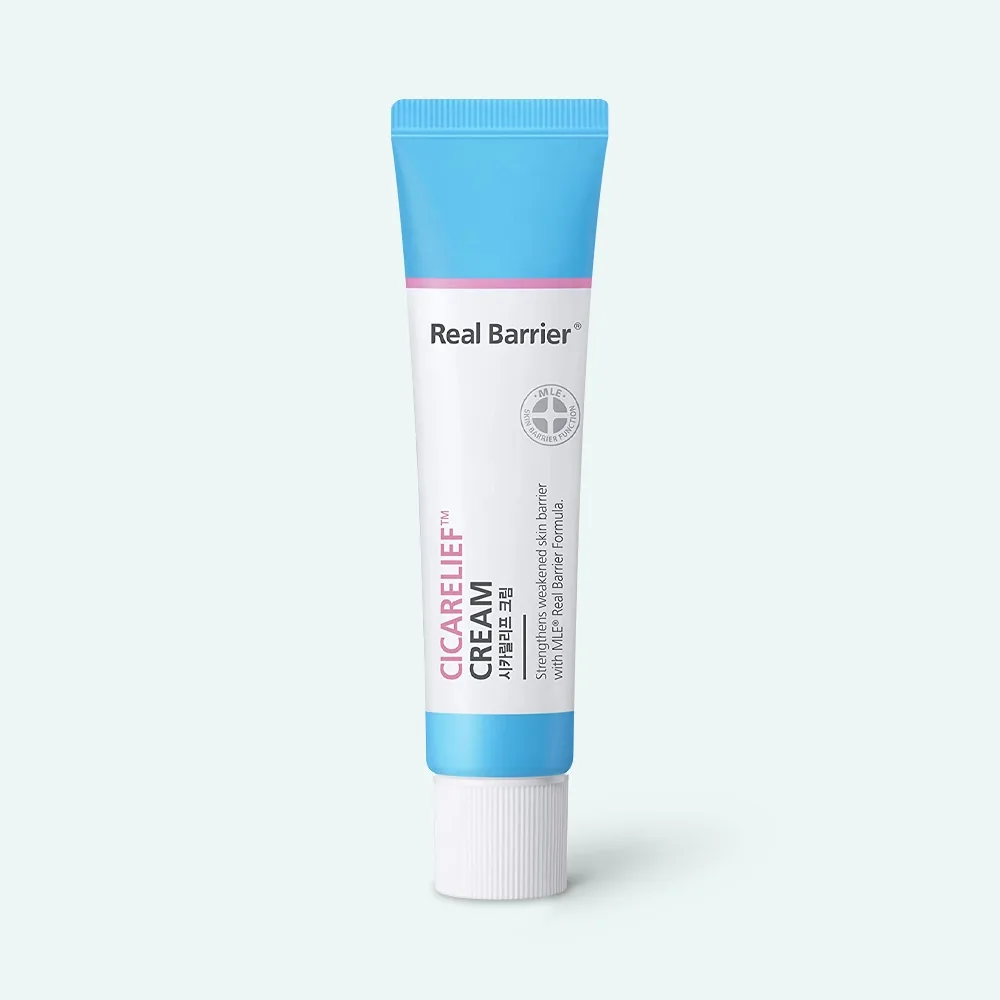
 Real Barrier Cicarelief Cream
One of the best consumer cica creams on the market, combining the full spectrum of centella actives with NeoPharm's MLE ceramide delivery and multiple complementary calming ingredients. Ideal for compromised, reactive, rosacea-prone, or recovering skin, and a staple in Korean dermatology clinic protocols. Minor limitations on packaging, but the formulation is genuinely excellent.
 Transparent 10% Panthenol Cream
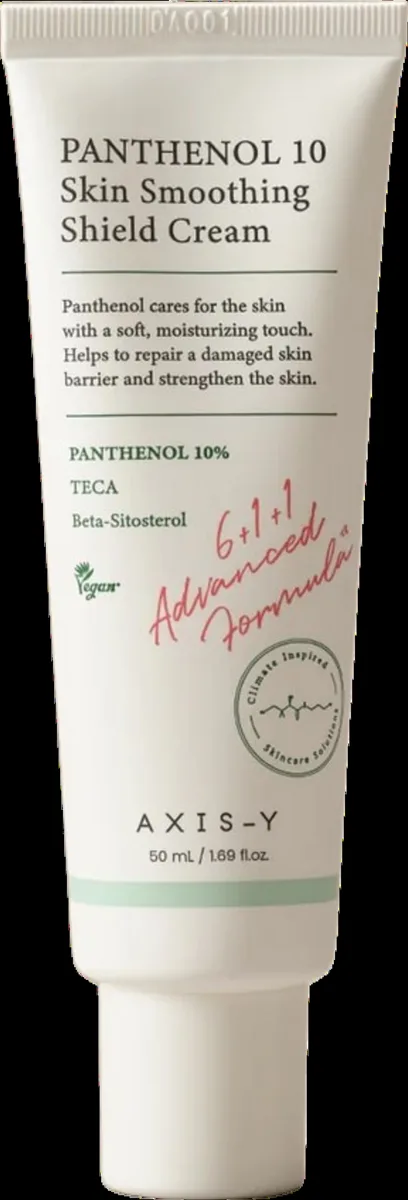
 Panthenol 10 Skin Smoothing Shield Cream
A disclosed 10% panthenol barrier cream built around a full physiological ceramide trio, a centella calming cast, and a modest shea butter occlusive. Fragrance-free, cross-season, and unusually transparent about its hero active — one of the brand's strongest moisturizer formulations.
 K-Beauty Icon
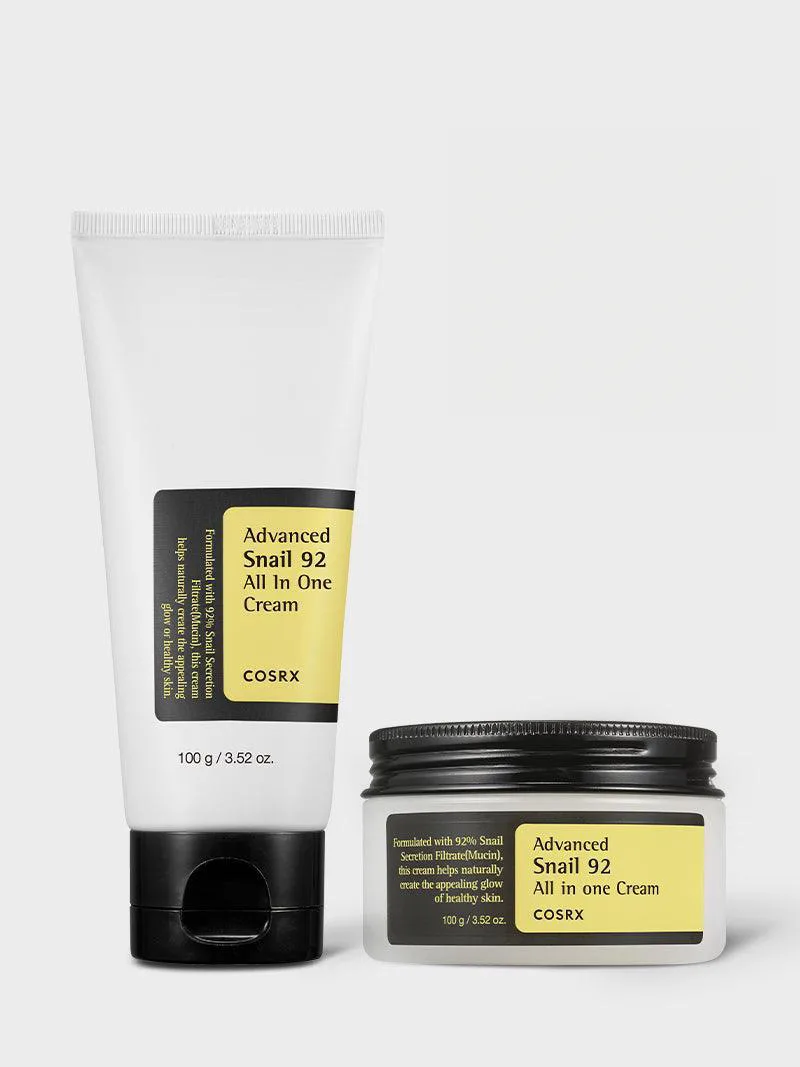
 Advanced Snail 92 All in One Cream
The cream that helped prove snail mucin to the world — and a decade later, it still deserves the reputation. At 92% snail secretion filtrate in a fragrance-free, gentle gel-cream, it delivers hydration, soothing, and gradual skin improvement across virtually every skin type. The texture takes getting used to, but 13 million sold units and 25,000+ reviews suggest most people manage.