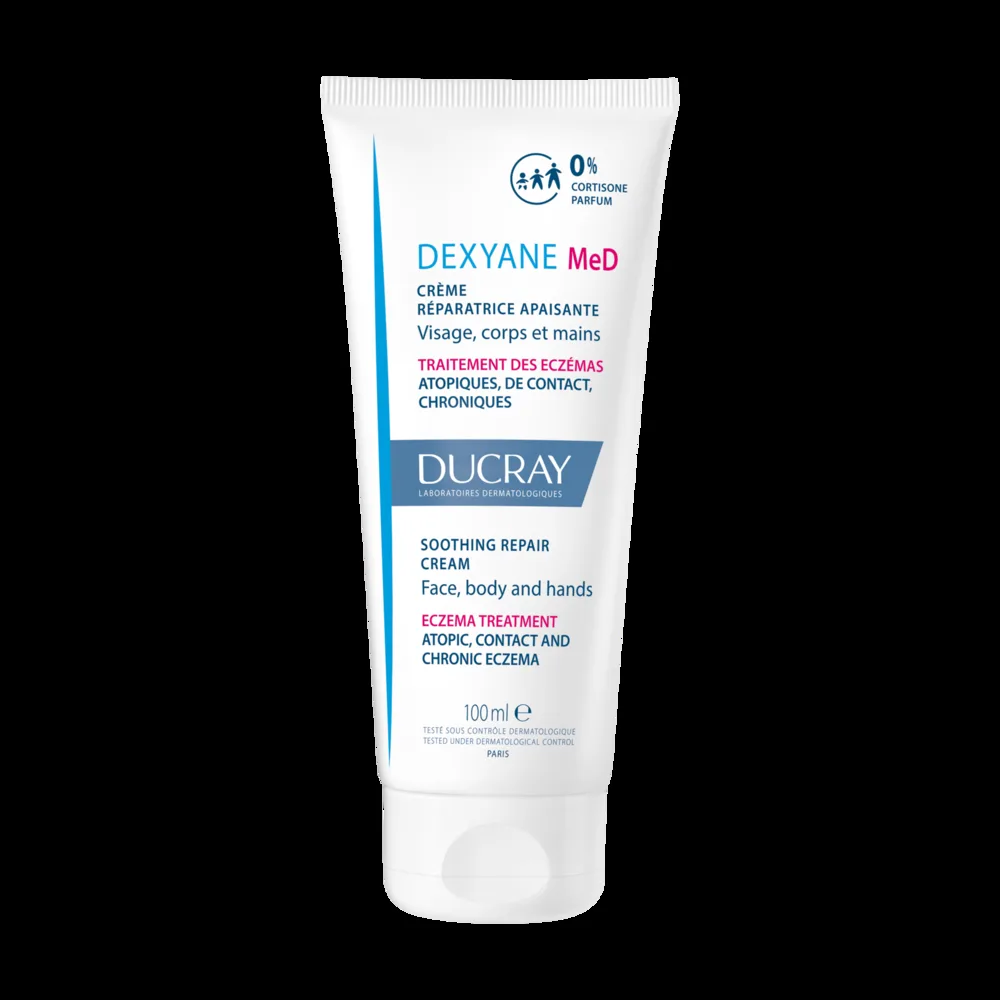
A genuinely unusual eczema cream — one of the few over-the-counter options built around Tripterygium wilfordii extract and registered as a European medical device. Faster-acting than typical emollient creams on acute flares, with published tolerance data to back it up. Not a steroid replacement for severe cases, but a credible bridge between basic barrier creams and prescription treatment.
Dexyane MeD Soothing Repair Cream
A genuinely unusual eczema cream — one of the few over-the-counter options built around Tripterygium wilfordii extract and registered as a European medical device. Faster-acting than typical emollient creams on acute flares, with published tolerance data to back it up. Not a steroid replacement for severe cases, but a credible bridge between basic barrier creams and prescription treatment.
Score Breakdown
Where this product gains points and where it loses them — broken down across the four scoring pillars.
A clinically positioned eczema treatment with a rare active (Tripterygium wilfordii extract) layered on a solid emollient base. Strong irritation score reflects published tolerance data; value score is dragged slightly by the small 100 ml size and specialty distribution.
Pros & Cons
- ✓Tripterygium wilfordii extract gives it a genuinely unusual anti-inflammatory mechanism
- ✓Class IIa medical device registration in Europe backs the clinical positioning
- ✓Faster flare resolution than emollient-only creams in most users
- ✓Sucralfate and enoxolone target inflammation and physical protection simultaneously
- ✓Fragrance-free, alcohol-free, and tolerated on broken or weeping skin
- ✓Useful as a steroid-tapering tool between prescription courses
- ✗Limited US availability — often requires specialty import or Ducray's own site
- ✗Not recommended during pregnancy due to the Tripterygium wilfordii extract
- ✗Small 100 ml tube makes per-use cost high for body-wide flare coverage
- ✗Too rich for most oily or acne-prone skin as a daily facial moisturizer
- ✗Not a substitute for prescription treatment in severe eczema flares
Full Review
Most skincare reviews don't have to explain regulatory classifications, but Dexyane MeD is an exception worth taking a detour for. In the European cosmetics market, there's a specific regulatory tier called Class IIa medical devices — products that have gone through clinical safety and efficacy review at a level above cosmetics but below pharmaceuticals. It's a category that exists specifically for topical treatments that do real therapeutic work without crossing into prescription drug territory. Very few over-the-counter skincare products live in this tier, and the ones that do are generally the result of a brand with both the clinical infrastructure and the regulatory appetite to push a product through the CE mark process. Ducray, which has been operating under Pierre Fabre's dermatology umbrella since 1930, is one of those brands, and Dexyane MeD is the flagship of that approach.
The anchor ingredient is Tripterygium wilfordii root extract — the thunder god vine. If you're only familiar with it from traditional Chinese medicine, you might have the same reaction most Western skincare readers have: isn't that the one with the safety warnings? The answer is yes, but the warnings apply to oral dosing of unpurified preparations in traditional medicine contexts. The extract used here is a standardized, purified topical fraction, with published tolerance data in atopic dermatitis patients, registered under European medical device regulations. The active compound of interest is celastrol, which has a growing body of anti-inflammatory research behind it — it modulates inflammatory cascades including NF-kB pathways relevant to eczema. Pierre Fabre's research team chose it as the anchor for Dexyane MeD because it gave the formula a real therapeutic differentiator beyond what a ceramide or niacinamide cream could claim.
Around the Tripterygium extract sits the rest of the Dexyane architecture: sucralfate for physical protection over compromised skin, enoxolone (licorice-derived glycyrrhetinic acid) for a secondary anti-inflammatory pathway, niacinamide for barrier signaling and ceramide synthesis, and shea butter as the emollient backbone. The vehicle is fragrance-free, alcohol-free, and designed to be tolerated on broken or weeping skin — which matters because most eczema patients have been burned (sometimes literally) by creams that stung on application.
In hand, it's a rich, creamy white emulsion with a cushiony slip. It absorbs in about sixty to ninety seconds and leaves a soft, matte-velvety finish rather than a greasy film. Applied to a flare area, the first thing most users notice is a slight cooling sensation followed by a reduction in the burning that accompanies inflamed skin. By day two or three of twice-daily use, redness begins visibly softening. By day seven to fourteen, a typical moderate flare has improved to the point where daily application is no longer necessary. Ducray's own published tolerance studies track the improvement curve through about four weeks of continuous use.
Where this cream genuinely distinguishes itself is in the specific clinical niche it occupies. For mild intermittent dryness, a generic ceramide cream is equivalent and cheaper. For severe eczema requiring systemic treatment, no topical over-the-counter product is a substitute for dermatologist-prescribed care. But for the large middle — patients whose flares are moderate, who want to reduce their reliance on topical steroids, who need something faster-acting than a pure emollient but don't require prescription treatment — this is one of the few products built specifically for that tier. It's particularly useful as a steroid-tapering tool: once a dermatologist has stabilized a flare with a short course of topical corticosteroid, switching to Dexyane MeD for the taper phase can extend remission without extending steroid exposure.
The limitations are real. Availability in the US is poor; you'll usually need to order from specialty pharmacy import sites or Ducray's own US distribution, which has expanded but isn't widely stocked in mainstream retailers. The 100 ml tube is notably smaller than the 200 ml standard Dexyane tube, and there's a larger size available but it's harder to source. The price per ounce is higher than the standard Dexyane line, which is defensible given the Tripterygium extract and the medical device registration but does add up for users applying it frequently. Pregnancy status is the one notable asterisk — because of the Tripterygium extract, Ducray advises pregnant and breastfeeding users consult a doctor before use, so this is not a pregnancy-default option. And like the rest of the Dexyane line, it contains shea butter, which means it's not fungal-acne safe and may be heavy for oily facial skin.
Still, for the right patient, this is one of the most differentiated eczema creams on the market. It's not a steroid, it's not a placebo, and it's not just another ceramide cream dressed up in French pharmacy packaging. It's a genuinely unusual formulation built around a botanical active with a credible evidence base, developed by a brand with the clinical research infrastructure to back the claims. If the itch-scratch cycle and acute flare management are your bottleneck, this earns its place in the routine.
Formula
Key Ingredients
The hero actives that drive this product's performance.
| Ingredient | Function | Evidence |
|---|---|---|
| Tripterygium Wilfordii Root Extract (Celastrol source) | The signature active of Dexyane MeD — an extract of the Tripterygium wilfordii (thunder god vine) root containing celastrol, a compound with well-documented anti-inflammatory activity in both Chinese traditional medicine and modern dermatology research. In this formula it's the accelerant that pushes the product from 'emollient' into 'active flare treatment' territory, modulating the inflammatory cascade faster than emollient-only creams can. | promising |
| Sucralfate | Creates a protective film over the fissured, weeping skin that characterizes moderate-to-severe eczema flares. Borrowed from gastroenterology, where it coats stomach ulcers, it's applied here to shield compromised atopic skin from further irritation while the other actives work underneath. Its inclusion is part of why Dexyane MeD is classified as a medical device rather than a cosmetic. | promising |
| Enoxolone (Glycyrrhetinic Acid) | Licorice-derived anti-inflammatory that potentiates the skin's own cortisol pathway without introducing corticosteroids. Paired with the Tripterygium wilfordii extract here, it provides a second mechanism for dampening the inflammatory drive behind the flare. | promising |
| Niacinamide | Supports the skin's ceramide synthesis and calms low-grade inflammation. In this acute-flare formula, it's the longer-term repair ingredient that keeps working after the Tripterygium and enoxolone have calmed the immediate fire. | well-established |
| Shea Butter | The occlusive and emollient backbone of the cream — its triglycerides and phytosterols reinforce the damaged lipid barrier and lock in the humectants. At the relatively high percentage in this INCI position, it's doing meaningful barrier repair, not just cosmetic softening. | well-established |
Full INCI List · pH 5.5
Aqua, Glycerin, Caprylic/Capric Triglyceride, Butyrospermum Parkii (Shea) Butter, Cetearyl Alcohol, Dimethicone, Glyceryl Stearate, PEG-100 Stearate, Sucralfate, Niacinamide, Tripterygium Wilfordii Root Extract, Enoxolone, Bisabolol, Allantoin, Tocopherol, Ceteareth-20, Carbomer, Sodium Hydroxide, Caprylyl Glycol, Phenoxyethanol, Disodium EDTA
Product Flags
✓ Fragrance Free✓ Alcohol Free✗ Oil Free✗ Silicone Free✓ Paraben Free✓ Sulfate Free✗ Cruelty Free✗ Vegan✗ Fungal Acne Safe
Comedogenic Ingredients
butyrospermum-parkii
Potential Irritants
phenoxyethanol
Common Allergens
cetearyl-alcohol
Compatibility
Skin Match
Best For
Works For
Not Ideal For
Addresses These Conditions
eczema compromised skin barrier sensitivity dryness post procedure
Use With Caution
Routine Step
treatment
Time of Day
AM & PM
Pregnancy Safe
Unknown
Layering Tips
Apply directly to flare areas 2-3 times daily during acute phases, tapering to once daily as the flare resolves. Can be used alongside prescription topical steroids or as a steroid-tapering tool.
Results Timeline
Visible reduction in redness and burning within 1-3 days of consistent twice-daily application. Most acute flares show meaningful improvement within 7-14 days. Published Ducray tolerance studies indicate flare-severity scores improve steadily over 28 days of continuous use.
Pairs Well With
gentle non-foaming cleansersprescription topical steroids
Sample AM Routine
- Gentle non-foaming cleanser
- Ducray Dexyane MeD Soothing Repair Cream
- Mineral sunscreen (if exposed)
Sample PM Routine
- Gentle cleanser
- Ducray Dexyane MeD Soothing Repair Cream
Evidence
Who Should Skip
- Limited US availability — often requires specialty import or Ducray's own site
- Not recommended during pregnancy due to the Tripterygium wilfordii extract
- Small 100 ml tube makes per-use cost high for body-wide flare coverage
- Too rich for most oily or acne-prone skin as a daily facial moisturizer
Science & Expert Perspective
The Science
The Tripterygium wilfordii research is the most interesting part of this formula's evidence base. Published studies in journals including the Journal of Ethnopharmacology and Phytomedicine have characterized celastrol and related compounds from Tripterygium as anti-inflammatory agents that modulate NF-kB signaling and reduce pro-inflammatory cytokine release. Ducray's own clinical studies on Dexyane MeD, presented at European dermatology meetings, have shown measurable improvements in SCORAD (Scoring Atopic Dermatitis) indexes over 28-day use periods in patients with mild-to-moderate atopic dermatitis, along with reductions in subjective itch scores.
The sucralfate evidence base is more established. Originally developed as an oral gastric ulcer protectant in the 1960s, topical sucralfate has been studied in wound healing, radiation-induced dermatitis, and atopic skin, with published work showing that it forms a protective coating over compromised skin and supports re-epithelialization. Its inclusion in a leave-on cream is unusual and gives Dexyane MeD a physical protection layer that purely emollient creams lack.
Enoxolone — glycyrrhetinic acid from licorice root — has a separate anti-inflammatory evidence base focused on its ability to inhibit 11-beta-hydroxysteroid dehydrogenase and effectively potentiate the skin's own cortisol activity. The strategic point of this formula is that these three actives target three different parts of the inflammatory cascade, layered on a niacinamide-and-shea-butter repair base. That multi-pathway approach is what justifies the medical device classification and distinguishes it from single-mechanism emollient creams.
Dermatologist Perspective
Dermatologists in Europe, particularly in France where Ducray has its strongest distribution, frequently include Dexyane MeD in atopic dermatitis protocols as a non-steroid adjunct during flare management and tapering. Board-certified dermatologists familiar with the product often recommend it for patients who want to reduce their topical steroid use, for pediatric patients where steroid sparing is a priority, and for adults with chronic moderate atopic dermatitis who need more than a basic emollient. It's commonly suggested as a bridge product between prescription courses — used to extend remission without extending corticosteroid exposure. Dermatologists also appreciate the medical device registration, which provides a higher level of regulatory vetting than standard cosmetic products and gives them more confidence in the clinical claims.
Guidance
Usage Guide
How to Use
Apply a generous layer to flare-affected areas twice daily during active flares. Can be used on face, body, and (in European labeling) on children from three months old. Safe to apply alongside or between doses of prescription topical steroids — commonly used as a steroid-tapering tool once a flare has been stabilized. Do not apply to broken, weeping, or infected skin that requires medical evaluation. Because of the Tripterygium wilfordii extract, pregnant and breastfeeding users should consult a doctor before use. Continue application until the flare has fully resolved, then switch to a standard emollient for maintenance between flares.
Value Assessment
At around $35 for 100 ml, this is priced well above a basic ceramide cream but below most prescription alternatives. The Tripterygium wilfordii extract and the medical device registration justify a premium over standard Dexyane. For patients whose flares are frequent enough that they'd otherwise be cycling through prescription steroid courses, the ability to reduce or taper that steroid use is a real clinical value. For patients with mild occasional dryness, a cheaper ceramide cream gives most of the benefit at a third of the price. A larger 400 ml pump version exists in some European markets and offers meaningfully better per-unit value if you can source it.
Who Should Buy
Patients with moderate atopic dermatitis looking for a faster-acting alternative to plain emollient creams, users trying to reduce or taper topical steroid use, and anyone whose eczema sits in the middle ground between basic barrier-cream territory and prescription treatment. Especially useful as a steroid-tapering tool.
Who Should Skip
Pregnant and breastfeeding users (without medical guidance), anyone with mild occasional dryness who doesn't need the medical-device-tier actives, people managing fungal folliculitis, and patients whose flares are severe enough to require prescription treatment first.
Ready to try Ducray Dexyane MeD Soothing Repair Cream?
Details
Details
Texture
Rich, creamy white emulsion with a cushiony slip — absorbs within 60-90 seconds
Scent
None
Packaging
White squeeze tube with flip cap, 100 ml
Finish
velvetynon-greasy
What to Expect on First Use
Expect a slight cooling sensation on application to inflamed skin. Burning and stinging usually decrease within the first application, and redness typically begins softening by day 2-3. No stinging on broken skin in most users, though a small number report mild warmth initially.
How Long It Lasts
3-5 weeks during an active flare with twice-daily application to affected areas
Period After Opening
6 months
Best Season
All Year
Certifications
CE mark (Class IIa medical device, EU)
Background
The Why
Dexyane MeD launched in 2015 as Ducray's response to a specific clinical gap: patients with moderate eczema who needed more than emollient support but weren't candidates for daily topical steroids. Pierre Fabre's dermatology researchers identified Tripterygium wilfordii as a botanical candidate with enough anti-inflammatory evidence to justify a medical-device-class product, and built the formula around it. The line is now a staple in French pharmacy atopic dermatitis protocols.
About Ducray Legacy Brand (20+ years)
Ducray has been developing dermatological products under the Pierre Fabre umbrella since 1930 and Dexyane MeD is registered in Europe as a Class IIa medical device — a higher regulatory tier than standard cosmetics, requiring clinical safety and efficacy data. The line is widely recommended by European dermatologists for moderate-to-severe atopic dermatitis flares.
Brand founded: 1930 · Product launched: 2015
Myth vs. Reality
Myths & Misconceptions
Myth
Tripterygium wilfordii is a dangerous traditional Chinese medicine ingredient.
Reality
The concerns about oral Tripterygium relate to systemic dosing in traditional medicine contexts. The topical extract used here is a standardized, purified fraction registered under European medical device regulations with published tolerance data in atopic patients.
FAQ
Frequently Asked Questions
How is Dexyane MeD different from regular Dexyane cream?
Dexyane MeD is registered as a Class IIa medical device in Europe, which means it's gone through more rigorous clinical evaluation than standard cosmetics. It contains Tripterygium wilfordii extract in addition to the anti-itch actives in the standard Dexyane line, making it positioned for acute flare treatment rather than just daily maintenance.
Can Dexyane MeD replace prescription topical steroids?
For mild-to-moderate flares, many users find it reduces or eliminates the need for daily topical steroid use. For moderate-to-severe flares, it's most effective as a complement to prescription treatment rather than a replacement — often used between steroid doses or during tapering.
Is Tripterygium wilfordii safe in a topical product?
The topical extract used in Dexyane MeD is a standardized, purified fraction registered under European medical device regulations. Safety concerns about Tripterygium relate to oral dosing in traditional medicine; the topical extract at cosmetic concentrations has published tolerance data in atopic patients.
Is Dexyane MeD safe during pregnancy?
Because it contains Tripterygium wilfordii extract, Ducray generally advises pregnant and breastfeeding users consult a doctor before use. The standard Dexyane (without the MeD formulation) is often recommended as a pregnancy-safer alternative.
How long before I see results from Dexyane MeD?
Most users report a reduction in burning and stinging within the first application or two, visible softening of redness within 2-3 days, and meaningful flare improvement within 7-14 days of twice-daily use. Ducray's tolerance studies show continued improvement through 28 days of application.
Can I use Dexyane MeD on my face?
Yes, it's safe for face application on flare-affected areas, though it's richer than a typical facial moisturizer and may feel heavy on non-flaring skin. Most users apply it only to the active patches rather than as a daily full-face moisturizer.
Community
Community Voices
Common Praise
"faster flare resolution than emollient-only creams"
"reduces burning within days"
"fragrance-free and tolerated on broken skin"
"helps reduce reliance on topical steroids"
Common Complaints
"small tube for the price"
"hard to source in the US"
"does not replace prescription treatment for severe flares"
Notable Endorsements
Class IIa medical device registration in EuropeFrench pediatric dermatology recommendation
Appears In
best non steroid eczema creams best eczema flare treatments best french pharmacy eczema creams best ducray products best medical device eczema creams
Related Conditions
eczema compromised skin barrier sensitivity dryness post procedure
Related Ingredients
You Might Also Like
 Budget Holy Grail
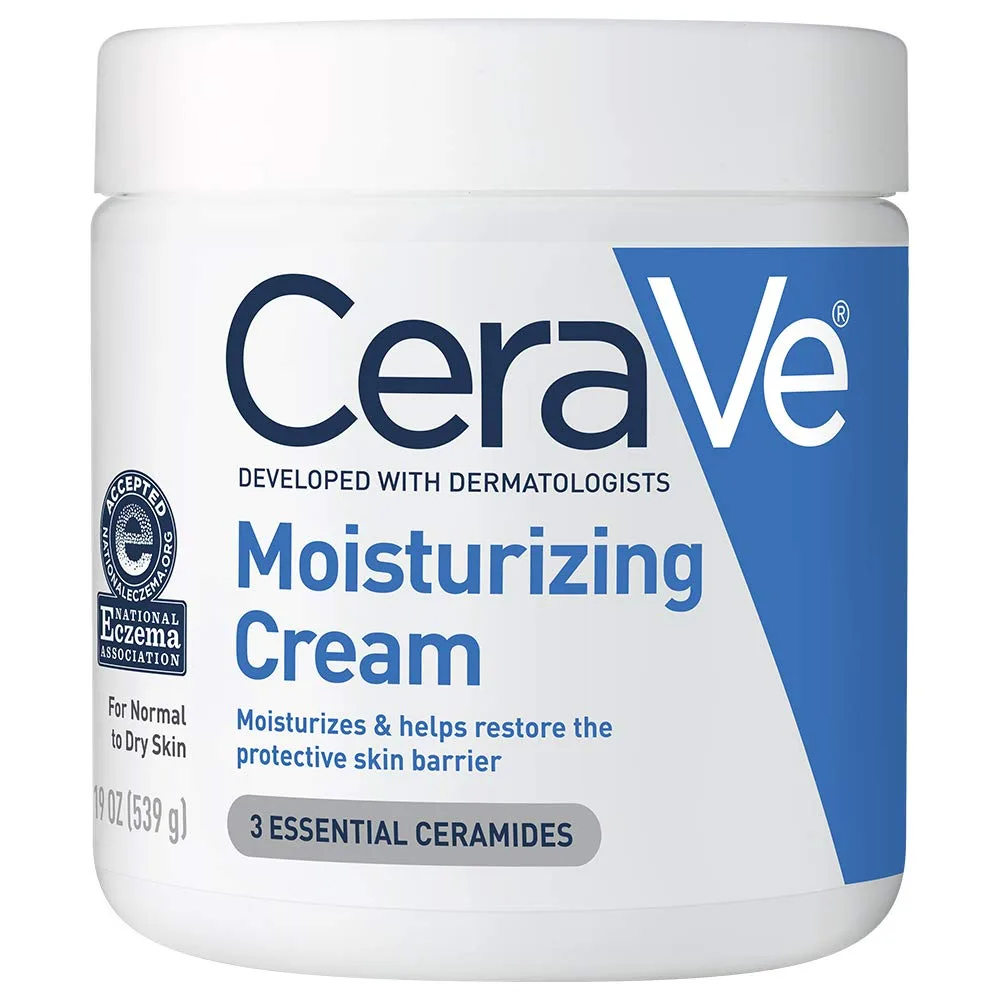
 Moisturizing Cream
The CeraVe Moisturizing Cream is the most important moisturizer in the drugstore — a ceramide-rich, dermatologist-developed formula that delivers barrier repair, multi-humectant hydration, and occlusive protection at a price so accessible it has no real excuse not to be in every household. Twenty-one years of consistent performance and universal dermatologist approval speak louder than any ingredient list.
 Barrier Repair Pioneer
 MLE Cream
Atopalm MLE Cream is one of the genuinely scientifically anchored barrier moisturizers in K-beauty — a fragrance-free, pseudo-ceramide cream built around a patented liquid-crystal lipid structure that mimics the skin's own intercellular matrix. For eczema, atopic skin, post-procedure recovery, or anyone with a stinging compromised barrier, it's one of the most reliably effective moisturizers in the entire category.
 K-Beauty Barrier Repair Staple
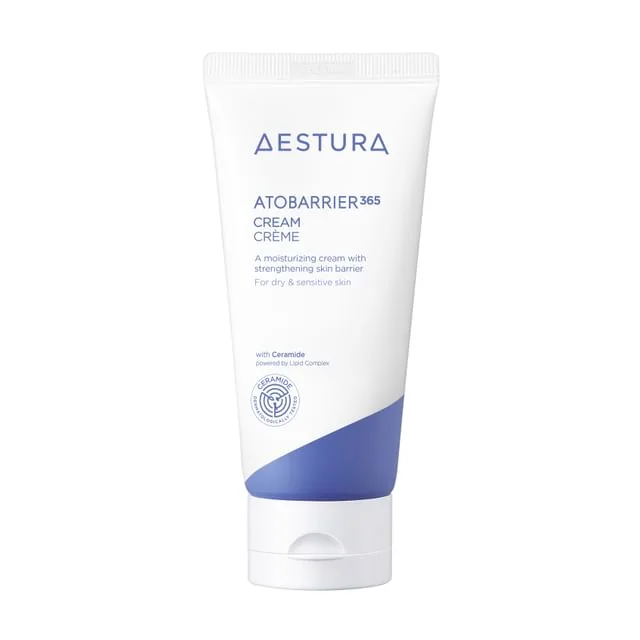
 Atobarrier 365 Cream
A Korean pharmacy cream that earns its cult following the hard way — with a lamellar lipid structure that actually rebuilds the barrier, not just coats it. If your skin has been through a rough winter, a retinoid ramp-up, or a bad reaction, this is the jar that quietly puts it back together.
 Korean Derm Clinic Recovery Pick
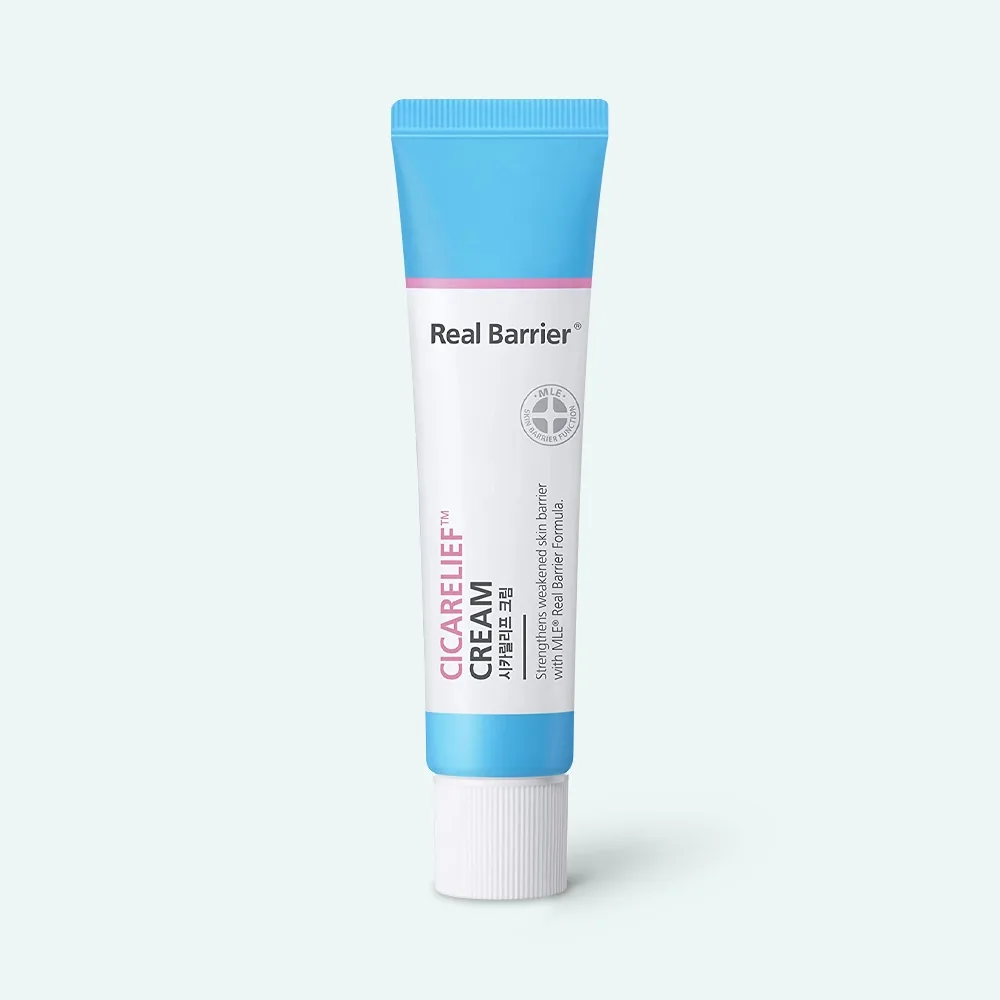
 Real Barrier Cicarelief Cream
One of the best consumer cica creams on the market, combining the full spectrum of centella actives with NeoPharm's MLE ceramide delivery and multiple complementary calming ingredients. Ideal for compromised, reactive, rosacea-prone, or recovering skin, and a staple in Korean dermatology clinic protocols. Minor limitations on packaging, but the formulation is genuinely excellent.
 Transparent 10% Panthenol Cream
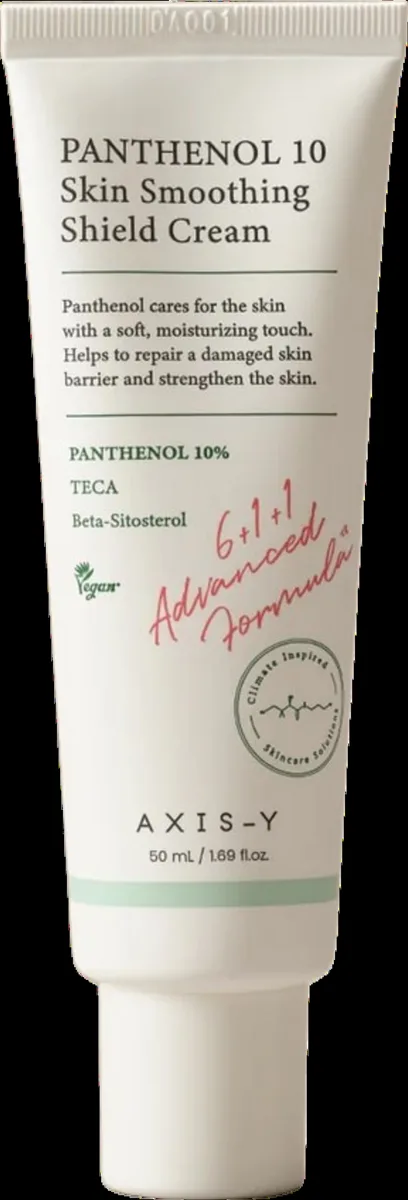
 Panthenol 10 Skin Smoothing Shield Cream
A disclosed 10% panthenol barrier cream built around a full physiological ceramide trio, a centella calming cast, and a modest shea butter occlusive. Fragrance-free, cross-season, and unusually transparent about its hero active — one of the brand's strongest moisturizer formulations.
 K-Beauty Icon
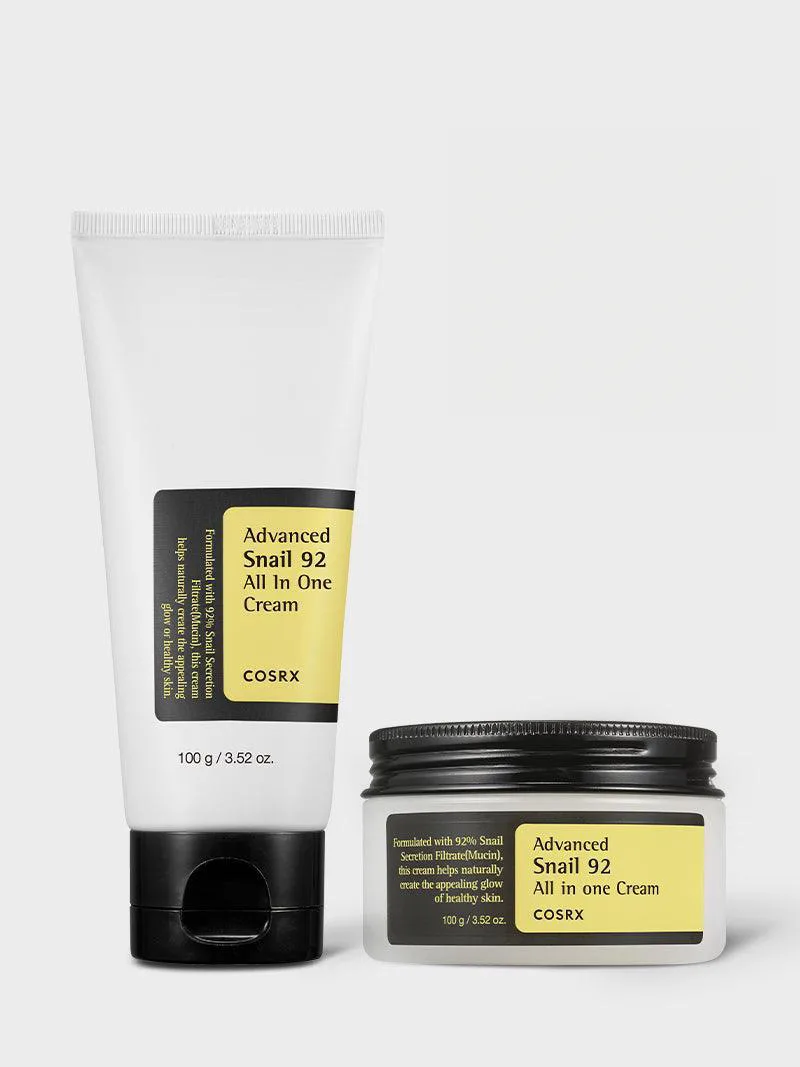
 Advanced Snail 92 All in One Cream
The cream that helped prove snail mucin to the world — and a decade later, it still deserves the reputation. At 92% snail secretion filtrate in a fragrance-free, gentle gel-cream, it delivers hydration, soothing, and gradual skin improvement across virtually every skin type. The texture takes getting used to, but 13 million sold units and 25,000+ reviews suggest most people manage.
This review reflects our independent analysis of publicly available ingredient data, manufacturer claims, and verified user reviews. We are reader-supported — Amazon links may earn us a commission at no cost to you. We do not accept paid placements; rankings are based solely on the evidence.