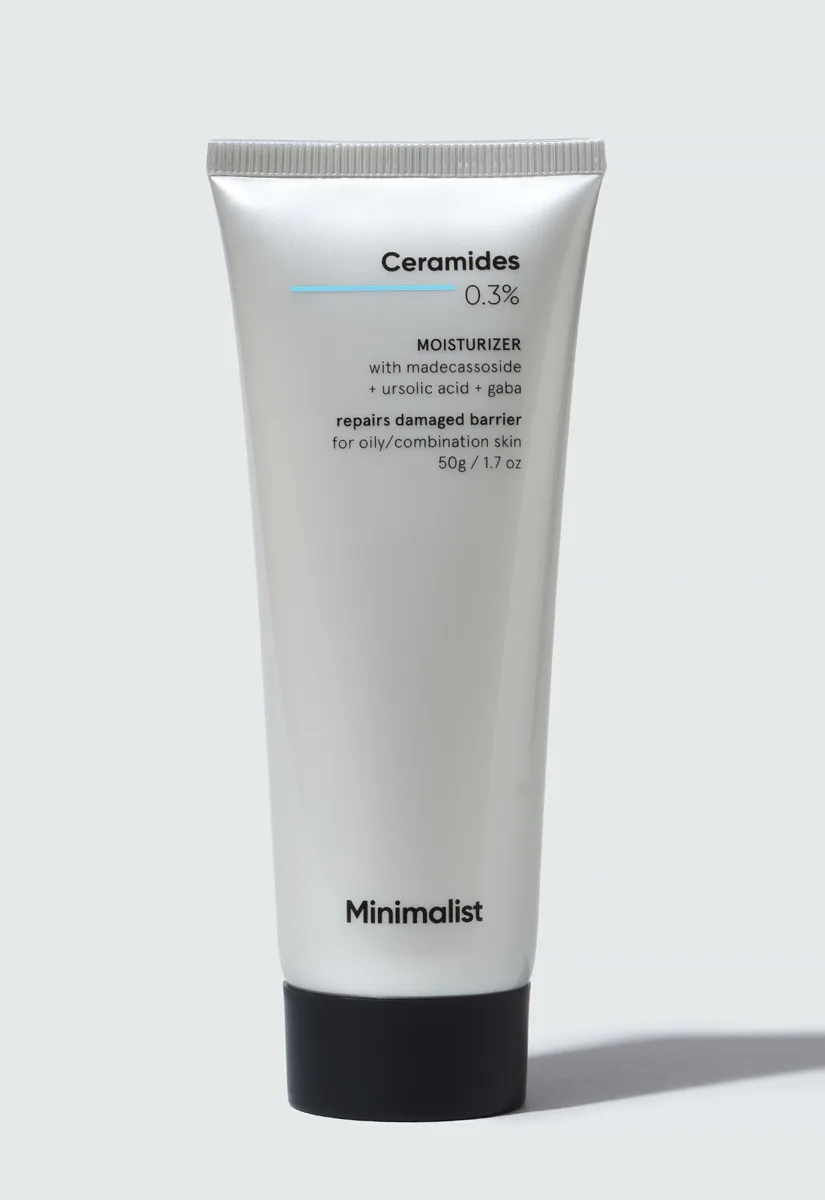
Minimalist's 0.3% Ceramide Barrier Repair Cream is one of the strongest value picks in the entire barrier-repair category — five ceramides at a declared 0.3% in the physiological 3:1:1 lipid ratio, madecassoside, ursolic acid, and a lightweight fragrance-free gel-cream base for under $15. This is the kind of formulation Western clinical brands charge $50-80 for, with better texture for oily skin.
0.3% Ceramide Barrier Repair Moisturizing Cream
Minimalist's 0.3% Ceramide Barrier Repair Cream is one of the strongest value picks in the entire barrier-repair category — five ceramides at a declared 0.3% in the physiological 3:1:1 lipid ratio, madecassoside, ursolic acid, and a lightweight fragrance-free gel-cream base for under $15. This is the kind of formulation Western clinical brands charge $50-80 for, with better texture for oily skin.
Score Breakdown
Where this product gains points and where it loses them — broken down across the four scoring pillars.
A near-perfect barrier cream at an almost unbelievable price: five ceramides at 0.3%, the 3:1:1 physiological lipid ratio, madecassoside, ursolic acid, and a clean fragrance-free formula. One of the strongest value picks in the entire category.
Pros & Cons
- ✓Five ceramide species at a declared 0.3% total concentration
- ✓Uses the physiological 3:1:1 ceramide:cholesterol:fatty acid ratio
- ✓Madecassoside rather than generic centella extract
- ✓Ursolic acid upregulates the skin's own ceramide synthesis
- ✓Lightweight gel-cream texture ideal for oily and combination skin
- ✓Genuinely fragrance-free with no essential oils or masking agents
- ✓Outstanding value — competitive with products at 4x the price
- ✓Layers beautifully under actives, makeup, and sunscreen
- ✗Contains propylene glycol, which can sensitize a small subset
- ✗Not fungal acne safe due to oat, lecithin, and polysorbate content
- ✗50 g tube runs out quickly with full-face twice-daily use
- ✗Limited international availability outside of India
- ✗Too lightweight for severely dry skin in harsh winter climates
Full Review
Start with the number on the label: 0.3%. Minimalist prints the total ceramide concentration directly on the front of the tube, which is itself an unusual move in a category where most brands hide behind 'complex' or 'blend' language that could mean anywhere from 0.05% to effectively zero. That transparency isn't marketing flourish — it's the founding principle of the brand, which was built in India in 2020 on the explicit premise that consumers deserve to know exactly what they're buying. The percentage-on-the-label approach put Minimalist on the map with Indian skincare enthusiasts, and their ceramide cream was one of the first products to demonstrate that the strategy could produce genuinely competitive formulations at a fraction of Western prices.
The ceramide complex itself is more sophisticated than most cream buyers realize. Five distinct ceramide species — NP, EOP, NS, AS, and AP — cover the major ceramide families found in healthy stratum corneum, rather than the single-ceramide-or-two approach that defines most drugstore ceramide products. More importantly, these ceramides are delivered alongside cholesterol and hydrogenated lecithin, which provides the cholesterol and fatty acid components needed for the 3:1:1 ratio that barrier research has repeatedly validated as the optimal physiological lipid balance. This is Peter Elias's work from the 1990s put into product form: applying ceramides without the supporting lipids can actually impair barrier recovery, and getting the ratio right matters more than simply increasing ceramide concentration.
The soothing layer is handled by madecassoside, which is the single most active triterpenoid extracted from centella asiatica. Where most centella-containing products use a generic centella extract at unclear concentrations, madecassoside is the specific molecule with the strongest wound-healing and anti-inflammatory data in the published literature. Its inclusion here shows a formulator who knows which component of centella does what, not someone who added 'cica' to the label for aesthetic reasons.
The deep hydration stack is where the formula gets genuinely interesting. Saccharide isomerate is a polysaccharide humectant that binds to the skin in a way that mimics natural moisturizing factor — it delivers sustained, long-lasting hydration more effectively than glycerin alone. Trehalose adds a plant-sugar osmoprotectant with cell-protective properties. Glyceryl glucoside is an aquaporin-activating ingredient that upregulates the skin's own water channels. Allantoin contributes mild keratolytic and soothing activity. Ursolic acid, a pentacyclic triterpene with published data on stimulating the skin's own ceramide synthesis pathway, completes the structural support side — an intelligent choice that encourages endogenous lipid production rather than relying purely on topical replacement.
The texture is where this cream diverges sharply from Western ceramide creams and earns its place in an oily-skin routine. Minimalist uses dicaprylyl carbonate and polyacrylate-13 to create a lightweight, almost gel-like cream that absorbs within 30 seconds and leaves no residue. This is a deliberate design choice — the brand recognizes that oily and combination skin buyers have been underserved by the ceramide category, which has traditionally been dominated by rich occlusive creams aimed at dry skin. CeraVe PM, La Roche-Posay Toleriane, Avène Tolerance Control — all excellent products, all too heavy for humid climates and oily-to-combination skin. Minimalist's gel-cream takes the same ingredient logic and puts it in a texture that works on a wider range of skin types without sacrificing the barrier-repair benefits.
The formula isn't flawless. The fragrance situation is actually exemplary — it's genuinely fragrance-free, with no essential oils, no 'parfum' line, no masking agents hiding under other labels. But there is propylene glycol in the formula, which is a mild sensitizer for a small subset of users with a history of contact dermatitis to glycols. The oat kernel extract near the top of the INCI is worth noting for anyone with a documented oat allergy. And the product is not fungal-acne safe — the oat, lecithin, polysorbate 20, and glyceryl stearate can potentially feed Malassezia in users with confirmed fungal acne. For everyone else, the ingredient list is remarkably clean for the category.
Now the value question, which is the part that deserves some explanation. This cream retails for roughly $9 USD at Indian retail pricing and around $12-18 internationally with shipping. For comparison: CeraVe PM at Target is $15, La Roche-Posay Toleriane is $25, Skinbetter Science Trio Rebalancing Moisture Treatment is $125. Minimalist is delivering a formulation in the upper tier of this category at the lower tier of the pricing. The catch — if there is one — is availability: Minimalist doesn't have the retail footprint of established Western brands, and international shipping adds friction. But if you can source it, this cream is one of the best value propositions in skincare today, and it genuinely competes with products at four times the price on ingredient quality alone.
In terms of performance, users with compromised barriers typically report noticeable reductions in baseline redness and tightness within a week, with full barrier recovery at 4-6 weeks of consistent use. It's particularly effective as a support product for active routines — the kind of cream you add to your stack when your retinol or your exfoliating acid has pushed your skin over the edge and you need to pull it back without losing the benefits of the active. That's a specific use case the ceramide category has historically underserved, and it's where this product shines.
Formula
Key Ingredients
The hero actives that drive this product's performance.
| Ingredient | Function | Evidence |
|---|---|---|
| Ceramide Complex 0.3% (NP, EOP, NS, AS, AP) (0.3%) | Five distinct ceramide species at a 0.3% total concentration — the full spectrum of the major stratum corneum ceramides rather than a token single ceramide. Combined with the cholesterol and the oat-derived fatty acid components in this formula, it approximates the lipid ratio of healthy skin barrier, which is the specific mechanism behind Elias's physiological lipid replacement work. | well-established |
| Madecassoside | The most potent individual triterpenoid from centella asiatica, with direct anti-inflammatory and wound-healing data. In a barrier-repair cream, madecassoside works alongside the ceramides to calm the irritation that typically accompanies compromised skin. | well-established |
| Cholesterol + Hydrogenated Lecithin | The second and third components of the 3:1:1 physiological lipid ratio (ceramides:cholesterol:fatty acids) that Minimalist structures this cream around. Without the cholesterol, ceramides alone can actually impair barrier recovery — the ratio matters as much as the individual ingredients. | well-established |
| Ursolic Acid | A pentacyclic triterpene with published data on upregulating ceramide synthesis in the skin's own lipid synthesis pathway. Its inclusion here is clever — rather than just applying ceramides topically, ursolic acid encourages the skin to make more of its own. | promising |
| Saccharide Isomerate + Trehalose + Glyceryl Glucoside | A sophisticated polysaccharide humectant stack that provides deep, sustained hydration. Saccharide isomerate in particular binds to the skin in a way that mimics natural moisturizing factor, which makes it one of the better humectants for compromised barriers. | well-established |
Full INCI List
Aqua, Avena Sativa (Oat) Kernel Extract, Dicaprylyl Carbonate, Glycerin, Glyceryl Glucoside, Butylene Glycol, Trehalose, Saccharide Isomerate, Ursolic Acid, Aminobutyric Acid, Pentylene Glycol, Allantoin, Cholesterol, Hydrogenated Lecithin, Madecassoside, Polyacrylate-13, Polyisobutene, Polysorbate 20, Glyceryl Stearate, Sucrose Distearate, Propylene Glycol, Phenoxyethanol, Ceramide NP, Ceramide EOP, Ceramide NS, Ceramide AS, Ceramide AP, Triethanolamine, Ethylhexylglycerin, Citric Acid, Sodium Citrate, Carbomer, Trisodium Ethylenediamine Disuccinate.
Product Flags
✓ Fragrance Free✓ Alcohol Free✗ Oil Free✓ Silicone Free✓ Paraben Free✓ Sulfate Free✓ Cruelty Free✗ Vegan✗ Fungal Acne Safe
Potential Irritants
Propylene Glycol
Common Allergens
Oat ExtractLecithin
Compatibility
Skin Match
Best For
oily combination sensitive normal
Works For
Not Ideal For
Addresses These Conditions
compromised skin barrier sensitivity dehydration eczema post procedure acne
Routine Step
moisturizer
Time of Day
AM & PM
Pregnancy Safe
Yes ✓
Layering Tips
Apply as the last moisturizing step, after any serums and before facial oil or sunscreen. Its gel-cream texture layers well with actives like retinol, vitamin C, and exfoliating acids — it's designed specifically to support an active routine without adding its own irritation.
Results Timeline
Immediate hydration and comfort from the first application. Noticeable reduction in baseline redness and tightness within 1 week. Full barrier recovery typically develops over 4-6 weeks of consistent twice-daily use.
Pairs Well With
retinol-treatmentsvitamin-c-serumsniacinamideexfoliating-acidssunscreen
Sample AM Routine
- Gentle cleanser
- Hydrating toner
- Vitamin C serum
- Minimalist 0.3% Ceramide Barrier Repair Moisturizing Cream
- SPF 50
Sample PM Routine
- Gentle cleanser
- Niacinamide or retinol treatment
- Minimalist 0.3% Ceramide Barrier Repair Moisturizing Cream
Evidence
Who Should Skip
- Contains propylene glycol, which can sensitize a small subset
- Not fungal acne safe due to oat, lecithin, and polysorbate content
- 50 g tube runs out quickly with full-face twice-daily use
- Limited international availability outside of India
Science & Expert Perspective
The Science
The formulation science behind this cream rests directly on Peter Elias and colleagues' research on stratum corneum lipid composition and barrier recovery. Elias's work in the 1990s and 2000s established that the stratum corneum contains a specific ratio of ceramides, cholesterol, and free fatty acids — approximately 3:1:1 — and that topical application of these lipids in the correct ratio accelerates barrier recovery more effectively than any single component applied alone. Critically, applying ceramides in isolation or in incorrect ratios can actually impair barrier recovery by disrupting the existing lipid organization. Minimalist's 3:1:1 formulation approach reflects this research and distinguishes it from most 'ceramide creams' on the market that don't balance the lipid components. The five ceramide species used (NP, EOP, NS, AS, AP) correspond to the major ceramide families identified in healthy stratum corneum, and 0.3% total is a substantive concentration for topical delivery. Madecassoside has a robust dermatology research base, with published data showing anti-inflammatory, antioxidant, and wound-healing effects in both in vitro and human clinical contexts; a 2015 paper in the Journal of Medicinal Chemistry reviewed its pharmacological activities and supported its use in dermatologic applications. Ursolic acid has published data in the Archives of Dermatological Research demonstrating upregulation of ceramide synthesis in cultured keratinocytes, which provides a plausible mechanism for topical ursolic acid contributing to endogenous lipid production. Saccharide isomerate has documented binding to lectins in human skin, which explains its unusually long hydration retention compared to conventional humectants. Overall, the formula is mechanistically coherent and supported by well-established research — the main evidence gap is the absence of peer-reviewed clinical trials on this specific formulation, though brand-published internal data reports a 87% reduction in skin irritation markers at 2 weeks.
Dermatologist Perspective
Dermatologists and skincare clinicians in India have adopted Minimalist's ceramide cream as a go-to barrier-repair recommendation for patients across a wide range of skin types and conditions. It's frequently used as support during active treatment regimens involving retinoids, benzoyl peroxide, or exfoliating acids, where the ceramide-plus-madecassoside stack provides reliable barrier protection without adding irritation of its own. Board-certified dermatologists appreciate the transparent labeling and the sophistication of the 3:1:1 ratio approach, which is mechanistically more defensible than most ceramide products at higher price points. The fragrance-free formulation makes it appropriate for eczema, rosacea, post-procedure care, and compromised barriers in general. Internationally, dermatologists who are aware of the brand often recommend it as a budget alternative to clinical Western ceramide creams when patients are cost-constrained. Pregnancy-safe and suitable for nearly all skin conditions except confirmed fungal acne.
Guidance
Usage Guide
How to Use
Apply as the final moisturizing step after any serums and treatment products, both morning and night. A pea-sized amount is sufficient for full face and neck coverage — this cream spreads further than its texture suggests. In the morning, follow with broad-spectrum SPF 30+. In the evening, this can be the final step of the routine, or you can layer a facial oil on top for additional occlusion in dry weather. Particularly effective when used to support active ingredients — apply your retinol, vitamin C, or exfoliating acid first, let it absorb fully, then layer this cream on top. Store in the original tube away from heat and direct sunlight. Pregnancy and breastfeeding safe for daily use.
Value Assessment
At roughly $9 USD at Indian retail pricing — or $12-18 internationally with shipping — this is one of the best value propositions in the entire skincare category. CeraVe PM at $15-18 delivers simpler ceramide formulation in a heavier texture; La Roche-Posay Toleriane at $25-30 offers comparable soothing but less sophisticated lipid ratio; clinical Western options like Epionce or Skinbetter hit $65-125 for similar ingredient principles. Minimalist is operating at a structurally lower price point due to Indian manufacturing and direct distribution, without compromising on the formulation logic. The 50 g size is the main value caveat — full-face twice-daily use empties the tube in 6-8 weeks, which is a faster burn rate than the larger Western products. Even at 2x restock frequency, the math favors Minimalist by a wide margin.
Who Should Buy
Practically anyone with barrier concerns — oily, combination, normal, dry, sensitive, eczema-prone, acne-prone, post-procedure, or compromised skin. Particularly strong for oily and combination skin buyers who have struggled to find a ceramide cream that isn't too heavy, and for users on active routines with retinoids or exfoliating acids who need barrier support. A top pick for value shoppers and anyone who appreciates transparent percentage labeling.
Who Should Skip
Users with confirmed fungal acne (pityrosporum folliculitis) should avoid this due to oat, lecithin, and polysorbate content. People with documented oat allergies should choose an alternative. Users in severely dry winter climates may find this too lightweight — layer it under a richer cream or use a heavier alternative during harsh weather.
Ready to try Minimalist 0.3% Ceramide Barrier Repair Moisturizing Cream?
Details
Details
Texture
Lightweight, almost gel-like cream that absorbs within 30 seconds and leaves no residue.
Scent
Genuinely fragrance-free — no essential oils, no 'parfum,' no masking agents.
Packaging
Squeeze tube with a precise tip — straightforward and travel-friendly.
Finish
satinnon-greasyinvisiblefast-absorbing
What to Expect on First Use
Immediate comfort and softening on first application. Most users with compromised barriers notice reduced tightness and redness within the first 2-3 days. No adjustment period, no purging — this is a pure support product, not a treatment.
How Long It Lasts
Roughly 6-8 weeks with twice-daily face application from the 50 g tube.
Period After Opening
12 months
Best Season
All Year
Certifications
Cruelty-free
Background
The Why
Minimalist launched in 2020 as an Indian skincare brand built around the premise that consumers deserve to see exact ingredient concentrations on the label. The 0.3% Ceramide cream was one of the brand's earliest hits, positioned as a direct response to the gap between expensive Western ceramide creams and cheap drugstore moisturizers that contained negligible amounts of actives. Minimalist was acquired by Hindustan Unilever (Unilever India) in 2024, though the formulations and pricing have remained consistent post-acquisition.
About Minimalist Emerging Brand (2–5 years)
Minimalist (also known as Be Minimalist) is an emerging Indian skincare brand founded in 2020 by the Bhayani brothers. The brand built a loyal following through transparent percentage-on-the-label positioning, INCI-first marketing, and competitive pricing on research-grade ingredients. It was acquired by HUL (Unilever India) in 2024.
Brand founded: 2020 · Product launched: 2021
Myth vs. Reality
Myths & Misconceptions
Myth
Oily skin doesn't need ceramides.
Reality
Barrier dysfunction affects all skin types, and oily skin often has compromised barriers from over-cleansing, actives, and acne treatment. The myth that oily skin should use lighter, less moisturizing products is backwards — oily skin needs barrier support, just in a lightweight format rather than a heavy cream. That's exactly what Minimalist designed this for.
Myth
More ceramides is always better.
Reality
Beyond about 0.5-1%, additional ceramide concentration yields diminishing returns, and without the cholesterol and fatty acid components in the correct ratio, pure ceramides can actually impair barrier recovery. Elias's research showed that the 3:1:1 ratio of ceramides:cholesterol:fatty acids was more effective than any single component at higher concentrations.
FAQ
Frequently Asked Questions
Is 0.3% a meaningful concentration of ceramides?
Yes. Most 'ceramide creams' on the market contain far less than this — often in the 0.05-0.1% range — and hide behind proprietary blends that obscure the actual amount. 0.3% total across five ceramide species is a substantial concentration that puts this cream in the same league as clinical barrier-repair products at 10x the price. The fact that Minimalist discloses the number on the label is itself unusual.
Does it work as well as CeraVe PM or La Roche-Posay Toleriane?
For barrier repair, yes — the ceramide concentration and 3:1:1 lipid ratio here are arguably more sophisticated than either of those options. The texture is different: Minimalist is a lightweight gel-cream, while CeraVe PM is a richer lotion and Toleriane is a heavier cream. For oily and combination skin, Minimalist is generally preferable; for severely dry or winter-compromised skin, the richer Western options may feel more cushioning.
Can I use it with retinol and exfoliating acids?
Yes — this is specifically what it's designed for. Apply your retinol or acid first, let it absorb, then layer this ceramide cream on top to support the barrier against the active's irritation. Many users report that adding this cream to their routine is what allowed them to tolerate stronger retinoids or BHA products.
Is it safe during pregnancy?
Yes. The formula contains no retinoids, hydroquinone, salicylic acid, or other pregnancy-restricted actives. The ceramides, madecassoside, ursolic acid, and humectants are all considered pregnancy-safe.
Why is it so cheap?
Minimalist is an Indian brand with lower manufacturing and distribution overhead than Western clinical brands, and they deliberately price for accessibility rather than premium positioning. The cream genuinely costs around $9 USD at Indian retail — there is no catch, and the formula is what the INCI says it is. International shipping increases the effective price somewhat, but the product is still excellent value.
Is this fungal acne safe?
Not strictly — the formula contains oat extract, lecithin, polysorbate 20, and a small amount of glyceryl stearate, which can feed Malassezia in users with confirmed fungal acne (pityrosporum folliculitis). Users with diagnosed fungal acne should choose a simpler fungal-acne-safe option instead.
Where can I buy it outside India?
Minimalist ships internationally through their global storefront and through Amazon in some markets. International pricing runs roughly $12-18 USD depending on shipping, which is still dramatically better value than comparable Western ceramide creams.
Community
Community Voices
Common Praise
"Lightweight gel-cream texture works for oily skin"
"Genuine barrier repair within 1-2 weeks"
"Fragrance-free"
"Unbeatable price-to-ingredient ratio"
"Layers beautifully with actives"
Common Complaints
"Small 50 g tube for daily full-face use"
"Contains propylene glycol"
"Not rich enough for severely dry skin in winter"
"Limited availability outside India"
Notable Endorsements
Massive following in Indian skincare communitiesFrequently recommended in r/IndianSkincareAddicts and r/SkincareAddiction for barrier repair
Appears In
best ceramide cream for oily skin best budget barrier repair cream best fragrance free moisturizer best gel cream moisturizer
Related Conditions
compromised skin barrier sensitivity dehydration eczema post procedure acne
Related Ingredients
ceramides centella asiatica cholesterol humectants ursolic acid
You Might Also Like
 Budget Holy Grail
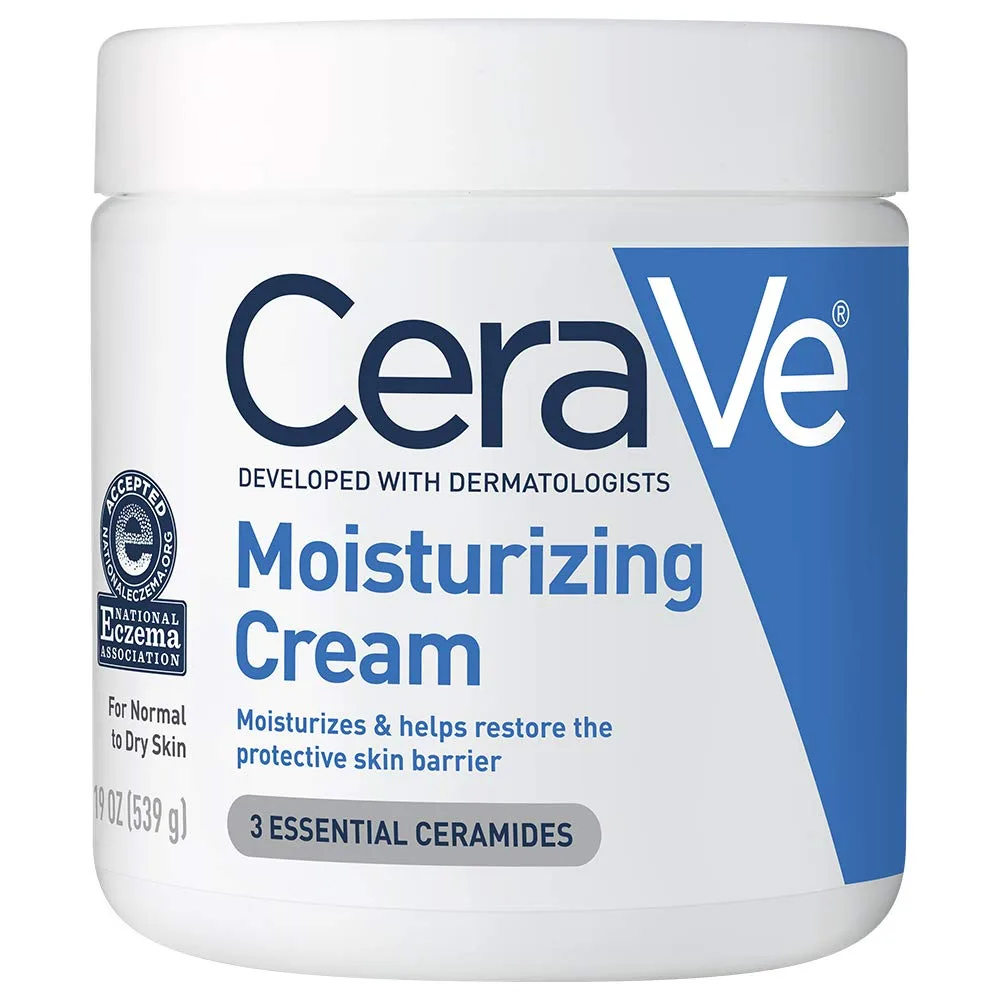
 Moisturizing Cream
The CeraVe Moisturizing Cream is the most important moisturizer in the drugstore — a ceramide-rich, dermatologist-developed formula that delivers barrier repair, multi-humectant hydration, and occlusive protection at a price so accessible it has no real excuse not to be in every household. Twenty-one years of consistent performance and universal dermatologist approval speak louder than any ingredient list.
 Barrier Repair Pioneer
 MLE Cream
Atopalm MLE Cream is one of the genuinely scientifically anchored barrier moisturizers in K-beauty — a fragrance-free, pseudo-ceramide cream built around a patented liquid-crystal lipid structure that mimics the skin's own intercellular matrix. For eczema, atopic skin, post-procedure recovery, or anyone with a stinging compromised barrier, it's one of the most reliably effective moisturizers in the entire category.
 K-Beauty Barrier Repair Staple
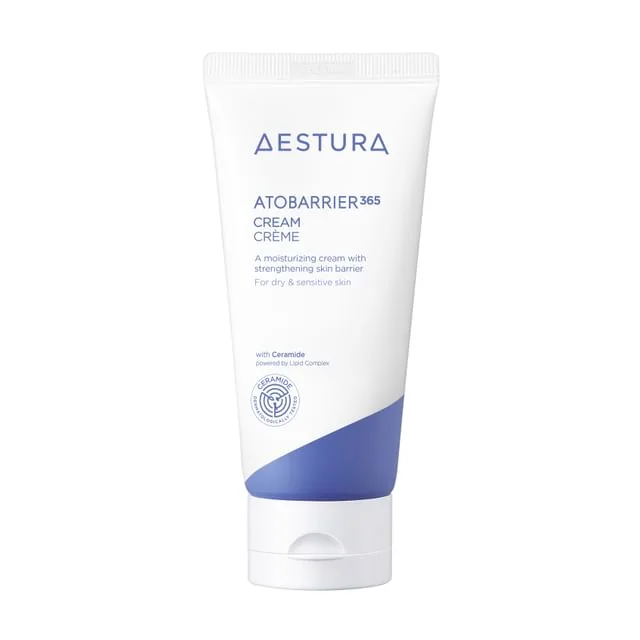
 Atobarrier 365 Cream
A Korean pharmacy cream that earns its cult following the hard way — with a lamellar lipid structure that actually rebuilds the barrier, not just coats it. If your skin has been through a rough winter, a retinoid ramp-up, or a bad reaction, this is the jar that quietly puts it back together.
 Korean Derm Clinic Recovery Pick
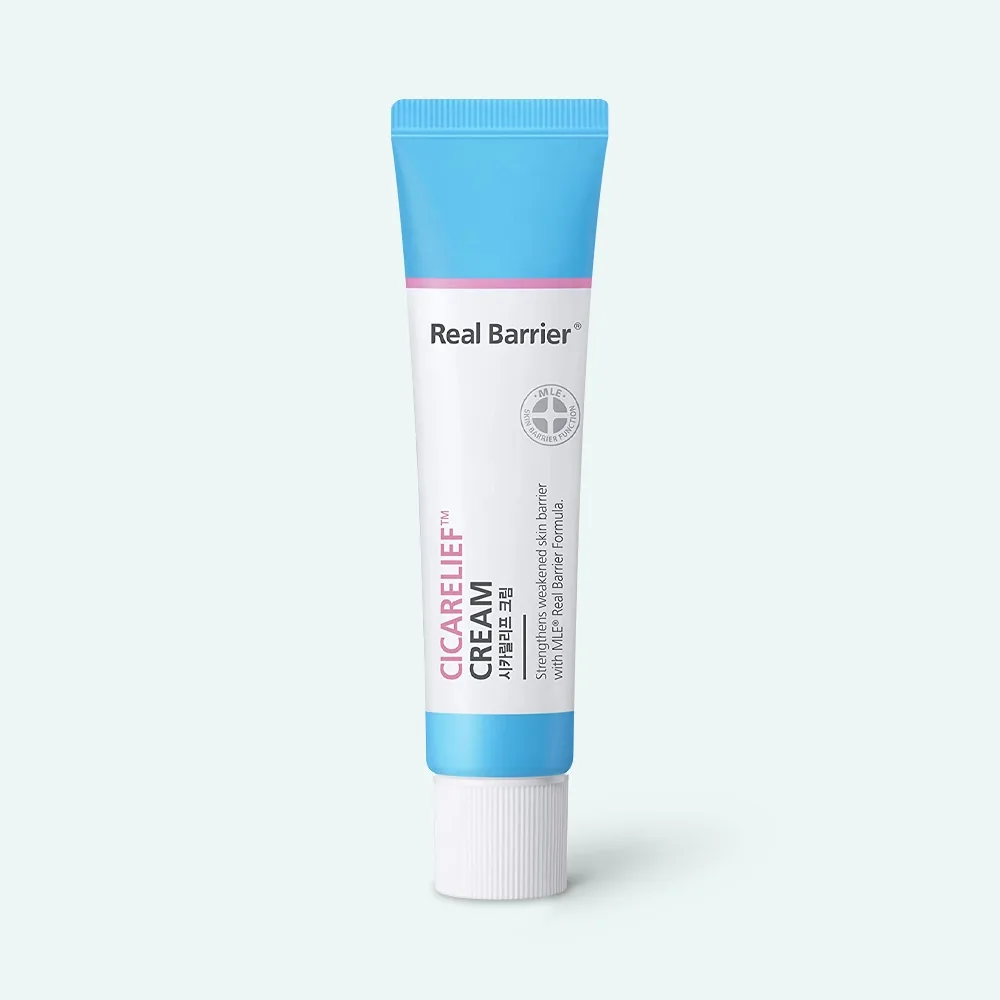
 Real Barrier Cicarelief Cream
One of the best consumer cica creams on the market, combining the full spectrum of centella actives with NeoPharm's MLE ceramide delivery and multiple complementary calming ingredients. Ideal for compromised, reactive, rosacea-prone, or recovering skin, and a staple in Korean dermatology clinic protocols. Minor limitations on packaging, but the formulation is genuinely excellent.
 Transparent 10% Panthenol Cream
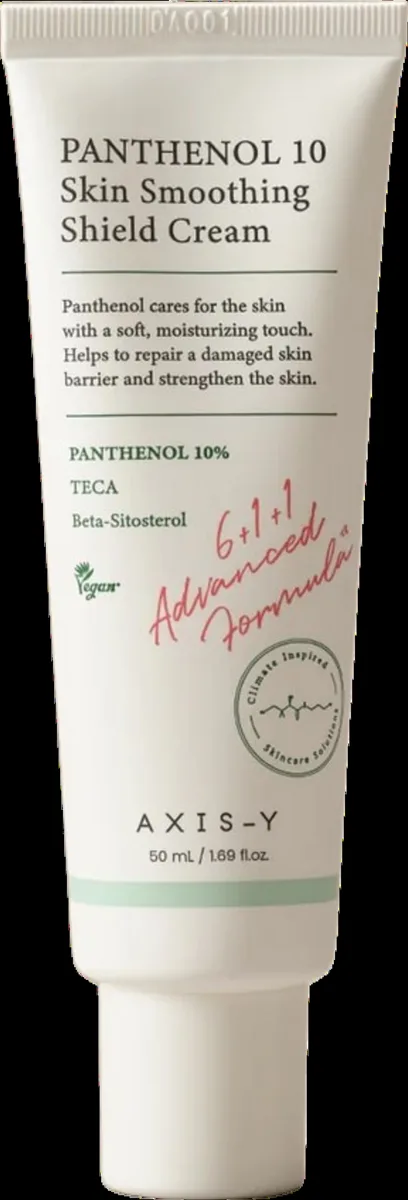
 Panthenol 10 Skin Smoothing Shield Cream
A disclosed 10% panthenol barrier cream built around a full physiological ceramide trio, a centella calming cast, and a modest shea butter occlusive. Fragrance-free, cross-season, and unusually transparent about its hero active — one of the brand's strongest moisturizer formulations.
 K-Beauty Icon
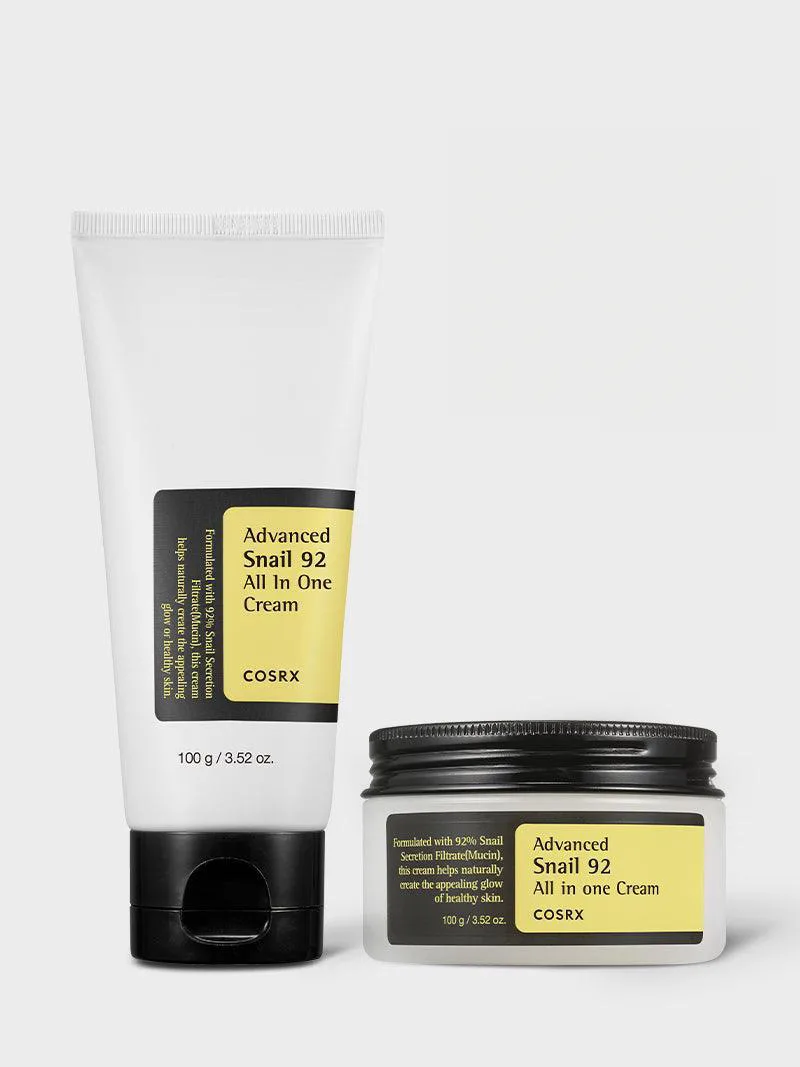
 Advanced Snail 92 All in One Cream
The cream that helped prove snail mucin to the world — and a decade later, it still deserves the reputation. At 92% snail secretion filtrate in a fragrance-free, gentle gel-cream, it delivers hydration, soothing, and gradual skin improvement across virtually every skin type. The texture takes getting used to, but 13 million sold units and 25,000+ reviews suggest most people manage.
This review reflects our independent analysis of publicly available ingredient data, manufacturer claims, and verified user reviews. We are reader-supported — Amazon links may earn us a commission at no cost to you. We do not accept paid placements; rankings are based solely on the evidence.