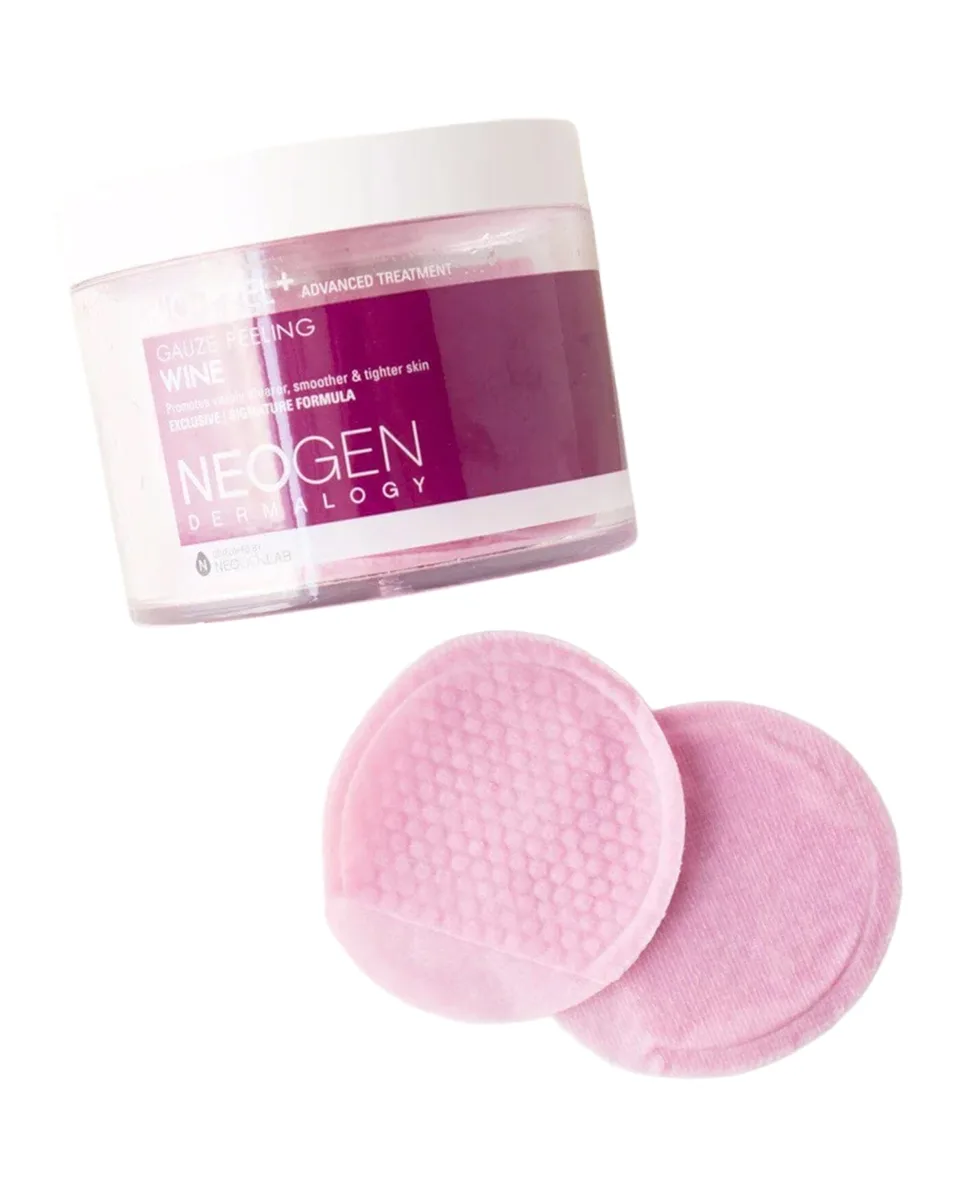
A decade after launch, Neogen's wine-soaked peeling pads still deliver one of the most satisfying first-use payoffs in K-beauty: genuine dead-skin lift, an immediate glow, and a resveratrol antioxidant kicker most peeling pads skip. Fragrance and alcohol keep it off the sensitive-skin list, but for normal-to-oily skin it's still the pad to beat.
Dermalogy Bio-Peel Gauze Peeling Wine
A decade after launch, Neogen's wine-soaked peeling pads still deliver one of the most satisfying first-use payoffs in K-beauty: genuine dead-skin lift, an immediate glow, and a resveratrol antioxidant kicker most peeling pads skip. Fragrance and alcohol keep it off the sensitive-skin list, but for normal-to-oily skin it's still the pad to beat.
Score Breakdown
Where this product gains points and where it loses them — broken down across the four scoring pillars.
A well-balanced dual-action exfoliant that delivers immediate glow at a reasonable per-use cost. Fragrance and alcohol drop the irritation score slightly for reactive skin.
Pros & Cons
- ✓Immediate visible glow and smoothness after the very first use
- ✓Dual-textured gauze physically lifts what the acids soften
- ✓Lactic acid plus gluconolactone blend is gentler than glycolic pads
- ✓Resveratrol adds antioxidant cover uncommon in peeling pads
- ✓Niacinamide and panthenol keep post-peel barrier comfortable
- ✓Travel-friendly format with no bottle or sink required
- ✓Decade-long track record with 15,000+ user reviews behind it
- ✗Denatured alcohol sits high in the formula and can feel stripping
- ✗Fragrance and fragrance allergens rule it out for reactive skin
- ✗Textured gauze side is too rough for compromised barriers
- ✗Scent lingers more than some users expect from a treatment
- ✗Not ideal to stack on the same night as retinoids or vitamin C
Full Review
If you used any peeling pad in the last ten years, there's a decent chance Neogen got there first. The Bio-Peel Gauze Peeling Wine launched in 2013 and kicked off a K-beauty format that spawned hundreds of imitators, most of which quietly copied the textured-gauze-plus-chemical-exfoliant trick without matching the original. Holding a fresh pad over a clean sink on a Sunday night still feels like a small ritual — the faint wine scent, the weight of the liquid, the textured side's subtle scratch — and for a product this old, that's a quiet kind of achievement. The formula is built around a blend of lactic acid and gluconolactone rather than the sharper glycolic acid you'll find in harsher pads. That matters, because the other half of the job is being done by the gauze itself: one side is smooth cotton, the other is raised, almost burlap-like, and when you swipe it across cheeks and forehead it lifts off a visible layer of dead cells on first use. Pair that kind of mechanical action with glycolic acid and you'd be asking for a flush that doesn't go down for an hour. The larger-molecule lactic acid plus the even larger gluconolactone buffer the exfoliation enough that the gauze side becomes the useful half, not the dangerous half. The real personality trick is the wine extract. This isn't just a shelf-appeal flourish, even though the name clearly leans into it. The Vitis vinifera fruit and leaf extract here carry resveratrol, a polyphenol antioxidant that gives the product a bit of oxidative-stress cover at exactly the moment your freshly exfoliated skin is most exposed. Niacinamide tucks in behind that to calm the post-peel flush and nudge pigment toward more even ground; panthenol and hyaluronic acid quietly clean up the hydration side so you don't wake up tight. It's a more thoughtful supporting cast than most first-generation peeling pads bothered to include. Texturally, you'll notice the improvement first around the nose and chin. The combination of acid softening and physical lifting is unusually good at clearing the oxidized sebum plugs people call blackheads, and two or three uses is usually enough to make the T-zone look visibly clearer. By week four of weekly use, the more general glow — the kind that comes from consistent turnover rather than a one-night shine — starts to settle in. It's the kind of product you forget is working until you skip a week. The honest caveats: this is not the pad for sensitive or reactive skin. Denatured alcohol sits fairly high on the ingredient list, fragrance is present, and the textured side — lovely for resilient skin — is going to be too much for anyone whose barrier is already wobbling. Neogen makes a fragrance-free Green Tea version for that crowd, and it's a much smarter choice if your skin flushes easily or you're dealing with active rosacea. Used on compromised skin or over eczema patches, the Wine pads will absolutely push you into the red zone. Value-wise, a tub of 30 pads at around $27 lands at roughly a dollar per use if you're using them weekly, which is reasonable for a product that replaces both a chemical exfoliant and a physical one in a single step. It's cheaper than most clinic-level peel treatments and genuinely more effective than the toner-pad era that came before it. If you want a once-a-week ritual that makes your skin visibly better by Monday morning, this is still, more than a decade later, the reference-class option in the category.
Formula
Key Ingredients
The hero actives that drive this product's performance.
| Ingredient | Function | Evidence |
|---|---|---|
| Lactic Acid | Acts as the primary AHA in the soaked side of this pad, loosening dead surface cells so the textured gauze side can physically lift them away in a single pass. Larger molecular size than glycolic makes it gentler for weekly use. | well-established |
| Gluconolactone | A polyhydroxy acid that layers into the acid blend to soften the sting typical of pure AHA pads. Because PHA molecules are bulky, they exfoliate more superficially, which pairs well with the mechanical action of the textured gauze. | well-established |
| Resveratrol (Wine Extract) | Sourced from the red wine extract the product is named after, it contributes antioxidant support that partially buffers the oxidative stress a fresh chemical peel places on exposed skin. | promising |
| Niacinamide | Calms the flush that follows the acid-plus-abrasion combo and helps even out the tone-brightening effect the lactic acid kicks off. Key reason this pad feels less raw than older first-gen peeling pads. | well-established |
| Panthenol | Left on the skin after the physical sweep, it offsets the mild stripping feeling of lactic acid and keeps the barrier from complaining the next morning. | well-established |
Full INCI List · pH 3.7
Water, Glycerin, Butylene Glycol, Sodium Lactate, Alcohol, Niacinamide, PEG-60 Hydrogenated Castor Oil, Vitis Vinifera (Grape) Fruit Extract, Vitis Vinifera (Grape) Leaf Extract, Wine Extract, Resveratrol, Lactic Acid, Gluconolactone, Tartaric Acid, Citric Acid, Malic Acid, Beta-Glucan, Adenosine, Arginine, Allantoin, Panthenol, Hydrolyzed Collagen, Sodium Hyaluronate, PEG-40 Hydrogenated Castor Oil, Disodium EDTA, Fragrance, Phenoxyethanol, Hydroxyisohexyl 3-Cyclohexene Carboxaldehyde, Butylphenyl Methylpropional, Alpha-Isomethyl Ionone, Citronellol, Limonene, Linalool
Product Flags
✗ Fragrance Free✗ Alcohol Free✓ Oil Free✓ Silicone Free✓ Paraben Free✓ Sulfate Free✗ Cruelty Free✗ Vegan✗ Fungal Acne Safe
Potential Irritants
alcoholfragrancelactic acidlinaloollimonenecitronellol
Common Allergens
fragrancelinaloollimonenecitronellol
Compatibility
Skin Match
Best For
Works For
Not Ideal For
Addresses These Conditions
dullness texture blackheads large pores hyperpigmentation
Use With Caution
Avoid With
compromised skin barrier eczema post procedure sensitivity
Routine Step
treatment
Time of Day
PM
Pregnancy Safe
Yes ✓
Layering Tips
Use after cleansing on dry skin. Swipe textured side across face avoiding eye area, flip to smooth side for neck and chest. Follow with hydrating toner, then moisturizer. Do not layer with other exfoliants or retinoids the same night.
Results Timeline
Immediate smoothness and glow after the first pad. Tone and texture improvements visible after 2-3 uses over 2 weeks. Full brightening and pore-refining benefits after 6-8 weeks of consistent weekly use.
Pairs Well With
hydrating tonersceramide moisturizerscentella serumshyaluronic acid
Conflicts With
retinoidsother AHAs/BHAsvitamin C at acidic pHbenzoyl peroxide
Sample AM Routine
- Gentle cleanser
- Hydrating toner
- Niacinamide serum
- Moisturizer
- SPF 50
Sample PM Routine
- Cleansing oil
- Gentle cleanser
- THIS PRODUCT (1-2x weekly)
- Hydrating toner
- Ceramide moisturizer
Evidence
Science & Expert Perspective
The Science
The mechanism here rests on two well-studied exfoliation pathways working in tandem. Lactic acid is one of the most-researched alpha hydroxy acids in cosmetic dermatology, with studies in the Journal of Dermatological Treatment and the International Journal of Cosmetic Science showing that it improves stratum corneum turnover, increases hydration via its natural moisturizing factor activity, and produces measurable brightening at concentrations between 5 and 12%. Gluconolactone, a polyhydroxy acid, has been studied alongside AHAs for its ability to produce similar exfoliating benefits with less transepidermal water loss and reduced stinging, a finding published by Green and colleagues that helped establish PHAs as a sensitive-skin-friendlier alternative. What makes the format in this specific product interesting is the integration of chemical exfoliation with a controlled mechanical component. The textured gauze side is not an abrasive scrub in the traditional plastic-bead sense; it's a woven fabric surface that removes already-loosened corneocytes rather than forcing off intact ones. That distinction matters, because research on physical exfoliation in the Journal of Cosmetic Dermatology has consistently flagged microtearing from hard particles as the main risk, not gentle mechanical lift. The resveratrol contribution is the most exploratory piece. Topical resveratrol has shown antioxidant activity in several peer-reviewed studies and modest effects on pigmentation and photoaging, though concentrations and delivery systems vary widely and results are less robust than for the acids. In this formula it functions more as a supporting antioxidant than a primary active, which is the honest way to describe its role.
Dermatologist Perspective
Dermatologists generally classify dual-action peeling pads like this one as a once-weekly maintenance tool rather than a clinical treatment, and they're routinely recommended for patients who want a visible refresh between in-office procedures. Board-certified dermatologists note that the lactic acid and PHA combination is a more forgiving choice than glycolic acid for at-home use, particularly on skin types prone to post-inflammatory hyperpigmentation, where aggressive exfoliation can backfire. The physical gauze component is commonly flagged as a caveat: clinicians generally advise patients with active acne, rosacea, or any sign of a compromised barrier to skip textured peeling formats entirely. Dermatologists also frequently remind patients that these pads are not a substitute for sunscreen — if anything, they make daytime SPF more important, since freshly exfoliated skin is more photosensitive for roughly a week after use.
Guidance
Usage Guide
How to Use
Once a week, after cleansing, take one pad and start with the textured side. Swipe gently across the forehead, cheeks, nose, and chin, avoiding the eye area and lips. Flip to the smooth side and use it to spread any remaining liquid over the neck, chest, and the backs of the hands. Do not rinse. Let the residue absorb for one to two minutes, then follow with a hydrating toner and a ceramide-rich moisturizer. Always apply SPF the next morning. Avoid pairing with retinoids, benzoyl peroxide, or other exfoliating acids on the same night, and skip entirely on any week your skin is flushed, peeling, or recovering from a procedure.
Value Assessment
At around $27 for 30 pads, the per-use cost lands near $0.90 if you stick to the recommended weekly cadence, making this one of the better-value exfoliants in the dual-action category. Neogen only sells the one size, so there's no bigger-value option to weigh. Compared to leave-on AHA serums at similar prices that cover exfoliation alone, the peeling wine pads also deliver the mechanical lift step, which fairly counts as two products in one. The price reflects a decade-proven formula from an established Korean biotech brand rather than pure hype, so the money is going toward substance rather than packaging.
Who Should Buy
Anyone with normal, oily, or combination skin who wants a visible once-a-week reset without booking a clinic appointment. It's especially well suited to people who find pure acid serums boring and miss the satisfying tactile element of a physical exfoliant, but who know better than to reach for harsh walnut scrubs.
Who Should Skip
Skip these pads if your skin is sensitive, reactive, actively acneic, rosacea-prone, or recovering from any barrier issue. Fragrance-allergic users and anyone who can't tolerate denatured alcohol should also walk away. Consider Neogen's fragrance-free Green Tea version instead if you still want the format.
Ready to try Neogen Dermalogy Bio-Peel Gauze Peeling Wine?
Details
Details
Texture
Soaked gauze pad with one textured side and one smooth side; the liquid is thin, slightly tacky, and wine-scented
Scent
Sweet fermented wine with floral fragrance top notes
Packaging
Round plastic tub with screw-top lid holding 30 individual soaked pads
Finish
fast-absorbinglightweight
What to Expect on First Use
First use delivers an immediate, almost startling smoothness — the textured side sweeps away a visible layer of dead cells and the wine-scented liquid tingles briefly. Expect a mild flush that fades within 10 minutes. Glow is visible the next morning.
How Long It Lasts
3-4 months with once-weekly use, or about 6-7 weeks if used twice weekly
Period After Opening
12 months
Best Season
All Year
Background
The Why
Neogen, a Korean biotech firm founded in 2000, launched the Bio-Peel Gauze line in 2013 and kicked off the textured peeling pad trend that dominated K-beauty for years. The Wine version became the flagship thanks to the resveratrol positioning and the dramatic first-use payoff.
About Neogen Established Brand (5–20 years)
Neogen is a Korean biotechnology company founded in 2000 that produces ingredients for other skincare brands before launching its own Dermalogy line. Its dual-sided peeling pads became the format that inspired much of the category.
Brand founded: 2000 · Product launched: 2013
Myth vs. Reality
Myths & Misconceptions
Myth
The wine extract will get you tipsy or stain your skin
Reality
The wine extract here is concentrated for resveratrol content, present at low cosmetic concentrations, and has no intoxicating or staining effect.
Myth
Peeling pads always damage the skin barrier
Reality
Used weekly rather than daily, and followed with a proper ceramide moisturizer, the dual-action format in this pad is no harder on the barrier than a well-formulated leave-on AHA serum.
FAQ
Frequently Asked Questions
How often should I use Neogen Bio-Peel Gauze Peeling Wine pads?
Once a week is the sweet spot for most skin types; twice weekly is safe for resilient oily or combination skin that tolerates acids well. The combination of lactic acid, gluconolactone and the textured gauze side means daily use will over-exfoliate even robust skin.
Are these pads safe for sensitive skin?
Not ideal. The fragrance, alcohol and physical textured side in this particular formula are a harder ask for reactive skin than the fragrance-free Green Tea or Lemon versions in the same Neogen line.
Can I use Neogen Wine Pads if I already use retinol?
Yes, but not on the same night. Space them at least 48 hours apart — for example, wine pads on Sunday night, retinol Tuesday and Thursday. This avoids stacking the physical exfoliation with retinoid-induced cell turnover.
Do Neogen peeling pads help with blackheads?
Yes, noticeably. The lactic acid loosens the oxidized sebum plugs at the pore opening and the textured gauze side physically lifts them on the swipe. Expect visible improvement around the nose and chin within 2-3 uses.
What's the difference between the Wine, Green Tea and Lemon versions?
Wine leans into resveratrol antioxidant support and a brightening angle; Green Tea swaps the acids for a gentler PHA-forward formula aimed at sensitive skin; Lemon pushes brightening harder with citrus vitamin-C derivatives. All share the dual-textured gauze base.
Should I rinse after using the pads?
No. These are leave-on treatment pads. Let the residue absorb for a minute, then follow with a hydrating toner and moisturizer. Rinsing would wash away the niacinamide, panthenol and resveratrol left behind.
Community
Community Voices
Common Praise
"immediate glow"
"clears blackheads"
"smooths texture"
"satisfying physical feel"
"travel-friendly format"
Common Complaints
"fragrance can sting"
"drying if overused"
"alcohol high in formula"
"not for sensitive skin"
"pads can feel scratchy"
Notable Endorsements
Soko Glam Best of K-BeautyAllure Beauty Blogger favoriteReddit r/AsianBeauty staple
Appears In
best exfoliant for dullness best k beauty exfoliant best peeling pads for blackheads best lactic acid exfoliant best dual action exfoliant
Related Conditions
dullness texture blackheads large pores hyperpigmentation
Related Ingredients
lactic acid gluconolactone resveratrol niacinamide panthenol
You Might Also Like
 Sensitive Skin AHA Pick
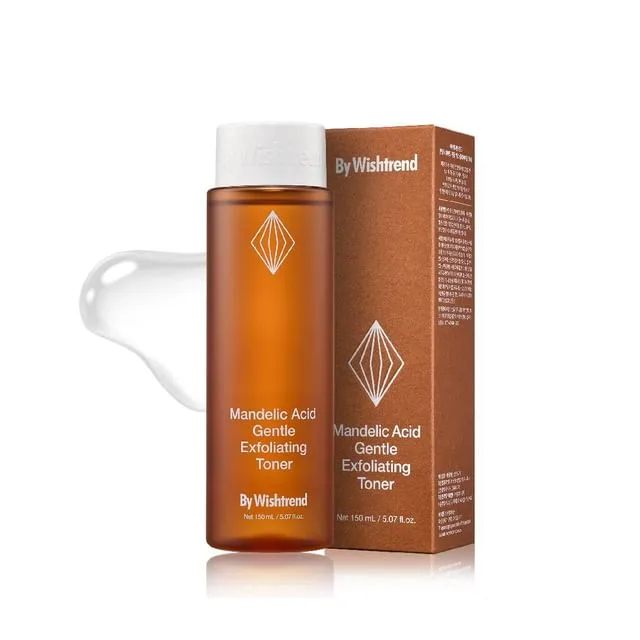
 Mandelic Acid 5% Skin Prep Water
The mandelic acid prep water that quietly converted half of K-beauty Reddit away from glycolic — and for good reason. It delivers visible texture and PIH improvement at 5% without the sting or pigment risk that derails sensitive and darker skin, and it does so for around twenty bucks.
 Gentle Glow Specialist
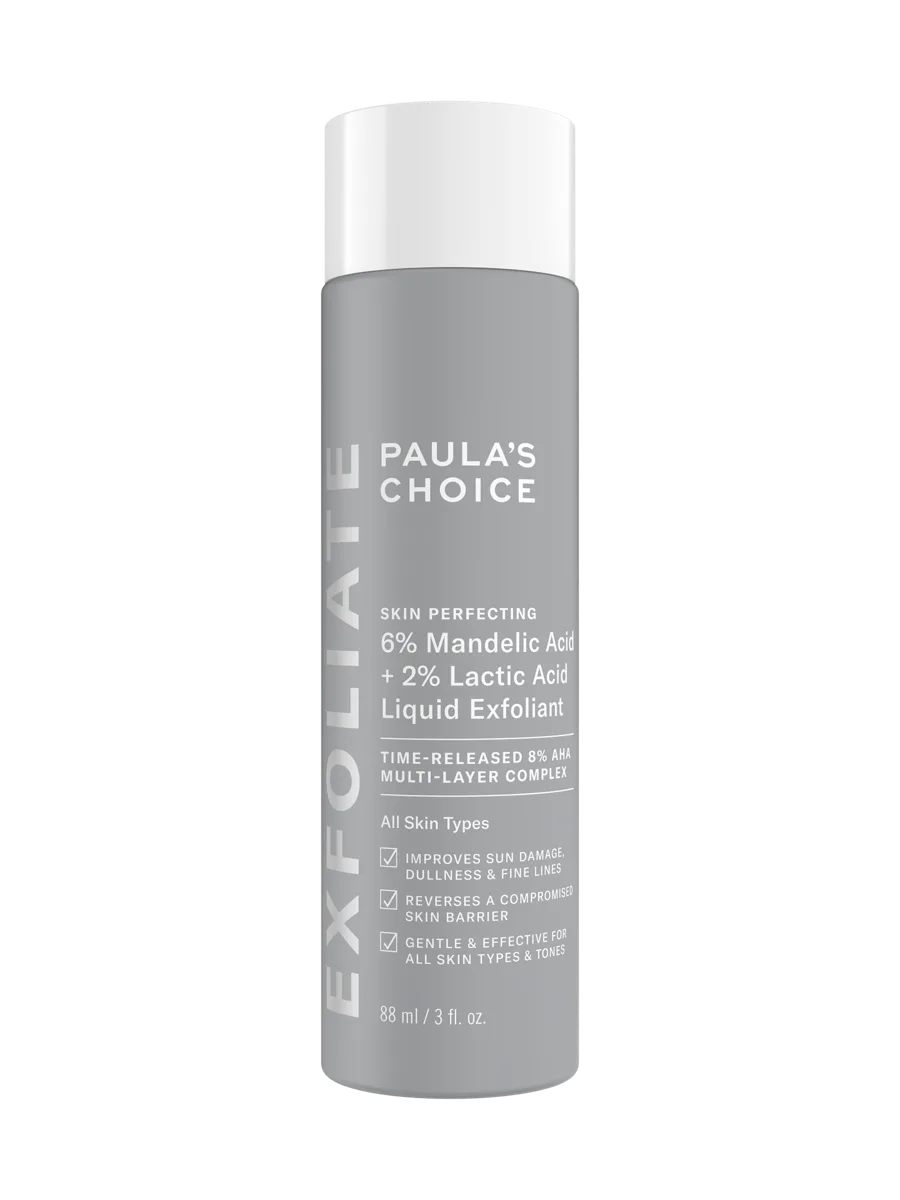
 Skin Perfecting 6% Mandelic Acid + 2% Lactic Acid Liquid Exfoliant
The exfoliant that finally treats sensitive and melanin-rich skin as the design priority rather than an afterthought. With a 4.8-star rating and 660+ reviews, this mandelic-lactic formula proves that gentleness and efficacy aren't mutually exclusive — it just requires smarter acid selection.
 The Original At-Home Peel
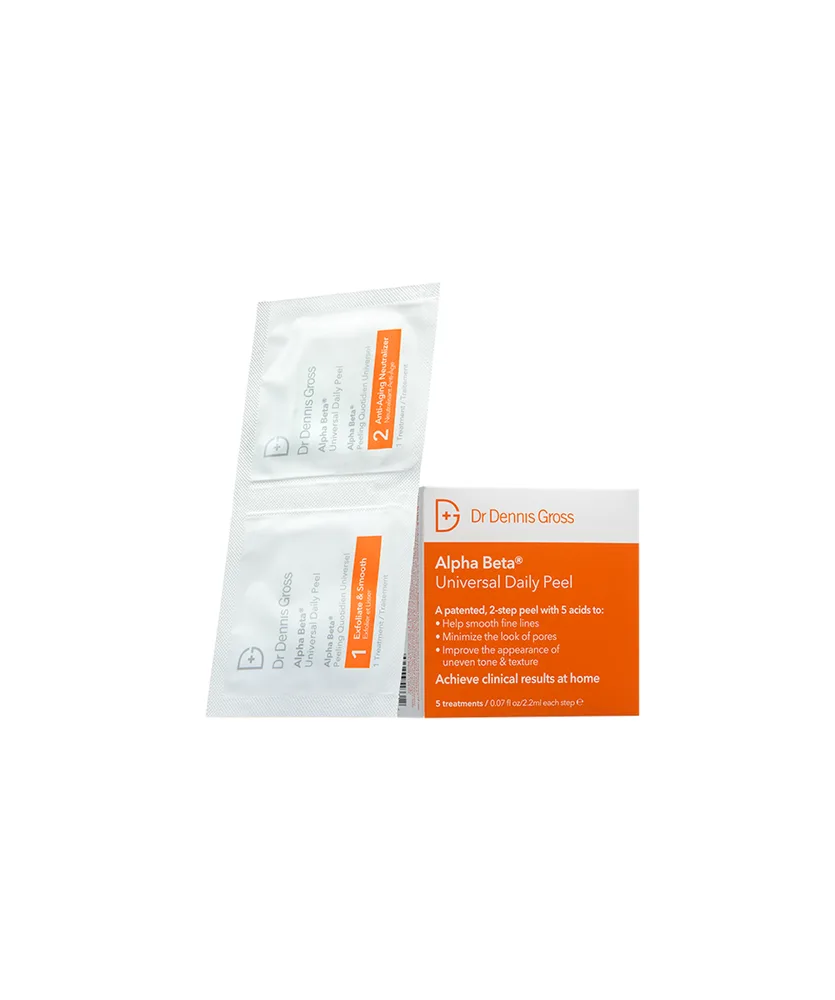
 Alpha Beta Universal Daily Peel
The product that invented the at-home daily peel category in 2002 and still sits at the top of it. The five-acid Step 1 and retinol-antioxidant Step 2 deliver genuine resurfacing and anti-aging in a single five-minute routine. Expensive, but the results and track record justify the reputation.
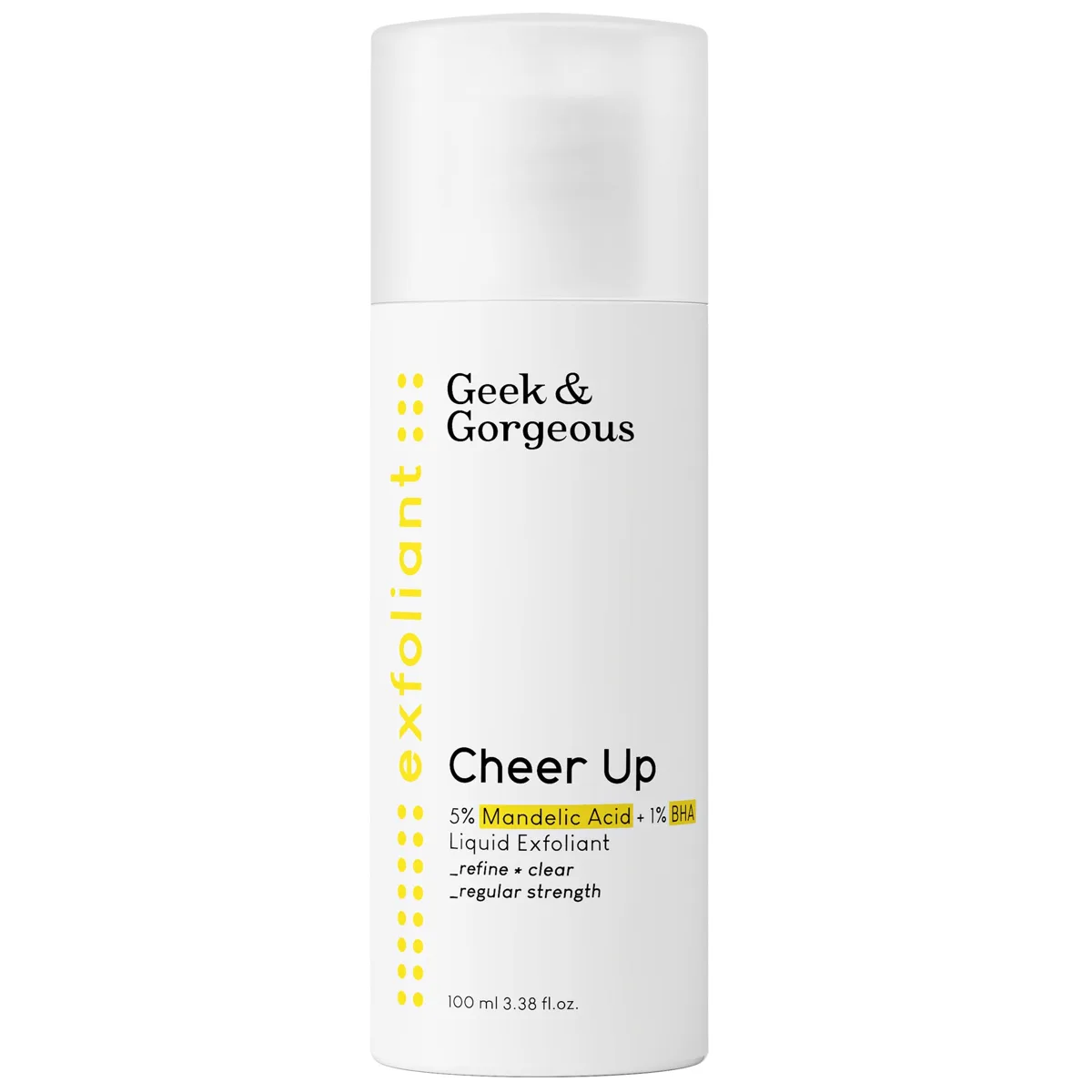 Beginner Exfoliant Pick
 Cheer Up 5% Mandelic + 1% Salicylic Exfoliant
A thoughtfully formulated beginner AHA/BHA exfoliant that uses mandelic acid — the gentlest mainstream AHA — in combination with low-strength salicylic, plus a sugar-humectant complex for comfort. At 100mL for around $12, the value is excellent, and the formulation choices reflect the kind of cosmetic-chemist thinking that separates this brand from typical indie exfoliants. Ideal for exfoliant newcomers and sensitive skin.
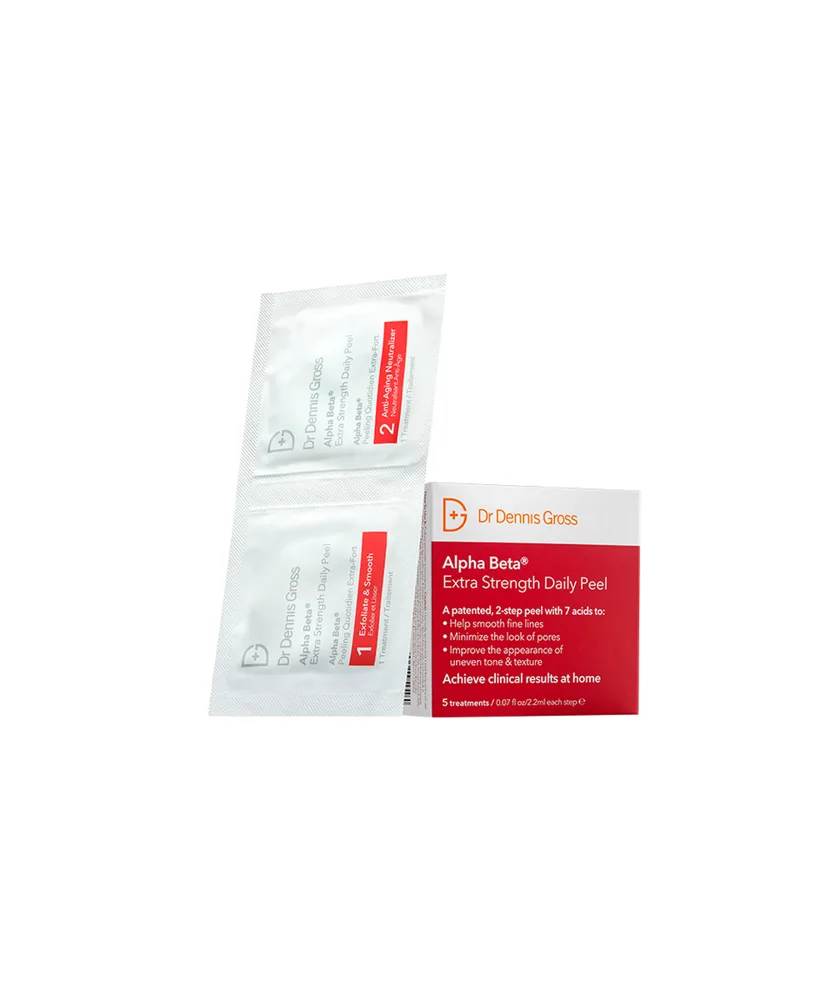 At-Home Peel Benchmark
 Alpha Beta Extra Strength Daily Peel
The harder-hitting version of the at-home peel that started the category. Step 1 delivers a serious five-acid blend and Step 2 follows with retinol and antioxidants, making this a combined resurfacing and anti-aging treatment in a single five-minute routine. Expensive but genuinely effective for experienced exfoliant users.
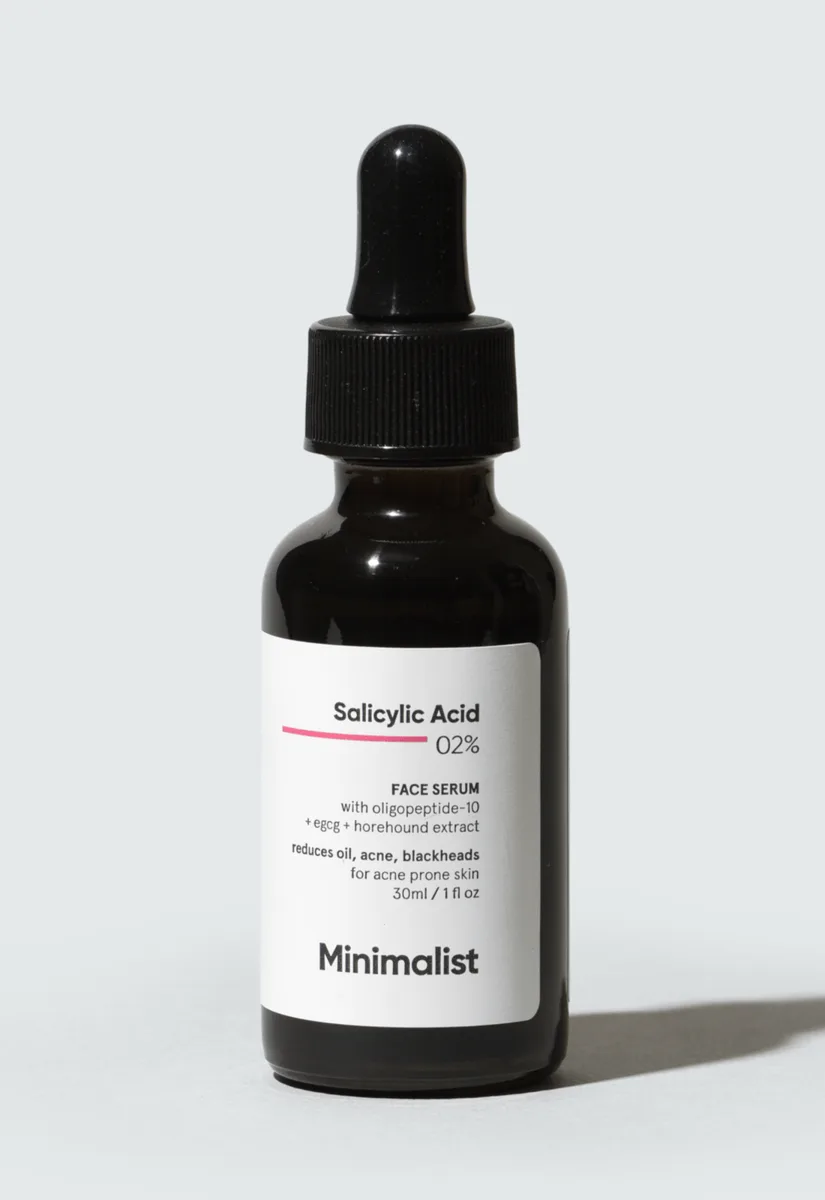 Pharma-Grade Budget BHA
 2% Salicylic Acid Face Serum
A pharma-grade 2% BHA serum at pH 3.75, built around Merck's RonaCare salicylic acid and flanked by Marrubium Vulgare, EGCG glucoside, and Oligopeptide-10 — a supporting cast most budget salicylic serums do not bother with. At ₹599 for 30ml, it is one of the best acne serums on the Indian market and genuinely competitive with the prestige alternatives.