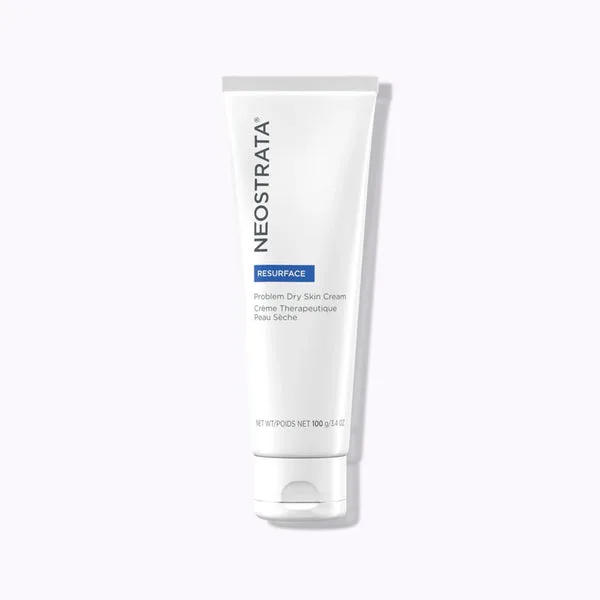
The closest thing to NeoStrata's original laboratory breakthrough in a consumer tube. This 20% multi-acid body cream is an absolute powerhouse for calloused heels, keratosis pilaris, and stubbornly rough skin — a purpose-built specialist from the brand that invented the science behind it.
Problem Dry Skin Cream PHA 20
The closest thing to NeoStrata's original laboratory breakthrough in a consumer tube. This 20% multi-acid body cream is an absolute powerhouse for calloused heels, keratosis pilaris, and stubbornly rough skin — a purpose-built specialist from the brand that invented the science behind it.
Score Breakdown
An expertly formulated high-potency acid cream from the pioneers of AHA/PHA technology, designed for a specific purpose — treating severely dry, rough, and calloused body skin. The narrow intended use limits suitability breadth, but for its target application, the formulation is outstanding. High irritation_risk score reflects low irritation for its intended use on thick body skin.
Data Confidence: high
This product has been on the market for nearly two decades with consistent positive reviews. The 20% AHA/PHA blend is backed by NeoStrata's extensive published research on glycolic acid and polyhydroxy acids, with clinical data supporting efficacy on calloused skin.
0/100
Overall Score
Ingredient Quality 0
Value for Money 0
Suitability Breadth 0
Irritation Risk (↑ = safer) 0
Assessment
Pros
- Four-acid blend at 20% concentration provides multi-depth exfoliation unmatched by single-acid body creams
- PHA and bionic acid components add moisturizing and antioxidant properties that buffer irritation from the high acid load
- Dramatically effective for calloused heels, with clinical data showing significant improvement in three weeks
- Occlusive petrolatum and beeswax base locks moisture into freshly exfoliated skin
- Fragrance-free formula suitable for those who react to scented body treatments
- Effective for keratosis pilaris with consistent daily use over 3-4 weeks
- From the brand that invented AHA and PHA technology with decades of clinical research
Cons
- 3.4 oz tube is small for a body treatment at $46, limiting coverage area per tube
- Initial stinging sensation on dry or cracked skin may deter some users during the first week
- Contains parabens (methylparaben, propylparaben) which some users prefer to avoid
- Colorants (Red 33, Yellow 5) add no functional benefit to a clinical treatment product
- Not suitable for facial use — the 20% acid concentration is far too intense for the face
Full Review
Some products are evolutionary. Others are archaeological. NeoStrata's Problem Dry Skin Cream is the latter — it's a direct descendant of the research that launched an entire skincare category. When Dr. Van Scott and Dr. Ruey Yu published their findings on alpha hydroxy acids and their ability to normalize keratinization in hyperkeratotic skin conditions, they were describing exactly the mechanism this cream delivers four decades later.
The formula centers on a 20% blend of four acids, each chosen for a specific molecular job. Glycolic acid, the smallest AHA, drives deepest into thickened skin to break the bonds between stubborn dead cells. Lactic acid follows with mid-range penetration and an added benefit: it's a natural humectant, pulling moisture into the skin even as it exfoliates. Mandelic acid, with its larger molecular structure, provides gentler surface exfoliation. And gluconolactone — NeoStrata's signature PHA — exfoliates while functioning as a humectant and antioxidant, essentially moisturizing and protecting the skin it's resurfacing.
The fourth acid, maltobionic acid, is worth singling out. This is a bionic acid, a next-generation evolution of PHA technology that NeoStrata developed. It provides powerful antioxidant properties and moisture retention at the skin surface, creating a hydrating layer that counterbalances the stripping potential of four simultaneous acids at 20% concentration. It's the formulation detail that separates this from crude high-concentration glycolic acid treatments.
The vehicle is equally deliberate. Petrolatum and beeswax create an occlusive barrier that locks moisture into freshly exfoliated skin — critical when you're removing layers of dead cells and need the newly exposed tissue to stay hydrated. Dimethicone smooths the texture, propylene glycol enhances ingredient penetration, and tocopheryl acetate provides vitamin E's antioxidant protection. This isn't a lightweight lotion with acids sprinkled in. It's a heavy-duty treatment cream engineered for skin that normal moisturizers have given up on.
In practice, the cream applies with satisfying richness. It's thick enough to feel therapeutic but not so heavy that it sits on the surface refusing to absorb. On heels and elbows, it sinks in within a few minutes, leaving a smooth, non-greasy feel. The first application on very dry or cracked skin will likely produce a tingling or mild stinging sensation — this is the acid concentration making contact with compromised skin. The sensation is temporary, typically subsiding within two to three minutes, and diminishes noticeably with each subsequent application as the skin surface normalizes.
The results build with impressive consistency. Within the first week, rough patches begin to soften. By week two, you can feel the difference in texture under your fingertips. At the three-week mark — which clinical testing confirms — calloused heels and rough body skin show significant visual improvement. Users who've committed to months of use describe heels that stay smooth year-round, KP bumps that flatten to near-invisibility, and elbows that lose their perpetual roughness.
Honesty requires acknowledging the limitations. This is a body-only product, and applying it to the face would be a painful mistake — the 20% acid concentration on thinner facial skin would cause significant irritation. The tube is 3.4 oz, which is small for a body treatment priced at $46; if you're treating large areas like both arms for KP, you'll run through it in about six weeks. And the formula does contain parabens (methyl and propyl), which some consumers prefer to avoid — though it's worth noting that at a 20% acid concentration, the formula's preservation challenges are genuine, and parabens remain among the most well-studied and effective preservatives available.
The colorants (Red 33 and Yellow 5) give the cream a slightly pink-tinged hue but serve no functional purpose, which feels unnecessary in a clinical product.
For its intended purpose — treating severely dry, rough, calloused, or keratotic body skin — this cream is remarkably effective. It exists at the intersection of dermatological treatment and consumer skincare, and that's exactly where NeoStrata has always been most comfortable. The multi-acid approach is smarter than the single-acid alternatives because it exfoliates at different depths simultaneously, and the emollient vehicle ensures the exfoliation leads to renewal rather than further drying.
This is not a glamorous product. It won't trend on social media or sit prettily on a shelfie. But for anyone who's fought with cracked heels, persistent keratosis pilaris, or skin so dry and rough that regular moisturizers barely register — this is the product that actually works. It's NeoStrata doing what NeoStrata does best: turning serious acid science into real results for real skin problems.
Formula
Ingredients
The hero actives that drive this product's performance.
| Ingredient | Function | Evidence |
|---|---|---|
| Glycolic Acid | The smallest AHA leads this cream's 20% acid blend, penetrating deeply into thickened, calloused skin to dissolve the intercellular bonds holding dead cells together. In this heavy-duty body formula, glycolic acid does the aggressive heavy lifting while the PHA and larger AHAs provide supporting exfoliation at different depths. | well-established |
| Gluconolactone (PHA) | NeoStrata's signature polyhydroxy acid provides exfoliation without the sting of pure glycolic acid. In this high-concentration formula, gluconolactone acts as the gentler partner — exfoliating while simultaneously humecting and chelating metal ions to reduce free radical irritation from the aggressive AHA blend. | well-established |
| Maltobionic Acid | A next-generation bionic acid that provides antioxidant protection and moisture retention in this intensive formula. Its large molecular structure means it works at the skin surface, creating a hydrating film that offsets the drying potential of the glycolic and lactic acids penetrating below. | promising |
| Lactic Acid | Provides mid-range AHA exfoliation in this blend while contributing its natural moisturizing properties — lactic acid is both an exfoliant and a humectant, helping to hydrate the very skin it's resurfacing. Works in tandem with glycolic acid to address different layers of dry, thickened skin. | well-established |
| Petrolatum | Creates an occlusive seal over the treated skin, locking in the moisture provided by the PHA humectants and preventing transepidermal water loss from the freshly exfoliated surface. Essential in this formula to prevent the 20% acid concentration from leaving skin dehydrated after exfoliation. | well-established |
| Tocopheryl Acetate (Vitamin E) | Provides antioxidant protection to the newly exposed skin cells revealed by the intense acid exfoliation, while also supporting the skin's moisture barrier repair process. Works alongside the petrolatum and beeswax to condition and protect the treated areas. | well-established |
Full INCI List
Ammonium Hydroxide, Aqua/Water/Eau, Arginine, Cera Alba, Cetyl Alcohol, Dimethicone, Disodium EDTA, Gluconolactone, Glycolic Acid, Lactic Acid, Magnesium Aluminum Silicate, Maltobionic Acid, Mandelic Acid, Methylparaben, Paraffinium Liquidum, PEG-40 Stearate, Petrolatum, Propylene Glycol, Propylparaben, Red 33 (CI 17200), Sodium Bisulfite, Sorbitan Stearate, Stearyl Alcohol, Tocopheryl Acetate, Xanthan Gum, Yellow 5 (CI 19140)
Product Flags
✓ Fragrance Free✓ Alcohol Free✗ Oil Free✗ Silicone Free✗ Paraben Free✓ Sulfate Free✗ Cruelty Free✗ Vegan✗ Fungal Acne Safe
Comedogenic Ingredients
PetrolatumCetyl Alcohol
Potential Irritants
Glycolic Acid at high concentrationPropylene Glycol
Compatibility
Skin Match
Best For
Works For
Not Ideal For
Addresses These Conditions
dryness keratosis pilaris psoriasis texture
Use With Caution
sensitivity compromised skin barrier
Avoid With
Routine Step
treatment
Time of Day
AM & PM
Pregnancy Safe
Yes ✓
Layering Tips
Apply directly to problem areas on the body — heels, elbows, knees, shins. This is a body treatment, not intended for the face. No additional moisturizer is needed over treated areas. Always use sunscreen on treated areas exposed to sun, as AHAs increase photosensitivity.
Results Timeline
Noticeable softening of rough patches within the first few applications. Significant improvement in calloused skin, scaling, and roughness after 3 weeks of once-daily use. Ongoing maintenance keeps problem areas smooth with continued use.
Pairs Well With
Broad-spectrum sunscreen on exposed treated areasGentle body wash
Conflicts With
Other high-concentration AHA body treatmentsRetinoid body lotions on the same areas
Sample AM Routine
- Gentle body wash
- NeoStrata Problem Dry Skin Cream on rough areas
- Sunscreen on exposed treated skin
Sample PM Routine
- Gentle body wash
- NeoStrata Problem Dry Skin Cream on rough areas
Evidence
Science
The Science
The scientific foundation of this cream draws directly from NeoStrata's founding research. Glycolic acid's mechanism of action in hyperkeratotic skin is well-characterized: it disrupts ionic bonding between corneocytes at the lowest levels of the stratum corneum, accelerating desquamation and promoting normalization of the keratinization cycle. At concentrations of 10-20%, glycolic acid has been shown in numerous published studies to significantly reduce visible scaling, roughness, and corneocyte cohesion.
The inclusion of lactic acid adds a complementary mechanism: beyond its AHA exfoliating action, lactic acid stimulates ceramide production in the epidermis, as demonstrated in published research, effectively helping the skin rebuild its barrier even as the formula exfoliates. This dual action is particularly valuable for chronically dry skin where barrier dysfunction contributes to the problem.
Gluconolactone (PHA) contributes NeoStrata's most distinctive innovation. Research published in the Journal of the European Academy of Dermatology and Venereology demonstrated that PHAs provide exfoliating and anti-aging effects comparable to AHAs while producing significantly less sensory irritation. The mechanism involves gluconolactone's polyhydroxy structure, which chelates transition metal ions (reducing Fenton reaction-mediated free radical generation) while also acting as a humectant due to its multiple hydroxyl groups.
Maltobionic acid, a bionic acid co-developed by NeoStrata, extends this principle further: its disaccharide structure provides even stronger antioxidant and humectant properties than gluconolactone alone, while still delivering meaningful exfoliation. The combination of all four acid types at 20% total concentration represents a sophisticated tiered-penetration strategy that addresses hyperkeratotic skin from the surface through to the deeper stratum corneum.
References
- Glucosamine: an ingredient with skin and other benefits — Journal of Cosmetic Dermatology (2007)
Dermatologist Perspective
Board-certified dermatologists frequently recommend high-concentration AHA body creams for hyperkeratotic conditions including keratosis pilaris, ichthyosis, and psoriasis-associated scaling. NeoStrata's Problem Dry Skin Cream is particularly well-regarded in clinical practice because the multi-acid approach with PHA buffering reduces the irritation typically associated with 20% glycolic acid alone. Dermatologists note that the amphoteric formulation design — where the acids are partially neutralized — maintains efficacy while improving tolerability. This product is commonly recommended as a maintenance treatment alongside prescription therapies for chronic dry skin conditions, and its HSA/FSA eligibility reflects its recognition as a medical-grade skin treatment.
Guidance
Usage Guide
How to Use
Apply a thin layer to rough, calloused body areas twice daily — morning and evening. Focus on heels, elbows, knees, shins, and any areas with keratosis pilaris or persistent roughness. For sensitive areas, start with once daily or every other day and increase frequency as tolerated. Test on the inner forearm first if you have reactive skin. Do not apply to the face, open wounds, or actively inflamed skin. Use sunscreen on treated areas exposed to the sun, as AHAs increase photosensitivity.
Value Assessment
At $46 for 3.4 oz, this is not inexpensive for a body product, but it occupies a unique position between prescription treatments and over-the-counter moisturizers. The four-acid blend at 20% concentration delivers clinical-grade results that drugstore AHA lotions at 10-12% simply can't match. For targeted use on problem areas (heels, elbows, KP patches), the tube lasts 6-8 weeks, making the monthly cost approximately $25-30. NeoStrata offers a 15% subscribe-and-save discount at $39.10. For those with chronic dry skin conditions that have resisted conventional moisturizers, the per-application effectiveness arguably makes this more cost-effective than going through multiple bottles of weaker products that don't solve the problem.
Who Should Buy
Anyone battling severely dry, rough, or calloused body skin that hasn't responded to regular moisturizers. This cream is particularly effective for keratosis pilaris, chronically rough heels, scaly elbows and knees, and the scaling associated with psoriasis. Ideal for those who want clinical-strength acid exfoliation in a convenient at-home treatment.
Who Should Skip
Those with sensitive body skin or active eczema should avoid this cream — the 20% acid concentration can cause significant irritation on compromised skin. Anyone expecting a facial product should look elsewhere. If you have mild dryness that responds well to regular moisturizers, this is more intensity than you need — NeoStrata's lower-concentration PHA products would be a better starting point.
Ready to try NeoStrata Problem Dry Skin Cream PHA 20?
Details
Details
Texture
Rich, emollient cream with a slightly thick consistency that spreads and absorbs without heavy greasiness
Scent
Fragrance-free with a faint clinical/acidic note typical of high-concentration AHA products
Packaging
Squeeze tube in NeoStrata's Resurface line packaging with clinical branding
Finish
satinnon-greasy
What to Expect on First Use
Expect a tingling or mild stinging sensation on first application, especially on very rough or cracked areas — this subsides within minutes as the skin acclimates. Test on your forearm first. Within the first few days, you may notice accelerated flaking as the acid exfoliation loosens dead skin layers. This is normal and signals the cream is working. Roughness begins to resolve noticeably by week two.
How Long It Lasts
6-8 weeks with twice-daily use on targeted body areas
Period After Opening
12 months
Best Season
All Year
Certifications
Dermatologist testedAllergy tested
Background
The Why
This cream is one of NeoStrata's longest-running products and perhaps the purest expression of the brand's founding mission. When Dr. Van Scott and Dr. Yu discovered the cosmetic and therapeutic potential of alpha hydroxy acids, treating severely dry, scaly, and calloused skin was among the first clinical applications they pursued. This product essentially packages their original research breakthrough into a consumer-accessible format — it's the closest you can get to the treatment that started it all.
About NeoStrata Legacy Brand (20+ years)
NeoStrata was founded in 1988 by dermatologist Dr. Van Scott and dermatopharmacologist Dr. Ruey Yu, who invented alpha and polyhydroxy acid technology. The brand holds over 110 patents and has published nearly 250 clinical studies and journal papers.
Brand founded: 1988 · Product launched: 2005
Myth vs. Reality
Myths
Myth
High-concentration AHA products are always extremely irritating and dangerous.
Reality
This formula's amphoteric (pH-buffered) design and the inclusion of gluconolactone and maltobionic acid significantly reduce the irritation you'd expect from a 20% acid concentration. The PHA and bionic acid components provide exfoliation with built-in moisturization, and the emollient base further buffers the acids. Most users on thick body skin report only mild tingling.
Myth
You can use this cream on your face for intense exfoliation.
Reality
This product is formulated specifically for tough body skin — heels, elbows, knees, and other calloused areas. The 20% acid concentration, combined with the heavy emollient base and colorants, makes it unsuitable and potentially very irritating for facial skin, which is much thinner and more sensitive.
FAQ
FAQ
Can I use NeoStrata Problem Dry Skin Cream on my face?
No — this product is formulated exclusively for body use on rough, calloused areas like heels, elbows, and knees. The 20% acid concentration is too intense for facial skin, and the emollient base with beeswax and petrolatum is too heavy for the face. NeoStrata offers separate facial products with appropriate acid concentrations for the face.
Does NeoStrata Problem Dry Skin Cream help with keratosis pilaris?
Yes — the combination of glycolic acid, lactic acid, and gluconolactone in this cream is effective for the rough, bumpy texture of keratosis pilaris. The multi-acid blend exfoliates the keratin plugs that cause KP bumps, while the emollient base moisturizes the surrounding skin. Many users report significant improvement in arm and leg KP within 3-4 weeks of daily use.
How long does it take for NeoStrata Problem Dry Skin Cream to work?
Most users notice softening of rough patches within the first few applications. Significant visible improvement in calloused skin, scaling, and roughness typically occurs after 3 weeks of once-daily use. For severely calloused heels or stubborn KP, full results may take 6-8 weeks of consistent application.
Does NeoStrata Problem Dry Skin Cream sting?
A mild tingling or stinging sensation is normal during the first few applications, especially on very dry or cracked skin. This is the 20% acid blend working and typically subsides within minutes. The sensation decreases as skin acclimates over the first week. If stinging is severe, reduce to once daily or every other day until your skin adjusts.
Is NeoStrata Problem Dry Skin Cream good for psoriasis?
This cream can help manage the scaling and roughness associated with psoriasis, though it is not a psoriasis treatment. The AHA/PHA blend gently removes accumulated scales and improves skin texture, and the emollient base helps with dryness. However, it should not be applied to actively inflamed or cracked psoriasis plaques. Consult a dermatologist before use if you have active psoriasis.
Community
Community
Common Praise
"Dramatically smooths rough heels and calloused skin within weeks"
"Effective for keratosis pilaris bumps on arms and legs"
"Non-greasy texture absorbs well for such a heavy-duty treatment"
"Long-term users report consistently smooth feet year-round"
Common Complaints
"Can sting on sensitive or cracked skin during initial applications"
"Contains parabens which some users prefer to avoid"
"3.4 oz tube is small for a body treatment at $46"
"Not suitable for facial use despite some users attempting it"
Notable Endorsements
Dermatologist-developed and recommendedHSA/FSA eligible with letter of medical necessity
Appears In
best body care for dryness best treatment for keratosis pilaris best aha cream for rough skin best body care for texture
Related Conditions
dryness keratosis pilaris psoriasis texture
Related Ingredients
You Might Also Like
 Eczema Gold Standard
 Eczema Therapy Moisturizing Cream
The strongest formulation in Aveeno's lineup for eczema-prone skin, combining FDA-regulated colloidal oatmeal with ceramide NP and panthenol for a multi-mechanism approach to barrier repair. Steroid-free, fragrance-free, and HSA/FSA eligible — this is the drugstore eczema cream dermatologists actually recommend by name.
 Sensitive Skin MVP
 The Body Lotion Fragrance-Free
The scented version's equal on active ingredients with none of the fragrance risk — and that makes this the better pick for sensitive skin, eczema-prone users, and anyone pregnant who wants to play it safe. At $25 it's still a premium price, but the formula genuinely earns it.
 Sensitive Skin MVP
 Eczema+ Hand Repair Cream
A serious, NEA-seal-certified hand cream that treats the underlying mechanism of hand eczema rather than just coating it. Colloidal oatmeal, ceramide-cholesterol lipid repair, and panthenol combine in a texture that actually absorbs fast enough to use at the sink. At eighteen dollars it's genuinely well-priced for what it does.
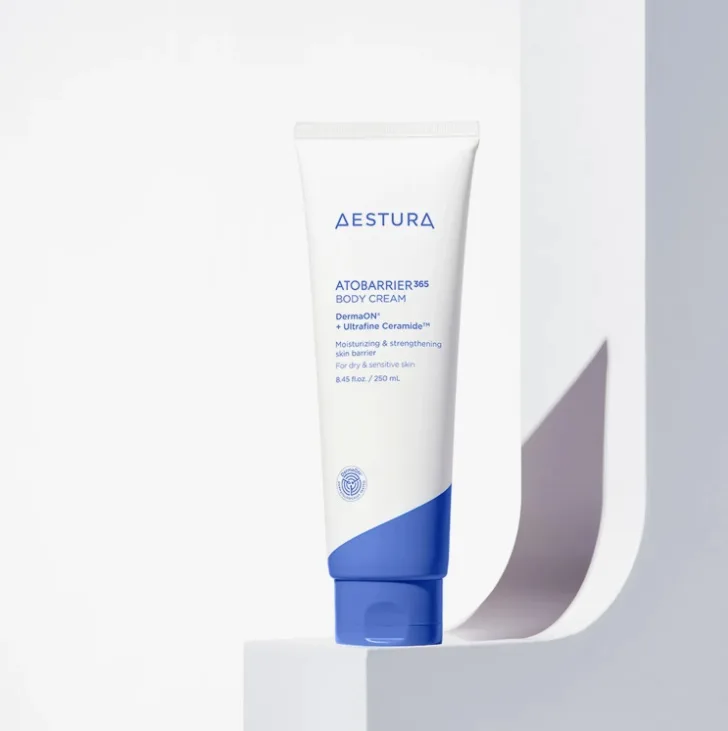 Korean Derm-Clinic Staple
 Atobarrier 365 Body Cream
A genuinely outstanding ceramide-forward body cream from a dermatologist-developed Korean brand with real clinical backing. Fragrance-free, effective for compromised body barriers, and reasonably priced for a 300ml jar — this is one of the better body moisturizers available in the barrier-repair category.
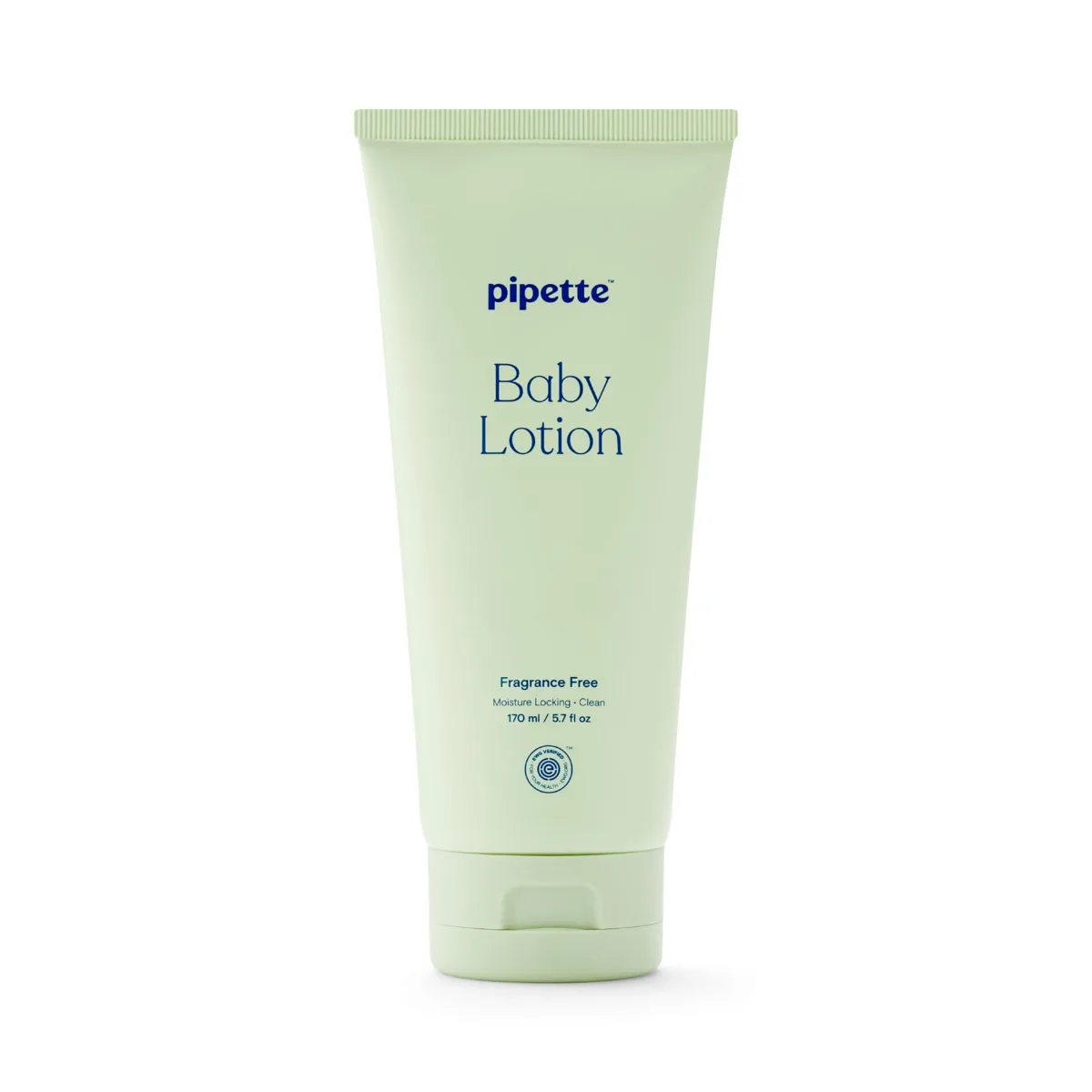 Clean Baby Staple
 Baby Lotion Fragrance Free
A lightweight, biomimetic baby lotion that proves you do not need mineral oil, silicones, or fragrances to deliver serious hydration. The squalane-ceramide-glycerin core provides evidence-based barrier support, and the olive-derived emulsifier system ensures it integrates into skin rather than sitting on top. At under $12 for 5.7 ounces with EWG Verified certification, the value is genuinely remarkable.
 Daily Atopic Companion
 Exomega Control Emollient Cream
The lighter sibling of A-Derma's Exomega Control balm — same Rhealba oat, sunflower oil unsaponifiables, and niacinamide active set, in a cream base that works better for year-round daily use and milder atopic-prone skin. For most adult users and for summer routines, this is the more practical choice of the two Exomega variants.