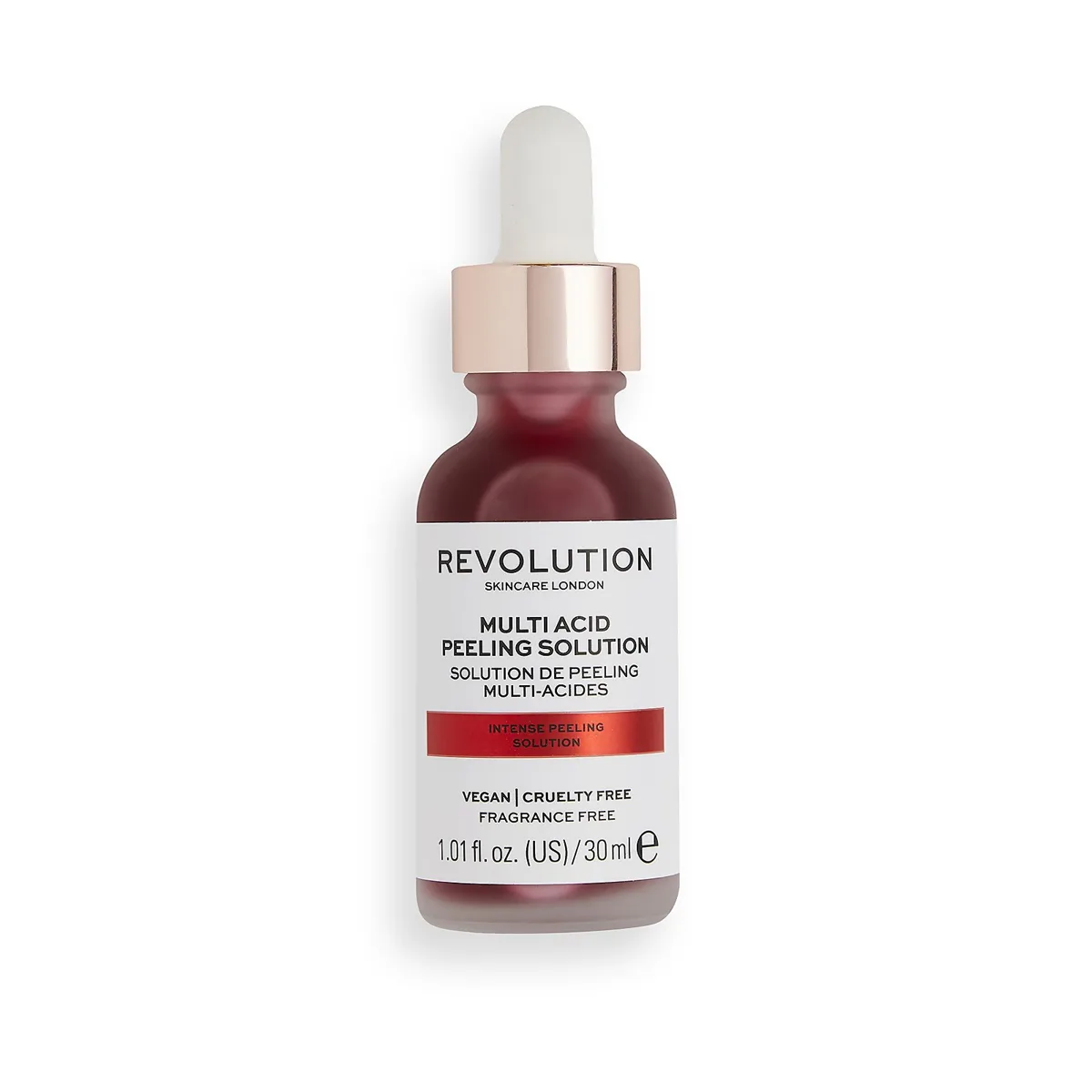
Revolution's Multi Acid Peeling Solution is a competent, near-identical clone of The Ordinary's AHA 30% + BHA 2% at a meaningfully lower price. For budget acid users who want a real at-home peel and can handle aggressive concentrations, this delivers exactly what it promises. The undisclosed pH and the citrus extracts are fair criticisms, but the value proposition is hard to argue with.
Multi Acid AHA + BHA Peeling Solution
Revolution's Multi Acid Peeling Solution is a competent, near-identical clone of The Ordinary's AHA 30% + BHA 2% at a meaningfully lower price. For budget acid users who want a real at-home peel and can handle aggressive concentrations, this delivers exactly what it promises. The undisclosed pH and the citrus extracts are fair criticisms, but the value proposition is hard to argue with.
Score Breakdown
Where this product gains points and where it loses them — broken down across the four scoring pillars.
A straightforward The Ordinary-style 30% AHA + 1.5% BHA peel at roughly half the price of the original. Genuinely effective and affordable, but the undisclosed pH, the citrus extracts, and the aggressive concentration profile mean this isn't for everyone.
Pros & Cons
- ✓Genuine 30% AHA + 1.5% BHA concentration at a budget price
- ✓Tasmanian pepper anti-irritant reduces stinging without dulling the peel
- ✓Lactic acid softens the aggression compared to pure glycolic formulations
- ✓Fragrance-free, vegan, and cruelty-free
- ✓Effectively mimics The Ordinary's peel at a lower price point
- ✓Rinse-off format limits cumulative irritation risk
- ✓Dropper bottle allows precise application control
- ✗pH not disclosed on the label
- ✗Contains orange and lemon fruit extracts
- ✗Not suitable for sensitive, rosacea, or barrier-compromised skin
- ✗Aggressive for first-time acid users — no beginner-friendly version in one bottle
- ✗Not pregnancy-safe due to acid concentration
Full Review
Revolution Skincare was founded in 2014 as the skincare offshoot of Revolution Beauty, a UK indie brand that built its reputation on affordable color cosmetics. When they expanded into skincare in 2018, the strategy was explicit: find the actives that The Ordinary had successfully introduced to mass-market shoppers, build similar formulations, and price them lower. It's a playbook that doesn't win points for innovation, but it has worked surprisingly well for Revolution because they actually execute on the formulation side rather than just slapping a percentage on a watered-down base. The Multi Acid Peeling Solution is one of the cleaner examples of this strategy in practice.
The target product was obvious. The Ordinary's AHA 30% + BHA 2% Peeling Solution, launched in 2017, was one of the products that put Deciem on the skincare map — a $10 at-home chemical peel with genuine clinical-strength acid concentrations, recognizable by its distinctive deep red color from the added pigments. Revolution's version arrived two years later with nearly the same concept: 30% total AHA, 1.5% BHA (slightly lower than The Ordinary's 2%), Tasmanian pepper extract as an anti-irritant, and the same rinse-off 10-minute application format. The red color is also similar, thanks to the bilberry and botanical extracts. If you put the two products next to each other without labels, most experienced acid users wouldn't be able to tell them apart in a blind use.
The AHA blend is the part that actually matters. Lactic acid sits at the top of the INCI as the primary AHA by weight — a slightly surprising choice, since most high-concentration peels lead with glycolic. Lactic is a larger molecule that penetrates more slowly and provides humectant benefits alongside exfoliation, which has a softening effect on the overall aggression of the peel. Glycolic acid follows further down the list, handling the deep keratolytic work. Then comes the 'fruit acid blend' — bilberry, sugar cane, orange, lemon, sugar maple — which Revolution uses to round out the 30% total AHA figure. Let's be honest about this part: fruit-source AHAs are much more about marketing narrative than pharmacology at these concentrations. They contribute some additional acid activity, but the real work is being done by the declared glycolic and lactic acids. The fruit acid story is window dressing for the category's preferred aesthetic.
The 1.5% salicylic acid handles the BHA side. This is below the 2% FDA OTC drug threshold, which keeps the product classified as a cosmetic rather than a drug and sidesteps the labeling requirements, but it's still high enough to contribute meaningful pore-level work during the 10-minute contact time. Salicylic is lipophilic, so it penetrates into sebum-rich follicles where the AHAs can't reach — the two acid classes are complementary rather than redundant. Combined, they deliver the surface-plus-follicle exfoliation that makes at-home peels feel effective on blackheads and texture simultaneously.
The Tasmanian pepper extract is the borrow I appreciate most. The Ordinary introduced this ingredient to the peel category specifically because it modulates TRPV1 receptors in the skin, reducing the stinging and burning sensation that high-concentration acids typically produce. It doesn't change the underlying pharmacology — the acids still work — but it makes the 10-minute application tolerable for more users. Revolution picked up the same ingredient for the same reason, and it's a small detail that signals they were paying attention to what made The Ordinary's version work.
Now the complaints. First, the pH is not disclosed anywhere on the label or the product page. This is a meaningful gap for an acid product because the activity of AHAs depends on the proportion of free (unbuffered) acid, which is determined by pH. A 30% AHA at pH 3.0 is dramatically more active than a 30% AHA at pH 3.8 — the total concentration is the same but the free acid percentage differs substantially. Revolution's product behaves like a functionally active peel in real-world use, which suggests a pH in the 3.0-3.8 range similar to The Ordinary's version, but the lack of disclosure means you're trusting the brand rather than verifying. For a product at this concentration, disclosure would be a fair ask.
Second, the citrus extracts. Orange fruit extract, lemon fruit extract, and the essential oil compounds associated with them are potential photosensitizers, which is a meaningful concern in a product that explicitly requires strict post-use sun protection. Revolution likely uses deionized extracts without the photosensitizing furocoumarin compounds, but again — no disclosure. Patch testing and rigorous sunscreen use the day after a peel are non-negotiable regardless of which brand you choose.
Third, the aggressive concentration profile. 30% total AHA plus 1.5% BHA is a real at-home peel, not a beginner exfoliant, and the marketing positioning doesn't always emphasize this clearly enough. First-time acid users who jump from a basic cleanser straight to this product are likely to experience significant stinging, redness, or barrier stress, and the difference between a useful exfoliation and a chemical burn is mostly about knowing your skin's tolerance. Start with 5-minute contact time, not 10. Start with once per week, not twice. Start in the fall when the UV index is lower. These are things experienced acid users know and first-timers need to be told explicitly.
Who this product serves well: experienced acid users who have worked up through lower-concentration AHAs and BHAs and want a budget alternative to The Ordinary's peel or to more expensive clinical kits. Users with oily, combination, or resilient normal skin who deal with dullness, texture, and congestion and want a weekly reset option. Shoppers who appreciate value pricing and don't need every product in their routine to be a branded clinical purchase. For those users, Revolution delivers nearly identical results to The Ordinary at a lower price point, and that's genuinely useful.
Who should skip: sensitive skin, rosacea, eczema, compromised barriers, first-time acid users, and anyone who isn't willing to be disciplined about daily sunscreen afterwards. For those users, gentler options like 5-10% lactic acid serums or enzymatic exfoliants are far more appropriate and will deliver smoothing benefits without the barrier risk.
Formula
Key Ingredients
The hero actives that drive this product's performance.
| Ingredient | Function | Evidence |
|---|---|---|
| Glycolic Acid (Part of 30% AHA Blend) | The smallest and most deeply penetrating AHA in the blend, responsible for the surface-resurfacing intensity that makes this product feel like a real peel rather than a gentle exfoliant. In Revolution's multi-acid stack, glycolic does the heavy keratolytic work while the larger acids soften the edges. | well-established |
| Lactic Acid (Part of 30% AHA Blend) | A larger AHA molecule that penetrates more slowly and provides humectant benefits alongside exfoliation — which is the reason this peel doesn't leave skin as dehydrated as a pure glycolic product would. Lactic sits at the top of the INCI, suggesting it's the primary AHA by weight. | well-established |
| Salicylic Acid 1.5% (BHA) (1.5%) | The lipophilic acid that penetrates into sebum-rich follicles where the AHAs can't reach. At 1.5% this is below the FDA OTC drug threshold but still high enough to contribute meaningful pore-level decongestion during the 10-minute contact time. | well-established |
| Fruit Acid Blend (Bilberry, Sugar Cane, Orange, Lemon, Sugar Maple) | A botanical source blend of additional AHAs and natural extracts that Revolution uses to round out the 30% total AHA figure. The evidence for these being meaningfully active at the concentrations used is thinner than for the declared glycolic and lactic acids — they function as marketing differentiation as much as pharmacology. | limited |
| Tasmannia Lanceolata (Tasmanian Pepper) Extract | An Australian botanical with published data on TRPV1 receptor modulation, used here to reduce the stinging sensation that high-concentration AHA peels typically produce. It's the same anti-irritant ingredient The Ordinary uses in their peeling solution for the same reason — an intelligent borrow. | promising |
Full INCI List
Aqua (Water, Eau), Lactic Acid, Propanediol, Vaccinium Myrtillus Fruit Extract, Glycolic Acid, Glycerin, Saccharum Officinarum (Sugar Cane) Extract, Butylene Glycol, Salicylic Acid, Citrus Aurantium Dulcis (Orange) Fruit Extract, Citrus Limon Fruit Extract, Daucus Carota Sativa (Carrot) Root Extract, Xanthan Gum, Acer Saccharum (Sugar Maple) Extract, Sodium Benzoate, Potassium Sorbate, Disodium EDTA, Tasmannia Lanceolata Fruit/Leaf Extract.
Product Flags
✓ Fragrance Free✓ Alcohol Free✓ Oil Free✓ Silicone Free✓ Paraben Free✓ Sulfate Free✓ Cruelty Free✓ Vegan✗ Fungal Acne Safe
Potential Irritants
Glycolic AcidLactic AcidSalicylic AcidCitrus Extracts
Common Allergens
Citrus Oils
Compatibility
Skin Match
Best For
Works For
Not Ideal For
Addresses These Conditions
dullness texture blackheads hyperpigmentation large pores acne
Use With Caution
sensitivity rosacea hyperpigmentation
Avoid With
eczema compromised skin barrier post procedure sunburn
Routine Step
treatment
Time of Day
PM
Pregnancy Safe
No ✗
Layering Tips
Use once or twice weekly at night, never more. Apply to clean dry skin for no more than 10 minutes, then rinse thoroughly. Follow with a hydrating serum, ceramide moisturizer, and mandatory SPF 30+ the next day. Do not layer on the same night as retinoids, benzoyl peroxide, or vitamin C.
Results Timeline
Immediate smoother, brighter skin after the first application. Visible texture and tone improvements within 2-3 uses (2-3 weeks at proper frequency). Clog and blackhead reduction typically visible at 3-4 weeks.
Pairs Well With
hydrating-tonersceramide-moisturizersniacinamidesunscreen-am
Conflicts With
retinoids-same-nightbenzoyl-peroxidevitamin-c-same-sessionother-exfoliants
Sample AM Routine
- Gentle cleanser
- Niacinamide serum
- Moisturizer
- SPF 50
Sample PM Routine
- Cleanser
- THIS PRODUCT (rinse after 10 minutes)
- Hydrating toner
- Ceramide moisturizer
Evidence
Science & Expert Perspective
The Science
The pharmacology behind this peel is straightforward and well-studied. Alpha hydroxy acids, particularly glycolic and lactic, have extensive research supporting their ability to disrupt corneocyte adhesion and promote desquamation at low pH. The activity of AHAs depends not just on total concentration but on the proportion of free (unbuffered) acid, which is determined by pH — a 30% glycolic at pH 3.0 is dramatically more active than the same concentration at pH 3.8. Most OTC AHA products are partially buffered to improve tolerability while retaining meaningful free acid. Glycolic acid, with its smaller molecular size, penetrates more deeply than lactic acid and has stronger evidence for improving fine lines, photoaging, and hyperpigmentation in clinical studies at controlled concentrations. Lactic acid has a larger molecular footprint and slower penetration, which makes it better tolerated on sensitive skin and provides additional humectant benefit — studies in the Journal of Cosmetic Dermatology have shown that higher-concentration lactic acid formulations can improve barrier function markers alongside exfoliation. Salicylic acid, the BHA in this formula, is lipophilic and penetrates into sebum-rich follicles where it provides comedolytic activity; research in acne dermatology has established its effectiveness for comedonal acne and blackhead reduction even at relatively short contact times. Tasmannia lanceolata (Tasmanian pepper) extract contains compounds that modulate TRPV1 receptors in sensory nerve endings, which is the mechanism behind the subjective reduction in stinging sensation reported by users of formulations containing it — published in vitro and preliminary clinical data support this mechanism. The main evidence gap for Revolution's specific product is the undisclosed pH, which prevents precise calculation of the free acid proportion at the declared concentrations. For comparison, The Ordinary discloses its AHA 30% + BHA 2% peel pH as approximately 3.6, and Revolution's product likely sits in a similar range based on real-world performance.
Dermatologist Perspective
Dermatologists generally treat at-home peeling solutions at this concentration with measured caution. They can be useful for experienced acid users with resilient skin who want a weekly exfoliation reset, but they're frequently misused by first-time users who don't appreciate the difference between 30% AHA in a rinse-off format and the 5-10% leave-on serums they may have used previously. Board-certified dermatologists typically steer sensitive skin, rosacea, eczema, and compromised-barrier patients away from products in this category and toward gentler alternatives. For patients who want an at-home chemical peel, clinicians often recommend starting with shorter contact times (5 minutes rather than 10), building to weekly use gradually, and maintaining strict daily SPF 30+ afterward. In terms of brand choice, most dermatologists treat Revolution and The Ordinary's peels as functionally interchangeable — the pharmacology is similar enough that price and availability typically drive the recommendation. Pregnant and breastfeeding patients are routed to safer exfoliation options regardless.
Guidance
Usage Guide
How to Use
Use no more than once or twice per week, always at night. Start with once per week. Cleanse skin thoroughly and pat completely dry — water dilutes the acids and changes their activity. Apply a thin layer evenly across the face using the dropper, avoiding the eye area, lip line, and any open breakouts. Leave on for 5 minutes on the first application; if no discomfort beyond a mild tingle, build to 10 minutes on subsequent applications. Never exceed 10 minutes. Rinse thoroughly with cool water, then follow with a hydrating toner, ceramide moisturizer, and optionally a gentle facial oil. The next morning, apply broad-spectrum SPF 30 or higher without exception. Do not combine with retinoids, benzoyl peroxide, vitamin C, or other exfoliants on the same night. Patch test behind the ear for 24 hours before first facial use. Discontinue 7 days before any in-office procedure.
Value Assessment
At roughly $13 for 30 ml in the U.S. market (£10 in the UK), Revolution's Multi Acid Peeling Solution sits at one of the lowest price points in the at-home chemical peel category. The Ordinary's AHA 30% + BHA 2% Peeling Solution at $10-12 is the direct competitor and delivers comparable results, making the choice between them largely a matter of availability and personal preference rather than pharmacology. Compared to clinical peel kits from PCA Skin, Perfect Image, or Image Skincare in the $30-80 range, Revolution offers 70-80% of the benefit for 20-30% of the price. A 30 ml bottle used once weekly lasts roughly 12-15 applications, or 3-4 months, which makes the per-use cost around $1. For budget-conscious acid users who want a real weekly peel, this is one of the more honest value propositions in skincare.
Who Should Buy
Experienced acid users with resilient normal, combination, or oily skin who want a budget alternative to The Ordinary's AHA 30% + BHA 2% peel. Best for buyers dealing with dullness, texture, blackheads, and mild hyperpigmentation who appreciate aggressive weekly exfoliation and are disciplined about daily sunscreen afterward.
Who Should Skip
First-time acid users, sensitive or rosacea-prone skin, eczema, compromised barriers, and pregnant or breastfeeding users should all choose gentler alternatives. Anyone unwilling to commit to daily SPF the day after use should not use this or any other chemical exfoliant.
Ready to try Revolution Skincare Multi Acid AHA + BHA Peeling Solution?
Details
Details
Texture
Thin, slightly viscous red liquid that pours from a dropper bottle.
Scent
Faintly tart, almost like diluted fruit juice — the bilberry and citrus extracts give it a distinct natural scent without added fragrance.
Packaging
Standard dropper bottle with a pipette — the same format The Ordinary pioneered and Revolution has copied across its serum line.
Finish
invisible
What to Expect on First Use
Expect 30-60 seconds of tingling, stinging, or mild burning on first application — this is normal for a peel at this concentration. Rinse immediately if the sensation becomes painful or uncomfortable beyond a mild sting. New acid users should start with 5-minute contact time and build to 10 minutes over several sessions.
How Long It Lasts
Roughly 12-15 uses at one application per week from the 30 ml bottle, which equals 3-4 months of weekly use.
Period After Opening
12 months
Best Season
fall winter
Certifications
Cruelty-freeVegan
Background
The Why
Revolution Skincare launched its Multi Acid Peeling Solution in 2019, at the height of the skincare-acid trend that The Ordinary had kicked off two years earlier. The formulation strategy was transparent: take The Ordinary's successful 30% AHA + 2% BHA peel concept, adjust the acid proportions slightly (30% + 1.5% instead of 30% + 2%), add the same Tasmanian pepper anti-irritant, and undercut on price. It's a direct-competitor formulation, and it's one of the better examples of Revolution's value-first category-following approach.
About Revolution Skincare Established Brand (5–20 years)
Revolution Skincare is the skincare offshoot of Revolution Beauty, a UK-based indie brand founded in 2014 that expanded from color cosmetics into skincare in 2018. The brand is known for value pricing on actives that closely follow The Ordinary's formulation playbook.
Brand founded: 2014 · Product launched: 2019
Myth vs. Reality
Myths & Misconceptions
Myth
30% AHA at home is the same as a professional chemical peel.
Reality
No. Professional peels use pH-controlled free-acid concentrations, buffered delivery systems, and clinician judgment about duration and neutralization. An OTC peel like this one uses partially buffered acids at an undisclosed pH, and the 10-minute rinse-off format is designed specifically to stay under the threshold of significant epidermal injury. Effective, but not equivalent to in-office treatment.
Myth
If you don't feel stinging, the peel isn't working.
Reality
Stinging is a sign of active acid penetration, but it's not a reliable proxy for efficacy. Experienced acid users who have built tolerance feel less sting while still getting real exfoliation. The absence of sting doesn't mean the product isn't working — it means you've adapted.
FAQ
Frequently Asked Questions
Is Revolution Multi Acid the same as The Ordinary AHA 30% + BHA 2%?
Not identical, but extremely close. Both are 30% AHA rinse-off peels with the same Tasmanian pepper anti-irritant approach. Revolution uses 1.5% BHA vs The Ordinary's 2%, and the specific AHA blend differs slightly. Performance is comparable in most real-world comparisons, and Revolution tends to be slightly cheaper.
How often should I use this peel?
Once per week maximum for beginners, up to twice weekly for experienced acid users. Never daily — this is a high-concentration rinse-off peel, not a leave-on serum. Always space peel nights at least 3 days apart, and skip if your skin shows any redness, tightness, or signs of barrier stress.
Do I have to rinse it off?
Yes, absolutely. This is a rinse-off peel, not a leave-on treatment. Apply to clean dry skin for no more than 10 minutes, then rinse thoroughly with water. Leaving this on would cause significant irritation and is not how the product was formulated to be used.
Is it safe during pregnancy?
No. The salicylic acid at 1.5%, combined with the 30% AHA total concentration, exceeds typical pregnancy-safe exfoliation guidelines. Switch to gentler options like 5-10% lactic acid or enzymatic exfoliation during pregnancy and breastfeeding.
Can I use it with retinol?
Not in the same session. Use your retinol on different nights from the peel, ideally with at least 2-3 days between. Pairing retinol and a 30% AHA peel on the same night is a fast way to wreck your barrier.
Why is pH not listed on the label?
Revolution has not disclosed the pH on the packaging or the product page. This is a meaningful gap because the activity of AHAs depends on the free acid proportion, which is determined by pH. The product behaves like a functionally active peel in real-world use, suggesting a pH in the 3.0-3.8 range similar to The Ordinary's version, but the lack of disclosure is a fair criticism.
Do I really need sunscreen the day after?
Absolutely. All AHA and BHA exfoliants increase UV sensitivity for at least 24-48 hours after use. A broad-spectrum SPF 30 or higher is mandatory, not optional, the day after a peel. Skipping it is the fastest way to turn an exfoliant into a hyperpigmentation trigger.
Community
Community Voices
Common Praise
"Immediate brightening and smoothing effect"
"Noticeably cheaper than comparable peels"
"Lactic acid softens the bite vs pure glycolic"
"Fragrance-free base"
Common Complaints
"Aggressive stinging for first-time acid users"
"Contains citrus extracts"
"pH not disclosed on label"
"Must be rinsed — not a leave-on treatment"
Notable Endorsements
Available at Lookfantastic, Amazon, and Revolution Beauty stores globallyPositioned as a budget alternative to The Ordinary AHA 30% + BHA 2%
Appears In
best budget at home peel best aha bha peel under 15 best chemical peel for texture best vegan peeling solution
Related Conditions
dullness texture blackheads hyperpigmentation large pores acne
Related Ingredients
You Might Also Like
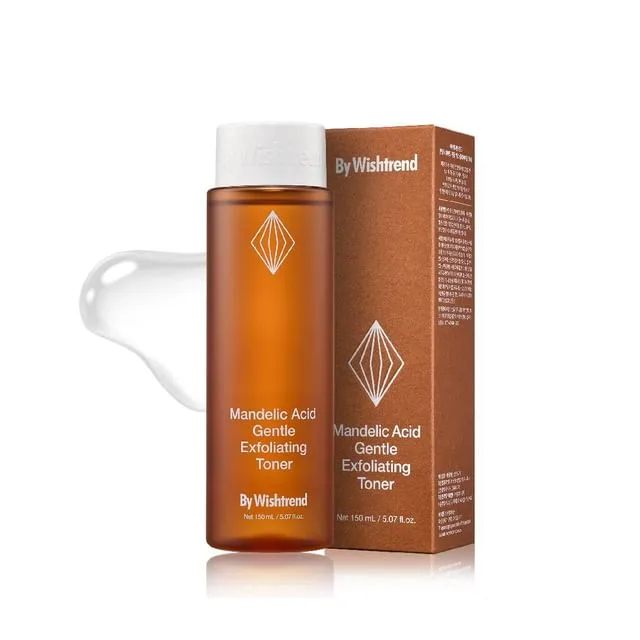 Sensitive Skin AHA Pick
 Mandelic Acid 5% Skin Prep Water
The mandelic acid prep water that quietly converted half of K-beauty Reddit away from glycolic — and for good reason. It delivers visible texture and PIH improvement at 5% without the sting or pigment risk that derails sensitive and darker skin, and it does so for around twenty bucks.
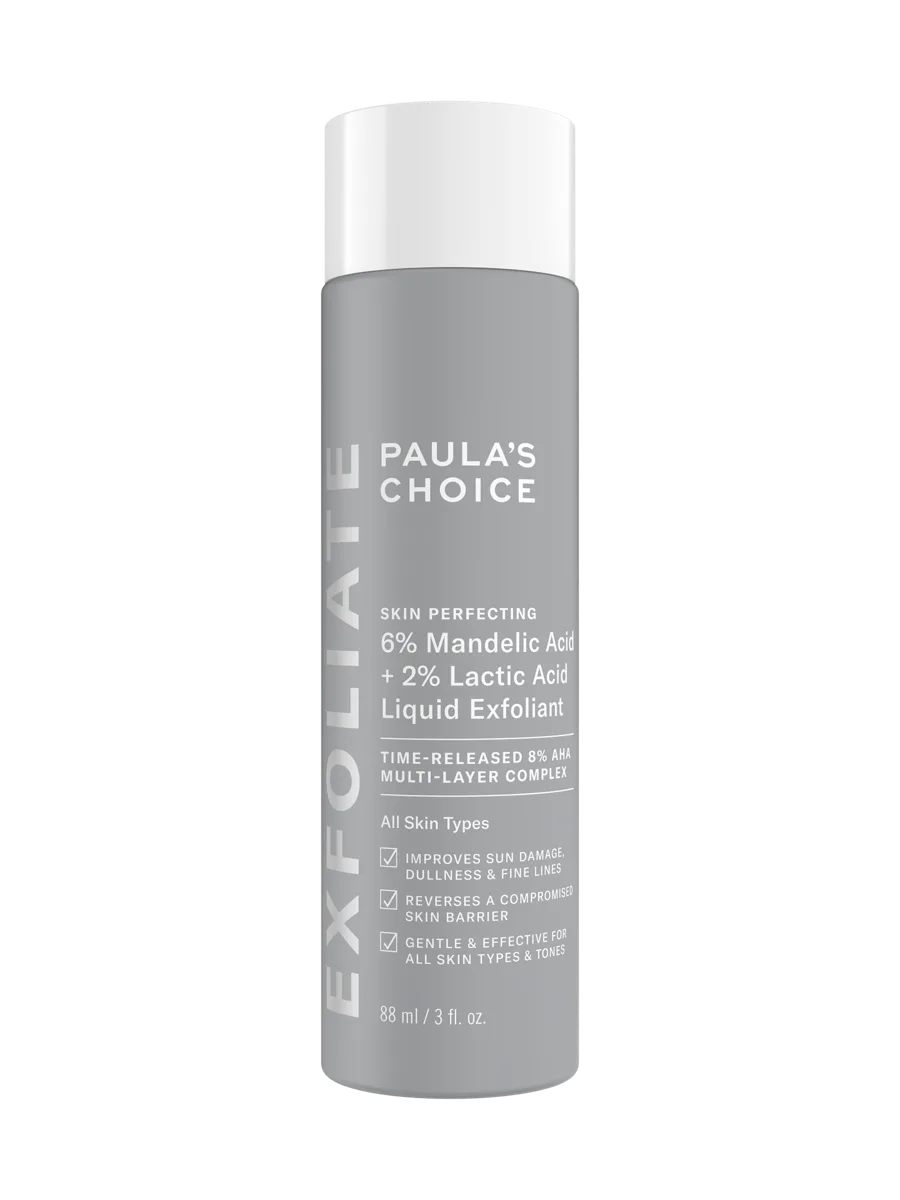 Gentle Glow Specialist
 Skin Perfecting 6% Mandelic Acid + 2% Lactic Acid Liquid Exfoliant
The exfoliant that finally treats sensitive and melanin-rich skin as the design priority rather than an afterthought. With a 4.8-star rating and 660+ reviews, this mandelic-lactic formula proves that gentleness and efficacy aren't mutually exclusive — it just requires smarter acid selection.
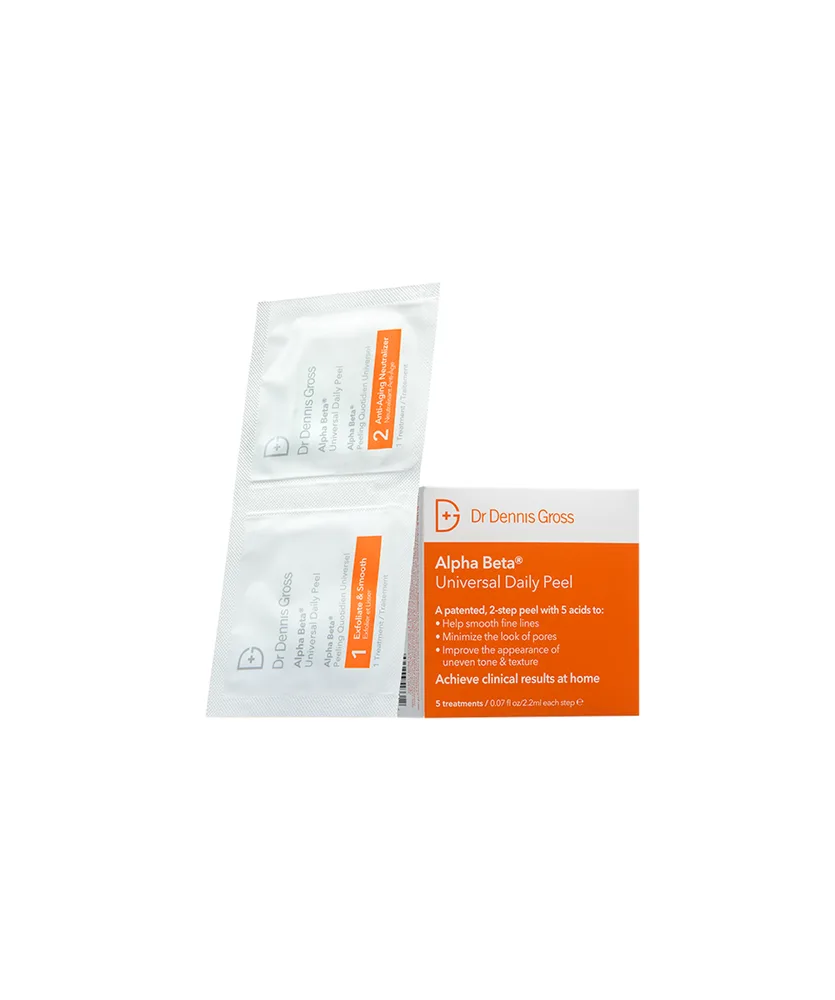 The Original At-Home Peel
 Alpha Beta Universal Daily Peel
The product that invented the at-home daily peel category in 2002 and still sits at the top of it. The five-acid Step 1 and retinol-antioxidant Step 2 deliver genuine resurfacing and anti-aging in a single five-minute routine. Expensive, but the results and track record justify the reputation.
 Beginner Exfoliant Pick
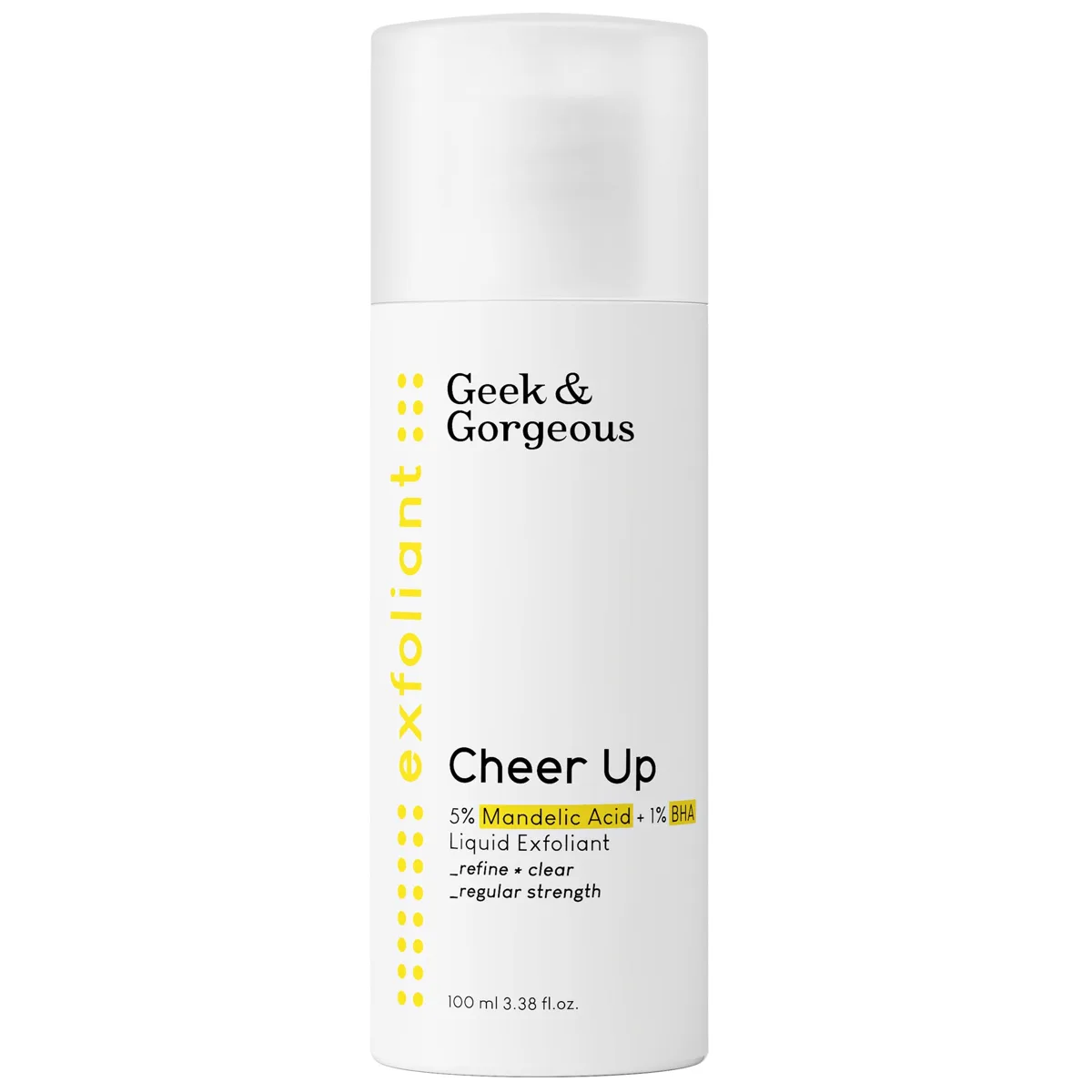
 Cheer Up 5% Mandelic + 1% Salicylic Exfoliant
A thoughtfully formulated beginner AHA/BHA exfoliant that uses mandelic acid — the gentlest mainstream AHA — in combination with low-strength salicylic, plus a sugar-humectant complex for comfort. At 100mL for around $12, the value is excellent, and the formulation choices reflect the kind of cosmetic-chemist thinking that separates this brand from typical indie exfoliants. Ideal for exfoliant newcomers and sensitive skin.
 At-Home Peel Benchmark
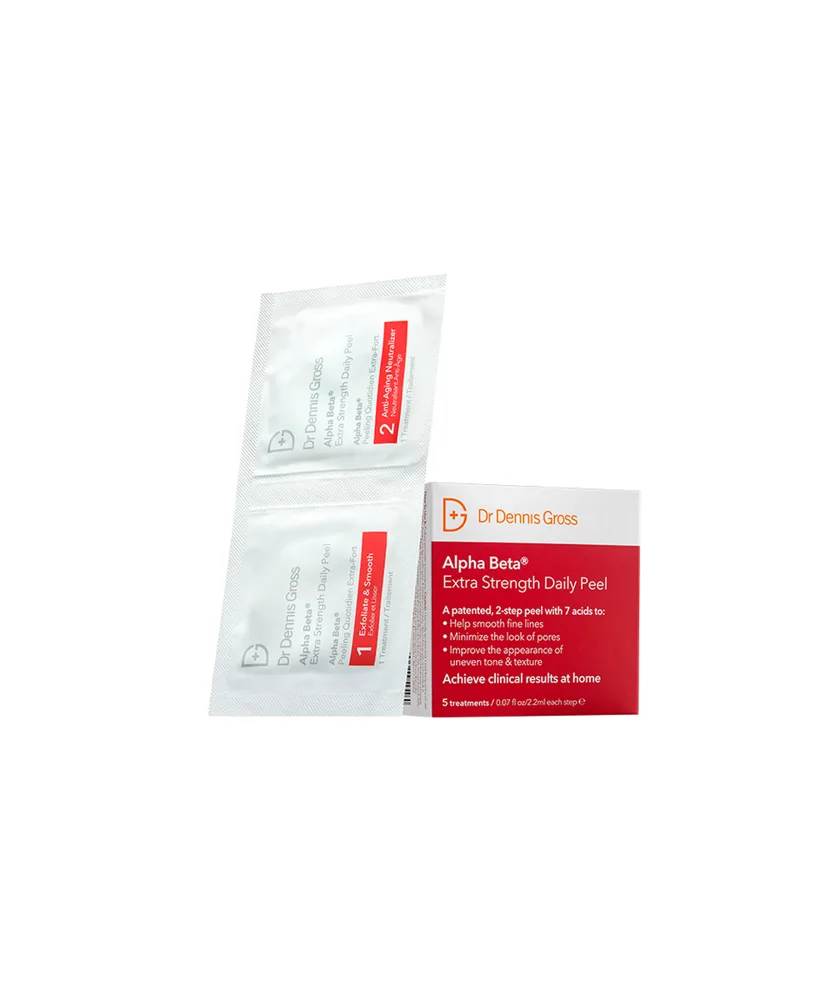
 Alpha Beta Extra Strength Daily Peel
The harder-hitting version of the at-home peel that started the category. Step 1 delivers a serious five-acid blend and Step 2 follows with retinol and antioxidants, making this a combined resurfacing and anti-aging treatment in a single five-minute routine. Expensive but genuinely effective for experienced exfoliant users.
 Pharma-Grade Budget BHA
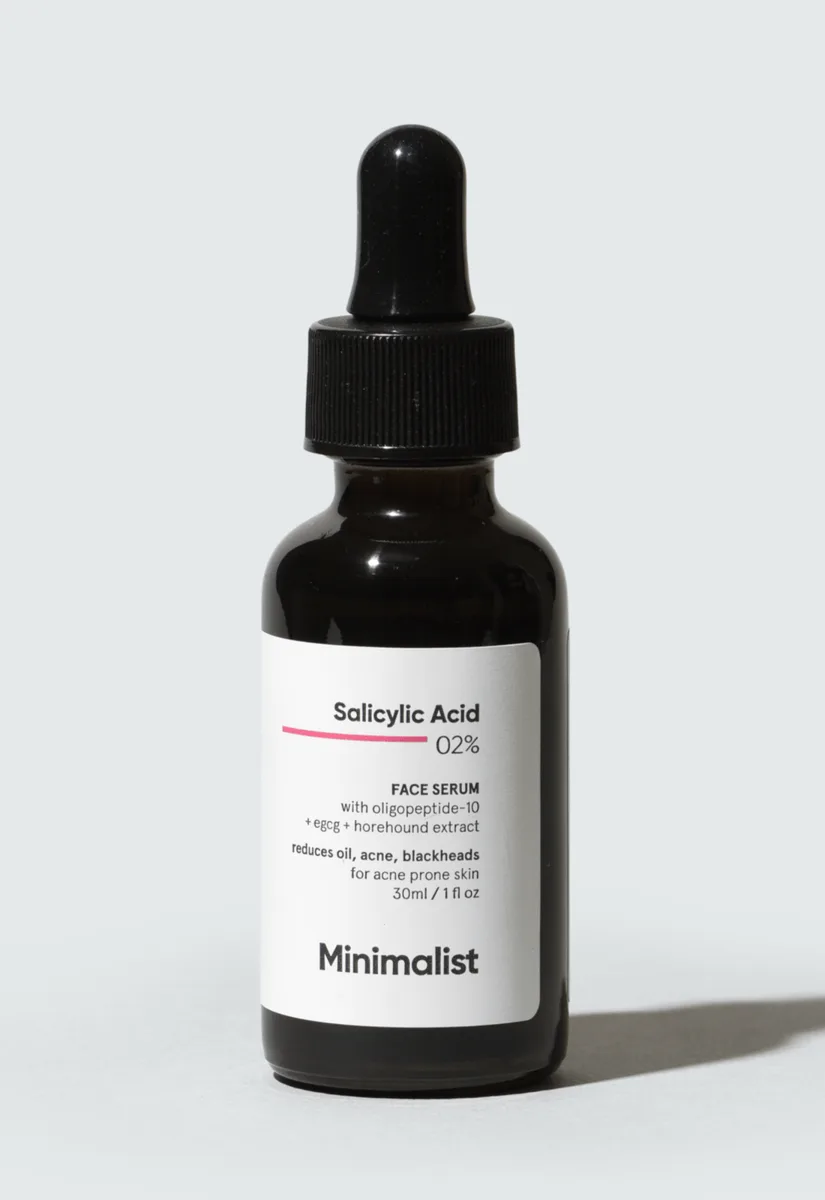
 2% Salicylic Acid Face Serum
A pharma-grade 2% BHA serum at pH 3.75, built around Merck's RonaCare salicylic acid and flanked by Marrubium Vulgare, EGCG glucoside, and Oligopeptide-10 — a supporting cast most budget salicylic serums do not bother with. At ₹599 for 30ml, it is one of the best acne serums on the Indian market and genuinely competitive with the prestige alternatives.