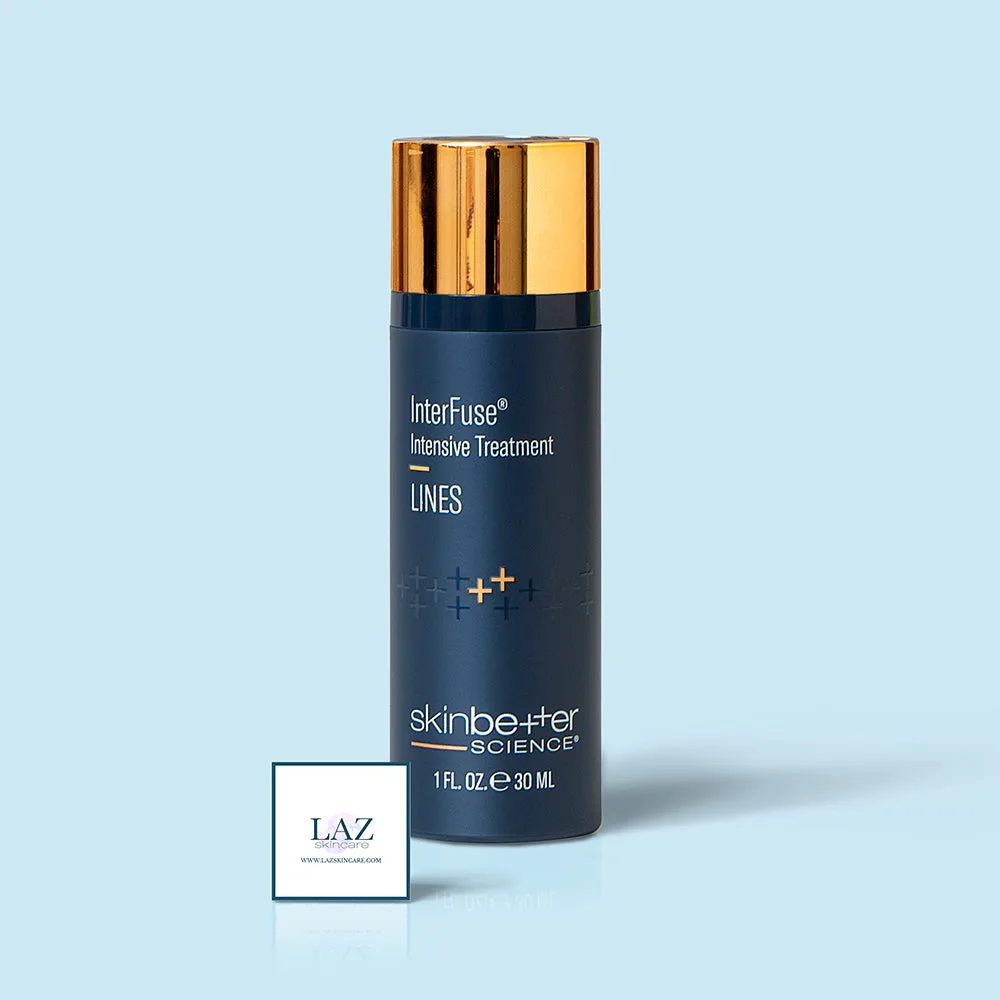
A targeted spot treatment for expression lines that combines muscle-signaling peptides (Argireline, Syn-Ake) with a matrikine stack for a compound topical approach. The formulation is thoughtful and the short-term smoothing is real, but it is not a replacement for injectables — and the $160 price for 9 grams is high for what muscle-signaling peptides can realistically accomplish.
InterFuse Intensive Treatment Lines
A targeted spot treatment for expression lines that combines muscle-signaling peptides (Argireline, Syn-Ake) with a matrikine stack for a compound topical approach. The formulation is thoughtful and the short-term smoothing is real, but it is not a replacement for injectables — and the $160 price for 9 grams is high for what muscle-signaling peptides can realistically accomplish.
Score Breakdown
Where this product gains points and where it loses them — broken down across the four scoring pillars.
An ambitious expression-line targeted treatment that combines muscle-relaxing peptides with matrikines for a compound approach. The formulation is thoughtful but the topical muscle-signaling ingredients have modest clinical evidence, and the price is high for what is essentially a targeted spot treatment.
Pros & Cons
- ✓Combines muscle-signaling peptides with matrikine collagen stimulators
- ✓Targeted applicator tube protects the formula and dispenses precisely
- ✓Immediate visible smoothing from hyaluronic acid and matte finish
- ✓Exceptionally tolerable on sensitive skin around expression lines
- ✓Safe for use between neurotoxin appointments
- ✓Pregnancy-safe with no retinoids, acids, or hormone-active ingredients
- ✓Compact size and targeted use make the tube last 4-5 months
- ✓Layers cleanly under makeup without pilling
- ✗$160 for 9 grams is among the most expensive products in the SkinBetter line per gram
- ✗Muscle-signaling peptides have limited independent clinical evidence
- ✗Not remotely a substitute for injectable neurotoxins
- ✗Results are subtle and take 8-12 weeks to become visible
- ✗Marketing in the broader category often oversells what it can deliver
Full Review
Let's get the most important thing about this product out of the way upfront. SkinBetter Science's InterFuse Intensive Treatment Lines is often marketed — not by SkinBetter themselves, but by the broader peptide-skincare conversation — as a kind of 'topical Botox.' It is not that. Nothing topical is that. The muscle-signaling peptides in this formula (Argireline and Syn-Ake) do have some published clinical evidence for modest reduction in expression line depth when applied consistently over weeks, but the magnitude of effect is nowhere near what an injected neurotoxin produces. If dramatic line reduction is what you're after, the answer is a needle, not a tube. What this treatment can honestly offer is a targeted, topical supplement — a tool for people who don't want injectables, who are between injection appointments and want some topical support, or who specifically want to address the shallower expression lines where injectables would be overkill. Set expectations there, and the product has a defensible case.
What's actually in the tube is a more thoughtful combination than the simple 'Argireline cream' label suggests. You get acetyl hexapeptide-8 (Argireline), which mimics the N-terminal end of the SNAP-25 protein involved in neurotransmitter release and mildly inhibits the muscle contraction signaling at the neuromuscular junction. You get dipeptide diaminobutyroyl benzylamide diacetate (Syn-Ake), a synthetic peptide inspired by temple viper venom that blocks the same pathway through a different receptor — the postsynaptic nicotinic acetylcholine receptor. The pairing of two muscle-signaling peptides operating on different points of the same pathway is the theoretical case for compound efficacy beyond what either alone can deliver. Layered on top of that, you have the same three-peptide matrikine stack used in the regular InterFuse eye cream (palmitoyl tripeptide-38, palmitoyl tetrapeptide-7, and acetyl tetrapeptide-5), which signals to fibroblasts to upregulate collagen and hyaluronic acid synthesis. So the formula is working on expression lines from two distinct biological angles: mild relaxation of the muscle contractions that form the lines, plus stimulation of the collagen and hyaluronic acid that fills and supports the skin from underneath. Add supporting ingredients — niacinamide for barrier strength, sodium hyaluronate for immediate surface smoothing, squalane and ceramide NP for the vehicle — and you have a formulation that's trying to do several things well rather than depending on any single miracle active.
The immediate experience is where the short-term appeal of this treatment lives. On first application, the hyaluronic acid gives you a visible smoothing effect that looks like early results — but it's mostly surface plumping from water binding, which wears off within hours. The matte finish of the cream also visually blurs the appearance of fine lines the way a good silicone primer does. Those immediate effects are not the long-term story, but they're genuine, and they're what makes users feel like the product is 'working' during the first few days while the actual peptide effects are too early to show. After eight to twelve weeks of consistent twice-daily application directly to the targeted expression lines — crow's feet, forehead lines, the '11s' between the brows — you can expect modest softening of line depth. Subtle. Not dramatic. Real, but measurable more by a dermatologist with a grid photo than by your morning mirror.
The applicator is worth commenting on. Unlike the jar format of the regular InterFuse eye cream, this product comes in a small squeeze tube with a narrow applicator tip, which is the right choice for a targeted spot treatment. You dispense a tiny amount — really tiny, smaller than you'd expect — and pat it directly onto the specific line or line cluster you're targeting. Full-face application is a mistake with this product; it wastes the expensive peptide concentration and empties the 9g tube in a month. Used correctly as a targeted spot treatment, the tube lasts four to five months, which helps the value math somewhat. The tube design also protects the peptides better than a jar would, since there's no air exposure with each use.
Where the formulation has real questions is in the independent clinical evidence for the muscle-signaling peptide category. Argireline has been studied for nearly twenty years, and the evidence supports modest effects on expression line depth — but most of the published studies are small, industry-funded, or methodologically limited. Syn-Ake has even less independent evidence. The strongest case you can make for these peptides is that they have some measurable effect at the right concentrations with consistent long-term use, and that the effect is safe, reversible, and well-tolerated. The weakest case — and the honest one — is that the magnitude of effect is on the order of what a good hyaluronic acid serum can produce through surface hydration alone, and it's genuinely hard to distinguish the peptide effect from the baseline smoothing effect of the rest of the formula without controlled comparison.
Who should actually buy this: patients who've made an informed decision not to pursue injectables but still want to do something topical for expression lines, patients using this as a supplementary step between injection appointments to maintain topical support, and patients already committed to the SkinBetter regimen whose dermatologist has recommended this as part of a structured plan. Who should skip: anyone hoping this will replace or significantly delay the need for injectables, anyone who wants dramatic visible results, anyone looking for a full-face anti-aging treatment (this is targeted, not broad-spectrum), and anyone on a budget. At $160 for 9 grams, this is among the most expensive products in the SkinBetter lineup on a per-gram basis, and the value argument depends entirely on whether the subtle topical effect is meaningful to you personally.
Final take: a genuinely thoughtful topical treatment for expression lines that delivers modest, cumulative results with consistent use — but one whose marketing history has often oversold what muscle-signaling peptides can accomplish. If you set expectations realistically and use it as a targeted spot treatment rather than a full-face cream, it has a defensible place in a dermatology-guided routine. If you go in expecting injectable-equivalent results, you'll be disappointed by a product that was never actually designed to compete with a needle.
Formula
Key Ingredients
The hero actives that drive this product's performance.
| Ingredient | Function | Evidence |
|---|---|---|
| Acetyl Hexapeptide-8 (Argireline) | A muscle-signaling peptide that mimics the N-terminal portion of the SNAP-25 protein, mildly inhibiting the neurotransmitter release that drives muscle contraction. In this formula it's the primary 'expression line' targeting ingredient for the area around the outer eyes and between the brows. | emerging |
| Dipeptide Diaminobutyroyl Benzylamide Diacetate (Syn-Ake) | A synthetic tripeptide inspired by the mechanism of temple viper venom that also relaxes muscle contractions by blocking the same neurotransmitter pathway as acetyl hexapeptide-8, through a different receptor. The pairing of Argireline and Syn-Ake is the core 'topical botox-adjacent' pitch of this formulation. | emerging |
| Matrikine Peptide Complex (Palmitoyl Tripeptide-38, Tetrapeptide-7, Acetyl Tetrapeptide-5) | The same three-peptide matrikine stack used in the InterFuse Intensive Treatment eye cream, included here for its fibroblast-stimulating collagen and hyaluronic acid synthesis signaling. The difference is that this formula also layers the muscle-relaxing peptides on top of the matrikines for a compound approach. | promising |
| Niacinamide | Strengthens the barrier around the thin skin being treated and supports overall tone in the application area. It also enhances penetration of the other actives by temporarily improving skin permeability. | well-established |
| Sodium Hyaluronate | Plumps the expression lines temporarily from the surface through water binding, giving an immediate visible smoothing effect while the longer-term peptide work happens underneath. It's the reason this treatment produces a noticeable short-term effect even before the collagen-signaling peptides have time to matter. | well-established |
Full INCI List · pH 5.5
Water, Propanediol, Glycerin, Dimethicone, Niacinamide, Acetyl Hexapeptide-8, Palmitoyl Tripeptide-38, Palmitoyl Tetrapeptide-7, Dipeptide Diaminobutyroyl Benzylamide Diacetate, Acetyl Tetrapeptide-5, Sodium Hyaluronate, Caffeine, Ceramide NP, Squalane, Panthenol, Allantoin, Tocopherol, Tocopheryl Acetate, Glycyrrhiza Glabra Root Extract, Bisabolol, Xanthan Gum, Carbomer, Tromethamine, Phenoxyethanol, Ethylhexylglycerin, Disodium EDTA
Product Flags
✓ Fragrance Free✓ Alcohol Free✗ Oil Free✗ Silicone Free✓ Paraben Free✓ Sulfate Free✗ Cruelty Free✗ Vegan✗ Fungal Acne Safe
Compatibility
Skin Match
Best For
normal dry combination sensitive
Works For
Not Ideal For
Addresses These Conditions
Routine Step
treatment
Time of Day
AM & PM
Pregnancy Safe
Yes ✓
Layering Tips
Apply a small dose to specific expression lines — crow's feet, between the brows, forehead — morning and evening before moisturizer. Not designed for full-face coverage; use as a targeted spot treatment.
Results Timeline
Immediate: subtle smoothing from hyaluronic acid and the matte finish. Short-term (2-4 weeks): visible softening of expression lines with consistent use. Full benefits (8-16 weeks): more sustained reduction in the depth of fine expression lines.
Pairs Well With
peptide-serumsmoisturizersunscreen
Sample AM Routine
- Cleanser
- Antioxidant serum
- THIS TREATMENT (spot)
- Moisturizer
- SPF 50
Sample PM Routine
- Cleanser
- Retinoid
- THIS TREATMENT (spot)
- Moisturizer
Evidence
Who Should Skip
- $160 for 9 grams is among the most expensive products in the SkinBetter line per gram
- Muscle-signaling peptides have limited independent clinical evidence
- Not remotely a substitute for injectable neurotoxins
- Results are subtle and take 8-12 weeks to become visible
Science & Expert Perspective
The Science
The active premise of this treatment rests on two biological mechanisms: muscle-signaling peptide activity at the neuromuscular junction, and matrikine-driven fibroblast stimulation. Acetyl hexapeptide-8 (Argireline) was developed in the early 2000s and has been studied in multiple small clinical trials; a 2002 paper in the International Journal of Cosmetic Science (Blanes-Mira et al.) demonstrated that Argireline mimics the N-terminal portion of SNAP-25 and competitively inhibits vesicle docking at the presynaptic neuromuscular junction, reducing neurotransmitter release. A 2013 clinical study in Clinical, Cosmetic and Investigational Dermatology reported that topical Argireline at 10% reduced periorbital wrinkle depth by approximately 17% over 30 days — measurable but modest compared to the typical 40-60% reduction seen with injected neurotoxins. The evidence for Syn-Ake (dipeptide diaminobutyroyl benzylamide diacetate) is more limited, with most published data coming from the manufacturer. Matrikine peptides, by contrast, have stronger theoretical backing based on Maquart et al.'s foundational work on fragment-based fibroblast signaling, and palmitoyl tripeptide-38 in particular has been studied for its effects on collagen I, III, and hyaluronic acid synthesis. The honest summary of the evidence: muscle-signaling peptides produce measurable but modest effects on expression line depth at the right concentrations with consistent use; matrikine peptides support collagen and hyaluronic acid synthesis with similar modest, gradual effects. Combined, they represent a reasonable topical strategy for patients who want to supplement or avoid injectables — but not a substitute for the dramatic effects that neurotoxin injections produce.
References
- A synthetic hexapeptide (Argireline) with antiwrinkle activity — International Journal of Cosmetic Science (2002)
Dermatologist Perspective
Dermatologists generally view muscle-signaling peptide creams as supplementary tools rather than replacements for injectable neurotoxins. Board-certified dermatologists note that topical peptides can produce measurable but modest effects on expression line depth with consistent long-term use and are appropriate for patients who prefer to avoid injectables or who want to maintain topical support between injection appointments. This treatment is commonly offered in dermatology offices as a targeted option for patients with mild expression lines or as an adjunct for patients already receiving in-office procedures. Dermatologists also emphasize that managing patient expectations is critical with this product category — the topical effect is real but subtle, and comparing it directly to injectable neurotoxin results sets patients up for disappointment.
Guidance
Usage Guide
How to Use
Dispense a tiny amount (about the size of a grain of rice or smaller) onto a clean fingertip and apply directly to specific expression lines — crow's feet, the '11s' between the brows, forehead lines. Pat gently until absorbed. Do not rub or spread across the full face; this is a targeted spot treatment, not a full-face cream. Use morning and evening after serums and before moisturizer. Allow 1-2 minutes between this treatment and makeup application. For maximum effect, use consistently twice daily for a minimum of 8-12 weeks before evaluating results.
Value Assessment
At $160 for 9 grams, the InterFuse Intensive Treatment Lines is $17.78 per gram — among the most expensive products in the SkinBetter line on a per-gram basis. With targeted spot application to specific expression lines, the tube lasts four to five months, putting the monthly cost around $32-40. Used incorrectly as a full-face treatment, the tube lasts only about a month, which destroys the value math. For patients who set realistic expectations and use it as a targeted supplement — not a substitute for injectables — the value is defensible. For patients expecting injectable-level results, no price would be a good value because the product isn't designed to deliver that. There's no larger size available.
Who Should Buy
Patients who have made an informed decision not to pursue injectables but want a targeted topical approach to expression lines, patients maintaining topical support between neurotoxin appointments, and patients with very mild expression lines where injectables would be overkill.
Who Should Skip
Anyone expecting injectable-equivalent results, anyone on a budget, anyone looking for a full-face treatment, and anyone whose expression lines are deep enough that topical intervention won't meaningfully shift the appearance.
Ready to try SkinBetter Science InterFuse Intensive Treatment Lines?
Details
Details
Texture
Silky, fast-absorbing cream with a slight matte finish
Scent
None detectable
Packaging
Small squeeze tube with narrow applicator tip
Finish
mattefast-absorbingnon-greasy
What to Expect on First Use
First use feels cool and immediately smoothing as the hyaluronic acid and matte finish soften the appearance of lines. No tingling or irritation. Expect subtle cumulative results rather than dramatic change.
How Long It Lasts
3-5 months with targeted twice-daily application
Period After Opening
12 months
Best Season
All Year
Background
The Why
Launched in 2018 as an extension of the InterFuse line, this treatment was positioned for patients who wanted a targeted topical option for expression lines — particularly between sessions of neurotoxin injections, or for patients who preferred to avoid injectables entirely. Dermatologists use it as an adjunct rather than a replacement for in-office procedures.
About SkinBetter Science Emerging Brand (2–5 years)
SkinBetter Science launched in 2016 as a physician-dispensed brand. The InterFuse Treatment Lines is marketed as a targeted topical alternative for specific expression lines and is sold exclusively through licensed dermatologist and medical aesthetic practices. L'Oréal acquired the brand in 2024.
Brand founded: 2016 · Product launched: 2018
Myth vs. Reality
Myths & Misconceptions
Myth
Argireline-based creams work as well as Botox.
Reality
They don't. Topical muscle-signaling peptides produce subtle, modest effects that are measurable in some clinical studies but nowhere near the magnitude of injected neurotoxins. If dramatic line reduction is the goal, injectables are the tool; this is a supplement, not a substitute.
Myth
You only need to apply this once a day since the peptides last.
Reality
Twice-daily application is recommended for consistent signaling to the muscle and fibroblast pathways. The peptides have a short half-life on the skin and need to be replenished regularly.
FAQ
Frequently Asked Questions
Can this replace Botox?
No. Topical muscle-signaling peptides produce subtle, modest effects that are not comparable to the dramatic line reduction of injected neurotoxins. This is a supplement or alternative for people who don't want injectables, not a replacement.
What's the difference between this and the regular InterFuse Intensive Treatment?
The regular InterFuse Intensive Treatment is a full eye cream targeting dark circles, puffiness, and general eye-area aging. This Lines version is a targeted spot treatment for specific expression lines and includes muscle-signaling peptides (Argireline, Syn-Ake) that the eye cream does not.
Where should I apply it?
Directly on specific expression lines — crow's feet at the outer corners of the eyes, the '11s' between the brows, forehead lines. It's not designed as a full-face treatment; using it that way wastes the concentrated peptides and empties the small tube quickly.
Is it safe during pregnancy?
Yes. There are no retinoids, acids, or hormone-active ingredients in the formula.
Can I use it alongside neurotoxin injections?
Yes — many patients use this between injection appointments to maintain some topical support. Ask your dermatologist whether the specific combination is right for your routine.
How long until I see results?
Early subtle smoothing within the first week from the hyaluronic acid component; more meaningful softening of expression lines at 8-12 weeks of consistent twice-daily use.
Community
Community Voices
Common Praise
"subtle smoothing effect on expression lines"
"gentle enough for sensitive skin"
"no pilling under makeup"
"small applicator makes it last"
Common Complaints
"expensive for the small size"
"subtle rather than dramatic results"
"not a replacement for injectables"
"overstated marketing claims"
Notable Endorsements
Dermatologist offices nationwide
Appears In
best topical expression line treatment best argireline cream best peptide spot treatment best alternative to botox for sensitive skin
Related Conditions
Related Ingredients
You Might Also Like
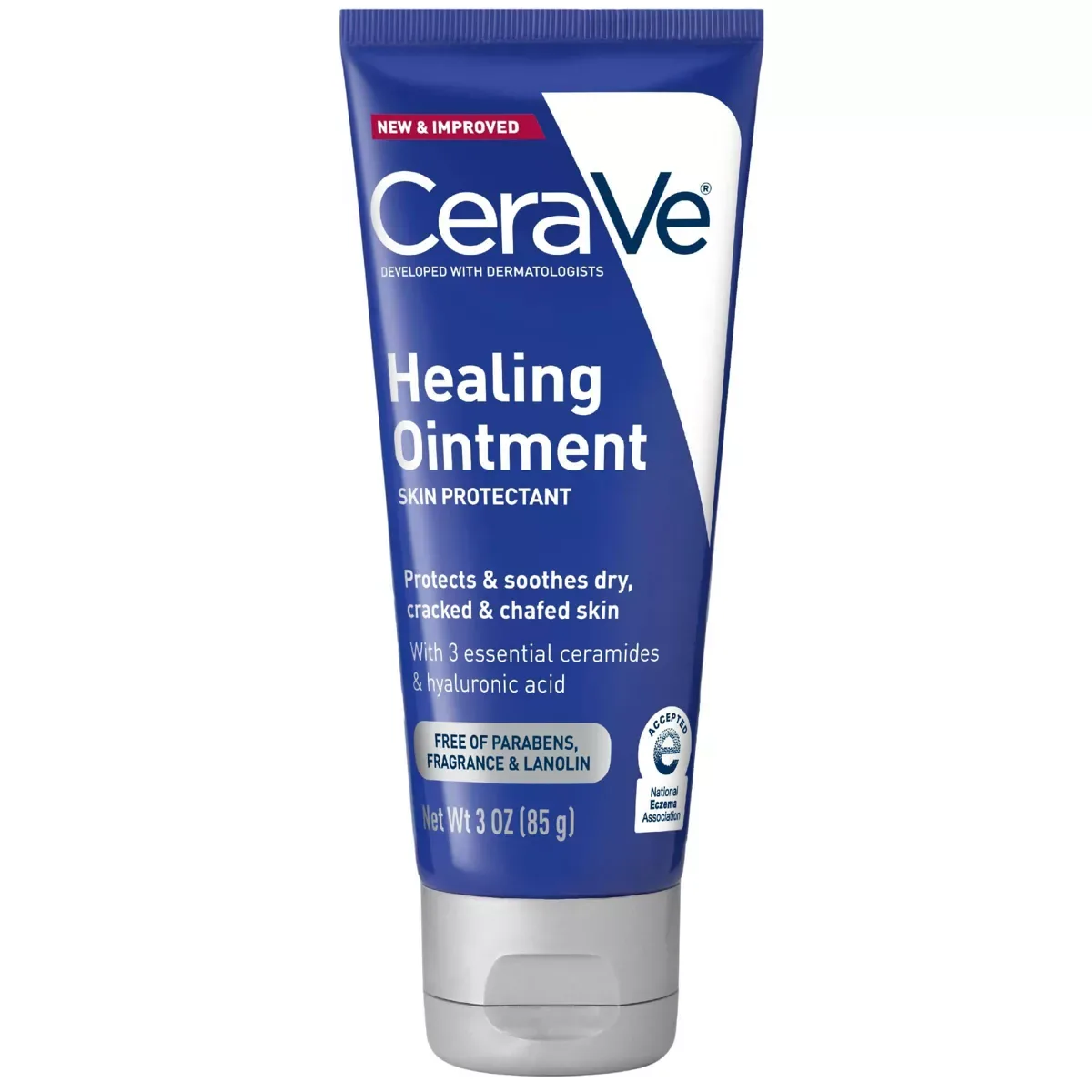 Barrier Rescue Hero
 Healing Ointment
CeraVe's Healing Ointment takes the simplest concept in skincare — seal the skin with petrolatum — and makes it genuinely intelligent by adding ceramides, hyaluronic acid, and panthenol beneath the occlusive layer. It is the gold standard drugstore occlusive for barrier rescue, slugging, and post-procedure care.
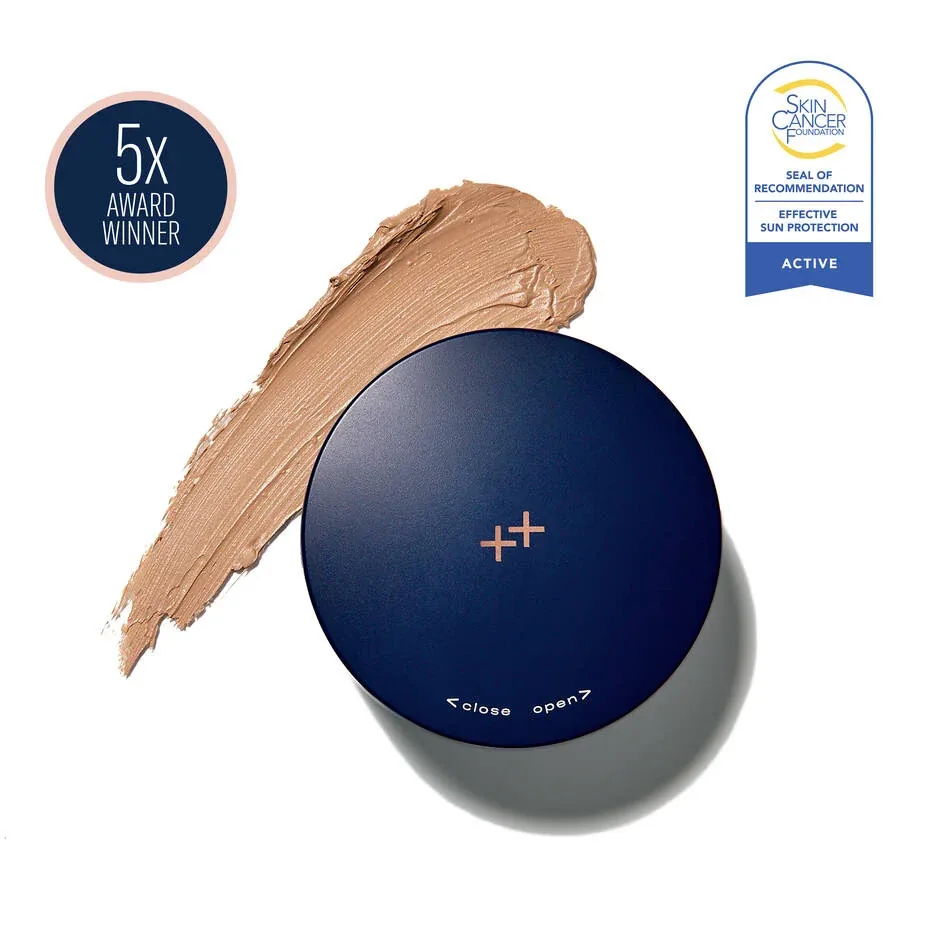 Melasma-Grade Mineral Sunscreen
 sunbetter TONE SMART SPF 68
One of the most clinically useful tinted mineral sunscreens in the professional category. SPF 68 from a 100% mineral formula, iron oxide tint that blocks visible light for melasma protection, and an unusually lightweight texture that doesn't feel like you're wearing high-concentration zinc. For patients with melasma or post-inflammatory hyperpigmentation, this is the category benchmark — and it's earned its Allure Best of Beauty wins.
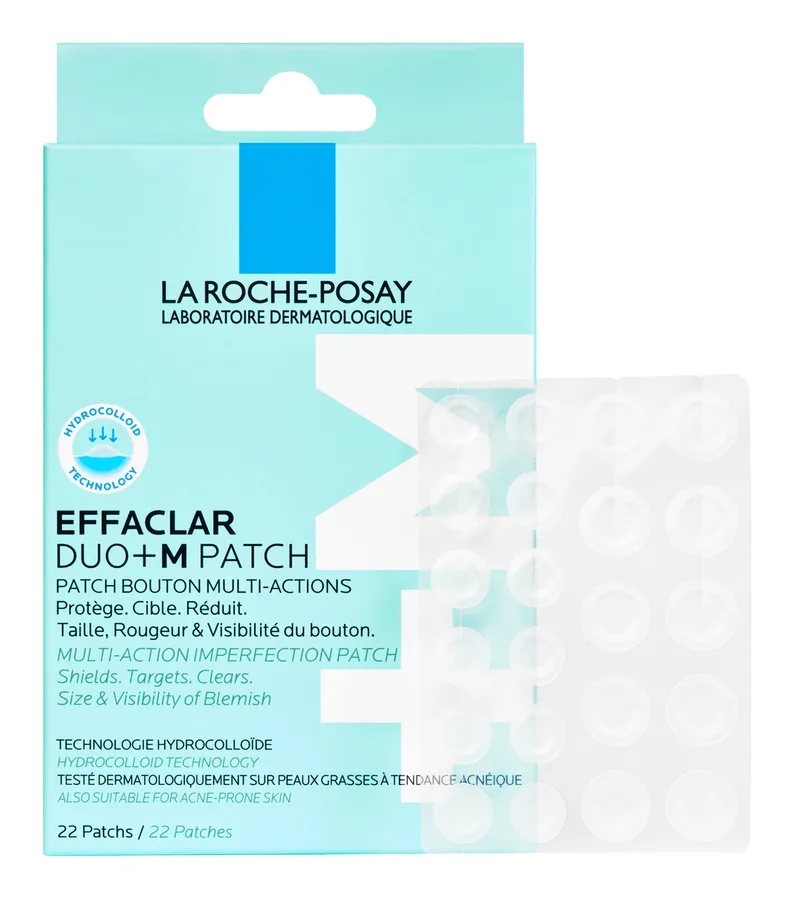 Derm Office Staple
 Effaclar Multi-Target Blemish Patches
One of the few hydrocolloid pimple patches that actually stays on overnight without curling off at 3am. At 420 microns thick with two size options in one pack and zero actives to irritate sensitive skin, this is the Effaclar line's quiet overachiever — and a legitimately good answer for anyone whose acne routine has been sabotaged by thinner patches that refuse to stay put.
 Reactive-Skin Cult Favorite
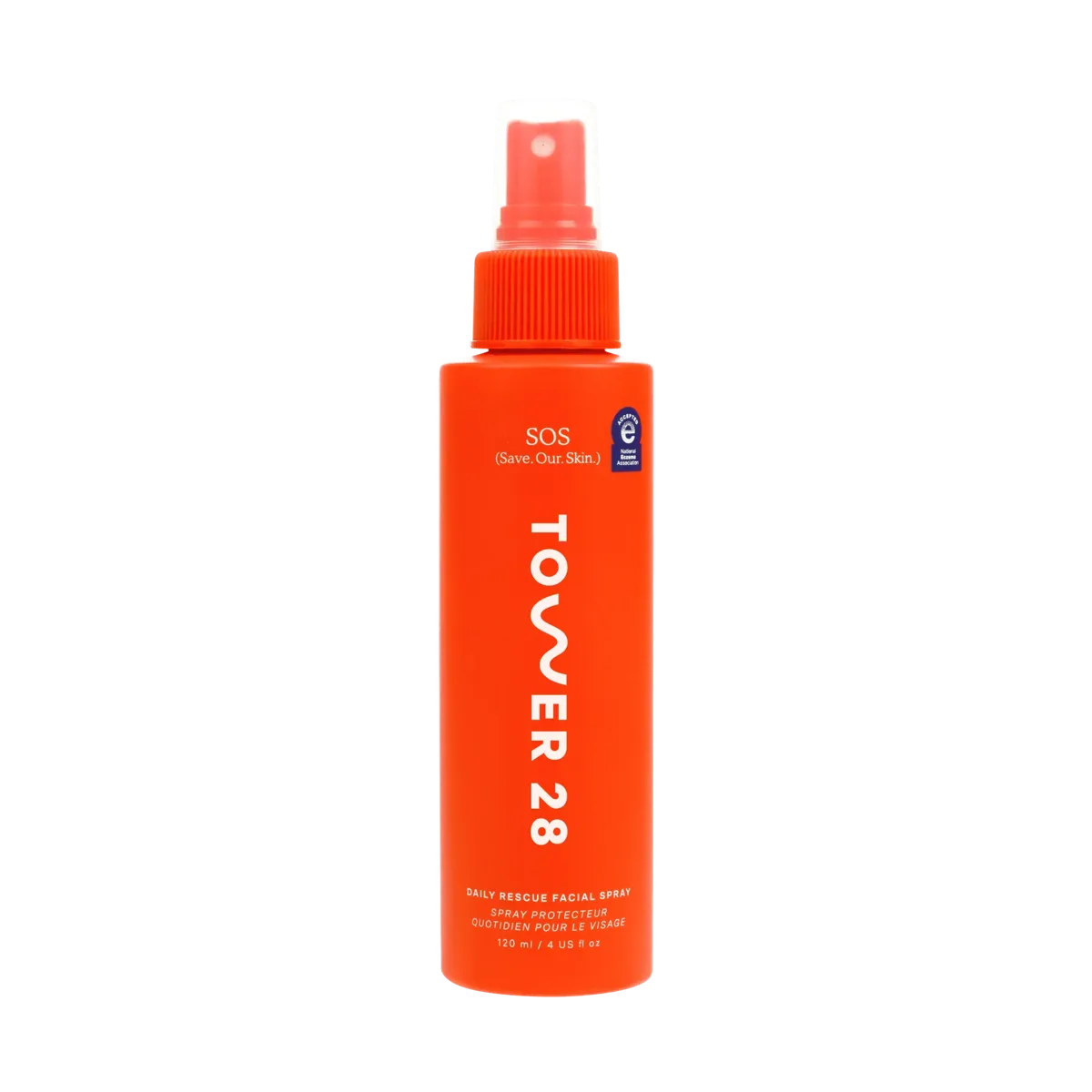
 SOS Save Our Skin Daily Rescue Facial Spray
The product that single-handedly brought hypochlorous acid into mainstream skincare. A fine-mist HOCl spray with genuine dermatology-organization validation, a near-perfect tolerability profile, and a cult following among people whose skin reacts to everything else. The price runs steeper than medical-grade HOCl, but the stabilization and design are worth the difference for daily use.
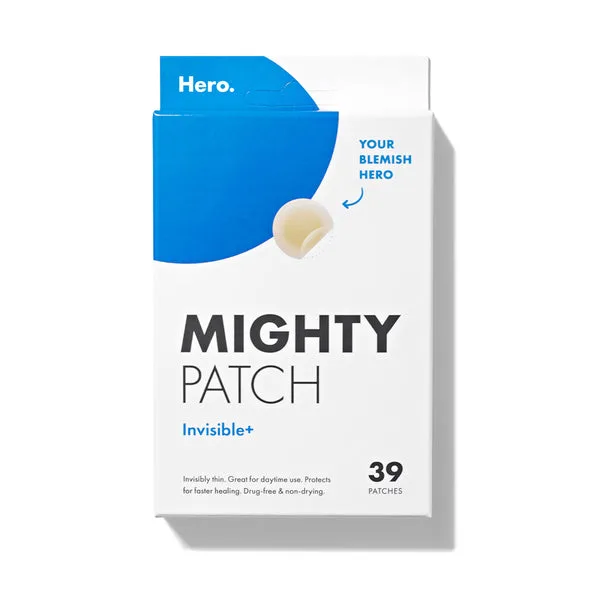
Mighty Patch Invisible+
The pimple patch that proved acne treatment could be invisible — Mighty Patch Invisible+ delivers the same fluid-absorbing hydrocolloid technology as the category-defining Original, but engineered thin enough to disappear under makeup. For daytime blemish management, nothing else comes this close to invisible.
 Post-Procedure MVP
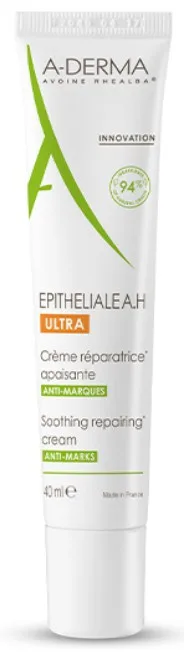
 Epitheliale A.H Ultra Repairing Cream
One of the best-formulated French pharmacy repair creams on the market, full stop. Rhealba oat, three-weight HA, madecassoside, trace minerals, panthenol, and shea butter come together in a cream that handles post-procedure skin, eczema flares, friction damage, and compromised barriers with unusual competence for the price.
This review reflects our independent analysis of publicly available ingredient data, manufacturer claims, and verified user reviews. We are reader-supported — Amazon links may earn us a commission at no cost to you. We do not accept paid placements; rankings are based solely on the evidence.