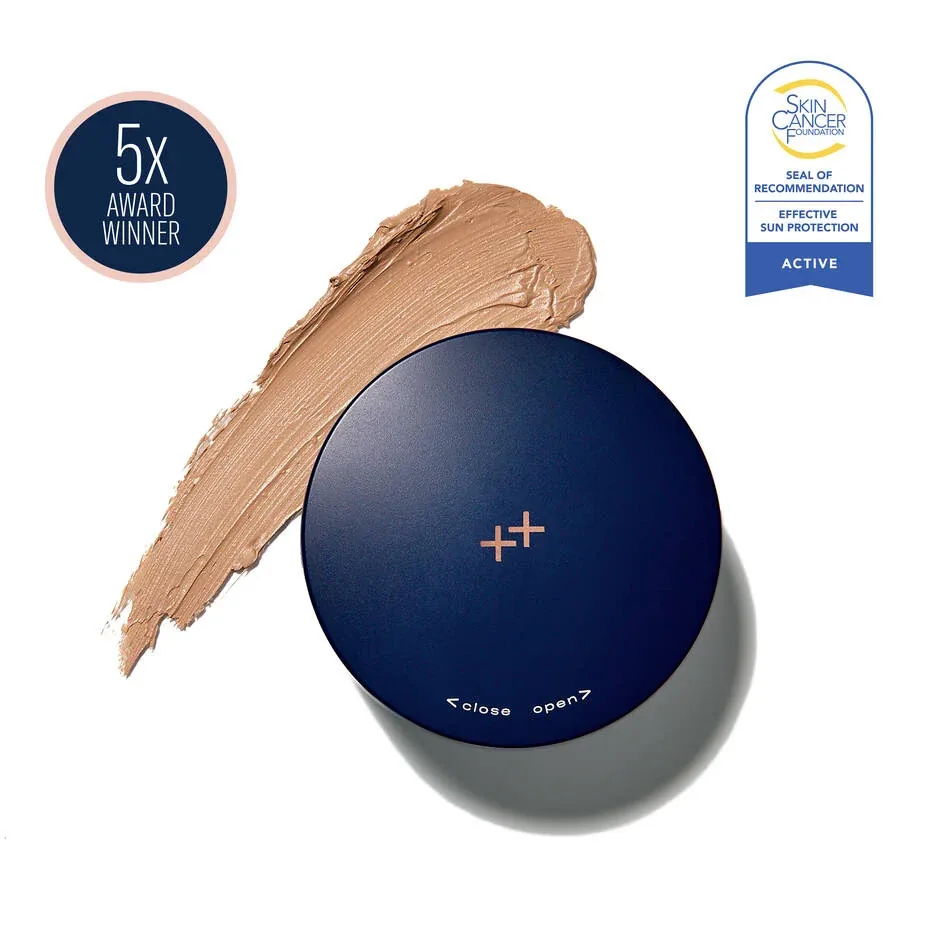
One of the most clinically useful tinted mineral sunscreens in the professional category. SPF 68 from a 100% mineral formula, iron oxide tint that blocks visible light for melasma protection, and an unusually lightweight texture that doesn't feel like you're wearing high-concentration zinc. For patients with melasma or post-inflammatory hyperpigmentation, this is the category benchmark — and it's earned its Allure Best of Beauty wins.
sunbetter TONE SMART SPF 68
One of the most clinically useful tinted mineral sunscreens in the professional category. SPF 68 from a 100% mineral formula, iron oxide tint that blocks visible light for melasma protection, and an unusually lightweight texture that doesn't feel like you're wearing high-concentration zinc. For patients with melasma or post-inflammatory hyperpigmentation, this is the category benchmark — and it's earned its Allure Best of Beauty wins.
Score Breakdown
Where this product gains points and where it loses them — broken down across the four scoring pillars.
An unusually high SPF (68) from a 100% mineral formula that also blocks visible light via iron oxides — a combination that's genuinely difficult to match in the sunscreen category, particularly for patients with melasma or post-inflammatory hyperpigmentation. Allure Best of Beauty winner.
Pros & Cons
- ✓SPF 68 in a 100% mineral formula — unusually high for the category
- ✓Iron oxide tint blocks visible light, a key trigger for melasma
- ✓18.75% zinc oxide for excellent long-UVA protection
- ✓Lightweight texture doesn't feel heavy or chalky
- ✓Universal tint works on a wide range of light-to-medium skin tones
- ✓Pregnancy-safe with 100% mineral UV filter system
- ✓Allure Best of Beauty winner with strong dermatologist reputation
- ✓Layers cleanly under makeup and can function as a light foundation alternative
- ✗$75 for 75g is expensive compared to drugstore mineral sunscreens
- ✗Universal tint doesn't work well for very fair or very deep skin tones
- ✗No shade variants available to accommodate different tones
- ✗2-3 month bottle life at daily use makes it a recurring purchase
- ✗Physician-dispensed only — not available online directly
Full Review
For most of sunscreen's history, the conversation was entirely about UV radiation — UVB for sunburn, UVA for aging, and once you'd blocked both, you were done. Over the last decade that story has gotten meaningfully more complicated. Research has increasingly shown that visible light — the part of the electromagnetic spectrum your eyes can actually see — is a significant trigger for melasma and post-inflammatory hyperpigmentation, particularly in darker skin tones. A 2010 study in the Journal of Investigative Dermatology (Mahmoud et al.) demonstrated that visible light exposure produced sustained hyperpigmentation in skin types IV-VI even when UV was completely blocked. This is a problem because zinc oxide, titanium dioxide, and virtually every chemical sunscreen filter are transparent to visible light — they let it pass through completely. For patients actively treating melasma, a standard 'broad-spectrum' sunscreen is addressing only part of the triggering spectrum, which is why dermatologists treating stubborn melasma often see their brightening work get undone despite diligent sunscreen use. The only topical ingredient that blocks visible light cosmetically is tinted pigment, specifically iron oxides — the same pigments used in makeup foundations for thousands of years, now repurposed as a biologically meaningful sunscreen ingredient.
SkinBetter Science's sunbetter TONE SMART SPF 68 is one of the first and most successful dermatology-office sunscreens to make iron oxide visible-light protection the explicit hero. The formula delivers three simultaneous protective mechanisms: UVB and short-UVA from a 5.5% titanium dioxide plus 18.75% zinc oxide mineral system (the highest concentration practically possible in a cosmetically elegant formula), long-UVA from the high zinc concentration (zinc is the best long-UVA blocker in the mineral arsenal), and visible light from the iron oxide tint. The SPF 68 rating — unusually high for a 100% mineral sunscreen — is possible because of the extreme zinc concentration, and it matters mostly because it compensates for the under-application that almost everyone is guilty of. Studies consistently show real-world sunscreen application is about 25-50% of the amount used in laboratory SPF testing, which means a labeled SPF 30 is often delivering effective SPF 10-15 in actual use. A labeled SPF 68 at the same under-application is effective SPF 25-35, which puts it comfortably in the genuinely-protective range even for people who don't measure their sunscreen dose with a quarter teaspoon.
The thing that would normally be the deal-breaker for a sunscreen with this much zinc and titanium is the cosmetic finish. Historically, mineral sunscreens at these concentrations felt heavy, chalky, and left a ghostly white cast that made them unusable for daily wear on any skin tone darker than the palest complexions. The TONE SMART formulation solves this through two choices: micronized mineral particles that scatter less visible light directly, and the iron oxide tint itself, which visually neutralizes the residual white cast by adding a warm pigmented base layer. The result is a lightweight lotion that applies like a very thin tinted moisturizer, blends into most light-to-medium skin tones without visible mismatch, and leaves a satin finish that looks natural on skin — not ghostly, not greasy, not obviously a sunscreen. For very fair skin tones, the tint may read slightly warm; for very deep skin tones, the tint may not fully match and may leave a slight cast. The 'universal' labeling is reasonably accurate for a wide middle range but not genuinely universal at the extremes of the tone spectrum. SkinBetter doesn't currently offer shade variants, which is the main complaint from users outside the middle of the tonal range.
The daily wear experience is where this sunscreen earns its fan base. It applies thin, absorbs quickly, doesn't sting the eyes (a common complaint with mineral sunscreens — the zinc and titanium don't migrate and irritate the way some chemical filters can), layers cleanly under foundation and concealer without pilling, and doesn't leave a greasy film by midday. The tone-evening effect of the tint functions as a light foundation on its own for minimal-makeup days, which some users treat as an inside secret — it's a sunscreen that functions as daily complexion makeup, not just sun protection. For patients with rosacea, the green tea extract and niacinamide add mild anti-redness support on top of the UV and visible-light blocking.
The clinical use case where this sunscreen truly shines is melasma management. Dermatologists treating melasma routinely prescribe a multi-step regimen: a brightening serum (hydroquinone, tranexamic acid, or a multi-pathway formula), gentle exfoliation to accelerate pigment fading, and — crucially — aggressive daily sun protection that blocks the full triggering spectrum including visible light. A standard untinted sunscreen in that regimen is the leak in the bucket; the brightening work proceeds during the day but the visible light exposure keeps retriggering the melasma, and patients see the fading plateau or reverse. Adding an iron-oxide-tinted high-SPF mineral sunscreen like this one closes the leak, which is why it's become a near-universal recommendation in melasma protocols at dermatology offices that stock the SkinBetter line. If you have melasma and you're using an untinted sunscreen, upgrading to a tinted mineral option is often the single highest-impact change you can make to your routine — and this sunscreen is one of the strongest options in that category.
The value conversation is the usual SkinBetter conversation. At $75 for 75 grams, this is a premium-priced sunscreen, and with daily face-and-neck application the tube lasts two to three months, putting the monthly cost around $25-37. Compared to drugstore mineral sunscreens ($15-20), it's meaningfully more expensive. Compared to other physician-dispensed tinted mineral sunscreens from brands like EltaMD, Colorescience, and ISDIN ($40-60), it's at the higher end but not an outlier. What you're paying for is the SPF 68 rating (unusually high for mineral), the visible-light-blocking iron oxide tint, the texture quality, and the SkinBetter ecosystem consistency if you're already using the brand's other products. For patients with melasma or post-inflammatory hyperpigmentation, the value argument is straightforward — this is the right tool for that job. For patients with straightforward photoaging concerns and no pigmentation issues, a less expensive broad-spectrum sunscreen captures most of the practical benefit.
Final take: this is one of the clinically most useful sunscreens in the professional category and a legitimate benchmark for tinted mineral SPF formulations. If you have melasma, post-inflammatory hyperpigmentation, or a history of UV-triggered pigment issues, this sunscreen has a strong case for itself — arguably the strongest case of any product in the SkinBetter lineup. If you're just looking for a daily broad-spectrum sunscreen without a specific pigment concern, there are less expensive options that will serve you well. The Allure Best of Beauty wins are earned, not marketing.
Formula
Key Ingredients
The hero actives that drive this product's performance.
| Ingredient | Function | Evidence |
|---|---|---|
| Zinc Oxide 18.75% (18.75%) | The primary mineral UV filter, providing broad-spectrum protection across UVB and the full UVA range — including the long-UVA wavelengths that chemical sunscreens often miss. The high concentration is what allows this formula to achieve SPF 68 in a 100% mineral system. | well-established |
| Titanium Dioxide 5.5% (5.5%) | The secondary mineral filter, providing additional UVB protection and working synergistically with the zinc oxide to achieve the SPF 68 rating. The pairing of the two minerals also allows for a less intensely white cast than zinc alone would produce at this high concentration. | well-established |
| Iron Oxides | The tint that makes TONE SMART 'tone smart' — iron oxides provide not only visible pigmentation that evens complexion but also protection against visible light, which is a meaningful factor in melasma and post-inflammatory hyperpigmentation that zinc and titanium alone cannot block. | promising |
| Niacinamide | Included at a supporting concentration for barrier strength and tone-evening work during the hours this sunscreen sits on the skin. Unlike rinse-off niacinamide in a cleanser, niacinamide in a daily sunscreen has meaningful contact time to contribute to brightening. | well-established |
Full INCI List
Active Ingredients: Zinc Oxide 18.75%, Titanium Dioxide 5.5%. Inactive Ingredients: Water, C12-15 Alkyl Benzoate, Butyloctyl Salicylate, Polyglyceryl-4 Isostearate, Niacinamide, Cetyl PEG/PPG-10/1 Dimethicone, Polyhydroxystearic Acid, Dimethicone, Dicaprylyl Carbonate, Hexyl Laurate, Caprylic/Capric Triglyceride, Tocopheryl Acetate, Bisabolol, Allantoin, Glycyrrhiza Glabra Root Extract, Panthenol, Camellia Sinensis Leaf Extract, Iron Oxides, Sodium Chloride, Magnesium Sulfate, Phenoxyethanol, Ethylhexylglycerin, Disodium EDTA
Product Flags
✓ Fragrance Free✓ Alcohol Free✗ Oil Free✗ Silicone Free✓ Paraben Free✓ Sulfate Free✗ Cruelty Free✗ Vegan✗ Fungal Acne Safe
Compatibility
Skin Match
Best For
normal combination dry sensitive
Works For
Not Ideal For
Addresses These Conditions
hyperpigmentation melasma sun damage aging sensitivity post procedure rosacea
Routine Step
sunscreen
Time of Day
AM
Pregnancy Safe
Yes ✓
Layering Tips
Apply as the final morning step after serums and moisturizer. Use a generous amount — a full ¼ teaspoon for face and neck. Reapply every 2 hours during outdoor exposure.
Results Timeline
Immediate: visible tone-evening effect from the iron oxide tint. Short-term (2-4 weeks): consistent UV protection plus visible-light blocking begins to show in reduced melasma triggering. Full benefits (ongoing): long-term photoprotection and melasma stabilization with daily consistent use.
Pairs Well With
brightening-serumsantioxidant-serumsmoisturizer
Sample AM Routine
- Cleanser
- Antioxidant serum
- Moisturizer
- THIS SUNSCREEN
Sample PM Routine
- Cleanser
- Treatment
- Moisturizer
Evidence
Science & Expert Perspective
The Science
The scientific case for tinted mineral sunscreens in melasma and post-inflammatory hyperpigmentation management rests on increasingly robust evidence that visible light — specifically the blue-violet portion of the visible spectrum — is a significant trigger for pigment production in darker skin types. The foundational paper here is Mahmoud et al. (2010) in the Journal of Investigative Dermatology, which demonstrated that visible light exposure induced sustained pigmentation in Fitzpatrick skin types IV-VI, an effect that persisted for weeks after exposure. A 2020 randomized controlled trial in the Journal of the American Academy of Dermatology (Lyons et al.) compared tinted versus untinted mineral sunscreens in melasma patients and reported that the tinted group showed significantly greater reduction in MASI scores over 12 weeks, establishing that iron-oxide-containing sunscreens produce clinically meaningful benefit beyond UV protection alone. The iron oxide pigments responsible for the visible-light blocking effect are the same pigments used in cosmetic foundations for decades — what's new is the recognition that their opacity to visible light makes them biologically active in photoprotection, not just cosmetically active for color matching. The 18.75% zinc oxide concentration in this formula is also worth understanding: zinc is the strongest long-UVA blocker available in the mineral filter category, with protection extending to approximately 380 nm, covering the full UVA1 range. A 2017 review in the Australasian Journal of Dermatology summarized the evidence that long-UVA (340-400 nm) penetrates deeper into the dermis than shorter UVA wavelengths and contributes disproportionately to photoaging and oxidative damage, making high-zinc formulations particularly valuable for anti-aging as well as melasma applications. The combination of SPF 68 UV protection plus iron oxide visible-light blocking in a single elegant vehicle is what makes this sunscreen structurally differentiated from cheaper alternatives.
References
- Impact of long-wavelength UVA and visible light on melanocompetent skin — Journal of Investigative Dermatology (2010)
- Tinted Sunscreens: Consumer Preferences Based on Light Skin Type and Ethnicity — Journal of Drugs in Dermatology (2019)
Dermatologist Perspective
Dermatologists increasingly recommend iron-oxide-tinted mineral sunscreens as the standard of care for patients with melasma or post-inflammatory hyperpigmentation, because visible light has been identified as a meaningful trigger for pigment production that standard untinted sunscreens cannot block. Board-certified dermatologists frequently cite sunbetter TONE SMART SPF 68 as one of the most clinically useful options in this category because of its high SPF, high zinc concentration for long-UVA coverage, and cosmetically elegant texture that improves patient compliance. This sunscreen is commonly offered as the foundational sun protection step in melasma treatment protocols alongside brightening serums and, in more stubborn cases, in-office procedures. Dermatologists also note that the iron oxide tint adds a cosmetic benefit that many patients find encouraging — the immediate tone-evening effect makes consistent daily use feel rewarding rather than purely functional.
Guidance
Usage Guide
How to Use
Apply generously as the final morning skincare step after serums and moisturizer. Use approximately ¼ teaspoon for face and neck to achieve labeled SPF protection — most users under-apply, which significantly reduces effective protection. Pat gently into the skin and blend evenly; the universal tint will smooth out into a natural satin finish. Allow 1-2 minutes to set before applying makeup. Reapply every two hours during outdoor exposure and after swimming or heavy sweating. Safe for twice-daily layering under foundation and concealer. Works as a light foundation alternative on minimal-makeup days.
Value Assessment
At $75 for 75g, sunbetter TONE SMART SPF 68 sits in the upper tier of the professional mineral sunscreen category but is competitive with other physician-dispensed tinted minerals from brands like EltaMD, Colorescience, and ISDIN. With daily face-and-neck application the tube lasts about two to three months, putting the monthly cost around $25-37. For patients with melasma or post-inflammatory hyperpigmentation, the value proposition is straightforward — the iron oxide visible-light blocking component is clinically meaningful for pigment management, and few alternatives match the SPF 68 rating plus the visible-light protection in a single cosmetically elegant vehicle. For casual users without specific pigmentation concerns, a less expensive broad-spectrum mineral sunscreen delivers most of the practical benefit. There's no larger size available, which is a frustration for loyal long-term users.
Who Should Buy
Patients with melasma, post-inflammatory hyperpigmentation, or a history of UV-triggered pigment issues who need visible-light protection in addition to standard UV blocking. Also a strong choice for rosacea, post-procedure recovery, and anyone already committed to a SkinBetter Science regimen under dermatological guidance.
Who Should Skip
Users with very fair or very deep skin tones for whom the universal tint may not match, users on tight budgets for whom a less expensive broad-spectrum mineral sunscreen captures most of the benefit, and users without specific pigmentation concerns who don't need the visible-light protection component.
Ready to try SkinBetter Science sunbetter TONE SMART SPF 68?
Details
Details
Texture
Lightweight lotion with universal tint
Scent
None detectable
Packaging
Squeeze tube with flip-cap
Finish
satinnaturalfast-absorbing
What to Expect on First Use
First application feels surprisingly lightweight for an SPF 68 mineral sunscreen. The universal tint blends into most skin tones without leaving a white cast, and the finish is a natural satin with subtle tone-evening effect. No stinging, no residue, no greasiness.
How Long It Lasts
2-3 months with daily face and neck application
Period After Opening
12 months
Best Season
All Year
Background
The Why
sunbetter TONE SMART SPF 68 launched in 2019 as part of SkinBetter Science's expansion into sun protection, specifically designed for dermatology practices treating patients with melasma and post-inflammatory hyperpigmentation. The recognition that visible light — not just UV — triggers melasma had been emerging in dermatology literature, and this sunscreen was one of the first tinted mineral options positioned as a visible-light-protective daily driver.
About SkinBetter Science Emerging Brand (2–5 years)
SkinBetter Science launched in 2016 and the sunbetter SPF line — including TONE SMART SPF 68 — has won multiple Allure Best of Beauty awards. The sunscreens are physician-dispensed only and were acquired as part of L'Oréal's 2024 purchase of the brand.
Brand founded: 2016 · Product launched: 2019
Myth vs. Reality
Myths & Misconceptions
Myth
Any SPF 30 sunscreen is enough for daily use.
Reality
For general protection, SPF 30 is fine. For patients actively treating melasma or recovering from UV-sensitive procedures, higher SPF plus visible-light protection produces meaningfully better outcomes. The iron oxide tint adds a layer of protection that no untinted sunscreen can match.
Myth
Mineral sunscreens always leave a white cast.
Reality
Traditional high-concentration zinc formulas did. Modern particle-size engineering plus tinted iron oxides like in this formula can produce a cosmetically elegant finish even at high SPF values. The white-cast problem is increasingly a myth for well-formulated modern mineral sunscreens.
FAQ
Frequently Asked Questions
Why does this sunscreen matter for melasma specifically?
Visible light — not just UV — is a documented trigger for melasma, and standard mineral and chemical sunscreens don't block visible light. The iron oxide tint in this formula is what blocks the visible light component, which is why tinted sunscreens outperform untinted ones for melasma management.
Will the tint match my skin tone?
The tint is designed as a universal shade that blends into most light-to-medium skin tones. For very fair or very deep skin tones, it may leave a slight mismatch; very deep skin tones in particular may prefer a darker tinted mineral option from a different brand.
Is SPF 68 meaningfully better than SPF 30?
The marginal UVB protection difference between SPF 30 and SPF 68 is real but modest (97% vs 98.5% blockage). What matters more for most users is that higher SPF ratings generally come with better UVA coverage and higher tolerance for under-application — most people apply too little sunscreen, and a higher rated product compensates for that.
Can I use this post-procedure?
Yes. The 100% mineral formula is gentle enough for post-procedure use once your dermatologist clears sunscreen reintroduction. The high SPF and visible-light protection are actually more important post-procedure when the skin is more vulnerable to hyperpigmentation triggers.
Is it pregnancy-safe?
Yes. The 100% mineral UV filter system is considered the safest sunscreen choice during pregnancy, and the formula contains no retinoids, salicylic acid, or hormone-active ingredients.
Can I wear makeup over it?
Yes — it layers cleanly under foundation and concealer without pilling. For best results, let it set for 1-2 minutes before applying makeup. The universal tint can also function as a light foundation alternative on minimal-makeup days.
Community
Community Voices
Common Praise
"elegant lightweight texture for a mineral sunscreen"
"universal tint works on most skin tones"
"effective at reducing melasma triggering"
"doesn't sting the eyes"
"comfortable all-day wear"
Common Complaints
"expensive"
"tint may not match all skin tones perfectly"
"compact size at 75g"
"physician-dispensed only"
Notable Endorsements
Allure Best of BeautyNewBeauty Awarddermatologist offices nationwide
Appears In
best tinted mineral sunscreen for melasma best sunscreen with visible light protection best dermatologist mineral sunscreen best sunscreen for rosacea best post procedure sunscreen
Related Conditions
melasma hyperpigmentation sun damage sensitivity post procedure rosacea
Related Ingredients
You Might Also Like
 Derm Office Staple
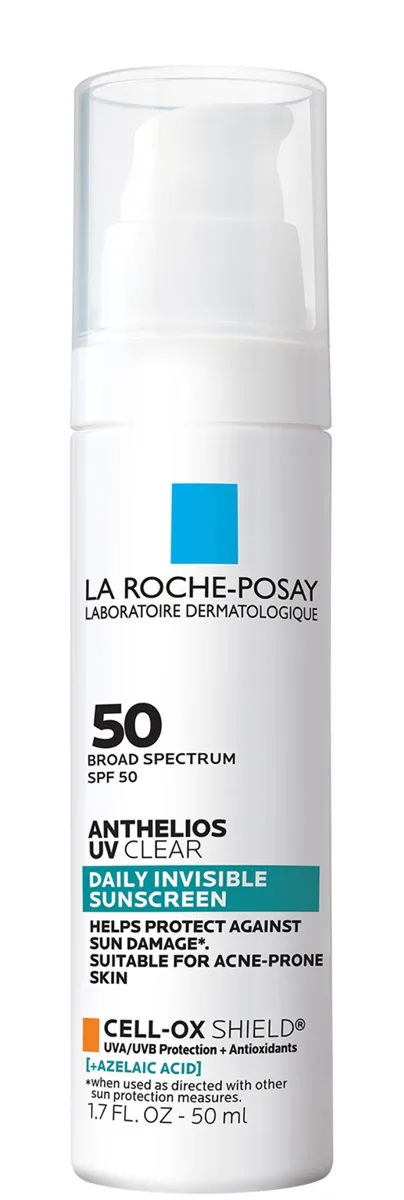
 Anthelios UV Clear Sunscreen SPF 50
One of the only US chemical sunscreens that genuinely earns its 'for sensitive and breakout-prone skin' positioning. A photostable Anthelios filter system paired with a legitimate azelaic acid dose in a lightweight serum-fluid that disappears on every skin tone. Excellent for rosacea, acne, and post-inflammatory hyperpigmentation — and probably the single best daily sunscreen in the La Roche-Posay US lineup for those conditions.
 K-Beauty Daily SPF Standout
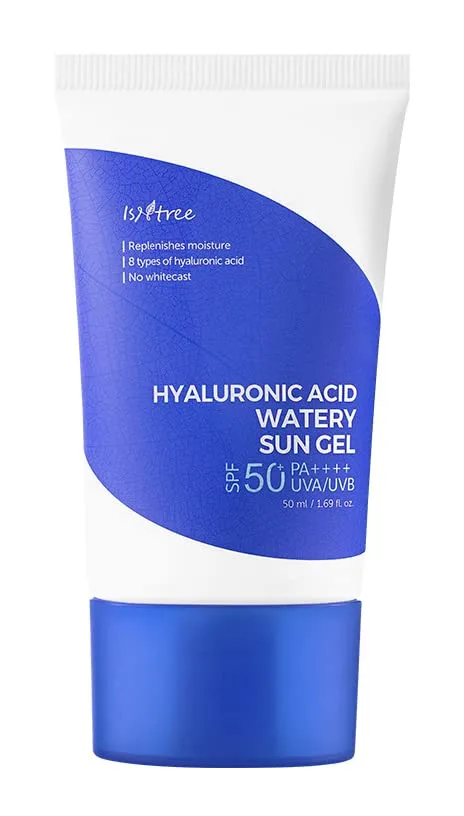
 Hyaluronic Acid Watery Sun Gel SPF 50+
One of the strongest everyday K-beauty sunscreens in the international market — modern European filters, no white cast, fragrance-free, niacinamide-boosted, and built around the brand's signature six-weight HA complex. At twenty-two dollars for 50ml, it's a case study in how much better a daily sunscreen can be when the formulator cares about both protection and wearability.
 Derm Office Staple
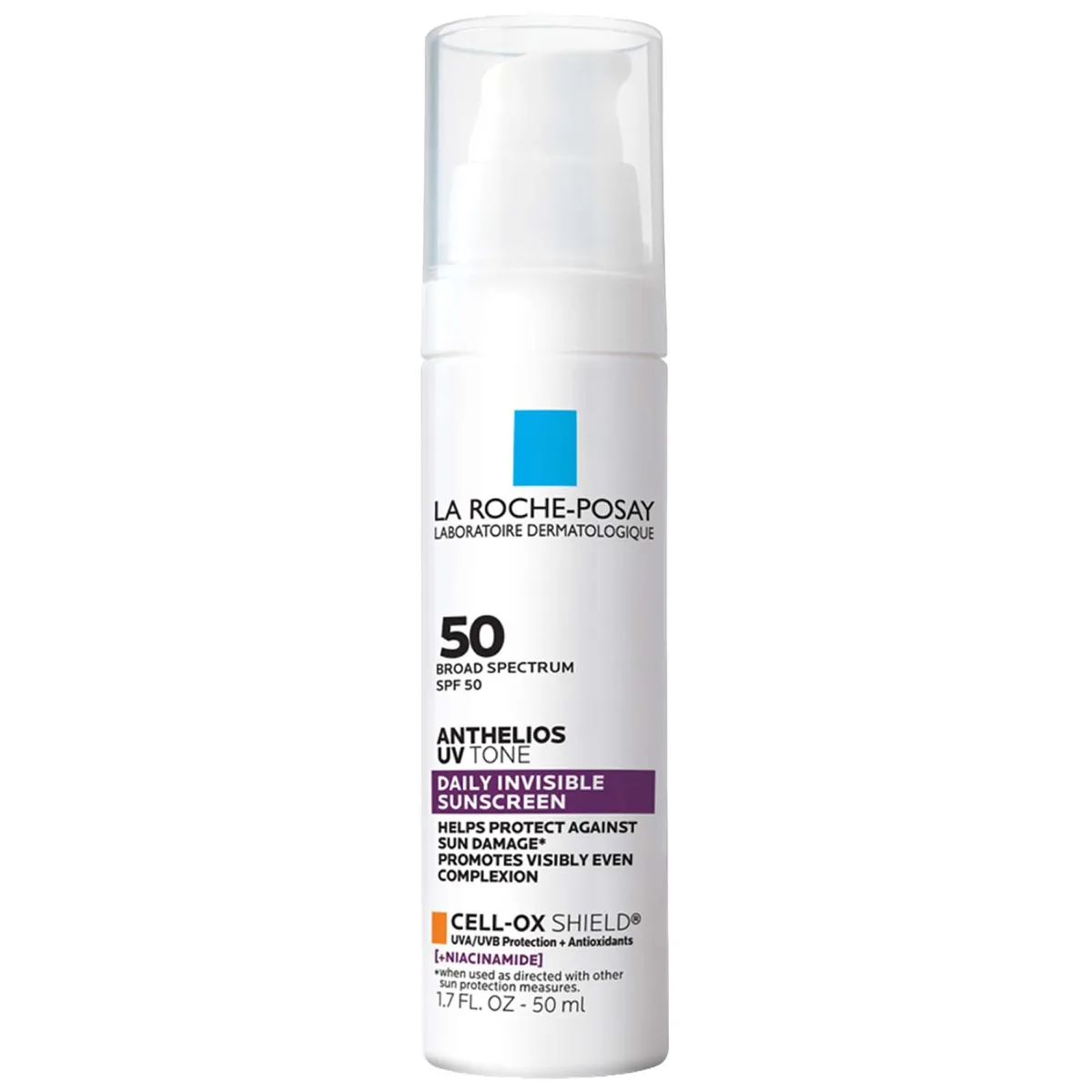
 Anthelios UV Tone Daily Invisible Sunscreen SPF 50
La Roche-Posay's most thoughtful answer yet for hyperpigmentation-prone skin that needs daily SPF. A photostable avobenzone system reinforced with Oxynex ST, paired with a meaningful dose of niacinamide, in a serum-fluid base that goes on invisible on every skin tone. Expensive for 1.7 oz but legitimately well-built — and a rare chemical sunscreen that earns its 'for dark spots' marketing.
 K-Beauty Cult Favorite
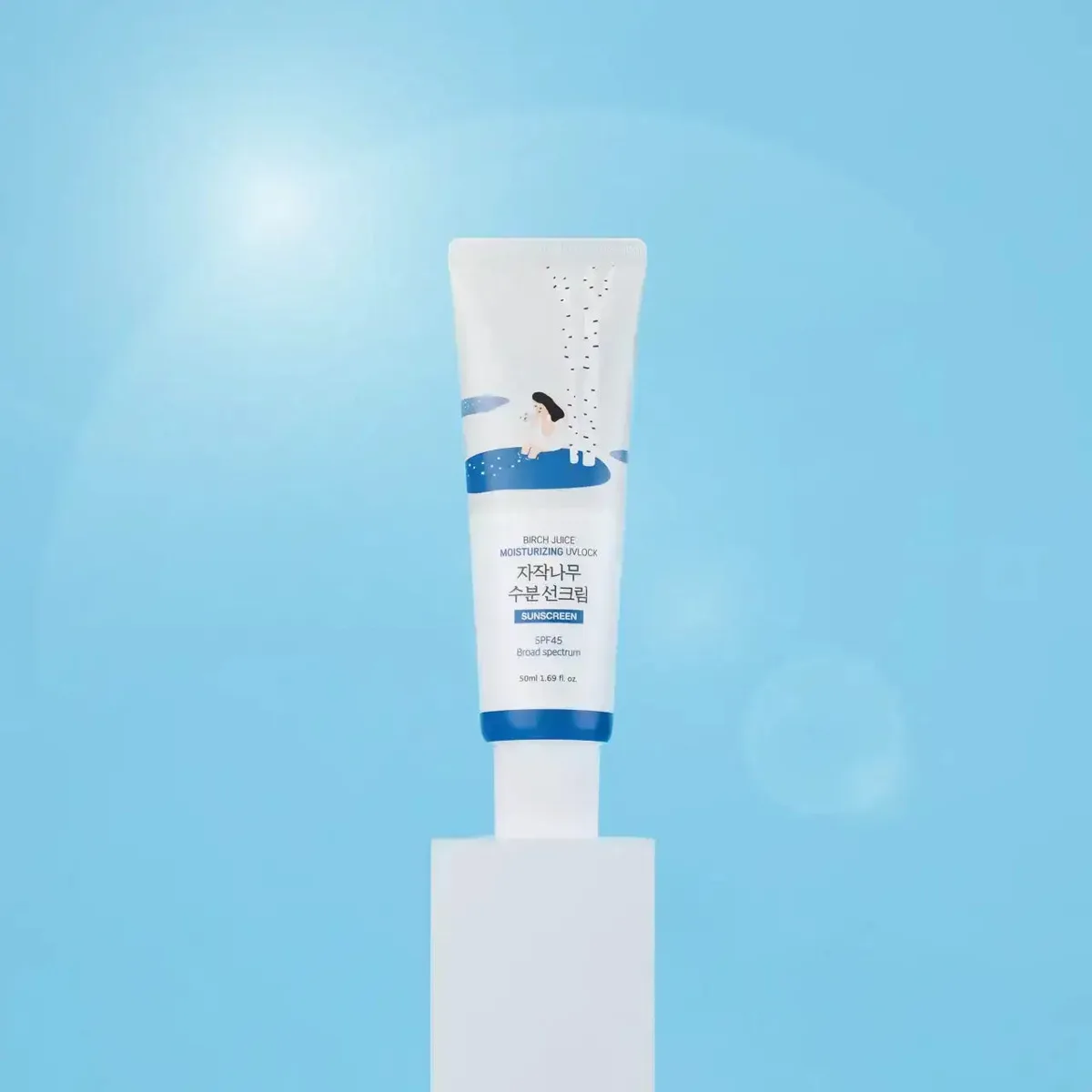
 Birch Juice Moisturizing Sun Cream SPF 50+
One of the best hybrid sunscreens in K-beauty right now — a 70% birch sap base, modern UVA filters you can't get in the US, and a finish that wears like a lightweight moisturizer. Broadly compatible, well-priced, and genuinely pleasant to apply, with minor tradeoffs for oily and fungal-acne-prone users.
 The K-Beauty Sunscreen That Changed Everything
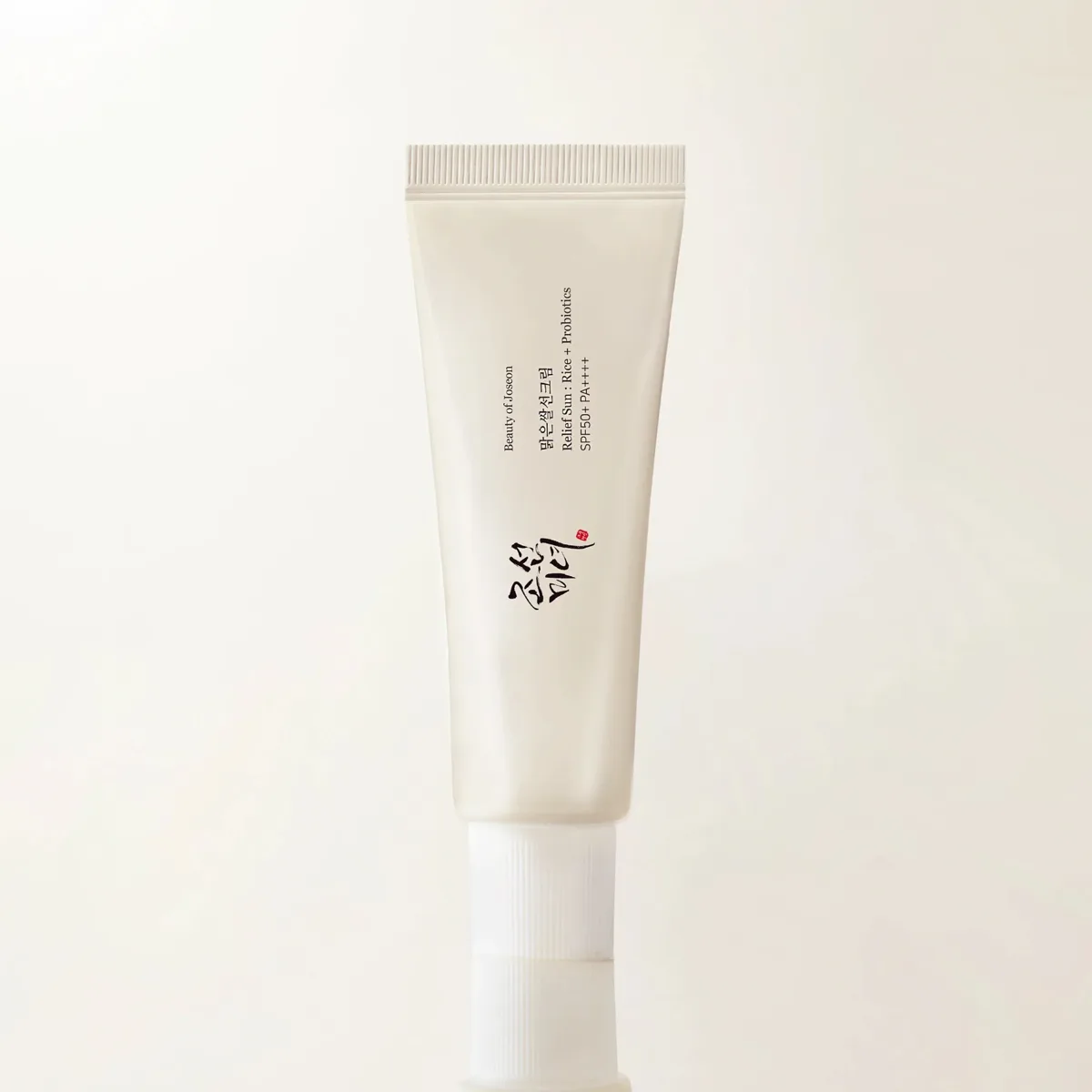
 Relief Sun: Rice + Probiotics SPF 50+
The sunscreen that rewrote the rules for what a $14 product could deliver. With independently verified SPF 50+, 30% rice extract, niacinamide, and a probiotic ferment complex, it offers protection and skincare benefits that rival products three times its price. The texture that feels like wearing nothing on your face is the reason it went viral — and stayed there.
 Modern Filter Pick
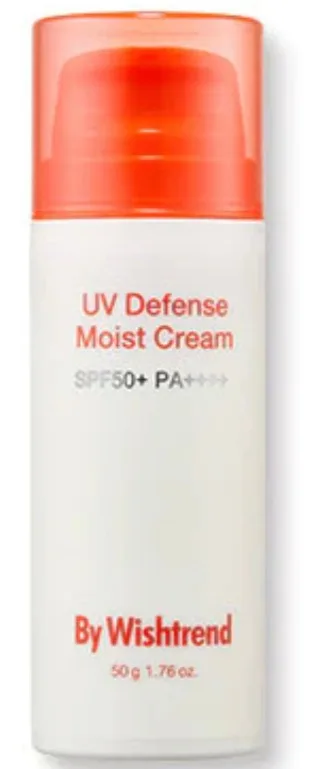
 UV Defense Moist Cream SPF 50+
A genuinely modern broad-spectrum sunscreen that runs three of the best UVA filters in the world simultaneously — Uvinul A Plus, Tinosorb S, and Mexoryl SX — in a moisturizing cream base that doubles as a daytime moisturizer. The white cast and the fungal-acne incompatibility limit its audience, but for normal-to-dry skin in the US frustrated by the FDA's old filter list, this is a serious upgrade.