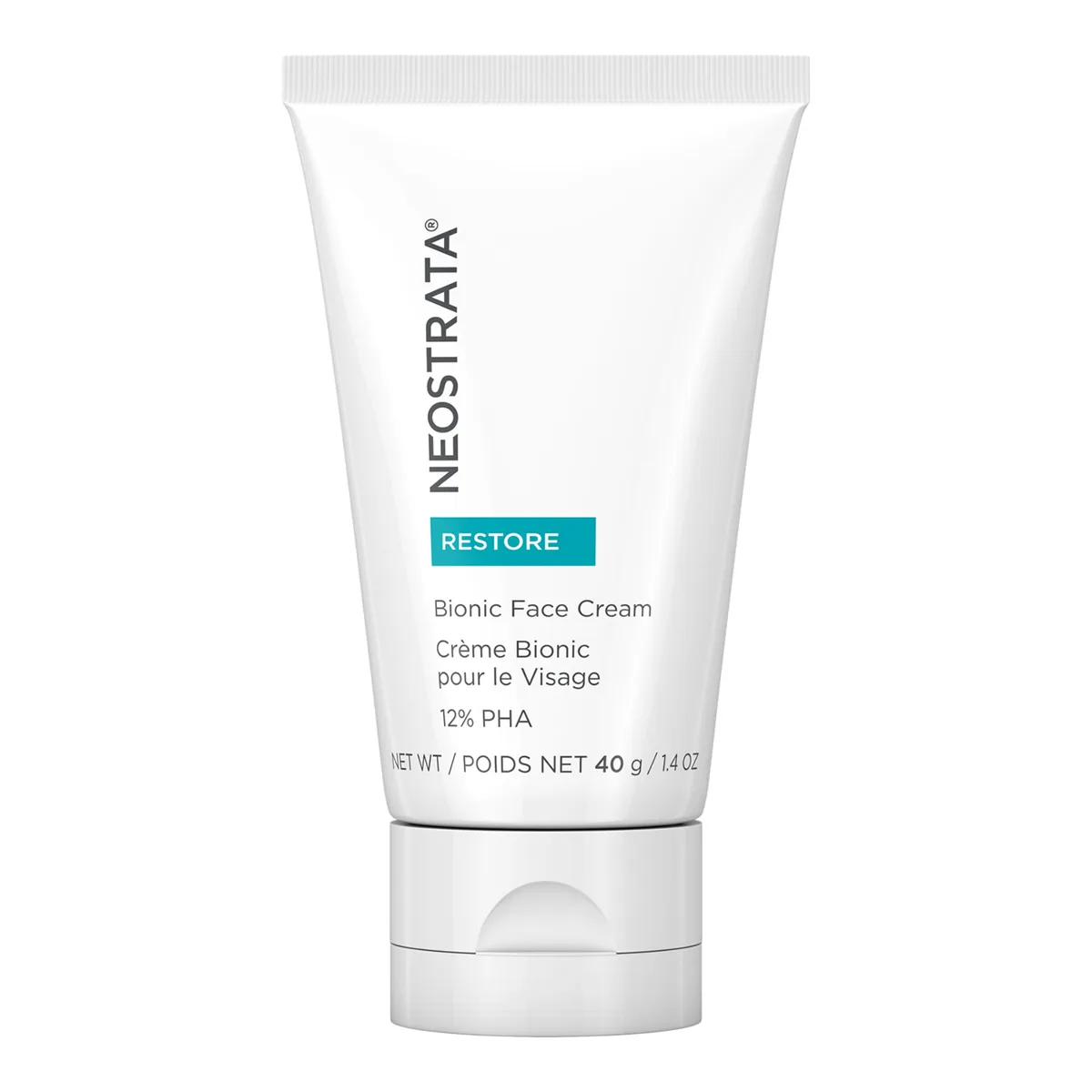
The quiet overachiever of NeoStrata's lineup — a rich, utterly gentle face cream that delivers 12% acid exfoliation so smoothly that sensitive and rosacea-prone skin actually thrives on it. The small jar and premium price sting, but the formulation quality from the inventors of PHA technology is in a class of its own.
Restore Bionic Face Cream PHA 12
The quiet overachiever of NeoStrata's lineup — a rich, utterly gentle face cream that delivers 12% acid exfoliation so smoothly that sensitive and rosacea-prone skin actually thrives on it. The small jar and premium price sting, but the formulation quality from the inventors of PHA technology is in a class of its own.
Score Breakdown
Where this product gains points and where it loses them — broken down across the four scoring pillars.
An exceptionally well-tolerated moisturizer that delivers PHA exfoliation, antioxidant protection, and intense hydration simultaneously. The high irritation\_risk score reflects how gentle this is even for sensitive skin. Value takes a hit due to the small 1.4 oz size at $66, but the formulation quality from the inventors of PHA technology is undeniable.
Pros & Cons
- ✓12% PHA blend delivers real exfoliation with zero sting or irritation, even on rosacea-prone skin
- ✓Gluconolactone simultaneously exfoliates, hydrates, and provides antioxidant protection in one molecule
- ✓Lactobionic acid adds powerful humectant and antioxidant benefits beyond standard PHA exfoliation
- ✓Sodium hyaluronate and meadowfoam seed oil create multi-layered hydration beneath the PHA activity
- ✓Fragrance-free and non-comedogenic certified, suitable for the most reactive skin types
- ✓Proven track record of over 15 years on the market with strong consumer satisfaction data
- ✓Does not increase sun sensitivity like traditional AHA products
- ✗1.4 oz jar at $66 makes this one of the most expensive per-ounce moisturizers in its class
- ✗Rich, balm-like texture can pill under makeup and primers, limiting daytime usability
- ✗Contains colorants (Yellow 5, Red 33) that add no benefit to a sensitive-skin clinical product
- ✗Too emollient for oily or combination skin types who prefer lighter textures
- ✗Jar packaging exposes product to air and bacteria with each use — a pump would be more hygienic
Full Review
There's an irony at the heart of NeoStrata's story. The brand that brought alpha hydroxy acids to the world — the company whose founders literally invented the category — eventually realized that their own flagship ingredient was too harsh for millions of potential users. Sensitive skin, rosacea, post-procedure recovery — an enormous population needed the anti-aging benefits of acid exfoliation but couldn't tolerate the sting, redness, and photosensitivity that came with traditional AHAs.
The solution was polyhydroxy acids. And the Bionic Face Cream, with its 12% blend of gluconolactone and lactobionic acid, is what that solution looks like when it's been perfected over more than a decade on the market.
The first thing you notice is the texture. This is not a lightweight, modern gel-cream. It's a rich, almost balm-like emollient that initially looks and feels closer to a medicated ointment than a trendy moisturizer. Apply it to slightly damp skin — this is critical for optimal spreading — and it transforms from thick paste to a smooth, velvety layer that sinks in gradually over several minutes. The finish is dewy and nourishing, the kind of feel that makes you instinctively touch your face to confirm that yes, something substantial just happened.
What's happening beneath that emollient surface is where the science gets interesting. Gluconolactone, the primary PHA at 8%, exfoliates through the same fundamental mechanism as glycolic acid — disrupting the bonds between dead corneocytes to reveal fresher skin beneath. But its molecular structure is dramatically larger (the molecular weight of gluconolactone is 178 g/mol versus glycolic acid's 76 g/mol), which means it penetrates more slowly and uniformly. The result: real exfoliation without the sting, redness, or peeling that smaller AHAs provoke.
But gluconolactone does something glycolic acid can't. Its polyhydroxy structure — multiple hydroxyl groups on each molecule — allows it to simultaneously function as a humectant, drawing moisture to the skin surface during the exfoliation process. And it chelates transition metal ions, which means it actively reduces the free radical generation that contributes to skin aging. Exfoliation, hydration, and antioxidant protection in a single molecule. This is why NeoStrata's founders consider PHAs a genuine advancement over the AHAs they originally pioneered.
Lactobionic acid, the second PHA at 4%, is what NeoStrata calls a bionic acid — a next-generation evolution with even larger molecules and stronger humectant and antioxidant properties. In organ preservation, lactobionic acid is used to protect donated organs from oxidative damage during transport. In this cream, it creates a protective, moisture-retaining film on the skin surface that feels like luxury hydration while delivering meaningful anti-aging exfoliation.
The supporting ingredients reinforce the moisture theme. Sodium hyaluronate provides deep hydration within the epidermis. Meadowfoam seed oil delivers long-chain fatty acids that mimic the skin's natural lipids. Petrolatum and dimethicone create an occlusive shield. Glycerin provides classic humectant support. The entire formula is engineered to exfoliate within a cocoon of hydration — the opposite of the stripping experience many people associate with acid products.
In daily use, the cream's reputation as a holy grail for sensitive skin is well-earned. There is genuinely no tingling upon application, even on first use. For anyone who has flinched applying glycolic acid products, this feels almost impossibly gentle for something containing 12% acid. Within two to four weeks, the exfoliation effect becomes visible: smoother texture, improved radiance, a refinement in the skin's surface that you can both see and feel. By six weeks, fine lines appear softened, and skin looks healthier and more resilient.
Users with rosacea deserve special mention. Multiple long-term users report that this cream not only doesn't trigger rosacea flares — it actively improves their skin's resilience and reduces background redness over time. For a population that has to scrutinize every product for potential irritants, finding an acid cream that's not just safe but beneficial is remarkably rare.
The honest downsides are practical, not formulation-related. At $66 for 1.4 oz, the per-ounce cost is steep. The rich texture, while wonderful for nighttime use, can pill under makeup and primers, limiting its daytime practicality for many users. The jar contains colorants (Yellow 5 and Red 33) that give it a slight pink tint but serve zero functional purpose — an odd choice for a clinical, fragrance-free product aimed at sensitive skin. And while the non-comedogenic certification holds for most users, the emollient richness means oily skin types will likely find it too heavy.
But for its intended audience — people with dry, sensitive, aging, or rosacea-prone skin who want the proven benefits of acid exfoliation without the proven drawbacks — this cream represents something genuinely special. It's the product that proved acid skincare doesn't have to hurt to work, from the brand that earned the authority to make that claim.
Formula
Key Ingredients
The hero actives that drive this product's performance.
| Ingredient | Function | Evidence |
|---|---|---|
| Gluconolactone (PHA) (8%) | The primary exfoliant in this 12% PHA blend, gluconolactone provides gentle resurfacing without the irritation of traditional AHAs. In this sensitive-skin formula, it simultaneously exfoliates, hydrates through its multiple hydroxyl groups, and chelates metal ions to protect against free radical damage — three functions in one ingredient that make it ideal for stressed or reactive skin. | well-established |
| Lactobionic Acid (4%) | The bionic acid component of this cream's PHA blend, lactobionic acid is a large-molecule sugar acid that provides antioxidant protection while attracting and retaining moisture at the skin surface. In this formula it complements gluconolactone by adding a stronger humectant effect and additional antioxidant capacity, making the overall 12% acid concentration feel hydrating rather than stripping. | well-established |
| Sodium Hyaluronate | Provides deep hydration that works beneath the PHA exfoliation — while gluconolactone and lactobionic acid draw moisture to the skin surface, sodium hyaluronate penetrates into the epidermis to plump and hydrate from within, creating a layered moisture approach in this rich emollient. | well-established |
| Meadowfoam Seed Oil (Limnanthes Alba) | A plant-derived emollient rich in long-chain fatty acids that closely mimic the skin's own lipids. In this formula it reinforces the moisture barrier that the PHAs are gently resurfacing, ensuring the exfoliation process doesn't compromise barrier integrity — particularly important for the dry, sensitive skin this cream targets. | promising |
| Glycerin | A proven humectant that draws water from the dermis and environment into the epidermis, supporting the multi-layered hydration strategy of this cream alongside the PHA humectants and sodium hyaluronate. Helps maintain skin moisture between the exfoliating and barrier-repair actions of the other actives. | well-established |
Full INCI List
Aqua/Water/Eau, Gluconolactone, Cyclopentasiloxane, Lactobionic Acid, Propylene Glycol, Ethylhexyl Hydroxystearate, Cyclohexasiloxane, Triethanolamine, Limnanthes Alba (Meadowfoam) Seed Oil, Glycerin, Arginine, C12-15 Alkyl Ethylhexanoate, Glycol Distearate, Octyldodecyl Myristate, Stearyl Alcohol, PEG-100 Stearate, Glyceryl Stearate, Ethoxydiglycol, Hydrogenated Vegetable Oil, Petrolatum, Dimethicone, Algae Extract, Hydrogenated Lecithin, Phosphatidylcholine, Sodium Hyaluronate, Palmitic Acid, Stearic Acid, Myristic Acid, Steareth-2, Caprylic/Capric Myristic/Stearic Triglyceride, Hydroxyethylcellulose, Xanthan Gum, Polyacrylamide, C13-14 Isoparaffin, Laureth-7, Caprylyl Glycol, Sodium Sulfite, Sodium Bisulfite, Phenoxyethanol, Chlorphenesin, CI 19140 (Yellow 5), CI 17200 (Red 33)
Product Flags
✓ Fragrance Free✓ Alcohol Free✗ Oil Free✗ Silicone Free✓ Paraben Free✓ Sulfate Free✗ Cruelty Free✗ Vegan✗ Fungal Acne Safe
Potential Irritants
Propylene Glycol
Compatibility
Skin Match
Best For
Works For
Not Ideal For
Addresses These Conditions
dryness aging sensitivity dullness texture
Routine Step
moisturizer
Time of Day
AM & PM
Pregnancy Safe
Yes ✓
Layering Tips
Apply after cleansing and any serums. The rich texture works best on slightly damp skin. Can be used morning and night, though its emollient texture may feel heavy under makeup — some users prefer it as a nighttime-only moisturizer. Follow with sunscreen in the morning.
Results Timeline
Immediate hydration and soothing comfort upon application. Skin texture improvement visible within 2-4 weeks as the PHA exfoliation gradually smooths the surface. Fine line reduction and radiance enhancement become more apparent after 4-6 weeks of consistent use.
Pairs Well With
Gentle hydrating cleansersHyaluronic acid serumsSPF 30+ sunscreen
Sample AM Routine
- Gentle cleanser
- Hydrating serum
- NeoStrata Restore Bionic Face Cream
- SPF 30+ sunscreen
Sample PM Routine
- Gentle cleanser
- Treatment serum (optional)
- NeoStrata Restore Bionic Face Cream
Evidence
Who Should Skip
- 1.4 oz jar at $66 makes this one of the most expensive per-ounce moisturizers in its class
- Rich, balm-like texture can pill under makeup and primers, limiting daytime usability
- Contains colorants (Yellow 5, Red 33) that add no benefit to a sensitive-skin clinical product
- Too emollient for oily or combination skin types who prefer lighter textures
Science & Expert Perspective
The Science
The scientific case for polyhydroxy acids in sensitive skin rests on NeoStrata's own published research, which remains the most extensive body of evidence on these ingredients. A key study published in Dermatologic Surgery demonstrated that gluconolactone at equivalent concentrations to glycolic acid produced comparable improvements in fine lines, texture, and skin firmness with significantly less sensory irritation — measured both by stinging/burning assessments and by quantitative evaluation of skin barrier disruption.
The mechanism behind this gentler profile is molecular: gluconolactone's larger polyhydroxy structure (multiple hydroxyl groups) creates a hydrating microenvironment at the skin surface during exfoliation, maintaining the moisture barrier even as dead cells are being loosened. Additionally, research published in the Journal of the European Academy of Dermatology and Venereology confirmed that PHAs chelate transition metal ions (iron and copper), reducing Fenton reaction-mediated hydroxyl radical generation by up to 50% in vitro. This antioxidant activity occurs simultaneously with exfoliation — a dual function unique to polyhydroxy acids.
Lactobionic acid extends these properties further. Originally studied for its role in organ preservation solutions (where it protects tissues from oxidative damage during transport), lactobionic acid's disaccharide structure provides even stronger water-binding and antioxidant capacity than gluconolactone. In dermatological applications, the combination of gluconolactone and lactobionic acid has been shown to improve visible signs of photoaging — wrinkles, roughness, and dyspigmentation — in clinical studies involving sensitive skin populations that could not tolerate glycolic acid formulations.
Dermatologist Perspective
Board-certified dermatologists specializing in sensitive skin and rosacea frequently cite the NeoStrata Bionic Face Cream as a cornerstone recommendation. Dermatologists appreciate that the PHA technology allows them to offer acid-based anti-aging benefits to patients who have failed or cannot tolerate retinoid or traditional AHA therapies. The cream is particularly valued in post-procedure recovery contexts — after laser treatments, chemical peels, or microneedling — where the skin needs gentle exfoliation and intense hydration without risk of irritation. Dermatologists note that unlike AHAs, PHAs do not increase photosensitivity, which simplifies the patient's daily routine and reduces the risk of UV-related complications during treatment.
Guidance
Usage Guide
How to Use
After cleansing, apply a small amount to slightly damp face and neck. The damp skin helps the rich cream spread more easily and absorb better. Gently press into the skin using upward motions — avoid tugging. Use morning and evening, though many users prefer nighttime-only use due to the rich texture. In the morning, allow 5-10 minutes for full absorption before applying sunscreen and makeup. No tingling or stinging should occur; if it does, reduce to once daily. Can be layered over lighter serums for additional benefits.
Value Assessment
At $66 for 1.4 oz, this cream commands a significant premium over most moisturizers. The value equation depends on your skin type: for those with sensitive, rosacea-prone, or dry aging skin, this product solves a genuine problem — gentle acid exfoliation without irritation — that very few alternatives address at this level of sophistication. The 12% PHA concentration from the inventors of PHA technology has no true drugstore equivalent. A small amount of the rich cream covers the face and neck, stretching the jar to 6-8 weeks at approximately $8-11 per week. The subscribe-and-save option at $56.10 improves the equation. For its intended audience, the formulation justifies the premium — but oily or normal skin types with more product options available have less reason to pay it.
Who Should Buy
This cream is ideal for anyone with dry, sensitive, or rosacea-prone skin who wants anti-aging exfoliation benefits without the irritation of traditional AHAs or retinoids. It's particularly well-suited for those over 40 dealing with both sensitivity and signs of aging, post-procedure recovery, or anyone who has tried and failed other acid products due to irritation. Long-term users consistently describe it as irreplaceable.
Who Should Skip
Oily skin types will find this too heavy and emollient — a lighter PHA product like NeoStrata's serum would be a better fit. Those who need a moisturizer that works well under makeup may be frustrated by potential pilling. If you're looking for dramatic, visible peeling or rapid results, PHAs work more gradually than high-strength AHAs — patience is required.
Ready to try NeoStrata Restore Bionic Face Cream PHA 12?
Details
Details
Texture
Rich, balm-like emollient cream with a thick, almost Vaseline-like consistency that spreads to a smooth, nourishing finish
Scent
Fragrance-free with no detectable scent
Packaging
Jar with screw-top lid in NeoStrata's Restore line packaging
Finish
dewyvelvety
What to Expect on First Use
The cream feels surprisingly rich for a product containing 12% acid — there's no tingling or stinging, even on sensitive skin. Applies best to slightly damp skin, where it spreads more easily. The initial feel is very emollient, almost like a balm, but it absorbs over several minutes to leave skin soft and dewy. May feel heavy if you're accustomed to lighter moisturizers.
How Long It Lasts
6-8 weeks with twice-daily face and neck application
Period After Opening
12 months
Best Season
fall winter
Certifications
Dermatologist testedAllergy testedNon-comedogenic
Background
The Why
The Bionic Face Cream was born from NeoStrata's realization that many people who needed the anti-aging benefits of acid exfoliation couldn't tolerate traditional AHAs. Dr. Van Scott and Dr. Yu's development of polyhydroxy acids — particularly gluconolactone and the bionic acid lactobionic acid — was specifically motivated by creating effective exfoliation for sensitive, reactive, and rosacea-prone skin. This cream is the flagship expression of that research, packaging 12% PHA into a soothing emollient that feels like a luxury moisturizer rather than an acid treatment.
About NeoStrata Legacy Brand (20+ years)
NeoStrata was founded in 1988 by dermatologist Dr. Van Scott and dermatopharmacologist Dr. Ruey Yu, who invented alpha and polyhydroxy acid technology. The brand holds over 110 patents and has published nearly 250 clinical studies and journal papers.
Brand founded: 1988 · Product launched: 2008
Myth vs. Reality
Myths & Misconceptions
Myth
PHAs are weaker than AHAs and don't really exfoliate effectively.
Reality
Published research shows that PHAs like gluconolactone provide comparable anti-aging and exfoliating results to traditional AHAs at equivalent concentrations, with significantly less irritation. The 12% PHA in this cream delivers real exfoliation — the gentleness comes from the larger molecular size and built-in humectant properties, not from reduced efficacy.
Myth
Rich creams always clog pores and cause breakouts.
Reality
This cream is certified non-comedogenic despite its emollient texture. The PHA content actively promotes cell turnover, which actually helps prevent the dead cell buildup that leads to clogged pores. Many users with sensitive, breakout-prone skin use this cream long-term without comedone formation.
FAQ
Frequently Asked Questions
Is NeoStrata Bionic Face Cream good for rosacea?
Yes — this is one of the most highly regarded moisturizers for rosacea-prone skin. The 12% PHA blend (gluconolactone and lactobionic acid) provides anti-aging exfoliation without triggering rosacea flares, unlike traditional AHAs. Published research demonstrates that PHAs cause significantly less sensory irritation than glycolic acid. Many long-term users with rosacea cite this as their go-to moisturizer.
Can I use NeoStrata Bionic Face Cream with retinol?
Yes — the PHA acids in this cream are gentle enough to layer with retinol products. The rich emollient base and moisturizing PHAs can actually help buffer retinol irritation. Apply retinol first, let it absorb, then follow with the Bionic Face Cream. If you experience any irritation, alternate nights between the two products.
Is NeoStrata Bionic Face Cream suitable for daytime use?
It can be used morning and night, but the rich, balm-like texture may feel heavy under makeup and can cause pilling with some primers and foundations. Many users prefer it as a nighttime moisturizer and use a lighter NeoStrata product during the day. PHAs don't increase sun sensitivity like AHAs, but sunscreen is still recommended.
What is the difference between PHA and AHA in this cream?
PHAs (polyhydroxy acids) like the gluconolactone and lactobionic acid in this cream are structurally related to AHAs but have larger molecules. This means they penetrate more slowly and gently, exfoliating without the stinging, peeling, or sun sensitivity associated with glycolic or lactic acid. They also function as humectants and antioxidants — benefits traditional AHAs don't provide.
Why is the Bionic Face Cream so expensive for a small jar?
At $66 for 1.4 oz, the cost-per-ounce is premium. The price reflects NeoStrata's proprietary PHA technology (developed and patented by their founders), the concentration of active ingredients at 12%, and the specialized formulation for sensitive skin. A small amount goes a long way due to the rich texture, and the jar typically lasts 6-8 weeks with twice-daily use on face and neck.
Community
Community Voices
Common Praise
"All-time favorite nighttime moisturizer for many long-term users"
"Dramatically improves skin texture and smoothness without irritation"
"Works beautifully for rosacea-prone and sensitive skin"
"Rich hydration that doesn't cause breakouts despite emollient texture"
Common Complaints
"Small 1.4 oz jar runs out quickly for the price"
"Rich texture can pill under makeup and primers"
"Too emollient for oily skin types"
"Contains colorants (Yellow 5, Red 33) that serve no functional purpose"
Notable Endorsements
Dermatologist-developed with published PHA researchNon-comedogenic certified
Appears In
best moisturizer for sensitivity best moisturizer for aging best moisturizer for dryness best pha cream for sensitive skin
Related Conditions
dryness aging sensitivity rosacea dullness
Related Ingredients
You Might Also Like
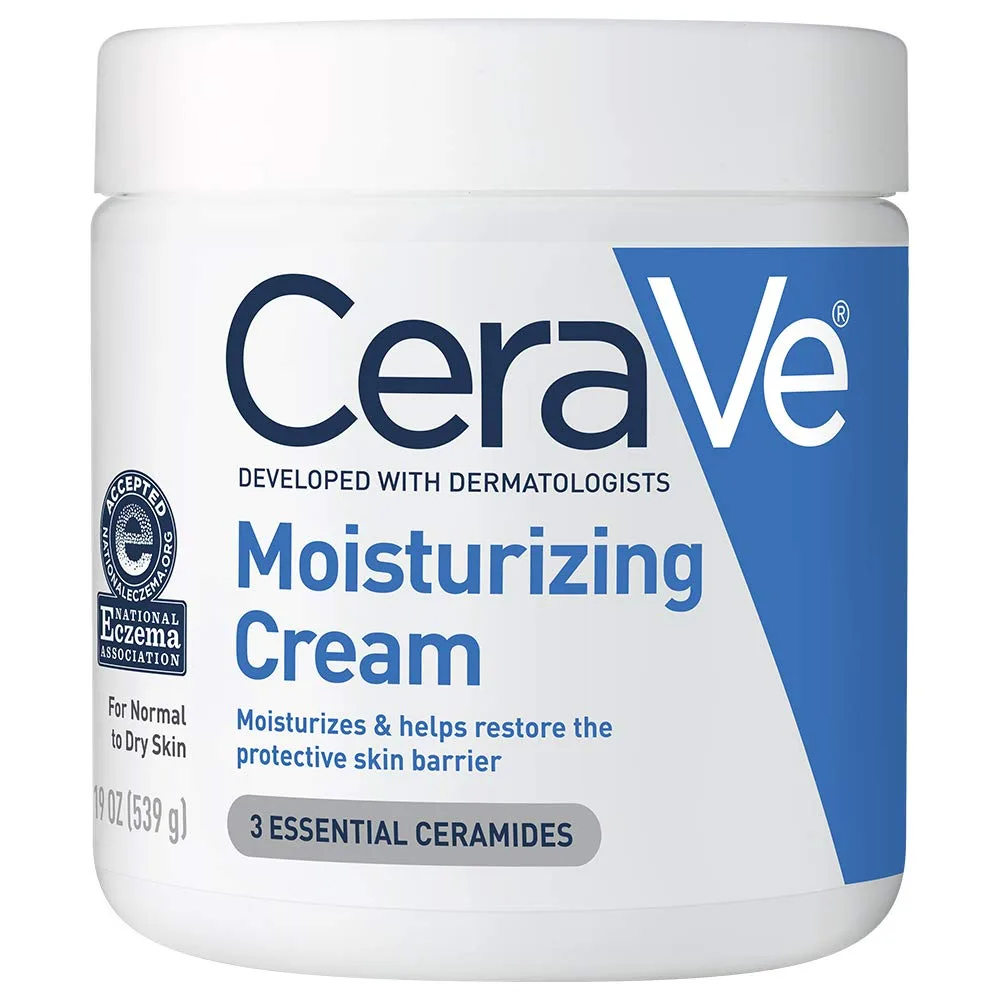 Budget Holy Grail
 Moisturizing Cream
The CeraVe Moisturizing Cream is the most important moisturizer in the drugstore — a ceramide-rich, dermatologist-developed formula that delivers barrier repair, multi-humectant hydration, and occlusive protection at a price so accessible it has no real excuse not to be in every household. Twenty-one years of consistent performance and universal dermatologist approval speak louder than any ingredient list.
 Barrier Repair Pioneer
 MLE Cream
Atopalm MLE Cream is one of the genuinely scientifically anchored barrier moisturizers in K-beauty — a fragrance-free, pseudo-ceramide cream built around a patented liquid-crystal lipid structure that mimics the skin's own intercellular matrix. For eczema, atopic skin, post-procedure recovery, or anyone with a stinging compromised barrier, it's one of the most reliably effective moisturizers in the entire category.
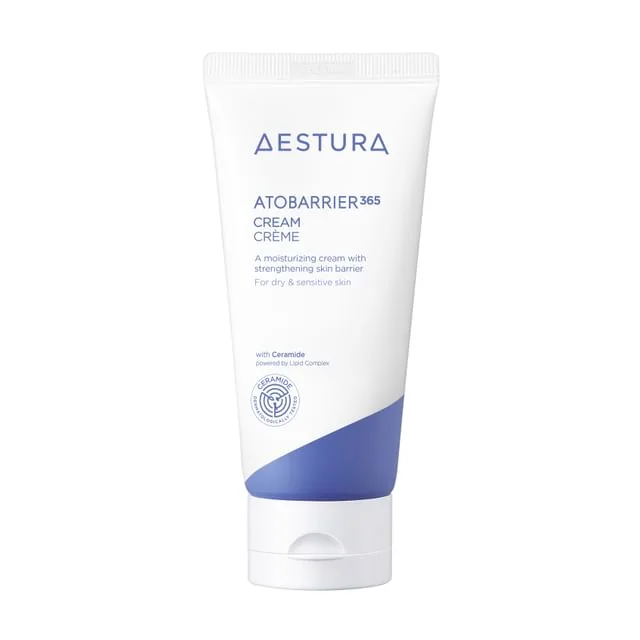 K-Beauty Barrier Repair Staple
 Atobarrier 365 Cream
A Korean pharmacy cream that earns its cult following the hard way — with a lamellar lipid structure that actually rebuilds the barrier, not just coats it. If your skin has been through a rough winter, a retinoid ramp-up, or a bad reaction, this is the jar that quietly puts it back together.
 Korean Derm Clinic Recovery Pick
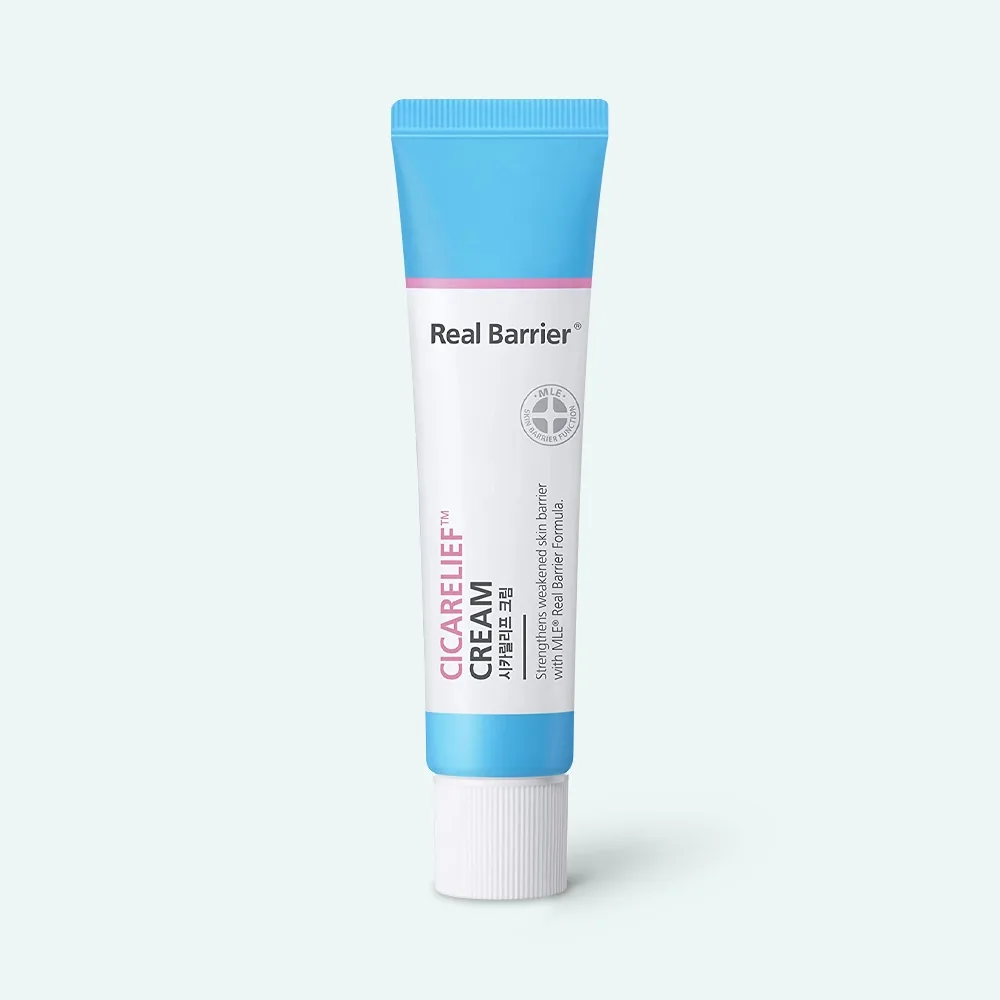
 Real Barrier Cicarelief Cream
One of the best consumer cica creams on the market, combining the full spectrum of centella actives with NeoPharm's MLE ceramide delivery and multiple complementary calming ingredients. Ideal for compromised, reactive, rosacea-prone, or recovering skin, and a staple in Korean dermatology clinic protocols. Minor limitations on packaging, but the formulation is genuinely excellent.
 Transparent 10% Panthenol Cream
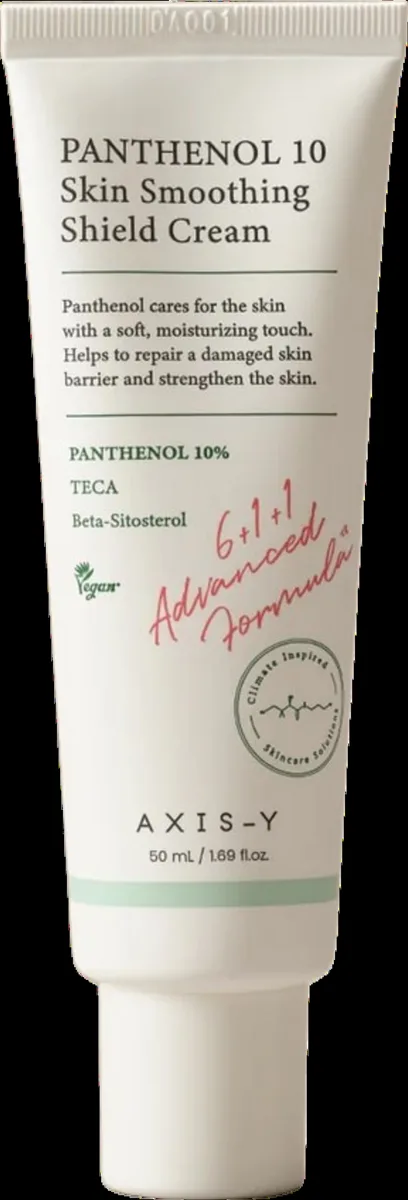
 Panthenol 10 Skin Smoothing Shield Cream
A disclosed 10% panthenol barrier cream built around a full physiological ceramide trio, a centella calming cast, and a modest shea butter occlusive. Fragrance-free, cross-season, and unusually transparent about its hero active — one of the brand's strongest moisturizer formulations.
 K-Beauty Icon
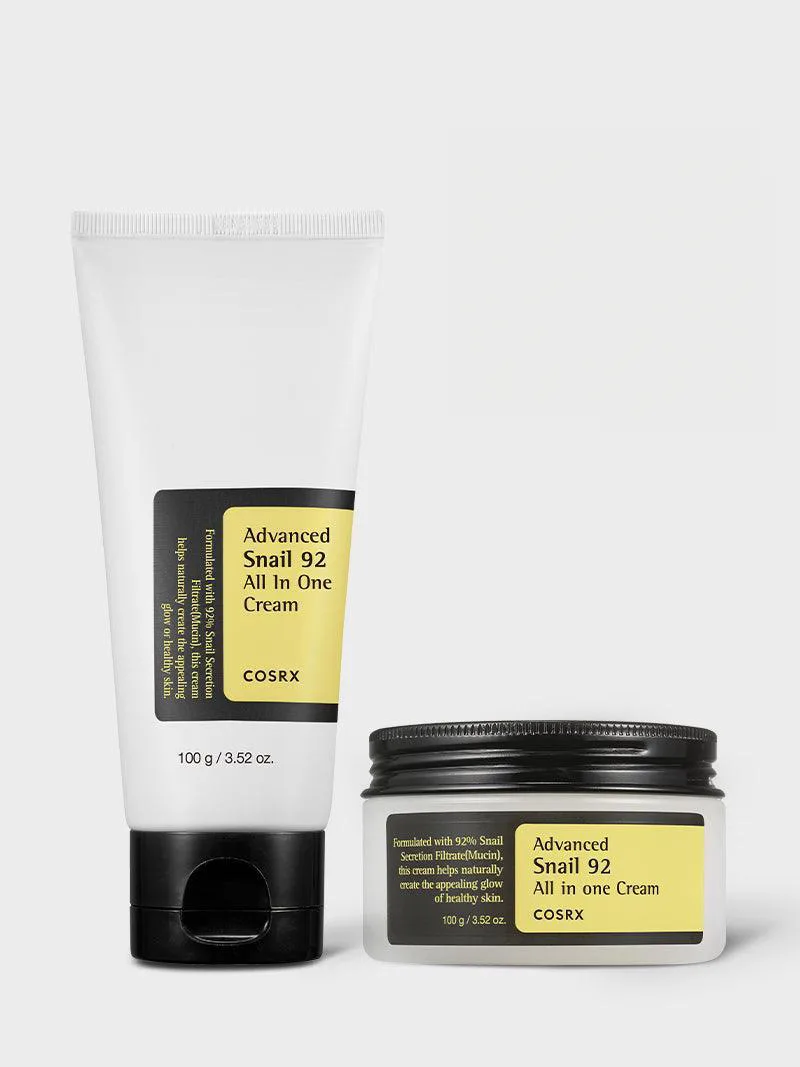
 Advanced Snail 92 All in One Cream
The cream that helped prove snail mucin to the world — and a decade later, it still deserves the reputation. At 92% snail secretion filtrate in a fragrance-free, gentle gel-cream, it delivers hydration, soothing, and gradual skin improvement across virtually every skin type. The texture takes getting used to, but 13 million sold units and 25,000+ reviews suggest most people manage.
This review reflects our independent analysis of publicly available ingredient data, manufacturer claims, and verified user reviews. We are reader-supported — Amazon links may earn us a commission at no cost to you. We do not accept paid placements; rankings are based solely on the evidence.