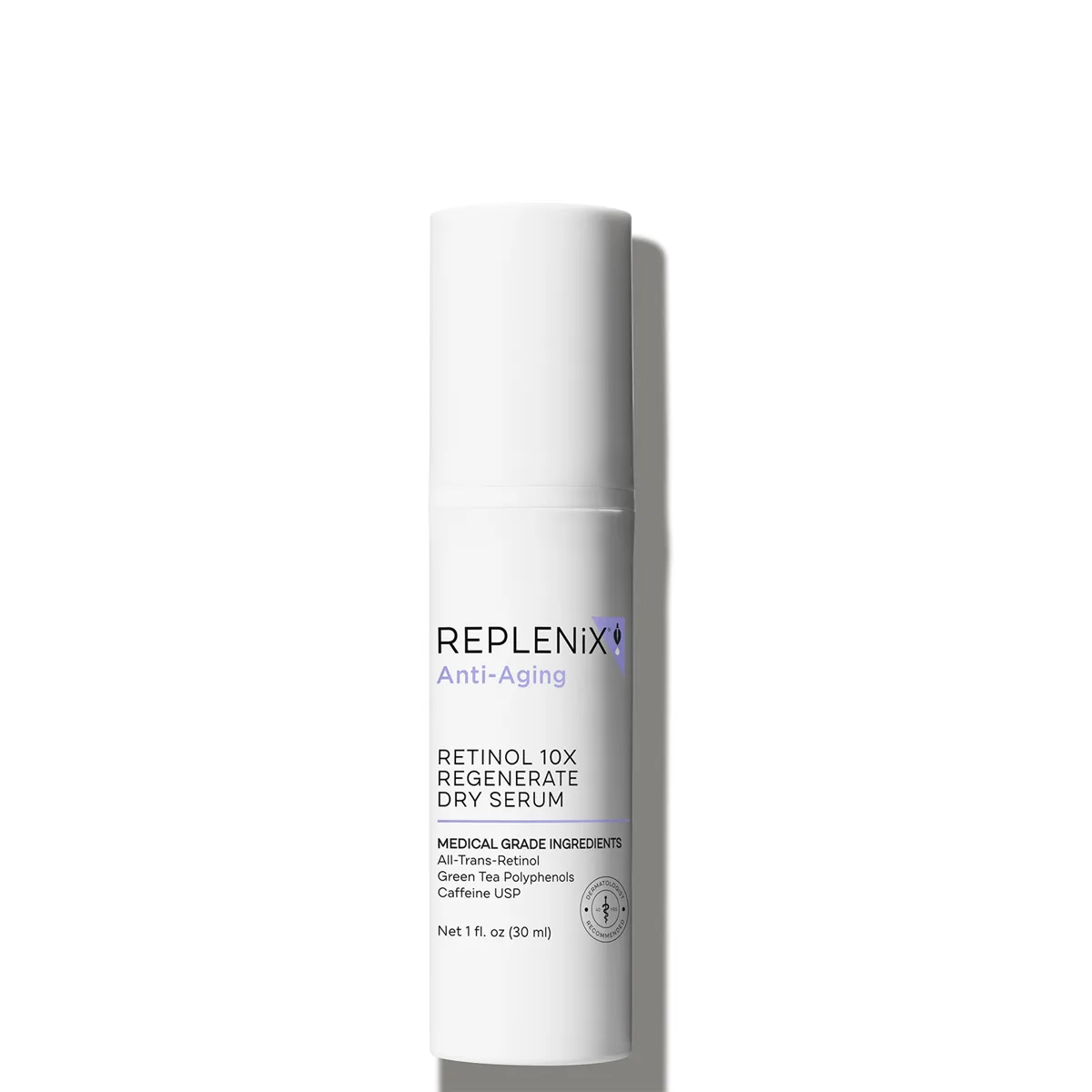
Replenix's Retinol 10X is a genuinely high-strength retinol delivered in a smart anhydrous silicone matrix that keeps the active stable and the irritation profile manageable. At roughly 1% retinol it's the top tier of the brand's ladder — not a beginner product, but one of the best-formulated high-percentage retinols in the dermatology channel for experienced users.
Retinol 10x Regenerate Dry Serum
Replenix's Retinol 10X is a genuinely high-strength retinol delivered in a smart anhydrous silicone matrix that keeps the active stable and the irritation profile manageable. At roughly 1% retinol it's the top tier of the brand's ladder — not a beginner product, but one of the best-formulated high-percentage retinols in the dermatology channel for experienced users.
Score Breakdown
Where this product gains points and where it loses them — broken down across the four scoring pillars.
A high-strength retinol delivered in an anhydrous silicone matrix that genuinely improves stability and tolerability. Expensive and too strong for beginners, but for the right user it's one of the best-formulated high-percentage retinols in the dermatology channel.
Pros & Cons
- ✓Approximately 1% retinol — top tier of over-the-counter strength
- ✓Anhydrous silicone base keeps retinol stable over shelf life
- ✓Green tea polyphenol and caffeine support reduce typical retinol irritation
- ✓Fragrance-free and fungal-acne safe
- ✓Visible fine-line and tone improvement within 2 months
- ✓Tiny 2-3 drop dose covers the whole face
- ✓Long professional-channel track record and review volume
- ✗Expensive at $104 for 1 oz
- ✗Far too strong for retinol beginners or sensitive skin
- ✗Dry silicone texture takes getting used to
- ✗Not compatible with same-night acids, vitamin C, or BPO
- ✗Not suitable during pregnancy or breastfeeding
Full Review
Here's a problem most retinol shoppers never think about: the retinol you're buying might not be the retinol you're applying. Retinol is a notoriously unstable molecule. Exposed to water, oxygen, or light it oxidizes into less active byproducts, which means a formula that claims 1% retinol on the label may be delivering half that within a few months of opening the bottle. The industry has tried to solve this with light-blocking packaging, encapsulation systems, and stabilizing antioxidants, all with mixed success. Replenix's Retinol 10X Regenerate Dry Serum takes a different approach: remove the water entirely. The base is almost pure silicone — caprylyl methicone, PEG-12 dimethicone crosspolymer, dimethicone, cyclomethicone — which gives the retinol nowhere to react and nothing to degrade into. It's one of the few commercial formulation strategies that genuinely addresses the shelf-life problem, and it's the reason this serum has stayed on Dermstore's top-seller lists for more than a decade.
The active story is deliberately straightforward. At the 10X tier — Replenix's internal strength label, widely understood to correspond to roughly 1% retinol — you're sitting at the very top of what over-the-counter retinol delivers before you cross into prescription tretinoin territory. That's a serious concentration, and not something you should walk into with fresh skin. Replenix makes a full ladder of 1X, 2X, 3X, 5X versions for exactly this reason: you're supposed to build up, not start here. The supporting cast is built around the brand's signature green tea polyphenol complex, which specifically targets the oxidative stress and low-grade inflammation that high-dose retinol produces, plus caffeine for vasoconstriction and mild anti-inflammatory support, plus a small amount of sodium hyaluronate to hold onto some hydration despite the anhydrous base.
On skin, the first thing you notice is the texture — it's unlike almost any other serum you've used. A small pump dispenses a few drops of an almost powdery-dry silicone fluid that spreads impossibly thin across the face and leaves a smooth, velvety finish with no residue. It's disorienting at first because you're conditioned to expect a serum to feel wet. After a few applications the texture actually becomes one of the selling points — it's comfortable under a night cream, doesn't pill, and doesn't slide around the way water-based retinols can. The retinol itself does what 1% retinol does to experienced skin: mild to moderate flaking in the first 1-2 weeks, possibly some purging around week 2-3 if you're acne-prone, and then by week six the texture of your skin starts looking measurably smoother. Eight to twelve weeks in, fine lines visibly soften, tone evens out, pores look tighter, and the quality of the skin's surface improves in a way that's obvious under makeup. This is the same retinol story that's been holding up in clinical trials for decades — Replenix just delivers it in a formulation that actually maintains the labeled concentration from bottle to bottle.
The cost is where conversation gets harder. At $104 for 30ml this is firmly in luxury retinol territory, competing with La Roche-Posay's Retinol B3 Pure, SkinCeuticals Retinol 1.0, and a handful of other dermatology-channel high-strength options. The math on a nightly two-to-three drop application works out to roughly 3-4 months per bottle, so you're spending $25-30 a month on retinol alone. That's defensible for someone with specific anti-aging goals and resilient skin who has already tested their tolerance to high-strength retinol, but it's absurd as an entry point. If you're starting from zero, a $20 0.25% drugstore retinol is the right first step; this is the product you graduate to after a year of consistent use.
The other honest drawback is who it's not for. Sensitive, rosacea-prone, or eczema-prone skin shouldn't touch a 1% retinol, period — no delivery system is clever enough to make that concentration comfortable for reactive skin. Pregnant or breastfeeding users need to pause retinoids entirely. And if you're already on prescription tretinoin, this won't add anything; you're already past retinol in the active-conversion chain. Everyone else who has built up through lower strengths and is looking for the top tier of over-the-counter retinol has a legitimate reason to consider this one.
One unexpected strength worth flagging: the anhydrous silicone base is surprisingly fungal-acne friendly. Most retinol serums include fatty alcohols, esters, or oils that feed malassezia; this one is almost pure silicone, which is inert and safe for fungal acne sufferers who usually have a miserable time finding a retinoid that doesn't trigger breakouts. That's not something the brand markets on the box, but it's a real and meaningful differentiator for a specific subset of users.
Formula
Key Ingredients
The hero actives that drive this product's performance.
| Ingredient | Function | Evidence |
|---|---|---|
| Retinol (approx. 1%) | The 10X marker is Replenix's proprietary labeling for their highest-strength retinol tier, widely understood to deliver approximately 1% retinol. In this specific anhydrous silicone matrix, the retinol is protected from water-driven oxidation, which is historically the biggest stability problem with high-strength retinol formulations. | well-established |
| Green Tea Polyphenols | Replenix's signature EGCG-rich polyphenol complex is built into this serum to counter the oxidative stress that high-dose retinol typically produces during the transition period, giving this 10X formulation a more tolerable irritation profile than most 1% retinols. | well-established |
| Caffeine | Works alongside the polyphenol complex as a secondary anti-inflammatory and vasoconstrictor — it's here specifically to damp down the post-retinol redness and puffiness that can show up the morning after application. | promising |
| Sodium Hyaluronate | A humectant counterweight included at the end of the formula to help maintain hydration despite the anhydrous, silicone-dominant base — small but meaningful in a serum where the retinol is otherwise delivered without a water phase. | well-established |
Full INCI List
Caprylyl Methicone, PEG-12 Dimethicone/PPG-20 Crosspolymer, Dimethicone, Caffeine, Cyclomethicone, PEG/PPG-18/18 Dimethicone, Camellia Sinensis (Green Tea) Polyphenols, Retinol, Sodium Hyaluronate, Polysorbate 20.
Product Flags
✓ Fragrance Free✓ Alcohol Free✓ Oil Free✗ Silicone Free✓ Paraben Free✓ Sulfate Free✓ Cruelty Free✓ Vegan✓ Fungal Acne Safe
Potential Irritants
retinol at high concentration
Compatibility
Skin Match
Best For
Works For
Not Ideal For
Addresses These Conditions
aging hyperpigmentation texture large pores dullness
Use With Caution
rosacea sensitivity compromised skin barrier
Avoid With
eczema post procedure psoriasis
Routine Step
treatment
Time of Day
PM
Pregnancy Safe
No ✗
Layering Tips
Apply 2-3 drops to completely dry skin at night after cleansing. Wait 20 minutes, then follow with a ceramide moisturizer. Do not layer with glycolic acid, vitamin C, or other exfoliants on the same night.
Results Timeline
Minor texture smoothing within 2-3 weeks. Visible improvements in fine lines, tone, and pore appearance at 8-12 weeks. Full anti-aging benefits at 4-6 months of consistent use.
Pairs Well With
ceramide moisturizershyaluronic acid serumsniacinamidesunscreen
Conflicts With
glycolic acidvitamin C serumsbenzoyl peroxideother exfoliants
Sample AM Routine
- Gentle cleanser
- Vitamin C serum
- Ceramide moisturizer
- SPF 50
Sample PM Routine
- Cleanser
- Replenix Retinol 10x Serum
- Ceramide moisturizer
Evidence
Science & Expert Perspective
The Science
The active ingredient here — retinol — has decades of clinical literature establishing it as one of the most effective non-prescription anti-aging actives. Retinol is converted by the skin through a two-step enzymatic process (retinol to retinaldehyde to retinoic acid), and it's the final retinoic acid form that binds to nuclear retinoic acid receptors and drives the cellular changes associated with collagen synthesis, cell turnover, and pigment cycling. The conversion rate is inefficient, which is why topical retinol needs to be delivered at higher concentrations than prescription tretinoin to produce similar effects — published research suggests a 1% retinol roughly approximates a 0.025-0.05% tretinoin in long-term clinical outcomes, though the timeline to visible results is slower. Where this specific formulation becomes interesting is in the delivery system. Retinol is highly susceptible to oxidation in the presence of water, heat, and light, and this has been one of the persistent formulation challenges for high-percentage retinols — a product labeled 1% may degrade substantially over its shelf life if the base is water-containing and the packaging allows air exposure. Replenix's anhydrous silicone dry-serum base removes the water phase entirely, which is one of the more effective stability solutions available, and the airless pump packaging minimizes oxygen contact. The supporting cast — green tea polyphenols (EGCG-rich), caffeine, and sodium hyaluronate — is well-chosen rather than decorative: topical green tea polyphenols have a substantial evidence base for mitigating UV-induced oxidative stress, and caffeine has been shown in clinical studies to reduce post-retinol erythema in small trials. The integration of these three elements with a stable delivery system is what justifies the 10X positioning.
Dermatologist Perspective
Dermatologists typically position 0.5-1% retinol as the upper range of over-the-counter options, after which patients who want more effect are usually directed toward prescription tretinoin or adapalene. Board-certified dermatologists commonly recommend Replenix's 10X as a step between 0.5% drugstore retinols and a prescription-strength protocol, especially for patients who have demonstrated good tolerance at lower concentrations and want to avoid the step-up to tretinoin. The anhydrous delivery system is well-regarded in dermatology circles specifically because the stability profile matches what patients actually need from a long-term retinol regimen. Use is generally recommended as nightly for experienced users or 3-5 nights per week for those still building tolerance, always paired with mandatory daily broad-spectrum sunscreen and never layered with in-office treatments or same-night acid exfoliants.
Guidance
Usage Guide
How to Use
Apply 2-3 drops to completely dry, clean skin at night, avoiding the immediate eye and lip area. Allow 15-20 minutes to absorb before following with a ceramide moisturizer. Start 2-3 nights per week for the first two weeks to assess tolerance, building gradually to nightly use over 4-6 weeks. Never layer on the same night as glycolic acid, salicylic acid, vitamin C, benzoyl peroxide, or other exfoliants. Broad-spectrum SPF 30 or higher is mandatory every morning. Pause if significant irritation or barrier disruption occurs.
Value Assessment
At $104 for 1 oz this is one of the more expensive over-the-counter retinols on the market. The per-month math is roughly $25-30, which is actually not outrageous for a genuinely high-strength, stable 1% retinol when compared to the La Roche-Posay and SkinCeuticals options in the same tier. That said, it's a poor value for anyone who hasn't already built tolerance to lower strengths — most users get 80% of the benefit from a $25 drugstore 0.5% retinol used consistently, and the last 20% improvement from graduating to this strength comes with steep incremental cost. Buy it because you've earned it, not because you're hoping to skip the gradual build-up.
Who Should Buy
Experienced retinol users who have built tolerance through lower strengths and are ready for the top tier of over-the-counter. It's also a good match for fungal-acne prone users who need a silicone-based retinoid that won't feed malassezia, and for people who want a stable, high-concentration retinol without crossing into prescription territory.
Who Should Skip
Retinol beginners, sensitive or rosacea-prone skin, pregnant or breastfeeding users, and anyone already on prescription tretinoin should skip this. It's also a poor value for casual anti-aging maintenance — a cheaper 0.5% retinol is the better first purchase.
Ready to try Replenix Retinol 10x Serum?
Details
Details
Texture
Dry, silky, almost powdery-finish silicone fluid — spreads extremely thin and absorbs into the skin with no tackiness.
Scent
Unscented.
Packaging
Opaque airless pump bottle designed to protect the retinol from light and oxygen — 30ml.
Finish
satinfast-absorbingnon-greasyvelvety
What to Expect on First Use
Expect a distinctive silky-dry finish on first application. Most users notice mild dryness and minor flaking in the first 1-2 weeks as the skin adjusts. True purging (new breakouts in previously active areas) may appear around week 2-3 and resolve by week 6. The texture and tone improvements start to show around week 4-6 and compound from there.
How Long It Lasts
30ml lasts 3-4 months with nightly 2-3 drop application.
Period After Opening
6 months
Best Season
fall winter
Certifications
Cruelty-FreeFragrance-FreeVegan
Background
The Why
The Retinol 10X Regenerate Dry Serum was developed as the top tier of Replenix's retinol ladder (1X, 2X, 3X, 5X, 10X), positioned for patients who had worked up through the lower strengths and wanted a prescription-adjacent retinol experience. The dry-serum delivery system was patent-pending when it launched and was one of the first commercial attempts to solve retinol stability through anhydrous formulation rather than encapsulation.
About Replenix Legacy Brand (20+ years)
Replenix has sold dermatology-channel retinol products for more than a decade, built around a proprietary silicone-based dry serum delivery system paired with the brand's signature green tea polyphenol technology.
Brand founded: 2001 · Product launched: 2013
Myth vs. Reality
Myths & Misconceptions
Myth
A 10X retinol means ten percent retinol.
Reality
The 10X is Replenix's internal strength tier label, not a percentage. The product delivers approximately 1% retinol, which is the upper edge of non-prescription formulations — 10% retinol doesn't exist in any commercial skincare product and would be catastrophically irritating if it did.
Myth
A dry silicone serum can't deliver retinol as well as an emollient cream.
Reality
Silicone-based anhydrous delivery is actually one of the more effective retinol vehicles because it protects the retinol from water-driven oxidation and provides a spreading base that delivers the active uniformly. Creams with water phases can lose significant retinol potency over a few months of shelf life.
FAQ
Frequently Asked Questions
Is Replenix Retinol 10X actually 10% retinol?
No. The 10X labeling refers to Replenix's internal strength tier — their top retinol concentration. The product delivers approximately 1% retinol, which is the upper end of what over-the-counter formulations achieve. No commercial retinol product contains 10% retinol.
Should I start with Replenix 10X or a lower strength?
Don't start here. If you've never used retinol before, start with a 0.25% or 0.5% product and build tolerance over 2-3 months before graduating to this strength. Replenix makes lower-tier versions (1X through 5X) that are more appropriate entry points.
How does Replenix 10X compare to prescription tretinoin?
Retinol and tretinoin are related but not equivalent. Tretinoin is the active form (retinoic acid) and works faster, while retinol must be converted by the skin. A 1% retinol roughly approximates a 0.025-0.05% tretinoin in effect over a longer time horizon, but with a gentler irritation profile.
Can I use this with glycolic acid or vitamin C?
Not on the same night or morning. Layering strong acids or vitamin C with a 1% retinol in the same application significantly raises irritation risk. Alternate nights (retinol one night, acid the next) or use vitamin C in the morning and retinol at night to get benefits from both without overwhelming the barrier.
Is Replenix Retinol 10X safe during pregnancy?
No. Retinol and all retinoids are contraindicated during pregnancy and breastfeeding. Use bakuchiol or a different anti-aging route during those periods and resume retinol afterward.
Why is it so expensive?
You're paying for the high retinol concentration, the patent-pending anhydrous delivery system that preserves potency over the product's shelf life, the green tea polyphenol and caffeine supporting cast, and the professional-channel distribution. Drugstore retinols at a fraction of the cost are generally lower concentration and less stable.
Community
Community Voices
Common Praise
"Remarkably tolerable for a 10X strength"
"Visible fine-line improvement within 2 months"
"Doesn't cause the typical retinol flaking"
"Tiny amount goes a long way"
Common Complaints
"Very expensive"
"Silicone-heavy base feels unusual at first"
"Too strong for beginners"
"Small 1 oz size"
Notable Endorsements
Frequent Dermstore Best of Beauty selectionWidely recommended by dermatologists for retinol-experienced patients
Appears In
best high strength retinol best retinol for wrinkles best dermatologist retinol best 1 percent retinol serum best retinol for aging
Related Conditions
aging hyperpigmentation texture large pores
Related Ingredients
You Might Also Like
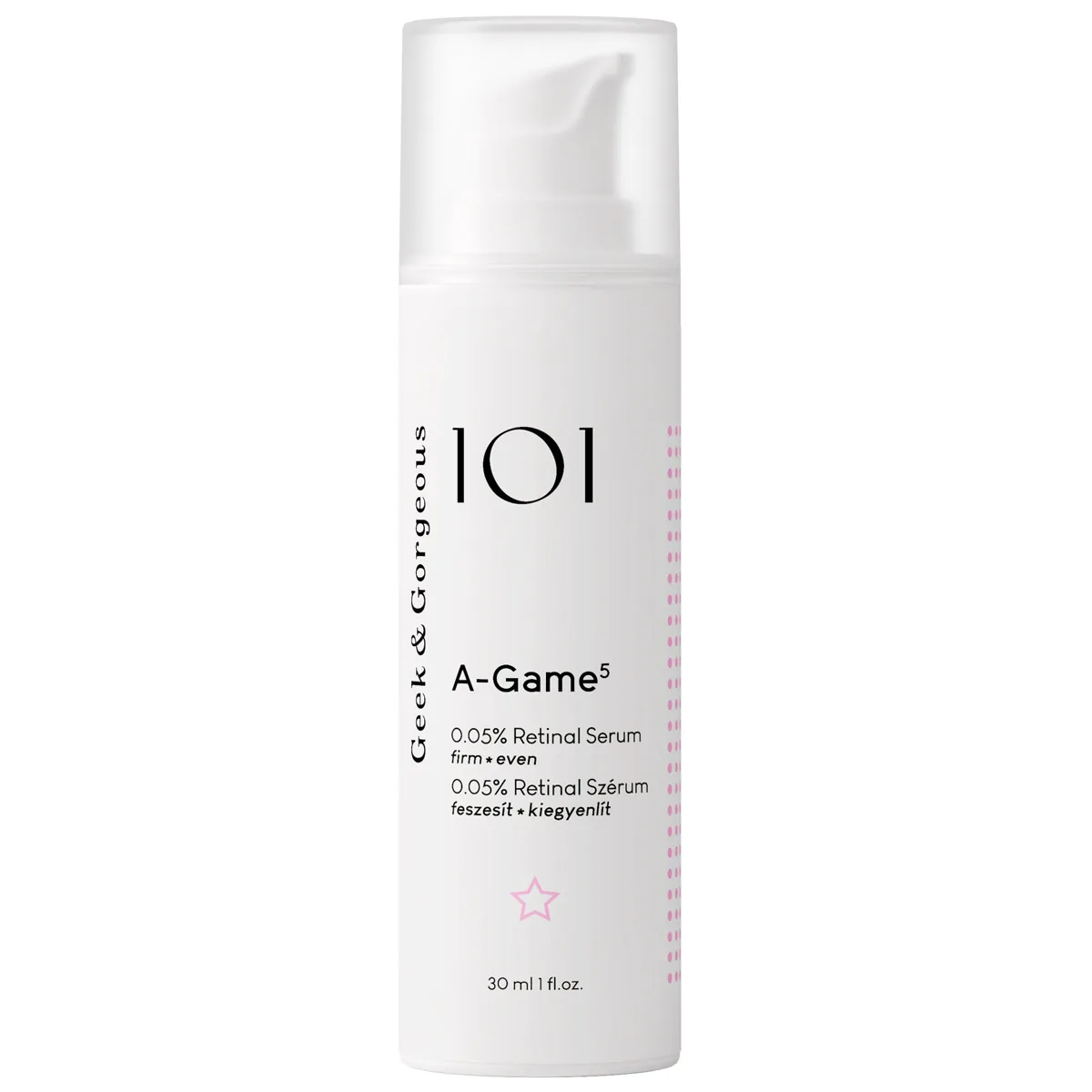 Beginner-Friendly Retinoid
 A-Game 5 Retinal Serum
The ideal beginner's retinaldehyde serum — a properly dosed 0.05% retinal in a buffered, fragrance-free formula at a price that makes long-term retinoid use actually sustainable. Same thoughtful supporting ingredients as the higher-strength A-Game 10 at half the potency, which is exactly the point. If you've never used a real retinoid, this is one of the best entry points on the market.
 Derm-Grade Retinal at Drugstore Price
 Stress Less 0.3% Retinal Serum
A genuinely derm-grade 0.3% retinaldehyde serum at a price that shouldn't be possible. The ceramide and bisabolol buffering keeps it tolerable for experienced retinoid users, and the results — on texture, tone, and fine lines — rival premium retinals costing four times as much.
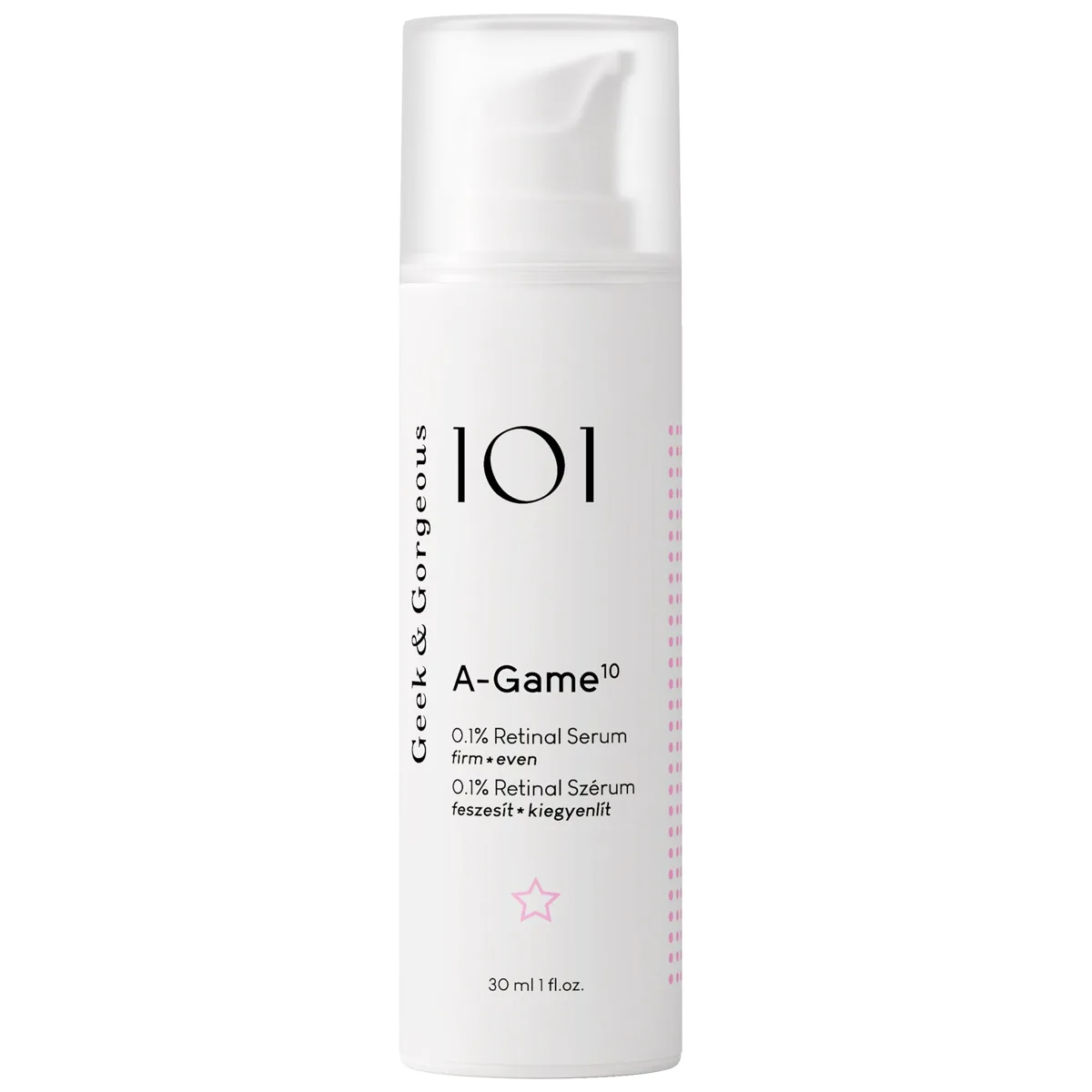 Budget Retinal Holy Grail
 A-Game 10 Retinal Serum
One of the most disruptive products in the retinoid category — a 0.1% retinaldehyde serum at around $16 when equivalent concentrations from derm brands cost $60-120. The formulation is thoughtful, the airless packaging is right, and the price point has no real competitor. Not for retinoid beginners: start with the 5 version and step up to this after a few months.
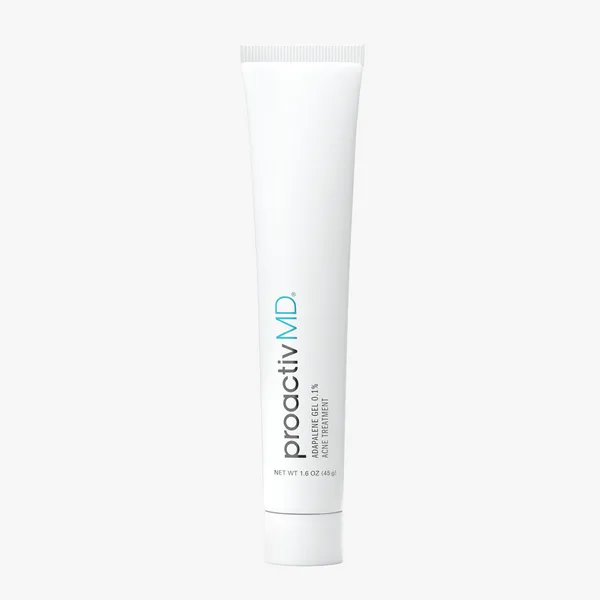 Gold Standard OTC Retinoid
 Adapalene Gel 0.1%
This is adapalene 0.1% — the same FDA-approved retinoid dermatologists have prescribed for over two decades, now available without a prescription in a no-nonsense gel. It's one of the most evidence-backed acne treatments you can buy, and Proactiv's version offers solid value in the larger size with an updated paraben-free formula.
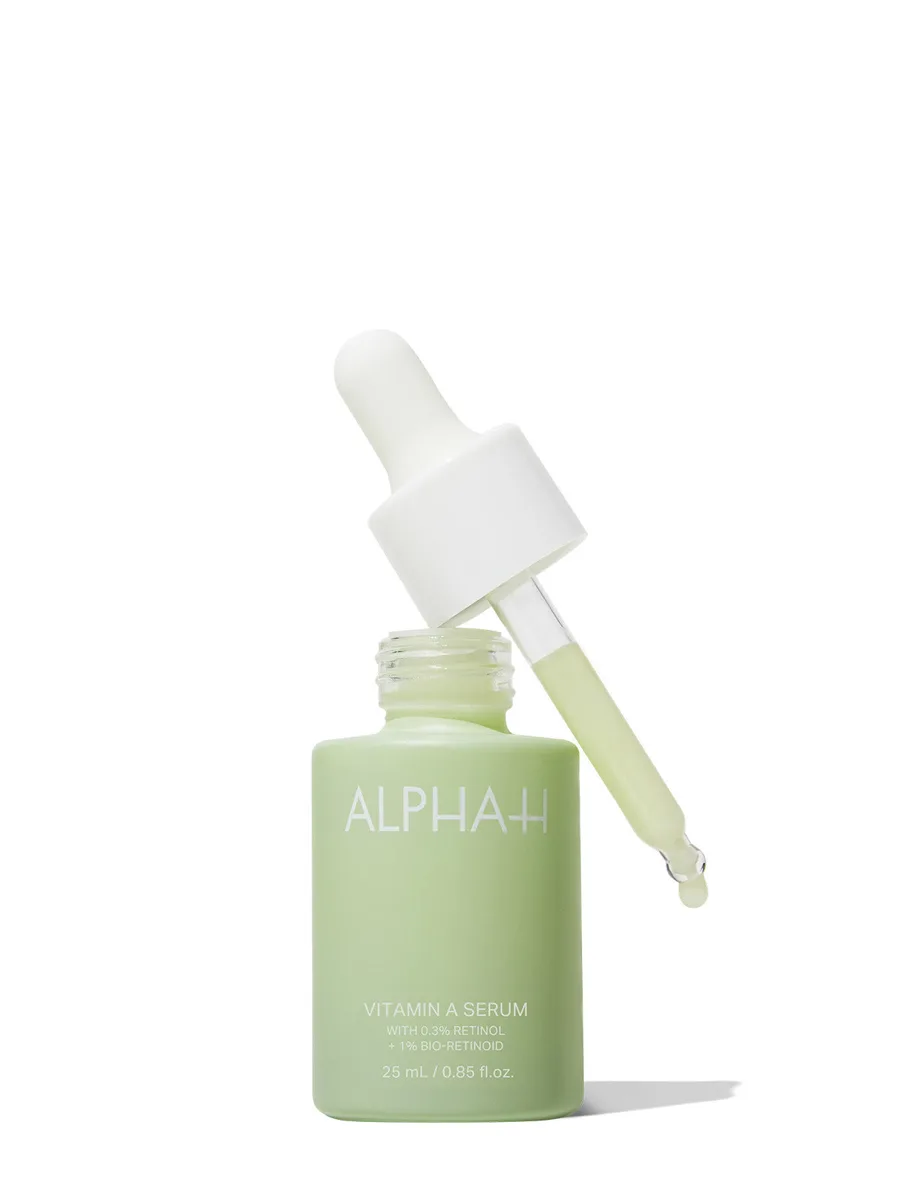 Buffered Beginner Retinol
 Vitamin A Serum
Alpha-H built its 0.5% retinol on a squalane and plant-oil base specifically to make a meaningful retinol concentration tolerable for the beginners it knew were already running aggressive AHA routines. The buffering works — this is one of the few 0.5% retinol serums new users can actually stick with through the adjustment period. The price is the only meaningful complaint.
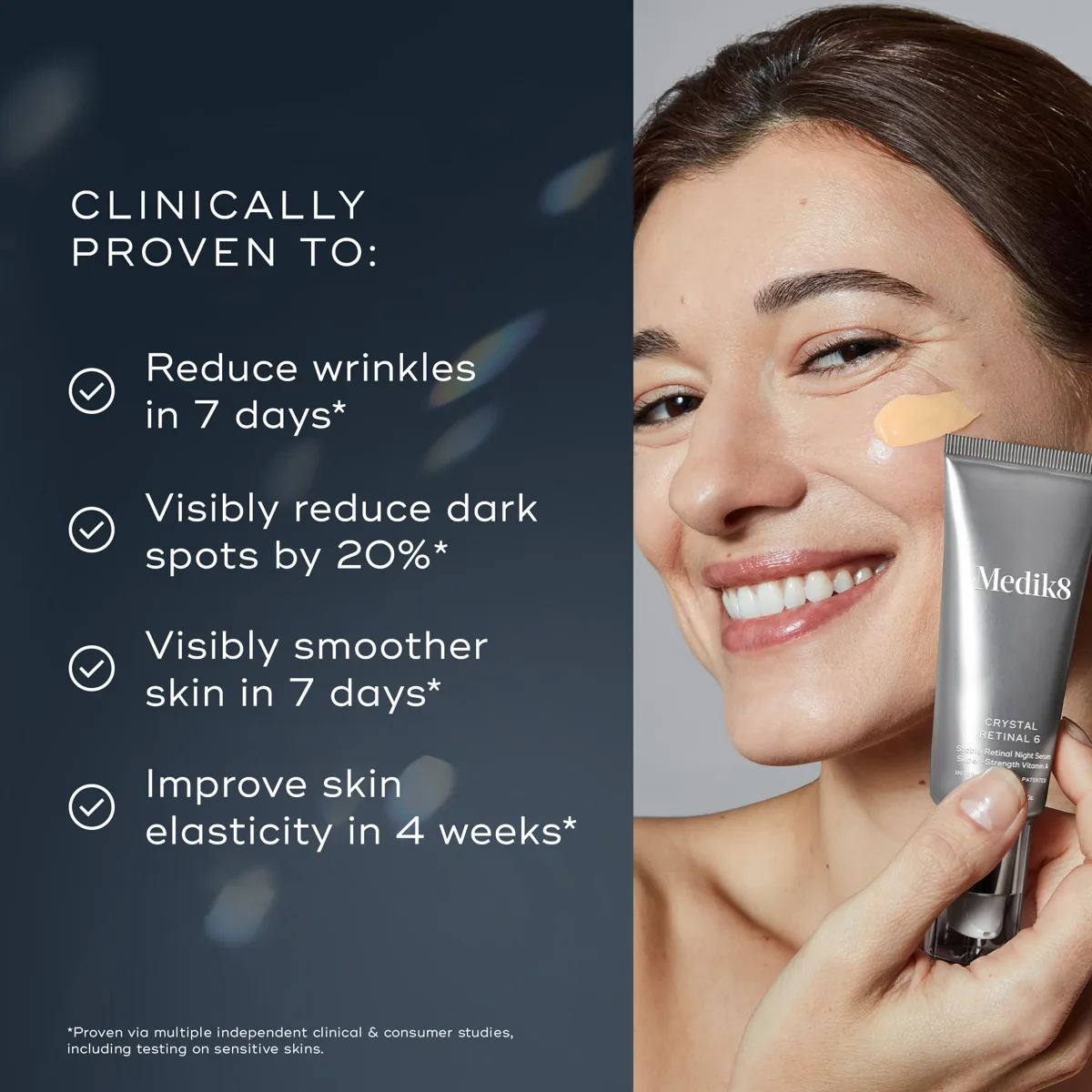 Best Retinoid Starter
 Crystal Retinal 3
The retinoid designed for people who are afraid of retinoids — and the product that might just convert them. Crystal Retinal 3 proves that the world's most effective OTC vitamin A form can be introduced to sensitive skin without the usual drama, creating a genuinely accessible on-ramp to serious anti-aging skincare.