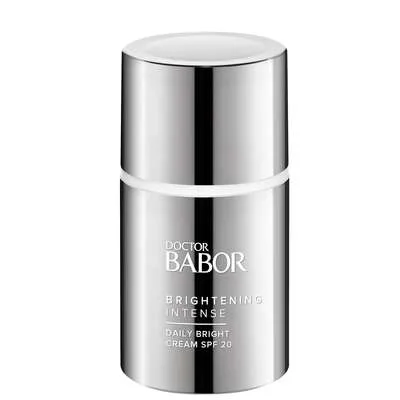
A genuinely thoughtful European brightening day cream that earns its keep through one of the smartest UV-filter quartets you can buy in a moisturizer — Tinosorb S, Uvinul A Plus, Uvinul T 150 and Ensulizole, paired with magnesium ascorbyl phosphate and licorice. The catch is the SPF 20 ceiling and the luxury price, both of which make it a tough sell next to cheaper SPF 50 brighteners.
Doctor Babor Brightening Intense Daily Bright Cream SPF 20
A genuinely thoughtful European brightening day cream that earns its keep through one of the smartest UV-filter quartets you can buy in a moisturizer — Tinosorb S, Uvinul A Plus, Uvinul T 150 and Ensulizole, paired with magnesium ascorbyl phosphate and licorice. The catch is the SPF 20 ceiling and the luxury price, both of which make it a tough sell next to cheaper SPF 50 brighteners.
Score Breakdown
A thoughtfully built European brightening day cream with a modern UV filter quartet, but the SPF 20 ceiling and luxury price keep it from competing with cheaper, higher-SPF brightening sunscreens.
Data Confidence: medium
This cream has been on the market since around 2018 and is sold primarily through licensed spas, so independent online review counts are modest — typically a few hundred across European retailers. Scoring leans on ingredient analysis and the Doctor Babor line's longer track record.
0/100
Overall Score
Ingredient Quality 0
Value for Money 0
Suitability Breadth 0
Irritation Risk (↑ = safer) 0
Assessment
Pros
- Modern four-filter European UV system unavailable in US-market sunscreens
- Photostable broad-spectrum protection at a level that actually supports brightening
- Stable magnesium ascorbyl phosphate paired with licorice for two-pathway tyrosinase inhibition
- Fully fragrance-free, important for melasma and reactive olive/brown skin
- Centella asiatica and panthenol calm low-grade redness and filter sting
- Soft satin finish that wears beautifully under makeup
- Pregnancy-safe brightening route with no retinoids or hydroquinone
Cons
- SPF 20 ceiling is too low for primary outdoor sun protection
- Expensive 96 dollars for a 50 ml jar without airless packaging
- Glass jar exposes the vitamin C derivative to air and light over time
- Cetyl alcohol and C12-15 alkyl benzoate make it heavier than oily skin will love
- Brightening effect is gradual and undramatic in the first month
Full Review
Here is the dirty secret of brightening day creams: most of them fail not because the vitamin C is weak, but because the sunscreen layered on top — or built in — is letting UVA through and remaking the pigment as fast as the actives can fade it. Babor's Doctor Babor Brightening Intense Daily Bright Cream SPF 20 is one of the rare formulas where someone clearly thought about that problem from the right end. The first thing worth noticing isn't the magnesium ascorbyl phosphate or the licorice extract, it's the four-filter UV system: Diethylamino Hydroxybenzoyl Hexyl Benzoate (Uvinul A Plus), Bis-Ethylhexyloxyphenol Methoxyphenyl Triazine (Tinosorb S), Ethylhexyl Triazone (Uvinul T 150), and Phenylbenzimidazole Sulfonic Acid (Ensulizole). If you live in the United States, three of those filters cannot legally appear in any sunscreen sold to you, because the FDA's monograph hasn't been updated since the late 1990s. They are the gold standard everywhere else — photostable, broad-spectrum, and far gentler on skin than the avobenzone-octocrylene combo that still dominates American shelves. That's the real value of this jar. The brightening conversation only matters because the UVA is being shut down. The actives themselves are sensible rather than aggressive. Magnesium ascorbyl phosphate is a stable, water-soluble vitamin C derivative — milder than pure L-ascorbic acid but a much better fit for a leave-on daytime emulsion that has to coexist with chemical filters and sit on skin for eight hours. Ammonium glycyrrhizate, the licorice derivative, hits tyrosinase from a different angle than the vitamin C does, so the two stack neatly without irritation. There is also centella asiatica leaf extract, panthenol, escin, and a small dose of ruscus aculeatus root extract for vascular soothing — a tell that Babor is thinking about the pink, reactive, slightly sensitized skin that often comes with melasma treatment. The texture is the satin-finish German-spa thing they do well: a medium-weight cream that breaks slightly watery as you press it in, then sets to a soft, almost powdery surface that takes makeup beautifully. There is no fragrance, which matters in a brightening cream because perfume oils are a sneaky cause of post-inflammatory pigmentation in olive and brown skin. The first application brings a brief, mild tingle from the ensulizole and ascorbic acid trace; that fades in under a minute and is not a sign of irritation in most people. After two weeks of daily use, what you tend to notice is not dramatic spot fading but a more even baseline tone first thing in the morning — the kind of result that makes you put down the concealer brush before reaching for it. Genuine spot lightening shows up in the eight-to-twelve-week window, which is realistic for a derivative-based vitamin C and entirely consistent with the published literature. So where does this fall short? Two places. First, SPF 20 is a strange ceiling in 2026. Even with the elite filter palette, real-world application thickness halves the labeled SPF, so you are protecting at maybe SPF 10 once you've actually used the product the way humans use moisturizer. For desk-bound days that's defensible. For anything outdoors, anyone serious about treating melasma needs to layer a true SPF 50 over the top, which somewhat defeats the elegance of a single jar doing both jobs. Second, the price. Roughly ninety-six dollars for a 50 ml glass jar puts this in the same neighborhood as multi-active brightening sunscreens from clinical brands that come in airless tubes, ship with retinaldehyde or tranexamic acid, and clear SPF 50. The Babor jar isn't airless either, and a vitamin C derivative in a screw-top frosted jar is going to oxidize faster than it would in a sealed airless dispenser. Use the cream within six months of opening and keep the lid tight. Final word: the right buyer for this is someone who already owns a serious sunscreen, wants a fragrance-free European-formulated daytime moisturizer with intelligent UV filters and gentle brightening built in, and is comfortable paying for the Babor cabinet aesthetic. If that description fits, this is one of the more sophisticated brightening creams in its price band. If you're hunting for maximum spot fading per dollar, you can do better elsewhere.
Formula
Ingredients
The hero actives that drive this product's performance.
| Ingredient | Function | Evidence |
|---|---|---|
| Photostable UV Filter Quartet (Uvinul A Plus, Tinosorb S, Uvinul T 150, Ensulizole) | Four complementary European UV filters provide broad-spectrum SPF 20 coverage at a much lower oxidative cost than older avobenzone systems. The Uvinul A Plus + Tinosorb S pairing is what allows the brightening actives below to actually work — without true UVA blockade, the magnesium ascorbyl phosphate would be fighting fresh pigment damage every day. | well-established |
| Magnesium Ascorbyl Phosphate | A stable, water-soluble vitamin C derivative chosen here because pure ascorbic acid would degrade in a daytime emulsion sitting alongside UV filters. It nudges pigment pathways gently rather than aggressively, which is the right pick for the leave-on, AM-only role this cream plays. | promising |
| Ammonium Glycyrrhizate (Licorice Derivative) | Sits in the formula as a tyrosinase-modulating sidekick to the vitamin C — licorice extracts work on a different point in the melanin-production cascade, so stacking the two gives broader brightening coverage than either alone in a sunscreen-heavy emulsion like this. | promising |
| Centella Asiatica Leaf Extract | Added to calm the slight tingle that the phenylbenzimidazole sulfonic acid filter and ascorbic acid trace can provoke on reactive skin. Its triterpenes also support post-inflammatory pigmentation healing, which dovetails with the brightening positioning. | well-established |
| Panthenol & Tocopheryl Acetate | Provitamin B5 humectant plus a stabilized vitamin E antioxidant — together they soften the slightly drying feel of the high filter load and protect the ascorbyl phosphate from oxidative breakdown inside the jar. | well-established |
Full INCI List
Water, Diisopropyl Sebacate, Diethylamino Hydroxybenzoyl Hexyl Benzoate, C12-15 Alkyl Benzoate, Phenylbenzimidazole Sulfonic Acid, Cetyl Alcohol, Arginine, Methyl Methacrylate Crosspolymer, Glycerin, Bis-Ethylhexyloxyphenol Methoxyphenyl Triazine, Propanediol, Ethylhexyl Triazone, Sodium Cetearyl Sulfate, Glyceryl Stearate, Panthenol, Tocopheryl Acetate, Phenoxyethanol, Butylene Glycol, Xanthan Gum, Carbomer, Sodium Potassium Aluminum Silicate, Ethylhexylglycerin, Disodium EDTA, Magnesium Ascorbyl Phosphate, Aloe Barbadensis Leaf Extract, Silica, Sodium Carboxymethyl Beta-Glucan, Escin, Phenethyl Alcohol, Brassica Oleracea Italica Extract, Bioflavonoids, Ruscus Aculeatus Root Extract, Pantolactone, Saccharide Isomerate, Ammonium Glycyrrhizate, Centella Asiatica Leaf Extract, Hydrolyzed Yeast Protein, Calendula Officinalis Flower Extract, Citric Acid, Sodium Citrate, Phosphoric Acid, Ascorbic Acid, CI 77891.
Product Flags
✓ Fragrance Free✓ Alcohol Free✓ Oil Free✓ Silicone Free✓ Paraben Free✗ Sulfate Free✗ Cruelty Free✗ Vegan✗ Fungal Acne Safe
Comedogenic Ingredients
C12-15 Alkyl Benzoate
Potential Irritants
Phenylbenzimidazole Sulfonic AcidPhenoxyethanol
Compatibility
Skin Match
Best For
Works For
Not Ideal For
Addresses These Conditions
hyperpigmentation dark spots sun damage dullness melasma
Use With Caution
Routine Step
moisturizer
Time of Day
AM
Pregnancy Safe
Yes ✓
Layering Tips
Apply as the final morning step over a vitamin C or niacinamide serum. Reapply every 2 hours of sun exposure or layer a higher-SPF sunscreen on top for outdoor days — SPF 20 is not enough for active sun.
Results Timeline
Immediate: a soft, slightly luminous finish and daily UV protection. 2-4 weeks: skin tone looks more even on first wake-up. 8-12 weeks of consistent daily use: gradual fading of post-inflammatory marks and shallow sun spots, provided no fresh UV damage is being added.
Pairs Well With
niacinamide-serumtranexamic-acidazelaic-acid
Conflicts With
high-strength-ahabenzoyl-peroxide
Sample AM Routine
- Gentle cleanser
- Vitamin C or niacinamide serum
- Babor Doctor Babor Brightening Intense Daily Bright Cream SPF 20
- SPF 50 sunscreen on outdoor days
Sample PM Routine
- Cleanser
- Tranexamic acid serum
- Retinoid
- Rich night cream
Evidence
Science
The Science
The brightening pathway here rests on two evidence-supported actives stacked on top of meaningful UVA blockade, and that combination is the part most worth understanding. Magnesium ascorbyl phosphate is the most-studied stable vitamin C derivative for hyperpigmentation. It enters the skin and converts to ascorbic acid intracellularly, where it inhibits tyrosinase and reduces existing melanin oxidation. Clinical work on its 10% concentration showed measurable improvement in melasma and solar lentigines over twelve weeks. The Babor formula uses a lower concentration consistent with its position as a leave-on daytime cream, which is appropriate — daytime exposure rules out the aggressive ascorbic acid concentrations you would put in a serum. Licorice-derived glycyrrhizinates inhibit tyrosinase at a different binding site than ascorbates, which is why dermatologists frequently recommend stacking the two for layered brightening. The UV filter system is where this product earns its keep. Bis-Ethylhexyloxyphenol Methoxyphenyl Triazine (Tinosorb S) absorbs across the UVA1, UVA2, and UVB ranges, is photostable, and stabilizes other filters in the same formulation. Diethylamino Hydroxybenzoyl Hexyl Benzoate (Uvinul A Plus) is one of the highest-performing dedicated UVA1 filters in cosmetic chemistry. Ethylhexyl Triazone (Uvinul T 150) is an ultra-high-efficiency UVB filter on a per-percent basis. Phenylbenzimidazole Sulfonic Acid (Ensulizole) adds water-phase UVB absorption. Together they push the formula's UVA-to-UVB ratio above the European long-wave protection threshold even at the relatively modest SPF 20 label, which is why centella asiatica and panthenol play meaningful supporting roles — they protect against the residual oxidative load that any chemical filter system generates and accelerate barrier recovery in skin already coping with pigment turnover.
Dermatologist Perspective
Dermatologists treating melasma and post-inflammatory pigmentation routinely emphasize that no brightening regimen succeeds without aggressive daily UVA blockade — the pigment-producing cells respond to long-wavelength UVA more strongly than to UVB, and many over-the-counter American sunscreens still under-protect in that range. Board-certified dermatologists generally recommend Tinosorb S- and Uvinul A Plus-containing European formulations as a meaningful upgrade for patients with stubborn pigmentation, when they can be sourced. The vitamin C derivative and licorice combination in this cream is also commonly recommended as a maintenance approach during pregnancy, when prescription tyrosinase inhibitors like hydroquinone and tretinoin are off the table. The main caveat noted in clinical settings is the SPF 20 label — for active melasma protocols, an additional SPF 50 layer is typically advised on outdoor days regardless of the brightening cream worn underneath.
Guidance
Usage Guide
How to Use
Apply a pea-to-hazelnut-sized amount as the final morning step, after your serum and before makeup. Press gently into face and neck rather than rubbing, which helps the filter film set evenly. On outdoor days, layer a true SPF 50 sunscreen on top — this cream is not designed to be a primary outdoor sun protectant. Avoid stacking with leave-on AHA, BHA, or benzoyl peroxide in the same routine, since the magnesium ascorbyl phosphate prefers a stable mid-acid environment. Use within six months of opening to preserve vitamin C activity, and keep the jar tightly closed away from bathroom heat and light.
Value Assessment
At roughly 96 dollars for 50 ml, this is unambiguously a luxury day cream, and the value math is mixed. On one hand, you genuinely cannot replicate this filter system in any US-market product, and Babor's professional-channel formulations have a long, reliable track record. On the other hand, clinical-brand brightening sunscreens at the SPF 50 level often run cheaper per milliliter, ship in airless packaging that protects the vitamin C, and include tranexamic acid or higher concentrations of niacinamide. Babor does not list a larger size for this SKU. The honest read: you are paying for the European filter cocktail, the Doctor Babor heritage, and the spa-cabinet aesthetic. If those things matter, the price is defensible. If you measure value by milligrams of active per dollar, look elsewhere.
Who Should Buy
Anyone with normal-to-dry, reactive, or pigmentation-prone skin who already runs a serious sunscreen routine and wants a fragrance-free European brightening day cream with intelligent UV filters built in. It is particularly well suited to people treating melasma during pregnancy, when prescription brighteners are unavailable.
Who Should Skip
Skip if you have oily or acne-prone skin and want a true sunscreen, if you need primary outdoor SPF protection from a single product, or if your budget is better spent on a higher-SPF brightening serum-and-sunscreen pair from a clinical brand. Also skip if you dislike jar packaging or are not willing to use the cream up within six months.
Ready to try Babor Doctor Babor Brightening Intense Daily Bright Cream SPF 20?
Details
Details
Texture
A medium-weight, satin emulsion that breaks slightly watery on contact and finishes powdery-soft.
Scent
Essentially fragrance-free with a faint clean cosmetic note from the filters.
Packaging
50 ml frosted glass jar with a screw cap — elegant but not ideal for protecting the ascorbyl phosphate from light and air.
Finish
satinnon-greasynatural
What to Expect on First Use
Most users feel a mild cool tingle from the phenylbenzimidazole sulfonic acid for 30 seconds, which fades. No purging is expected. The brightening effect is gradual rather than dramatic; do not expect a vitamin C 'wow' moment in week one.
How Long It Lasts
Around 3 months with once-daily morning use on face and neck.
Period After Opening
12 months
Best Season
All Year
Background
The Why
The Doctor Babor pillar was rebuilt in the late 2010s to bring the brand's professional treatment formulas into a clinical home-use line. The Brightening Intense range was added to address the rise of melasma and post-inflammatory pigmentation cases coming through European medical spas, where Babor has long been the back-bar brand of choice.
About Babor Legacy Brand (20+ years)
Babor is a German skincare company founded in 1956 that built its reputation supplying professional spa and esthetics protocols across Europe. Its Doctor Babor pillar focuses on more clinically positioned formulations and has been sold through licensed estheticians and dermatology offices for decades.
Brand founded: 1956 · Product launched: 2018
Myth vs. Reality
Myths
Myth
SPF 20 is enough sun protection if a brightening cream is layered daily.
Reality
SPF 20 blocks roughly 95% of UVB but real-world application thickness usually halves that. For active hyperpigmentation treatment, dermatologists recommend SPF 30-50, so treat this as a brightening moisturizer with bonus filters, not a primary sunscreen for outdoor days.
Myth
Magnesium ascorbyl phosphate is too weak to do anything for dark spots.
Reality
It is genuinely milder than L-ascorbic acid, but in a leave-on daytime cream worn under daily UV protection, the cumulative effect over 8-12 weeks is well-documented in the dermatology literature.
FAQ
FAQ
Is SPF 20 enough sun protection in this brightening cream?
For incidental indoor and short outdoor exposure, the four-filter system here gives competent everyday cover. For outdoor activity, beach days, or active melasma treatment, layer a true SPF 50 over it — the brightening actives in this cream can only succeed if fresh UVA damage is minimized.
How long until I see brighter skin from this cream?
Most users notice a soft luminous finish immediately, but real fading of dark spots takes 8-12 weeks of consistent morning use. Magnesium ascorbyl phosphate is a slow-and-steady brightener, not a knockout punch.
Is this cream safe to use during pregnancy?
Yes — there are no retinoids, hydroquinone, or salicylic acid above rinse-off levels in this formula. The brightening comes from vitamin C derivatives and licorice, both considered pregnancy-safe.
Can oily or acne-prone skin use it?
It is workable but not ideal. The C12-15 alkyl benzoate and cetyl alcohol can feel heavy on oily skin, and the cream is not formulated for acne. A gel-textured brightening sunscreen will likely suit oily skin better.
Why is the jar packaging a concern?
Vitamin C derivatives oxidize on exposure to air and light. A frosted glass jar is more vulnerable than an airless pump or opaque tube, so use the cream within six months of opening and keep the lid sealed tightly.
Does it leave a white cast?
No — the chemical filters are fully transparent on all skin tones, and the small amount of CI 77891 (titanium dioxide) is present as a colorant rather than a UV filter.
Does this replace a vitamin C serum?
Not really. The magnesium ascorbyl phosphate concentration is moderate and the filters take up much of the formula. For active brightening, pair this cream over a dedicated morning vitamin C or tranexamic acid serum.
Community
Community
Common Praise
"Lightweight finish under makeup"
"Visible glow on first use"
"Calms reactive skin"
Common Complaints
"Expensive for a 50 ml jar"
"SPF 20 feels low for a daily brightening cream"
"Jar packaging exposes vitamin C to air"
Notable Endorsements
Carried in many German and Austrian medical spa chains
Appears In
best european brightening day cream best spa brand spf moisturizer best brightening cream for sensitive skin best luxury day cream with vitamin c
Related Conditions
hyperpigmentation melasma dark spots sun damage dullness
Related Ingredients
vitamin c tinosorb uvinul a plus licorice root centella asiatica
You Might Also Like
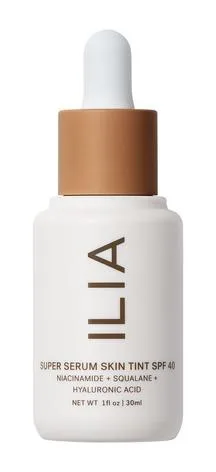 Clean Beauty Cult Classic
 Super Serum Skin Tint SPF 40
The product that finally made mineral tinted SPF desirable instead of medicinal. At 12% non-nano zinc with iron oxide visible-light protection, niacinamide, and a squalane-based glowy finish, this bottle does the impossible — it delivers real sun protection, real skincare, and real makeup in a single step without any one of them feeling compromised. The $54 price stings, but almost nothing else in the category does all three jobs this well.
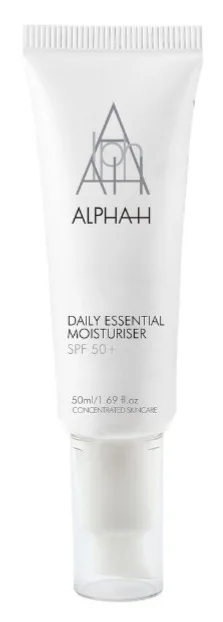 Australian SPF Standard
 Daily Essential Moisturiser SPF 50+
An excellent multi-active daily SPF that meets Australia's stricter TGA SPF 50+ standard and includes modern UVA filters that put it well ahead of most US sunscreens. Niacinamide, centella, and hyaluronate make it a genuine moisturizer rather than just a sunscreen step. Premium-priced but uniquely well-formulated.
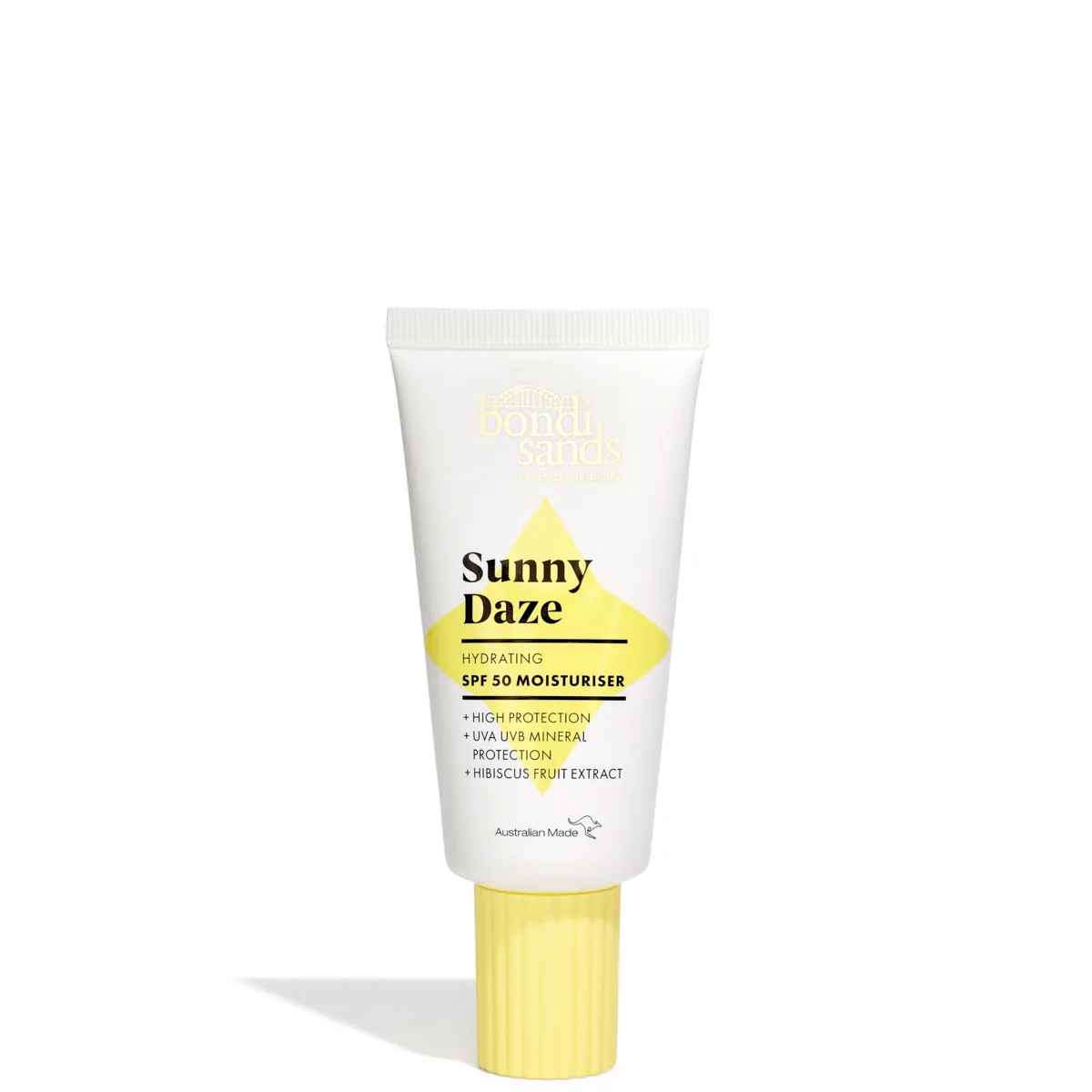 Mineral SPF for Melasma
 Sunny Daze SPF 50 Moisturiser
A 25% zinc oxide mineral face moisturizer with a built-in universal tint that provides both visible-light protection and white-cast neutralization — one of the better-engineered mineral SPF moisturizers in its price tier. The single universal shade is a real limitation, but for anyone managing melasma or reactive skin, this is a surprisingly thoughtful drugstore option.
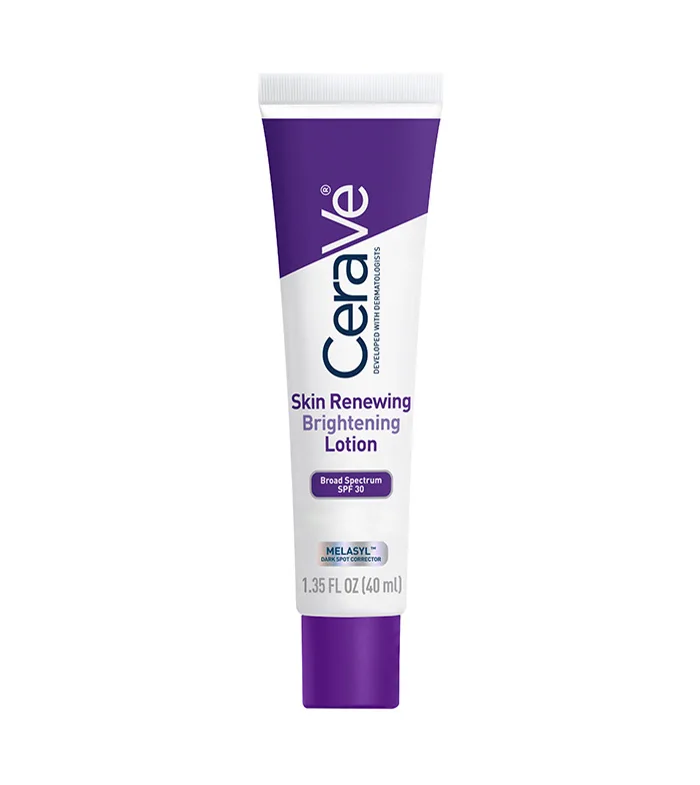 Brightening Multitasker
 Skin Renewing Brightening Lotion SPF 30
CeraVe's first product to use L'Oréal's Melasyl pigmentation molecule is also a competent SPF 30 day cream and a barrier-supporting lotion in one step. The size is small for the price, but the formula is genuinely impressive — this is CeraVe taking a real swing at the dark spot treatment category.
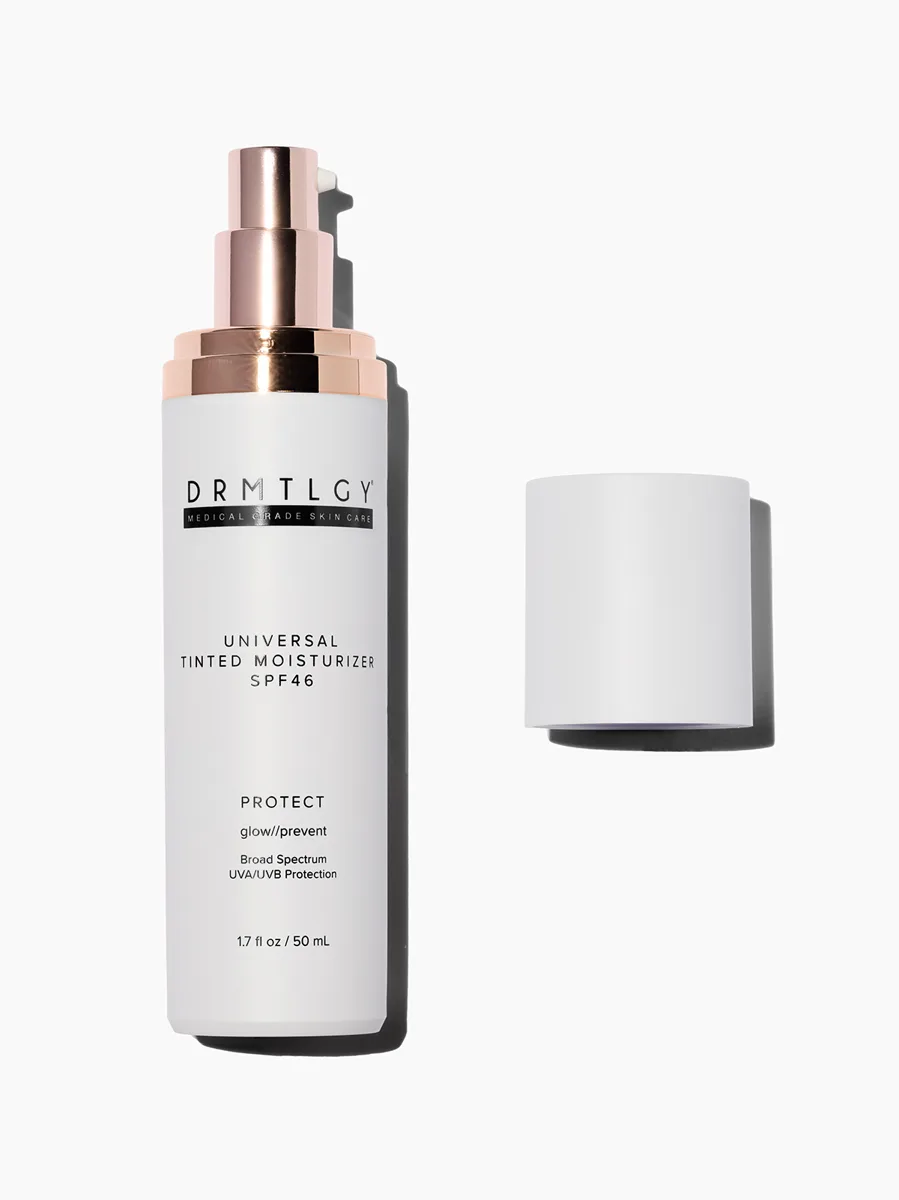 Budget Tinted SPF Pick
 Tinted Moisturizer SPF 46
One of the most-recommended tinted SPFs in dermatologist-focused online communities, and for good reason — a hybrid SPF 46 with iron oxide visible-light protection, niacinamide treatment benefits, and a universal satin tint at roughly half the price of the Elta MD product it closely resembles. The fragrance and the octinoxate are the only meaningful asks for forgiveness.
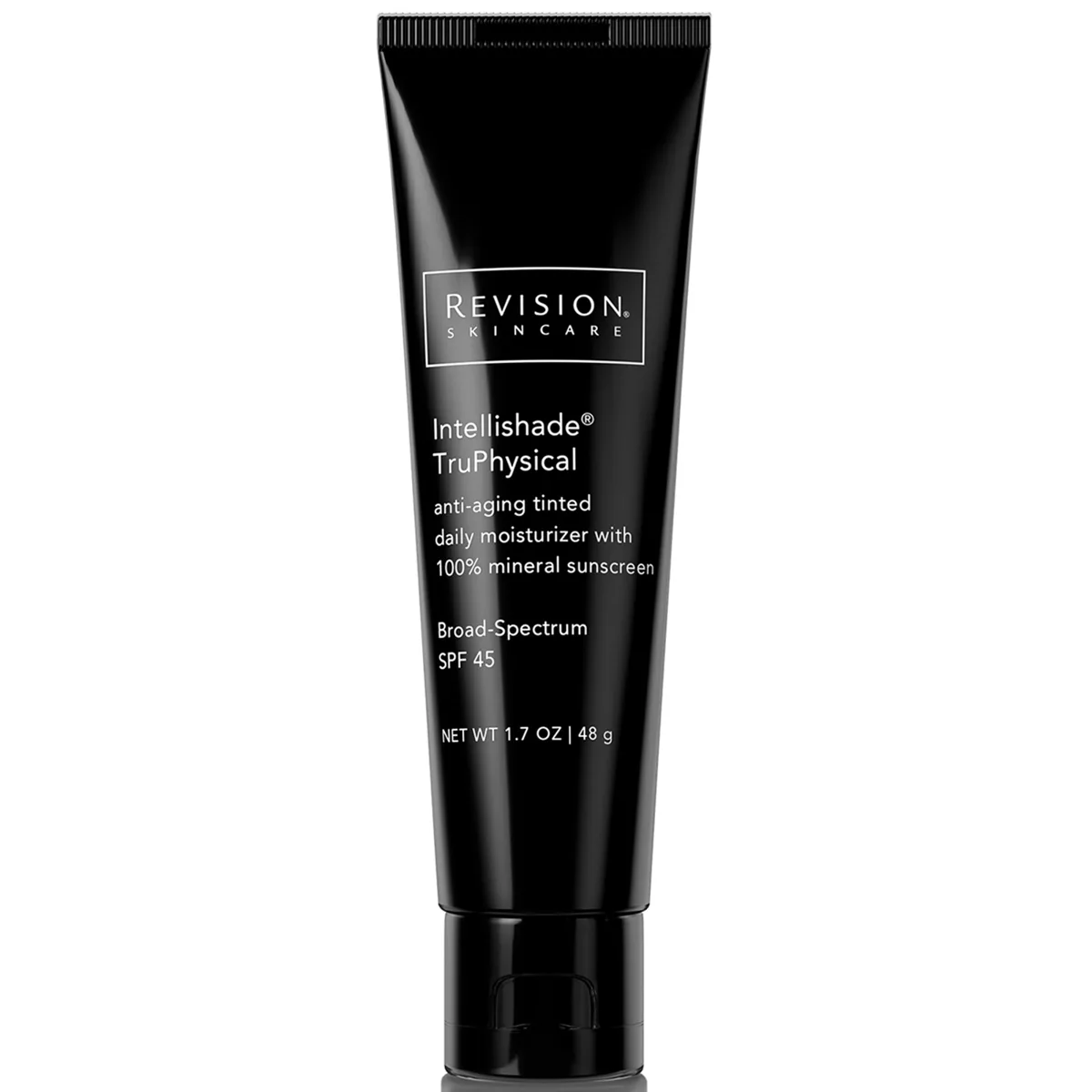 5-in-1 Mineral SPF Multitasker
 Intellishade TruPhysical SPF 45
A genuinely impressive multi-tasking mineral sunscreen that packs meaningful anti-aging actives into a wearable tinted formula. It replaces foundation for many users while delivering SPF 45 mineral protection and peptide-driven corrective benefits — though the thick texture requires patience and may not suit oily skin.