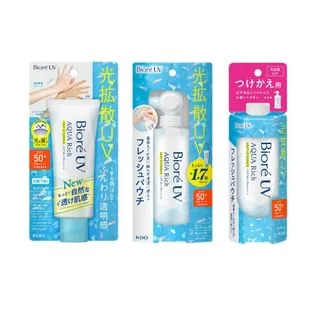
A genuinely clever dual-purpose sunscreen that delivers robust four-filter UV protection while making your skin look like it has a ring light pointed at it. The alcohol and fragrance limit its audience, but for normal-to-combination skin types who want sun protection and instant radiance in one step, this is a standout.
UV Aqua Rich Light Up Essence SPF 50+
A genuinely clever dual-purpose sunscreen that delivers robust four-filter UV protection while making your skin look like it has a ring light pointed at it. The alcohol and fragrance limit its audience, but for normal-to-combination skin types who want sun protection and instant radiance in one step, this is a standout.
Score Breakdown
Where this product gains points and where it loses them — broken down across the four scoring pillars.
Exceptional UV filter system with four modern filters delivering genuine SPF 50+/PA++++ protection, plus a unique light-diffusing glow effect. Held back by alcohol content, fragrance, and octinoxate sensitivity concerns that narrow the suitable audience.
Pros & Cons
- ✓Four modern UV filters deliver genuine SPF 50+ PA++++ broad-spectrum protection
- ✓Light-diffusing mica and tin oxide create a natural lit-from-within glow effect
- ✓Ultra-lightweight watery texture absorbs instantly with zero white cast on any skin tone
- ✓Doubles as an effective makeup primer, eliminating an extra step from morning routines
- ✓Super waterproof rating holds up during normal activity and moderate sweating
- ✓Exceptional value at approximately $13 for 70g with a premium UV filter system
- ✓Tinosorb S photostabilizes the entire filter system for longer-lasting protection
- ✗High alcohol content makes this unsuitable for dry, sensitive, or barrier-damaged skin
- ✗Contains fragrance that adds irritation risk without functional benefit
- ✗Octinoxate is a controversial UV filter some consumers and regions restrict
- ✗Requires importing from Japanese retailers — not available in Western drugstores
- ✗Dewy luminous finish can look overly shiny on very oily skin in humid conditions
Full Review
The Bioré UV Aqua Rich Watery Essence has spent years as perhaps the most recommended sunscreen in online skincare communities, the product that convinced thousands of people that sun protection did not have to mean a greasy white mask. When Kao introduced the Light Up Essence to the Aqua Rich family in 2021, it was a calculated expansion — same beloved lightweight texture, same robust protection, but with a luminous twist that turned the final step of a morning routine into a complexion-enhancing moment.
The premise is straightforward. This is a sunscreen that wants to replace your illuminating primer. Mica and tin oxide are dispersed throughout the formula to create what Bioré calls a light-diffusing effect, and in practice, it delivers. Upon application, skin takes on a soft, pearlescent luminosity that sits somewhere between natural glow and dewy highlighter. It does not look like you have applied a shimmery product. It looks like you slept well, drank water, and happen to be standing in very good lighting.
Beneath the glow, the UV filter system is legitimately impressive. Four complementary filters cover the full ultraviolet spectrum: octinoxate for UVB, Tinosorb S and DHHB for broad UVA coverage, and ethylhexyl triazone for additional UVB absorption. The SPF 50+ PA++++ rating is not cosmetic marketing — PA++++ is the highest UVA protection grade under the Japanese testing system, and achieving it requires real formulation work. Crucially, Tinosorb S acts as a photostabilizer for the entire system, preventing the octinoxate from degrading under prolonged sun exposure. This is smart, modern sunscreen chemistry.
The texture is where Japanese sunscreen engineering continues to humble most Western competitors. Out of the tube, this is a watery liquid — thinner than most serums, let alone sunscreens. It spreads effortlessly across the face with no dragging, pilling, or resistance. Within seconds, it absorbs into the skin and sets into a dewy, luminous film. There is no residual stickiness, no greasy sheen, no white cast on any skin tone. It simply disappears, leaving behind the glow.
Alcohol is the third ingredient, and it is the primary reason this texture is possible. The denatured alcohol drives the rapid evaporation that makes the formula feel so weightless, helps the UV filters distribute evenly across the skin surface, and prevents the heavy, occlusive feeling that plagues many high-SPF products. It is also the ingredient that will disqualify this sunscreen for anyone with dry, sensitized, or barrier-compromised skin. If your skin stings when you apply products with alcohol, this is not for you, and no amount of glow is worth that discomfort.
The fragrance is another point of division. It is a light floral scent — pleasant and fairly typical of Japanese cosmetics — that dissipates within a few minutes of application. For fragrance-sensitive users, it is an unnecessary addition to a sunscreen. For everyone else, it barely registers.
As a makeup primer, this genuinely excels. The light-diffusing particles create a smooth, even canvas that helps foundation adhere and look more natural. Several users report skipping their primer entirely when using this, and after testing, that seems entirely reasonable. The only caveat is for very oily skin types, where the dewy finish can tip into looking shiny by midday, particularly in humid conditions.
The value proposition is hard to argue with. At roughly $13 for 70g — enough for two to three months of daily use — this costs less than most Western drugstore sunscreens while delivering a more sophisticated UV filter system and a more elegant texture. The catch is availability: this is a Japanese-market product that requires importing through online beauty retailers. Shipping times and costs vary, and there is always the minor gamble of purchasing skincare through third-party sellers.
Bioré reformulated this for 2025 with updated Micro Defense technology, which encapsulates the UV filters in micro-capsules for more uniform distribution. The improvement over the original is subtle but detectable — the formula seems to set slightly more evenly and maintain its finish a bit longer throughout the day.
There are genuine limitations to acknowledge. The octinoxate (ethylhexyl methoxycinnamate) will be a dealbreaker for some consumers who avoid this filter for environmental or personal sensitivity reasons. The formula is not reef-safe by Hawaiian or Palauan standards. It contains methylparaben and BHT, which, while safe at the concentrations used, are ingredients some consumers prefer to avoid. And as with all sunscreens, the protection only works if you apply enough — the recommended amount is about 1/4 teaspoon for the face — and reapply every two hours during sun exposure.
This sunscreen does not pretend to be something it is not. It is not a treatment product. It will not fade dark spots or reduce wrinkles directly. What it does, exceptionally well, is protect your skin from the UV radiation that causes those problems while simultaneously making you look more radiant. For a product that costs less than a mediocre cocktail, that is a remarkably good deal.
Formula
Key Ingredients
The hero actives that drive this product's performance.
| Ingredient | Function | Evidence |
|---|---|---|
| Bis-Ethylhexyloxyphenol Methoxyphenyl Triazine (Tinosorb S) | A photostable broad-spectrum UV filter that absorbs both UVA and UVB radiation without degrading under sun exposure. In this multi-filter system, Tinosorb S stabilizes the octinoxate and provides the backbone of the PA++++ UVA rating, ensuring consistent protection even during extended outdoor exposure. | well-established |
| Diethylamino Hydroxybenzoyl Hexyl Benzoate (DHHB/Uvinul A Plus) | A newer-generation UVA filter that works alongside Tinosorb S to deliver the maximum PA++++ rating. DHHB is highly photostable and extends the UVA protection range, particularly in the longer UVA-I wavelengths that drive photoaging deep in the dermis. | well-established |
| Ethylhexyl Methoxycinnamate (Octinoxate) | Listed second in the formula, this UVB filter carries the primary SPF 50+ rating. While octinoxate can degrade under UV exposure, the Tinosorb S in this formula stabilizes it, extending its protective lifespan on skin — a deliberate formulation strategy common in Japanese sunscreens. | well-established |
| Sodium Hyaluronate | Counteracts the dehydrating effect of the high alcohol content by pulling moisture into the skin surface. At the low-molecular-weight form implied by sodium hyaluronate, it penetrates more effectively to provide hydration beneath the sunscreen film. | well-established |
| Mica and Tin Oxide | The signature 'Light Up' technology — mica reflects and scatters light across the skin surface while tin oxide adds a subtle luminous sheen. Together they create a soft-focus, lit-from-within radiance that evens out skin tone and makes this sunscreen double as a glow-enhancing primer. | well-established |
Full INCI List
Water, Ethylhexyl Methoxycinnamate, Alcohol, Butylene Glycol, Isopropyl Palmitate, Titanium Dioxide, Bis-Ethylhexyloxyphenol Methoxyphenyl Triazine, Ethylhexyl Triazone, Dimethicone, Lauryl Methacrylate/Sodium Methacrylate Crosspolymer, Hydrogenated Polyisobutene, Diethylamino Hydroxybenzoyl Hexyl Benzoate, Silica, Hydrated Silica, Mica, Dextrin Palmitate, Dipentaerythrityl Tri-Polyhydroxystearate, Acrylates/C10-30 Alkyl Acrylate Crosspolymer, Triethoxycaprylylsilane, Cetyl Alcohol, Glyceryl Stearate, Hydroxyethylcellulose, Polysorbate 60, Polysilicone-9, Aluminum Hydroxide, Potassium Hydroxide, Royal Jelly Extract, Sodium Hyaluronate, Tin Oxide, Phenoxyethanol, Methylparaben, Disodium EDTA, BHT, Fragrance
Product Flags
✗ Fragrance Free✗ Alcohol Free✗ Oil Free✗ Silicone Free✗ Paraben Free✓ Sulfate Free✗ Cruelty Free✗ Vegan✗ Fungal Acne Safe
Comedogenic Ingredients
Isopropyl Palmitate
Potential Irritants
AlcoholFragranceEthylhexyl Methoxycinnamate
Common Allergens
FragranceMethylparaben
Compatibility
Skin Match
Best For
Works For
Not Ideal For
Addresses These Conditions
sun damage dullness hyperpigmentation
Use With Caution
sensitivity rosacea dehydration
Avoid With
eczema compromised skin barrier
Routine Step
sunscreen
Time of Day
AM
Pregnancy Safe
Yes ✓
Layering Tips
Apply as the final skincare step before makeup. The luminous finish means this works beautifully as a primer — skip additional illuminating primers to avoid looking overly shiny. Allow 1-2 minutes to set before applying foundation. Reapply every 2 hours during sun exposure.
Results Timeline
Immediate radiant, glowy finish upon application. UV protection is immediate. The luminous effect lasts 4-6 hours before fading. Consistent daily use contributes to long-term prevention of photoaging, dark spots, and UV-induced collagen loss.
Pairs Well With
Hydrating toner (underneath for alcohol-sensitive skin)Niacinamide serum (for brightening synergy)Lightweight moisturizer (buffer for dry patches)
Sample AM Routine
- Gentle cleanser
- Hydrating toner
- Lightweight moisturizer
- Biore UV Aqua Rich Light Up Essence SPF 50+
Sample PM Routine
- Double cleanse (oil + water cleanser)
- Hydrating toner
- Serum
- Night cream
Evidence
Science & Expert Perspective
The Science
The UV filter system in this formula represents a thoughtful approach to broad-spectrum photostability. The combination of four filters — octinoxate (UVB), ethylhexyl triazone (UVB), Tinosorb S (UVA+UVB), and DHHB (UVA) — creates overlapping protection across the 280-400nm ultraviolet spectrum.
Tinosorb S (Bis-Ethylhexyloxyphenol Methoxyphenyl Triazine) is particularly important here. As a photostable triazine-class filter, it absorbs UV radiation and converts it to heat without degrading — a property that also extends to stabilizing the octinoxate in the formula. Octinoxate alone loses approximately 10% of its protective capacity per hour of sun exposure due to photodegradation, but when paired with a photostabilizer like Tinosorb S, this degradation is dramatically reduced. Research published in Photochemistry and Photobiology has demonstrated that triazine filters can reduce the photodegradation of cinnamate-class filters by over 50%.
DHHB (Diethylamino Hydroxybenzoyl Hexyl Benzoate), marketed as Uvinul A Plus by BASF, specifically targets UVA-I radiation in the 340-400nm range — the wavelengths most responsible for photoaging and indirect DNA damage through reactive oxygen species generation. A 2013 study in the Journal of the American Academy of Dermatology confirmed that filters targeting this longer UVA range are critical for preventing the collagen degradation that drives wrinkle formation.
The titanium dioxide in the formula serves a dual role: it provides some additional UV scattering (mineral filter contribution) and, combined with mica and tin oxide, creates the optical light-diffusing effect. Tin oxide nanoparticles are particularly effective at scattering visible light to create a soft-focus luminous effect without the chalkiness associated with larger zinc oxide or titanium dioxide particles.
Kao's Micro Defense technology addresses a practical challenge in sunscreen application: uniform distribution. UV filters encapsulated in micro-aqua capsules break upon application and self-distribute across the skin surface, potentially reducing the protection gaps that occur when thicker formulas are applied unevenly.
Dermatologist Perspective
Dermatologists generally view the Bioré UV Aqua Rich line favorably for its high-level UV protection in a cosmetically elegant vehicle that encourages consistent daily use. Board-certified dermatologists note that patient compliance with sunscreen is the single biggest factor in UV protection outcomes, and products that feel pleasant and look good on skin dramatically improve the likelihood that patients will use them correctly and consistently. The PA++++ rating — the highest under Japan's UVA grading system — indicates robust UVA protection that many Western sunscreens lack. Dermatologists do caution that the high alcohol content makes this inappropriate for patients with rosacea, active eczema, or compromised skin barriers, and recommend that patients with these conditions opt for alcohol-free mineral sunscreens instead.
Guidance
Usage Guide
How to Use
Apply generously as the last step of your morning skincare routine, after moisturizer and before makeup. Use approximately 1/4 teaspoon (a two-finger-length strip) for the face alone — most people under-apply sunscreen by 50% or more. Spread evenly across the forehead, cheeks, nose, and chin. Allow 1-2 minutes to set before applying makeup. Reapply every 2 hours during continuous sun exposure, and immediately after swimming, heavy sweating, or towel-drying. Can be removed with regular facial cleanser — no special cleansing oil required despite the waterproof rating.
Value Assessment
At approximately $13 for 70g, this delivers a four-filter UV system, PA++++ UVA protection, and a built-in luminizing primer for less than the price of most single-filter Western drugstore sunscreens. The per-use cost works out to roughly $0.15-0.20 per daily application, making it one of the best value propositions in high-protection sunscreens globally. The import requirement adds a minor inconvenience factor, but the price-to-quality ratio is genuinely hard to beat. Bioré has been refining this formula through Kao's massive R&D infrastructure for years, and the result is a product that outperforms many sunscreens costing three to four times as much.
Who Should Buy
Normal and combination skin types who want serious UV protection that doubles as a radiance-boosting primer. Ideal for anyone frustrated with sunscreens that look chalky, feel heavy, or require a separate primer step.
Who Should Skip
Anyone with dry, sensitive, eczema-prone, or barrier-compromised skin should avoid the high alcohol content. Also skip if you prefer fragrance-free products, avoid octinoxate for environmental or sensitivity reasons, or need a matte finish for very oily skin.
Ready to try Biore UV Aqua Rich Light Up Essence SPF 50+?
Details
Details
Texture
Ultra-lightweight watery essence that feels like a thin liquid upon dispensing, spreading into a barely-there film with a subtle pearlescent shimmer
Scent
Light floral fragrance typical of Japanese sunscreens — noticeable upon application but fades within minutes
Packaging
70g squeeze tube with a flip-top cap in Bioré's signature blue and white Aqua Rich branding with pink accents denoting the Light Up variant
Finish
glowydewylightweight
What to Expect on First Use
The watery consistency surprises on first use — it feels more like a hydrating essence than a sunscreen. The alcohol helps it absorb almost instantly, and the mica-based glow is immediately visible. Skin looks brighter and more luminous within seconds of application. No adjustment period needed.
How Long It Lasts
2-3 months with daily facial application (approximately 1/4 teaspoon per use)
Period After Opening
12 months
Best Season
All Year
Background
The Why
The Bioré UV Aqua Rich family has been a cornerstone of Japanese sun care since its introduction in the mid-2010s, with the Watery Essence becoming a gateway product for millions of Western consumers discovering J-beauty. The Light Up Essence was added to the lineup in 2021 to address the growing demand for sunscreens that serve double duty as complexion-enhancing primers. It was reformulated in 2025 with improved Micro Defense technology for even more uniform UV film distribution.
About Biore Legacy Brand (20+ years)
Bioré was launched by Kao Corporation in 1980 and has been a dominant force in Japanese skincare for over four decades. The UV Aqua Rich line in particular has become one of the most recognized Asian sunscreen ranges globally, widely praised for pioneering lightweight, cosmetically elegant UV protection.
Brand founded: 1980 · Product launched: 2021
Myth vs. Reality
Myths & Misconceptions
Myth
Japanese sunscreens with alcohol are bad for your skin and cause premature aging
Reality
Denatured alcohol in sunscreens serves a critical formulation purpose: it helps UV filters spread evenly and dry quickly into a uniform protective film. While high alcohol content can be drying for some skin types, the rapid evaporation means the alcohol does not remain on the skin long-term. For most non-sensitive skin types, the cosmetic elegance alcohol enables actually encourages proper sunscreen application and reapplication — which provides far more anti-aging benefit than avoiding alcohol.
Myth
SPF 50+ and PA++++ from a watery essence cannot possibly provide real protection
Reality
The UV protection rating is determined by standardized testing, not by the product's texture. This formula uses four complementary UV filters covering the full UVA/UVB spectrum, with Tinosorb S stabilizing the entire system. The watery texture is an engineering achievement — Kao's Micro Defense technology encapsulates UV filters in micro-capsules that distribute evenly across the skin, potentially providing more uniform coverage than thicker formulas that are harder to spread.
FAQ
Frequently Asked Questions
Does the Biore UV Aqua Rich Light Up Essence leave a white cast?
No. Despite containing titanium dioxide, the particles are nano-sized and combined with mica and tin oxide to create a luminous rather than chalky effect. The finish is a subtle pearlescent glow that flatters all skin tones without any white residue.
Can I use Biore Light Up Essence as a makeup primer?
Yes — this is one of its strongest use cases. The light-diffusing mica and tin oxide create a smoothing, radiant base that helps foundation glide on evenly. Many users skip a separate primer entirely when using this sunscreen. Allow 1-2 minutes for the formula to set before applying makeup.
Is the Biore UV Aqua Rich Light Up Essence waterproof?
Bioré rates this as 'Super Waterproof,' meaning it resists water and sweat during normal activity. However, like all sunscreens, it should be reapplied every 2 hours during prolonged sun exposure and immediately after swimming, heavy sweating, or towel-drying.
Why does this sunscreen contain alcohol — is that safe?
The denatured alcohol helps the four UV filters spread into a thin, even, fast-drying film — which is essential for uniform sun protection. It evaporates quickly after application and does not remain on the skin. While alcohol can cause stinging on broken or sensitized skin, it is safe and functionally important for most skin types in this specific sunscreen formulation.
How does the Light Up Essence differ from the Watery Essence?
Both share a similar watery texture and SPF 50+/PA++++ rating, but the Light Up Essence adds mica and tin oxide for a visible luminous, radiance-boosting finish. The Watery Essence aims for a more invisible, skin-like finish. Choose Light Up if you want a glowy primer effect; choose Watery Essence if you prefer a matte or natural finish.
Where can I buy the Biore UV Aqua Rich Light Up Essence?
This is a Japanese-market product not widely available in Western retail stores. It can be purchased through Japanese beauty import sites like Japanese Taste, YesStyle, and Stylevana, as well as Amazon from third-party sellers. Prices typically range from $12-18 depending on the seller.
Community
Community Voices
Common Praise
"Gives skin a beautiful lit-from-within glow without looking greasy"
"Lightweight watery texture that absorbs instantly"
"Doubles perfectly as a makeup primer"
"No white cast on any skin tone"
"Strong SPF 50+ PA++++ protection in an elegant formula"
Common Complaints
"High alcohol content can sting on broken or sensitized skin"
"Contains fragrance that some users find unnecessary"
"Not widely available in Western retail stores — requires import"
"Luminous finish may be too dewy for very oily skin types"
"Contains octinoxate which some consumers prefer to avoid"
Notable Endorsements
Cult favorite in Asian beauty communities worldwideConsistently ranked among top J-beauty sunscreens by beauty editors
Appears In
best sunscreen for glow best j beauty sunscreen best sunscreen primer best sunscreen for no white cast
Related Conditions
sun damage hyperpigmentation dullness aging
Related Ingredients
You Might Also Like
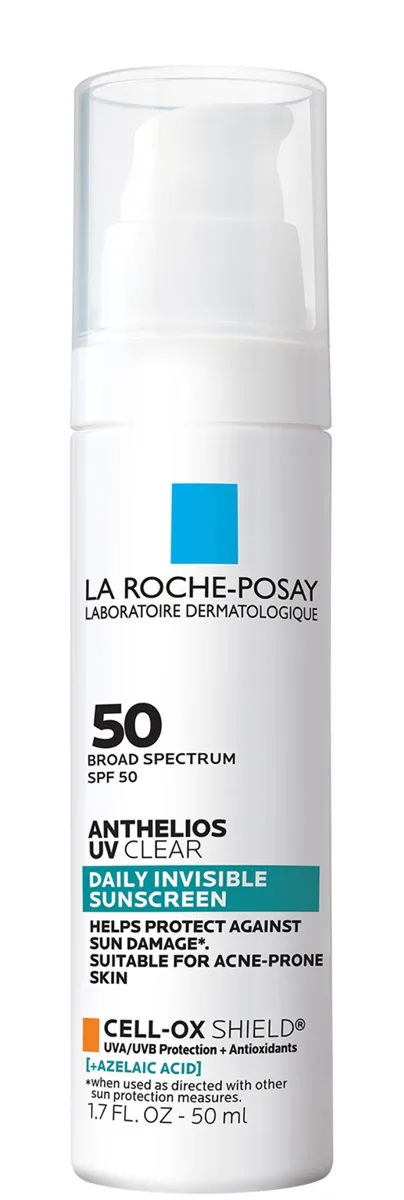 Derm Office Staple
 Anthelios UV Clear Sunscreen SPF 50
One of the only US chemical sunscreens that genuinely earns its 'for sensitive and breakout-prone skin' positioning. A photostable Anthelios filter system paired with a legitimate azelaic acid dose in a lightweight serum-fluid that disappears on every skin tone. Excellent for rosacea, acne, and post-inflammatory hyperpigmentation — and probably the single best daily sunscreen in the La Roche-Posay US lineup for those conditions.
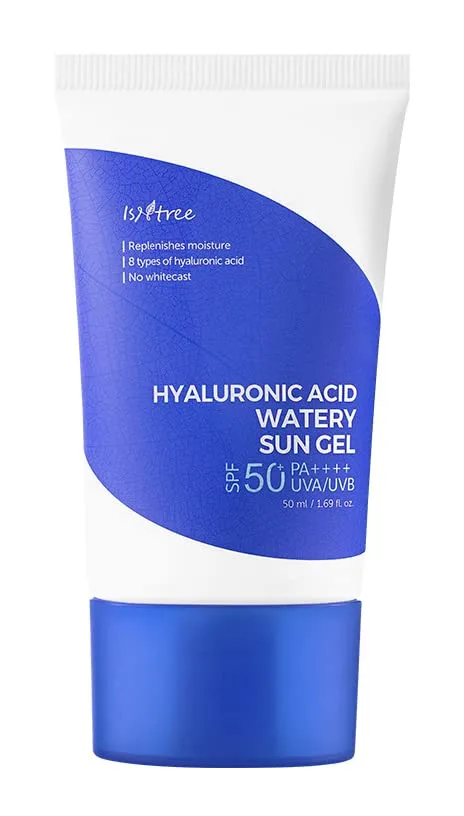 K-Beauty Daily SPF Standout
 Hyaluronic Acid Watery Sun Gel SPF 50+
One of the strongest everyday K-beauty sunscreens in the international market — modern European filters, no white cast, fragrance-free, niacinamide-boosted, and built around the brand's signature six-weight HA complex. At twenty-two dollars for 50ml, it's a case study in how much better a daily sunscreen can be when the formulator cares about both protection and wearability.
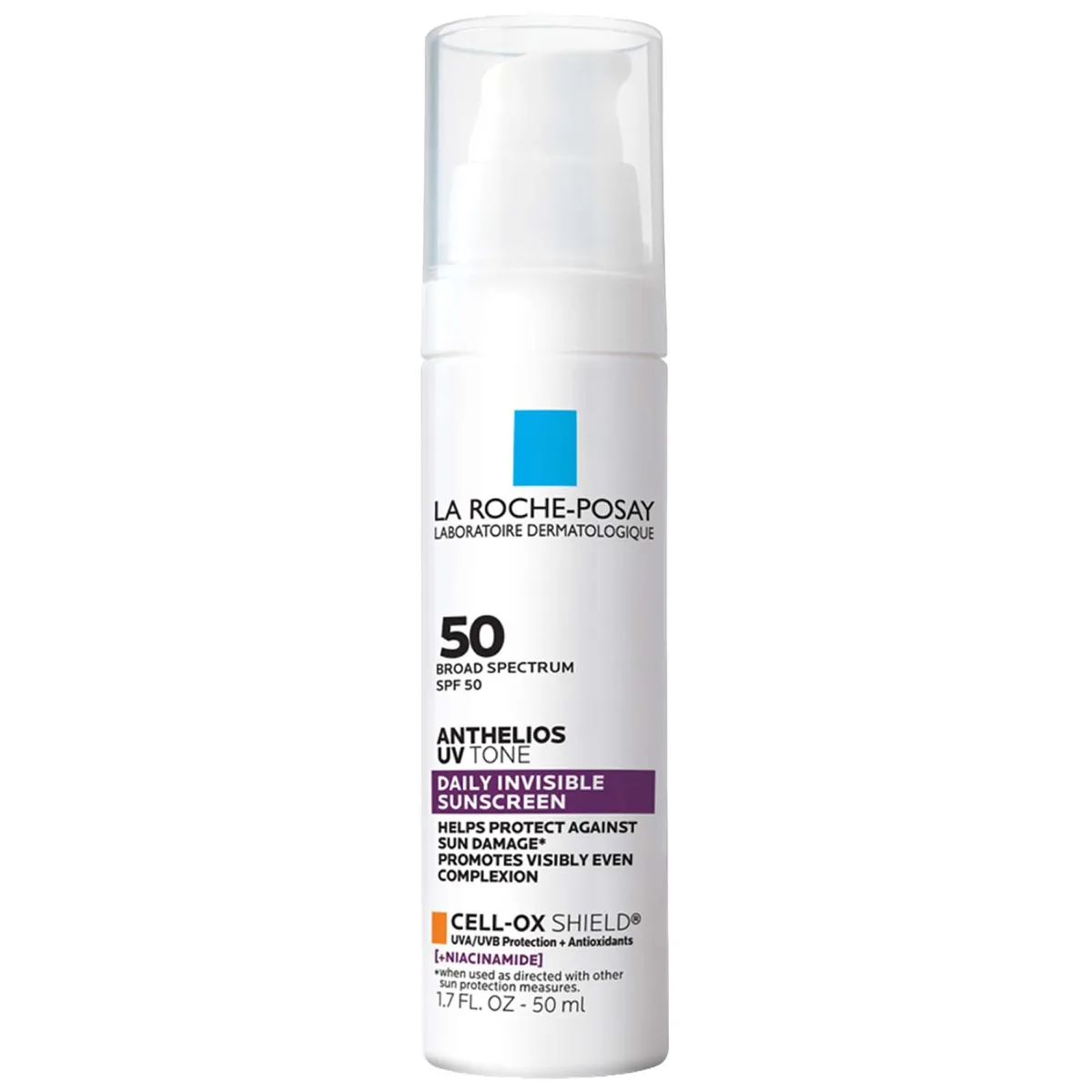 Derm Office Staple
 Anthelios UV Tone Daily Invisible Sunscreen SPF 50
La Roche-Posay's most thoughtful answer yet for hyperpigmentation-prone skin that needs daily SPF. A photostable avobenzone system reinforced with Oxynex ST, paired with a meaningful dose of niacinamide, in a serum-fluid base that goes on invisible on every skin tone. Expensive for 1.7 oz but legitimately well-built — and a rare chemical sunscreen that earns its 'for dark spots' marketing.
 Melasma-Grade Mineral Sunscreen
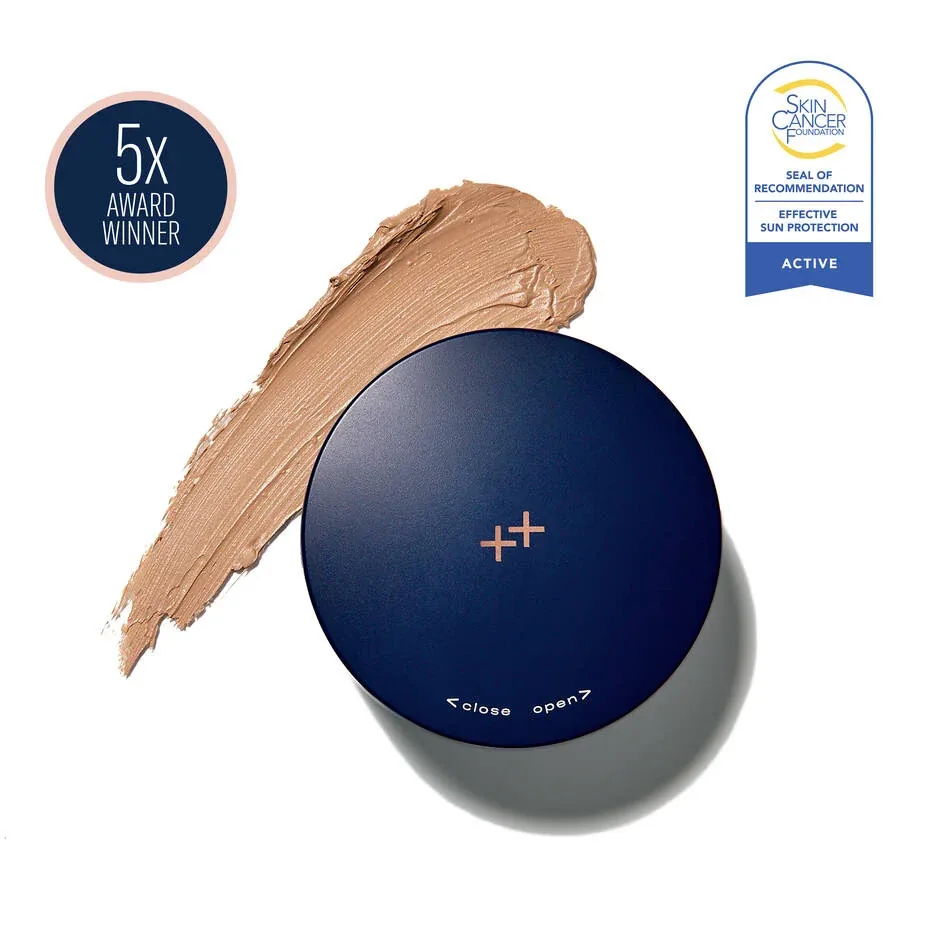
 sunbetter TONE SMART SPF 68
One of the most clinically useful tinted mineral sunscreens in the professional category. SPF 68 from a 100% mineral formula, iron oxide tint that blocks visible light for melasma protection, and an unusually lightweight texture that doesn't feel like you're wearing high-concentration zinc. For patients with melasma or post-inflammatory hyperpigmentation, this is the category benchmark — and it's earned its Allure Best of Beauty wins.
 K-Beauty Cult Favorite
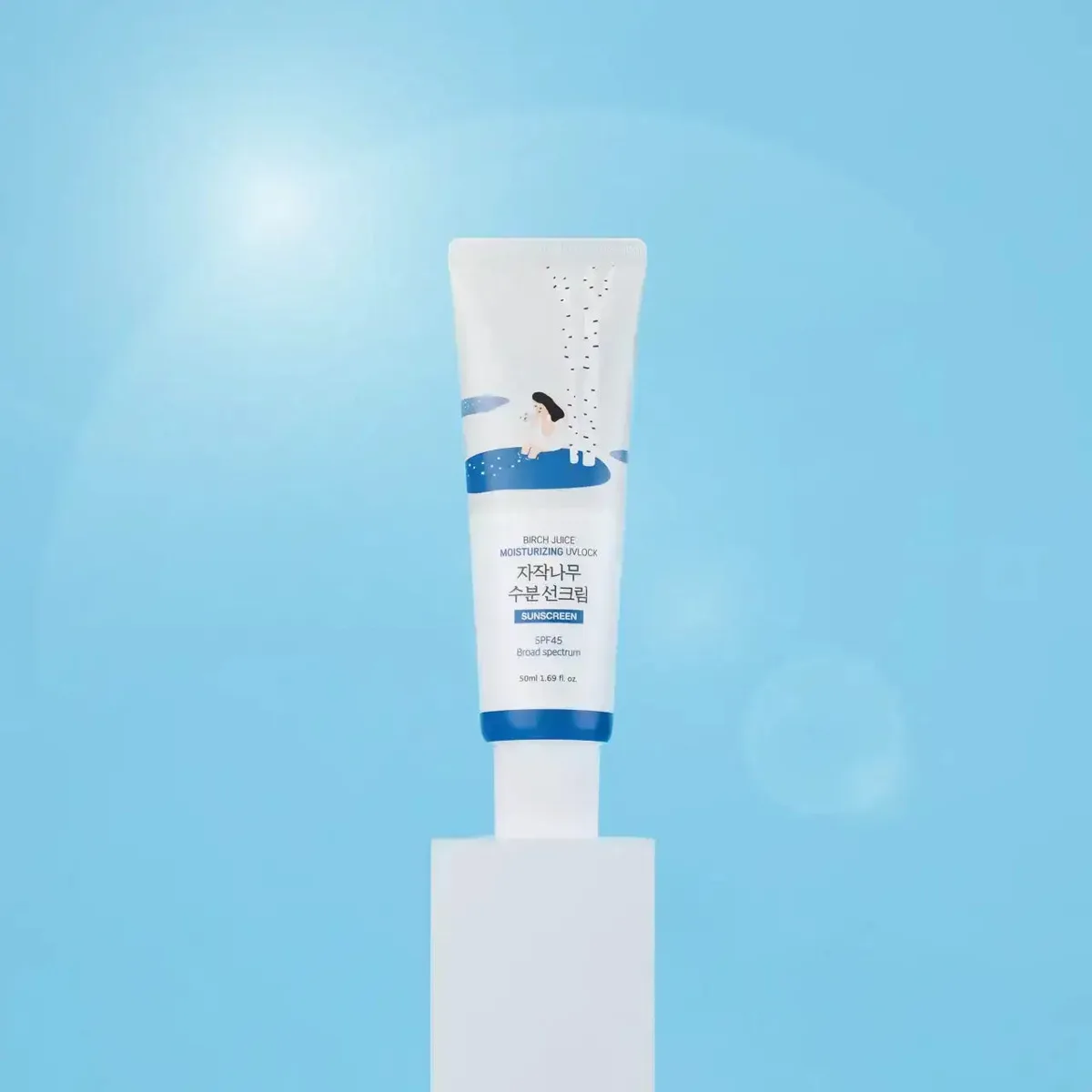
 Birch Juice Moisturizing Sun Cream SPF 50+
One of the best hybrid sunscreens in K-beauty right now — a 70% birch sap base, modern UVA filters you can't get in the US, and a finish that wears like a lightweight moisturizer. Broadly compatible, well-priced, and genuinely pleasant to apply, with minor tradeoffs for oily and fungal-acne-prone users.
 The K-Beauty Sunscreen That Changed Everything
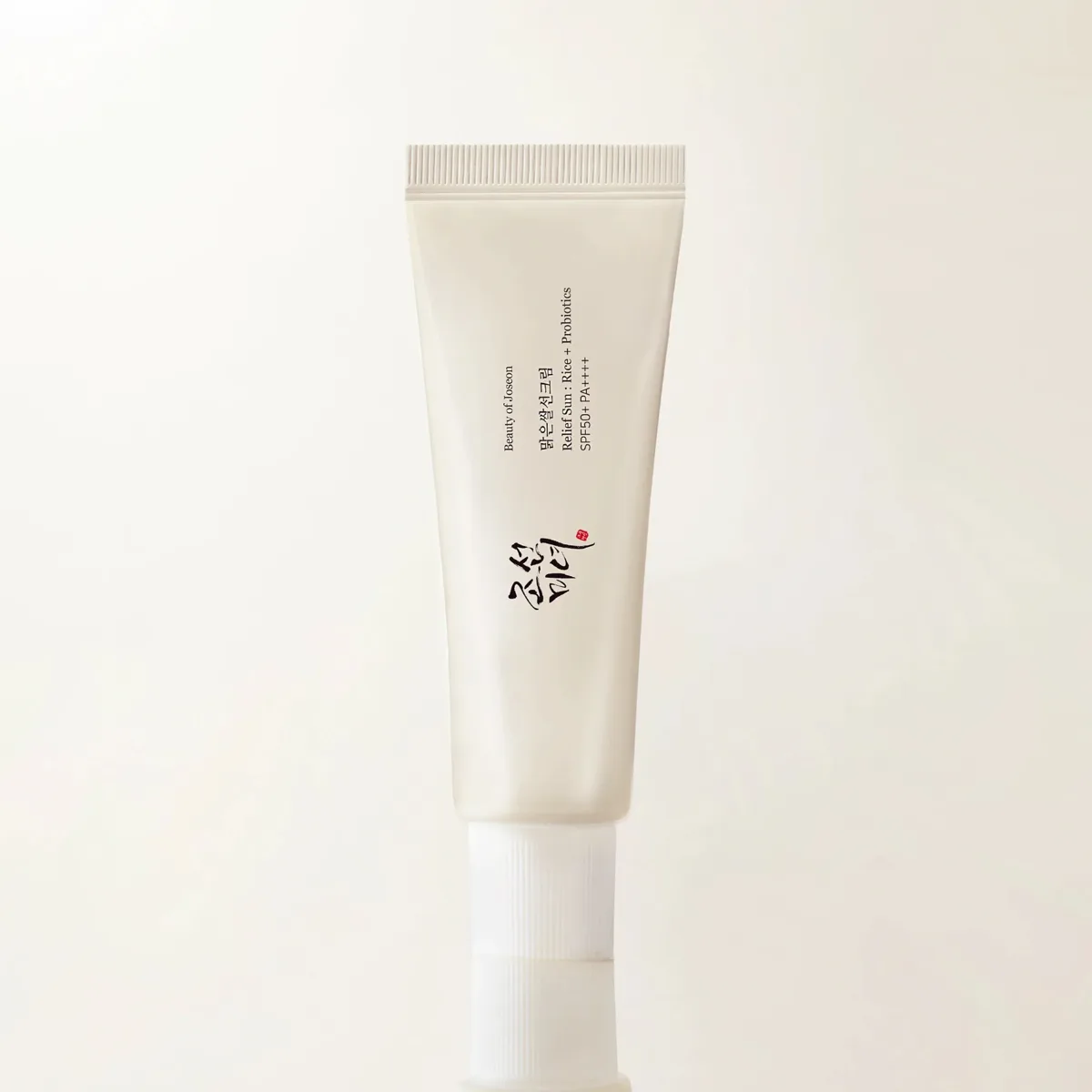
 Relief Sun: Rice + Probiotics SPF 50+
The sunscreen that rewrote the rules for what a $14 product could deliver. With independently verified SPF 50+, 30% rice extract, niacinamide, and a probiotic ferment complex, it offers protection and skincare benefits that rival products three times its price. The texture that feels like wearing nothing on your face is the reason it went viral — and stayed there.