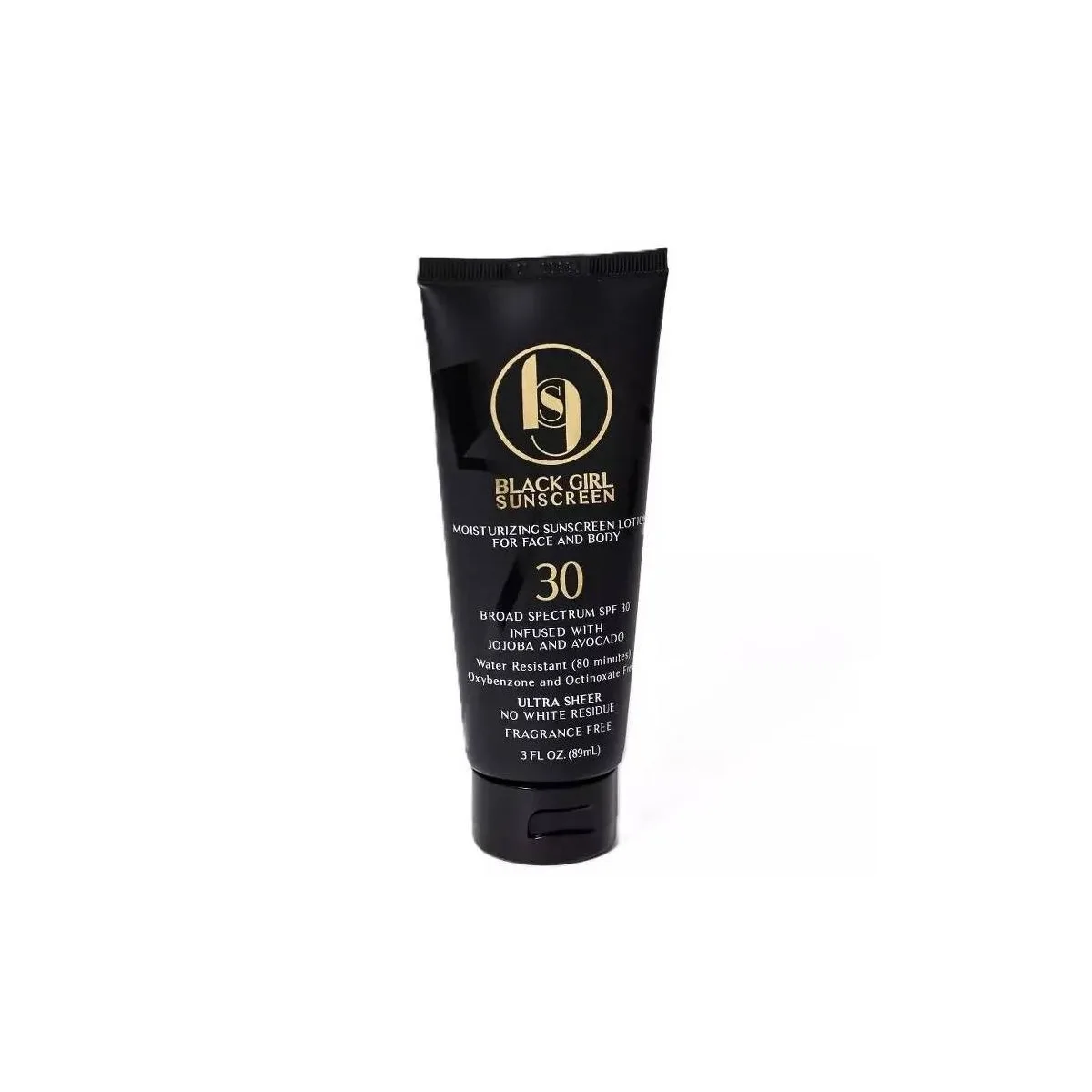
The sunscreen that proved the industry had been ignoring an enormous market. A moisturizing, cast-free SPF 30 with an oil-rich formula specifically designed for melanin-rich skin. It is not for oily skin, but for dry to normal darker complexions that have spent years fighting white cast and ashy finish, this $16 tube is exactly the product that should have existed decades ago.
SPF 30 Broad Spectrum
The sunscreen that proved the industry had been ignoring an enormous market. A moisturizing, cast-free SPF 30 with an oil-rich formula specifically designed for melanin-rich skin. It is not for oily skin, but for dry to normal darker complexions that have spent years fighting white cast and ashy finish, this $16 tube is exactly the product that should have existed decades ago.
Score Breakdown
Where this product gains points and where it loses them — broken down across the four scoring pillars.
A purposefully designed chemical sunscreen that solves the white cast problem on melanin-rich skin with an oil-rich, moisturizing formula. Excellent value at $16 for 3 oz. The chemical-only UV filter system and heavy oil base limit suitability for oily, acne-prone, and sensitive skin types, but for dry to normal darker skin tones, this fills a genuine market gap.
Pros & Cons
- ✓Zero white cast on melanin-rich skin — the primary innovation that built the brand
- ✓Oil-rich formula doubles as a moisturizer for dry to normal skin
- ✓Affordable at approximately $16 for 3 fl oz with 80-minute water resistance
- ✓Fragrance-free, silicone-free, paraben-free, and PETA certified cruelty-free and vegan
- ✓Broad-spectrum SPF 30 with avobenzone for strong UVA protection against hyperpigmentation
- ✓Widely available at Target, Walmart, CVS, Walgreens, and Ulta — accessible at mass retail
- ✗Oil-rich formula is too heavy and shiny for oily skin types
- ✗Cocoa butter (comedogenic rating 4) and multiple oils make this risky for acne-prone skin
- ✗Chemical UV filters only — not suitable for those avoiding chemical sunscreen during pregnancy
- ✗Homosalate at 10% exceeds the EU's recommended 0.5% limit (still within FDA limits)
- ✗Faint chemical-woody scent from UV filters detectable despite fragrance-free claim
- ✗Not fungal-acne-safe due to multiple plant oils and oleate-based emulsifier
Full Review
Shontay Lundy asked a question in 2016 that the entire sunscreen industry should have been asking for decades: why does every sunscreen on the shelf leave a white, purple, or ashy cast on dark skin? The answer, of course, was that the industry had not been formulating with melanin-rich skin tones as the primary audience. Mineral sunscreens — zinc oxide and titanium dioxide — are white by nature and sit on top of the skin as physical blockers. On pale skin, the white tint blends in. On dark skin, it looks like chalk. The handful of tinted mineral options that existed in 2016 rarely matched the range of deeper skin tones, and most chemical sunscreens were formulated for cosmetic elegance on lighter complexions without considering how they performed on darker ones.
Lundy invested $33,000 of her own money and built Black Girl Sunscreen from scratch, launching this SPF 30 as the brand's first and flagship product. The formula takes a straightforward but effective approach to the white cast problem: it uses exclusively chemical UV filters — avobenzone, homosalate, octisalate, and octocrylene — which absorb UV radiation rather than reflecting it. No mineral filters means no white particles sitting on the skin surface. The result is a sunscreen that genuinely disappears on melanin-rich skin, leaving behind nothing but a dewy, moisturized finish.
The UV filter combination provides legitimate broad-spectrum protection. Avobenzone at 3% (the FDA maximum) handles UVA protection, which is critical for preventing hyperpigmentation — a primary sun-related concern for darker skin tones. Homosalate at 10% and octisalate at 5% cover the UVB spectrum, while octocrylene at 2.75% serves double duty as both a UVB absorber and an avobenzone stabilizer, preventing the UVA filter from degrading during sun exposure. At SPF 30, this blocks approximately 97% of UVB rays — more than adequate for daily wear and only marginally less than SPF 50's 98%.
What makes this formula distinctive beyond the UV filters is the moisturizing vehicle. Jojoba seed oil, avocado oil, sunflower seed oil, and cocoa seed butter create an oil-rich base that transforms sunscreen application from a chalky obligation into a genuinely nourishing skincare step. For dry to normal skin, this sunscreen legitimately replaces a morning moisturizer — the oils provide enough hydration and barrier support that an additional cream is unnecessary. Aloe vera juice and vitamin E (tocopheryl acetate) add soothing and antioxidant benefits, while carrot seed oil contributes beta-carotene for additional antioxidant protection.
On the skin, the experience lives up to the promise for its target audience. The lotion blends smoothly, absorbs fully, and leaves a dewy glow with zero cast. On dry skin, it feels nourishing and comfortable. On normal skin, it provides a natural, healthy-looking luminosity. The 80-minute water resistance is the maximum the FDA allows, making it suitable for outdoor activities. And at roughly $16 for 3 fluid ounces, the value is exceptional for a purpose-built sunscreen with this level of moisturizing complexity.
The honest limitations align with who this product was not designed for. Oily skin types will find the oil-rich formula too heavy and too shiny. By mid-day on an oily complexion, this sunscreen has added more glow than most people want, and it does not layer well under mattifying products without some pilling. Acne-prone skin should approach with caution — cocoa butter has a comedogenic rating of 4, and the combination of avocado oil, jojoba oil, and sunflower seed oil creates a heavy lipid load that can trigger breakouts in clog-prone pores.
The chemical UV filters themselves carry some considerations. Homosalate has faced scrutiny from the European Commission's Scientific Committee on Consumer Safety, which recommended a maximum concentration of 0.5% in 2021 due to potential endocrine activity — this product contains it at 10%. The FDA has not changed its regulations on homosalate, and the ingredient remains approved at up to 15%, but some consumers and dermatologists prefer to avoid it. Octocrylene has been linked to potential coral reef toxicity, and while this sunscreen is marketed as reef-safe (free of oxybenzone and octinoxate), the reef-safe designation is not FDA-regulated and does not account for octocrylene.
For pregnancy, most dermatologists recommend mineral sunscreens as a precautionary measure, as chemical filters have been detected in bloodstream and breast milk in FDA absorption studies. This does not mean chemical sunscreens are proven unsafe during pregnancy, but mineral alternatives are generally considered the more cautious choice.
None of these limitations diminish what this product achieved culturally and commercially. Before Black Girl Sunscreen, the message that the SPF industry sent to millions of people with darker skin was essentially: sun protection means looking ashy, or skipping protection entirely. Lundy's brand demonstrated that formulating for melanin-rich skin was not a technical impossibility but a market choice that the industry had been choosing not to make. The brand's expansion to Target, Walmart, CVS, Walgreens, and Ulta — mainstream mass-market retail — proved the demand was always there.
For dry to normal darker skin tones that want a moisturizing, invisible, affordable daily sunscreen, this remains one of the best options available nearly a decade after its launch. It is not trying to be everything to everyone. It is trying to be excellent for the people who were overlooked, and at that, it succeeds.
Formula
Key Ingredients
The hero actives that drive this product's performance.
| Ingredient | Function | Evidence |
|---|---|---|
| Avobenzone (3%) | The primary UVA-absorbing filter in this formula, providing the critical long-wave UV protection that prevents sun-induced hyperpigmentation and melanin damage — concerns disproportionately relevant for darker skin tones. Stabilized by the octocrylene in this formula to prevent photodegradation during sun exposure. | well-established |
| Homosalate (10%) | A UVB-absorbing filter at a high concentration that provides strong protection against the burning rays that, while less visibly damaging on melanin-rich skin, still cause DNA damage and contribute to photoaging. Works alongside octisalate to create a comprehensive UVB shield. | well-established |
| Jojoba Seed Oil | A liquid wax ester that closely mimics human sebum, providing moisturizing slip to the formula that helps the sunscreen spread evenly across the skin without the white cast that mineral filters create on darker skin tones. Jojoba's compatibility with the skin's natural oils is key to this sunscreen's seamless application on melanin-rich complexions. | well-established |
| Avocado Oil | Rich in oleic acid and vitamins A, D, and E, avocado oil provides deep nourishment that allows this sunscreen to double as a moisturizer — particularly beneficial for dry skin that struggles with the matte, drying finish of many SPF products. | well-established |
| Sunflower Seed Oil | Provides linoleic acid-rich moisturization and supports the skin barrier while enhancing the spreadability of the UV filters. The oil-based vehicle is central to achieving the cast-free finish that mineral sunscreens cannot match on darker skin. | well-established |
Full INCI List
Active Ingredients: Avobenzone 3%, Homosalate 10%, Octisalate 5%, Octocrylene 2.75%. Inactive Ingredients: Acrylates/C10-30 Alkyl Acrylate Crosspolymer, Acrylates/C12-22 Alkyl Methacrylate Copolymer, Aloe Barbadensis Leaf Juice, Butylphthalimide, Carbomer, Daucus Carota Sativa (Carrot) Seed Oil, Disodium EDTA, Ethylhexylglycerin, Helianthus Annuus (Sunflower) Seed Oil, Hydroxypropyl Methylcellulose, Isopropylphthalimide, Lecithin, Persea Gratissima (Avocado) Oil, Phenoxyethanol, Propylene Glycol, Simmondsia Chinensis (Jojoba) Seed Oil, Sodium Hydroxide, Sorbitan Oleate, Theobroma Cacao (Cocoa) Seed Butter, Tocopheryl Acetate, Water
Product Flags
✓ Fragrance Free✓ Alcohol Free✗ Oil Free✓ Silicone Free✓ Paraben Free✓ Sulfate Free✓ Cruelty Free✓ Vegan✗ Fungal Acne Safe
Comedogenic Ingredients
Theobroma Cacao (Cocoa) Seed ButterPersea Gratissima (Avocado) Oil
Potential Irritants
HomosalateOctocrylenePropylene Glycol
Common Allergens
Propylene Glycol
Compatibility
Skin Match
Best For
Works For
Not Ideal For
Addresses These Conditions
sun damage hyperpigmentation dryness dullness
Use With Caution
Routine Step
sunscreen
Time of Day
AM
Pregnancy Safe
Unknown
Layering Tips
Apply as the last step of your morning skincare routine, at least 15 minutes before sun exposure. Use approximately a nickel-sized amount for the face and blend evenly. The oil-rich formula may serve as both moisturizer and sunscreen for dry to normal skin — skip the separate moisturizer if this provides sufficient hydration. Reapply every 2 hours during extended sun exposure. Water resistant for 80 minutes.
Results Timeline
Immediate UV protection upon application. The moisturizing oils provide instant hydration and a dewy glow. Consistent daily use prevents sun-induced hyperpigmentation and dark spot formation over time. No adjustment period.
Pairs Well With
lightweight hydrating serum (if needed)vitamin C serum underneathsetting powder over top for oily areas
Conflicts With
heavy moisturizers underneath (may feel too oily)mattifying primers (may pill)
Sample AM Routine
- Gentle cleanser
- Vitamin C serum (optional)
- THIS PRODUCT (doubles as moisturizer for dry/normal skin)
- Makeup (optional)
Sample PM Routine
- Oil cleanser (to remove sunscreen)
- Gentle foaming cleanser
- Treatment serum
- Moisturizer
Evidence
Who Should Skip
- Oil-rich formula is too heavy and shiny for oily skin types
- Cocoa butter (comedogenic rating 4) and multiple oils make this risky for acne-prone skin
- Chemical UV filters only — not suitable for those avoiding chemical sunscreen during pregnancy
- Homosalate at 10% exceeds the EU's recommended 0.5% limit (still within FDA limits)
Science & Expert Perspective
The Science
The four chemical UV filters in this formula create a comprehensive absorption spectrum. Avobenzone absorbs primarily in the UVA range (310-400 nm), which is critical for preventing the melanogenesis (melanin production) that drives hyperpigmentation in darker skin tones. UVA radiation penetrates deeper into the dermis than UVB, activating melanocytes and exacerbating conditions like melasma and post-inflammatory hyperpigmentation — concerns that are disproportionately prevalent in melanin-rich skin.
Octocrylene serves a dual role as both a UVB absorber and a photostabilizer for avobenzone. Avobenzone is notoriously photolabile — it degrades when exposed to UV light, losing up to 90% of its efficacy within an hour without stabilization. Research published in Photochemistry and Photobiology has demonstrated that octocrylene absorbs the triplet-state energy from photoexcited avobenzone, preventing the photodegradation that would otherwise compromise UVA protection over time.
The perception that melanin-rich skin does not need sunscreen is contradicted by research published in the Journal of the American Academy of Dermatology, which documented that while darker skin provides an inherent SPF of approximately 13 (compared to approximately 3 in lighter skin), this is insufficient to prevent cumulative UV damage. Darker-skinned individuals experience lower rates of melanoma but are diagnosed at later stages with worse outcomes, and non-melanoma UV effects — hyperpigmentation, photoaging, melasma — remain significant concerns.
The moisturizing vehicle contributes to efficacy by improving user compliance. Research in the British Journal of Dermatology has consistently shown that the cosmetic elegance of a sunscreen — how it feels, looks, and blends on the skin — is one of the strongest predictors of daily use. A sunscreen that leaves visible residue on dark skin undermines the compliance that determines real-world protection, regardless of the SPF number on the bottle.
References
- Photoprotection in people with naturally dark skin — Journal of the American Academy of Dermatology (2020)
Dermatologist Perspective
Dermatologists increasingly emphasize that sunscreen compliance is as important as SPF level, and products like Black Girl Sunscreen address a critical compliance barrier for darker-skinned patients. Board-certified dermatologists note that the white cast from mineral sunscreens is one of the primary reasons patients with darker skin tones skip daily sun protection — directly increasing their risk of hyperpigmentation, melasma, and photoaging. The chemical filter approach in this product provides a cosmetically elegant solution, though dermatologists who prefer mineral sunscreens for safety profiles may suggest using this for daily incidental exposure while recommending mineral options for prolonged direct sun exposure. For patients concerned about hyperpigmentation specifically, dermatologists typically recommend any sunscreen that the patient will actually wear daily — making this product's cast-free finish a genuine clinical advantage.
Guidance
Usage Guide
How to Use
Apply a nickel-sized amount to the face as the last step of your morning skincare routine, at least 15 minutes before sun exposure. Blend evenly across the face, neck, and ears. Can be used as a standalone moisturizer-sunscreen for dry to normal skin, or over a hydrating serum for additional moisture. Reapply every 2 hours during extended outdoor exposure, and immediately after swimming or heavy sweating. Water resistant for 80 minutes. Remove thoroughly at night with an oil-based cleanser or micellar water.
Value Assessment
At approximately $16 for 3 fl oz, this is excellent value for a purpose-built sunscreen with a moisturizing oil-rich vehicle. Comparable cast-free chemical sunscreens from prestige brands cost $28-45 for similar volumes. The fact that this sunscreen can replace a morning moisturizer for dry to normal skin further improves the value — you are effectively getting two products in one. Available at mass-market retailers nationwide with HSA/FSA eligibility, making it both financially and logistically accessible. The 2 fl oz travel size offers a lower-commitment trial option.
Who Should Buy
People with melanin-rich skin tones (medium to deep) who are tired of sunscreens leaving white, gray, or ashy casts. Ideal for dry to normal skin that wants SPF and moisture in one step. Anyone looking for an affordable, accessible, fragrance-free chemical sunscreen from a Black-owned brand. Perfect for daily incidental sun exposure — commuting, errands, office days near windows.
Who Should Skip
Oily skin types will find this too heavy and shiny — look for mattifying formulas instead. Acne-prone individuals should be cautious of the cocoa butter and multiple plant oils. Those who prefer mineral sunscreens (particularly during pregnancy) should choose a zinc oxide or titanium dioxide option. Anyone with sensitivity to chemical UV filters like homosalate or octocrylene. Those seeking SPF 50+ for extended direct sun exposure may want a higher-protection option.
Ready to try Black Girl Sunscreen SPF 30 Broad Spectrum?
Details
Details
Texture
A silky, smooth lotion with a rich, moisturizing feel from the oil-based formula. Thicker than most chemical sunscreens but blends easily into the skin. Some recent batches have been reported as more liquid in consistency, which may indicate a gradual formula adjustment.
Scent
Marketed as fragrance-free. No added fragrance or essential oils in the formula. However, many users detect a faint woody or chemical note from the UV filters themselves — this is the natural scent of avobenzone and homosalate, not an added fragrance.
Packaging
Orange squeeze tube with a flip-top cap. Compact and travel-friendly at 3 fl oz. The brand's vibrant orange packaging is immediately recognizable. Some users note difficulty squeezing product from the tube as it empties.
Finish
dewyglowynon-greasy
What to Expect on First Use
On first application, the sunscreen feels rich and moisturizing — more like a body lotion than a typical sunscreen. It blends into melanin-rich skin without any white or gray cast. The dewy finish is immediately apparent and flattering on dry to normal skin but may feel heavy on oily skin. Allow 2-3 minutes for full absorption before applying makeup.
How Long It Lasts
4-6 weeks with daily facial application using approximately a nickel-sized amount.
Period After Opening
12 months
Best Season
All Year
Certifications
PETA certified cruelty-freeVeganReef-safe (oxybenzone and octinoxate free)HSA/FSA eligibleBlack-owned brandWomen-owned brand
Background
The Why
Shontay Lundy founded Black Girl Sunscreen in 2016 after experiencing the frustration that millions of people with darker skin tones share: existing sunscreens left a visible white or purple cast that made daily sun protection feel cosmetically unacceptable. She invested $33,000 of personal savings to develop a formula that would be invisible on melanin-rich skin while providing broad-spectrum protection. The brand quickly grew from a direct-to-consumer startup to a mass-market staple available at Target, Walmart, and major pharmacy chains — proving that the market gap was real and the solution was overdue.
About Black Girl Sunscreen Established Brand (5–20 years)
Black Girl Sunscreen was founded in 2016 by Shontay Lundy, who invested $33,000 of personal savings to create a sunscreen specifically designed for melanin-rich skin tones. The brand is PETA certified cruelty-free and vegan, and has become widely available at Target, Walmart, Walgreens, CVS, and Ulta. This was the brand's first and flagship product.
Brand founded: 2016 · Product launched: 2016
Myth vs. Reality
Myths & Misconceptions
Myth
People with dark skin do not need sunscreen.
Reality
While melanin provides some natural UV protection (estimated SPF 13 in darker skin tones), it does not prevent UV-induced DNA damage, hyperpigmentation, melasma, or photoaging. Dark-skinned individuals are also diagnosed with skin cancer at later stages, partly because of the misconception that melanin provides complete protection. Daily broad-spectrum sunscreen is recommended by dermatologists for all skin tones.
Myth
SPF 30 is not enough protection.
Reality
SPF 30 blocks approximately 97% of UVB rays, compared to 98% for SPF 50. The marginal increase in protection above SPF 30 is minimal. What matters more is proper application amount (a nickel-sized portion for the face) and consistent reapplication every 2 hours. SPF 30 applied correctly provides excellent protection for daily wear.
FAQ
Frequently Asked Questions
Does this sunscreen leave a white cast?
No. This is a 100% chemical (organic filter) sunscreen — it uses avobenzone, homosalate, octisalate, and octocrylene instead of mineral filters like zinc oxide or titanium dioxide. Chemical filters absorb UV radiation rather than reflecting it, so they do not leave the visible white or ashy cast that mineral sunscreens create on darker skin tones.
Is SPF 30 enough protection for dark skin?
Yes. SPF 30 blocks approximately 97% of UVB rays and provides excellent daily protection when applied correctly. The key is using enough product (a nickel-sized amount for the face) and reapplying every 2 hours during extended sun exposure. While melanin provides some natural UV protection, it does not prevent hyperpigmentation, melasma, or UV-induced DNA damage.
Can this replace my moisturizer?
For dry to normal skin, yes. The formula contains jojoba oil, avocado oil, sunflower oil, and cocoa butter, which provide substantial moisturization alongside the UV protection. Many users skip their morning moisturizer entirely when using this sunscreen. For very dry skin, you may still want a hydrating serum underneath.
Is this good for oily skin?
This sunscreen is better suited for dry to normal skin. The oil-rich formula (jojoba, avocado, sunflower, cocoa butter) can feel heavy and look shiny on oily skin by mid-day. If you have oily skin, consider Black Girl Sunscreen's 'Make It Matte' SPF 45 or a mattifying chemical sunscreen from another brand.
Is this safe for pregnancy?
The answer is not definitive. This sunscreen uses chemical UV filters (avobenzone, homosalate, octisalate, octocrylene), which some dermatologists recommend avoiding during pregnancy in favor of mineral sunscreens (zinc oxide, titanium dioxide). While there is no conclusive evidence that these chemical filters are unsafe during pregnancy, many OB-GYNs recommend a precautionary approach. Consult your healthcare provider.
Is this reef-safe?
This sunscreen is free of oxybenzone and octinoxate, which are the two UV filters most strongly associated with coral reef damage. However, it does contain octocrylene, which some research has linked to coral toxicity at high concentrations. The term 'reef-safe' is not FDA-regulated, so the claim is based on the absence of the two most studied reef-harmful filters.
Is this sunscreen water resistant?
Yes. This sunscreen is water resistant for 80 minutes, which is the maximum water resistance claim allowed by the FDA. Reapply after swimming, heavy sweating, or towel-drying, even within the 80-minute window.
Community
Community Voices
Common Praise
"Zero white cast on melanin-rich skin tones"
"Moisturizing formula doubles as a moisturizer"
"Absorbs smoothly into skin with a dewy finish"
"Affordable and accessible at major retailers"
"Water resistant for 80 minutes"
"Fragrance-free and silicone-free"
Common Complaints
"Too greasy or oily for oily skin types"
"Can look shiny by mid-day"
"Faint chemical-woody scent from UV filters despite being fragrance-free"
"Recent formula changes reported — more runny consistency"
"Hard to squeeze product from the tube when running low"
"Not ideal as a makeup base for oily skin"
Notable Endorsements
PETA certified cruelty-free and veganAvailable at Target, Walmart, Walgreens, CVS, and UltaBlack-owned and women-owned brandReef-safe (free of oxybenzone and octinoxate)HSA/FSA eligible
Appears In
best sunscreen for dark skin best sunscreen no white cast best moisturizing sunscreen best sunscreen for dry skin best chemical sunscreen drugstore
Related Conditions
sun damage hyperpigmentation dryness dullness
Related Ingredients
avobenzone homosalate octisalate octocrylene jojoba oil avocado oil
You Might Also Like
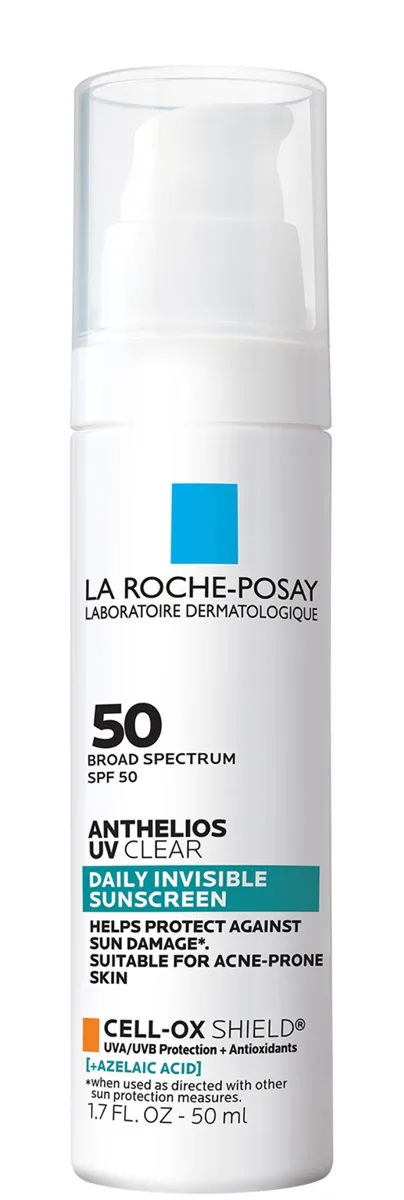 Derm Office Staple
 Anthelios UV Clear Sunscreen SPF 50
One of the only US chemical sunscreens that genuinely earns its 'for sensitive and breakout-prone skin' positioning. A photostable Anthelios filter system paired with a legitimate azelaic acid dose in a lightweight serum-fluid that disappears on every skin tone. Excellent for rosacea, acne, and post-inflammatory hyperpigmentation — and probably the single best daily sunscreen in the La Roche-Posay US lineup for those conditions.
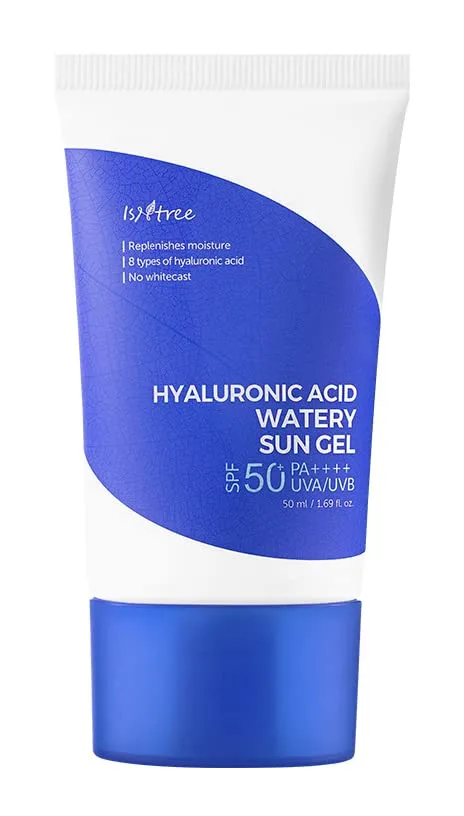 K-Beauty Daily SPF Standout
 Hyaluronic Acid Watery Sun Gel SPF 50+
One of the strongest everyday K-beauty sunscreens in the international market — modern European filters, no white cast, fragrance-free, niacinamide-boosted, and built around the brand's signature six-weight HA complex. At twenty-two dollars for 50ml, it's a case study in how much better a daily sunscreen can be when the formulator cares about both protection and wearability.
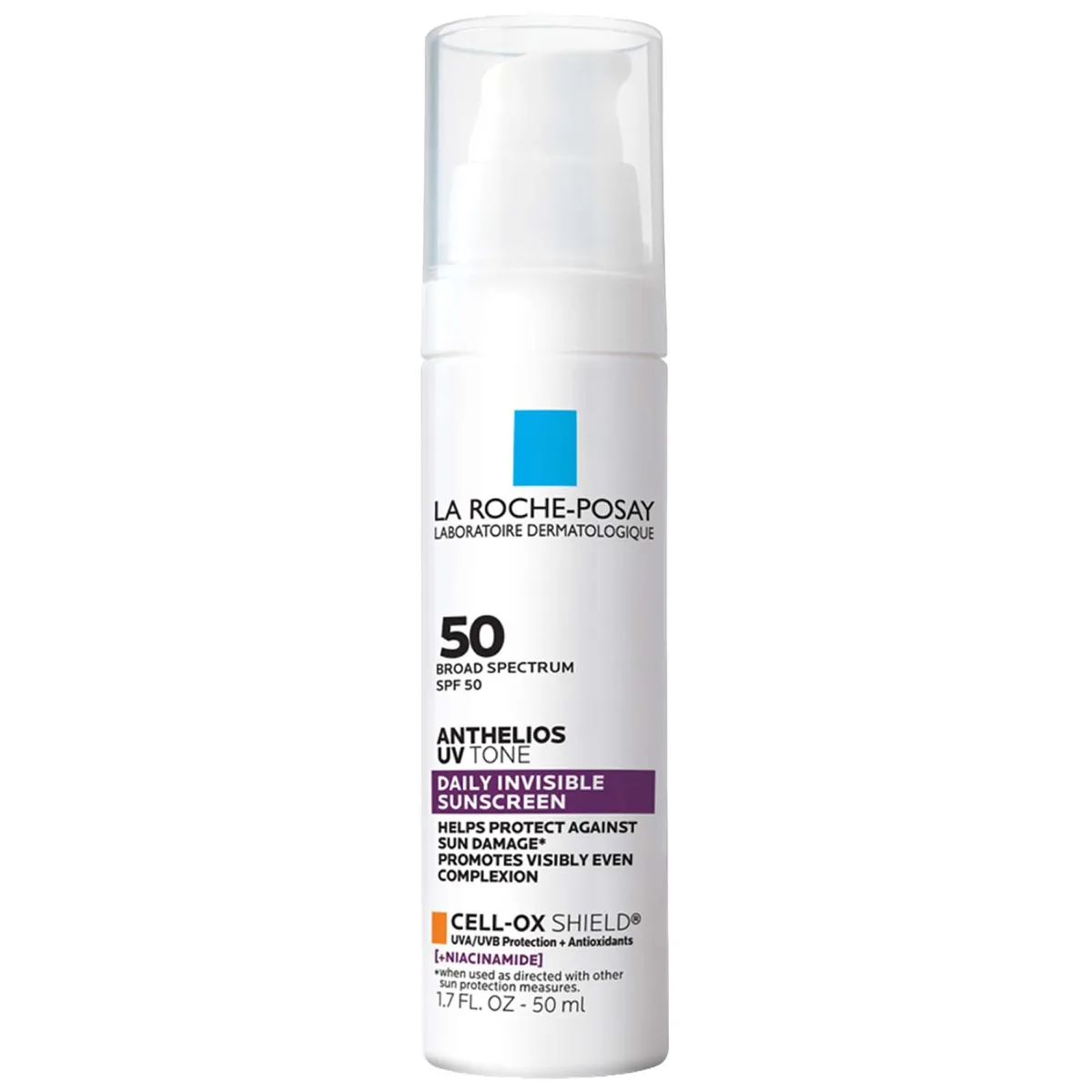 Derm Office Staple
 Anthelios UV Tone Daily Invisible Sunscreen SPF 50
La Roche-Posay's most thoughtful answer yet for hyperpigmentation-prone skin that needs daily SPF. A photostable avobenzone system reinforced with Oxynex ST, paired with a meaningful dose of niacinamide, in a serum-fluid base that goes on invisible on every skin tone. Expensive for 1.7 oz but legitimately well-built — and a rare chemical sunscreen that earns its 'for dark spots' marketing.
 Melasma-Grade Mineral Sunscreen
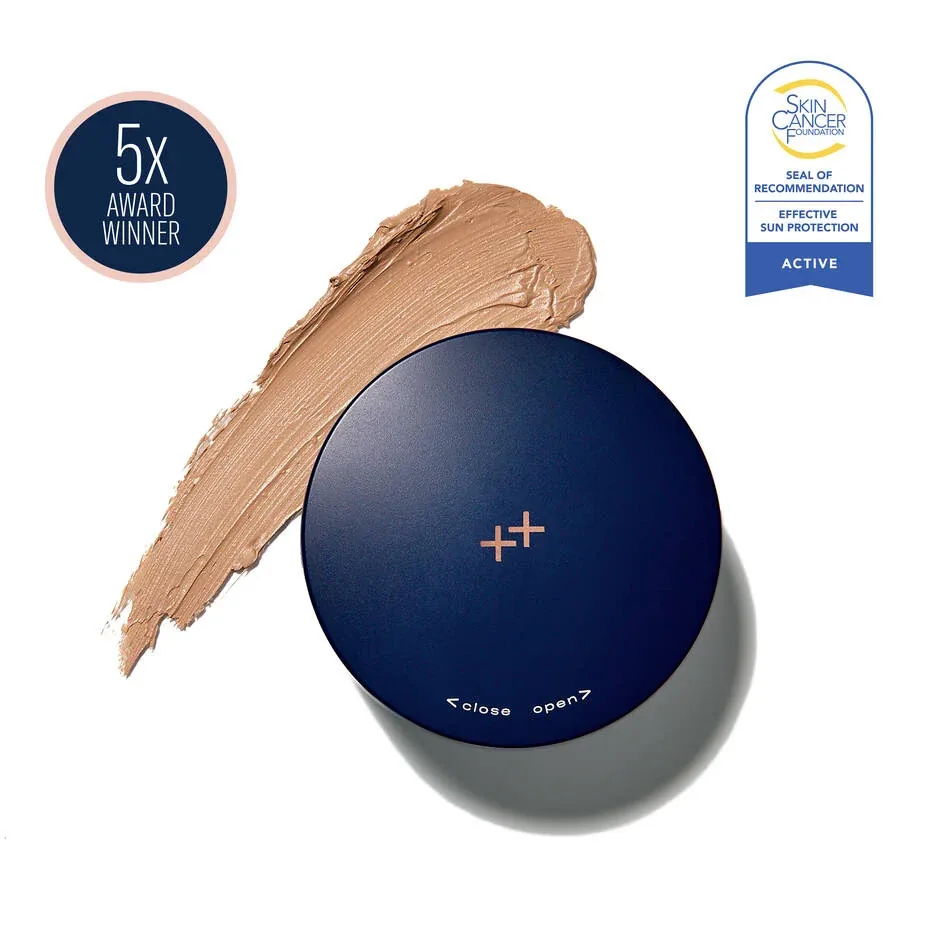
 sunbetter TONE SMART SPF 68
One of the most clinically useful tinted mineral sunscreens in the professional category. SPF 68 from a 100% mineral formula, iron oxide tint that blocks visible light for melasma protection, and an unusually lightweight texture that doesn't feel like you're wearing high-concentration zinc. For patients with melasma or post-inflammatory hyperpigmentation, this is the category benchmark — and it's earned its Allure Best of Beauty wins.
 K-Beauty Cult Favorite
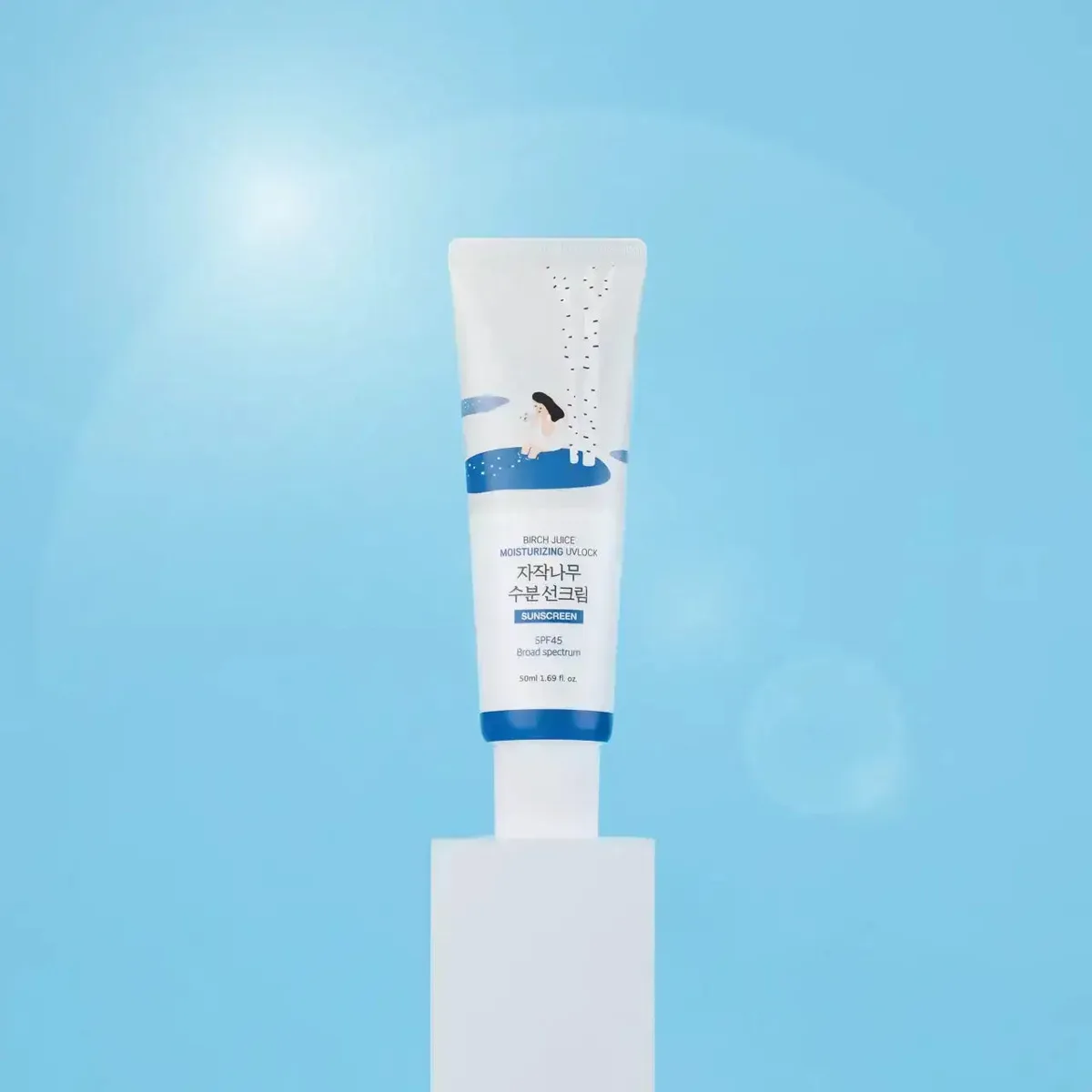
 Birch Juice Moisturizing Sun Cream SPF 50+
One of the best hybrid sunscreens in K-beauty right now — a 70% birch sap base, modern UVA filters you can't get in the US, and a finish that wears like a lightweight moisturizer. Broadly compatible, well-priced, and genuinely pleasant to apply, with minor tradeoffs for oily and fungal-acne-prone users.
 The K-Beauty Sunscreen That Changed Everything
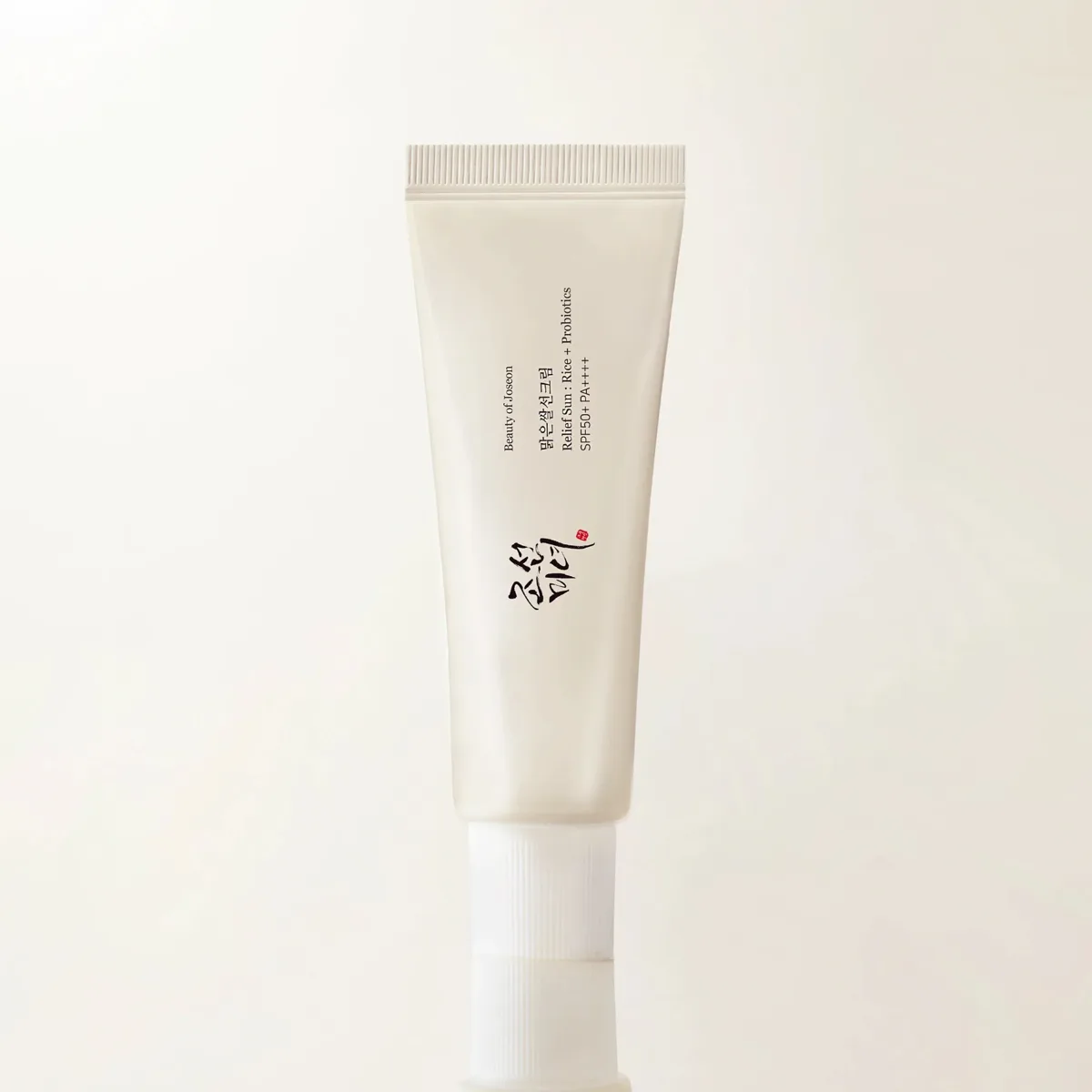
 Relief Sun: Rice + Probiotics SPF 50+
The sunscreen that rewrote the rules for what a $14 product could deliver. With independently verified SPF 50+, 30% rice extract, niacinamide, and a probiotic ferment complex, it offers protection and skincare benefits that rival products three times its price. The texture that feels like wearing nothing on your face is the reason it went viral — and stayed there.
This review reflects our independent analysis of publicly available ingredient data, manufacturer claims, and verified user reviews. We are reader-supported — Amazon links may earn us a commission at no cost to you. We do not accept paid placements; rankings are based solely on the evidence.