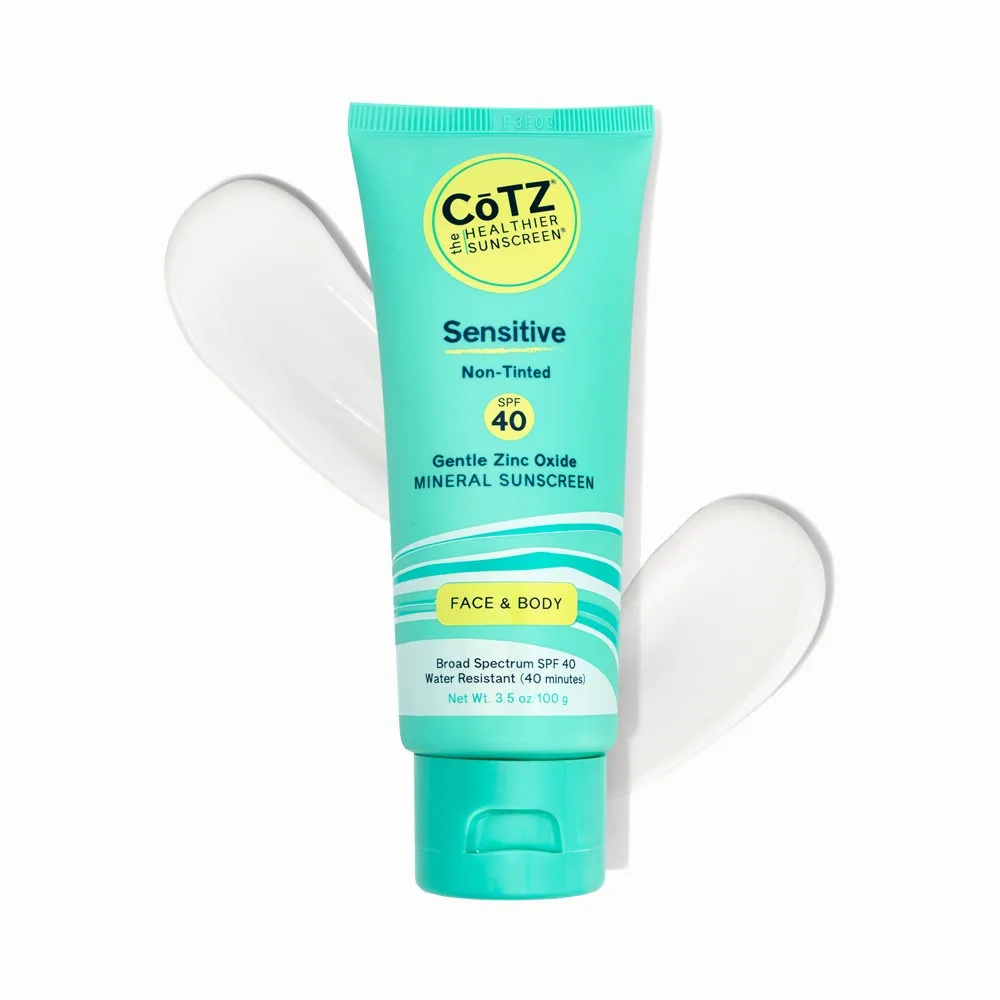
A dermatologist-developed 20% zinc oxide mineral sunscreen that has earned its reputation as a go-to recommendation for rosacea, post-procedure recovery, and pediatric use. The formulation is exactly what sensitive skin needs — no fragrance, no chemical filters, no titanium dioxide — and the price is reasonable for what you're getting. The only real tradeoff is white cast, which is manageable on fair to light skin but becomes a real concern on deeper tones.
Sensitive SPF 40 Mineral Sunscreen
A dermatologist-developed 20% zinc oxide mineral sunscreen that has earned its reputation as a go-to recommendation for rosacea, post-procedure recovery, and pediatric use. The formulation is exactly what sensitive skin needs — no fragrance, no chemical filters, no titanium dioxide — and the price is reasonable for what you're getting. The only real tradeoff is white cast, which is manageable on fair to light skin but becomes a real concern on deeper tones.
Score Breakdown
Where this product gains points and where it loses them — broken down across the four scoring pillars.
A genuinely excellent dermatologist-developed mineral sunscreen with maximum-strength zinc oxide, no chemical filters, no fragrance, and a track record of tolerance in sensitive and post-procedure populations. The white cast is the only real concern, and it's manageable at application.
Pros & Cons
- ✓Maximum allowable 20% zinc oxide for true broad-spectrum protection
- ✓No chemical filters, titanium dioxide, or fragrance to trigger sensitive skin
- ✓Fragrance-free formulation appropriate for rosacea and post-procedure use
- ✓Skin Cancer Foundation Seal of Recommendation
- ✓Safe for children six months and older
- ✓Reef-safe and compliant with Hawaii and Key West sunscreen regulations
- ✓Fair price relative to dermatologist-office sensitive-skin sunscreens
- ✗Significant white cast on medium and deep skin tones
- ✗Thick texture requires firm rubbing to blend
- ✗Not the most cosmetically elegant option for everyday use
- ✗Only 40 minutes of water resistance
Full Review
Most sunscreens are designed with cosmetic elegance as the primary goal and skin tolerance as the secondary consideration. The brand's formulators start with a desired finish — weightless, invisible, glowy, whatever the current aesthetic trend demands — and then try to deliver UV protection inside those constraints. It works well for the average consumer with healthy, resilient skin. It doesn't work at all for the patients dermatologists see most often: people with rosacea whose skin reacts to fragrance and certain filters, people recovering from lasers or chemical peels whose barriers can't tolerate anything beyond pure zinc, kids whose thin skin absorbs chemical filters into their bloodstream more readily than adults, and patients with photosensitive conditions who need maximum UV blocking at all costs. Cotz was built for that second group. The brand name — an acronym for 'Contains Only Titanium and Zinc' — tells you everything about the original design brief, and the Sensitive SPF 40 formulation is the most disciplined product in the line. It uses 20% zinc oxide, the maximum allowable concentration under FDA regulations, with no titanium dioxide and no chemical filters. There is literally nothing else in the sunscreen actives profile. That simplicity is the entire value proposition. Twenty percent zinc oxide is as much broad-spectrum protection as any mineral sunscreen commercially available, and the absence of any chemical filters or blended titanium means there's nothing in the active profile that can trigger a photosensitive or sensitive-skin reaction. For patients recovering from ablative lasers, chemical peels, or Mohs surgery, this is exactly the protection their dermatologists want them wearing. For rosacea patients whose skin flares with even mild irritants, it's one of the few sunscreens they can reliably tolerate. For parents of young children, it's fragrance-free, chemical-filter-free, and safe for daily use. The inactive ingredients reflect the same discipline. The formula is built on a silicone emollient matrix — dimethicone, cyclomethicone, and silicone crosspolymers — that suspends the high zinc concentration evenly and prevents the clumping and patchiness that 20% zinc often creates in aqueous emulsion bases. There's a trace amount of tetrahexyldecyl ascorbate (a stable fat-soluble vitamin C) and tocopheryl acetate (vitamin E) for supplemental antioxidant support, which is more than most pure mineral sunscreens bother including. No fragrance, no essential oils, no botanical extracts that could trigger allergic reactions. The ingredient list reads like a dermatologist's safe prescription rather than a marketing deck. The use experience is where the tradeoffs become visible. This is a thick, opaque white lotion. It does not blend weightlessly. You dispense a generous amount — genuinely a quarter-teaspoon for the face alone, because that's what the SPF rating requires — warm it between your fingertips, and work it into skin in sections. On fair to light skin, the white cast fades to a soft matte finish after about a minute. On medium skin tones, you see a pale ghostiness that looks okay in natural daylight but can photograph oddly in flash. On deep skin tones, the white cast is significant and you should look at a tinted alternative like Cotz Face Natural Skin Tone or a different brand's deep-tone mineral formula. This is the honest limitation of high-percentage zinc oxide sunscreens, and Cotz doesn't pretend otherwise. The price is reasonable. At $31 for 100g, you're paying mid-market for a formulation that rivals dermatologist-office sunscreens costing twice as much. A single tube lasts about two months with face-only daily use, which comes out to roughly $15 per month for maximum-zinc broad-spectrum protection — that's a genuinely good deal by prescription-adjacent sunscreen standards. Overall, this is one of the sunscreens that earns the 'if you need it, you really need it' designation. It's not the most cosmetically elegant option on the market, and it's not the right pick if white cast is a dealbreaker for your daily routine. But for sensitive skin, post-procedure recovery, pediatric use, or anyone prioritizing maximum broad-spectrum protection over aesthetics, it's one of the best mineral sunscreens available — and it's earned its place in dermatology offices for two decades running.
Formula
Key Ingredients
The hero actives that drive this product's performance.
| Ingredient | Function | Evidence |
|---|---|---|
| Zinc Oxide 20% (20%) | The maximum allowable concentration of zinc oxide in a US sunscreen, providing true broad-spectrum UVA and UVB protection through physical reflection and absorption — in this formula it's the entire sunscreen story, with no titanium dioxide or chemical filters diluting the approach. | well-established |
| Silicone Emollient Matrix | The dimethicone and cyclomethicone blend is what makes 20% zinc oxide cosmetically wearable — it suspends the mineral particles evenly, prevents them from clumping on skin, and delivers a smoother finish than traditional emulsion bases allow at this high a zinc concentration. | well-established |
| Tetrahexyldecyl Ascorbate (Stable Vitamin C) | A fat-soluble vitamin C derivative added in trace amounts to provide supplemental antioxidant defense against any UV-induced free radicals that make it past the zinc barrier — a small but useful finishing touch that most basic mineral sunscreens don't bother with. | promising |
Full INCI List · pH 7
Active: Zinc Oxide 20%. Inactive: Water, C12-15 Alkyl Benzoate, Cyclopentasiloxane, Cyclohexasiloxane, PEG-10 Dimethicone, Dimethicone, Dimethicone Crosspolymer, Glycerin, Polyhydroxystearic Acid, Dimethicone/Vinyl Dimethicone Crosspolymer, Dimethiconol, Cetyl PEG/PPG-10/1 Dimethicone, Triethoxycaprylylsilane, Hydrogen Dimethicone, Polyglyceryl-4 Isostearate, PEG-30 Dipolyhydroxystearate, Microcrystalline Wax, Stearyl Dimethicone, Polysorbate 20, Tetrahexyldecyl Ascorbate, Tocopheryl Acetate, Sodium Chloride, Caprylyl Glycol, Caprylhydroxamic Acid, Disodium EDTA, Triethanolamine
Product Flags
✓ Fragrance Free✓ Alcohol Free✓ Oil Free✗ Silicone Free✓ Paraben Free✓ Sulfate Free✓ Cruelty Free✓ Vegan✓ Fungal Acne Safe
Compatibility
Skin Match
Best For
sensitive normal combination dry
Works For
Not Ideal For
Addresses These Conditions
rosacea sensitivity hyperpigmentation melasma post procedure eczema compromised skin barrier
Routine Step
sunscreen
Time of Day
AM
Pregnancy Safe
Yes ✓
Layering Tips
Apply as the final step of your morning routine, using a generous quarter-teaspoon amount for the face alone. Allow one to two minutes to set before applying makeup. Reapply every two hours during sun exposure or after sweating.
Results Timeline
Immediate full broad-spectrum UV protection; visible reduction in sun-induced hyperpigmentation and redness after 4-8 weeks of consistent daily use; cumulative photoprotective benefits over months and years.
Pairs Well With
hydrating-serumceramide-moisturizerniacinamide-serum
Sample AM Routine
- Gentle cleanser
- Hydrating toner
- Vitamin C serum
- Moisturizer
- Cotz Sensitive SPF 40 Mineral Sunscreen
Sample PM Routine
- Cleanser
- Treatment serum
- Night cream
Evidence
Who Should Skip
- Significant white cast on medium and deep skin tones
- Thick texture requires firm rubbing to blend
- Not the most cosmetically elegant option for everyday use
- Only 40 minutes of water resistance
Science & Expert Perspective
The Science
The formulation's efficacy rests on one of the most robust evidence bases in dermatological skincare — zinc oxide as a broad-spectrum UV filter. Zinc oxide at concentrations of 15% and higher provides genuine broad-spectrum protection covering UVB and the full UVA range, including UVA1 which is responsible for most photoaging and is poorly covered by older chemical filters. Peer-reviewed research has extensively documented zinc oxide's photoprotective mechanism, which combines physical reflection, scattering, and absorption of UV radiation. At 20%, this formulation uses the maximum concentration allowed under FDA monograph regulations, which delivers the upper limit of protection that a US over-the-counter mineral sunscreen can legally claim. The single-active approach — zinc oxide with no titanium dioxide or chemical filters — eliminates the interactions and compatibility issues that can occur in blended filter systems, and it removes every known photosensitizer and potential allergen from the active profile. The silicone-based inactive formulation is a deliberate cosmetic chemistry choice. Dimethicone and cyclomethicone provide an even dispersion matrix for the zinc oxide particles, preventing clumping that would create patchy application and inconsistent UV coverage. The silicone matrix also contributes to water resistance, though the product's 40-minute claim is modest compared to beach-specific formulations. The addition of tetrahexyldecyl ascorbate and tocopheryl acetate provides supplemental antioxidant defense against residual UV-induced free radicals, which is a thoughtful inclusion that aligns with current dermatological recommendations for antioxidant-plus-sunscreen combinations. The absence of fragrance, essential oils, and botanical extracts minimizes allergen exposure and makes this product one of the safest options for patients with contact sensitivities or compromised barriers. Clinical evidence for zinc oxide sunscreens in rosacea and post-procedure populations consistently favors high-zinc formulations over blended or chemical alternatives.
Dermatologist Perspective
Dermatologists widely recommend high-concentration zinc oxide sunscreens as first-line options for patients with sensitive skin, rosacea, post-procedure recovery needs, and pediatric photoprotection. Board-certified dermatologists note that 20% zinc oxide represents the maximum mineral UV protection available in an over-the-counter formulation, and this specific concentration is commonly prescribed for patients recovering from laser resurfacing, chemical peels, and other procedures where barrier compromise makes chemical filter sunscreens unsuitable. Cotz has maintained dermatologist recommendation for nearly two decades specifically because its formulation approach aligns with clinical needs — fragrance-free, single-active, and appropriate for the most reactive skin populations. For pediatric use, dermatologists frequently recommend this category of mineral sunscreen over chemical filter alternatives because children's thinner skin absorbs topical ingredients more readily and their endocrine systems are more sensitive to certain chemical filters. The white cast is the limitation most commonly raised by patients, and dermatologists typically acknowledge it honestly while emphasizing that cosmetic elegance is a secondary consideration behind maximum UV protection for clinical populations.
Guidance
Usage Guide
How to Use
Apply generously to clean, moisturizer-prepped skin as the final step of your morning routine, using approximately a quarter-teaspoon for face alone or a full tablespoon for face, neck, and décolletage. Warm between fingertips and work into skin in sections, blending thoroughly to minimize white cast. Allow one to two minutes to set before applying makeup. Reapply every two hours during sun exposure or after sweating, swimming, or towel drying. For children under two years old, consult a pediatrician before use. Do not apply to damaged or broken skin unless specifically directed by a dermatologist.
Value Assessment
At $31 for 100g, this sunscreen is priced in the middle of the mineral sunscreen market and represents solid value for a 20% zinc oxide formulation. Compared to dermatology-office alternatives like EltaMD UV Pure ($33 for 56ml, lower zinc percentage) or SkinCeuticals Sheer Physical ($38 for 50ml, blended filters), Cotz delivers more zinc for less money per milliliter. Drugstore alternatives from Blue Lizard or Neutrogena Sheer Zinc are cheaper but typically use lower zinc concentrations and include titanium dioxide or additional filters. Cotz does not offer a larger body-size version of this specific formulation, which limits extended outdoor use value. The verdict: a genuinely good value for users who specifically need maximum zinc concentration in a fragrance-free formulation; fairly priced relative to its direct competitors.
Who Should Buy
Sensitive, rosacea-prone, or reactive skin types who need maximum broad-spectrum protection without fragrance or chemical filters. Especially good for users recovering from laser treatments, chemical peels, or other dermatological procedures. Also a strong pick for parents looking for a pediatric-safe family sunscreen and for anyone prioritizing reef-safe, fragrance-free mineral protection over cosmetic elegance.
Who Should Skip
Users with medium to deep skin tones who find white cast unacceptable should look at tinted mineral alternatives like EltaMD UV Elements, ILIA Super Serum Skin Tint, or a Cotz tinted option. Skip if you prioritize weightless, invisible finishes for daily makeup wear. Also skip if you spend extensive time in water — the 40-minute water resistance is less than beach-specific sunscreens provide.
Ready to try Cotz Sensitive SPF 40 Mineral Sunscreen?
Details
Details
Texture
Thick opaque white lotion that requires firm rubbing to blend
Scent
Fragrance-free with faint neutral mineral note
Packaging
White squeeze tube with flip cap
Finish
mattenon-greasy
What to Expect on First Use
Dispense a generous amount — about a quarter teaspoon for face alone — and apply in sections, warming between fingertips to help it spread. Expect a visible white cast during application that settles into a lighter finish after one to two minutes, though users with medium to deep skin tones will see residual ghostiness. The formula sets to a matte finish that holds up under makeup.
How Long It Lasts
About 2 months with daily face-only use, or 3-4 weeks with full-body application
Period After Opening
12 months
Best Season
All Year
Certifications
Skin Cancer Foundation RecommendedCruelty-FreeFragrance-Free
Background
The Why
Cotz was founded in 2004 by a team focused specifically on mineral-only sunscreen for sensitive skin and photosensitive conditions. The brand name is an acronym — 'Contains Only Titanium and Zinc' — though this specific Sensitive formulation drops the titanium dioxide entirely in favor of a single-active 20% zinc approach for maximum gentleness.
About Cotz Legacy Brand (20+ years)
Cotz (which stands for 'contains only titanium and zinc') was developed by dermatologists in 2004 as a dedicated mineral sunscreen brand. The line has long-standing recommendation from dermatologists treating photosensitive skin, post-procedure patients, and pediatric users, and is commonly stocked in dermatology offices and medical distribution channels.
Brand founded: 2004 · Product launched: 2006
Myth vs. Reality
Myths & Misconceptions
Myth
Mineral sunscreens are always less effective than chemical sunscreens.
Reality
A 20% zinc oxide formulation like this provides true broad-spectrum UVA and UVB protection at a level that meets or exceeds most chemical sunscreens. The efficacy gap narrowed significantly once high-concentration zinc formulations became widely available; the real differences today are aesthetic, not protective.
Myth
Non-nano zinc oxide doesn't work as well as the nanoparticle version.
Reality
Both non-nano and nano zinc oxide provide equivalent UV protection at the same concentration — the difference is particle size, which affects appearance and spreadability, not efficacy. If you see white cast, it's typically because the formulation uses larger non-nano particles for aesthetic or safety reasons, not because it's underperforming.
FAQ
Frequently Asked Questions
How does this compare to EltaMD UV Pure?
Both are zinc-plus-titanium or zinc-only mineral sunscreens recommended for sensitive skin. Cotz Sensitive uses 20% zinc oxide alone, while EltaMD UV Pure uses a 10% zinc oxide plus 5.5% titanium dioxide blend. Cotz has a higher zinc concentration and no titanium; EltaMD tends to be slightly more cosmetically elegant with less white cast. Choose based on whether you prioritize maximum zinc or smoother aesthetics.
Is this safe for babies and children?
Yes — the fragrance-free, chemical-filter-free formulation is commonly recommended by pediatric dermatologists for children six months and older. The thick texture and white cast are less of a concern for kids than cosmetic elegance.
Will this work under makeup?
Yes, with some patience. Apply a generous amount, allow one to two minutes to set, then apply primer and foundation. The silicone matrix helps makeup layer cleanly, though darker foundations may need to be mixed with a drop of skin-tone moisturizer to balance the white cast.
How much white cast should I expect?
At 20% zinc oxide with no tinting, the white cast is noticeable on medium to dark skin tones. Fair to light skin users typically see minimal residue after full blending; medium tones see a pale ghostiness; deep skin tones see significant white cast that may not be acceptable for daily use without a tinted alternative.
Is this reef-safe?
Yes — the zinc-only, chemical-filter-free formulation meets the criteria used in most reef-safe sunscreen guidelines. It's allowed in Hawaii, Key West, and other jurisdictions that have banned oxybenzone and octinoxate.
How long will a 100g tube last?
For face-only daily use, about two months. For face and neck, closer to six weeks. If you're using it on body areas for beach days or outdoor activities, a single tube will cover two to three full-body applications.
Can I use this on the beach?
Yes, but understand the water resistance claim is only 40 minutes. Reapply every 40 minutes in water or after heavy sweating, and apply generously — mineral sunscreens underperform their SPF rating when applied sparingly.
Community
Community Voices
Common Praise
"Zero irritation even on rosacea skin"
"Maximum zinc concentration for true broad-spectrum"
"No chemical filters or fragrance"
"Safe for post-procedure recovery"
"Reliable family sunscreen"
Common Complaints
"Noticeable white cast on medium and dark skin tones"
"Thick texture requires patience to blend"
"Not as cosmetically elegant as tinted or chemical alternatives"
Notable Endorsements
Skin Cancer Foundation Seal of RecommendationDermatologist-recommended for rosacea and post-procedure useEWG verified for lower-hazard formulation
Appears In
best zinc oxide sunscreen best mineral sunscreen for rosacea best sunscreen for sensitive skin best fragrance free mineral sunscreen best post procedure sunscreen
Related Conditions
rosacea sensitivity hyperpigmentation melasma post procedure
Related Ingredients
You Might Also Like
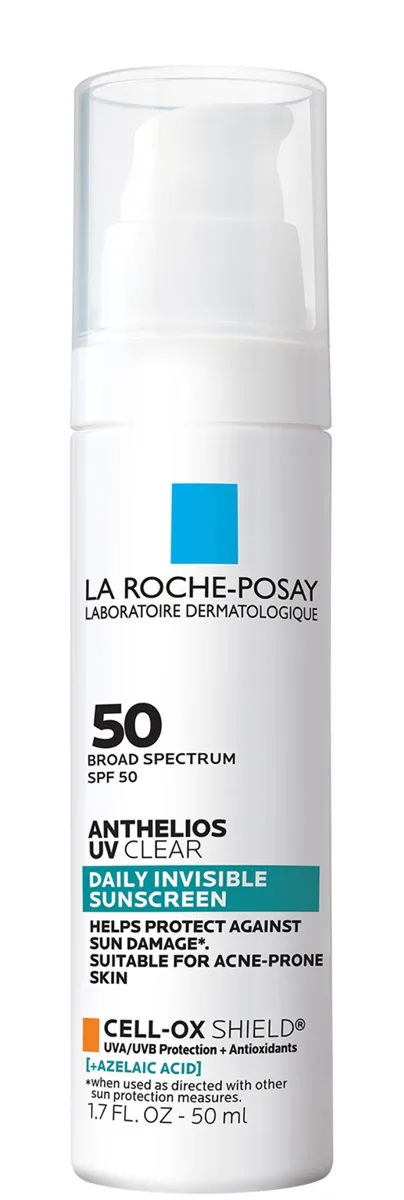 Derm Office Staple
 Anthelios UV Clear Sunscreen SPF 50
One of the only US chemical sunscreens that genuinely earns its 'for sensitive and breakout-prone skin' positioning. A photostable Anthelios filter system paired with a legitimate azelaic acid dose in a lightweight serum-fluid that disappears on every skin tone. Excellent for rosacea, acne, and post-inflammatory hyperpigmentation — and probably the single best daily sunscreen in the La Roche-Posay US lineup for those conditions.
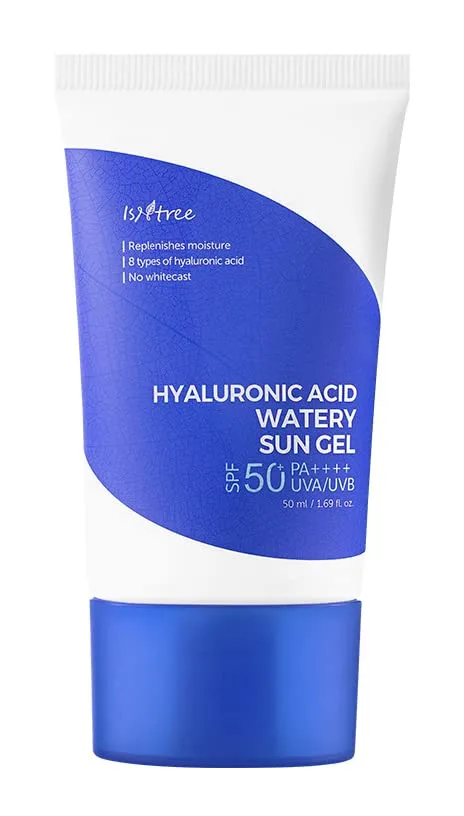 K-Beauty Daily SPF Standout
 Hyaluronic Acid Watery Sun Gel SPF 50+
One of the strongest everyday K-beauty sunscreens in the international market — modern European filters, no white cast, fragrance-free, niacinamide-boosted, and built around the brand's signature six-weight HA complex. At twenty-two dollars for 50ml, it's a case study in how much better a daily sunscreen can be when the formulator cares about both protection and wearability.
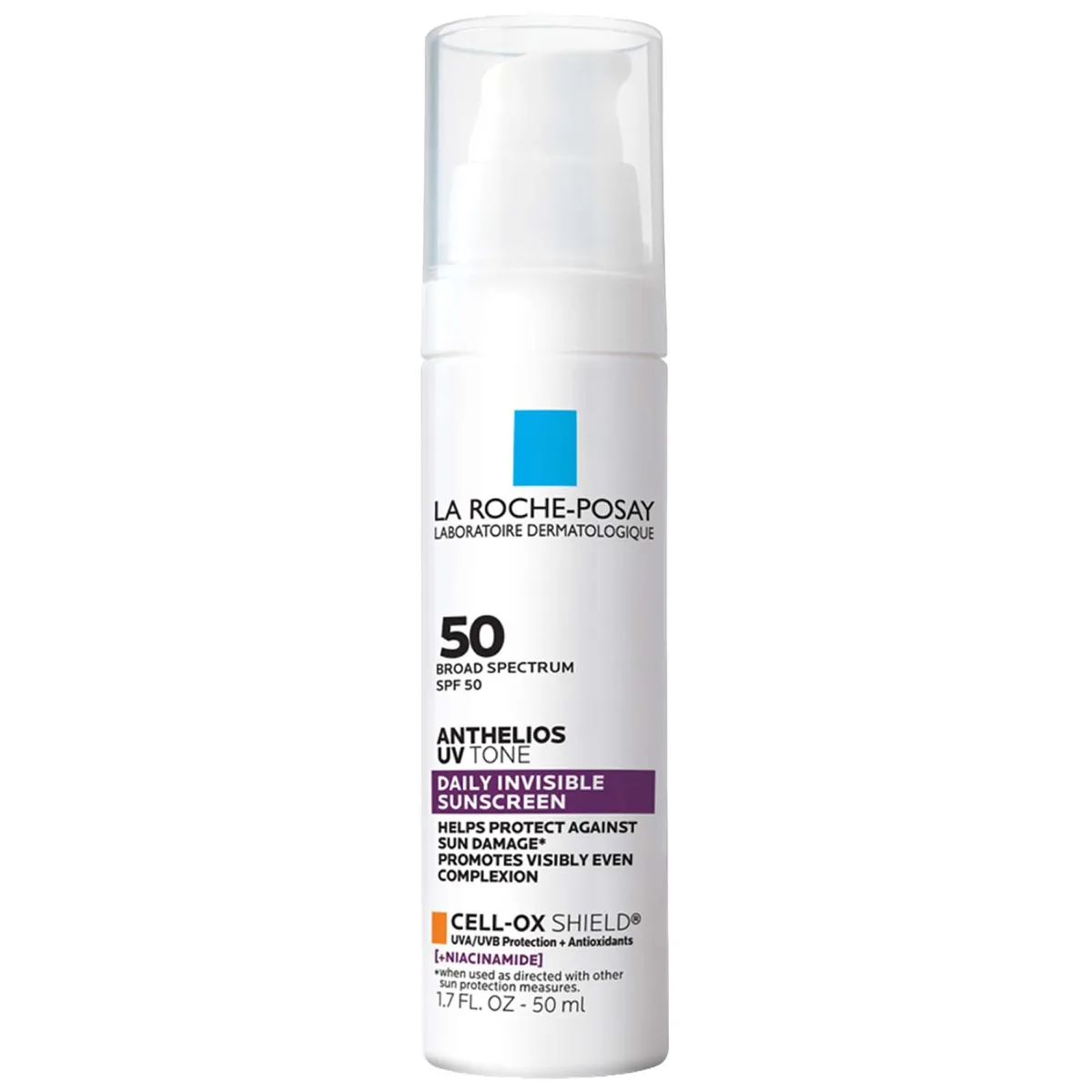 Derm Office Staple
 Anthelios UV Tone Daily Invisible Sunscreen SPF 50
La Roche-Posay's most thoughtful answer yet for hyperpigmentation-prone skin that needs daily SPF. A photostable avobenzone system reinforced with Oxynex ST, paired with a meaningful dose of niacinamide, in a serum-fluid base that goes on invisible on every skin tone. Expensive for 1.7 oz but legitimately well-built — and a rare chemical sunscreen that earns its 'for dark spots' marketing.
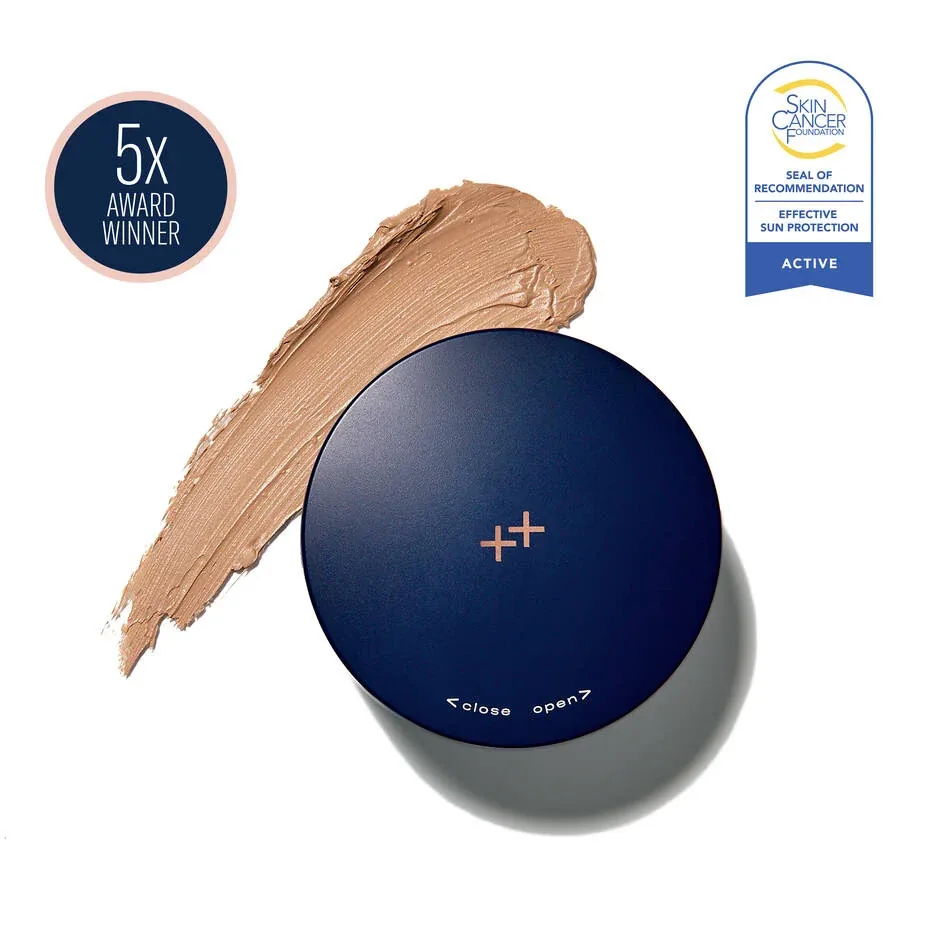 Melasma-Grade Mineral Sunscreen
 sunbetter TONE SMART SPF 68
One of the most clinically useful tinted mineral sunscreens in the professional category. SPF 68 from a 100% mineral formula, iron oxide tint that blocks visible light for melasma protection, and an unusually lightweight texture that doesn't feel like you're wearing high-concentration zinc. For patients with melasma or post-inflammatory hyperpigmentation, this is the category benchmark — and it's earned its Allure Best of Beauty wins.
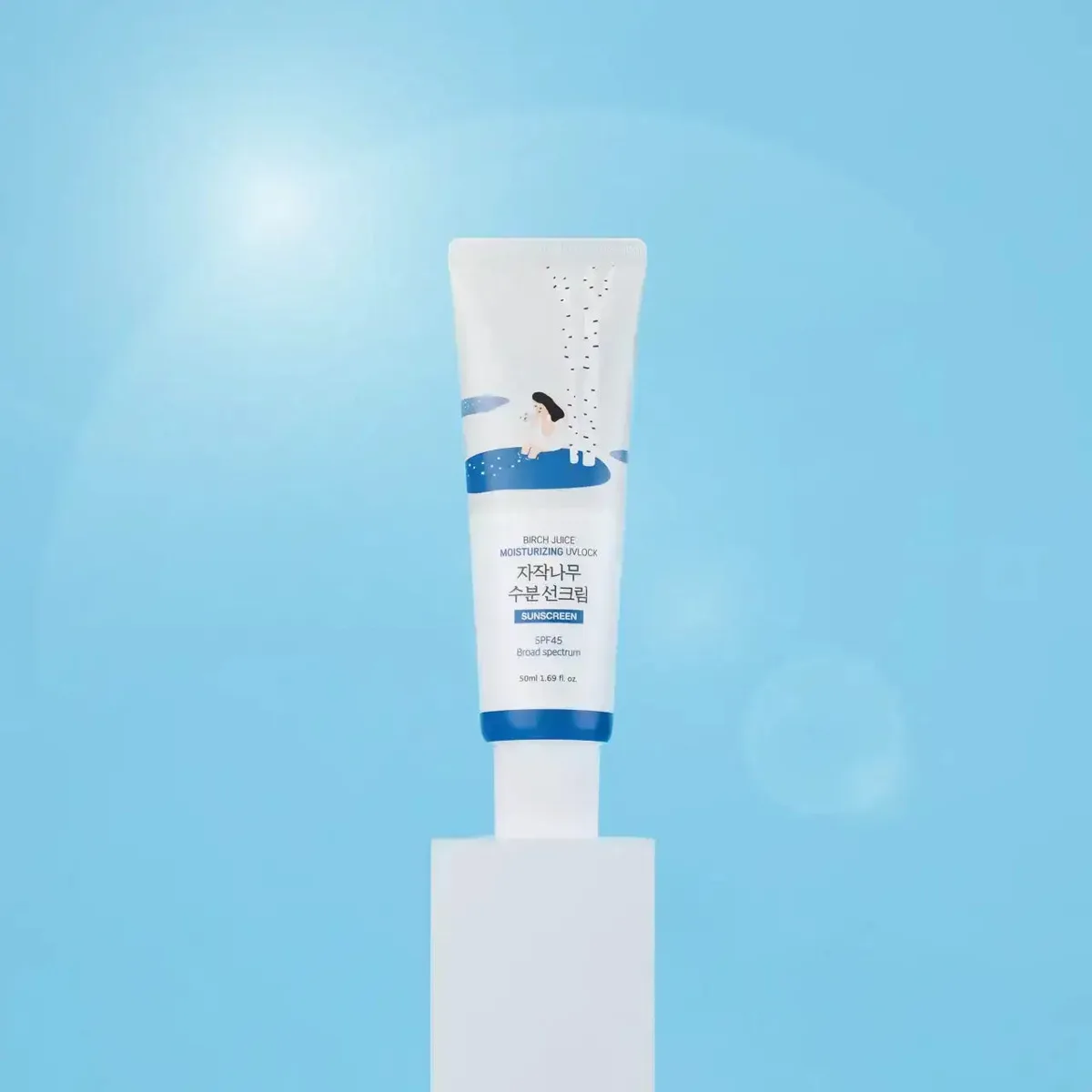 K-Beauty Cult Favorite
 Birch Juice Moisturizing Sun Cream SPF 50+
One of the best hybrid sunscreens in K-beauty right now — a 70% birch sap base, modern UVA filters you can't get in the US, and a finish that wears like a lightweight moisturizer. Broadly compatible, well-priced, and genuinely pleasant to apply, with minor tradeoffs for oily and fungal-acne-prone users.
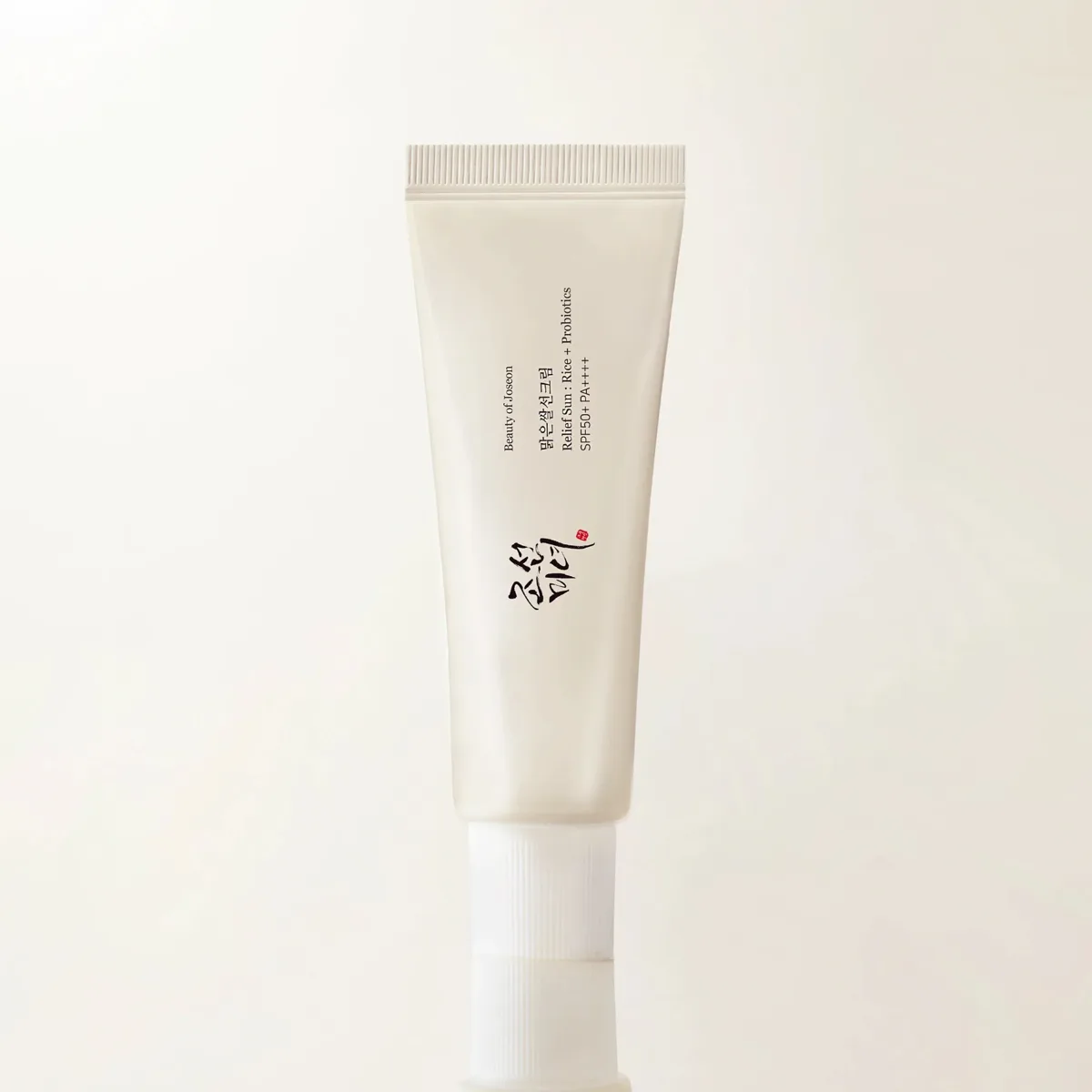 The K-Beauty Sunscreen That Changed Everything
 Relief Sun: Rice + Probiotics SPF 50+
The sunscreen that rewrote the rules for what a $14 product could deliver. With independently verified SPF 50+, 30% rice extract, niacinamide, and a probiotic ferment complex, it offers protection and skincare benefits that rival products three times its price. The texture that feels like wearing nothing on your face is the reason it went viral — and stayed there.
This review reflects our independent analysis of publicly available ingredient data, manufacturer claims, and verified user reviews. We are reader-supported — Amazon links may earn us a commission at no cost to you. We do not accept paid placements; rankings are based solely on the evidence.