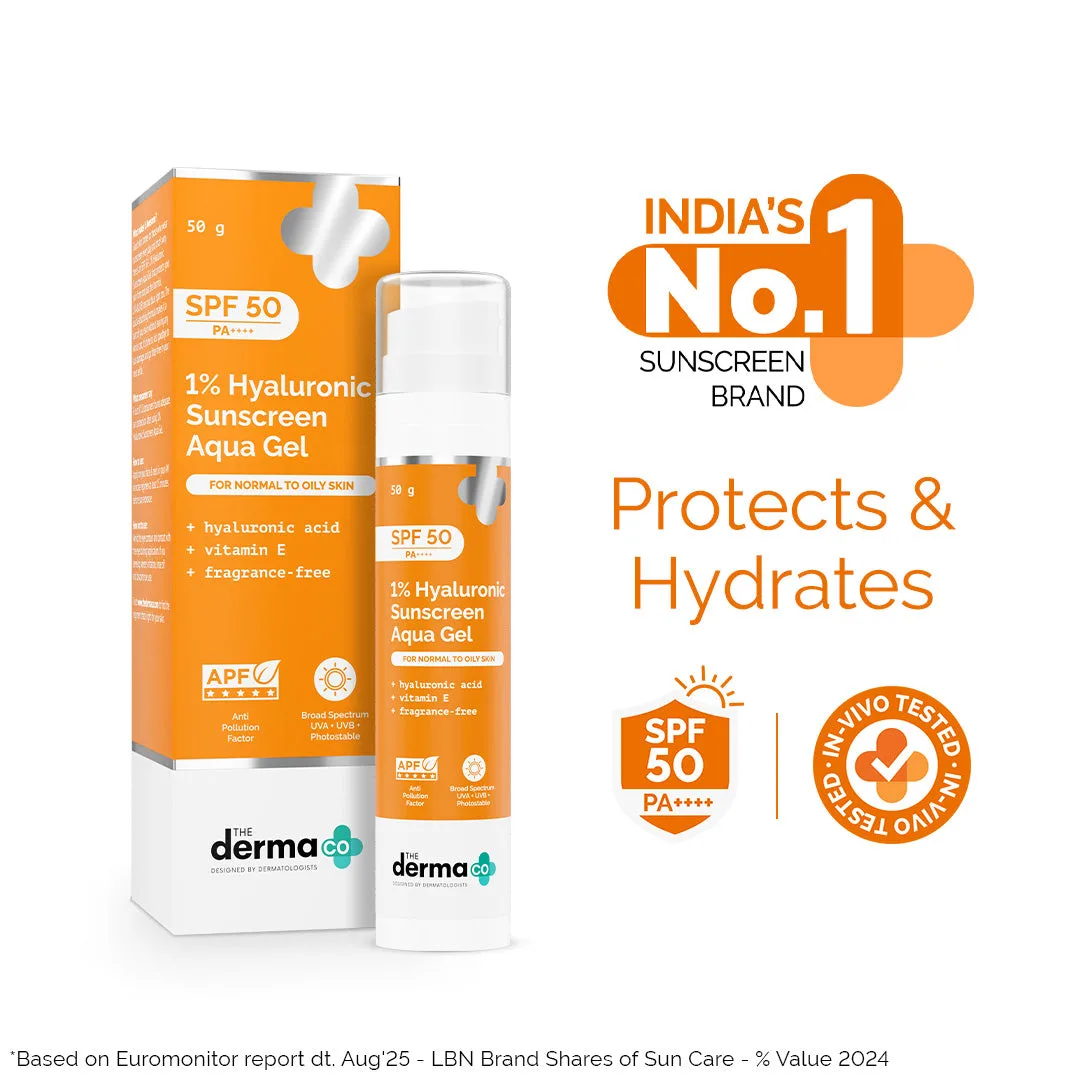
An aggressively priced hybrid aqua-gel sunscreen that punches well above its weight on hydration and UVA coverage, letting down mainly on its use of benzophenone-3 and a mild white cast on deeper skin tones. For daily Indian-climate use at under ten dollars, it's one of the stronger budget picks.
1% Hyaluronic Sunscreen SPF 50
An aggressively priced hybrid aqua-gel sunscreen that punches well above its weight on hydration and UVA coverage, letting down mainly on its use of benzophenone-3 and a mild white cast on deeper skin tones. For daily Indian-climate use at under ten dollars, it's one of the stronger budget picks.
Score Breakdown
Where this product gains points and where it loses them — broken down across the four scoring pillars.
Aggressively priced hybrid aqua gel sunscreen with genuine PA++++ UVA coverage, held back by the inclusion of benzophenone-3 and the lack of pregnancy compatibility.
Pros & Cons
- ✓Aggressively affordable SPF 50 with genuine PA++++ UVA coverage
- ✓Lightweight aqua-gel texture absorbs fast and feels cooling
- ✓1% hyaluronic acid provides meaningful surface hydration during wear
- ✓Fragrance-free formula suitable for most non-reactive skin
- ✓Sits well under makeup without pilling or breaking apart
- ✓Squeeze tube packaging encourages generous application
- ✓Widely available across Indian retail and e-commerce platforms
- ✓One of the better value picks for daily urban UV exposure
- ✗Contains benzophenone-3, a filter many dermatologists flag during pregnancy
- ✗Mild white cast visible on deeper skin tones before it settles
- ✗Water resistance claim is not backed by formal certification
- ✗Contains C12-15 alkyl benzoate, a mildly comedogenic ester
- ✗Not an ideal choice for highly sensitive or reactive skin
Full Review
Before 2020, the Indian sunscreen market had a stubborn shape: you could buy a cheap SPF that felt like paste, or you could spend serious money on an import that felt like water. There wasn't much in between. The Derma Co's 1% Hyaluronic Sunscreen Aqua Gel showed up that year with a deliberately pointed value proposition — SPF 50, PA++++, true aqua-gel texture, genuine hyaluronic acid at a claimed 1%, all for roughly the price of two coffees. It wasn't trying to be the best sunscreen in the world. It was trying to be the best sunscreen the average Indian consumer could actually buy every month without flinching, and on that specific brief, it succeeded.
Open the tube and the texture gives away the whole strategy. This is a watery gel, closer to an aloe essence than a traditional sunscreen lotion, and it spreads across the face in a single pass. A minute later the finish is dewy and lightly hydrated, not sticky, not tacky, not coated — a meaningful distinction in a country where summer humidity can turn conventional sunscreen into a slow-motion grease slick by noon. The 1% hyaluronic acid is doing visible work here. Combined with the glycerin and xylitol on the INCI list, it gives the gel a hydrating feel that lets many normal-to-oily users skip a separate daytime moisturizer, which is partly why the product picked up word-of-mouth momentum through the Indian skincare Instagram community in its first year.
The filter system is where the formula reveals its budget-hybrid logic. Octinoxate handles the bulk of the UVB burden, avobenzone delivers the UVA protection that earns the PA++++ rating, zinc oxide props the whole thing up and helps photostabilize the avobenzone, and benzophenone-3 — the one ingredient that raises eyebrows — is along for additional photostability and broader UVA reach. That last inclusion is the formula's weakest point. Benzophenone-3 has a longer history of contact sensitivity reports than most modern filters, it's one of the filters most flagged for reef and coral concerns, and it's typically avoided in pregnancy out of caution. If you're building a sunscreen routine for a sensitive child, a pregnant partner, or a reef dive trip, this isn't the one to pack.
On the other hand, if you're a healthy adult looking for a hydrating daily sunscreen at an accessible price, the formula works. The hydration claim is backed by real surface humectants. The UVA protection is real enough that PA++++ is achievable. The aqua-gel feel is gentle enough to layer under makeup without pilling, and the squeeze tube makes it easy to measure out the two-finger-length quantity you actually need. That's the hidden trap of cheap sunscreens in general — people use too little because they're afraid of running out — and at this price you can be generous without guilt.
The cast situation is worth being honest about. On fair and medium skin tones, any initial whiteness from the zinc settles within ten to fifteen minutes and essentially disappears. On deeper tones, there's a faint residual cast that some users tolerate and others don't. It's less pronounced than a pure mineral sunscreen, more pronounced than the newer Asian hybrid filter formulas that can cost three or four times as much. Your tolerance will depend on how you're using it — under a tinted moisturizer or foundation, it's a non-issue; bare-faced in a selfie, you might notice.
One other thing worth noting: the water and sweat resistance language on the packaging isn't backed by a formal water-resistance certification the way American or European sunscreens typically are. Treat this as a daily-wear sunscreen, not a swim-workout sunscreen, and reapply every two hours during serious sun exposure. For commute-to-office use, which is what most of its users actually buy it for, it does the job admirably.
Where this product lands in the broader sunscreen conversation depends on what you're comparing it against. Against a premium Asian hybrid sunscreen from the current generation, it's clearly a rung below on elegance and filter sophistication. Against the typical sub-ten-dollar sunscreen available in the Indian market three years ago, it's a genuine upgrade that's pulled the whole category forward. It's the kind of formulation that earns its shelf space not by being exceptional, but by being dependably good at a price almost anyone can afford. For a market where daily sunscreen adoption was historically low, that matters more than most review sites give it credit for.
Formula
Key Ingredients
The hero actives that drive this product's performance.
| Ingredient | Function | Evidence |
|---|---|---|
| Ethylhexyl Methoxycinnamate (Octinoxate) | The primary UVB filter in this gel and the reason the SPF 50 rating is achievable in such a lightweight aqua texture. Paired with zinc oxide and avobenzone in this formula, it handles the short-wave UV burden while the mineral and avobenzone handle UVA, a typical hybrid approach in Indian-market sunscreens. | well-established |
| Butyl Methoxydibenzoylmethane (Avobenzone) | The workhorse UVA filter in this aqua gel, responsible for the PA++++ rating. Because it's not stabilized with octocrylene here, the formulation leans on zinc oxide and benzophenone-3 to shore up UVA coverage and photostability. | well-established |
| Zinc Oxide | Provides mineral UVA/UVB coverage and helps photostabilize the avobenzone in this hybrid formula. Its presence also contributes to the slight white cast the gel can leave on deeper skin tones. | well-established |
| Hyaluronic Acid (1%) (1%) | The branded hook of this sunscreen. At 1% it provides meaningful surface hydration that counteracts the drying effect chemical filters can have, making the aqua gel feel closer to a hydrating essence than a typical sunscreen. | well-established |
| Vitamin E (Tocopheryl Acetate) | Adds antioxidant support that works alongside the UV filters to neutralize free radicals from any UV that slips through. Also helps stabilize the oil phase of this aqua gel. | well-established |
Full INCI List
Aqua, Ethylhexyl Methoxycinnamate, Zinc Oxide, Butyl Methoxydibenzoylmethane, Phospholipids, Glyceryl Stearate, Hyaluronic Acid, D-Alpha Tocopheryl Acetate, Benzophenone-3, Sodium Benzoate, Sodium Levulinate, Allantoin, Titanium Dioxide, Sodium Polyacrylate, Glycerin, Xylitol, Caprylic Acid, Dimethicone, Helianthus Annuus Seed Oil, 1,3 Butylene Glycol, C12-C15 Alkyl Benzoate, Aloe Barbadensis Leaf Juice, E-Ascorbic Acid, Phenoxyethanol, Melanin
Product Flags
✓ Fragrance Free✓ Alcohol Free✗ Oil Free✗ Silicone Free✓ Paraben Free✓ Sulfate Free✓ Cruelty Free✓ Vegan✗ Fungal Acne Safe
Comedogenic Ingredients
C12-15 Alkyl Benzoate
Potential Irritants
Benzophenone-3Ethylhexyl Methoxycinnamate
Common Allergens
Benzophenone-3
Compatibility
Skin Match
Best For
Works For
Not Ideal For
Addresses These Conditions
sun damage dehydration aging dullness
Use With Caution
Routine Step
sunscreen
Time of Day
AM
Pregnancy Safe
No ✗
Layering Tips
Apply as the final AM step after moisturizer, using at least two finger lengths for the face. Reapply every two hours of sun exposure. The aqua-gel texture layers well under makeup.
Results Timeline
Immediate hydration and sun protection on application. Long-term photoaging prevention is cumulative over months and years of consistent daily use — the primary anti-aging benefit of any sunscreen.
Pairs Well With
niacinamidehyaluronic-acid-serumsvitamin-c
Sample AM Routine
- Gentle cleanser
- Hydrating toner
- Niacinamide serum
- Moisturizer
- The Derma Co 1% Hyaluronic Sunscreen SPF 50
Evidence
Who Should Skip
- Contains benzophenone-3, a filter many dermatologists flag during pregnancy
- Mild white cast visible on deeper skin tones before it settles
- Water resistance claim is not backed by formal certification
- Contains C12-15 alkyl benzoate, a mildly comedogenic ester
Science & Expert Perspective
The Science
The filter combination in this sunscreen is a textbook budget-hybrid approach for achieving high UVB and UVA protection cost-effectively. Ethylhexyl methoxycinnamate (octinoxate) is one of the most efficient UVB absorbers available, with decades of regulatory approval across global markets. Its peak absorption around 311 nm covers the most erythemogenic UVB wavelengths, making it a reliable workhorse for SPF 50 claims in gel bases where higher filter loads would compromise texture.
Avobenzone (butyl methoxydibenzoylmethane) is the primary UVA filter responsible for the PA++++ rating. Avobenzone's well-documented photostability challenge is typically managed with octocrylene in Western sunscreens; in this formula, the role is split between zinc oxide — which has been shown in published photostability studies to protect avobenzone during UV exposure — and benzophenone-3, which contributes both additional UVA coverage and photostabilization through quenching mechanisms.
The PA++++ rating itself corresponds to a Persistent Pigment Darkening protection factor of 16 or higher, a threshold only achievable when the UVA filter system delivers substantial long-wave UVA coverage. Independent in-vivo testing cited by The Derma Co supports the rating, though the raw data isn't publicly published. This matters because UVA is the primary driver of photoaging, pigmentation, and long-term skin cancer risk, and a PA++++ rating at this price is uncommon in the Indian market.
The 1% hyaluronic acid claim and the presence of glycerin and xylitol provide humectant activity that reduces the tight, dry feel that traditional chemical sunscreens often produce. There's published evidence that pairing humectant ingredients with sunscreen actives can improve user compliance — the biggest determinant of real-world sunscreen efficacy.
Dermatologist Perspective
Dermatologists practicing in India frequently recommend budget sunscreens like this one because daily sunscreen compliance remains one of the single biggest modifiable factors in preventing photoaging and skin cancer in their patient population. A sunscreen that costs a few hundred rupees and feels pleasant enough to wear every morning will outperform a premium product that sits unused in a drawer. That said, board-certified dermatologists typically steer pregnant patients, patients with highly reactive skin, and patients with a history of benzophenone contact allergy toward pure mineral alternatives. Dermatologists also commonly reinforce the two-finger-length application guideline with this product, because the aqua-gel texture feels so light that many users apply far less than the labeled SPF requires — which proportionally reduces the actual protection achieved.
Guidance
Usage Guide
How to Use
Apply as the final step in your AM routine, after moisturizer and before makeup. Use two full finger lengths — the length of your index and middle finger from base to tip — for the face and neck, which delivers approximately the 1.25 ml needed to achieve the labeled SPF 50 protection. Pat gently until fully absorbed, which takes under a minute. Reapply every two hours during direct sun exposure, and after swimming or heavy sweating. The gel layers well under most Indian-market foundations and tinted moisturizers without pilling.
Value Assessment
At roughly $8 for 50 g, this is one of the strongest value picks in the SPF 50 PA++++ category, particularly in the Indian market where it is primarily sold. The larger 80 g size offers slightly better per-gram value for committed users. Very few sunscreens in this price bracket match the hydration feel, the UVA rating, and the elegant gel texture all at once. The one caveat on value: if you're shopping internationally and can easily access modern Asian hybrid sunscreens with more contemporary filter systems, the small premium for those often buys you a formulation without benzophenone-3 and with measurably lower white cast. For daily Indian-climate use on a budget, though, the value case is strong.
Who Should Buy
Normal to oily skin types in hot or humid climates who want genuine SPF 50 and PA++++ protection at a truly affordable price, and who want a sunscreen light enough to wear daily without fuss. A good entry point for anyone building their first proper sunscreen habit.
Who Should Skip
Anyone pregnant or nursing, anyone with a history of chemical filter sensitivity or benzophenone contact allergy, anyone with deeply pigmented skin who is cast-averse, and anyone specifically seeking a formula without octinoxate or benzophenone-3 for environmental or health reasons.
Ready to try The Derma Co 1% Hyaluronic Sunscreen SPF 50?
Details
Details
Texture
Lightweight watery aqua gel that spreads quickly and absorbs within a minute
Scent
Neutral — essentially scent-free
Packaging
Squeeze tube with flip cap
Finish
dewylightweightfast-absorbing
What to Expect on First Use
Feels closer to a hydrating essence than a typical sunscreen on first application. Most users notice immediate comfort and hydration; some with deeper skin tones notice a faint white cast from the zinc oxide that settles within 10-15 minutes.
How Long It Lasts
About 1-1.5 months with daily full-face application at the recommended quantity
Period After Opening
12 months
Best Season
All Year
Background
The Why
The Derma Co launched in 2020 as Honasa Consumer's dermatologist-oriented sister brand to Mamaearth, targeting Indian consumers who wanted a clinical-feeling direct-to-consumer line at drugstore prices. The 1% Hyaluronic Sunscreen became one of its breakout SKUs because it filled a gap the domestic market had long felt — a hydrating, non-greasy SPF 50 that didn't cost the equivalent of a week's groceries.
About The Derma Co Emerging Brand (2–5 years)
The Derma Co launched in 2020 as a dermatologist-led direct-to-consumer brand under Honasa Consumer, the Indian parent company of Mamaearth. It positions its products as clinically oriented alternatives within the Indian skincare market, with formulations reviewed by in-house dermatologists.
Brand founded: 2020 · Product launched: 2020
Myth vs. Reality
Myths & Misconceptions
Myth
1% hyaluronic acid means this sunscreen is enough hydration on its own.
Reality
The hyaluronic acid here provides surface hydration but doesn't replace a moisturizer for most skin types. Apply after your usual moisturizer in the AM for proper layering.
Myth
A chemical-hybrid sunscreen can't protect as well as a pure mineral one.
Reality
The filter system here — octinoxate, avobenzone, benzophenone-3, and zinc oxide — achieves PA++++ UVA protection, which is higher than many pure mineral sunscreens manage. The filter type matters less than the total protection achieved.
FAQ
Frequently Asked Questions
Is this sunscreen good for oily skin?
Yes — the aqua-gel texture is one of the lightest in its price range and absorbs quickly without leaving a greasy finish. However, the C12-15 alkyl benzoate in the formula is mildly comedogenic, so very acne-prone users may want to patch test first.
Does this sunscreen leave a white cast?
On fair and medium skin tones, the white cast is minimal and settles within 10-15 minutes. Deeper skin tones may notice a faint cast from the zinc oxide content, though it's less pronounced than a pure mineral sunscreen.
Can I use this sunscreen during pregnancy?
This formula contains benzophenone-3 (oxybenzone), which many dermatologists suggest avoiding during pregnancy out of caution. A pure mineral sunscreen based on zinc oxide and titanium dioxide is a safer choice if you're pregnant or nursing.
Is this sunscreen water-resistant?
The Derma Co markets it as water and sweat resistant for up to 6 hours, though there's no published water-resistance testing certification. For swimming or heavy sweating, reapply more frequently or choose a sunscreen with labeled water resistance.
How much should I apply?
Use about two finger lengths for the face and neck — roughly 1.25 ml — to achieve the labeled SPF 50 protection. Using less gives proportionally less protection.
Can this replace my moisturizer?
For some users with normal or oily skin, the 1% hyaluronic acid and glycerin content may provide enough hydration to skip a separate moisturizer in the AM. Drier skin types should continue using a moisturizer underneath.
Community
Community Voices
Common Praise
"Lightweight gel texture"
"Hydrating feel"
"Affordable SPF 50 with PA++++"
"Sits well under makeup"
Common Complaints
"Mild white cast on deeper skin tones"
"Not for extended water exposure"
"Contains benzophenone-3"
Notable Endorsements
Widely recommended by Indian dermatologist creators on Instagram
Appears In
best budget sunscreen for sun damage best aqua gel sunscreen for oiliness best hyaluronic acid sunscreen for dehydration best lightweight spf 50 for aging
Related Conditions
Related Ingredients
You Might Also Like
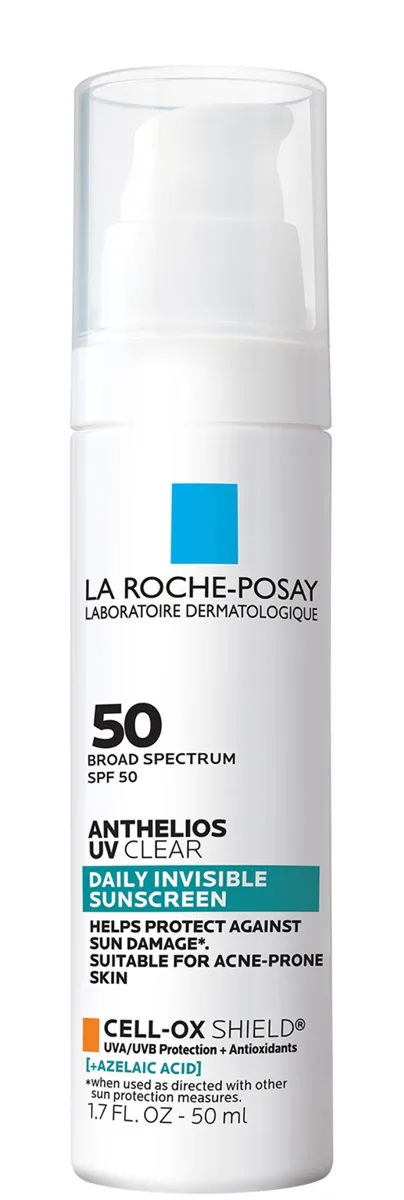 Derm Office Staple
 Anthelios UV Clear Sunscreen SPF 50
One of the only US chemical sunscreens that genuinely earns its 'for sensitive and breakout-prone skin' positioning. A photostable Anthelios filter system paired with a legitimate azelaic acid dose in a lightweight serum-fluid that disappears on every skin tone. Excellent for rosacea, acne, and post-inflammatory hyperpigmentation — and probably the single best daily sunscreen in the La Roche-Posay US lineup for those conditions.
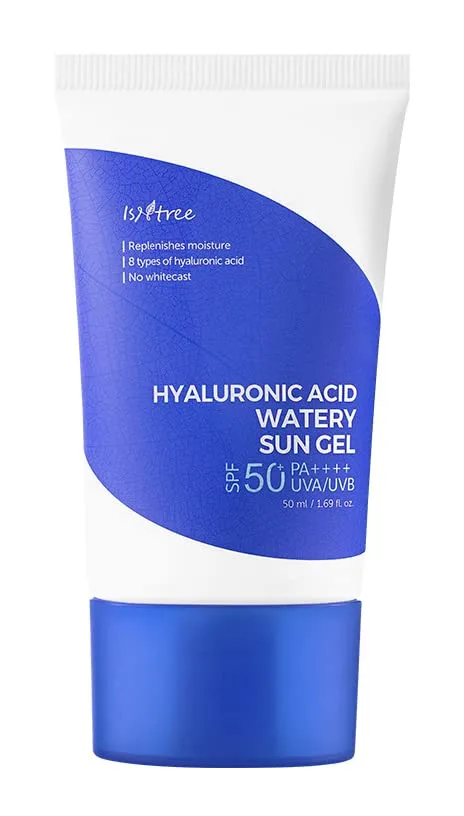 K-Beauty Daily SPF Standout
 Hyaluronic Acid Watery Sun Gel SPF 50+
One of the strongest everyday K-beauty sunscreens in the international market — modern European filters, no white cast, fragrance-free, niacinamide-boosted, and built around the brand's signature six-weight HA complex. At twenty-two dollars for 50ml, it's a case study in how much better a daily sunscreen can be when the formulator cares about both protection and wearability.
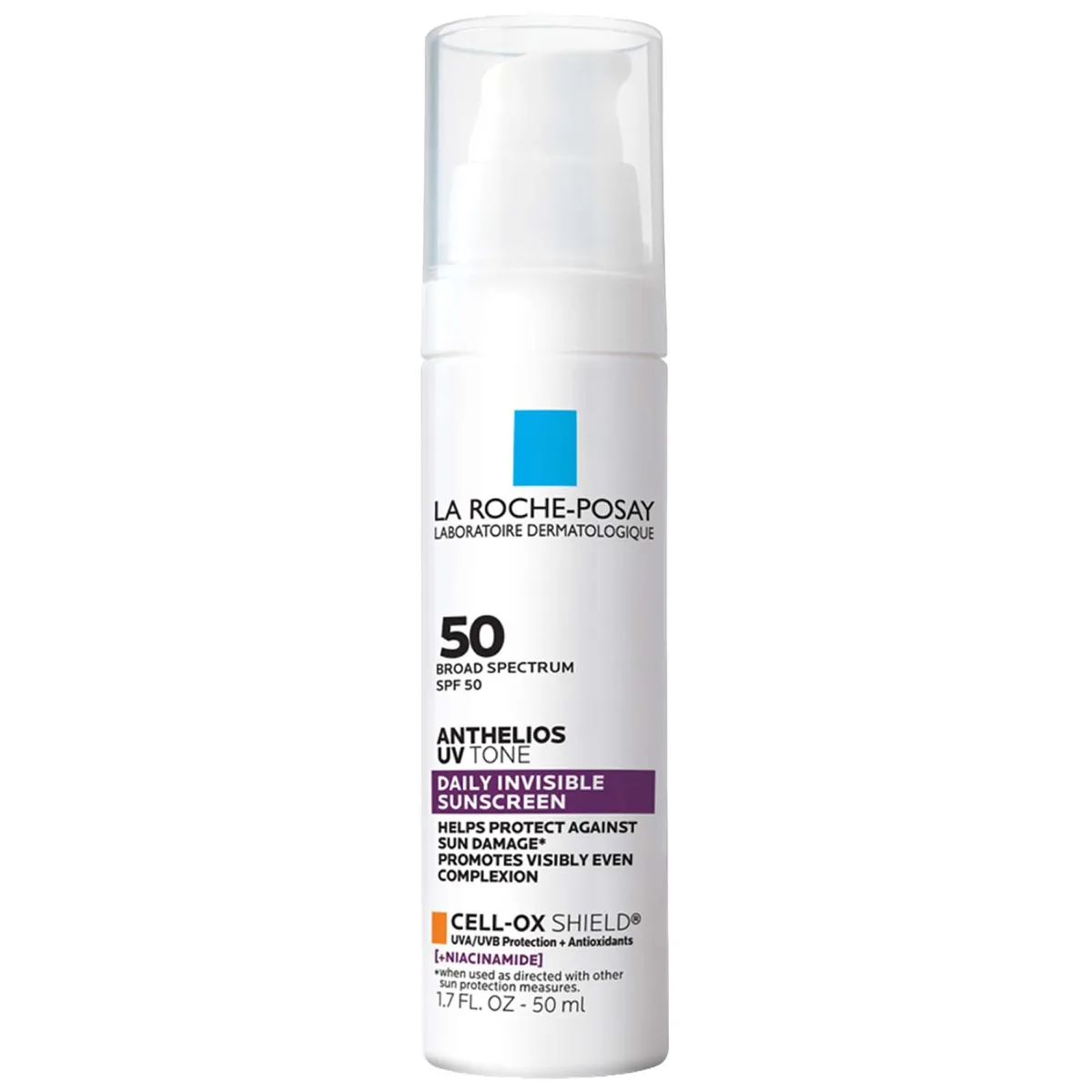 Derm Office Staple
 Anthelios UV Tone Daily Invisible Sunscreen SPF 50
La Roche-Posay's most thoughtful answer yet for hyperpigmentation-prone skin that needs daily SPF. A photostable avobenzone system reinforced with Oxynex ST, paired with a meaningful dose of niacinamide, in a serum-fluid base that goes on invisible on every skin tone. Expensive for 1.7 oz but legitimately well-built — and a rare chemical sunscreen that earns its 'for dark spots' marketing.
 Melasma-Grade Mineral Sunscreen
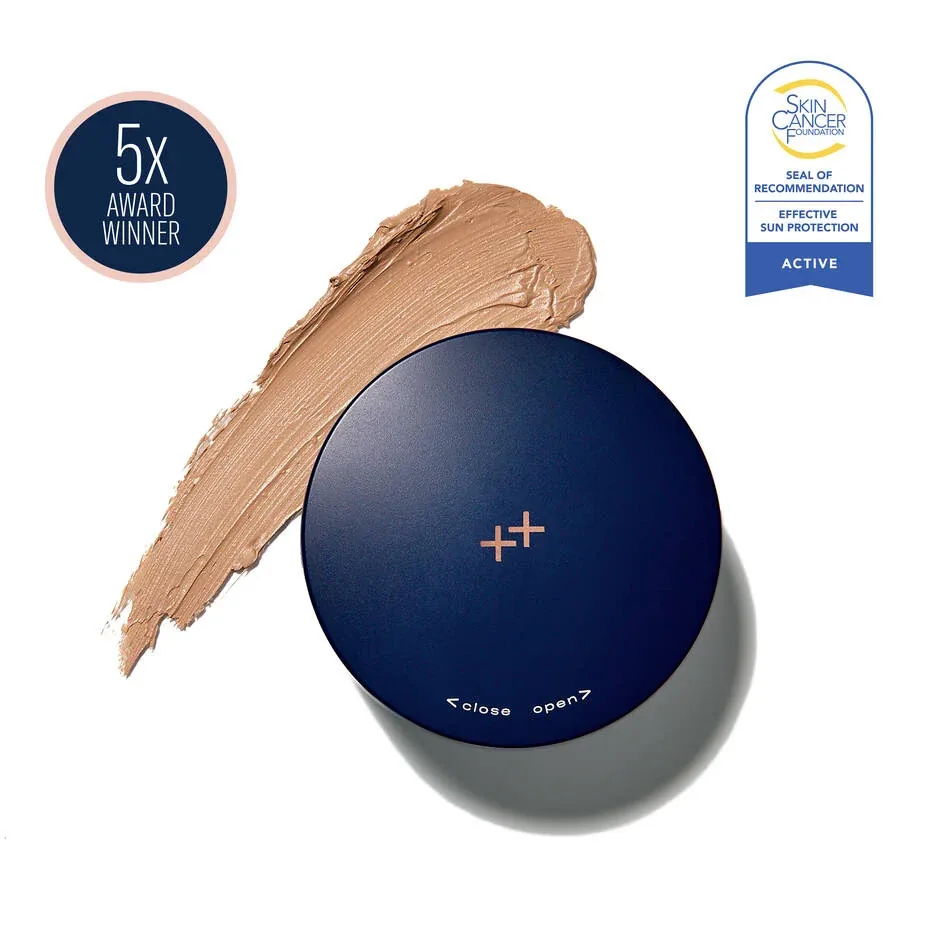
 sunbetter TONE SMART SPF 68
One of the most clinically useful tinted mineral sunscreens in the professional category. SPF 68 from a 100% mineral formula, iron oxide tint that blocks visible light for melasma protection, and an unusually lightweight texture that doesn't feel like you're wearing high-concentration zinc. For patients with melasma or post-inflammatory hyperpigmentation, this is the category benchmark — and it's earned its Allure Best of Beauty wins.
 K-Beauty Cult Favorite
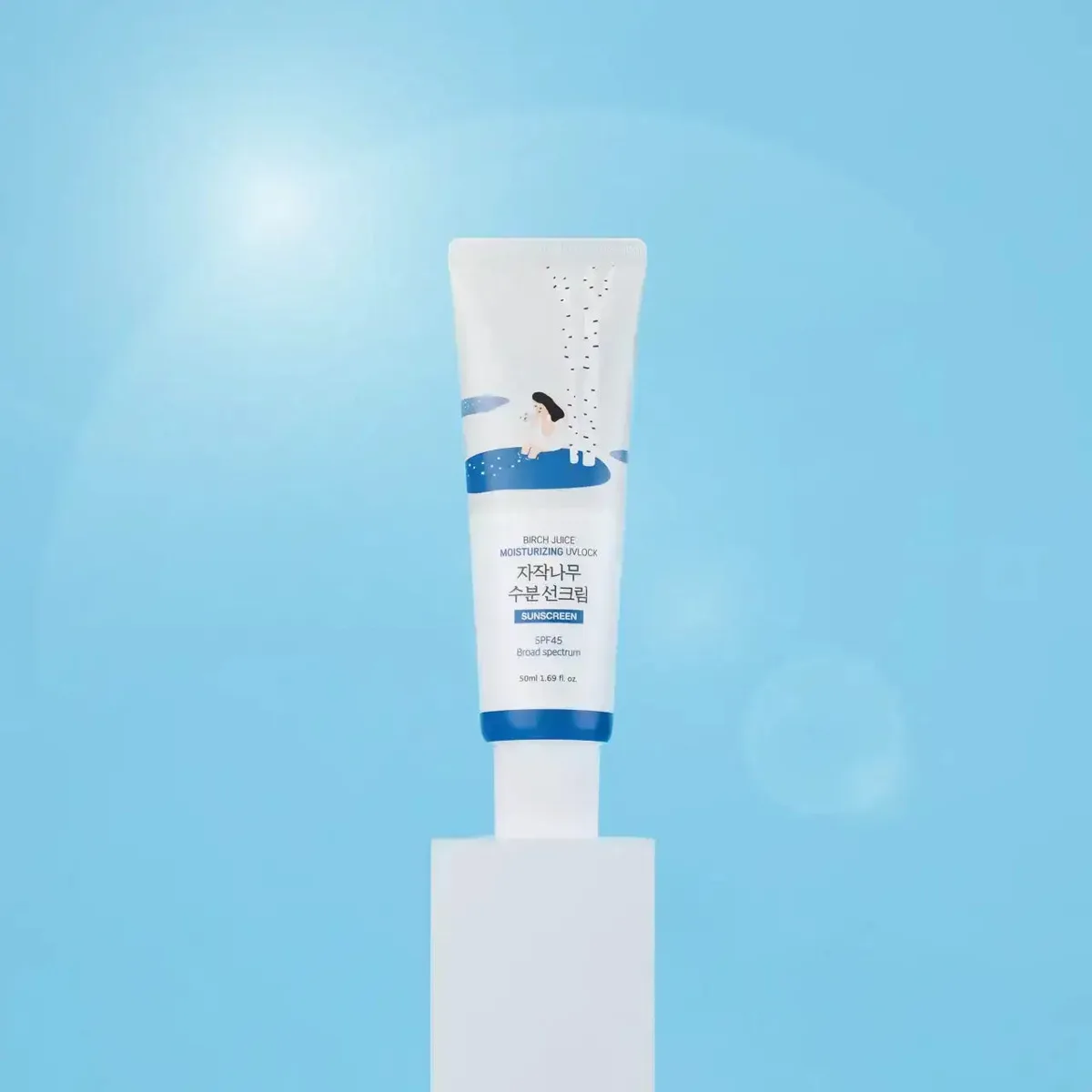
 Birch Juice Moisturizing Sun Cream SPF 50+
One of the best hybrid sunscreens in K-beauty right now — a 70% birch sap base, modern UVA filters you can't get in the US, and a finish that wears like a lightweight moisturizer. Broadly compatible, well-priced, and genuinely pleasant to apply, with minor tradeoffs for oily and fungal-acne-prone users.
 The K-Beauty Sunscreen That Changed Everything
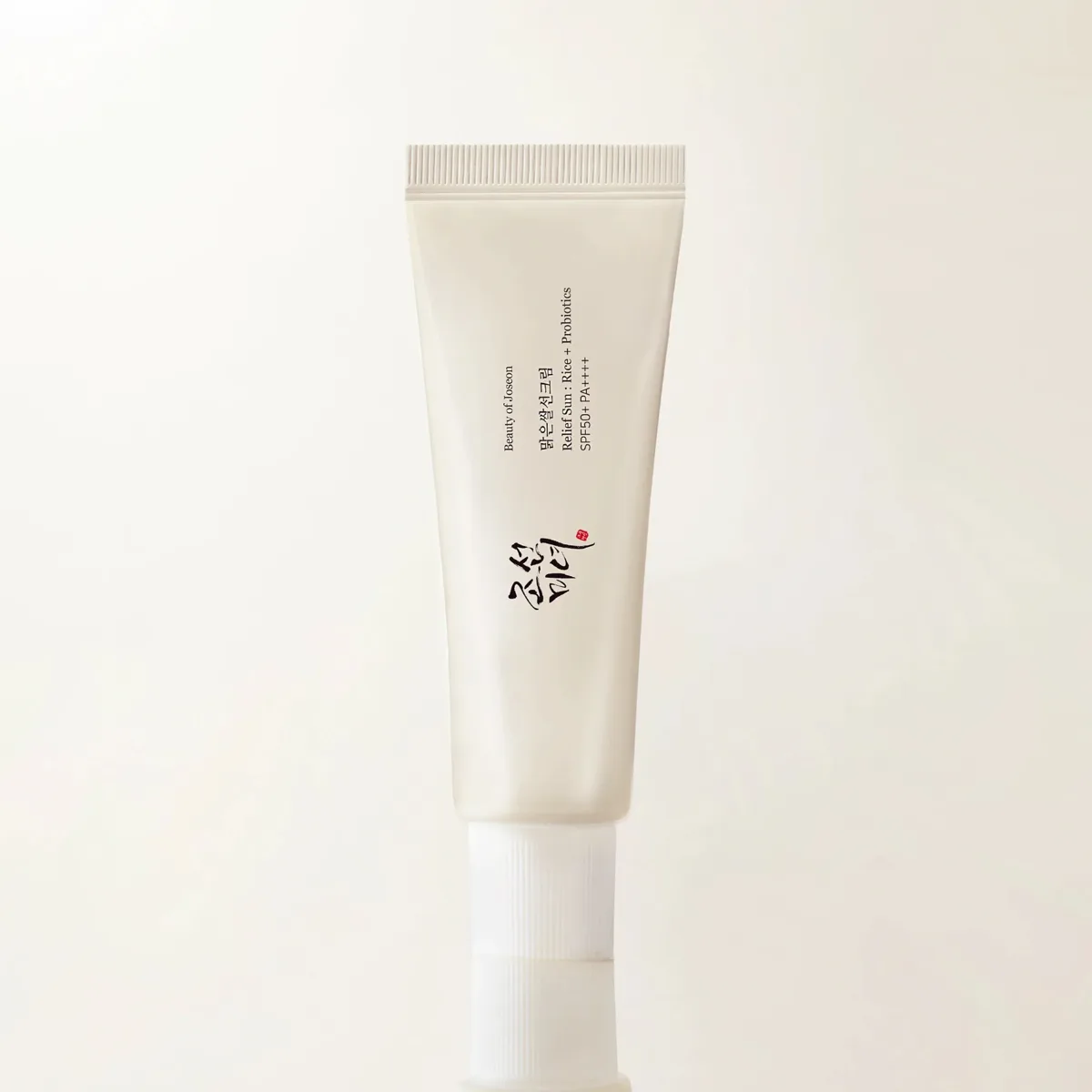
 Relief Sun: Rice + Probiotics SPF 50+
The sunscreen that rewrote the rules for what a $14 product could deliver. With independently verified SPF 50+, 30% rice extract, niacinamide, and a probiotic ferment complex, it offers protection and skincare benefits that rival products three times its price. The texture that feels like wearing nothing on your face is the reason it went viral — and stayed there.
This review reflects our independent analysis of publicly available ingredient data, manufacturer claims, and verified user reviews. We are reader-supported — Amazon links may earn us a commission at no cost to you. We do not accept paid placements; rankings are based solely on the evidence.