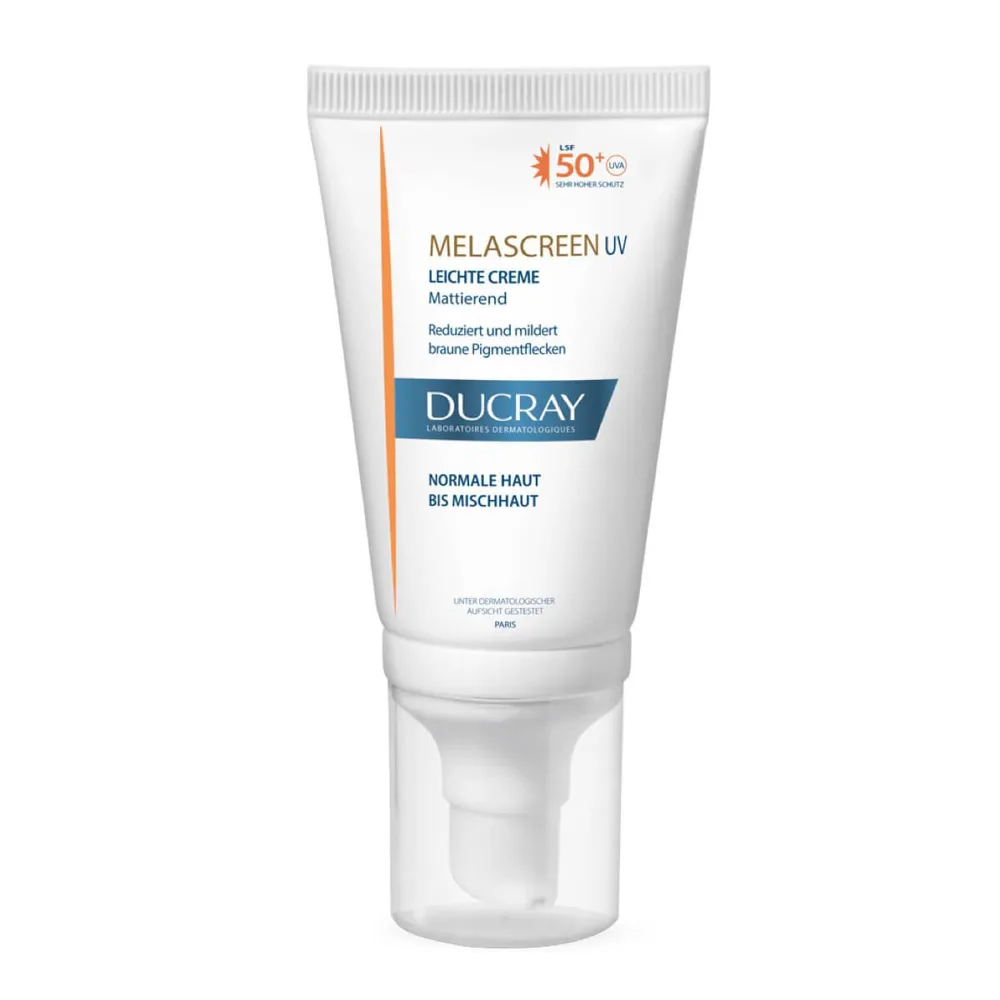
The daily-driver companion to Ductray's Melascreen line — a broad-spectrum SPF 50+ with strong UVA coverage and supporting brightening actives, in a formulation gentle enough for indefinite use. The right choice for melasma maintenance, pregnant patients, and anyone who wants daily sun protection that does a little more than just block UV. The lighter sibling to the Depigmenting Cream variant.
Melascreen UV Light Cream SPF 50+
The daily-driver companion to Ductray's Melascreen line — a broad-spectrum SPF 50+ with strong UVA coverage and supporting brightening actives, in a formulation gentle enough for indefinite use. The right choice for melasma maintenance, pregnant patients, and anyone who wants daily sun protection that does a little more than just block UV. The lighter sibling to the Depigmenting Cream variant.
Score Breakdown
Where this product gains points and where it loses them — broken down across the four scoring pillars.
A well-executed daily melasma maintenance sunscreen with strong broad-spectrum filters and supporting brightening actives. The lighter, AHA-free formulation makes it appropriate for a wider range of skin types than the Depigmenting Cream variant.
Pros & Cons
- ✓Strong broad-spectrum SPF 50+ with Tinosorb-driven UVA coverage
- ✓Gentle enough for indefinite daily use without irritation buildup
- ✓Pregnancy-safe and rosacea-safe — appropriate for the broadest patient population
- ✓Dioic acid and niacinamide add brightening support without aggressive actives
- ✓Light satin finish that layers cleanly under makeup
- ✓Backed by Pierre Fabre's clinical research and over a decade of pharmacy distribution
- ✗Small 40 ml tube runs out in about 2 months of daily use
- ✗Brightening effect is slow — wrong product for fast active correction
- ✗Slight whitecast possible on the deepest skin tones
- ✗Octocrylene is a known potential allergen for a small subset of users
- ✗Not fungal-acne safe due to silicone and emollient content
Full Review
If melasma treatment had a problem with dramatic visibility, the Depigmenting Cream would be the obvious hero of Ductray's Melascreen line. It has the more aggressive ingredient list, the four-mechanism brightening approach, the keratolytic acid alongside the broad-spectrum sunscreen. It's the product you'd reach for when you want to actually correct active hyperpigmentation. But melasma treatment doesn't end when the dark patches start fading. In fact, that's when the harder work begins — the indefinite, year-after-year maintenance phase where you're trying to preserve the improvement you fought for and prevent new pigmentation from forming. That maintenance phase doesn't need an aggressive cream. It needs something tolerable enough that you'll actually use it every single day for the rest of your life. That's what the UV Light Cream variant is for, and understanding that role is the key to knowing whether this product belongs in your routine.
The formulation differences from the Depigmenting Cream variant are deliberate and worth understanding. Both products use the same five-filter sunscreen system: octocrylene, ethylhexyl salicylate, Tinosorb S, Tinosorb M, and Uvinul A Plus. That's a serious modern broad-spectrum cocktail with strong UVA coverage, which matters specifically for melasma because UVA wavelengths are the primary trigger for melanocyte reactivation. Both products include dioic acid and niacinamide as brightening actives. The crucial difference is what the UV Light Cream variant doesn't have: glycolic acid and phenylethyl resorcinol. Removing these two more-active ingredients makes the formula meaningfully gentler — appropriate for indefinite daily use without the irritation risk that glycolic acid poses for sensitive or compromised barriers. It's a sunscreen first, with brightening as a bonus, rather than a brightening treatment that happens to include sunscreen.
In hand, the texture is noticeably lighter than you'd expect from a high-SPF cream. It absorbs in about forty-five to sixty seconds and leaves a soft satin finish that doesn't feel sticky or greasy. The chemical filter system means there's minimal white cast on most skin tones — a small number of users with very deep skin tones report a slight initial whitecast that fades within a few minutes, but it's not typically a dealbreaker. The cream layers cleanly under makeup and works well as the final morning step of a multi-product routine. It's fragrance-free, which matters for the post-procedure and sensitive-skin patients who often end up using it.
The brightening side of the formula works on a longer timeline than the Depigmenting Cream variant precisely because it's gentler. Most users see visible improvement in surface pigmentation over eight to twelve weeks of consistent daily use, with continued improvement and stable maintenance over four to six months. This isn't a rapid corrective product — it's a slow, sustained protective and supportive cream. For patients who've completed an intensive treatment phase with prescription tranexamic acid, hydroquinone, or laser treatment, this is the kind of daily product that keeps the gains in place. For patients in early melasma who want to prevent the condition from worsening, it's a strong starting point that can be used for years without irritation.
The broader appeal of this cream is its tolerability profile. Where the Depigmenting Cream's glycolic acid rules it out for the most sensitive users, the UV Light Cream variant works for almost everyone. It's appropriate for sensitive skin, for patients with rosacea (sun protection is critical for rosacea management, and the gentle formulation doesn't trigger flares), for pregnant and breastfeeding patients dealing with hormonal melasma who can't use stronger treatments, and for the post-procedure population recovering from in-office pigmentation treatments who need something gentle but effective to wear during recovery. That breadth of suitability is a meaningful advantage over more aggressive alternatives.
The limitations are mostly the standard high-SPF asterisks. The 40 ml tube is small for daily face use and runs out in about two months. There's no larger size option. Like any chemical-filter sunscreen, it requires reapplication every two hours during active sun exposure to maintain protection — single morning application is not enough for outdoor activities regardless of the high SPF rating. The octocrylene filter is a known allergen for a small subset of users, though the same is true of most chemical sunscreens. And it's not fungal-acne safe, so patients managing Malassezia folliculitis should look for a specialized alternative.
In the broader Ductray context, this cream sits in the same long-running French pharmacy tradition as the rest of the brand's catalog. Pierre Fabre has been doing dermatology research since the 1960s and Ducray itself dates to 1930, with the Melascreen line as one of its longer-standing platforms. Published clinical and tolerance data on the active combinations is on file with European regulators, and the line has been recommended in French dermatology pigmentation protocols for over a decade. The 2014 launch of the Melascreen Depigmenting and UV Light variants was the brand's deliberate effort to give patients matched options for the active treatment and maintenance phases of melasma management — and that two-product approach is still how dermatologists generally use the line.
For the patient who needs daily melasma maintenance, who's looking for a sunscreen that does slightly more than just block UV, and who values gentleness and indefinite tolerability over aggressive correction, this is one of the easier recommendations in the European pharmacy category. It's not flashy, it doesn't promise transformation, and it's not the first product you'd reach for if you had untreated active melasma. But for the long, unglamorous maintenance work that determines whether melasma improvement actually sticks, it earns its place.
Formula
Key Ingredients
The hero actives that drive this product's performance.
| Ingredient | Function | Evidence |
|---|---|---|
| Broad-Spectrum SPF 50+ Filter System | Combines five photostable filters — octocrylene, ethylhexyl salicylate, Tinosorb S, Tinosorb M, and Uvinul A Plus — for high-protection broad-spectrum coverage. This is the primary purpose of the cream: providing the level of UVA and UVB protection necessary to prevent and maintain melasma improvement. The Tinosorb-driven UVA coverage is particularly important here because UVA wavelengths are the primary trigger for melasma reactivation. | well-established |
| Octadecenedioic Acid (Dioic Acid) | A patented saturated fatty diacid that inhibits tyrosinase activity and reduces hyperpigmentation over 8-12 weeks of consistent use. In this lighter UV Light Cream variant, dioic acid is the primary active treatment ingredient — without the glycolic acid found in the Depigmenting Cream variant — making the formula more tolerable for sensitive skin while still providing brightening support. | promising |
| Niacinamide | Inhibits melanosome transfer from melanocytes to keratinocytes, reducing the visible expression of pigment without bleaching the underlying cells. In this preventive-leaning formula, it complements the dioic acid with a different mechanism, providing a daily brightening pathway that's compatible with the broadest possible range of skin types. | well-established |
| Glycerin | Sits high in the ingredient list as the humectant base that keeps the high-SPF formula from feeling drying. For a sunscreen-cream that's meant to be worn daily by melasma patients (often on already-sensitized skin), the comfort layer matters as much as the active ingredients. | well-established |
Full INCI List · pH 5.5
Aqua, Octocrylene, Diethylhexyl Butamido Triazone, Glycerin, Diethylamino Hydroxybenzoyl Hexyl Benzoate, Bis-Ethylhexyloxyphenol Methoxyphenyl Triazine, Caprylic/Capric Triglyceride, Niacinamide, Cetearyl Alcohol, Dimethicone, Ethylhexyl Salicylate, Methylene Bis-Benzotriazolyl Tetramethylbutylphenol, Octadecenedioic Acid, Tocopherol, Glyceryl Stearate, PEG-100 Stearate, Sodium Hydroxide, Carbomer, Caprylyl Glycol, Phenoxyethanol, Disodium EDTA
Product Flags
✓ Fragrance Free✓ Alcohol Free✗ Oil Free✗ Silicone Free✓ Paraben Free✓ Sulfate Free✗ Cruelty Free✓ Vegan✗ Fungal Acne Safe
Potential Irritants
phenoxyethanoloctocrylene
Common Allergens
cetearyl-alcohol
Compatibility
Skin Match
Best For
normal combination oily sensitive
Works For
Not Ideal For
Addresses These Conditions
hyperpigmentation melasma sun damage dark spots
Routine Step
sunscreen
Time of Day
AM
Pregnancy Safe
Yes ✓
Layering Tips
Apply as the final step of the morning routine over moisturizer and any treatment serums. Reapply every 2 hours with sun exposure.
Results Timeline
Immediate broad-spectrum sun protection from first application. Visible improvement in surface pigmentation over 8-12 weeks of consistent daily use as the dioic acid and niacinamide accumulate effect. Long-term melasma maintenance over 4-6 months of continuous use combined with consistent reapplication.
Pairs Well With
vitamin-ctranexamic-acidniacinamideazelaic-acid
Sample AM Routine
- Gentle cleanser
- Vitamin C serum
- Moisturizer
- Ducray Melascreen UV Light Cream SPF 50+
Sample PM Routine
- Gentle cleanser
- Tranexamic acid or retinoid treatment
- Moisturizer
Evidence
Science & Expert Perspective
The Science
The sunscreen filter system here represents modern European broad-spectrum photoprotection. Octocrylene and ethylhexyl salicylate provide foundational UVB protection, while Tinosorb S (Bis-Ethylhexyloxyphenol Methoxyphenyl Triazine), Tinosorb M (Methylene Bis-Benzotriazolyl Tetramethylbutylphenol), and Uvinul A Plus (Diethylamino Hydroxybenzoyl Hexyl Benzoate) handle the broader UVA spectrum. Published photostability data on these filters confirms they maintain their protective effect throughout typical wear periods — important for a maintenance sunscreen that needs to deliver consistent protection across a daily routine.
The UVA coverage is the part of this filter system that matters most for melasma. Published dermatology research has consistently shown that UVA wavelengths (particularly UVA1) are more effective triggers of melanocyte activation and melasma reactivation than UVB. A high SPF rating without strong UVA coverage is inadequate for melasma management — and this is precisely why simple drugstore high-SPF sunscreens often fail to maintain melasma improvement even when applied diligently. The Tinosorb-and-Uvinul combination in this cream provides the kind of UVA coverage that European dermatology pigmentation protocols typically require.
The brightening side of the formula draws on the same dioic acid and niacinamide evidence bases as the Depigmenting Cream variant. Octadecenedioic acid (dioic acid) has published clinical research demonstrating tyrosinase inhibition and pigment reduction over 8-12 week treatment windows, with efficacy comparable to hydroquinone in some comparative studies and substantially better tolerability. Niacinamide's effect on melanosome transfer is well-established in the British Journal of Dermatology and other clinical literature, with measurable pigment improvement over similar timelines.
The strategic point of leaving glycolic acid out of this formula compared to the Depigmenting variant is tolerability for indefinite use. Glycolic acid is effective but cumulative irritation can become a problem in long-term daily use, particularly for sensitive skin and for patients with overlapping conditions like rosacea. Removing it makes the UV Light Cream appropriate as a daily-forever sunscreen rather than a treatment-phase product.
Dermatologist Perspective
Dermatologists treating melasma generally distinguish between active treatment phases — when more aggressive interventions are deployed to correct existing pigmentation — and maintenance phases, when the goal shifts to preserving improvement and preventing new pigmentation. Board-certified dermatologists familiar with the Melascreen line typically recommend the UV Light Cream as the maintenance-phase daily product, particularly for patients who've completed prescription treatments and need a long-term sunscreen with mild brightening support. It's also frequently recommended for pregnant and breastfeeding patients who can't use stronger treatments during their pregnancy, and for rosacea patients who need a gentle daily SPF that won't trigger flares. Dermatologists generally pair it with stronger evening treatments (tranexamic acid, retinoids, or prescription depigmenting agents) for around-the-clock pigment management.
Guidance
Usage Guide
How to Use
Apply a generous layer (about a quarter teaspoon for the face) every morning as the final step of your AM routine, after moisturizer and any treatment serums. Reapply every 2 hours during direct sun exposure, beach activities, or prolonged outdoor time. Pair with an evening treatment (tranexamic acid, retinoid, or prescription depigmenting product) for full melasma management. Safe for daily use during pregnancy and breastfeeding. Continue use indefinitely for melasma maintenance — this is not a treatment with a defined endpoint but a long-term protective and supportive product.
Value Assessment
At around $32 for 40 ml, this is priced in line with mid-market European pharmacy sunscreens with brightening support. The per-ounce price is higher than a basic SPF 50+ sunscreen but reflects the dioic acid and niacinamide content. Compared to luxury brightening sunscreens at $50-80, it's a strong value. Compared to a basic drugstore SPF, it's a moderate premium for the additional actives and the strong UVA coverage that simpler sunscreens often lack. For melasma patients, the value calculation is essentially: this is the price of indefinite daily melasma maintenance, which is meaningfully better than the alternative of pigmentation rebound.
Who Should Buy
Patients in the maintenance phase of melasma management, anyone needing a daily sunscreen with mild brightening support, pregnant and breastfeeding patients dealing with hormonal melasma, rosacea patients needing gentle high-protection SPF, and post-procedure patients recovering from in-office pigmentation treatments.
Who Should Skip
People with active untreated melasma who need the more active Depigmenting Cream variant or prescription treatment, anyone needing a basic cheap sunscreen who doesn't need the brightening actives, patients managing fungal folliculitis, and users with octocrylene allergies.
Ready to try Ducray Melascreen UV Light Cream SPF 50+?
Details
Details
Texture
Light, smooth white cream that absorbs in 45-60 seconds with a satin finish
Scent
None
Packaging
White squeeze tube with flip cap, 40 ml
Finish
satinlightweight
What to Expect on First Use
Expect immediate sun protection and a soft satin finish on application with no stinging. Skin tone evens out over weeks rather than producing immediate brightening. No purging or adjustment period — this is a maintenance and protective product, not an aggressive treatment.
How Long It Lasts
2-3 months with daily morning facial application
Period After Opening
6 months
Best Season
All Year
Background
The Why
Melascreen UV Light Cream was developed in 2014 alongside the Depigmenting Cream variant as Pierre Fabre's daily maintenance counterpart. Where the Depigmenting Cream was built for the active treatment phase, the UV Light Cream was designed as the long-term daily product — the cream you keep using for years after the most intensive depigmenting work is done, to maintain the improvement and prevent new pigmentation from developing.
About Ducray Legacy Brand (20+ years)
Ducray, founded in 1930 and part of Pierre Fabre Dermo-Cosmetique, has nearly a century of pharmacy-grade dermatology research behind its formulations. The Melascreen line has been a French dermatology pigmentation staple for over a decade with published clinical and tolerance data.
Brand founded: 1930 · Product launched: 2014
Myth vs. Reality
Myths & Misconceptions
Myth
If you have melasma, you only need sunscreen — brightening ingredients are unnecessary.
Reality
Sunscreen alone is foundational but rarely sufficient for established melasma. Pairing daily SPF with low-irritation brightening actives like dioic acid and niacinamide produces meaningfully better long-term outcomes than sunscreen alone, which is why this cream combines both rather than being a pure sunscreen.
FAQ
Frequently Asked Questions
How is Melascreen UV Light Cream different from Melascreen Depigmenting Cream?
The UV Light Cream is the lighter, more protective option — it contains dioic acid and niacinamide for brightening support but skips the glycolic acid found in the Depigmenting variant. This makes it more tolerable for sensitive skin and appropriate for indefinite daily use, while the Depigmenting Cream is positioned for active treatment phases.
Is Melascreen UV Light Cream a sunscreen or a brightening treatment?
Both, but its primary purpose is sun protection. It's a broad-spectrum SPF 50+ sunscreen with dioic acid and niacinamide added as supporting brightening actives. If you only need a basic sunscreen, simpler options are cheaper. If you want daily melasma maintenance with sun protection in one step, this is appropriate.
Can I use Melascreen UV Light Cream during pregnancy?
Yes. The active ingredients (dioic acid, niacinamide) are pregnancy-safe under standard OB/GYN guidelines, and the chemical sunscreen filters are well-tolerated. This makes it one of the better daily options for pregnant patients dealing with hormonal melasma.
Does this sunscreen leave a white cast?
It's a chemical-filter-based sunscreen rather than mineral, so white cast is minimal on most skin tones. A small number of users with very deep skin tones report a slight initial whitecast that absorbs within a few minutes.
Can I layer this over a vitamin C serum?
Yes — applying vitamin C first, allowing it to absorb, then layering this cream on top is a standard and effective melasma routine. The vitamin C provides antioxidant protection that complements the sunscreen, while the dioic acid and niacinamide in the cream add their own brightening pathways.
Is Melascreen UV Light Cream enough for outdoor activities?
It provides high protection from a single morning application for normal indoor activity, but for outdoor activities (beach, hiking, prolonged sun exposure) you'll need to reapply every 2 hours regardless of the high SPF rating. No sunscreen, regardless of formulation, maintains protection beyond about 2 hours of active sun exposure.
Community
Community Voices
Common Praise
"high SPF without heavy feel"
"gentle enough for sensitive skin"
"layers well under makeup"
"helps maintain melasma improvement"
Common Complaints
"small 40 ml tube"
"slight whitecast on deepest skin tones"
"needs reapplication for outdoor activities"
"octocrylene allergy possible"
Notable Endorsements
French pharmacy melasma maintenance staplecommonly prescribed in European pigmentation protocols
Appears In
best sunscreens for melasma best spf 50 melasma creams best french pharmacy sunscreens best ducray products best melasma maintenance products
Related Conditions
hyperpigmentation melasma sun damage dark spots
Related Ingredients
You Might Also Like
 Derm Office Staple
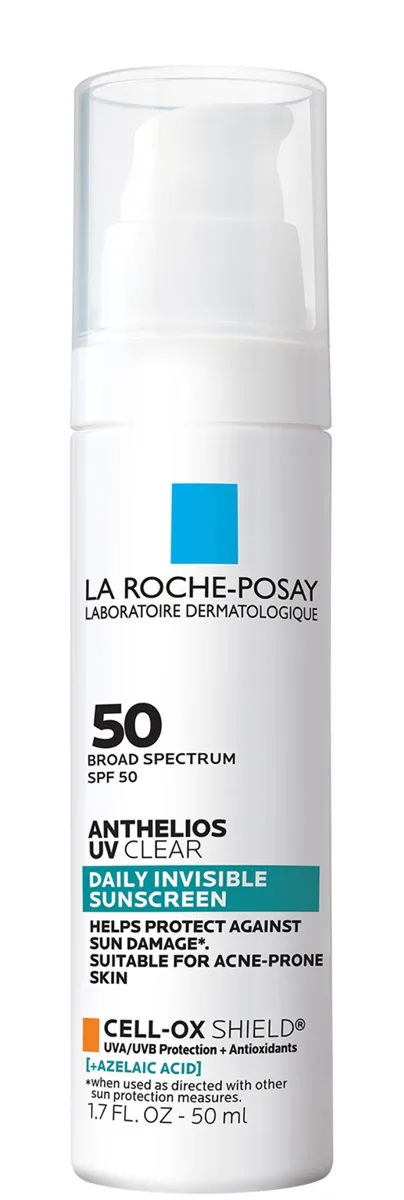
 Anthelios UV Clear Sunscreen SPF 50
One of the only US chemical sunscreens that genuinely earns its 'for sensitive and breakout-prone skin' positioning. A photostable Anthelios filter system paired with a legitimate azelaic acid dose in a lightweight serum-fluid that disappears on every skin tone. Excellent for rosacea, acne, and post-inflammatory hyperpigmentation — and probably the single best daily sunscreen in the La Roche-Posay US lineup for those conditions.
 K-Beauty Daily SPF Standout
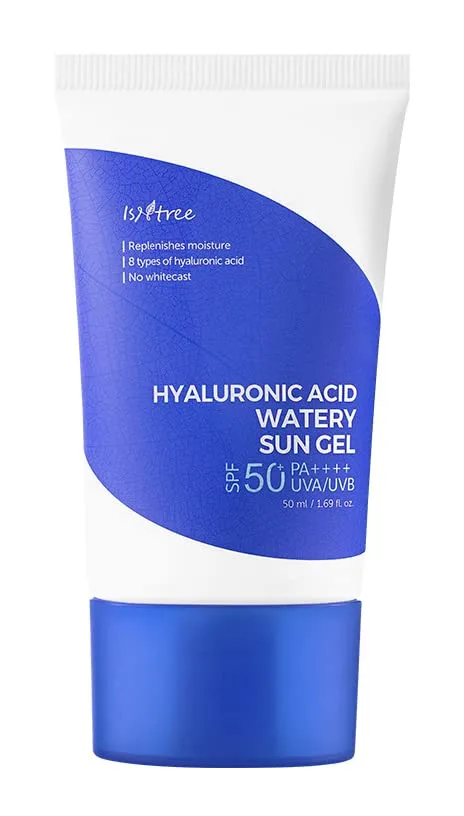
 Hyaluronic Acid Watery Sun Gel SPF 50+
One of the strongest everyday K-beauty sunscreens in the international market — modern European filters, no white cast, fragrance-free, niacinamide-boosted, and built around the brand's signature six-weight HA complex. At twenty-two dollars for 50ml, it's a case study in how much better a daily sunscreen can be when the formulator cares about both protection and wearability.
 Derm Office Staple
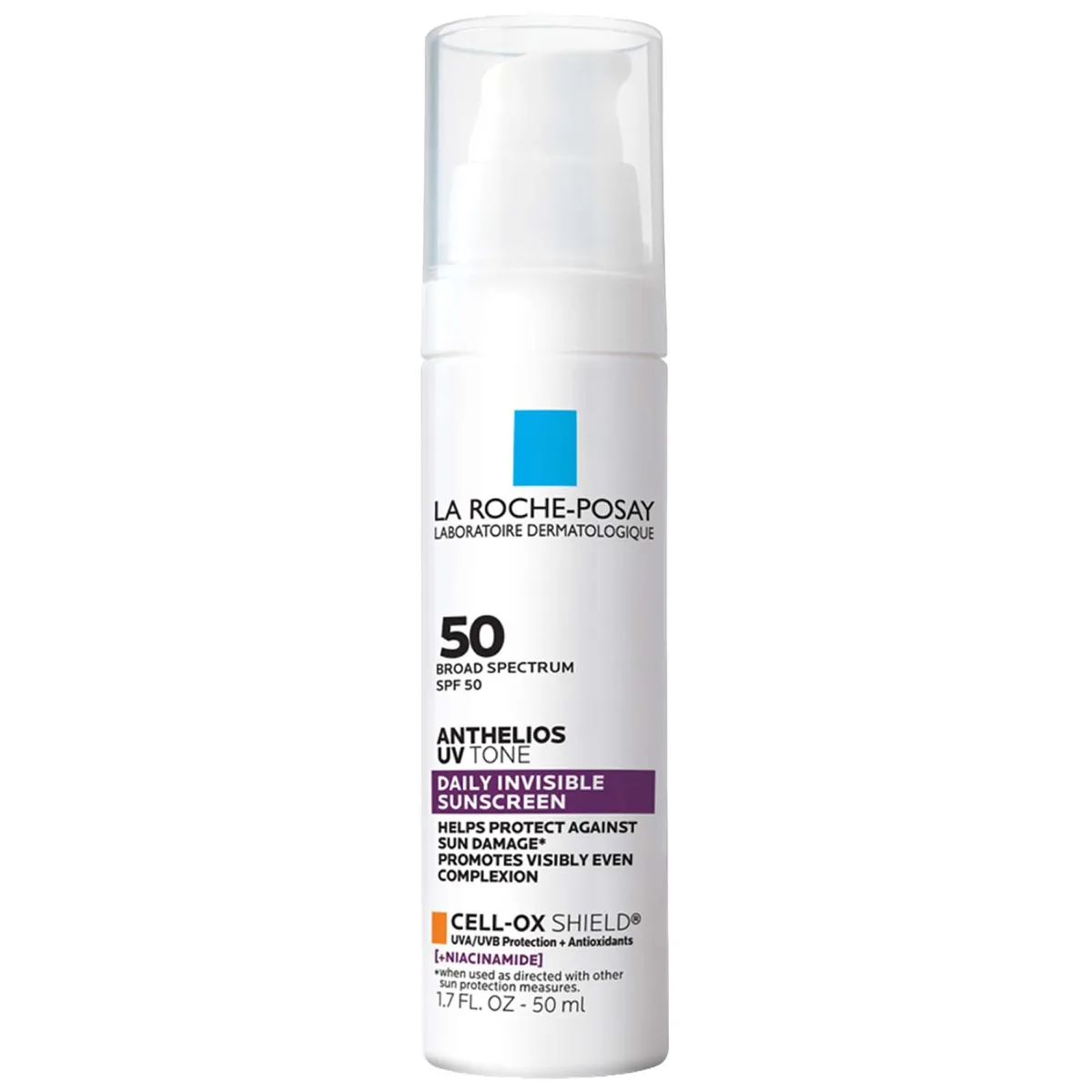
 Anthelios UV Tone Daily Invisible Sunscreen SPF 50
La Roche-Posay's most thoughtful answer yet for hyperpigmentation-prone skin that needs daily SPF. A photostable avobenzone system reinforced with Oxynex ST, paired with a meaningful dose of niacinamide, in a serum-fluid base that goes on invisible on every skin tone. Expensive for 1.7 oz but legitimately well-built — and a rare chemical sunscreen that earns its 'for dark spots' marketing.
 Melasma-Grade Mineral Sunscreen
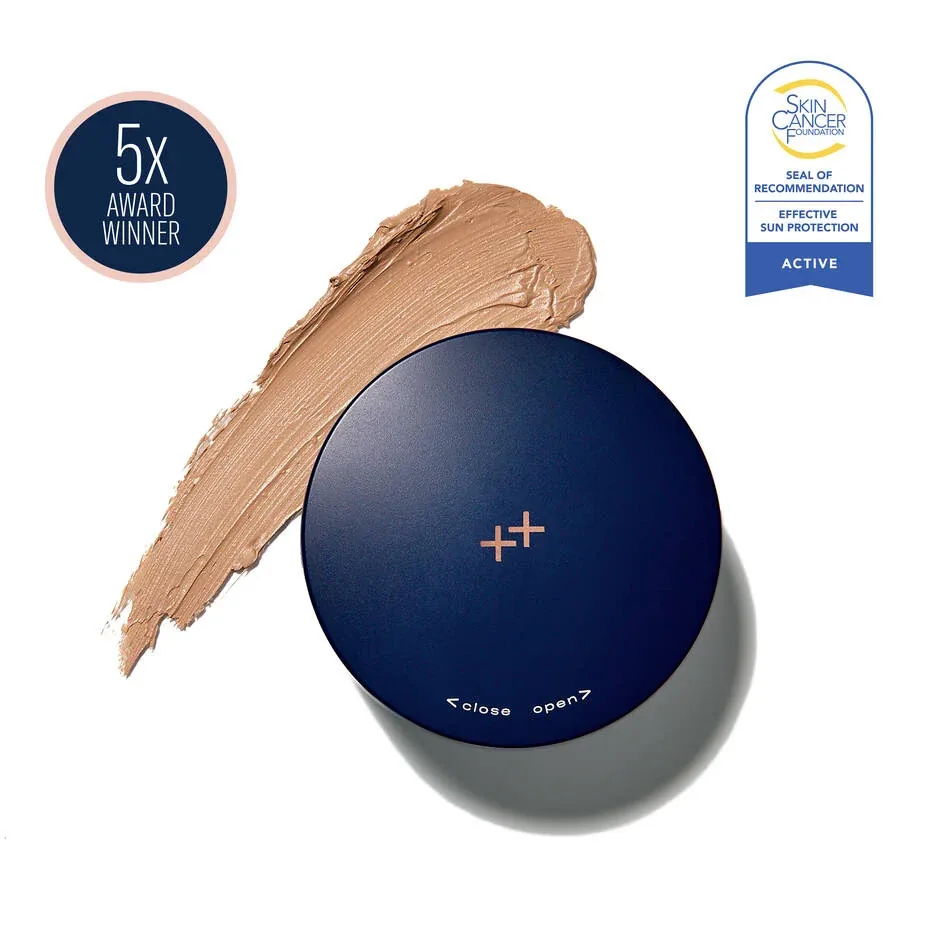
 sunbetter TONE SMART SPF 68
One of the most clinically useful tinted mineral sunscreens in the professional category. SPF 68 from a 100% mineral formula, iron oxide tint that blocks visible light for melasma protection, and an unusually lightweight texture that doesn't feel like you're wearing high-concentration zinc. For patients with melasma or post-inflammatory hyperpigmentation, this is the category benchmark — and it's earned its Allure Best of Beauty wins.
 K-Beauty Cult Favorite
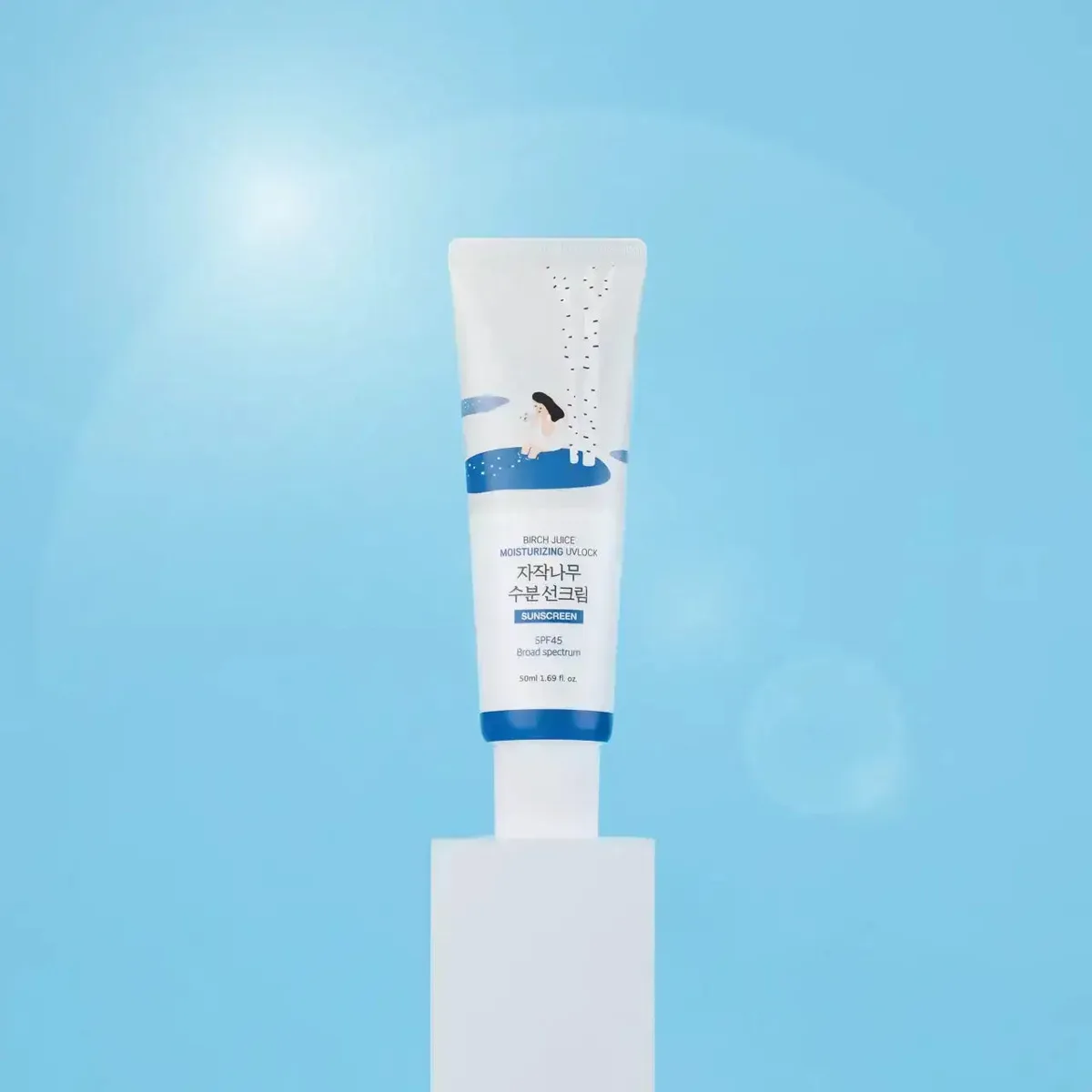
 Birch Juice Moisturizing Sun Cream SPF 50+
One of the best hybrid sunscreens in K-beauty right now — a 70% birch sap base, modern UVA filters you can't get in the US, and a finish that wears like a lightweight moisturizer. Broadly compatible, well-priced, and genuinely pleasant to apply, with minor tradeoffs for oily and fungal-acne-prone users.
 The K-Beauty Sunscreen That Changed Everything
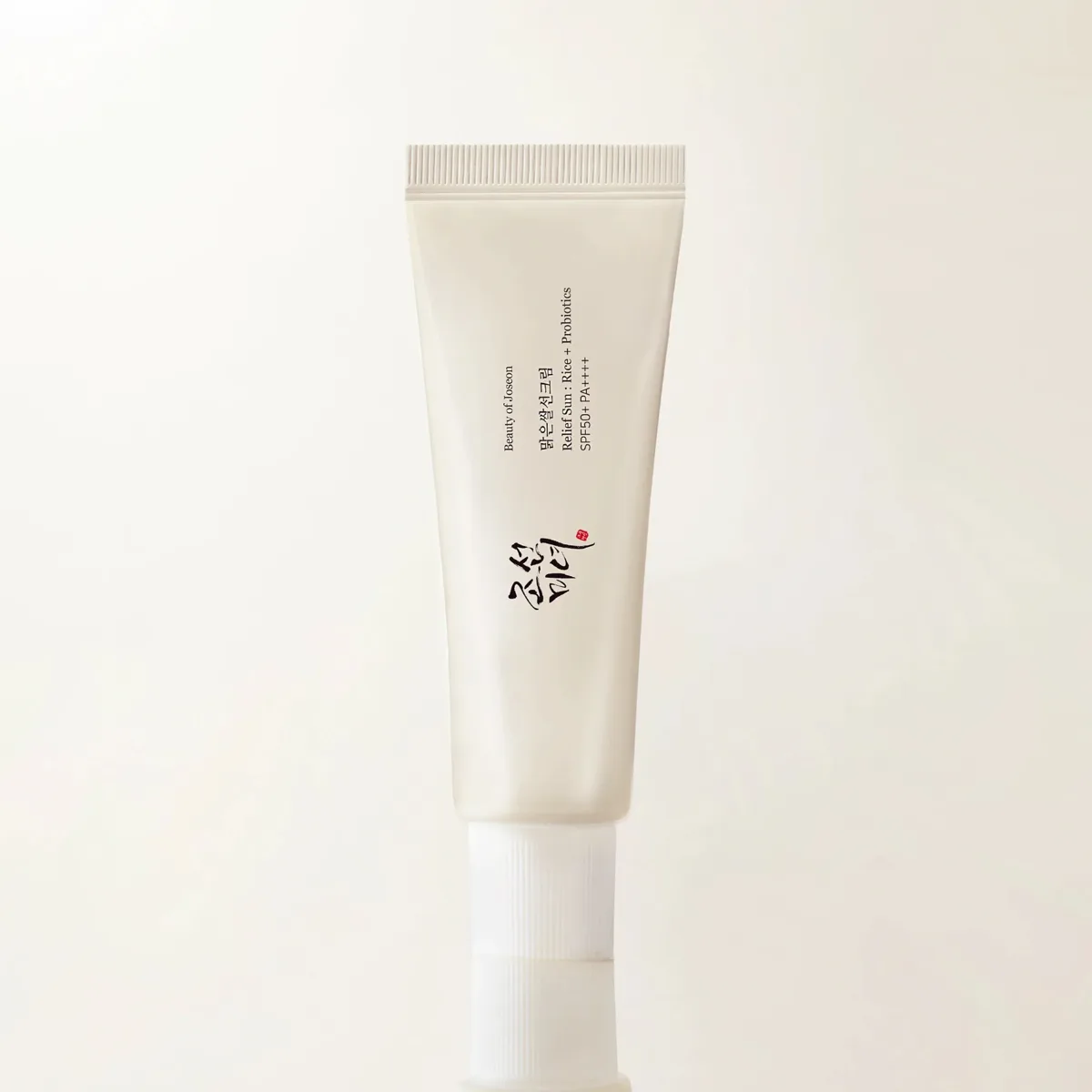
 Relief Sun: Rice + Probiotics SPF 50+
The sunscreen that rewrote the rules for what a $14 product could deliver. With independently verified SPF 50+, 30% rice extract, niacinamide, and a probiotic ferment complex, it offers protection and skincare benefits that rival products three times its price. The texture that feels like wearing nothing on your face is the reason it went viral — and stayed there.