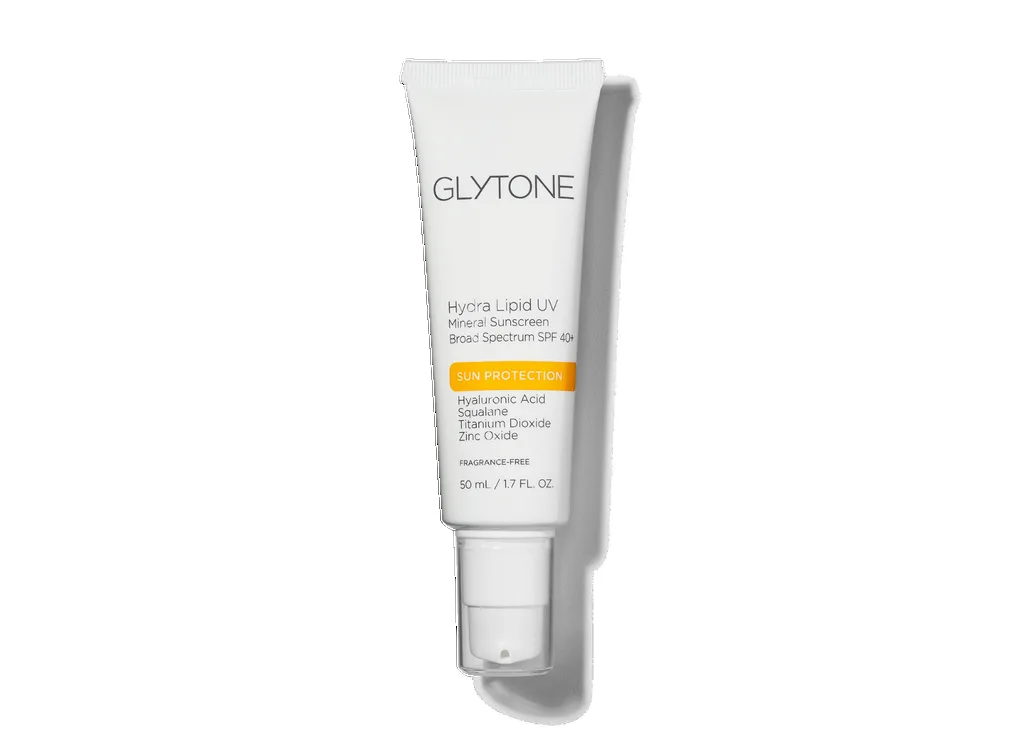
A derm-office mineral sunscreen with an unusually light feel and a calming, hydrating backbone of squalane, hyaluronic acid and bisabolol. Built for post-procedure and sensitive skin, it looks better under makeup than most mineral SPFs and earns its place in the clinic-retail lineup.
Hydra Lipid UV Mineral Sunscreen SPF 40
A derm-office mineral sunscreen with an unusually light feel and a calming, hydrating backbone of squalane, hyaluronic acid and bisabolol. Built for post-procedure and sensitive skin, it looks better under makeup than most mineral SPFs and earns its place in the clinic-retail lineup.
Score Breakdown
Where this product gains points and where it loses them — broken down across the four scoring pillars.
A hydrating mineral sunscreen with low white cast and a calming secondary profile — well suited to sensitive and post-procedure skin. Filter concentrations are lower than many pure-mineral peers, which is solved by formulation but worth noting.
Pros & Cons
- ✓Legitimate SPF 40 in a notably light mineral base
- ✓Minimal white cast versus most zinc-heavy mineral SPFs
- ✓Squalane and dual HA give it a hydrating feel
- ✓Bisabolol and allantoin calm post-procedure skin
- ✓Fragrance-free and essential-oil-free
- ✓Registered under FDA sunscreen monograph with published label
- ✗Lower filter percentages than some pure-mineral peers
- ✗Only one size is offered, and it's small for daily full-face use
- ✗Priced above drugstore mineral sunscreens
- ✗U.S. retail availability is mostly through dermatology-channel sites
Full Review
Mineral sunscreens have a credibility problem that has nothing to do with their filters and everything to do with their texture. Zinc oxide and titanium dioxide have excellent UV protection profiles and are the filters most dermatologists recommend for sensitive, post-procedure and pediatric skin. They are also, historically, the reason so many people gave up on daily sunscreen — thick, white, sticky, drying, with the charming ability to make every face they're applied to look like the wearer just walked out of a cricket match. For years, mineral sunscreen formulation was a compromise: you could have photoprotection or a wearable texture, but not both. Glytone's Hydra Lipid UV Mineral Sunscreen is one of the products that quietly closed that gap, and it did so through a choice that looks counterintuitive on the back of the box: relatively low mineral filter percentages paired with a photostable ester-and-silicone dispersion system and a hydrating, calming supporting cast. The result is an SPF 40 mineral lotion that wears closer to a hydrating fluid than a traditional zinc-heavy cream, and one of the easier mineral SPFs to layer under makeup in the daily dermatology-channel lineup. The active panel lists titanium dioxide at 2% and zinc oxide at 1%, which will raise eyebrows for anyone who knows their mineral SPFs. Most pure-mineral formulas hit SPF 30 and up with 10–20% zinc oxide. The trick here is that SPF is not a linear function of filter percentage. Particle size, dispersion, photostability of the base, and the presence of UV-boosting esters all drive the final rating, and Glytone's formulation leans on a base of butyloctyl salicylate, octyldodecyl neopentanoate, ethylhexyl isononanoate and silicate crosspolymers that dramatically increase the efficiency of the mineral filters. The SPF 40 rating is validated under the FDA monograph testing protocol and registered through DailyMed, so the number on the tube is doing real work. What you feel on the skin is the other half of the story. The formula spreads like a silky lotion — not a thick mineral paste — and sets to a satin finish over about a minute. On fair-to-medium skin tones it's essentially invisible. On deeper tones there can be a faint cast that usually resolves as it absorbs, but as with any mineral product, if you're shade-sensitive, swatch test before buying. The finish is closer to 'softly hydrated' than 'matte,' which is a direct consequence of the squalane, dual hyaluronic acid and glycerin backbone doing moisturizer-adjacent work under the UV filters. For post-procedure skin that's already dehydrated and inflamed, that hydration layer is a meaningful benefit. Surrounding all of this is an unusually well-considered set of supporting actives. Bisabolol — a chamomile-derived anti-irritant — and allantoin soften the tendency for emulsifier-heavy sunscreens to sting or tingle on reactive skin. Oat kernel extract adds additional soothing. Sodium ascorbate and tocopherol provide a mild topical antioxidant layer under the UV filters, and while the concentrations are modest, they're consistent with the modern understanding that daily photoprotection benefits from a small antioxidant assist since visible light and infrared still generate free radicals even under zinc oxide. Glytone also left the fragrance out entirely, which for a product aimed at post-peel and laser-recovery skin is the right choice. The tradeoffs are real but modest. At $44 for 50 ml, this sits at dermatology-retail pricing — more expensive than a drugstore mineral sunscreen but in line with other clinic-distributed SPFs like EltaMD, SkinCeuticals Physical Fusion, and Avène Mineral. Against drugstore mineral options like La Roche-Posay Anthelios Mineral or CeraVe Hydrating Mineral, you're paying a premium for the formulation polish, the dermatology-channel trust factor, and the specific post-procedure targeting. Some users will find the lower filter percentages philosophically off-putting, even though the performance is what it is. And because it's sold mostly through dermatology offices and clinical-retailer sites rather than drugstore shelves, you may need to hunt for it the first time. Where it earns its place is in the narrow but important niche of 'sunscreen that sensitive, post-procedure or rosacea-prone skin can actually wear daily without resentment.' That niche is underserved by drugstore options that feel too mineral-heavy, and overserved by prestige options that charge luxury prices for comparable formulations. As a derm-office default for the patient walking out with retinol, exfoliants and brightening actives in the bag, it does exactly what the product category is supposed to do, which is still rarer in sunscreen than it should be in 2026.
Formula
Key Ingredients
The hero actives that drive this product's performance.
| Ingredient | Function | Evidence |
|---|---|---|
| Titanium Dioxide 2% & Zinc Oxide 1% (2% + 1%) | The mineral UV filter duo that does the photoprotection work — here the concentrations are lower than many mineral SPFs, and the brand compensates with photostable booster esters and silica dispersion to reach SPF 40 broad spectrum without the heavy white cast typical of higher-percentage zinc formulas. | well-established |
| Squalane | Included as the 'lipid' in the name — squalane mimics the skin's native sebum chemistry and adds emollience to the base, which is specifically how this SPF dodges the dry, powdery feel that plagues most lower-percentage mineral sunscreens. | well-established |
| Sodium Hyaluronate & Hydrolyzed Sodium Hyaluronate | Two molecular weights of HA anchoring the 'Hydra' half of the name — they pull water into the surface of the skin under the sunscreen film, which is why this formula wears more like a hydrating fluid than a mineral SPF. | well-established |
| Bisabolol & Allantoin | A calming pair — bisabolol is a chamomile-derived anti-irritant and allantoin a skin-conditioning agent — included specifically to soften the potential irritancy of the filter and emollient system for post-procedure or reactive skin, which matches Glytone's derm-office distribution. | promising |
| Sodium Ascorbate & Tocopherol | A sodium ascorbate (stable vitamin C salt) and vitamin E pairing that adds a mild antioxidant layer under the UV filters — a reasonable co-formulation because UV exposure still drives some free radicals even with strong mineral sun protection. | promising |
Full INCI List
Active Ingredients: Titanium Dioxide 2%, Zinc Oxide 1%. Inactive Ingredients: Water, Butyloctyl Salicylate, Octyldodecyl Neopentanoate, Ethylhexyl Isononanoate, Polyester-7, Glycerin, Neopentyl Glycol Diheptanoate, Cetyl Alcohol, Glyceryl Stearate, Squalane, Allantoin, Avena Sativa (Oat) Kernel Extract, Bisabolol, C12-15 Alkyl Benzoate, Camellia Sinensis Leaf Extract, Caprylyl Glycol, Ceteth-20, Dicrateria Rotunda Oil, Dimethiconol/Octylsilsesquioxane/Silicate Crosspolymer, Dimethiconol/Propylsilsesquioxane/Silicate Crosspolymer, Disodium EDTA, Ethylhexylglycerin, Hexylene Glycol, Hydrolyzed Sodium Hyaluronate, Lecithin, Lysolecithin, PEG-75 Stearate, Phenoxyethanol, Potassium Sorbate, Pullulan, Pyrus Malus (Apple) Fruit Extract, Ruttnera Lamellosa Oil, Sclerotium Gum, Silica, Sodium Ascorbate, Sodium Hyaluronate, Steareth-20, Tocopherol, Triceteareth-4 Phosphate, Trilaureth-4 Phosphate, Xanthan Gum
Product Flags
✓ Fragrance Free✓ Alcohol Free✗ Oil Free✗ Silicone Free✓ Paraben Free✓ Sulfate Free✗ Cruelty Free✗ Vegan✗ Fungal Acne Safe
Compatibility
Skin Match
Best For
sensitive dry normal combination
Works For
Not Ideal For
Addresses These Conditions
sun damage post procedure rosacea hyperpigmentation sensitivity
Routine Step
sunscreen
Time of Day
AM
Pregnancy Safe
Yes ✓
Layering Tips
Apply as the final AM step after serums and moisturizer, allowing 60 seconds of absorb time for each prior step. Use a full quarter-teaspoon (about 1.25 ml) for the face and neck; less than that will undercut the SPF rating. Reapply every two hours outdoors — this formula is light enough to reapply without caking.
Results Timeline
Immediate: photoprotection begins at application, plus a softened hydrated feel. Short-term (2–4 weeks): reduced redness and less post-procedure flushing in sensitive users. Full benefits (months to years): prevention of photoaging, hyperpigmentation progression and collagen loss — the long-term case that makes any good daily sunscreen worth using.
Pairs Well With
vitamin-c-serumsniacinamideceramide-moisturizershyaluronic-acid-serums
Sample AM Routine
- Gentle cleanser
- Vitamin C serum
- Moisturizer
- Glytone Hydra Lipid UV Mineral Sunscreen SPF 40
Sample PM Routine
- Cleansing oil
- Gentle cleanser
- Retinol or treatment
- Ceramide cream
Evidence
Science & Expert Perspective
The Science
Zinc oxide and titanium dioxide are the two UV filters with the strongest broad-spectrum photoprotection profiles in the FDA sunscreen monograph, covering both UVB and the full UVA range (including UVA1, which chemical filters often miss). Both are classified as GRASE (generally recognized as safe and effective) and are the filter category most dermatologists recommend for pregnant patients, pediatric use, rosacea, and post-procedure skin. This product's SPF 40 rating is achieved through a combination of filter particle efficiency, dispersion in a photostable ester base, and UV-booster esters — the relevant FDA testing is documented through DailyMed, where the product is registered as a sunscreen drug product under the over-the-counter monograph. The hydrating and calming actives have their own smaller evidence bases: squalane is well-documented as a non-comedogenic emollient that mimics skin's native sebum chemistry and reduces transepidermal water loss, bisabolol is a chamomile-derived terpene with anti-inflammatory activity in topical models, allantoin is a classic skin-conditioning agent with wound-healing support, and hyaluronic acid has abundant evidence for topical hydration benefits. Sodium ascorbate and tocopherol serve as mild topical antioxidants; the evidence for antioxidants alongside sunscreen is supportive but is typically used as a reason to layer a dedicated antioxidant serum in the morning rather than to rely on the small amount present in a sunscreen. Oat kernel extract completes the calming side with its well-documented avenanthramide content.
Dermatologist Perspective
Dermatologists commonly recommend mineral-only sunscreens for patients with rosacea, eczema, sensitive skin, children, and anyone recovering from in-office procedures like chemical peels, microneedling or laser treatments. This product sits squarely in that recommendation set because its formulation avoids the common pitfalls of mineral SPFs — heavy white cast, drying finish, stinging potential — while maintaining a dermatologist-trusted filter system. Board-certified dermatologists note that patient adherence is the single largest determinant of sunscreen effectiveness, and a mineral sunscreen that patients will actually wear daily delivers more photoprotection in practice than a higher-filter product that gets abandoned after a week. Dermatologists typically recommend applying a full quarter-teaspoon of sunscreen to the face and neck and reapplying every two hours during outdoor exposure. For patients post-procedure, this specific product is commonly cited as a safe reintroduction option once the provider clears SPF use.
Guidance
Usage Guide
How to Use
Apply as the final step of your AM routine after serums and moisturizer. Dispense a full quarter-teaspoon (about 1.25 ml) into your palm, warm it briefly, and press evenly onto the face and neck — do not rub it in like a moisturizer, because rubbing reduces sunscreen coverage. Allow 60 seconds to set before makeup. Reapply every two hours during outdoor activity or after sweating or toweling. For best SPF value, pair with broad-brimmed hats and UV-protective sunglasses during prolonged outdoor exposure.
Value Assessment
At $44 for 50 ml, this is priced as a clinical-channel sunscreen rather than a drugstore one. You're paying for the formulation polish, the dermatology-office distribution and the specific post-procedure targeting. Compared with drugstore mineral sunscreens like La Roche-Posay Anthelios Mineral or CeraVe Hydrating Mineral, the premium is real, and value hunters can absolutely get a good mineral SPF for less. Compared with other clinical-channel mineral sunscreens like EltaMD UV Clear, SkinCeuticals Physical Fusion or Avène Mineral, the price and positioning are in line, and the formula's hydrating edge makes it a strong option specifically for dry or reactive skin. If you're buying it at a dermatology office and it replaces an abandoned drugstore SPF, the value calculus is straightforward.
Who Should Buy
Sensitive, rosacea-prone, post-procedure or pregnant users who want a lightweight mineral sunscreen with a hydrating finish. Also a strong pick for anyone who has abandoned mineral SPFs because of white cast or drying feel.
Who Should Skip
Value shoppers who would be equally well served by a drugstore mineral SPF, users seeking high-percentage zinc oxide formulas for philosophical reasons, and those who prefer a true matte finish rather than a softly hydrated one.
Ready to try Glytone Hydra Lipid UV Mineral Sunscreen SPF 40?
Details
Details
Texture
A silky fluid-to-lotion weight that spreads easily and sets to a barely-there satin finish.
Scent
Essentially none — a faint base note from the emulsifiers.
Packaging
White airless-style pump tube with a minimalist clinical label — the same visual language as the rest of Glytone's line.
Finish
satinnon-greasylightweightinvisible
What to Expect on First Use
Spreads like a hybrid chemical/mineral fluid on the first try — smoother than most pure-mineral SPFs, with a barely visible finish that settles over about a minute. No sting on the eye area, no noticeable warmth, and most users can wear it under makeup without pilling if they let prior layers absorb. Expect a faintly soft finish rather than a matte one.
How Long It Lasts
Roughly 2–3 months with daily face and neck application at a proper quarter-teaspoon dose.
Period After Opening
12 months
Best Season
All Year
Background
The Why
Glytone launched in 1999 as the U.S. consumer arm of the Pierre Fabre / Ducray dermatological group's glycolic acid research, focused on dermatology-channel distribution. The Hydra Lipid UV Mineral Sunscreen was added to the line in 2020 to give Glytone users a daily mineral SPF that could pair comfortably with the brand's exfoliating and brightening products, which is why it's formulated to feel more like a moisturizer than a typical mineral lotion.
About Glytone Established Brand (5–20 years)
Glytone was founded in 1999 as the consumer arm of the Pierre Fabre / Ducray dermatological group's glycolic acid technology platform, and has long been distributed primarily through dermatology offices. That channel gives it more clinical positioning than a typical drugstore SPF brand.
Brand founded: 1999 · Product launched: 2020
Myth vs. Reality
Myths & Misconceptions
Myth
Lower mineral filter percentages can't reach SPF 40.
Reality
Filter concentration is only one part of the equation — photostability, particle size, dispersion and booster esters all affect the final SPF rating. This formula's SPF 40 was tested under FDA-monograph protocols and is reflected on the DailyMed filing.
Myth
Mineral sunscreens always leave a white cast.
Reality
Older formulas did. Modern mineral SPFs using micronized particles and silicone or ester-based dispersion — like this one — reduce white cast dramatically, though medium-to-deep skin tones should still patch test.
FAQ
Frequently Asked Questions
How is the SPF 40 achieved with only 2% titanium dioxide and 1% zinc oxide?
Through formulation: the filter particles are dispersed in a photostable ester and silicone base that maximizes UV attenuation per particle, and the SPF rating is validated under FDA monograph test conditions. Filter percentage is not the only driver of SPF value.
Is it reef-safe?
Yes in the common interpretation — the only UV filters are titanium dioxide and zinc oxide, which are not on Hawaii's banned list. It also contains no oxybenzone or octinoxate.
Does it leave a white cast?
Minimal for a mineral sunscreen. On fair to medium skin tones it's essentially invisible after a minute. On deeper skin tones there can be a faint cast that usually resolves as it absorbs — swatch test before committing if you're shade-sensitive.
Can I use it after a chemical peel or laser treatment?
Yes — the combination of mineral filters, bisabolol, allantoin and hyaluronic acid makes it a common in-office recommendation for post-procedure skin. Check with your provider for their preferred recovery timeline before reintroducing SPF.
Is it pregnancy-safe?
Yes. Mineral-only UV filters are the filter category most OB/GYNs recommend during pregnancy, and this formula contains no oxybenzone or other filters commonly flagged for pregnancy avoidance.
Does it work under makeup?
Yes. It sets to a satin finish and layers under tinted moisturizers or liquid foundations cleanly, provided you allow 60 seconds of absorb time before applying makeup.
Community
Community Voices
Common Praise
"Minimal white cast for a mineral sunscreen"
"Hydrating feel under makeup"
"Gentle on post-procedure skin"
"Doesn't sting the eyes"
Common Complaints
"Low filter percentages versus other mineral SPFs"
"Only one size offered"
"Premium pricing versus drugstore mineral SPFs"
Notable Endorsements
Widely stocked in dermatology offices and medspas
Appears In
best mineral sunscreen for sensitive skin best hydrating mineral spf best post procedure sunscreen best dermatologist mineral sunscreen
Related Conditions
sun damage post procedure rosacea
Related Ingredients
mineral sunscreen filters squalane hyaluronic acid bisabolol vitamin c
You Might Also Like
 Derm Office Staple
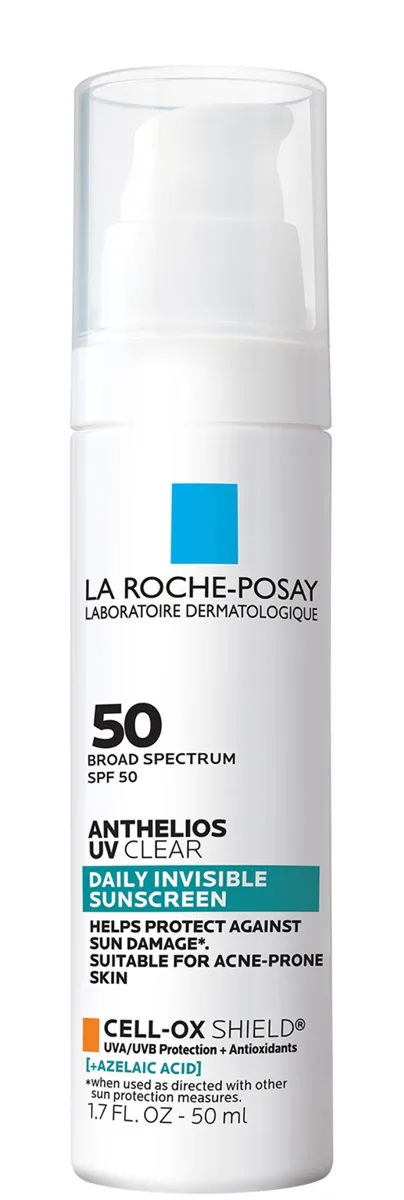
 Anthelios UV Clear Sunscreen SPF 50
One of the only US chemical sunscreens that genuinely earns its 'for sensitive and breakout-prone skin' positioning. A photostable Anthelios filter system paired with a legitimate azelaic acid dose in a lightweight serum-fluid that disappears on every skin tone. Excellent for rosacea, acne, and post-inflammatory hyperpigmentation — and probably the single best daily sunscreen in the La Roche-Posay US lineup for those conditions.
 K-Beauty Daily SPF Standout
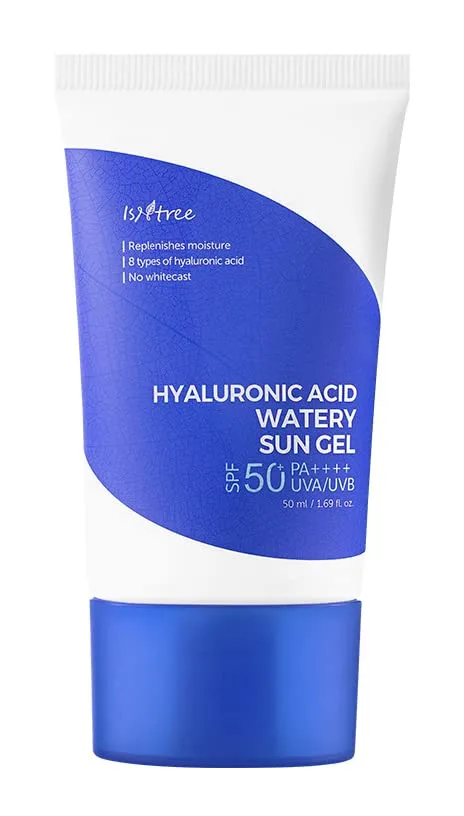
 Hyaluronic Acid Watery Sun Gel SPF 50+
One of the strongest everyday K-beauty sunscreens in the international market — modern European filters, no white cast, fragrance-free, niacinamide-boosted, and built around the brand's signature six-weight HA complex. At twenty-two dollars for 50ml, it's a case study in how much better a daily sunscreen can be when the formulator cares about both protection and wearability.
 Derm Office Staple
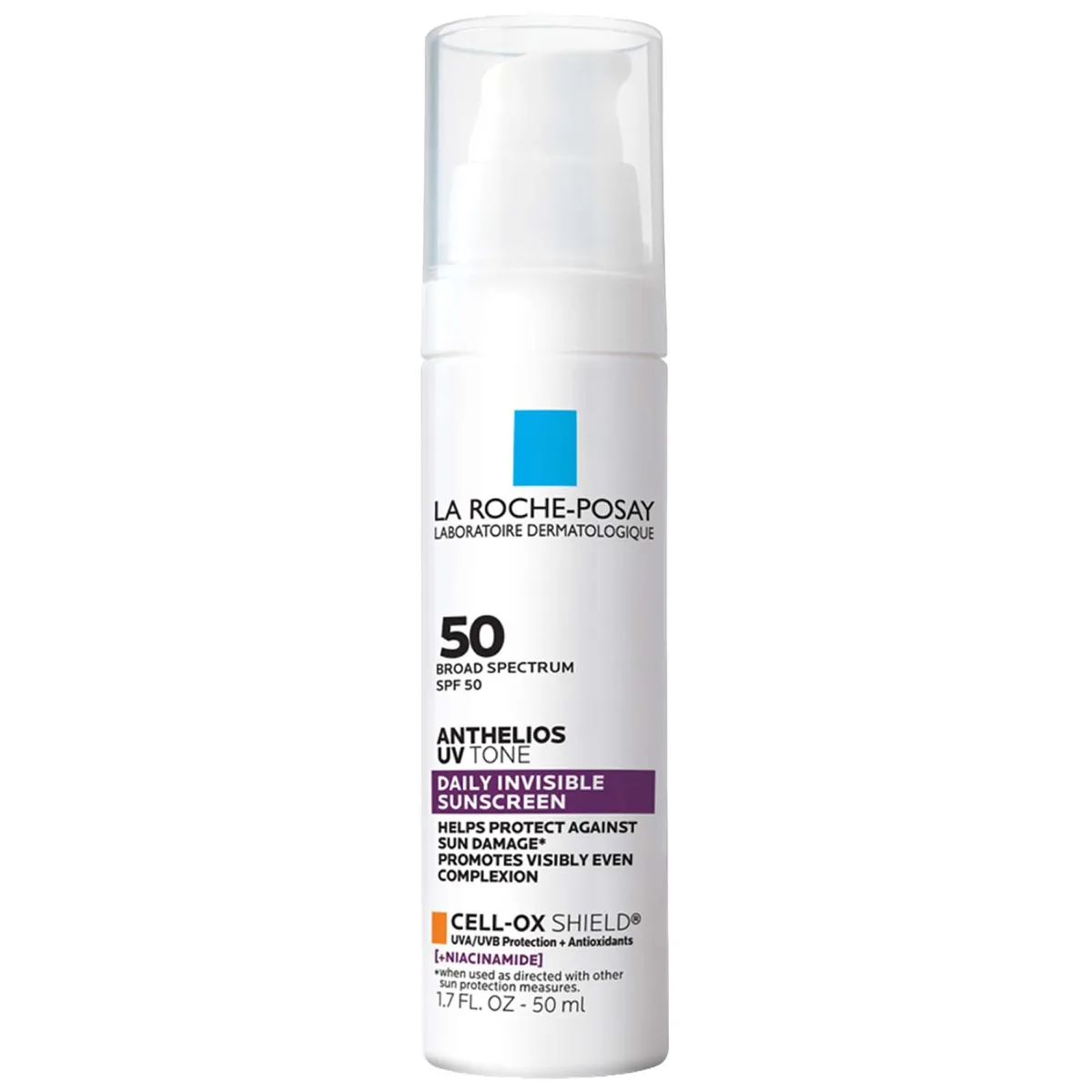
 Anthelios UV Tone Daily Invisible Sunscreen SPF 50
La Roche-Posay's most thoughtful answer yet for hyperpigmentation-prone skin that needs daily SPF. A photostable avobenzone system reinforced with Oxynex ST, paired with a meaningful dose of niacinamide, in a serum-fluid base that goes on invisible on every skin tone. Expensive for 1.7 oz but legitimately well-built — and a rare chemical sunscreen that earns its 'for dark spots' marketing.
 Melasma-Grade Mineral Sunscreen
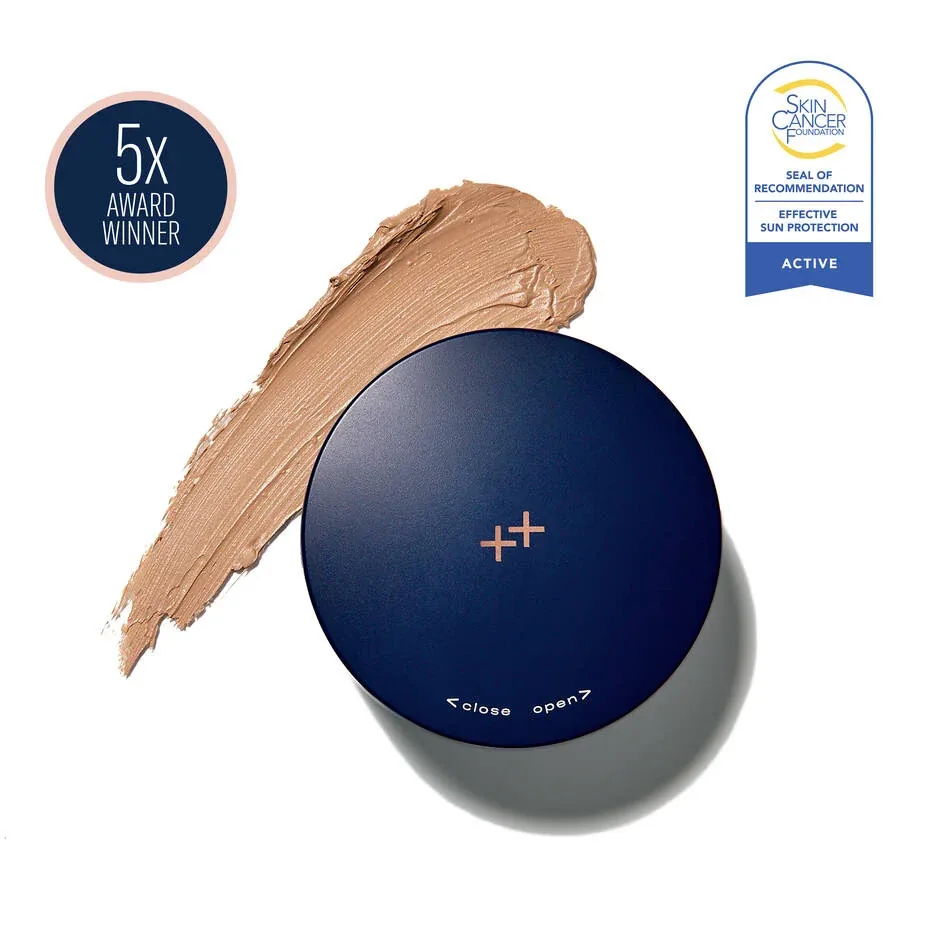
 sunbetter TONE SMART SPF 68
One of the most clinically useful tinted mineral sunscreens in the professional category. SPF 68 from a 100% mineral formula, iron oxide tint that blocks visible light for melasma protection, and an unusually lightweight texture that doesn't feel like you're wearing high-concentration zinc. For patients with melasma or post-inflammatory hyperpigmentation, this is the category benchmark — and it's earned its Allure Best of Beauty wins.
 K-Beauty Cult Favorite
 Birch Juice Moisturizing Sun Cream SPF 50+
One of the best hybrid sunscreens in K-beauty right now — a 70% birch sap base, modern UVA filters you can't get in the US, and a finish that wears like a lightweight moisturizer. Broadly compatible, well-priced, and genuinely pleasant to apply, with minor tradeoffs for oily and fungal-acne-prone users.
 The K-Beauty Sunscreen That Changed Everything
 Relief Sun: Rice + Probiotics SPF 50+
The sunscreen that rewrote the rules for what a $14 product could deliver. With independently verified SPF 50+, 30% rice extract, niacinamide, and a probiotic ferment complex, it offers protection and skincare benefits that rival products three times its price. The texture that feels like wearing nothing on your face is the reason it went viral — and stayed there.