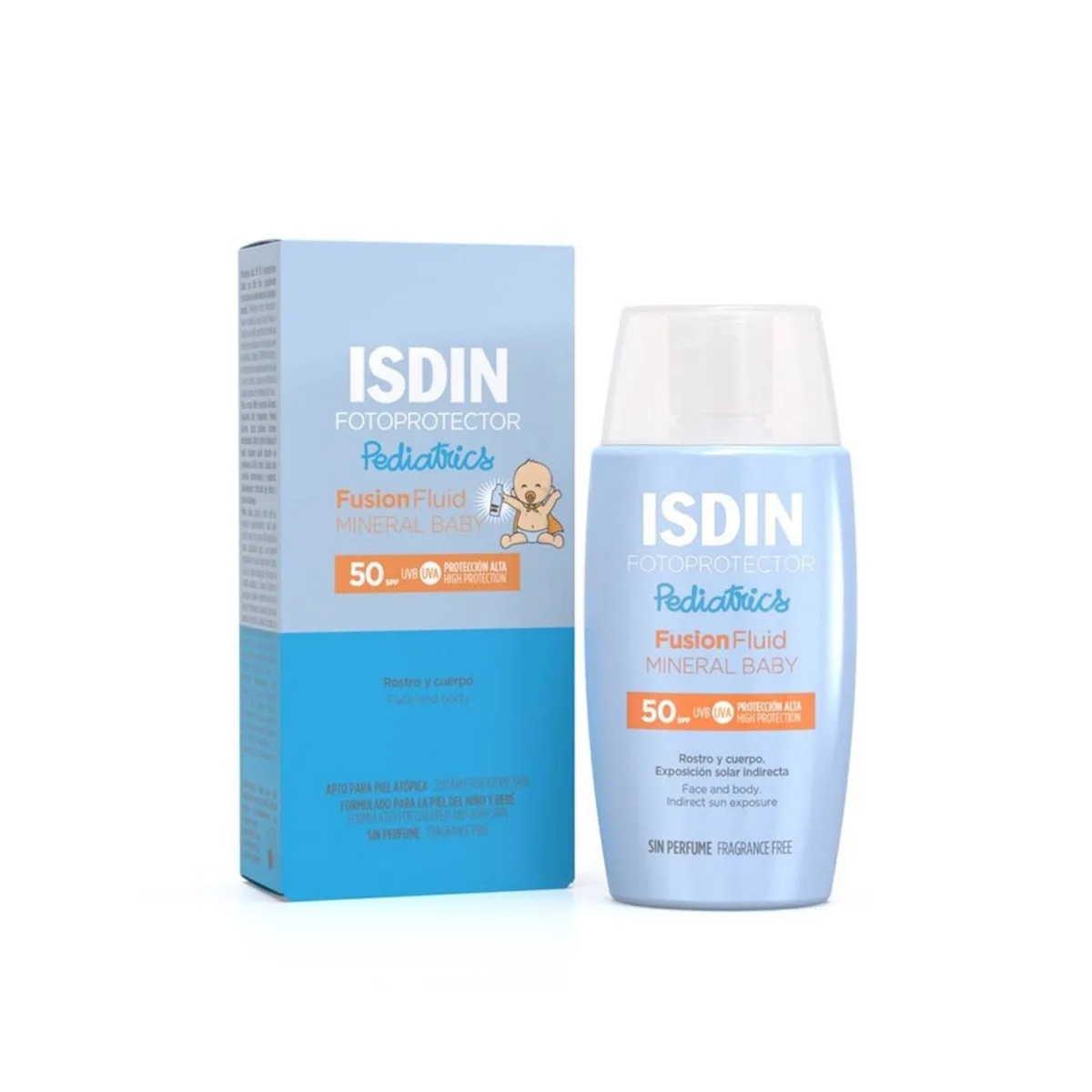
The mineral baby sunscreen that European pediatric dermatologists actually recommend — and that parents don't dread applying. Its genuinely fluid texture makes it the rare 100% mineral SPF 50 that goes on smoothly enough to get reapplied, which is the whole point of baby sunscreen.
Fotoprotector Mineral Baby Pediatrics SPF 50
The mineral baby sunscreen that European pediatric dermatologists actually recommend — and that parents don't dread applying. Its genuinely fluid texture makes it the rare 100% mineral SPF 50 that goes on smoothly enough to get reapplied, which is the whole point of baby sunscreen.
Score Breakdown
Where this product gains points and where it loses them — broken down across the four scoring pillars.
A thoughtfully formulated 100% mineral sunscreen designed for the most sensitive skin. The inclusion of soothing agents and the absence of fragrance and chemical UV filters make it exceptionally gentle, though the price-per-milliliter is high and the denatured alcohol may concern some parents.
Pros & Cons
- ✓100% mineral filters provide immediate UV protection with no absorption wait time
- ✓Fragrance-free formula specifically designed for atopic and sensitive baby skin
- ✓Fluid texture is dramatically easier to apply than traditional thick mineral baby creams
- ✓Panthenol and allantoin provide soothing barrier support for eczema-prone skin
- ✓80-minute water resistance rating suitable for outdoor and pool activities
- ✓Developed with pediatric dermatologists by Spain's leading dermatological brand
- ✓Nano-sized particles reduce white cast compared to non-nano mineral alternatives
- ✗Contains denatured alcohol as a solvent, which some parents prefer to avoid entirely
- ✗Small 50ml size depletes quickly with full-body baby application at the beach
- ✗Still leaves some visible white cast on medium to deeper skin tones
- ✗Premium pricing at approximately $33 makes frequent repurchasing costly
- ✗Contains cyclopentasiloxane, which faces environmental scrutiny in some markets
Full Review
Here is the fundamental problem with baby sunscreen: the products that parents feel best about buying — thick, mineral-only, fragrance-free, all-natural — are almost always the products they hate using. White zinc paste that takes five minutes to rub in while a toddler writhes like a greased eel. Residue that makes your child look like a Victorian ghost. A texture so dense it might as well be spackle. The result is predictable: parents apply it once in the morning, dread it all day, and never reapply. An SPF 50 that gets applied once and forgotten offers substantially less protection than an SPF 30 that gets faithfully reapplied every two hours.
ISDIN understood this equation. Their Pediatrics Fusion Fluid Mineral Baby was engineered to solve the compliance problem that undermines nearly every mineral baby sunscreen on the market. The formula uses nano-sized titanium dioxide and zinc oxide suspended in a fluid emulsion system that behaves nothing like the zinc paste parents expect. It pours. It spreads. It doesn't require the kind of aggressive rubbing that turns sunscreen application into a wrestling match.
The UV protection is entirely mineral — no chemical filters. Titanium dioxide handles the broad-spectrum heavy lifting with particularly strong UVB absorption, while zinc oxide fills in the UVA coverage. Together, they achieve SPF 50 from the moment they touch skin, with no absorption wait time. This is a meaningful advantage for baby sunscreen specifically, because the window between application and a baby's exposure to sun is often approximately zero seconds. You're already outside when you realize you forgot sunscreen.
The 80-minute water resistance rating is solid for a mineral fluid, though it's worth understanding what water resistance means in practice. It means the SPF decreases more slowly when wet, not that it's waterproof. After pool time, bath time, or any enthusiastic puddle-stomping, reapplication is non-negotiable.
Formulation choices reflect genuine pediatric consideration, not just adult-sunscreen-in-a-pastel-bottle marketing. The fragrance-free formula removes the most common sensitizer found in cosmetic products. Panthenol and allantoin are included specifically for their soothing properties on irritated or atopic skin — these aren't decorative ingredients but functional choices for babies with eczema or dermatitis who need sun protection without additional aggravation.
Sodium hyaluronate provides light hydration to offset the drying tendency of mineral films. The antioxidant system — tocopheryl acetate, tocopherol, and ascorbyl palmitate — adds free radical protection, which is thoughtful given how vulnerable young skin is to oxidative damage.
The honest concerns. This formula contains denatured alcohol as a solvent, which is how ISDIN achieves the fluid texture with such a high mineral load. It evaporates on application and is unlikely to cause issues for most babies, but some parents with extremely eczema-prone children may prefer to avoid it entirely. The presence of cyclopentasiloxane, a volatile silicone, also appears — it contributes to the smooth spreading but has faced some environmental scrutiny in European regulations.
White cast exists. It's significantly less than traditional baby zinc creams — the nano particle size genuinely helps — but on medium to dark skin tones, a visible cast remains. This is the inherent trade-off of mineral-only sunscreens at SPF 50: the concentration of reflective particles needed for that protection level will leave some visible residue.
The 50ml bottle is the biggest practical limitation. On a baby's face alone, 50ml lasts a reasonable time. But babies at the beach need sunscreen on their arms, legs, back, and feet — full-body application on even a small child will drain this bottle in a few outings. At roughly $33 per bottle, that cost accumulates fast during beach season.
ISDIN's five decades of photoprotection expertise show in this formulation. The company was born in sun-drenched Barcelona and has been the leading dermatological brand in Spain for decades. Their pediatric line isn't an afterthought or a brand extension — it's a core product category developed with pediatric dermatologists who understand that baby skin has a thinner stratum corneum, less melanin, and a higher surface-area-to-body-weight ratio than adult skin. Those differences matter in sunscreen formulation.
The value assessment comes down to what you're comparing against. Against drugstore baby zinc creams, it's expensive for a small bottle. Against the cost of a pediatric dermatologist visit for a sunburn on atopic baby skin, it's a bargain. The real value is in the texture: this is the mineral baby sunscreen you'll actually reapply, and consistent reapplication is worth more than any SPF number.
Formula
Key Ingredients
The hero actives that drive this product's performance.
| Ingredient | Function | Evidence |
|---|---|---|
| Titanium Dioxide [Nano] | One of two mineral UV filters in this 100% physical sunscreen. Positioned high in the INCI list, it provides the primary broad-spectrum UVA/UVB protection. The nano particle size allows the formula to spread more thinly and reduce the white cast that non-nano mineral screens leave on skin. | well-established |
| Zinc Oxide [Nano] | The second mineral filter, complementing titanium dioxide with stronger UVA coverage. Together they create complete spectrum protection without any chemical UV absorbers — critical for the baby formulation since mineral filters sit on the skin surface rather than being absorbed, reducing systemic exposure. | well-established |
| Panthenol | A provitamin B5 derivative included specifically for its skin-soothing and barrier-repairing properties on delicate baby skin. Works alongside allantoin in this formula to calm any irritation from sun exposure or the physical sunscreen film. | well-established |
| Allantoin | A gentle soothing agent that protects delicate pediatric skin from irritation. Paired with panthenol in this formula, it provides a calming base beneath the mineral UV filters, helping maintain skin comfort during extended wear. | well-established |
| Sodium Hyaluronate | Provides lightweight hydration to counteract the drying effect that mineral sunscreen films can have on young skin. Its low molecular weight helps it penetrate the upper skin layers despite the occlusive mineral filter layer sitting on top. | well-established |
Full INCI List
Aqua (Water), Dicaprylyl Carbonate, Diethylhexyl Carbonate, Cyclopentasiloxane, Dibutyl Adipate, Titanium Dioxide [Nano], Zinc Oxide [Nano], Alcohol Denat., Cyclohexasiloxane, Butylene Glycol, PEG-30 Dipolyhydroxystearate, Trimethylpentanediol/Adipic Acid/Glycerin Crosspolymer, Silica, Polyglyceryl-6 Polyricinoleate, Allantoin, Sodium Hyaluronate, Polyglyceryl-2 Isostearate, Panthenol, Tocopheryl Acetate, Magnesium Sulfate, Phenylpropanol, Disteardimonium Hectorite, Propanediol, Caprylyl Glycol, Triethoxycaprylylsilane, Glyceryl Stearate, PEG-8, Dimethicone Crosspolymer, Tocopherol, Ascorbyl Palmitate, Ascorbic Acid, Citric Acid
Product Flags
✓ Fragrance Free✗ Alcohol Free✓ Oil Free✗ Silicone Free✓ Paraben Free✓ Sulfate Free✗ Cruelty Free✗ Vegan✗ Fungal Acne Safe
Potential Irritants
Alcohol Denat.
Compatibility
Skin Match
Best For
Works For
Not Ideal For
Addresses These Conditions
Routine Step
sunscreen
Time of Day
AM
Pregnancy Safe
Yes ✓
Layering Tips
Apply generously to all exposed areas of baby's skin at least 15 minutes before sun exposure. Can be applied over emollient or barrier cream if baby has atopic or eczema-prone skin.
Results Timeline
Immediate UV protection upon application. The mineral filters provide protection from the moment they are applied to the skin, unlike chemical filters which need absorption time. Consistent daily use helps prevent cumulative sun damage on young, vulnerable skin.
Pairs Well With
Gentle baby moisturizerBarrier cream for eczema-prone skin
Sample AM Routine
- Gentle baby cleanser (if needed)
- Baby moisturizer or emollient
- ISDIN Fotoprotector Mineral Baby Pediatrics SPF 50
Sample PM Routine
- Gentle baby wash
- Baby moisturizer or emollient
Evidence
Science & Expert Perspective
The Science
The safety of nano-sized mineral UV filters in pediatric use has been extensively evaluated. The European Commission's Scientific Committee on Consumer Safety (SCCS) published opinions in 2013 and 2014 concluding that nano titanium dioxide used as a UV filter at concentrations up to 25% is safe for application on healthy, intact, or sunburnt skin. The committee found no evidence of dermal penetration beyond the stratum corneum — the outermost layer of dead cells — even with repeated application. Similar conclusions were reached for nano zinc oxide, with the SCCS noting in its 2012 opinion that zinc oxide nanoparticles do not penetrate into viable skin cells.
For baby skin specifically, a study published in the British Journal of Dermatology (2009) by Stamatas et al. characterized the structural differences between infant and adult skin, finding that infant skin has a thinner stratum corneum and higher transepidermal water loss. Despite these differences, subsequent research has not demonstrated that nano mineral filters behave differently on infant versus adult skin in terms of penetration. The particles remain on the skin surface, functioning as a physical reflective barrier.
The combination of titanium dioxide and zinc oxide provides complementary UV coverage. Titanium dioxide offers peak absorption in the UVB range (290-320nm) with some UVA-II coverage, while zinc oxide provides broader UVA absorption extending into UVA-I (340-400nm). A study by Pinnell et al. in Dermatologic Surgery (2000) demonstrated that the combination of these two minerals achieves broader and more uniform UV protection across the spectrum than either filter alone — a particularly important consideration for pediatric skin, which is more susceptible to long-term UV damage.
References
- SCCS Opinion on Titanium Dioxide (nano form) as UV filter — European Commission Scientific Committee on Consumer Safety (2013)
- Infant skin microstructure assessed in vivo differs from adult skin — British Journal of Dermatology (2009)
- Microfine zinc oxide is a superior sunscreen ingredient to microfine titanium dioxide — Dermatologic Surgery (2000)
Dermatologist Perspective
Pediatric dermatologists widely recommend mineral-only sunscreens for babies and young children due to the established surface-level mechanism of action — mineral filters reflect and scatter UV rays without requiring absorption into the skin. Board-certified pediatric dermatologists note that for babies with atopic dermatitis or sensitive skin, the absence of chemical UV filters, fragrance, and common sensitizers in this formula makes it an appropriate choice. Dermatologists emphasize that sun protection for babies should prioritize physical barriers (hats, clothing, shade) first, with sunscreen as a complement for exposed areas. The American Academy of Dermatology advises that sunscreen can be used on babies from 6 months of age, and mineral formulations are the preferred type for this age group.
Guidance
Usage Guide
How to Use
Apply generously to all exposed areas of baby's skin at least 15 minutes before going outdoors, though mineral filters provide immediate protection. Use approximately a teaspoon for the face and a tablespoon for the body. Reapply every two hours during sun exposure, and immediately after water exposure, towel-drying, or sweating. For babies with eczema, apply the usual emollient first and let it absorb before layering the sunscreen on top. Always combine with physical sun protection: hats, protective clothing, and shade during peak UV hours (10am-4pm).
Value Assessment
At approximately $33 for 50ml, this is positioned at the premium end of the baby sunscreen market. The per-ounce cost is roughly double that of widely available drugstore mineral baby sunscreens. The premium buys you ISDIN's fluid technology that makes mineral sunscreen significantly more pleasant to apply, a thoughtfully formulated soothing complex for atopic skin, and the backing of Europe's leading pediatric photoprotection brand. For parents of babies with eczema or extreme sensitivity, the formulation quality justifies the cost. For parents who simply need an everyday baby sunscreen and whose children tolerate standard formulas, the price premium is harder to justify given the small bottle size.
Who Should Buy
Parents of babies aged 6 months and older who have sensitive, atopic, or eczema-prone skin and need a mineral-only SPF 50 that won't cause additional irritation. Families who want the most cosmetically elegant mineral baby sunscreen available, and parents who've given up on reapplying thick zinc creams.
Who Should Skip
Parents who are comfortable with standard drugstore mineral baby sunscreens and don't need the premium fluid texture. Those who want to avoid any form of alcohol or silicone in their baby's products. Families needing to cover large body areas frequently — the 50ml bottle won't last through a beach vacation.
Ready to try ISDIN Fotoprotector Mineral Baby Pediatrics SPF 50?
Details
Details
Texture
A lightweight fluid that spreads more easily than traditional mineral sunscreens. Not as invisible as a chemical sunscreen, but significantly more elegant than thick zinc-based baby creams. Absorbs within a minute with gentle rubbing.
Scent
No added fragrance. Very faint neutral scent from the base ingredients that is virtually undetectable.
Packaging
Compact 50ml plastic squeeze bottle, easy to hold with one hand while managing a squirming baby. Travel-friendly size meets airline carry-on requirements.
Finish
naturallightweightsatin
What to Expect on First Use
Parents will notice the fluid consistency is much thinner than expected for a mineral baby sunscreen. It spreads well and leaves less white cast than traditional baby zinc formulas, though some residual whiteness is still visible. No stinging, no fragrance, no fussing from babies on first application.
How Long It Lasts
2-4 weeks with full-body application on a baby; 6-8 weeks with face-and-hands-only application
Period After Opening
12 months
Best Season
All Year
Background
The Why
Developed as part of ISDIN's dedicated Pediatrics line, this sunscreen was born from the recognition that parents in southern European climates needed mineral sun protection that they'd actually reapply on their children. Thick white paste that babies scream about and parents dread rubbing in doesn't get reapplied — so ISDIN engineered the most cosmetically elegant 100% mineral baby formula they could.
About ISDIN Legacy Brand (20+ years)
ISDIN was founded in Barcelona in 1975 as a joint venture between Puig and Esteve, two established Spanish cosmetics and pharmaceutical groups. The brand is the #1 dermatological skincare company in Spain and has a deep history in pediatric photoprotection, collaborating with pediatric dermatologists across Europe.
Brand founded: 1975 · Product launched: 2016
Myth vs. Reality
Myths & Misconceptions
Myth
Nano-sized mineral filters are unsafe for babies because they can penetrate the skin.
Reality
Extensive safety research, including a comprehensive review by the European Commission's Scientific Committee on Consumer Safety (SCCS), has found that nano titanium dioxide and zinc oxide do not penetrate intact skin beyond the outermost dead cell layers, even on baby skin. They remain on the surface where they reflect and scatter UV rays.
Myth
All baby sunscreens are the same — just pick the cheapest mineral SPF 50.
Reality
Formulation matters significantly. The vehicle, dispersants, soothing agents, and absence of potential irritants like fragrance vary widely between baby sunscreens. This formula specifically includes panthenol and allantoin for atopic skin compatibility, a consideration absent from many generic baby SPFs.
FAQ
Frequently Asked Questions
Is ISDIN Mineral Baby SPF 50 safe for newborns?
This sunscreen is formulated for babies aged 6 months and older. For newborns under 6 months, the American Academy of Pediatrics recommends keeping babies out of direct sunlight entirely rather than applying sunscreen, as their skin barrier is not yet fully developed.
Does ISDIN Mineral Baby sunscreen leave a white cast on baby skin?
The Fusion Fluid technology reduces white cast significantly compared to traditional thick mineral baby creams, but some residual whiteness is still visible — especially on deeper skin tones. The nano-sized mineral particles help minimize this effect while maintaining full UV protection.
Can I use ISDIN Mineral Baby on my baby's eczema-prone skin?
Yes — this formula was specifically designed for sensitive and atopic baby skin. The 100% mineral filters sit on the skin surface rather than absorbing in, and the fragrance-free formula includes panthenol and allantoin to soothe irritation. Apply over your baby's regular emollient for best results.
How water-resistant is ISDIN Mineral Baby SPF 50?
This sunscreen is rated as very water-resistant for up to 80 minutes. However, reapplication after swimming, towel-drying, or heavy sweating is still essential — water resistance decreases the effective SPF over time, and babies should have sunscreen reapplied every two hours during sun exposure regardless.
Why does this baby sunscreen contain alcohol?
Denatured alcohol serves as a solvent that enables the fluid texture — without it, the high concentration of mineral filters would create a thick paste. The alcohol evaporates upon application, contributing to the fast-absorbing feel. In this formulation context, the amount is unlikely to cause drying or irritation on baby skin.
Community
Community Voices
Common Praise
"100% mineral filters give parents peace of mind"
"Fragrance-free formula suitable for atopic baby skin"
"Fluid texture absorbs better than typical mineral sunscreens"
"Water-resistant up to 80 minutes"
"Does not irritate sensitive or eczema-prone skin"
Common Complaints
"Contains denatured alcohol which some parents prefer to avoid"
"Can leave a white cast especially on darker skin tones"
"Small 50ml size runs out quickly on whole-body baby application"
"Premium price for a small bottle"
Notable Endorsements
Recommended by pediatric dermatologists in SpainUsed in ISDIN's pediatric photoprotection program
Appears In
best sunscreen for babies best mineral sunscreen for sensitive skin best sunscreen for eczema best baby sunscreen no fragrance
Related Conditions
Related Ingredients
titanium dioxide zinc oxide panthenol allantoin hyaluronic acid
You Might Also Like
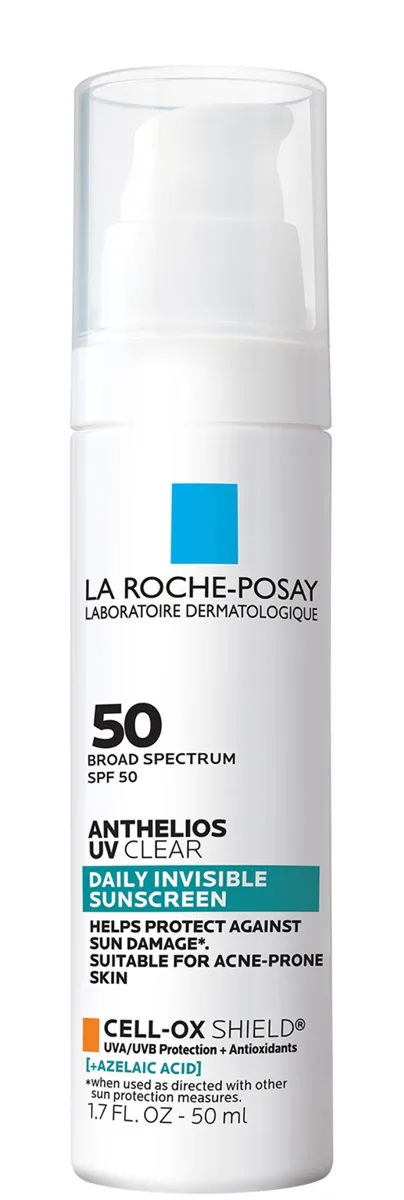 Derm Office Staple
 Anthelios UV Clear Sunscreen SPF 50
One of the only US chemical sunscreens that genuinely earns its 'for sensitive and breakout-prone skin' positioning. A photostable Anthelios filter system paired with a legitimate azelaic acid dose in a lightweight serum-fluid that disappears on every skin tone. Excellent for rosacea, acne, and post-inflammatory hyperpigmentation — and probably the single best daily sunscreen in the La Roche-Posay US lineup for those conditions.
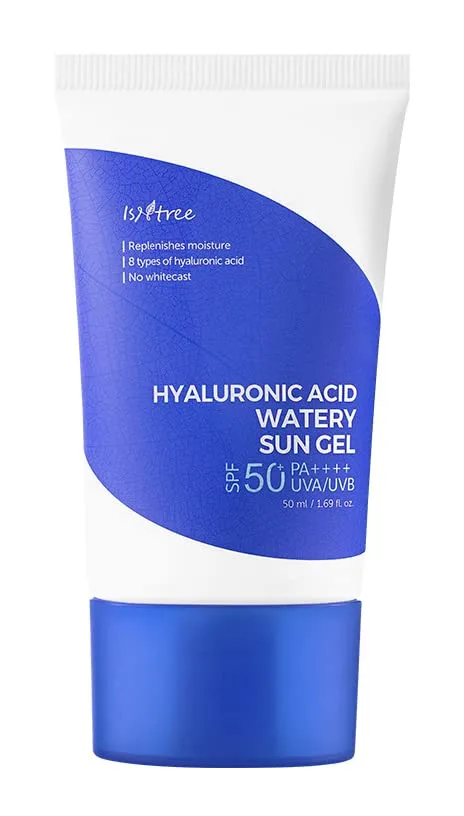 K-Beauty Daily SPF Standout
 Hyaluronic Acid Watery Sun Gel SPF 50+
One of the strongest everyday K-beauty sunscreens in the international market — modern European filters, no white cast, fragrance-free, niacinamide-boosted, and built around the brand's signature six-weight HA complex. At twenty-two dollars for 50ml, it's a case study in how much better a daily sunscreen can be when the formulator cares about both protection and wearability.
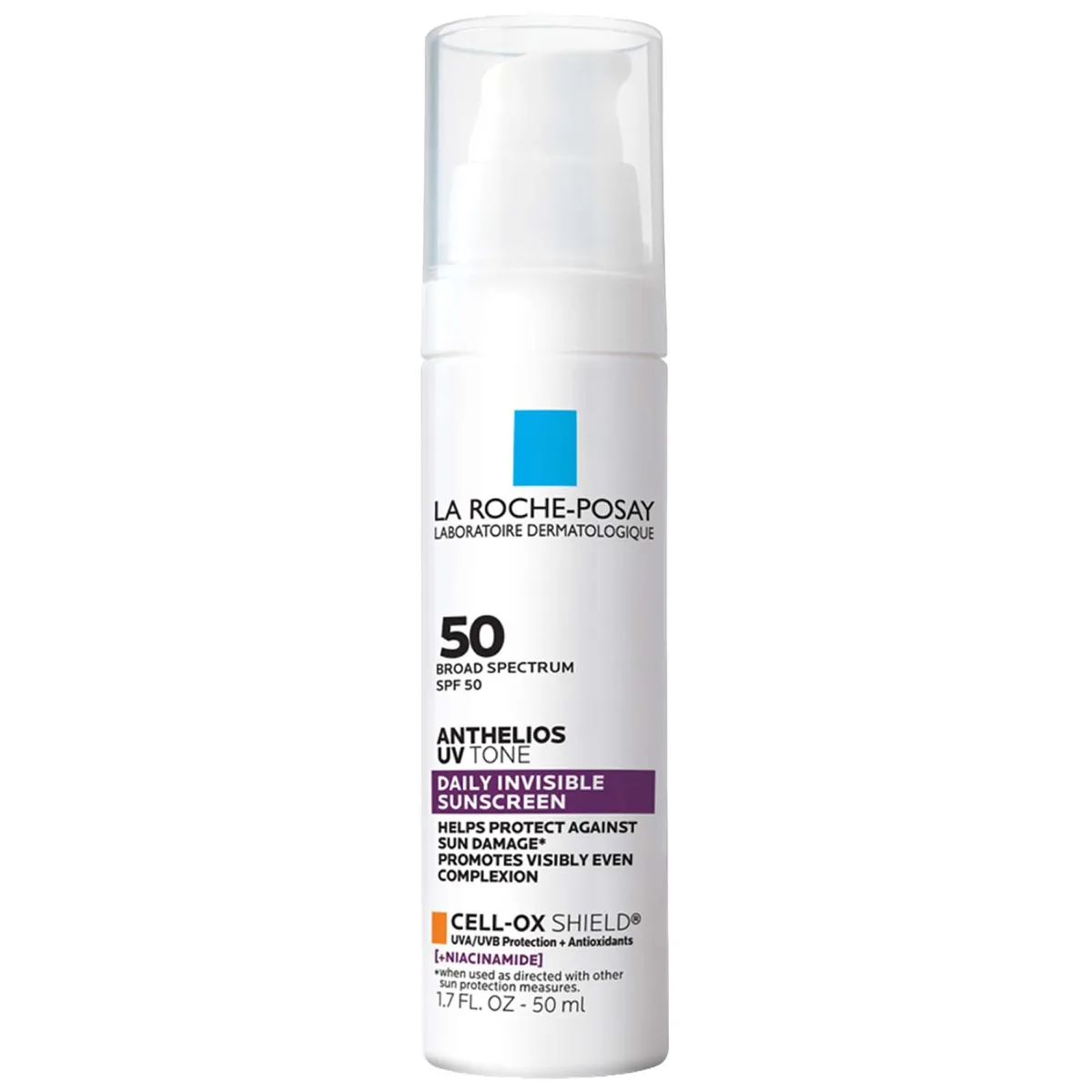 Derm Office Staple
 Anthelios UV Tone Daily Invisible Sunscreen SPF 50
La Roche-Posay's most thoughtful answer yet for hyperpigmentation-prone skin that needs daily SPF. A photostable avobenzone system reinforced with Oxynex ST, paired with a meaningful dose of niacinamide, in a serum-fluid base that goes on invisible on every skin tone. Expensive for 1.7 oz but legitimately well-built — and a rare chemical sunscreen that earns its 'for dark spots' marketing.
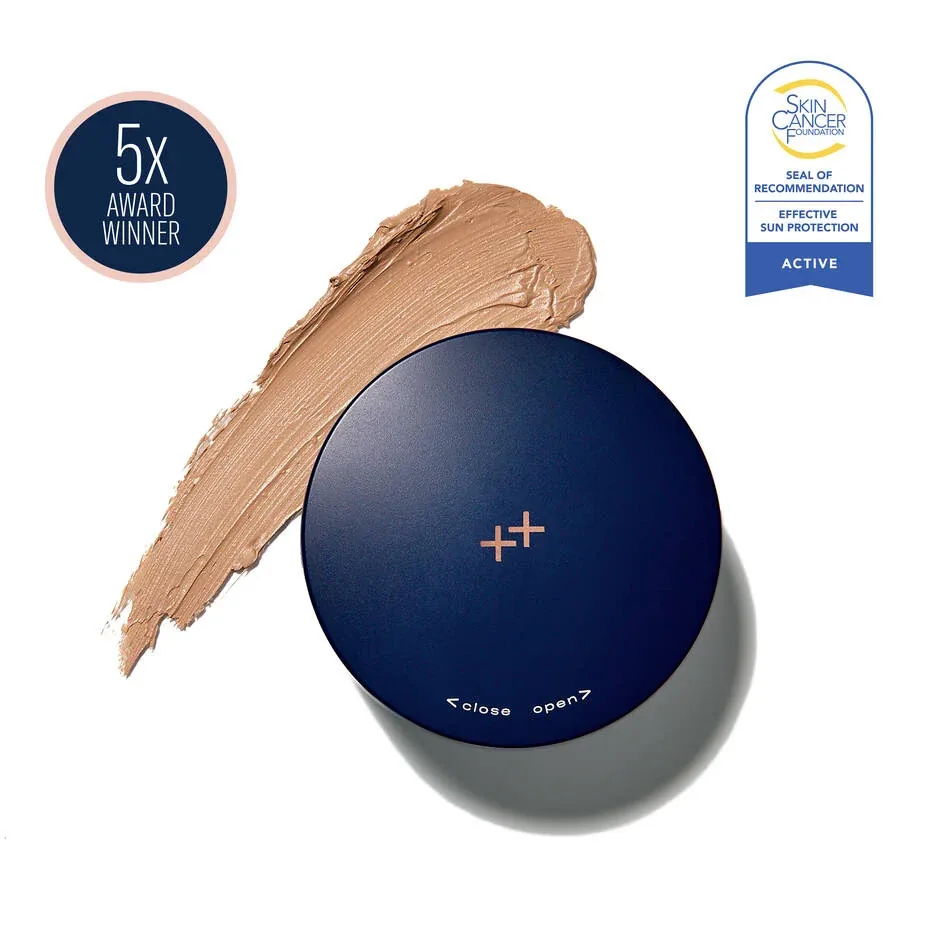 Melasma-Grade Mineral Sunscreen
 sunbetter TONE SMART SPF 68
One of the most clinically useful tinted mineral sunscreens in the professional category. SPF 68 from a 100% mineral formula, iron oxide tint that blocks visible light for melasma protection, and an unusually lightweight texture that doesn't feel like you're wearing high-concentration zinc. For patients with melasma or post-inflammatory hyperpigmentation, this is the category benchmark — and it's earned its Allure Best of Beauty wins.
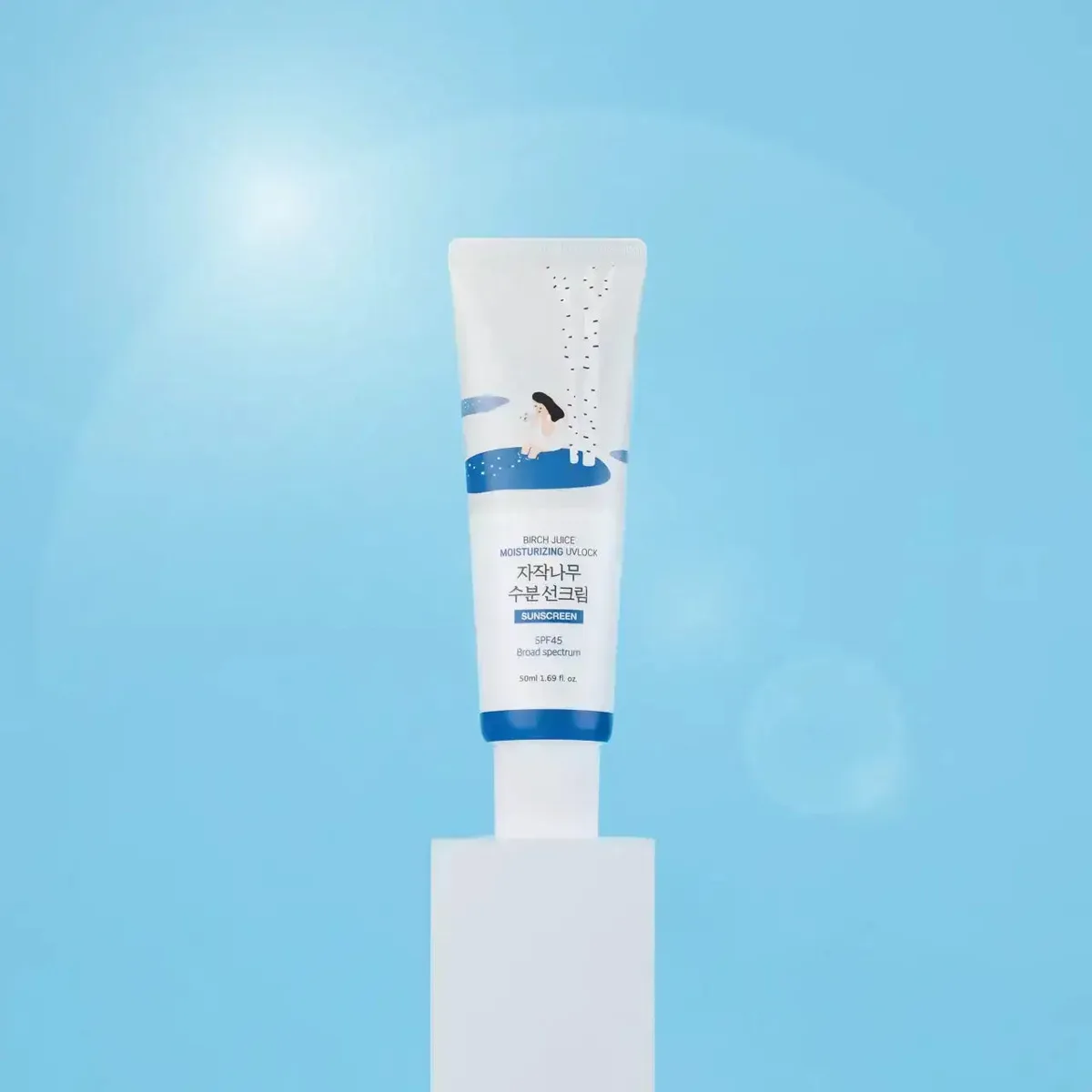 K-Beauty Cult Favorite
 Birch Juice Moisturizing Sun Cream SPF 50+
One of the best hybrid sunscreens in K-beauty right now — a 70% birch sap base, modern UVA filters you can't get in the US, and a finish that wears like a lightweight moisturizer. Broadly compatible, well-priced, and genuinely pleasant to apply, with minor tradeoffs for oily and fungal-acne-prone users.
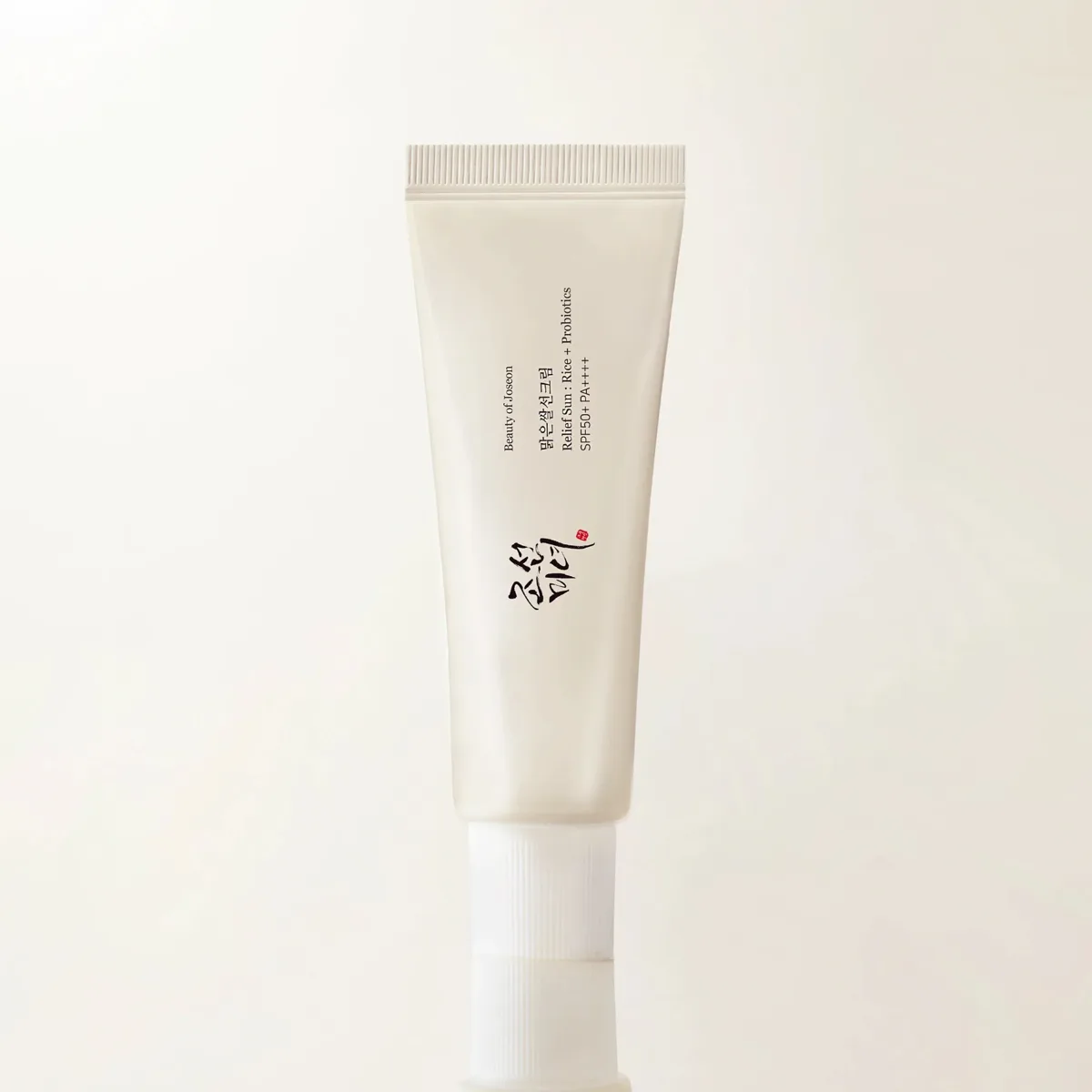 The K-Beauty Sunscreen That Changed Everything
 Relief Sun: Rice + Probiotics SPF 50+
The sunscreen that rewrote the rules for what a $14 product could deliver. With independently verified SPF 50+, 30% rice extract, niacinamide, and a probiotic ferment complex, it offers protection and skincare benefits that rival products three times its price. The texture that feels like wearing nothing on your face is the reason it went viral — and stayed there.