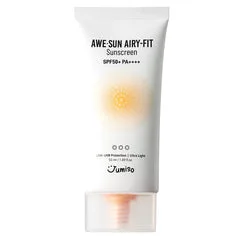
A masterclass in modern sunscreen formulation — five next-generation UV filters deliver SPF 50+ PA++++ protection in a texture so lightweight you forget you're wearing it. With niacinamide, hyaluronic acid, and adenosine onboard, this is a treatment product disguised as sunscreen, at a price that makes expensive Western SPFs look embarrassing.
AWE Sun Airy-fit Sunscreen SPF 50+
A masterclass in modern sunscreen formulation — five next-generation UV filters deliver SPF 50+ PA++++ protection in a texture so lightweight you forget you're wearing it. With niacinamide, hyaluronic acid, and adenosine onboard, this is a treatment product disguised as sunscreen, at a price that makes expensive Western SPFs look embarrassing.
Score Breakdown
An exceptionally well-formulated K-beauty sunscreen with modern UV filter technology, generous skincare actives, and outstanding value. The five-filter system provides robust SPF 50+ PA++++ protection, and the inclusion of niacinamide, hyaluronic acid, and adenosine transforms a sunscreen into a genuine treatment product.
Data Confidence: medium
This product has been available since approximately 2023 with growing review counts across Amazon, YesStyle, and K-beauty retailers. The UV filters used are well-established in European and Asian sunscreen markets with extensive safety data, though the specific formulation has a shorter track record.
0/100
Overall Score
Ingredient Quality 0
Value for Money 0
Suitability Breadth 0
Irritation Risk (↑ = safer) 0
Assessment
Pros
- Five modern UV filters provide robust SPF 50+ PA++++ broad-spectrum protection
- Zero white cast — completely invisible on all skin tones including deep complexions
- Texture so lightweight it can replace morning moisturizer for oily and combo skin
- Niacinamide, hyaluronic acid, adenosine, and panthenol add genuine skincare benefits
- Fragrance-free and alcohol-free — rare for a sunscreen with this level of elegance
- Extraordinary value at approximately $15 for 50ml of premium UV protection
- Vegan and cruelty-free with clean-label philosophy
Cons
- Chemical UV filters may not suit consumers who strictly prefer mineral sunscreens
- Some filters (Tinosorb S, DHHB) are not FDA-approved for US market sale
- Limited availability in Western brick-and-mortar retail — primarily online K-beauty shops
- Newer product with shorter track record than established sunscreen brands
- May not provide sufficient moisture for very dry skin without layering
Full Review
There's a moment, the first time you try a well-formulated Korean sunscreen, when you realize that the heavy, white, pilling mess you've been putting on your face every morning was never inevitable. It was a formulation choice — or more accurately, a regulatory one. American sunscreens are limited to a handful of UV filters approved decades ago, while Korean and European formulators have access to next-generation filters that deliver better protection in formulas that feel like they don't exist. Jumiso's AWE Sun Airy-fit is that moment in a tube.
The UV filter system is where this sunscreen earns its technical credentials. Five filters work in concert: ethylhexyl triazone anchors UVB protection with exceptional photostability. Diethylamino hydroxybenzoyl hexyl benzoate (DHHB, also known as Uvinul A Plus) provides UVA absorption. Terephthalylidene dicamphor sulfonic acid (Mexoryl SX) adds water-soluble UVA filtration. Polysilicone-15 contributes UVB absorption with a silicone backbone that improves the formula's sensorial properties. And bis-ethylhexyloxyphenol methoxyphenyl triazine (Tinosorb S) provides broad-spectrum coverage across both UVA and UVB while also stabilizing the other filters. This is not a simple two-filter sunscreen hoping for the best — it's an engineered protection system where each filter covers a different wavelength range and reinforces the others.
The PA++++ rating — the highest grade in the Asian UVA protection system — confirms that this sunscreen doesn't just prevent sunburn. It provides serious protection against the longer UVA wavelengths that penetrate deeper into the skin, driving collagen degradation, hyperpigmentation, and the kind of cumulative photoaging that shows up fifteen years later as suddenly visible wrinkles and dark spots. Most American SPF 50 products can't match this level of UVA protection because the approved US filters are less effective in the UVA I range.
But UV protection alone doesn't explain why this sunscreen has developed a cult following. The texture does. The formula uses bamboo stem extract as a primary base ingredient — it's listed second, above all the UV filters — creating an ultra-lightweight, almost watery consistency that absorbs into the skin within seconds. There is zero white cast. Zero greasy film. Zero detectable sunscreen texture. It feels like applying a lightweight moisturizing essence, which is exactly what Korean formulators intended. When your sunscreen feels like a chore, you skip it. When it feels like this, you reach for it.
The skincare actives are where Jumiso goes beyond basic sun protection. Niacinamide is present at a meaningful concentration — listed before the UV filters on the INCI, suggesting it's above the typical 2-4% functional threshold. This means your morning sunscreen application is simultaneously delivering brightening, barrier-strengthening, and anti-inflammatory benefits. Sodium hyaluronate provides lightweight hydration. Panthenol supports barrier repair. And adenosine — a KFDA-recognized anti-wrinkle ingredient — adds anti-aging function to a product that's already preventing aging through UV filtration. It's a genuinely multi-functional product, not a sunscreen with token skincare marketing.
For oily and combination skin types, this sunscreen can replace your morning moisturizer entirely. The glycerin, propanediol, and hyaluronic acid provide enough hydration for most non-dry skin types, and the natural finish — not matte, not dewy, just skin-like — sits under makeup without causing separation or sliding. For dry skin types, it layers beautifully over a hydrating serum or moisturizer without the pilling that plagues many sunscreen-over-moisturizer combinations.
The honest limitations are few but worth noting. This is a chemical sunscreen — the UV filters work by absorbing and converting UV energy rather than physically reflecting it. While the modern filters used here have excellent safety profiles and low systemic absorption, consumers who specifically require or prefer mineral sunscreens will need to look elsewhere. The formula also isn't widely available in brick-and-mortar Western retailers, requiring online ordering from K-beauty shops or Amazon, with variable shipping times and occasional stock issues.
At approximately $15 for 50ml, the value proposition is extraordinary. This is less than half the price of many premium Western sunscreens that offer inferior UV filter technology and heavier textures. The cost per application — roughly $0.30 per daily use over five to six weeks — makes it one of the most accessible high-performance sunscreens available anywhere. The argument that good sun protection requires expensive products was always questionable, but products like this demolish it entirely.
Jumiso's Awe-Sun Airy-fit represents the best of what K-beauty innovation can deliver: next-generation sun protection technology, meaningful skincare actives, a texture that respects how people actually live, and a price that doesn't gatekeep quality. It's the kind of product that makes you wonder why anyone would pay four times more for less protection in a less pleasant formula.
Formula
Ingredients
The hero actives that drive this product's performance.
| Ingredient | Function | Evidence |
|---|---|---|
| Ethylhexyl Triazone | A photostable UVB filter that anchors this five-filter sunscreen system. Unlike older UVB absorbers, ethylhexyl triazone maintains its protective capacity without degrading under UV exposure, providing consistent SPF 50+ protection throughout the day. | well-established |
| Tinosorb S (Bis-Ethylhexyloxyphenol Methoxyphenyl Triazine) | A broad-spectrum filter covering both UVA and UVB ranges while also stabilizing other UV filters in the system. Its inclusion is what enables this formula to achieve PA++++ (highest UVA protection grade) while keeping the other filters effective over time. | well-established |
| Niacinamide | Goes beyond typical sunscreen duty — while the UV filters prevent damage, niacinamide actively addresses existing concerns by brightening uneven tone, strengthening the barrier, and reducing the inflammation that UV exposure would otherwise trigger. | well-established |
| Sodium Hyaluronate | Provides hydration within the sunscreen matrix, counteracting the drying effect that chemical UV filters can have. Works alongside glycerin and propanediol to maintain skin moisture under the protective film. | well-established |
| Panthenol | Vitamin B5 derivative that soothes and supports barrier repair, making this sunscreen comfortable for sensitive or slightly compromised skin that might otherwise react to chemical UV filters. | well-established |
| Adenosine | A Korean cosmetic staple that provides anti-wrinkle benefits recognized by KFDA. In this sunscreen context, it adds anti-aging function to a product that's already preventing UV-induced aging through filtration. | promising |
Full INCI List
Water, Bambusa Arundinacea Stem Extract, Dibutyl Adipate, Butyloctyl Salicylate, Glycerin, Propanediol, Ethylhexyl Triazone, Terephthalylidene Dicamphor Sulfonic Acid, Polyglyceryl-3 Distearate, Niacinamide, Butylene Glycol, 1,2-Hexanediol, Tromethamine, Pentylene Glycol, Diethylamino Hydroxybenzoyl Hexyl Benzoate, Polysilicone-15, Cardiospermum Halicacabum Flower/Leaf/Vine Extract, Sodium Hyaluronate, Echium Plantagineum Seed Oil, Glyceryl Stearate, Bis-Ethylhexyloxyphenol Methoxyphenyl Triazine, Cetearyl Alcohol, Octyldodecanol, Panthenol, Carbomer, Ammonium Acryloyldimethyltaurate/VP Copolymer, Glyceryl Stearate Citrate, Inulin Lauryl Carbamate, Acrylates/C10-30 Alkyl Acrylate Crosspolymer, Sodium Stearoyl Glutamate, Ethylhexylglycerin, Adenosine, Methylpropanediol, Helianthus Annuus (Sunflower) Seed Oil Unsaponifiables, Polyether-1, Tocopherol, Biosaccharide Gum-1
Product Flags
✓ Fragrance Free✓ Alcohol Free✗ Oil Free✗ Silicone Free✓ Paraben Free✓ Sulfate Free✓ Cruelty Free✓ Vegan✗ Fungal Acne Safe
Compatibility
Skin Match
Best For
Works For
Not Ideal For
Addresses These Conditions
sun damage aging hyperpigmentation dehydration dullness
Routine Step
sunscreen
Time of Day
AM
Pregnancy Safe
Unknown
Layering Tips
Apply as the final step of your morning skincare routine. The lightweight texture layers well over serums and moisturizers without pilling. Can serve as a light moisturizer for oily skin types, eliminating the need for a separate morning moisturizer. Sits well under makeup.
Results Timeline
Immediate UV protection and light hydration from first application. The niacinamide contributes to gradual brightening and even tone over 4-8 weeks of daily use. Anti-aging prevention benefits are cumulative with consistent daily application.
Pairs Well With
Lightweight hydrating tonerNiacinamide or vitamin C serum underneathAny moisturizer for dry skin types
Conflicts With
Very heavy occlusive moisturizers may cause pilling
Sample AM Routine
- Gentle cleanser
- Hydrating toner
- Serum (optional)
- Jumiso AWE Sun Airy-fit Sunscreen SPF 50+
Sample PM Routine
- Oil cleanser
- Water-based cleanser
- Exfoliant (2-3x/week)
- Serum
- Moisturizer
Evidence
Science
The Science
The five-filter UV system in this sunscreen represents the current state of the art in photoprotection technology. Ethylhexyl triazone (Uvinul T 150) is a high-extinction UVB filter with exceptional photostability — research published in Photochemical & Photobiological Sciences (2009) demonstrated that it retains over 95% of its UV-absorbing capacity after 50 MED of simulated sun exposure, far outperforming older UVB filters like octinoxate.
Bis-ethylhexyloxyphenol methoxyphenyl triazine (Tinosorb S, BEMT) is a broad-spectrum filter covering both UVA and UVB ranges (peak absorption 310 nm and 343 nm) with an additional critical function: it acts as a photostabilizer for other UV filters in the system. A study published in the Journal of Photochemistry and Photobiology B (2012) showed that Tinosorb S prevents the photodegradation of less stable filters through an energy transfer mechanism, effectively extending the protective lifespan of the entire sunscreen system.
Diethylamino hydroxybenzoyl hexyl benzoate (DHHB, Uvinul A Plus) provides targeted UVA absorption with peak absorption at 354 nm, covering the crucial UVA I range (340-400 nm) that is poorly addressed by many US-market sunscreens. A 2014 study in the International Journal of Cosmetic Science confirmed that DHHB is photostable and provides synergistic protection when combined with Tinosorb-class filters.
The PA++++ rating corresponds to a UVA protection factor of 16 or higher, as defined by the Japanese JCIA standard. This level of UVA protection is clinically significant for preventing photoaging — a landmark study published in the Annals of Internal Medicine (2013) demonstrated that daily broad-spectrum sunscreen use reduced skin aging by 24% over 4.5 years of follow-up.
References
- Photostability of modern UVB filters including ethylhexyl triazone — Photochemical & Photobiological Sciences (2009)
- Tinosorb S as UV filter and photostabilizer — Journal of Photochemistry and Photobiology B (2012)
- Daily sunscreen use and prevention of skin aging — Annals of Internal Medicine (2013)
Dermatologist Perspective
Board-certified dermatologists recognize that the UV filter technology available in Korean and European sunscreens — including Tinosorb S, DHHB, and ethylhexyl triazone — provides superior spectral coverage and photostability compared to the limited filter palette approved for US-market products. Dermatologists note that the PA++++ UVA rating addresses a significant gap in sun protection, as UVA damage drives the majority of photoaging and contributes to melanoma risk. The inclusion of niacinamide is viewed favorably from a dermatological standpoint — it's one of the most well-studied topical actives for barrier repair, brightening, and anti-inflammatory effects. Dermatologists emphasize that the best sunscreen is the one you'll actually use daily, and this product's lightweight, invisible texture directly supports compliance.
Guidance
Usage Guide
How to Use
Apply generously as the last step of your morning skincare routine, after moisturizer (or instead of moisturizer for oily skin). Use approximately a two-finger-length strip for face and neck coverage. Smooth evenly and allow 10-15 minutes to absorb before sun exposure. Reapply every two hours during sustained sun exposure, after swimming, or after heavy sweating. For touch-ups over makeup, pat gently rather than rubbing.
Value Assessment
At approximately $15 for 50ml, this sunscreen offers extraordinary value by any standard. The five-filter UV system provides protection technology that premium Western sunscreens selling for $40-60 can't match due to regulatory limitations on available UV filters. The niacinamide, hyaluronic acid, adenosine, and panthenol would constitute a reasonable skincare serum on their own. The per-application cost of roughly $0.30 makes daily SPF 50+ PA++++ protection genuinely accessible. Even accounting for shipping from K-beauty retailers, this product costs a fraction of comparable protection levels from Western brands.
Who Should Buy
Anyone seeking high-performance daily sunscreen that feels invisible on the skin. Ideal for oily and combination skin types who struggle with greasy or white-cast sunscreens, K-beauty enthusiasts, those concerned about UVA-driven photoaging, and budget-conscious consumers who don't want to compromise on protection quality.
Who Should Skip
Consumers who strictly require mineral-only sunscreens (pregnancy precaution, mineral preference). Those who prefer purchasing from brick-and-mortar retailers may find availability challenging. Very dry skin types will need a moisturizer underneath for adequate hydration.
Ready to try Jumiso AWE Sun Airy-fit Sunscreen SPF 50+?
Details
Details
Texture
Ultra-lightweight, watery lotion that absorbs almost instantly. The bamboo stem extract base gives it a fresh, fluid consistency that feels more like a hydrating essence than a traditional sunscreen.
Scent
Fragrance-free with no detectable scent.
Packaging
Slim squeeze tube with a flip cap. Clean, minimalist Korean design. Travel-friendly 50ml size.
Finish
naturallightweightnon-greasy
What to Expect on First Use
The first application is often a revelation for people used to Western sunscreens. It applies like a lightweight moisturizer, absorbs within seconds, and leaves zero visible residue. No white cast, no greasy film, no detectable sunscreen texture. Comfortable enough that you forget you're wearing it.
How Long It Lasts
5-6 weeks with daily face application
Period After Opening
12 months
Best Season
All Year
Certifications
Cruelty-FreeVegan
Background
The Why
Jumiso's Awe-Sun line emerged from the Korean sunscreen innovation wave that recognized daily SPF as the single most important anti-aging step. While Western sunscreens were still debating avobenzone stability, Korean and European formulators were building multi-filter systems with next-generation UV absorbers. This product represents the culmination of that approach — maximum protection with the lightest possible sensorial footprint.
About Jumiso Emerging Brand (2–5 years)
Jumiso was founded in 2016 in South Korea by Siheon Keum under parent company Helloskin. The brand has grown rapidly in global K-beauty markets with a focus on clean, plant-based formulations. While relatively young, it has developed a strong following for its sunscreen line and vitamin C serums, with growing independent review coverage.
Brand founded: 2016 · Product launched: 2023
Myth vs. Reality
Myths
Myth
Korean sunscreens can't be trusted because they aren't FDA-regulated.
Reality
Korean sunscreens are regulated by MFDS (Ministry of Food and Drug Safety), which has its own rigorous testing standards. Many of the UV filters used in Korean sunscreens (like Tinosorb S) are also approved and widely used in Europe and Australia. SPF and PA ratings are verified through standardized testing.
Myth
Chemical sunscreens are dangerous because they absorb into the bloodstream.
Reality
While some older chemical filters show measurable blood absorption, the modern filters in this formula (ethylhexyl triazone, Tinosorb S) have very low systemic absorption due to their large molecular size. No completed study has demonstrated adverse health effects from topical sunscreen use at recommended levels.
FAQ
FAQ
Does Jumiso AWE Sun Airy-fit leave a white cast?
No — this is a chemical (organic) sunscreen that uses UV-absorbing filters rather than mineral particles. It goes on completely clear and invisible on all skin tones, which is one of its most praised features.
Is Jumiso sunscreen good for oily skin?
Excellent for oily skin. The lightweight, watery texture absorbs quickly without adding oiliness, and many oily-skin users report it's moisturizing enough to skip a separate morning moisturizer. The natural finish sits well under makeup without sliding.
What does PA++++ mean?
PA++++ is the highest UVA protection grade in the Asian sunscreen rating system. While SPF measures UVB protection (sunburn prevention), PA measures UVA protection (which prevents photoaging, hyperpigmentation, and deeper skin damage). PA++++ means this sunscreen blocks over 95% of UVA radiation.
Can I use this sunscreen if I'm pregnant?
The chemical UV filters in this formula haven't raised specific pregnancy safety concerns in current research, but there's limited long-term data on newer filters like Tinosorb S during pregnancy. If you prefer maximum caution, consult your OB-GYN or consider a mineral sunscreen during pregnancy.
Is Jumiso AWE Sun Airy-fit reef-safe?
This sunscreen does not contain oxybenzone or octinoxate, the two UV filters most associated with coral reef damage. However, the term 'reef-safe' has no regulated definition. The chemical filters used here are considered more environmentally friendly than older-generation chemical sunscreens.
How does this compare to Western SPF 50 sunscreens?
Korean sunscreens like this one often use next-generation UV filters (Tinosorb S, DHHB, ethylhexyl triazone) that provide broader spectral coverage and better photostability than the older avobenzone-based systems common in US sunscreens. The textural difference is also significant — this feels like a lightweight moisturizer rather than a heavy sunscreen.
Community
Community
Common Praise
"Zero white cast — completely invisible on all skin tones"
"Lightweight, airy texture that doesn't feel like wearing sunscreen"
"Doubles as a light moisturizer for oily and combination skin"
"Excellent under makeup without pilling or separating"
"Impressive SPF 50+ PA++++ at an incredibly affordable price point"
Common Complaints
"May not be moisturizing enough for very dry skin without layering"
"Availability can be inconsistent outside of K-beauty retailers"
"Some chemical UV filters not approved in all markets"
"Newer brand with less long-term track record than established sunscreen brands"
Notable Endorsements
Widely recommended in K-beauty communities and subredditsMultiple positive reviews from K-beauty content creators
Appears In
best sunscreen for oily skin best korean sunscreen best sunscreen no white cast best affordable sunscreen best sunscreen for hyperpigmentation
Related Conditions
sun damage aging hyperpigmentation dullness
Related Ingredients
You Might Also Like
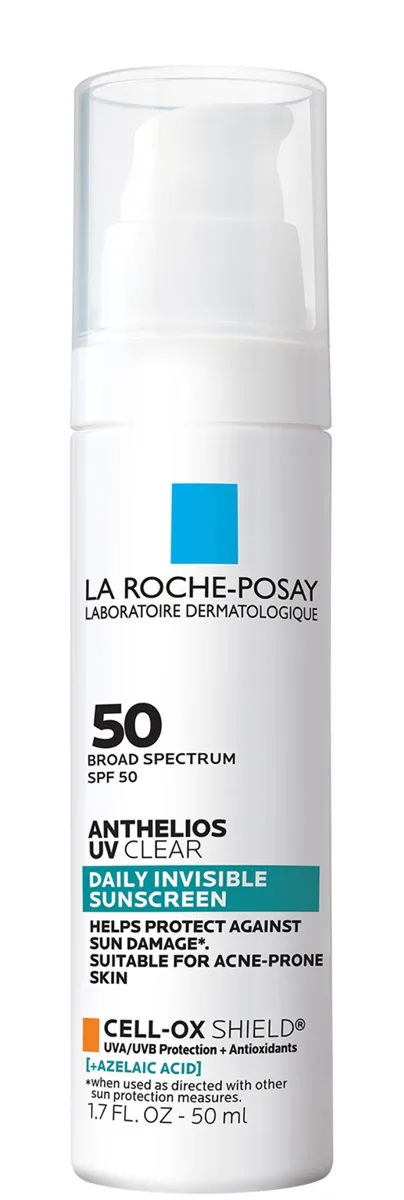 Derm Office Staple
 Anthelios UV Clear Sunscreen SPF 50
One of the only US chemical sunscreens that genuinely earns its 'for sensitive and breakout-prone skin' positioning. A photostable Anthelios filter system paired with a legitimate azelaic acid dose in a lightweight serum-fluid that disappears on every skin tone. Excellent for rosacea, acne, and post-inflammatory hyperpigmentation — and probably the single best daily sunscreen in the La Roche-Posay US lineup for those conditions.
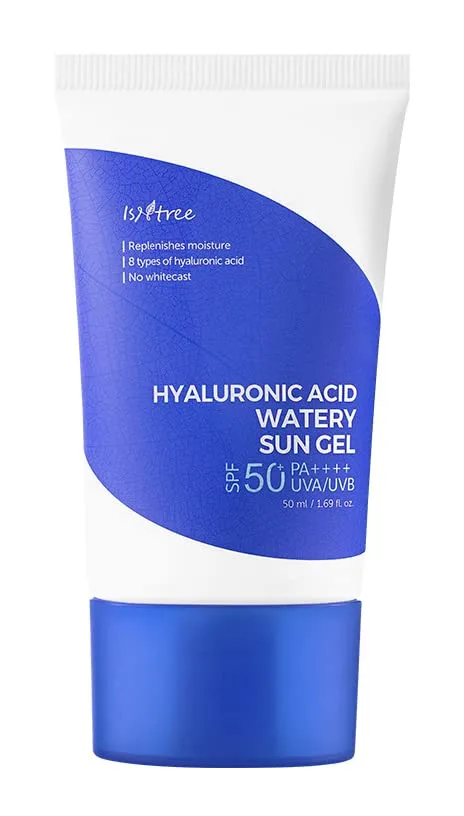 K-Beauty Daily SPF Standout
 Hyaluronic Acid Watery Sun Gel SPF 50+
One of the strongest everyday K-beauty sunscreens in the international market — modern European filters, no white cast, fragrance-free, niacinamide-boosted, and built around the brand's signature six-weight HA complex. At twenty-two dollars for 50ml, it's a case study in how much better a daily sunscreen can be when the formulator cares about both protection and wearability.
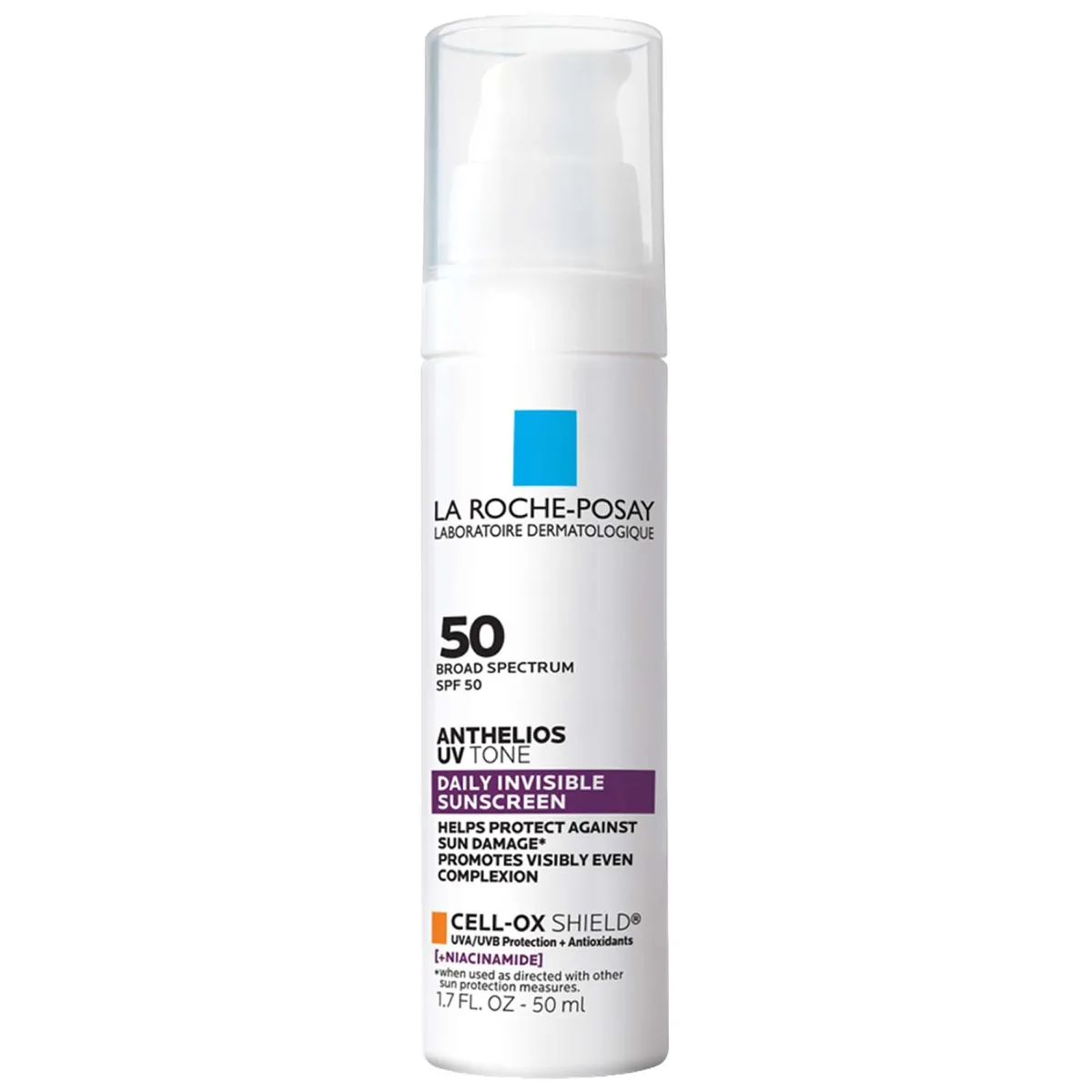 Derm Office Staple
 Anthelios UV Tone Daily Invisible Sunscreen SPF 50
La Roche-Posay's most thoughtful answer yet for hyperpigmentation-prone skin that needs daily SPF. A photostable avobenzone system reinforced with Oxynex ST, paired with a meaningful dose of niacinamide, in a serum-fluid base that goes on invisible on every skin tone. Expensive for 1.7 oz but legitimately well-built — and a rare chemical sunscreen that earns its 'for dark spots' marketing.
 Melasma-Grade Mineral Sunscreen
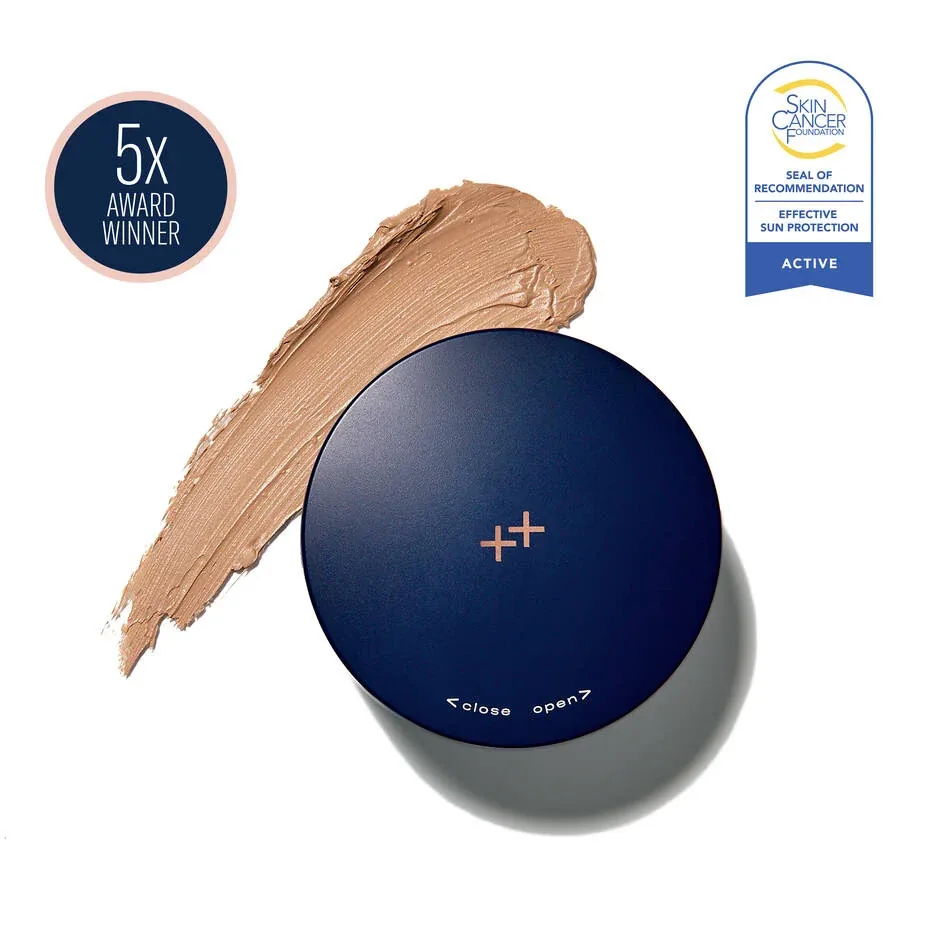
 sunbetter TONE SMART SPF 68
One of the most clinically useful tinted mineral sunscreens in the professional category. SPF 68 from a 100% mineral formula, iron oxide tint that blocks visible light for melasma protection, and an unusually lightweight texture that doesn't feel like you're wearing high-concentration zinc. For patients with melasma or post-inflammatory hyperpigmentation, this is the category benchmark — and it's earned its Allure Best of Beauty wins.
 K-Beauty Cult Favorite
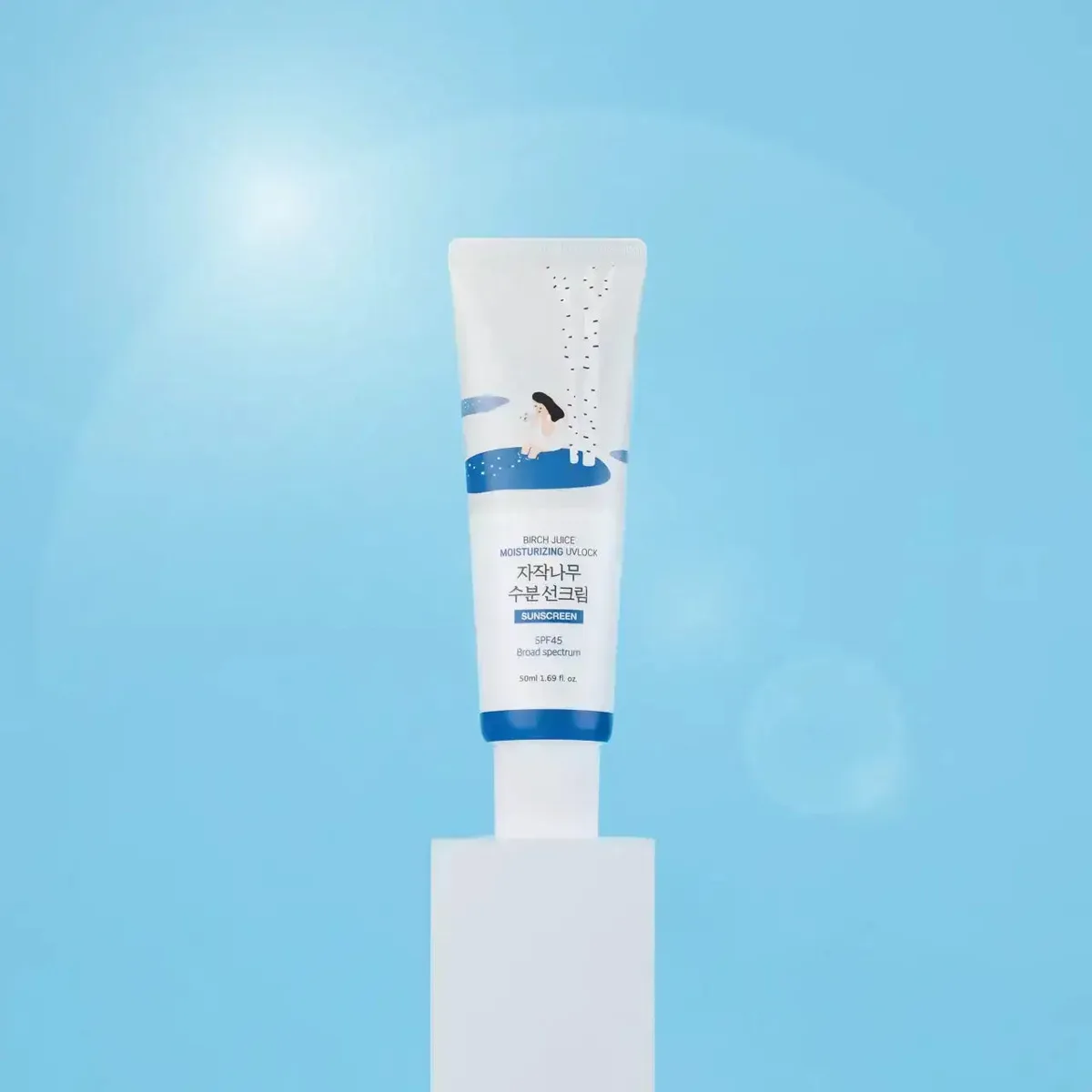
 Birch Juice Moisturizing Sun Cream SPF 50+
One of the best hybrid sunscreens in K-beauty right now — a 70% birch sap base, modern UVA filters you can't get in the US, and a finish that wears like a lightweight moisturizer. Broadly compatible, well-priced, and genuinely pleasant to apply, with minor tradeoffs for oily and fungal-acne-prone users.
 The K-Beauty Sunscreen That Changed Everything
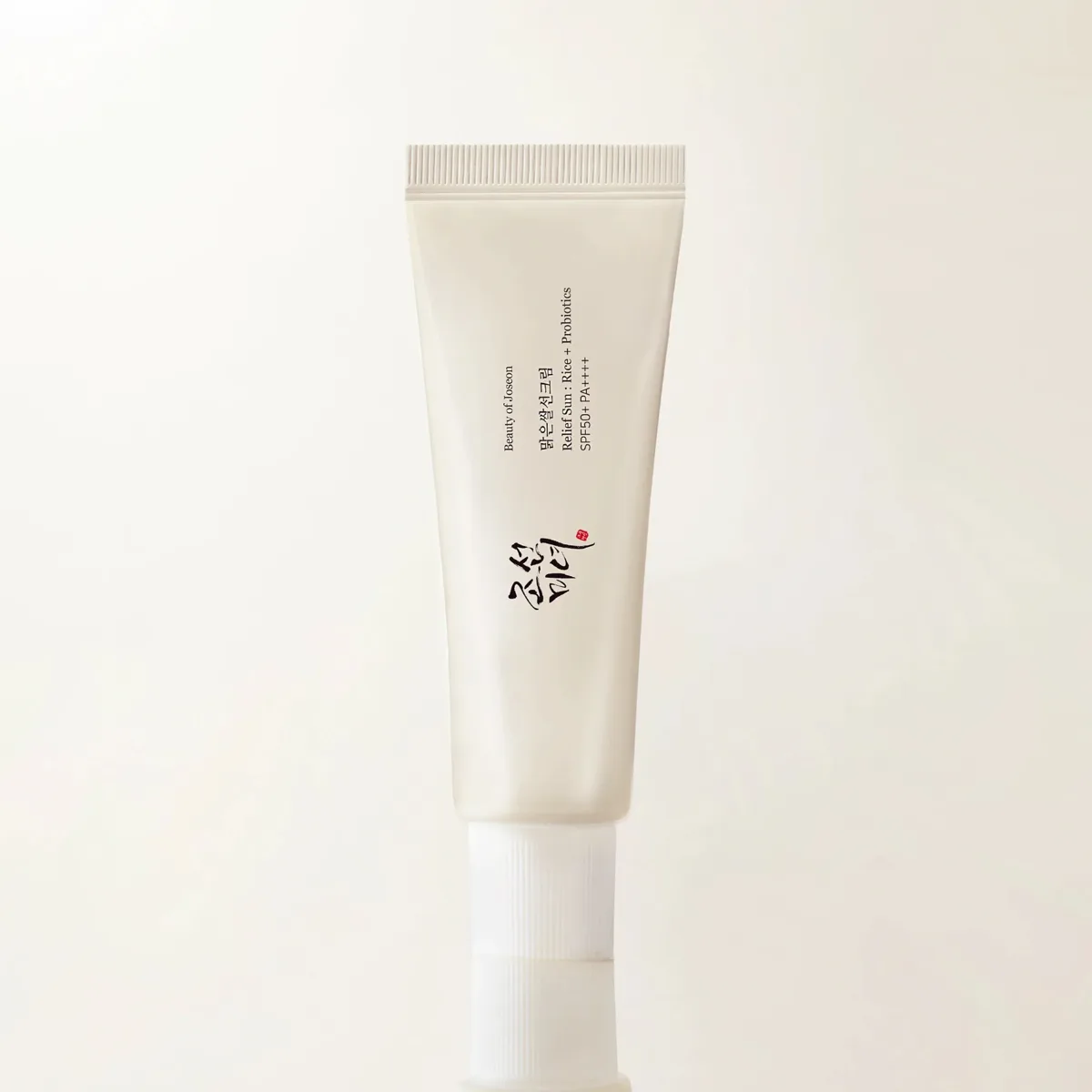
 Relief Sun: Rice + Probiotics SPF 50+
The sunscreen that rewrote the rules for what a $14 product could deliver. With independently verified SPF 50+, 30% rice extract, niacinamide, and a probiotic ferment complex, it offers protection and skincare benefits that rival products three times its price. The texture that feels like wearing nothing on your face is the reason it went viral — and stayed there.