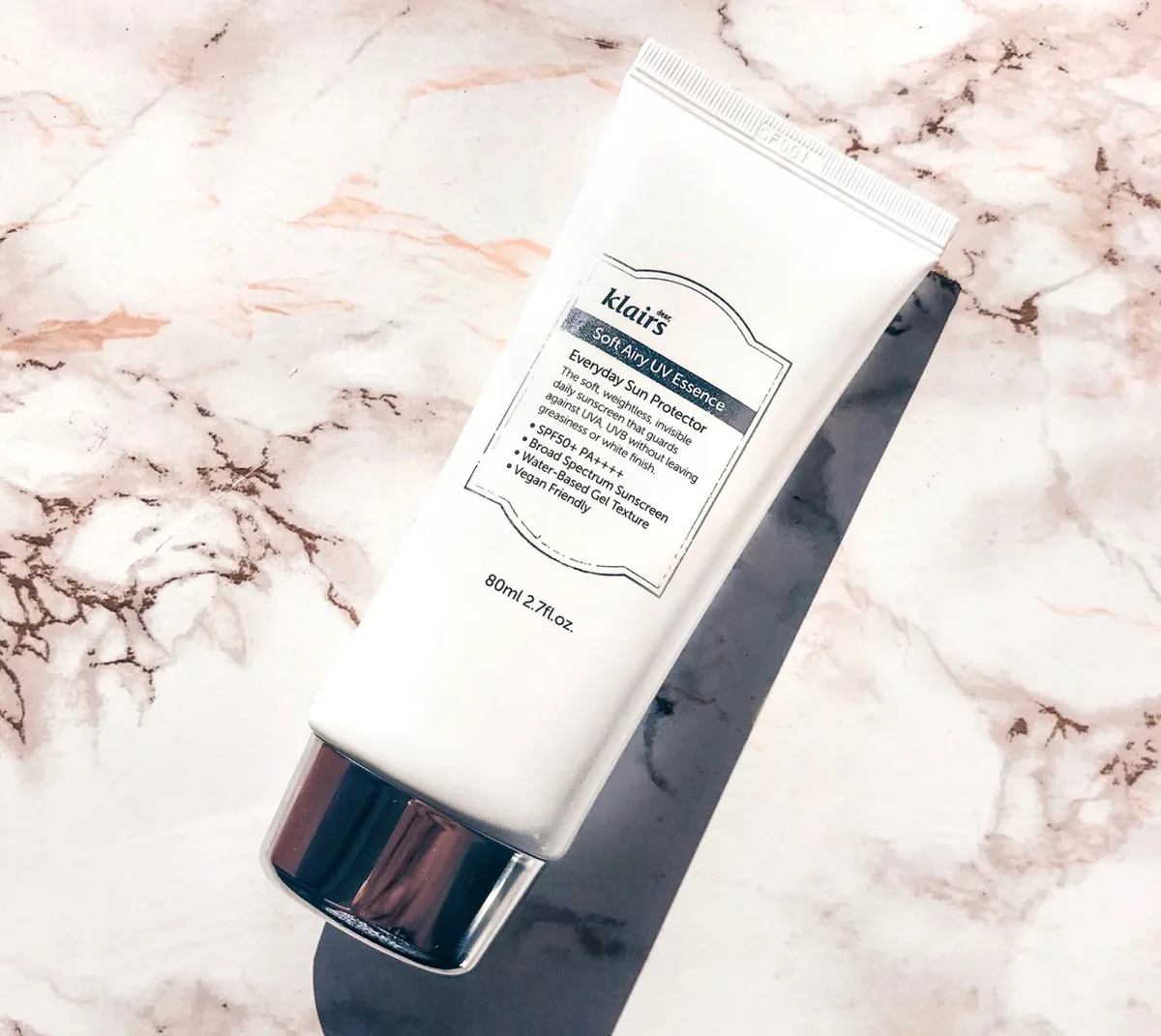
A cautionary tale packaged as a sunscreen. The Soft Airy UV Essence had everything a daily sunscreen should feel like — lightweight, hydrating, invisible — except the one thing a sunscreen must actually do: protect you from the sun at its claimed level. Independent testing confirmed SPF of 12-28 versus the labeled 50+. Discontinued by Klairs after public acknowledgment. Do not purchase remaining stock.
Soft Airy UV Essence SPF 50
A cautionary tale packaged as a sunscreen. The Soft Airy UV Essence had everything a daily sunscreen should feel like — lightweight, hydrating, invisible — except the one thing a sunscreen must actually do: protect you from the sun at its claimed level. Independent testing confirmed SPF of 12-28 versus the labeled 50+. Discontinued by Klairs after public acknowledgment. Do not purchase remaining stock.
Score Breakdown
Where this product gains points and where it loses them — broken down across the four scoring pillars.
The catastrophic failure to deliver the labeled SPF 50+ protection — independently confirmed at SPF 12-28 — makes this product fundamentally unfit for its primary purpose. A sunscreen that doesn't protect as claimed creates real health risk. The texture and skincare ingredients were appealing, but none of that matters when the core promise is broken. Irritation risk is scored low (meaning HIGH irritation/harm risk) to reflect the danger of UV exposure under false confidence.
Pros & Cons
- ✓Texture was genuinely groundbreaking — lightweight, essence-like, with zero white cast
- ✓Niacinamide and panthenol provided real skincare benefits beyond UV protection
- ✓Klairs issued a transparent public statement acknowledging the testing failure
- ✓The controversy drove industry-wide improvements in sunscreen accountability
- ✗Independent testing confirmed SPF of 12-28 versus the labeled 50+ — a critical safety failure
- ✗Product was discontinued due to the SPF discrepancy
- ✗Years of consumer use under false confidence in UV protection
- ✗Contains essential oils despite sensitive-skin marketing
- ✗UV filter concentrations were insufficient for the claimed protection level
- ✗Damaged brand credibility in the sun protection category
Full Review
It is tempting to write this review as a simple product failure story: brand makes sunscreen, sunscreen doesn't work as claimed, brand pulls it. But the Klairs Soft Airy UV Essence was something more significant than a single mislabeled product. It was a moment that changed how the global skincare community thinks about sunscreen claims, testing standards, and the implicit trust we place in the numbers on a tube.
Before the controversy, this was one of the most beloved sunscreens in K-beauty. The texture was genuinely remarkable — an essence-like liquid that spread across the skin like a lightweight hydrating serum, absorbing in seconds, leaving zero white cast, and feeling like nothing was there. In a category dominated by heavy, greasy, white-casting products that people tolerate rather than enjoy, the Soft Airy UV Essence offered something radical: a sunscreen that people actually looked forward to applying.
The formula read well on paper. Diethylamino Hydroxybenzoyl Hexyl Benzoate (Uvinul A Plus) provided UVA protection, while Ethylhexyl Triazone (Uvinul T 150) covered UVB. Niacinamide added brightening and barrier support. Panthenol contributed hydration and anti-inflammatory comfort. Beta-glucan, sodium hyaluronate, and allantoin rounded out a formula that blurred the line between sunscreen and skincare treatment.
And then the independent testing happened. In 2021, results revealed that the actual SPF of this product ranged from 12 to 28 — at best, roughly half of the claimed 50+, and at worst, barely a quarter. The UV filter concentrations, when analyzed, were found to be insufficient to deliver the stated protection level. The lightweight texture that made it so pleasant to wear may have been partially a consequence of the same insufficient filter loading that made it inadequate as sun protection.
Klairs, to their credit, did not deny the findings. They issued a public statement acknowledging the testing results and discontinued the product. It was an act of transparency that other brands facing similar scrutiny have not always matched. But transparency after the fact doesn't undo the years during which consumers applied this sunscreen believing they had SPF 50+ protection while receiving substantially less.
The health implications are worth stating clearly. People who used this as their sole sun protection while taking photosensitizing medications, using retinoids, or recovering from chemical peels were exposed to significantly more UV radiation than they expected. For individuals relying on high SPF for melasma management or post-procedure photoprotection, the gap between claimed and actual protection was not just a cosmetic concern — it was a genuine health risk.
The broader impact extended beyond Klairs. The Soft Airy UV Essence controversy accelerated a wave of independent sunscreen testing across the K-beauty industry. It prompted consumers to demand verification, beauty publications to commission their own testing, and brands to submit to more rigorous third-party evaluation. Whether or not it was the intention, this product's failure made the sunscreen market more accountable.
The essential oils — chamomile flower oil and orange oil — represent a secondary concern that would be the primary criticism of any other product but seems almost trivial in the context of the SPF failure. For a brand positioning itself as sensitive-skin-friendly, including potential sensitizers in a daily-wear product that sits on the skin all day was an unnecessary risk.
Klairs subsequently released the All-Day Airy Sunscreen as a replacement, reportedly with improved testing protocols. Whether the brand can rebuild trust in their sun protection category is an ongoing question. The formulation expertise to create appealing textures was never in doubt — the Soft Airy UV Essence proved that Klairs could make a sunscreen people genuinely wanted to use. What it failed to prove was that the protection behind the experience was real.
This review exists as documentation and consumer awareness. The product is discontinued and should not be purchased from remaining stock. Any lingering bottles should be replaced with a verified alternative. The lesson it teaches — that the feel of a sunscreen tells you nothing about its actual protective capacity — is one worth remembering every time we reach for a tube of SPF.
Formula
Key Ingredients
The hero actives that drive this product's performance.
| Ingredient | Function | Evidence |
|---|---|---|
| Diethylamino Hydroxybenzoyl Hexyl Benzoate (Uvinul A Plus) (3.3-4.0%) | A UVA filter that provides protection against long-wave UVA radiation. However, independent testing revealed that the UV filter concentrations in this product were insufficient to deliver the claimed SPF 50+ protection, with actual protection measuring significantly lower. | well-established |
| Ethylhexyl Triazone (Uvinul T 150) (1.5-1.8%) | A UVB-absorbing chemical filter that should contribute to the overall SPF value. The low concentration relative to the SPF 50+ claim was one factor identified in the product's failure to deliver its stated protection level. | well-established |
| Niacinamide | Provides skin-brightening and barrier-supporting benefits beyond UV protection. Listed high in the formula, suggesting a meaningful concentration that adds skincare value to the sun protection function. | well-established |
| Panthenol | Adds humectant and anti-inflammatory properties that make the sunscreen more comfortable for daily wear, reducing the drying effect that some chemical UV filters can have on the skin. | well-established |
Full INCI List
Water, Dicaprylyl Carbonate, Butylene Glycol, Dibutyl Adipate, Diethylamino Hydroxybenzoyl Hexyl Benzoate, Hydrogenated Polyisobutene, 1,2-Hexanediol, Glycerin, Niacinamide, Ethylhexyl Triazone, Polyglyceryl-3 Methylglucose Distearate, Silica, Cetearyl Olivate, Cetearyl Alcohol, Sorbitan Olivate, Glyceryl Stearate SE, Methyl Glucose Sesquistearate, Sorbitan Stearate, Panthenol, Beta-Glucan, Disodium EDTA, Citrus Junos Fruit Extract, Adenosine, Sodium Hyaluronate, Chamomilla Recutita Flower Oil, Hippophae Rhamnoides Oil, Caprylyl Glycol, Ethylhexylglycerin, Tocopherol, Allantoin, Citrus Aurantium Dulcis Oil
Product Flags
✗ Fragrance Free✓ Alcohol Free✗ Oil Free✓ Silicone Free✓ Paraben Free✓ Sulfate Free✓ Cruelty Free✓ Vegan✗ Fungal Acne Safe
Potential Irritants
Chamomilla Recutita Flower OilCitrus Aurantium Dulcis Oil
Common Allergens
Chamomilla Recutita Flower OilCitrus Aurantium Dulcis Oil
Compatibility
Skin Match
Best For
Works For
Not Ideal For
Addresses These Conditions
Routine Step
sunscreen
Time of Day
AM
Pregnancy Safe
Yes ✓
Layering Tips
Was applied as the final step of morning skincare. Note: This product has been discontinued due to SPF accuracy concerns. Do not rely on this product for adequate sun protection.
Results Timeline
Immediate lightweight, hydrating feel with no white cast on application. However, the UV protection delivered was independently confirmed to be significantly lower than SPF 50+.
Evidence
Who Should Skip
- Independent testing confirmed SPF of 12-28 versus the labeled 50+ — a critical safety failure
- Product was discontinued due to the SPF discrepancy
- Years of consumer use under false confidence in UV protection
- Contains essential oils despite sensitive-skin marketing
Science & Expert Perspective
The Science
The SPF testing discrepancy in this product highlighted an important gap between laboratory SPF testing and real-world formulation. The UV filters used — Diethylamino Hydroxybenzoyl Hexyl Benzoate (DHHB/Uvinul A Plus) at 3.3-4.0% and Ethylhexyl Triazone (Uvinul T 150) at 1.5-1.8% — are well-established filters with documented efficacy. However, achieving SPF 50+ requires both sufficient filter concentration and proper formulation of the vehicle that keeps filters evenly distributed on the skin surface.
Research published in the Journal of the American Academy of Dermatology has consistently shown that the vehicle formulation significantly impacts SPF performance — the same filter concentrations can produce dramatically different SPF values depending on the emulsion type, film-forming agents, and spreading characteristics. A lightweight, fast-absorbing essence vehicle may distribute UV filters less uniformly than a thicker cream, potentially creating gaps in the protective film and reducing effective SPF.
The discrepancy between in-house and independent testing may also reflect differences in testing methodology. ISO 24444 (the international SPF testing standard) and the methods used by different testing laboratories can produce variable results depending on factors like the amount of product applied, the uniformity of application, and the spectral output of the UV source. However, an SPF variation from 50+ down to 12-28 exceeds normal methodological variation and indicates a fundamental formulation insufficiency.
The incident underscored the importance of independent, third-party SPF verification — particularly for products achieving cosmetic elegance through potentially lower filter loading. Multiple dermatological publications subsequently called for more rigorous and standardized testing protocols in the cosmetic sunscreen industry.
Dermatologist Perspective
Board-certified dermatologists were among the most vocal critics following the SPF testing revelations. Dermatologists consistently emphasize that sunscreen efficacy is non-negotiable — it is the single most important daily skincare product for preventing photoaging, hyperpigmentation, and skin cancer risk. The gap between SPF 28 and SPF 50+ is clinically significant: SPF 50 blocks approximately 98% of UVB radiation versus 96% for SPF 30 and 92% for SPF 15. An SPF of 12-28 under conditions where patients believed they had SPF 50+ protection represents a meaningful increase in cumulative UV exposure, particularly for photosensitive patients and those using retinoids or hydroxy acids. Dermatologists now frequently advise patients to verify sunscreen SPF claims through independent testing databases when possible.
Guidance
Usage Guide
How to Use
DO NOT USE. This product has been discontinued due to confirmed SPF insufficiency. Replace with a sunscreen that has verified SPF claims. If you have remaining stock, discard it and switch to a product with independently verified protection levels.
Value Assessment
The value assessment for this product is negative regardless of price. A sunscreen that fails to deliver its claimed SPF level provides negative value — it creates a false sense of protection that may lead users to extend sun exposure beyond what their actual protection level allows. At any price point, a sunscreen must deliver its labeled protection to justify purchase. This product did not. Remaining stock should not be purchased at any price.
Who Should Buy
No one — this product is discontinued and should not be purchased. The actual SPF (12-28) is significantly below the labeled claim (50+). For a Klairs sunscreen alternative, consider the reformulated All-Day Airy Sunscreen, which the brand developed with improved testing protocols.
Who Should Skip
Everyone. This is a discontinued product with a confirmed critical safety failure in its primary function. Do not purchase remaining stock from resellers.
Ready to try Klairs Soft Airy UV Essence SPF 50?
Details
Details
Texture
Ultra-lightweight, essence-like texture that felt like a hydrating serum rather than a sunscreen. No white cast, no greasiness, no heaviness. The cosmetic elegance was the product's strongest quality — and ironically, the low UV filter concentrations that failed to deliver SPF 50+ may have contributed to the appealing texture.
Scent
Light citrus-herbal scent from chamomile and orange essential oils. Subtle but detectable.
Packaging
White squeeze tube with 80ml capacity — generous for an Asian sunscreen. The larger size reflected the product's positioning as an everyday essential.
Finish
lightweightnaturaldewy
What to Expect on First Use
The essence-like texture was immediately impressive — it felt nothing like a traditional sunscreen. Light, hydrating, fast-absorbing, with zero white cast. The experience that made it a bestseller was genuine. The UV protection was not.
How Long It Lasts
N/A — product discontinued
Period After Opening
12 months
Best Season
All Year
Certifications
KARA cruelty-free certified
Background
The Why
The Soft Airy UV Essence launched in 2018 to enthusiastic reception — its featherweight texture and hydrating formula earned devoted fans who recommended it across K-beauty communities worldwide. In 2021, independent testing revealed SPF values of 12-28 versus the labeled 50+. Klairs issued a public statement, acknowledged the testing results, and discontinued the product. The incident damaged the brand's credibility in sun protection and contributed to a broader reckoning about SPF testing standards in the K-beauty industry.
About Klairs Established Brand (5–20 years)
Dear, Klairs was founded in 2010 in South Korea with KARA cruelty-free certification. CRITICAL NOTE: This product was discontinued after independent testing revealed the actual SPF to be significantly lower than the labeled SPF 50+ claim — results ranged from 12 to 28. Klairs issued a public statement and removed the product from the market. This review is included for historical documentation and consumer awareness.
Brand founded: 2010 · Product launched: 2018
Myth vs. Reality
Myths & Misconceptions
Myth
If a sunscreen feels lightweight and non-greasy, it must have lower SPF.
Reality
Modern UV filter technology allows genuinely high SPF formulations with elegant textures. The Klairs Soft Airy UV Essence's lightweight feel wasn't inherently suspicious — many SPF 50+ sunscreens achieve similar textures. The issue was specifically that the UV filter concentrations were insufficient, not that elegant texture and high SPF are incompatible.
Myth
Asian sunscreens have unreliable SPF claims.
Reality
The Klairs controversy prompted scrutiny, but Japanese and Korean sunscreen formulations routinely perform well in independent testing. The issue was specific to this product, not systemic to all Asian sunscreens. However, the incident legitimately raised awareness about the importance of independent SPF verification.
FAQ
Frequently Asked Questions
Is Klairs Soft Airy UV Essence still available?
No — Klairs discontinued this product after independent testing revealed the actual SPF to be significantly lower than the claimed 50+. Some old stock may still appear on third-party resellers, but purchasing it for sun protection is not recommended.
What was the actual SPF of Klairs Soft Airy UV Essence?
Independent retesting found SPF values ranging from 12 to 28 — far below the labeled SPF 50+. Klairs acknowledged these results in a public statement and removed the product from the market.
What replaced Klairs Soft Airy UV Essence?
Klairs released the All-Day Airy Sunscreen as a replacement product. The brand has stated they implemented more rigorous testing protocols for their reformulated sun protection products.
Did Klairs address the SPF controversy?
Yes — Klairs issued an official public statement acknowledging the independent testing results and discontinued the product. They committed to improved testing standards for future sun protection products. The incident prompted the brand to reassess their entire sun protection lineup.
Should I use leftover Klairs Soft Airy UV Essence?
No — given the confirmed SPF discrepancy, relying on this product for sun protection would leave your skin inadequately protected. The actual protection level (SPF 12-28) is substantially below what's recommended for daily sun protection, especially for photosensitive individuals or those using photosensitizing ingredients like retinoids or AHAs.
Community
Community Voices
Common Praise
"Exceptionally lightweight, essence-like texture (pre-controversy)"
"No white cast on any skin tone"
"Hydrating formula with niacinamide and panthenol"
"Pleasant to wear daily — felt like skincare rather than sunscreen"
Common Complaints
"Independent testing revealed SPF was 12-28, not the claimed 50+"
"Product was discontinued by Klairs following the SPF scandal"
"Contains essential oils despite being marketed for sensitive skin"
"Users who relied on this as their sole sun protection were inadequately protected"
"Shook consumer trust in K-beauty sunscreen claims broadly"
Related Conditions
Related Ingredients
You Might Also Like
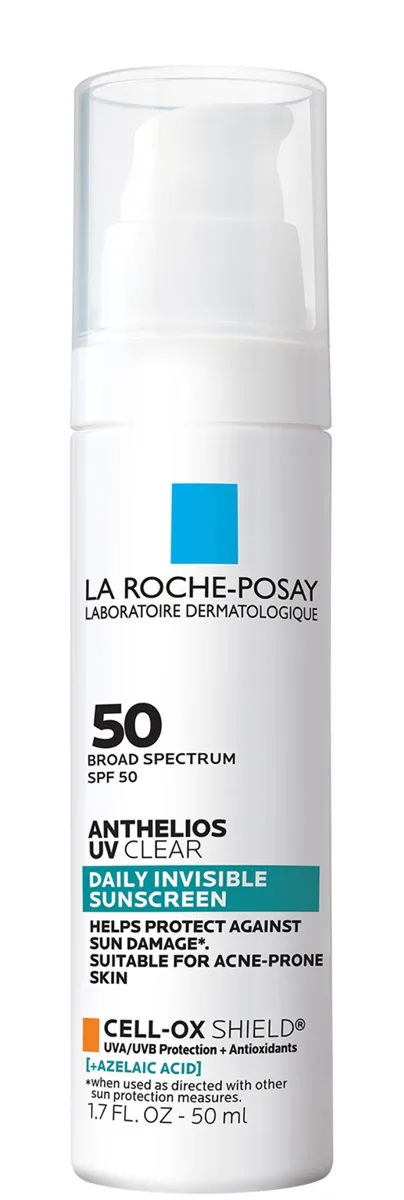 Derm Office Staple
 Anthelios UV Clear Sunscreen SPF 50
One of the only US chemical sunscreens that genuinely earns its 'for sensitive and breakout-prone skin' positioning. A photostable Anthelios filter system paired with a legitimate azelaic acid dose in a lightweight serum-fluid that disappears on every skin tone. Excellent for rosacea, acne, and post-inflammatory hyperpigmentation — and probably the single best daily sunscreen in the La Roche-Posay US lineup for those conditions.
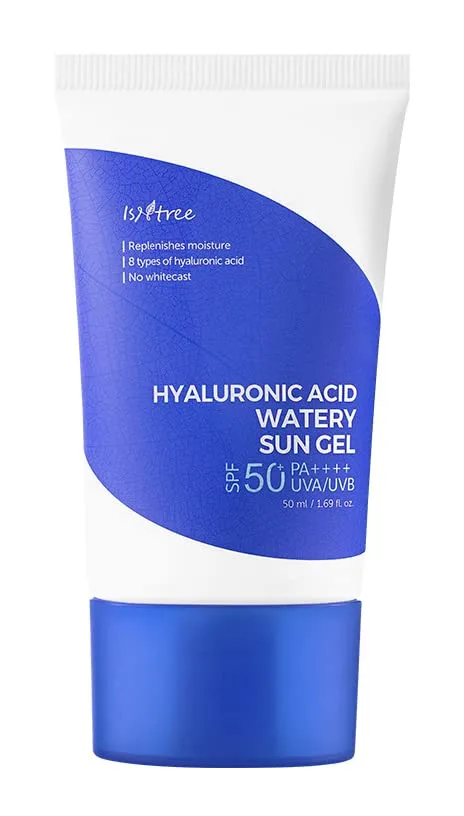 K-Beauty Daily SPF Standout
 Hyaluronic Acid Watery Sun Gel SPF 50+
One of the strongest everyday K-beauty sunscreens in the international market — modern European filters, no white cast, fragrance-free, niacinamide-boosted, and built around the brand's signature six-weight HA complex. At twenty-two dollars for 50ml, it's a case study in how much better a daily sunscreen can be when the formulator cares about both protection and wearability.
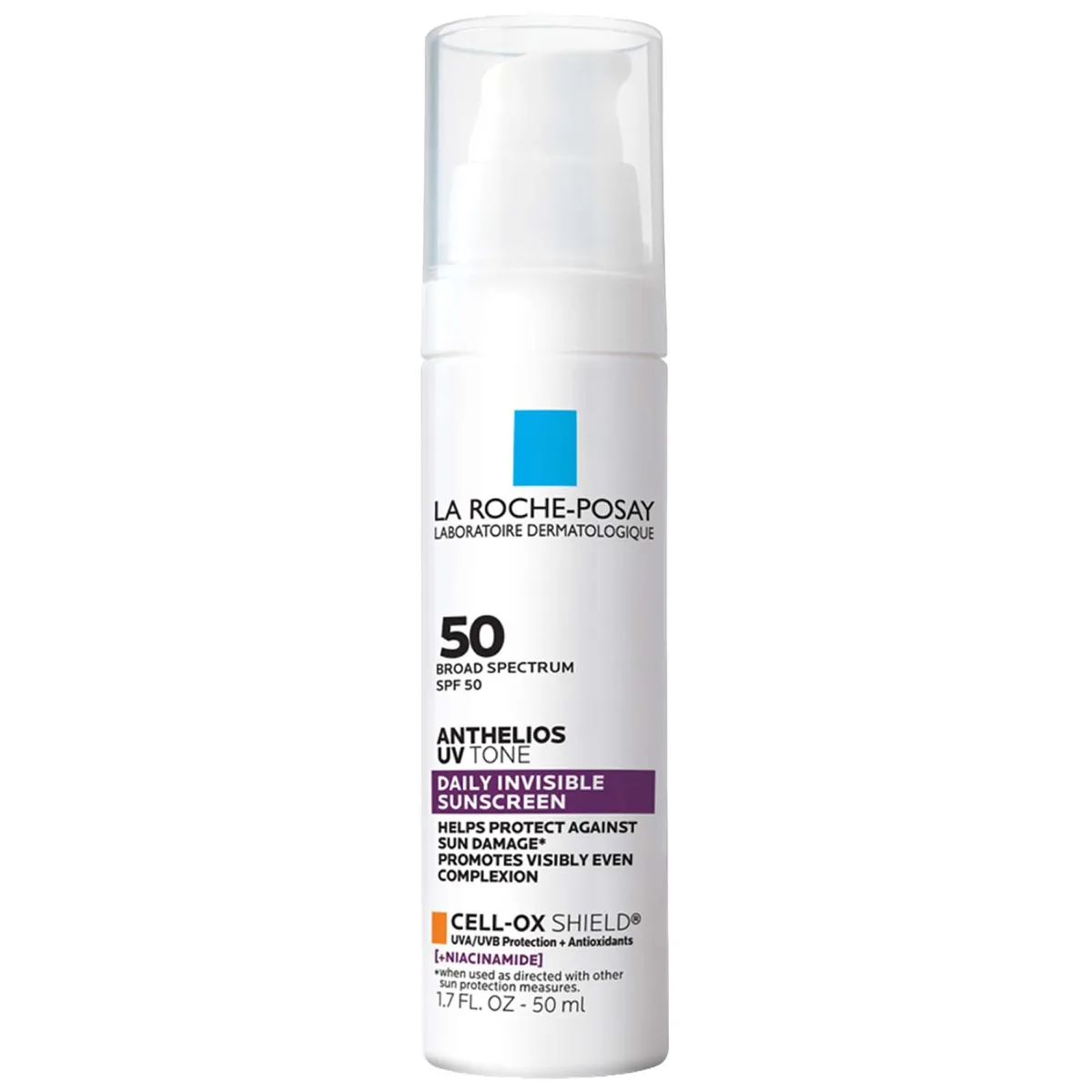 Derm Office Staple
 Anthelios UV Tone Daily Invisible Sunscreen SPF 50
La Roche-Posay's most thoughtful answer yet for hyperpigmentation-prone skin that needs daily SPF. A photostable avobenzone system reinforced with Oxynex ST, paired with a meaningful dose of niacinamide, in a serum-fluid base that goes on invisible on every skin tone. Expensive for 1.7 oz but legitimately well-built — and a rare chemical sunscreen that earns its 'for dark spots' marketing.
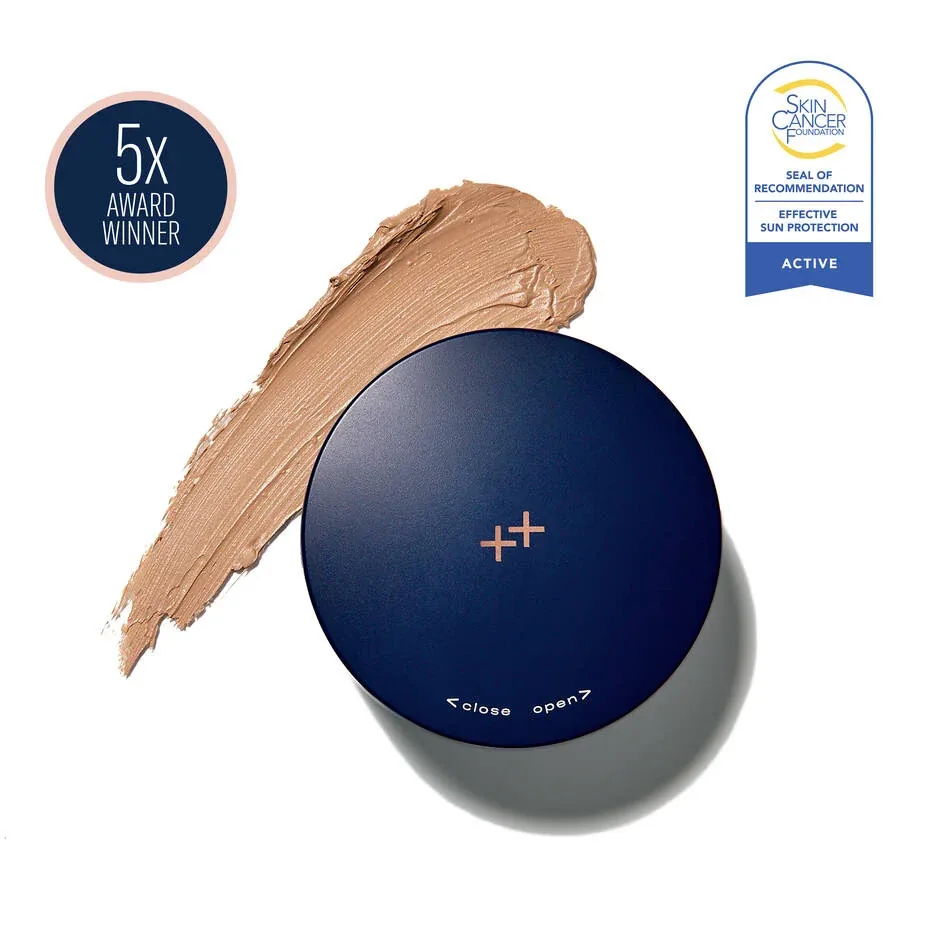 Melasma-Grade Mineral Sunscreen
 sunbetter TONE SMART SPF 68
One of the most clinically useful tinted mineral sunscreens in the professional category. SPF 68 from a 100% mineral formula, iron oxide tint that blocks visible light for melasma protection, and an unusually lightweight texture that doesn't feel like you're wearing high-concentration zinc. For patients with melasma or post-inflammatory hyperpigmentation, this is the category benchmark — and it's earned its Allure Best of Beauty wins.
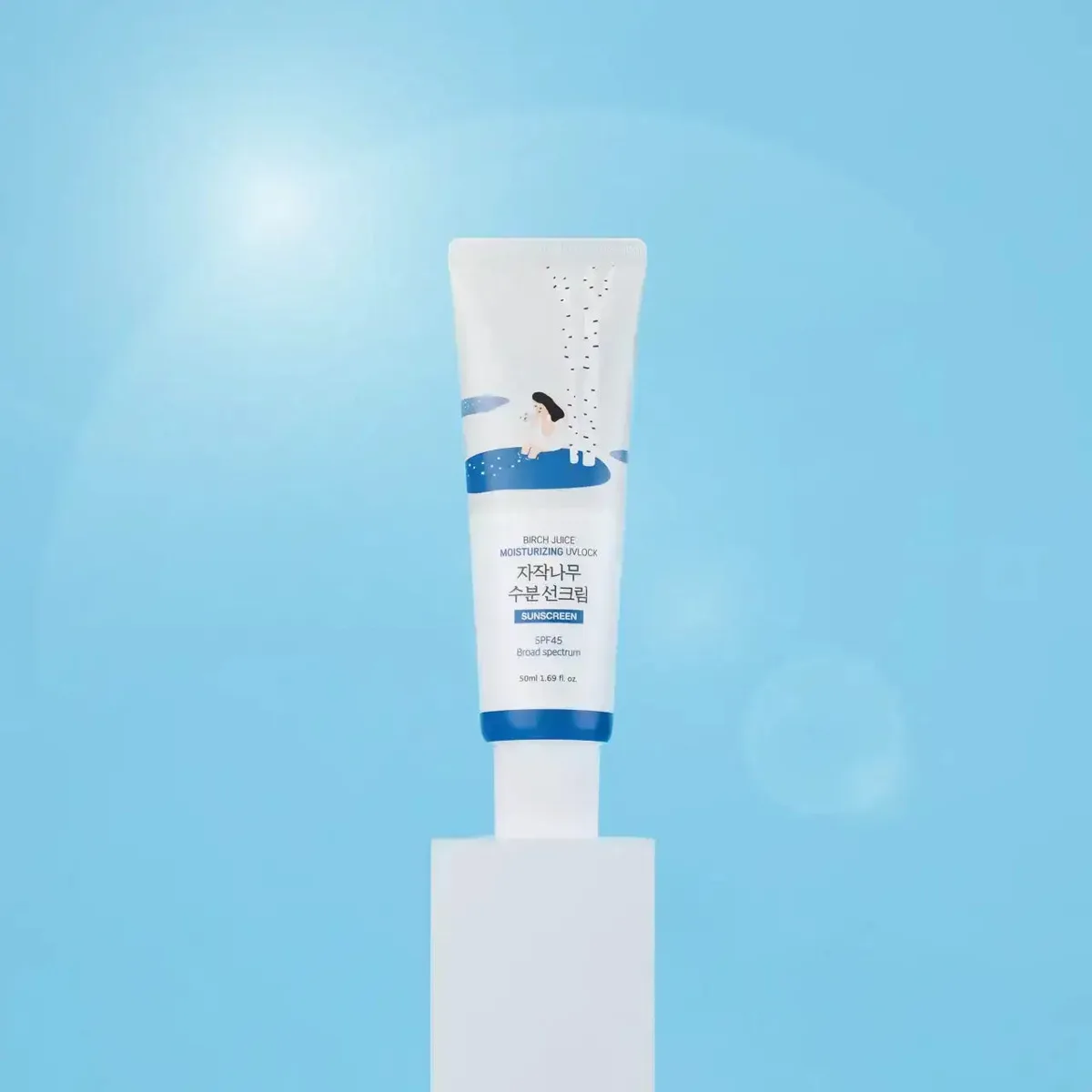 K-Beauty Cult Favorite
 Birch Juice Moisturizing Sun Cream SPF 50+
One of the best hybrid sunscreens in K-beauty right now — a 70% birch sap base, modern UVA filters you can't get in the US, and a finish that wears like a lightweight moisturizer. Broadly compatible, well-priced, and genuinely pleasant to apply, with minor tradeoffs for oily and fungal-acne-prone users.
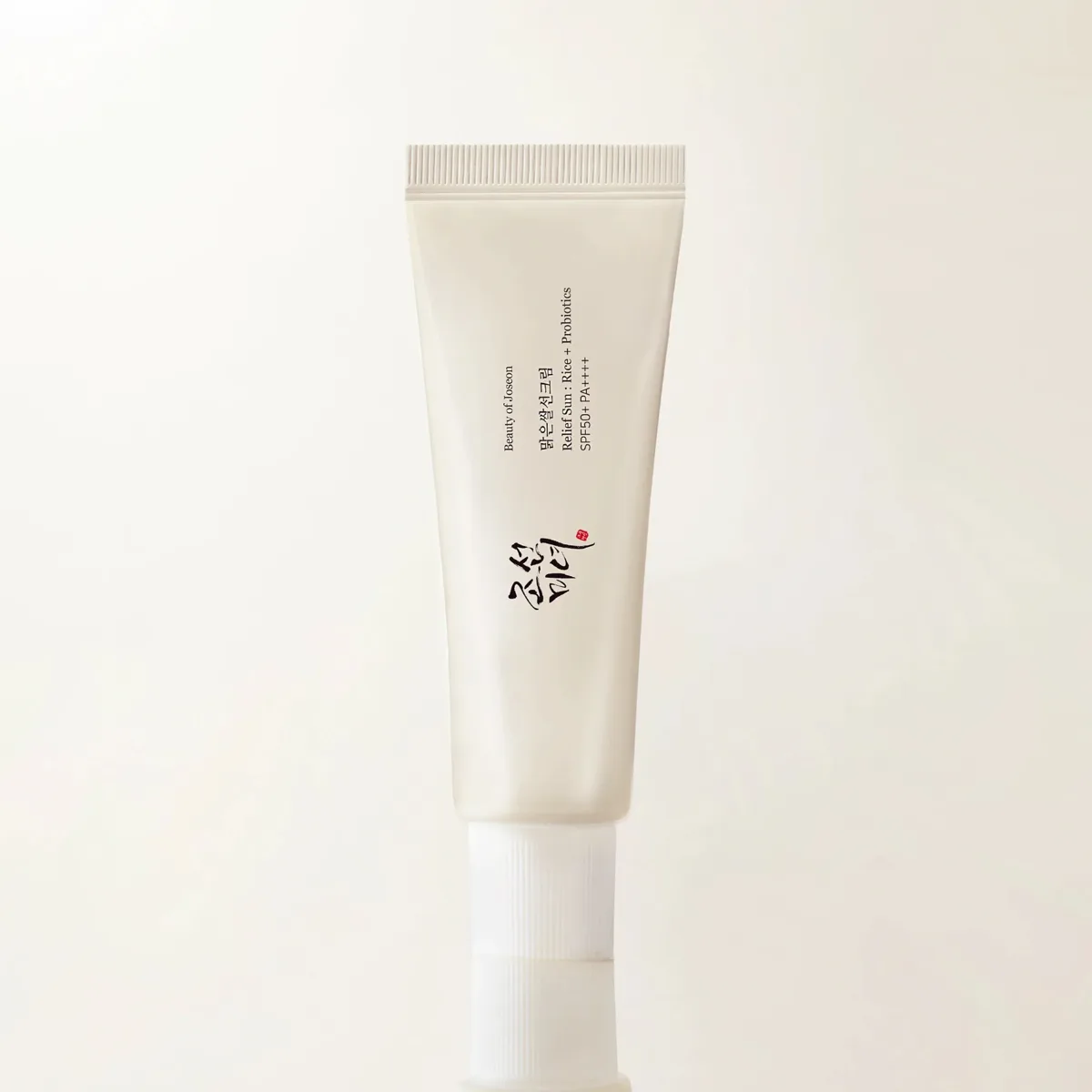 The K-Beauty Sunscreen That Changed Everything
 Relief Sun: Rice + Probiotics SPF 50+
The sunscreen that rewrote the rules for what a $14 product could deliver. With independently verified SPF 50+, 30% rice extract, niacinamide, and a probiotic ferment complex, it offers protection and skincare benefits that rival products three times its price. The texture that feels like wearing nothing on your face is the reason it went viral — and stayed there.
This review reflects our independent analysis of publicly available ingredient data, manufacturer claims, and verified user reviews. We are reader-supported — Amazon links may earn us a commission at no cost to you. We do not accept paid placements; rankings are based solely on the evidence.