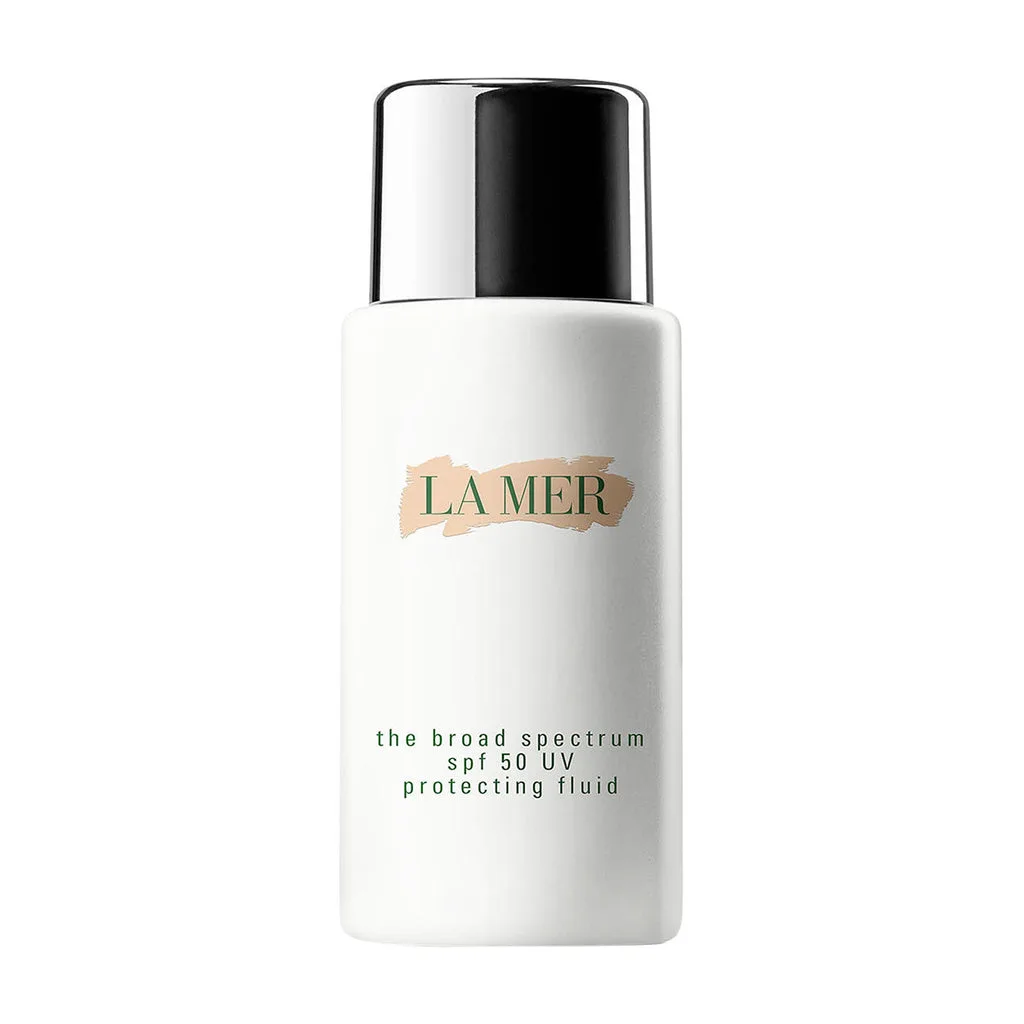
An undeniably elegant sunscreen that delivers SPF 50 protection in a texture so lightweight it could pass for a serum. The application experience is exceptional and the formula layers perfectly under makeup. But at $130 for 1.7 oz, and with oxybenzone still in the formula in 2026, this is a luxury tax on sun protection rather than a functional necessity.
The Broad Spectrum SPF 50 UV Protecting Fluid
An undeniably elegant sunscreen that delivers SPF 50 protection in a texture so lightweight it could pass for a serum. The application experience is exceptional and the formula layers perfectly under makeup. But at $130 for 1.7 oz, and with oxybenzone still in the formula in 2026, this is a luxury tax on sun protection rather than a functional necessity.
Score Breakdown
Where this product gains points and where it loses them — broken down across the four scoring pillars.
Effective SPF 50 protection in an elegantly formulated fluid that layers beautifully, but the inclusion of oxybenzone is outdated for a luxury brand, and the price — $76/oz for a sunscreen — is difficult to justify when comparable UV protection is available at a fraction of the cost.
Pros & Cons
- ✓Exceptionally lightweight, invisible texture that sets the standard for elegant SPF 50 application
- ✓Absolutely no white cast — absorbs completely into all skin tones
- ✓Layers perfectly under makeup without pilling or interference
- ✓Genuine SPF 50 broad-spectrum protection from a comprehensive five-filter system
- ✓Kukui oil and hyaluronic acid provide real skincare hydration within the sunscreen
- ✓Precise pump dispenser ensures hygienic, controlled application
- ✗Contains oxybenzone — increasingly avoided by dermatologists and banned in several regions
- ✗Prohibitively expensive at $130 for 1.7 oz ($76/oz) for a daily-use, reapplication-required product
- ✗Six fragrance allergens in a product applied to the face daily
- ✗Miracle Broth claims lack independent peer-reviewed verification
- ✗Limited shade neutrality — slight green tint from CI 61570 dye
- ✗Identical UV protection is available in products costing 90% less
Full Review
There is a philosophical question embedded in every La Mer product, and it goes something like this: at what point does the experience of applying a product become worth more than what the product actually does? With the Crème de la Mer, you could at least argue that the moisturizer's unique texture and Miracle Broth created a genuinely distinctive skincare experience. With sunscreen, the argument gets harder. Sunscreen has one job: block UV radiation. Everything else is ambiance.
And yet. The La Mer Broad Spectrum SPF 50 UV Protecting Fluid is one of the most pleasant sunscreens ever made. That's not hyperbole — it's a simple statement about what happens when serious cosmetic chemistry gets unlimited budget. The fluid pours from the pump with the consistency of a lightweight serum, spreads across the face with zero resistance, and disappears completely within sixty seconds. No white cast. No tacky residue. No pilling under makeup. No heavy, sunscreen-y film that makes you want to wash your face by 2 PM. It's the platonic ideal of how a facial sunscreen should feel, and if this is the only criterion that matters to you, it might be worth every dollar.
The UV protection comes from a five-filter chemical system — avobenzone for UVA, homosalate and octisalate for UVB, octocrylene for stability, and oxybenzone for broad coverage. It's a comprehensive approach that delivers genuine SPF 50, and the chemical filter cocktail is what enables the invisible, weightless finish that mineral sunscreens struggle to achieve. The protection is real. The science is sound.
But oxybenzone. In 2026. In a $130 sunscreen.
This is the ingredient that makes this product difficult to recommend without reservation. Oxybenzone has been the subject of increasing scientific scrutiny over the past decade. Studies have documented its systemic absorption, its potential as an endocrine disruptor, and its contribution to coral reef bleaching. Hawaii, the US Virgin Islands, and Palau have restricted its use in sunscreens. The FDA has requested additional safety data. Most prestige sunscreen brands — including several in the Estée Lauder portfolio that owns La Mer — have quietly reformulated to exclude it. That La Mer hasn't is a puzzling choice for a brand that positions itself at the absolute pinnacle of luxury skincare.
Beyond the oxybenzone question, the formula is lavished with La Mer's characteristic botanical extravagance. Miracle Broth (algae extract) makes its obligatory appearance. Kukui seed oil provides the lightweight emollient base that gives the fluid its remarkable skin feel. Caffeine contributes antioxidant photoprotection. Sodium hyaluronate adds hydration. Laminaria ochroleuca extract (another marine botanical) and a mineral gluconate complex round out the skincare claims. It's a genuinely interesting supporting cast, even if none of these ingredients are unique to La Mer or particularly expensive to source.
The malachite inclusion is a La Mer signature — a copper carbonate mineral that the brand positions as a detoxifying ingredient. Its skincare efficacy at cosmetic concentrations is not well-established, but it adds to the narrative of sea-inspired, mineral-rich formulation that is central to La Mer's brand identity.
The fragrance is present but restrained — a light, marine-inflected scent that fades within minutes. The fragrance allergens, however, are numerous: limonene, geraniol, hydroxycitronellal, linalool, and citronellol all appear on the label. For a product worn daily on the face and requiring frequent reapplication for reliable protection, this allergen load is a genuine concern.
Daily use economics tell a sobering story. At $130 for 1.7 ounces, applying the recommended amount (about 1/4 teaspoon for the face) daily depletes a bottle in roughly 6-8 weeks. That's over $1,000 per year on sunscreen alone. If you reapply as recommended every 2 hours during outdoor activity, the math gets worse. Some La Mer users report applying this as their morning sunscreen and carrying a less expensive option for reapplication — a pragmatic compromise that makes the investment more sustainable.
The La Mer SPF 50 UV Protecting Fluid is a product at war with itself. It's an exquisitely formulated sunscreen with a texture that genuinely makes daily SPF application feel like a pleasure rather than a chore. And it's also a $130 product that uses oxybenzone, contains multiple fragrance allergens, and wraps well-understood UV chemistry in a mythology that doesn't stand up to independent scientific scrutiny. If La Mer reformulated to remove the oxybenzone and fragrance, this would be an easier — if still expensive — recommendation. As it stands, it's a luxury experience in search of a functional justification.
Formula
Key Ingredients
The hero actives that drive this product's performance.
| Ingredient | Function | Evidence |
|---|---|---|
| Five-Filter UV System (Avobenzone, Homosalate, Octisalate, Octocrylene, Oxybenzone) (3% + 5% + 5% + 2.7% + 3%) | A comprehensive chemical UV filter system providing broad-spectrum SPF 50 protection. Avobenzone handles UVA, while homosalate, octisalate, and octocrylene address UVB and stabilize the avobenzone. Oxybenzone provides both UVA and UVB absorption. Together they deliver high-level protection without the white cast of mineral filters. | well-established |
| Miracle Broth (Algae Extract) | La Mer's proprietary sea kelp ferment, included to extend the brand's skincare philosophy into sun protection. In this context, the Miracle Broth is intended to provide soothing and renewal benefits underneath the UV protection layer, though its specific contribution to the sunscreen's performance is unverifiable. | emerging |
| Kukui Seed Oil | A lightweight, non-greasy emollient derived from the candlenut tree. Positioned high in the inactive ingredients list, kukui oil provides the rich but fluid texture that gives this sunscreen its elegant skin feel — moisturizing without the heavy, occlusive quality typical of high-SPF products. | well-established |
| Sodium Hyaluronate | Provides hydration within the sunscreen layer, helping prevent the tight, dry feeling that chemical sunscreens can cause. In a luxury sunscreen context, it contributes to the 'skincare feel' that distinguishes this from purely protective formulations. | well-established |
| Caffeine | An antioxidant that provides additional photoprotective support beyond the UV filters. Research has shown caffeine enhances UV defense at the cellular level by promoting the elimination of UV-damaged cells, making it a functional complement to the chemical sunscreen actives. | promising |
Full INCI List
Active Ingredients: Avobenzone 3.00%, Homosalate 5.00%, Octisalate 5.00%, Octocrylene 2.70%, Oxybenzone 3.00%. Inactive Ingredients: Water, Butyloctyl Salicylate, Methyl Trimethicone, Neopentyl Glycol Diheptanoate, Aleurites Moluccana (Kukui) Seed Oil, Lauryl PEG-9 Polydimethylsiloxyethyl Dimethicone, PEG-100 Stearate, Butylene Glycol, Glyceryl Stearate, Potassium Cetyl Phosphate, Algae (Seaweed) Extract, Sesamum Indicum (Sesame) Seed Oil, Medicago Sativa (Alfalfa) Seed Powder, Helianthus Annuus (Sunflower) Seedcake, Prunus Amygdalus Dulcis (Sweet Almond) Seed Meal, Eucalyptus Globulus (Eucalyptus) Leaf Oil, Sodium Gluconate, Copper Gluconate, Calcium Gluconate, Magnesium Gluconate, Zinc Gluconate, Tocopheryl Succinate, Niacin, Sesamum Indicum (Sesame) Seed Powder, Laminaria Ochroleuca Extract, Malachite, Caffeine, Sorbitol, Sodium Hyaluronate, Cetyl Alcohol, Stearic Acid, VP/Eicosene Copolymer, Ethylhexylglycerin, Saccharide Isomerate, Caprylic/Capric Triglyceride, Caprylyl Glycol, Ammonium Acryloyldimethyltaurate/VP Copolymer, Dehydroxanthan Gum, Sodium Dehydroacetate, Citric Acid, Tourmaline, Styrene/Acrylates Copolymer, Silica, PEG-8 Laurate, Fragrance, Disodium EDTA, Phenoxyethanol, Limonene, Geraniol, Hydroxycitronellal, Linalool, Citronellol, Mica, CI 61570/Green 5, CI 77891/Titanium Dioxide
Product Flags
✗ Fragrance Free✓ Alcohol Free✗ Oil Free✗ Silicone Free✓ Paraben Free✓ Sulfate Free✗ Cruelty Free✗ Vegan✗ Fungal Acne Safe
Potential Irritants
OxybenzoneFragranceLimoneneGeraniolHydroxycitronellalLinaloolCitronellolEucalyptus Globulus Leaf Oil
Common Allergens
OxybenzoneLimoneneGeraniolHydroxycitronellalLinaloolCitronellol
Compatibility
Skin Match
Best For
Works For
Not Ideal For
Addresses These Conditions
Use With Caution
Routine Step
sunscreen
Time of Day
AM
Pregnancy Safe
Unknown
Layering Tips
Apply as the last step of your skincare routine, after moisturizer and before makeup. Use approximately a nickel-sized amount for the face. Allow 15-20 minutes before sun exposure for full protection. Reapply every 2 hours during continuous sun exposure or immediately after swimming or sweating.
Results Timeline
Immediate SPF 50 protection upon application. Skin feels hydrated and protected from the first use. Any cumulative skincare benefits from the Miracle Broth and botanical extracts develop over weeks of daily use.
Pairs Well With
La Mer moisturizerAntioxidant serumMakeup primer
Sample AM Routine
- Gentle cleanser
- Serum
- La Mer moisturizer
- La Mer The Broad Spectrum SPF 50 UV Protecting Fluid
Sample PM Routine
- Double cleanse to remove
- Treatment serum
- Night cream
Evidence
Science & Expert Perspective
The Science
The UV protection system employs five chemical filters at FDA-regulated concentrations to achieve SPF 50 broad-spectrum coverage. Avobenzone (3%) absorbs across the UVA spectrum (310-400 nm), providing critical protection against the wavelengths responsible for photoaging and skin cancer. Octocrylene (2.7%) serves a dual role: it absorbs UVB radiation while stabilizing the photolabile avobenzone molecule, preventing its degradation under UV exposure.
Homosalate (5%) and octisalate (5%) are UVB-absorbing filters that bolster the formula's overall SPF value. Oxybenzone (3%) provides broad-spectrum absorption across both UVA and UVB, but has become the most controversial UV filter in current use. A study published in JAMA (2019) demonstrated that oxybenzone achieves systemic absorption at levels exceeding the FDA's threshold for requiring further safety evaluation (0.5 ng/mL) after a single application, with plasma concentrations remaining elevated for days.
Caffeine provides supplementary photoprotection through a mechanism distinct from UV filtering: research published in the Journal of Investigative Dermatology has demonstrated that topical caffeine promotes the elimination of UV-damaged keratinocytes, potentially reducing the risk of UV-induced carcinogenesis. This antioxidant function complements rather than replaces the primary UV filter system.
Sodium hyaluronate provides humectant hydration that maintains skin comfort during sunscreen wear. Kukui seed oil (Aleurites moluccana) contributes essential fatty acids (primarily linoleic and linolenic acids) that support barrier function — a meaningful addition given that some chemical UV filters can mildly compromise barrier integrity with sustained daily use.
Dermatologist Perspective
Dermatologists consistently recommend daily SPF 50 sunscreen as the single most important anti-aging product. Board-certified dermatologists note that this La Mer fluid achieves its SPF rating through well-established chemical filters and provides the elegant texture that improves patient compliance — a factor that is often more important than the specific filter choice. However, an increasing number of dermatologists recommend against oxybenzone-containing sunscreens, citing systemic absorption data and potential endocrine effects, particularly for pregnant or breastfeeding patients. Dermatologists also note that fragrance in daily sunscreens adds unnecessary sensitization risk over time. The formulation's skincare ingredients (caffeine, hyaluronic acid) are considered beneficial but supplementary to dedicated treatment products.
Guidance
Usage Guide
How to Use
Apply generously to the face and neck as the final step of your morning skincare routine, after moisturizer and before makeup. Use approximately a nickel-sized amount (1/4 teaspoon) for the face alone. Allow 15-20 minutes before sun exposure for the chemical filters to fully activate. Reapply every 2 hours during continuous sun exposure, after swimming, or after heavy sweating. For daily indoor use with minimal sun exposure, a single morning application is generally sufficient.
Value Assessment
At $130 for 1.7 oz, this is one of the most expensive facial sunscreens available. The UV filters — avobenzone, homosalate, octisalate, octocrylene, and oxybenzone — are commodity ingredients available in sunscreens costing $10-30. The premium reflects the kukui oil base, Miracle Broth, botanical extracts, and the La Mer luxury experience. With daily use depleting a bottle in 6-8 weeks, the annual cost exceeds $1,000 — more than many people spend on their entire skincare routine. The texture is genuinely exceptional, but comparable invisible-finish SPF 50 sunscreens exist at $30-50 from brands like Supergoop and EltaMD.
Who Should Buy
Dedicated La Mer loyalists who want their sunscreen to match their skincare line's philosophy and texture. Consumers who prioritize invisible, elegant sunscreen texture above all other considerations and have the budget to match. Those who have tried multiple sunscreens and consistently find them too heavy, too white, or too greasy — this fluid genuinely solves those problems.
Who Should Skip
Value-conscious consumers — comparable SPF 50 protection is available at 90% lower cost. Anyone avoiding oxybenzone for health or environmental reasons. Sensitive skin types or those with fragrance allergies should choose fragrance-free alternatives. Oily skin types may find the emollient base too dewy. Those who reapply sunscreen frequently will find the per-application cost unsustainable.
Ready to try La Mer The Broad Spectrum SPF 50 UV Protecting Fluid?
Details
Details
Texture
Lightweight, fluid lotion with an almost watery consistency that belies its high SPF level. Absorbs quickly and completely without a white cast, leaving a dewy-to-satin finish.
Scent
Light La Mer signature fragrance — subtle marine and botanical notes. Noticeable on application but fades within minutes.
Packaging
White pump bottle with La Mer's signature clean aesthetic. The pump dispenses product precisely and hygienically. The 1.7 oz bottle is standard sunscreen sizing.
Finish
satindewynon-greasyinvisible
What to Expect on First Use
The first pump dispenses a surprisingly thin, fluid product that doesn't look or feel like a traditional SPF 50 sunscreen. It glides across skin with effortless spreadability, absorbs within a minute, and leaves absolutely no white cast or chalky residue. The finish is dewy and fresh, and makeup applies smoothly on top. If you didn't know it was SPF 50, you'd think you'd just applied a lightweight moisturizer.
How Long It Lasts
6-8 weeks with daily face application
Period After Opening
12 months
Best Season
All Year
Background
The Why
La Mer developed this protecting fluid as the brand's entry into high-SPF sun protection, extending the Miracle Broth philosophy to a product category that typically prioritizes function over experience. The challenge was creating an SPF 50 product that felt consistent with La Mer's luxury sensibility — lightweight, elegant, and enriched with skincare actives — rather than the thick, white-casting formulations that high-SPF products were historically known for.
About La Mer Legacy Brand (20+ years)
La Mer was founded in 1965 by aerospace physicist Dr. Max Huber, who developed the brand's signature Miracle Broth from sea kelp fermentation. Now owned by Estée Lauder Companies, the brand is one of the most recognized luxury skincare lines globally, though its proprietary Miracle Broth ingredient lacks independent peer-reviewed validation.
Brand founded: 1965 · Product launched: 2015
Myth vs. Reality
Myths & Misconceptions
Myth
This sunscreen is worth the premium because it contains Miracle Broth, which provides anti-aging benefits beyond sun protection.
Reality
While algae extracts have documented antioxidant properties, La Mer's specific Miracle Broth formulation has not been independently validated in peer-reviewed research. The UV filters providing the SPF 50 protection are the same FDA-regulated ingredients available in sunscreens costing $10-30. The premium is primarily for the texture, brand experience, and supporting botanical ingredients.
Myth
Chemical sunscreens like this one are more dangerous than mineral sunscreens.
Reality
The FDA continues to classify avobenzone, homosalate, octisalate, and octocrylene as generally recognized as safe and effective. However, oxybenzone has received more scrutiny, with studies showing systemic absorption and potential endocrine effects, leading some dermatologists to recommend avoiding it. The inclusion of oxybenzone in a 2025 formulation is increasingly uncommon among prestige brands.
FAQ
Frequently Asked Questions
Is La Mer sunscreen worth $130?
The UV filters providing SPF 50 protection are standard chemical sunscreen actives available in products costing $10-30. What you're paying for is the lightweight, invisible texture, the Miracle Broth and botanical extracts, and the La Mer brand experience. If texture and luxury application are your top priorities and budget isn't a concern, the experience is genuinely exceptional. For UV protection alone, comparable products exist at a fraction of the price.
Does La Mer sunscreen contain oxybenzone?
Yes — oxybenzone at 3% is one of five UV filter actives in this formula. While FDA-approved, oxybenzone has been the subject of increased scrutiny regarding potential endocrine disruption and coral reef impact. Many dermatologists and consumers now prefer oxybenzone-free options, and most prestige sunscreen brands have reformulated to exclude it.
Can I use La Mer SPF 50 under makeup?
Yes — this is one of the product's genuine strengths. The fluid texture absorbs completely without a white cast, leaving a dewy-satin finish that serves as an excellent makeup base. Foundation, concealer, and powder all layer smoothly without pilling or interference.
Is La Mer sunscreen safe for sensitive skin?
Despite the luxury positioning, this formula contains multiple potential irritants: oxybenzone, fragrance, and six fragrance allergens (limonene, geraniol, hydroxycitronellal, linalool, citronellol). Sensitive skin types or those with rosacea should consider mineral SPF alternatives or fragrance-free chemical sunscreens instead.
How often should I reapply La Mer sunscreen?
Every 2 hours during continuous sun exposure, and immediately after swimming or heavy sweating. At $130 per bottle, frequent reapplication gets expensive quickly — some users apply this as their morning sunscreen and carry a more affordable option for reapplication throughout the day.
Community
Community Voices
Common Praise
"Lightweight fluid texture that doesn't feel heavy or greasy"
"No white cast — absorbs completely into skin"
"Layers perfectly under makeup without pilling"
"Provides genuine SPF 50 protection with an elegant finish"
Common Complaints
"Extremely expensive at $130 for 1.7 oz of sunscreen"
"Contains oxybenzone, which many consumers actively avoid"
"Multiple fragrance allergens in a daily-use product"
"Miracle Broth contribution is unverifiable and may be marketing-driven"
Appears In
best luxury sunscreen best invisible spf 50 best sunscreen under makeup best lightweight spf 50
Related Conditions
Related Ingredients
You Might Also Like
 Derm Office Staple
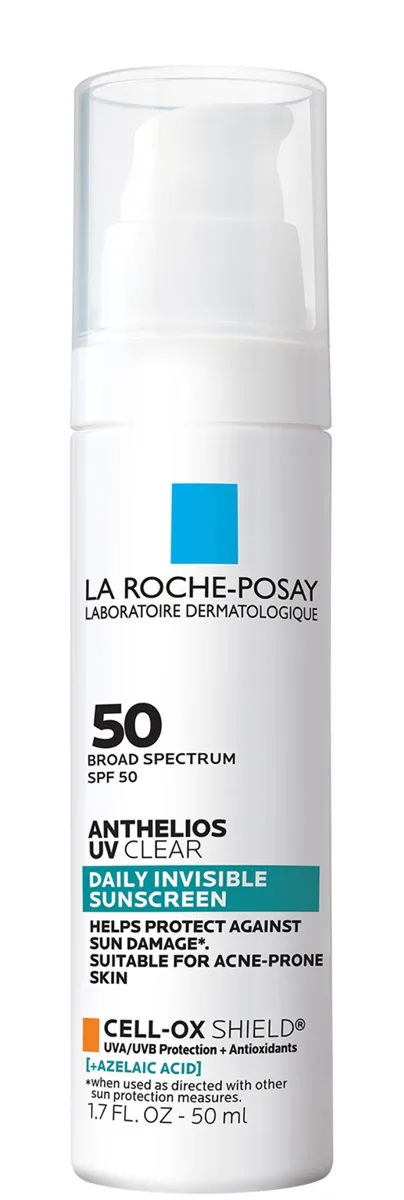
 Anthelios UV Clear Sunscreen SPF 50
One of the only US chemical sunscreens that genuinely earns its 'for sensitive and breakout-prone skin' positioning. A photostable Anthelios filter system paired with a legitimate azelaic acid dose in a lightweight serum-fluid that disappears on every skin tone. Excellent for rosacea, acne, and post-inflammatory hyperpigmentation — and probably the single best daily sunscreen in the La Roche-Posay US lineup for those conditions.
 K-Beauty Daily SPF Standout
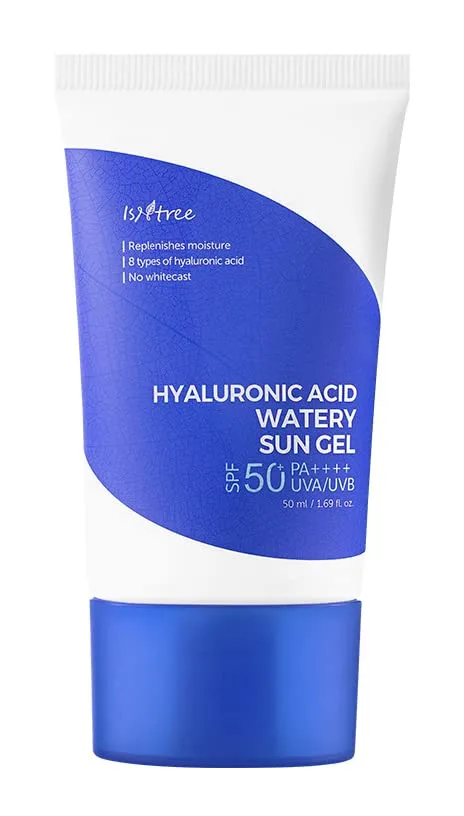
 Hyaluronic Acid Watery Sun Gel SPF 50+
One of the strongest everyday K-beauty sunscreens in the international market — modern European filters, no white cast, fragrance-free, niacinamide-boosted, and built around the brand's signature six-weight HA complex. At twenty-two dollars for 50ml, it's a case study in how much better a daily sunscreen can be when the formulator cares about both protection and wearability.
 Derm Office Staple
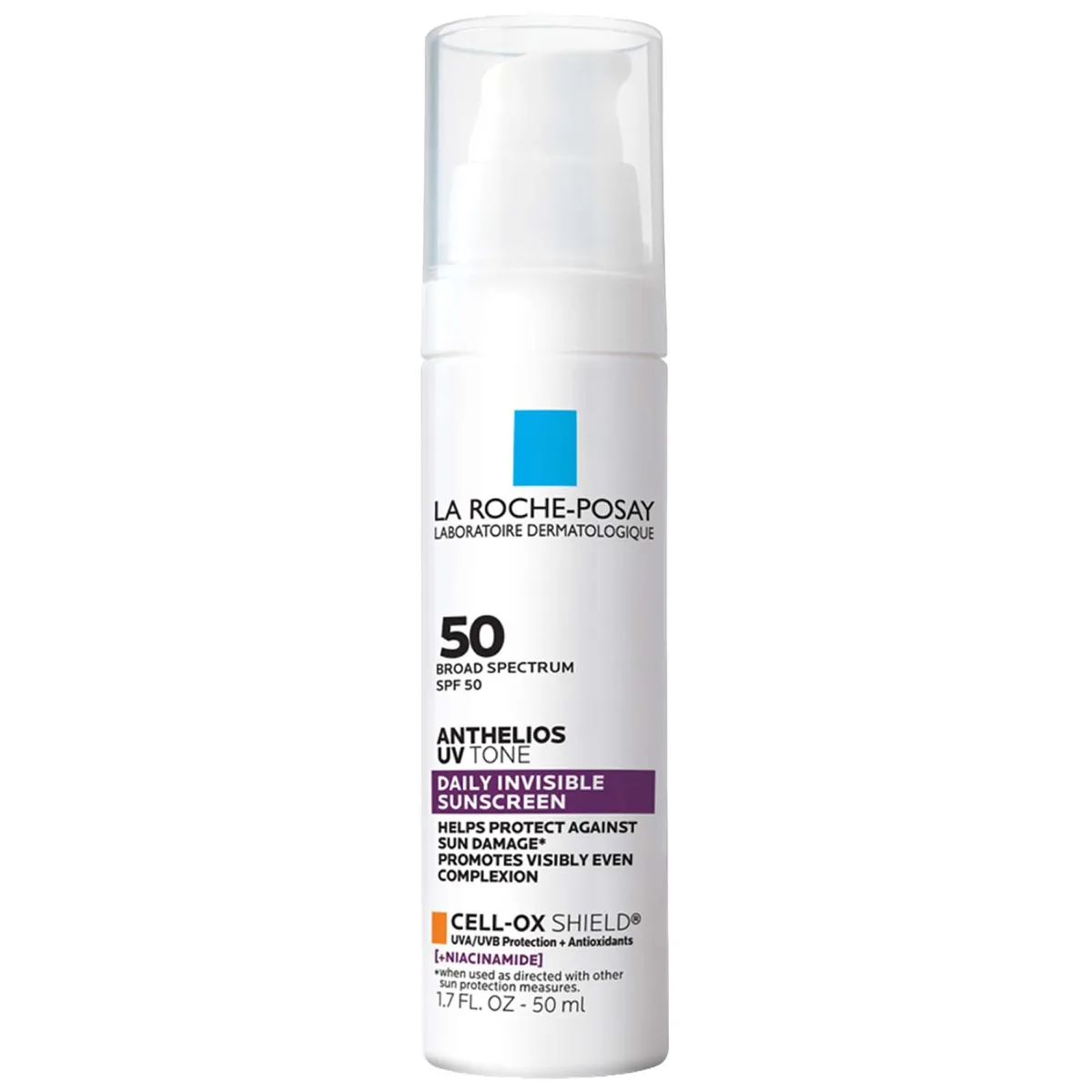
 Anthelios UV Tone Daily Invisible Sunscreen SPF 50
La Roche-Posay's most thoughtful answer yet for hyperpigmentation-prone skin that needs daily SPF. A photostable avobenzone system reinforced with Oxynex ST, paired with a meaningful dose of niacinamide, in a serum-fluid base that goes on invisible on every skin tone. Expensive for 1.7 oz but legitimately well-built — and a rare chemical sunscreen that earns its 'for dark spots' marketing.
 Melasma-Grade Mineral Sunscreen
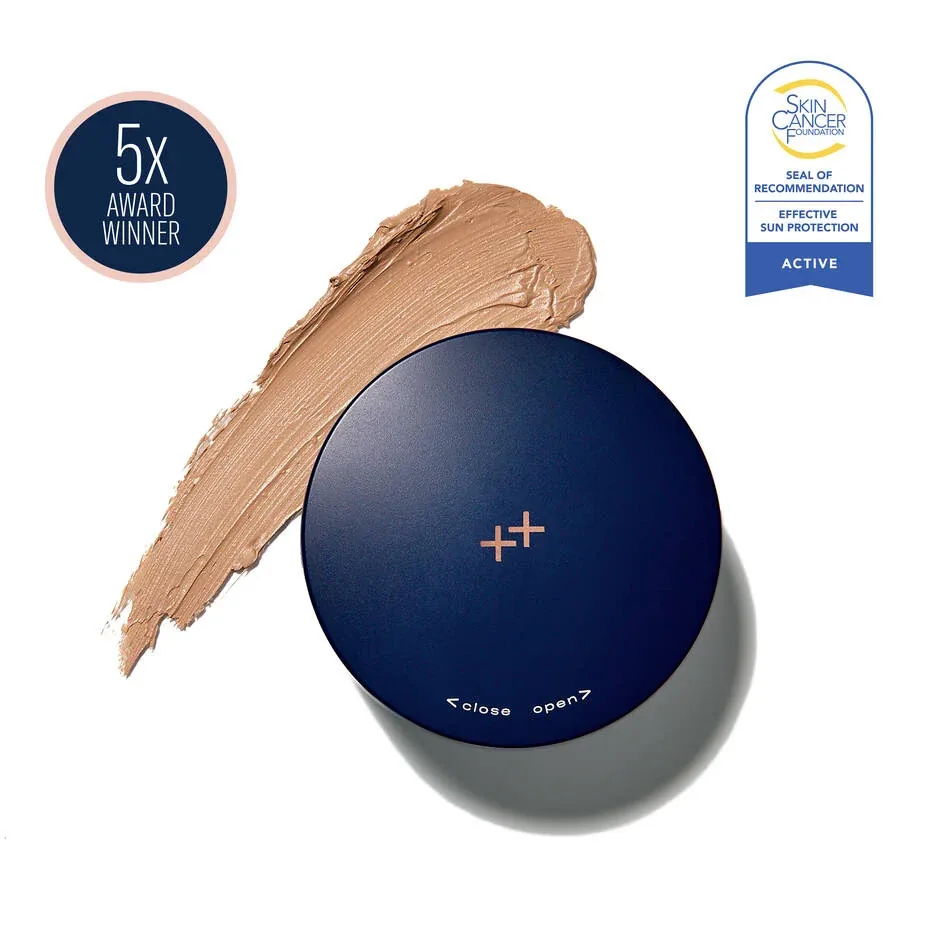
 sunbetter TONE SMART SPF 68
One of the most clinically useful tinted mineral sunscreens in the professional category. SPF 68 from a 100% mineral formula, iron oxide tint that blocks visible light for melasma protection, and an unusually lightweight texture that doesn't feel like you're wearing high-concentration zinc. For patients with melasma or post-inflammatory hyperpigmentation, this is the category benchmark — and it's earned its Allure Best of Beauty wins.
 K-Beauty Cult Favorite
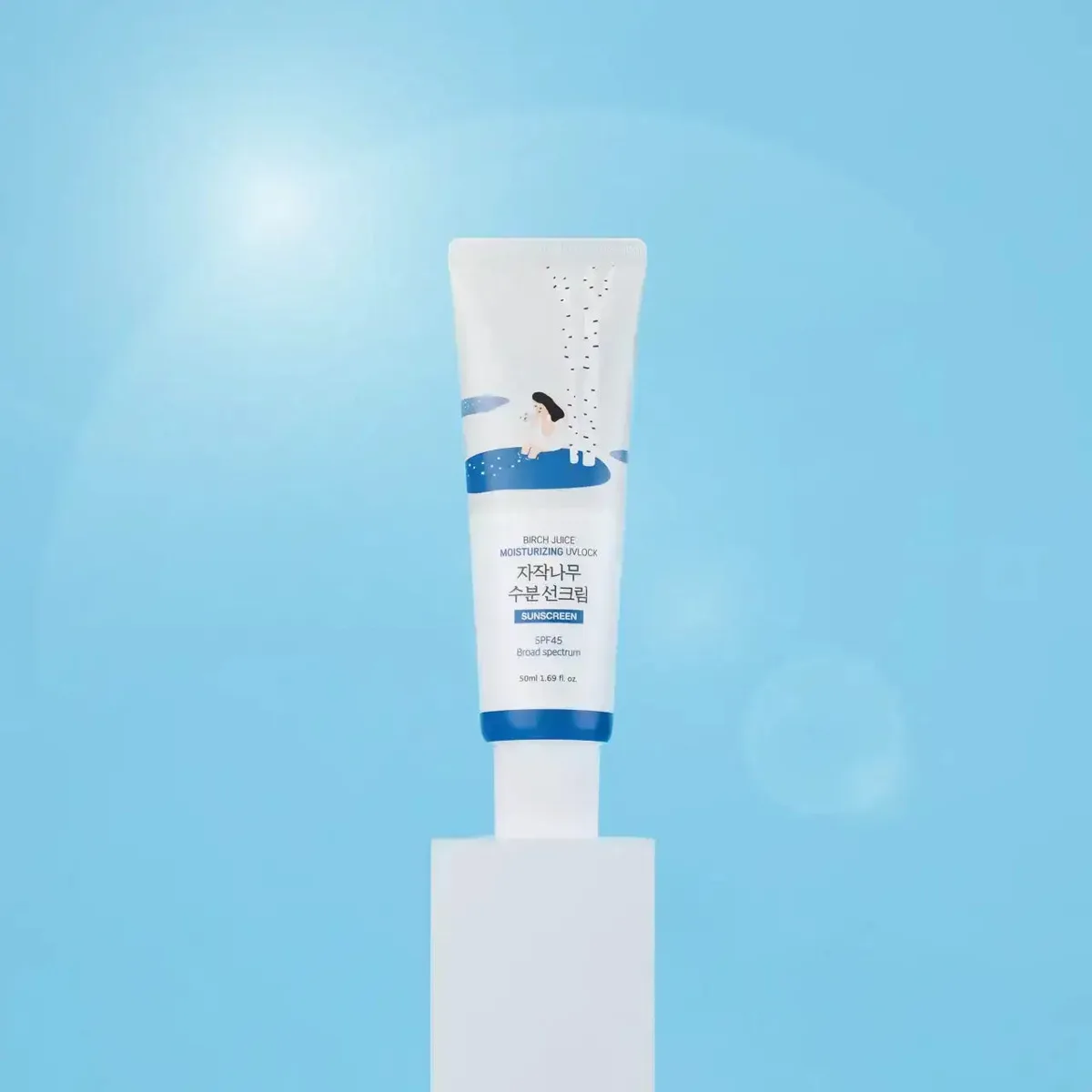
 Birch Juice Moisturizing Sun Cream SPF 50+
One of the best hybrid sunscreens in K-beauty right now — a 70% birch sap base, modern UVA filters you can't get in the US, and a finish that wears like a lightweight moisturizer. Broadly compatible, well-priced, and genuinely pleasant to apply, with minor tradeoffs for oily and fungal-acne-prone users.
 The K-Beauty Sunscreen That Changed Everything
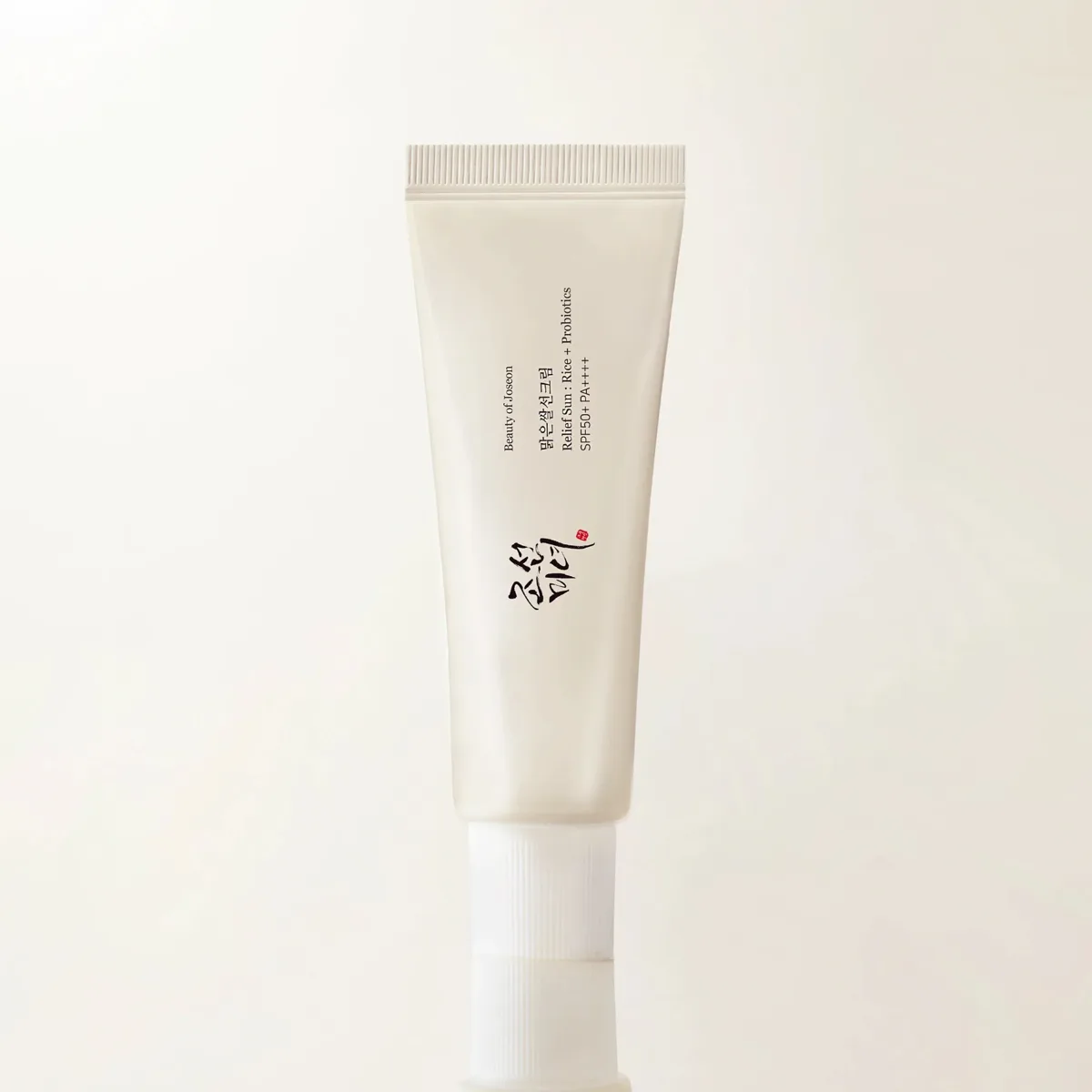
 Relief Sun: Rice + Probiotics SPF 50+
The sunscreen that rewrote the rules for what a $14 product could deliver. With independently verified SPF 50+, 30% rice extract, niacinamide, and a probiotic ferment complex, it offers protection and skincare benefits that rival products three times its price. The texture that feels like wearing nothing on your face is the reason it went viral — and stayed there.