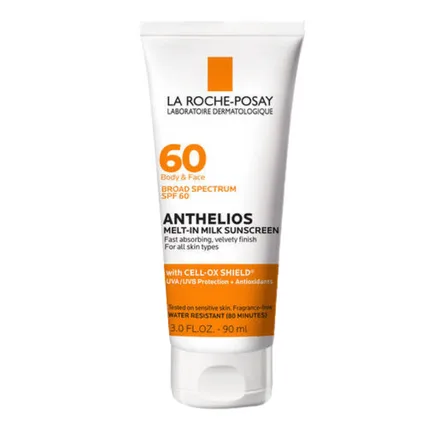
A sunscreen so consistently excellent that Consumer Reports gave it a perfect score five years running. The Melt-In Milk earns its reputation with genuinely comfortable wear, serious UV protection, and a finish that doesn't announce itself — though the alcohol and chemical-only filter system means sensitive skin types should patch test first.
Anthelios Melt-In Milk Sunscreen SPF 60
A sunscreen so consistently excellent that Consumer Reports gave it a perfect score five years running. The Melt-In Milk earns its reputation with genuinely comfortable wear, serious UV protection, and a finish that doesn't announce itself — though the alcohol and chemical-only filter system means sensitive skin types should patch test first.
Score Breakdown
Where this product gains points and where it loses them — broken down across the four scoring pillars.
A highly effective broad-spectrum sunscreen backed by years of Consumer Reports top ratings, though the presence of alcohol denat. and chemical-only UV filters slightly limit its universality for very sensitive skin.
Pros & Cons
- ✓Perfect Consumer Reports score for five consecutive years of independent testing
- ✓Photostable UV filter combination that maintains efficacy throughout wear
- ✓Genuinely comfortable melt-in texture that absorbs in under 90 seconds
- ✓No white cast on any skin tone thanks to chemical-only filter system
- ✓80-minute water resistance — the maximum allowed by FDA standards
- ✓Fragrance-free with no detectable scent after application
- ✓Oil-free and non-comedogenic, suitable for both face and body use
- ✓Antioxidant layer with Cassia Alata provides protection beyond UV filtering
- ✗Alcohol denat. may cause dryness or irritation for compromised skin barriers
- ✗Chemical-only filters exclude those who prefer or need mineral sunscreens
- ✗Octocrylene has drawn some environmental and safety scrutiny in recent years
- ✗Not optimized as a face sunscreen — can feel slippery under makeup
- ✗Five-ounce bottle depletes quickly with proper full-body application
Full Review
There is a particular kind of product that earns its reputation not through marketing blitzes or influencer hauls, but through the quiet, unsexy work of performing flawlessly in a testing lab, year after year. La Roche-Posay's Anthelios Melt-In Milk Sunscreen SPF 60 is that product. When Consumer Reports awarded it a perfect 100 score for the fifth consecutive year, it wasn't a fluke or a soft grading curve — it was confirmation that this sunscreen does exactly what it promises, at the level it promises, every single time.
The formula hinges on three chemical UV filters: homosalate at 10%, octocrylene at 7%, and ethylhexyl salicylate at 5%. That's a classic photostable trio. Octocrylene pulls double duty here — it absorbs UVB radiation on its own while simultaneously stabilizing the other two filters, preventing them from degrading under sustained UV exposure. This photostability is likely the key reason this sunscreen dominates lab testing. Many sunscreens deliver their labeled SPF at application but lose efficacy over a few hours as their filters break down. This one holds.
Layered on top of the UV filter system is La Roche-Posay's Cell-Ox Shield technology, which pairs the filters with Cassia Alata leaf extract and tocopherol (vitamin E). The idea is straightforward: UV filters block radiation, but some gets through and generates free radicals. The antioxidant layer mops up those free radicals before they damage DNA and collagen. It's a belt-and-suspenders approach to photoprotection, and it's supported by the brand's research into oxidative stress from UV exposure.
But lab scores and ingredient lists don't tell you what it feels like to actually wear sunscreen for eight hours at the beach, which is where the Melt-In Milk genuinely shines. The texture is a fluid, milky white that looks concerning for about three seconds before it absorbs and vanishes. There's no white cast — this is a chemical sunscreen, so the filters absorb UV rather than reflecting it, meaning no zinc or titanium dioxide ghosting. On the skin, it settles into a lightweight, satin-matte finish that doesn't feel greasy, tacky, or like you're wearing anything at all. For a body sunscreen you need to reapply every two hours during active outdoor use, this kind of comfort is non-negotiable.
The oil-free formula and non-comedogenic testing make it workable for face use too, and many people do use it that way. But there's a caveat worth discussing honestly: alcohol denat. sits fairly high on the inactive ingredient list. It's there for a reason — it helps the formula spread easily, absorb quickly, and dry without that dreaded sunscreen stickiness. But for people with dry, eczema-prone, or sensitized skin, denatured alcohol can be irritating and dehydrating over time. If your skin barrier is already compromised, this might not be your daily facial sunscreen. For healthy, resilient skin? You probably won't notice it at all.
Water resistance is rated at 80 minutes, the maximum the FDA allows a sunscreen to claim. In practice, this means it holds up well during swimming and sweating, though the standard reapplication rules still apply — every two hours, or immediately after toweling off. The formula doesn't sting eyes as aggressively as some chemical sunscreens, but it's not marketed as tear-free, so keep that in mind around the eye area.
The fragrance-free claim is genuine. There's no added parfum, no floral or coconut beach-day scent. You'll catch a faint sunscreen-base smell during application that disappears within a minute. For people who find fragrance in sunscreen irritating — either to their skin or their sensibilities — this restraint is appreciated.
Value is where things get interesting. At roughly $38 for 5 ounces, this isn't drugstore pricing, but it's far from luxury either. Considering that a proper body application eats through sunscreen fast — you need about a shot glass worth for exposed arms and legs — a bottle might last six to eight weeks of daily summer use. The 3-ounce size at around $26 is better per-ounce value for trying it out or travel. For the level of protection and cosmetic elegance you're getting, the price feels fair, especially when you consider that this specific formula has been independently validated at a level most sunscreens never achieve.
Where the Melt-In Milk falls short is in its filter system's limitations. It relies entirely on chemical (organic) UV filters, with no mineral backup. For people who prefer or need mineral sunscreens — whether due to chemical filter sensitivities, pregnancy preferences, or environmental concerns about octocrylene — this simply isn't an option. La Roche-Posay makes mineral Anthelios variants for exactly this reason.
There's also the reality that this is primarily a body sunscreen that happens to work on the face, rather than a dedicated facial sunscreen. The texture and finish are optimized for larger surface areas. Under makeup, some users find it slightly too slippery compared to sunscreens formulated specifically as primer-like face products.
But these are narrow complaints about a sunscreen that has earned its reputation through the most rigorous independent testing available to consumers. In a market flooded with SPF products making ambitious claims, the Melt-In Milk simply performs — year after year, test after test, application after application. It's the sunscreen equivalent of a Honda Civic: not flashy, not trying to impress anyone, just relentlessly, measurably good at its job.
Formula
Key Ingredients
The hero actives that drive this product's performance.
| Ingredient | Function | Evidence |
|---|---|---|
| Homosalate (10%) | The primary UV filter in this formula, absorbing UVB radiation across a broad range. Working in concert with ethylhexyl salicylate and octocrylene, it forms part of Cell-Ox Shield technology to deliver photostable SPF 60 protection that maintains its efficacy even after prolonged sun exposure. | well-established |
| Octocrylene (7%) | Acts as both a UVB absorber and a photostabilizer for the other UV filters in this formula. Its stabilizing role is critical here — it prevents the homosalate and ethylhexyl salicylate from degrading under UV exposure, which is why Consumer Reports has consistently rated this sunscreen's protection as top-tier. | well-established |
| Cassia Alata Leaf Extract | The botanical backbone of La Roche-Posay's Cell-Ox Shield technology. This tropical leaf extract provides antioxidant defense against free radicals generated by UV exposure, complementing the chemical filters by addressing oxidative damage that UV filters alone cannot prevent. | promising |
| Tocopherol | Vitamin E works alongside the Cassia Alata extract in this formula to provide a secondary antioxidant layer. In a sunscreen context, tocopherol helps neutralize free radicals that penetrate past the UV filter system, offering photoprotection beyond what the SPF number alone indicates. | well-established |
| Glycerin | Provides essential hydration in what could otherwise be a drying formula — the alcohol denat. in this product can strip moisture, and glycerin counterbalances that effect, helping the sunscreen feel comfortable during extended outdoor wear rather than tight or parched. | well-established |
Full INCI List
Active Ingredients: Homosalate 10%, Ethylhexyl Salicylate 5%, Octocrylene 7%. Inactive Ingredients: Water, Dimethicone, Styrene/Acrylates Copolymer, Polymethylsilsesquioxane, Butyloctyl Salicylate, Glycerin, Alcohol Denat., Poly C10-30 Alkyl Acrylate, Caprylyl Methicone, Trisiloxane, Acrylates/Dimethicone Copolymer, Diethylhexyl Syringylidenemalonate, Glyceryl Stearate, PEG-100 Stearate, Phenoxyethanol, Potassium Cetyl Phosphate, Propylene Glycol, Caprylyl Glycol, PEG-8 Laurate, Acrylates/C10-30 Alkyl Acrylate Crosspolymer, Triethanolamine, Tocopherol, Inulin Lauryl Carbamate, Disodium EDTA, P-Anisic Acid, Caprylic/Capric Triglyceride, Xanthan Gum, Cassia Alata Leaf Extract, Maltodextrin, Sodium Dodecylbenzenesulfonate
Product Flags
✓ Fragrance Free✗ Alcohol Free✓ Oil Free✗ Silicone Free✓ Paraben Free✓ Sulfate Free✗ Cruelty Free✗ Vegan✗ Fungal Acne Safe
Potential Irritants
Alcohol Denat.OctocrylenePhenoxyethanol
Compatibility
Skin Match
Best For
Works For
Not Ideal For
Addresses These Conditions
Use With Caution
Routine Step
sunscreen
Time of Day
AM
Pregnancy Safe
Yes ✓
Layering Tips
Apply as the final step in your skincare routine, after moisturizer. Use a generous amount — about a nickel-sized dollop for the face and a shot glass worth for the body. Reapply every two hours or immediately after swimming or sweating.
Results Timeline
Immediate UV protection upon application. The melt-in texture settles within 1-2 minutes to a non-greasy finish. Over weeks of consistent use, helps prevent cumulative sun damage and supports anti-aging efforts by blocking photoaging rays.
Pairs Well With
Antioxidant serumsMoisturizers with ceramidesVitamin C serums
Sample AM Routine
- Gentle cleanser
- Vitamin C serum
- Lightweight moisturizer
- La Roche-Posay Anthelios Melt-In Milk Sunscreen SPF 60
Sample PM Routine
- Cleanser
- Treatment serum
- Night moisturizer
Evidence
Who Should Skip
- Alcohol denat. may cause dryness or irritation for compromised skin barriers
- Chemical-only filters exclude those who prefer or need mineral sunscreens
- Octocrylene has drawn some environmental and safety scrutiny in recent years
- Not optimized as a face sunscreen — can feel slippery under makeup
Science & Expert Perspective
The Science
The photostability of this sunscreen's UV filter system is its defining scientific feature. Octocrylene, present at 7%, functions as both a UVB absorber and a photostabilizer — it prevents the photodegradation of homosalate and ethylhexyl salicylate, the other two active filters. A 2004 study published in the Journal of the American Academy of Dermatology demonstrated that octocrylene significantly improves the photostability of UVB-absorbing filters when used in combination, which directly explains this sunscreen's consistent performance in independent lab testing.
The Cell-Ox Shield technology pairs these UV filters with Cassia Alata (Senna Alata) leaf extract, a botanical antioxidant. Research on Cassia Alata published in the Journal of Ethnopharmacology has documented its antioxidant and anti-inflammatory properties, though most studies focus on traditional medicinal uses rather than topical photoprotection specifically. La Roche-Posay's proprietary research positions this extract as a free radical scavenger that addresses the oxidative stress UV radiation generates even when UV filters are working effectively.
Tocopherol (vitamin E) provides a well-established second antioxidant layer. A study published in the Journal of the American Academy of Dermatology in 2003 demonstrated that topical vitamin E can reduce UV-induced erythema and provide modest photoprotective effects when combined with UV filters. In this formula, tocopherol works synergistically with the Cassia Alata extract to address both immediate and cumulative oxidative damage.
The SPF 60 rating itself warrants scientific context. While the difference between SPF 30 (blocking approximately 97% of UVB) and SPF 60 (blocking approximately 98.3%) appears marginal in percentage terms, real-world application studies consistently show that consumers apply only 25-50% of the recommended amount. Research published in the British Journal of Dermatology has demonstrated that under-application of SPF 60 still provides meaningful protection closer to what SPF 30 delivers at proper application thickness, making higher SPF products a practical safety net for typical use patterns.
References
- Photostability of sunscreen products and their UV-absorbing ingredients — Journal of the American Academy of Dermatology (2004)
- Topical vitamin E and UV-induced skin damage — Journal of the American Academy of Dermatology (2003)
Dermatologist Perspective
Dermatologists consistently rank the Anthelios Melt-In Milk among their top sunscreen recommendations for patients who need reliable broad-spectrum protection with cosmetic elegance. Board-certified dermatologists note that the photostable filter combination addresses a common clinical concern — many patients apply sunscreen once in the morning and assume they're protected all day, so a formula that maintains its efficacy over time provides a meaningful clinical advantage. Dermatologists also appreciate the fragrance-free, non-comedogenic formulation, which reduces the risk of contact dermatitis and acne mechanica that can occur with heavily fragranced or occlusive sunscreens. For patients using photosensitizing treatments like retinoids or AHAs, dermatologists frequently recommend SPF 50+ products like this one to provide adequate protection during the increased vulnerability period.
Guidance
Usage Guide
How to Use
Apply generously 15 minutes before sun exposure. Use approximately one ounce (a shot glass full) for exposed body areas and a nickel-sized amount for the face. Spread evenly and allow 60-90 seconds for the formula to absorb. Reapply every two hours, or immediately after swimming, sweating, or towel-drying. For daily use under clothing, a single morning application is typically sufficient for covered areas. Can be applied over moisturizer and serum but should be the final step before makeup.
Value Assessment
At $37.99 for 5 ounces, the Melt-In Milk sits in the mid-range of the sunscreen market — significantly cheaper than prestige sunscreens from brands like Supergoop or Shiseido, but above basic drugstore options. The 3-ounce size at $25.99 offers a lower entry point for trial. When you factor in the Consumer Reports validation and the cosmetic elegance of the formula, the price-to-quality ratio is strong. This is a legacy pharmacy brand with decades of dermatological research behind it — you're paying for proven protection, not hype. For a body sunscreen that depletes quickly with proper application, buying the larger size is the more economical choice.
Who Should Buy
Anyone who wants a sunscreen backed by the most rigorous independent testing available. Ideal for active outdoor use, beach days, and sports where water resistance and comfortable wear matter. Particularly well-suited for people who dislike greasy or heavy sunscreens.
Who Should Skip
Those with very dry, eczema-prone, or sensitized skin who react to alcohol denat. People who specifically need mineral-only sunscreens, whether for ingredient sensitivity, pregnancy preference, or environmental concerns about chemical UV filters.
Ready to try La Roche-Posay Anthelios Melt-In Milk Sunscreen SPF 60?
Details
Details
Texture
A fluid, milky lotion that transforms from a white cream into a transparent, lightweight layer as it absorbs. The 'melt-in' descriptor is accurate — it feels like it dissolves into the skin rather than sitting on top.
Scent
Virtually unscented. No added fragrance, and the sunscreen base scent is minimal and dissipates quickly after application.
Packaging
White plastic squeeze tube with a flip-top cap. The 5 oz size is travel-bag-friendly for a body sunscreen, and the 3 oz size fits TSA carry-on requirements.
Finish
non-greasylightweightsatin
What to Expect on First Use
Applies white but absorbs within 60-90 seconds to a nearly invisible finish on most skin tones. No tingling or stinging for most users, though those sensitive to alcohol denat. may notice a brief cooling sensation. Feels immediately comfortable and non-sticky.
How Long It Lasts
6-8 weeks with daily face and body use; 3-4 months with face-only daily use
Period After Opening
12 months
Best Season
spring summer
Certifications
Skin Cancer Foundation Recommended
Background
The Why
Born from La Roche-Posay's decades-long partnership with dermatologists in France, the Anthelios line was originally developed using Mexoryl technology for the European market before being adapted for US formulations. The Melt-In Milk became the workhorse of the US Anthelios range — a body-and-face sunscreen designed to make high SPF feel effortless rather than burdensome.
About La Roche-Posay Legacy Brand (20+ years)
La Roche-Posay was founded in 1975 near the thermal springs in central France and has been a dermatologist-recommended brand for nearly five decades. Its formulations are developed with dermatologists and backed by extensive clinical testing, and the brand holds multiple Skin Cancer Foundation seals of recommendation.
Brand founded: 1975 · Product launched: 2009
Myth vs. Reality
Myths & Misconceptions
Myth
SPF 60 is overkill — SPF 30 is enough for everyone.
Reality
While SPF 30 blocks about 97% of UVB rays, most people apply far less sunscreen than the tested amount. SPF 60 provides a safety margin — even at half the recommended application, you're still getting meaningful protection closer to what SPF 30 delivers at full application.
Myth
Chemical sunscreens are dangerous and should be avoided.
Reality
The FDA has requested additional safety data on certain chemical filters, but this does not mean they are proven unsafe. Homosalate, octocrylene, and ethylhexyl salicylate in this formula have decades of use history and continue to be approved for use globally. The risk of unprotected sun exposure far outweighs the theoretical concerns.
FAQ
Frequently Asked Questions
Is La Roche-Posay Anthelios Melt-In Milk SPF 60 good for the face?
Yes, this sunscreen is formulated for both face and body use. Its oil-free, non-comedogenic formula absorbs quickly without leaving a greasy residue. However, if you have very sensitive or acne-prone facial skin, the alcohol denat. and chemical UV filters may cause irritation — in that case, La Roche-Posay's mineral face sunscreens may be a better fit.
Does this sunscreen leave a white cast?
No. As a chemical sunscreen (not mineral/zinc-based), the Melt-In Milk absorbs into the skin and dries to a transparent finish within about 60-90 seconds. It does not leave a white cast on any skin tone.
Is this sunscreen reef-safe?
This formula does not contain oxybenzone or octinoxate, the two UV filters most commonly cited in reef-safety legislation. However, it does contain octocrylene, which some researchers have flagged as potentially harmful to coral. If strict reef-safety is a priority, a mineral-only sunscreen may be a better choice.
How often should I reapply this sunscreen?
Reapply every two hours during continuous sun exposure. While this formula is water-resistant for 80 minutes, reapply immediately after swimming, sweating heavily, or towel-drying. For daily commute-level exposure with limited outdoor time, a single morning application may suffice.
Can I use this sunscreen with retinol or vitamin C?
Absolutely. This sunscreen pairs particularly well with morning vitamin C serums, as both provide antioxidant protection. For retinol users, this SPF 60 is especially important — retinol increases photosensitivity, and the high SPF plus Cell-Ox Shield antioxidants provide the robust protection retinol-treated skin needs.
Is this sunscreen safe during pregnancy?
Yes. This formula uses chemical UV filters that are generally considered safe during pregnancy. It does not contain retinoids or other pregnancy-contraindicated ingredients. However, always confirm with your healthcare provider if you have specific concerns.
Community
Community Voices
Common Praise
"Melts into skin without white cast"
"Non-greasy finish despite high SPF"
"Excellent for outdoor activities with 80-minute water resistance"
"Works well under makeup"
"No strong sunscreen smell"
Common Complaints
"Contains alcohol denat. which can be drying"
"Some users report mild breakouts on the face"
"Chemical filters may irritate very sensitive skin"
"Bottle design makes it hard to get last product out"
Notable Endorsements
Consumer Reports perfect 100 score for five consecutive yearsSkin Cancer Foundation RecommendedBoard-Certified Dermatologist recommended
Appears In
best sunscreen for outdoor activities best body sunscreen spf 60 best sunscreen for water resistance best sunscreen for oily skin
Related Conditions
sun damage aging hyperpigmentation melasma
Related Ingredients
You Might Also Like
 Derm Office Staple
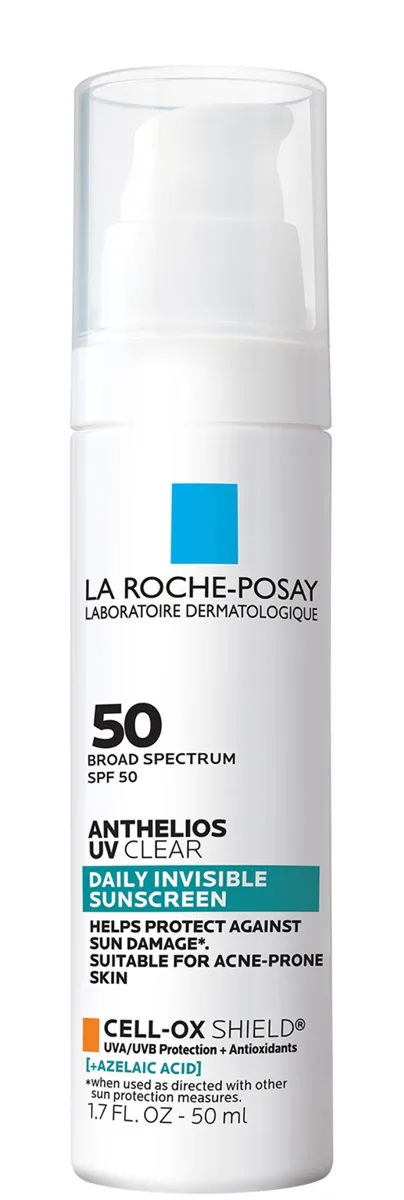
 Anthelios UV Clear Sunscreen SPF 50
One of the only US chemical sunscreens that genuinely earns its 'for sensitive and breakout-prone skin' positioning. A photostable Anthelios filter system paired with a legitimate azelaic acid dose in a lightweight serum-fluid that disappears on every skin tone. Excellent for rosacea, acne, and post-inflammatory hyperpigmentation — and probably the single best daily sunscreen in the La Roche-Posay US lineup for those conditions.
 K-Beauty Daily SPF Standout
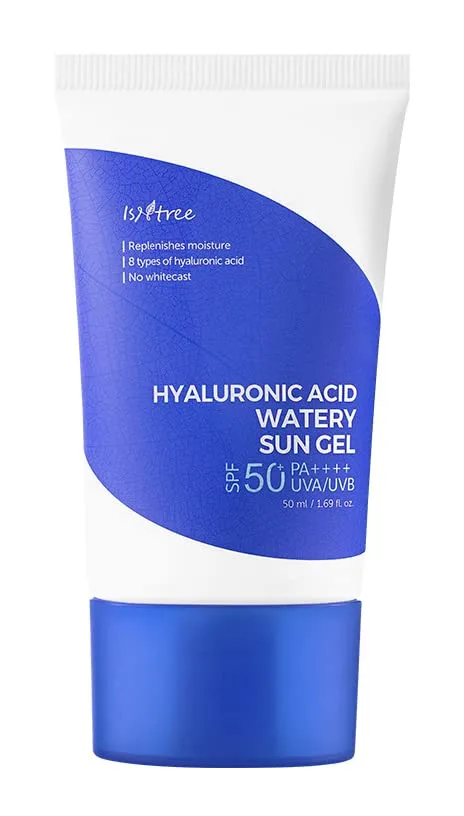
 Hyaluronic Acid Watery Sun Gel SPF 50+
One of the strongest everyday K-beauty sunscreens in the international market — modern European filters, no white cast, fragrance-free, niacinamide-boosted, and built around the brand's signature six-weight HA complex. At twenty-two dollars for 50ml, it's a case study in how much better a daily sunscreen can be when the formulator cares about both protection and wearability.
 Derm Office Staple
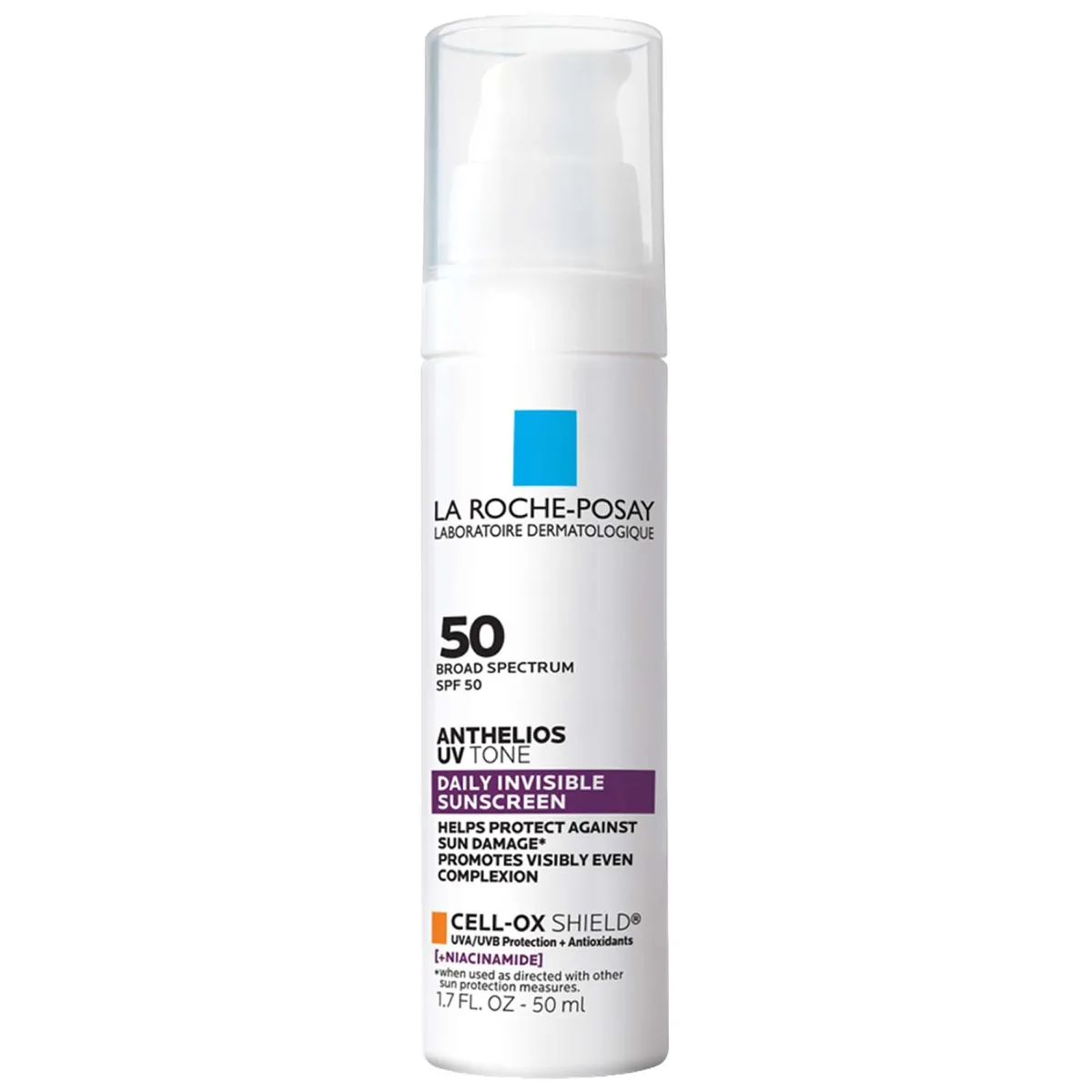
 Anthelios UV Tone Daily Invisible Sunscreen SPF 50
La Roche-Posay's most thoughtful answer yet for hyperpigmentation-prone skin that needs daily SPF. A photostable avobenzone system reinforced with Oxynex ST, paired with a meaningful dose of niacinamide, in a serum-fluid base that goes on invisible on every skin tone. Expensive for 1.7 oz but legitimately well-built — and a rare chemical sunscreen that earns its 'for dark spots' marketing.
 Melasma-Grade Mineral Sunscreen
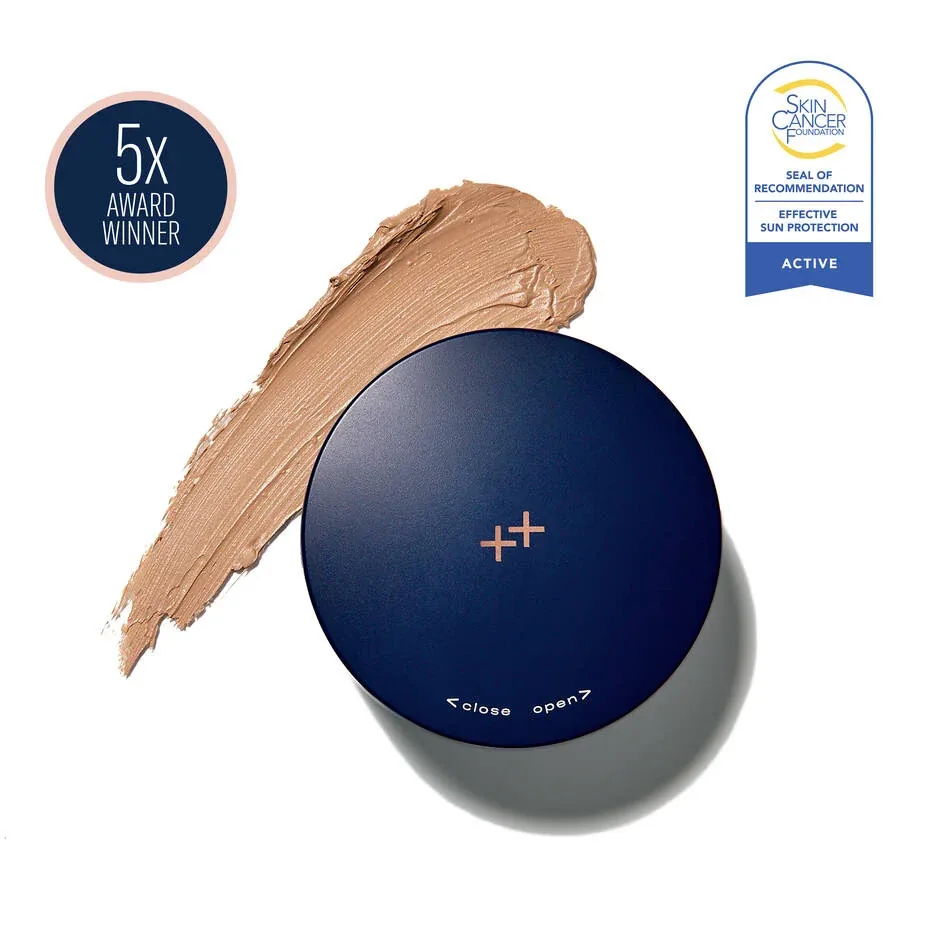
 sunbetter TONE SMART SPF 68
One of the most clinically useful tinted mineral sunscreens in the professional category. SPF 68 from a 100% mineral formula, iron oxide tint that blocks visible light for melasma protection, and an unusually lightweight texture that doesn't feel like you're wearing high-concentration zinc. For patients with melasma or post-inflammatory hyperpigmentation, this is the category benchmark — and it's earned its Allure Best of Beauty wins.
 Derm Office Staple
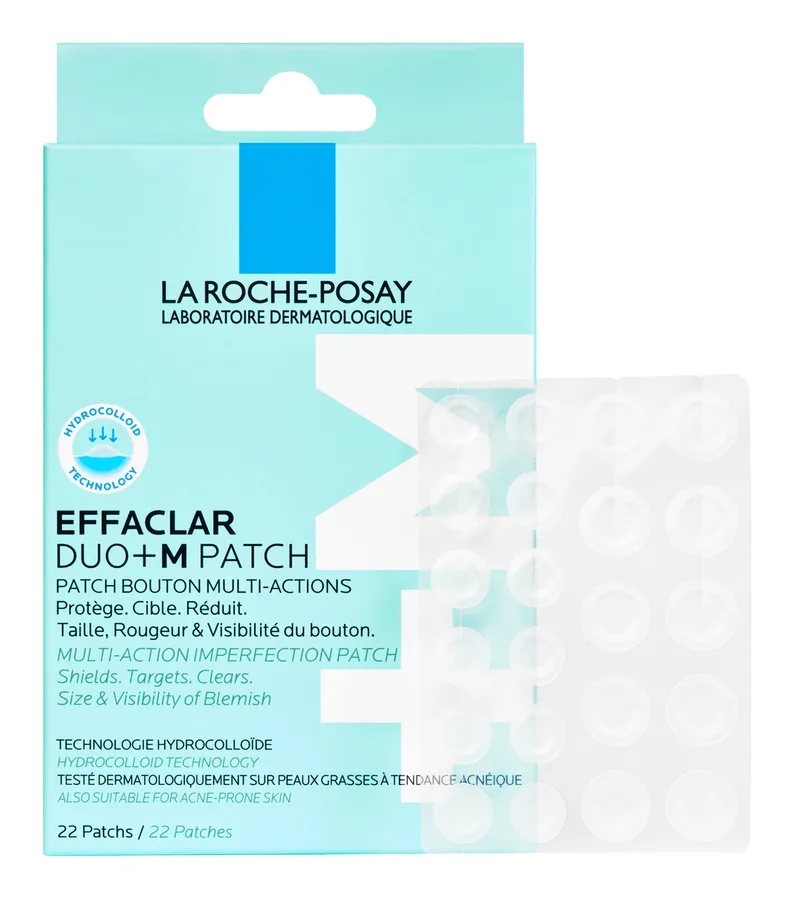
 Effaclar Multi-Target Blemish Patches
One of the few hydrocolloid pimple patches that actually stays on overnight without curling off at 3am. At 420 microns thick with two size options in one pack and zero actives to irritate sensitive skin, this is the Effaclar line's quiet overachiever — and a legitimately good answer for anyone whose acne routine has been sabotaged by thinner patches that refuse to stay put.
 K-Beauty Cult Favorite
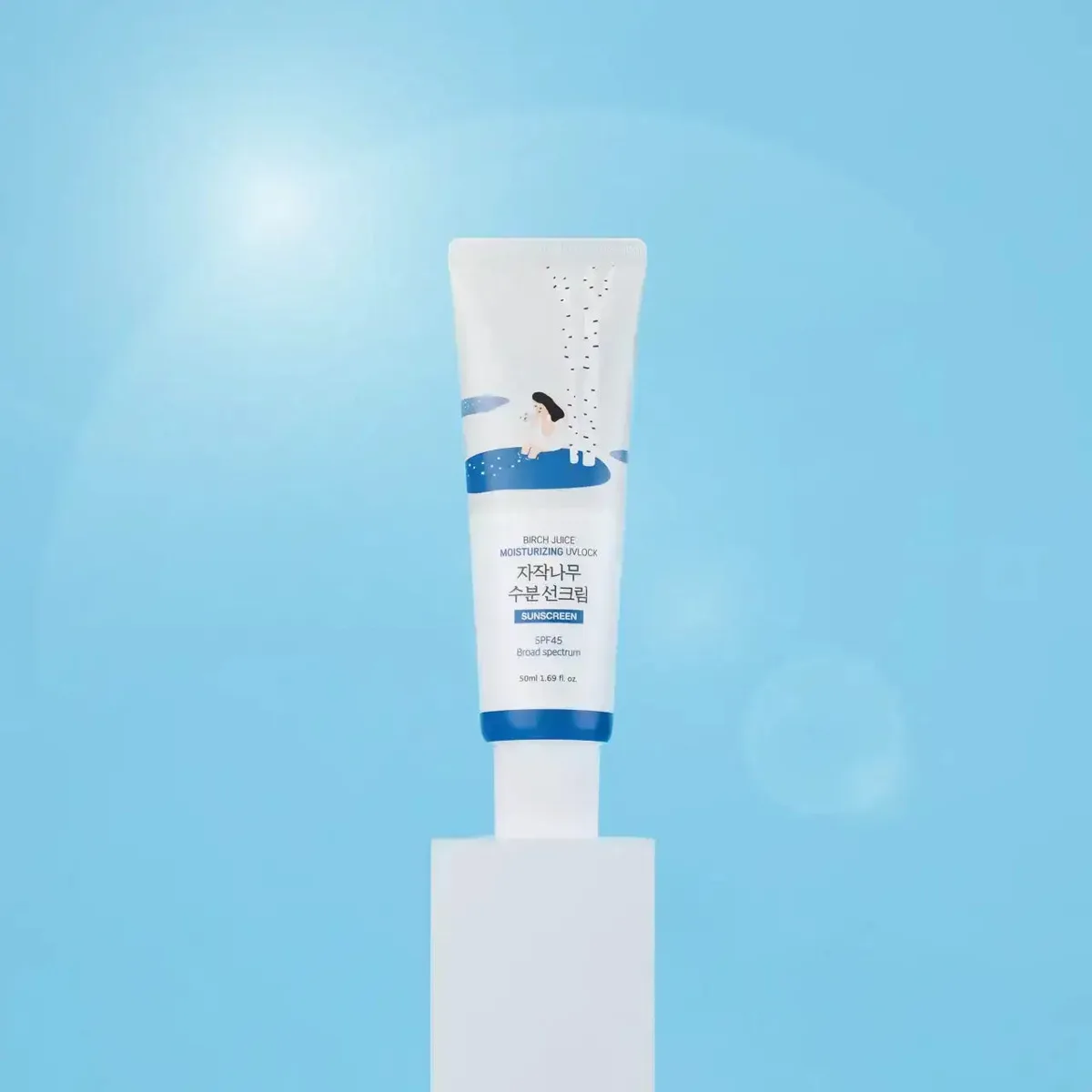
 Birch Juice Moisturizing Sun Cream SPF 50+
One of the best hybrid sunscreens in K-beauty right now — a 70% birch sap base, modern UVA filters you can't get in the US, and a finish that wears like a lightweight moisturizer. Broadly compatible, well-priced, and genuinely pleasant to apply, with minor tradeoffs for oily and fungal-acne-prone users.
This review reflects our independent analysis of publicly available ingredient data, manufacturer claims, and verified user reviews. We are reader-supported — Amazon links may earn us a commission at no cost to you. We do not accept paid placements; rankings are based solely on the evidence.