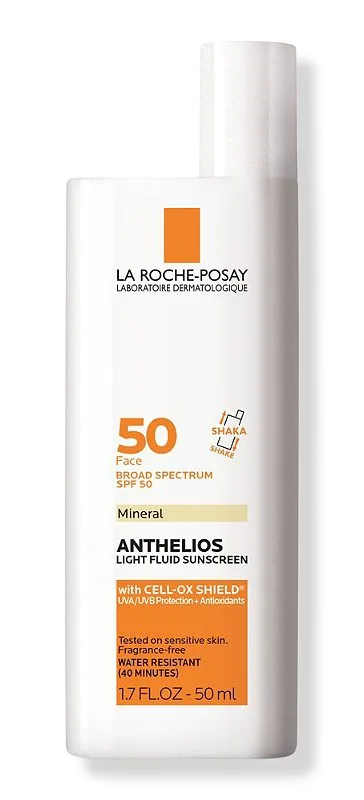
One of the most wearable mineral-only daily sunscreens in the US market, and a go-to dermatology office recommendation for post-procedure and reactive skin. Micronized titanium and zinc in a silicone-alkane base that spreads like a chemical fluid and sets to a makeup-friendly matte. Priced at the premium end for 1.7 oz, but earns it on tolerance and texture.
Anthelios Ultra-Light Fluid Face Sunscreen SPF 40
One of the most wearable mineral-only daily sunscreens in the US market, and a go-to dermatology office recommendation for post-procedure and reactive skin. Micronized titanium and zinc in a silicone-alkane base that spreads like a chemical fluid and sets to a makeup-friendly matte. Priced at the premium end for 1.7 oz, but earns it on tolerance and texture.
Score Breakdown
Where this product gains points and where it loses them — broken down across the four scoring pillars.
A cosmetically strong mineral fluid for reactive and rosacea-prone skin that can't tolerate chemical filters. The irritation risk is excellent thanks to the pure mineral filter system and fragrance-free base. Value drops slightly at $35 for 1.7 oz, and SPF 40 is lower than the line's chemical options.
Pros & Cons
- ✓Pure mineral filter system suitable for post-procedure and severely reactive skin
- ✓Silicone-alkane base spreads more like a chemical fluid than traditional mineral
- ✓Minimal white cast on fair to medium skin tones
- ✓Fragrance-free, alcohol-free, and very well tolerated by rosacea-prone skin
- ✓Sets to a satin-matte finish that layers cleanly under makeup
- ✓Pregnancy-safe and widely recommended for post-procedure recovery
- ✓Cell-Ox Shield antioxidant complex adds free-radical defense
- ✗Visible white cast on deep skin tones despite micronization
- ✗SPF 40 rating is lower than competitive options at SPF 50
- ✗Price is steep at $35 for 1.7 oz
- ✗Can pill if layered too quickly over heavy moisturizer or under makeup
- ✗Not water-resistant enough for beach, pool, or heavy sweat activities
Full Review
There's a specific patient who walks into a dermatology office in search of a sunscreen recommendation, and this Anthelios Ultra-Light Fluid SPF 40 is the answer for most of them. They might be recovering from a laser treatment or a chemical peel and under strict instructions to avoid chemical filters. They might have rosacea that flares from octocrylene or homosalate. They might be pregnant and taking no chances with systemic absorption of anything. They might just have reactive skin that's burned out three other sunscreens in the past year. For all of these cases, the answer has traditionally been 'use a mineral sunscreen' — followed by the grim tour of mineral SPF options, most of which either ghosted the face white or felt like applying spackle. This fluid is one of the few products in the category that's solved the cosmetic elegance problem without compromising the tolerance profile. The filter system is the traditional mineral duo of titanium dioxide and zinc oxide, both micronized for better spread and reduced white cast. Titanium handles UVB and short-UVA through reflection and scattering; zinc extends protection into longer UVA wavelengths including UVA1, which is what you want for melasma, photoaging, and hormonal pigmentation. The formulation pairs these with a silicone-and-alkane base — dimethicone, isododecane, C12-15 alkyl benzoate, isohexadecane — that's engineered to let the mineral particles disperse more evenly across the skin surface. The result, on application, is something much closer to a chemical fluid than to traditional mineral lotions. It spreads thin, sinks in fast, and sets to a satin-matte finish within about a minute. White cast is minimal on fair through medium skin tones; on deeper tones, there's still a faint cast, not catastrophic but noticeable. For deep skin tones specifically, the chemical UV Tone or UV Clear sunscreens are going to be a better cosmetic match — mineral-only formulas are limited by the physics of zinc and titanium, and no amount of base engineering fully solves the color issue on the deepest skin. What this fluid does phenomenally well is tolerate abused skin. Post-laser, post-peel, post-microneedling — the mineral filters don't penetrate into compromised stratum corneum, the silicone base is soothing rather than irritating, and the fragrance-free-and-alcohol-free formula removes the common sting-triggers that sensitive patients react to. Rosacea flushes tend to stay calmer under mineral SPF than under chemical, and this fluid is light enough that it doesn't create the kind of occlusive heat-trap that can worsen rosacea in the first place. The Cell-Ox Shield complex — tocopherol, cassia alata, Oxynex ST — adds free-radical defense for the environmental damage that slips past the physical filters, which matters more for photoaging and pigmentation than people realize. The SPF 40 rating instead of SPF 50 will bother some buyers who instinctively equate higher numbers with more protection. The real-world difference is small: SPF 40 blocks about 97.5% of UVB, SPF 50 blocks about 98%. What's more important than that half-percent is whether you apply enough product — most people apply about half the recommended dose, which drops real-world protection to a fraction of the label in either case. At full two-finger-length application, this is plenty of UVB protection for daily driver use. The SPF 40 rating is essentially the cost of achieving the cosmetic texture; pushing mineral filters higher typically means pushing either white cast or heaviness to unacceptable levels. The complaints are worth naming. Price is steep at around $35 for 1.7 oz, which is in the upper range for a mineral fluid and bothers users who can find comparable-tolerance options from dermatology-adjacent brands for less. Deep skin tone white cast is a real limitation that any 100% mineral formula will share to some degree. Layering discipline matters — apply it too quickly over a heavy moisturizer, rub too aggressively, or layer makeup before it's set and you'll get pilling or balling. And if your sun exposure routine includes beach, pool, or heavy sweat activity, this isn't water-resistant enough to be your primary sports SPF; you'd want a dedicated water-resistant beach option for those use cases. Where this sunscreen earns its recommendation is as the default daily mineral driver for the patient population that specifically needs one: reactive rosacea, post-procedure recovery, severe sensitivity, or personal preference for physical filters. Within that scope, it's one of the best-balanced options in the US market, and the La Roche-Posay research apparatus behind the Anthelios franchise gives the formulation more credibility than most competing mineral fluids. For everyone else — users who tolerate chemical filters fine and want zero cast on deep skin — UV Tone or UV Clear will be the more elegant choice in the same line.
Formula
Key Ingredients
The hero actives that drive this product's performance.
| Ingredient | Function | Evidence |
|---|---|---|
| Titanium Dioxide + Zinc Oxide | This is La Roche-Posay's micronized mineral filter duo — titanium dioxide handles the UVB and short-UVA range while zinc oxide extends UVA coverage across the longer wavelengths, including UVA1. Together they deliver broad-spectrum SPF 40 protection through pure reflection and scattering rather than absorption, which is what makes the formula suitable for very reactive, rosacea-prone, or post-procedure skin that can't tolerate chemical filters. | well-established |
| Diethylhexyl Syringylidenemalonate (Oxynex ST) | Oxynex ST is a photostability booster and antioxidant from L'Oréal's research labs. In a mineral formula like this one, it functions primarily as an antioxidant defender against UV-induced free radicals rather than as a filter stabilizer, reinforcing the Cell-Ox Shield complex's environmental-damage defense. | promising |
| Tocopherol (Vitamin E) | Tocopherol is a well-studied antioxidant that neutralizes UV-induced free radicals that penetrate past the mineral filters. It's a core part of the Cell-Ox Shield complex and adds oxidative defense against environmental stressors beyond just UV. | well-established |
| Cassia Alata Leaf Extract | Cassia alata is La Roche-Posay's proprietary antioxidant in the Cell-Ox Shield complex, aimed at supplementary free-radical defense particularly against infrared and visible light. The evidence base is thinner than for vitamin E, but it rounds out the antioxidant support. | emerging |
Full INCI List
Active Ingredients: Titanium Dioxide, Zinc Oxide. Inactive Ingredients: Water, Dimethicone, Isododecane, C12-15 Alkyl Benzoate, Undecane, Triethylhexanoin, Isohexadecane, Nylon-12, Caprylyl Methicone, Butyloctyl Salicylate, Phenethyl Benzoate, Styrene/Acrylate Copolymer, Silica, Tridecane, Dicaprylyl Carbonate, Dicaprylyl Ether, Talc, Dimethicone/PEG-10/15 Crosspolymer, Aluminum Stearate, Pentylene Glycol, PEG-9 Polydimethylsiloxyethyl Dimethicone, Alumina, Polyhydroxystearic Acid, Phenoxyethanol, Magnesium Sulfate, Propylene Glycol, Caprylyl Glycol, PEG-8 Laurate, Disteardimonium Hectorite, Triethoxycaprylylsilane, Diethylhexyl Syringylidenemalonate, Tocopherol, Propylene Carbonate, Cassia Alata Leaf Extract, Maltodextrin
Product Flags
✓ Fragrance Free✓ Alcohol Free✓ Oil Free✗ Silicone Free✓ Paraben Free✓ Sulfate Free✗ Cruelty Free✗ Vegan✗ Fungal Acne Safe
Compatibility
Skin Match
Best For
sensitive normal combination oily
Works For
Not Ideal For
Addresses These Conditions
sensitivity rosacea post procedure sun damage compromised skin barrier
Routine Step
sunscreen
Time of Day
AM
Pregnancy Safe
Yes ✓
Layering Tips
Apply as the last step of morning skincare. Dispense a generous pump to ensure a full two-finger-length dose for face and neck. Shake well before use — mineral fluids separate slightly in the bottle. Let settle for 60-90 seconds before applying makeup.
Results Timeline
UV protection is immediate upon application at the labeled SPF 40 level. This is a protective product, not a treatment — benefits like preventing further photodamage and reducing UV-triggered pigmentation are cumulative over months of consistent daily use.
Pairs Well With
vitamin-cniacinamideretinolhyaluronic-acidceramides
Sample AM Routine
- Gentle cleanser
- Vitamin C serum
- Moisturizer
- La Roche-Posay Anthelios Ultra-Light Fluid Face Sunscreen SPF 40
Sample PM Routine
- Gentle cleanser
- Retinol or treatment
- Moisturizer
Evidence
Who Should Skip
- Visible white cast on deep skin tones despite micronization
- SPF 40 rating is lower than competitive options at SPF 50
- Price is steep at $35 for 1.7 oz
- Can pill if layered too quickly over heavy moisturizer or under makeup
Science & Expert Perspective
The Science
The clinical case for mineral sunscreens in general — and this formulation specifically — rests on the distinct mechanism of physical filters compared to chemical filters. Titanium dioxide and zinc oxide block UV through reflection, scattering, and absorption at the particle surface, rather than by absorbing UV into their molecular structure and converting it to heat the way avobenzone, octocrylene, and other organic filters do. The practical consequences: mineral filters work the instant they're applied (no 15-20 minute activation window), they don't photodegrade meaningfully under sunlight, and they don't penetrate into the stratum corneum to the same extent as smaller organic filter molecules. That last point is the reason dermatologists consistently recommend mineral filters for post-procedure and compromised-barrier skin — when the barrier is disrupted by a laser, peel, or microneedling session, chemical filters can penetrate further than they would on intact skin and irritate the underlying epidermis. Zinc oxide specifically is one of the broadest-spectrum single filters available anywhere in the world, covering UVB through long-wavelength UVA1, which makes it particularly valuable for melasma and photoaging since UVA1 is the wavelength range most strongly implicated in pigmentation and dermal damage. Titanium dioxide complements this coverage on the shorter-wavelength side. The micronization process used in this formula reduces particle size to improve optical properties (less visible white cast) and skin feel, while the silicone and alkane base further improves dispersion so that the mineral particles form a more uniform film across the skin surface rather than clumping. The Cell-Ox Shield antioxidant complex (tocopherol, cassia alata leaf extract, diethylhexyl syringylidenemalonate) adds supplementary defense against reactive oxygen species generated by UV that penetrates past the filters, which is consistent with the dermatology literature on photoaging: UV generates ROS, ROS damage collagen and cellular DNA, and antioxidant support meaningfully reduces that downstream damage. The combination of physical UV blockade plus antioxidant free-radical scavenging is the current best-practice approach to comprehensive photoprotection.
Dermatologist Perspective
Dermatologists routinely recommend 100% mineral sunscreens for post-procedure recovery, and the Anthelios Mineral Fluid line has been a default recommendation in dermatology practices for the better part of a decade. Board-certified dermatologists note that after lasers, chemical peels, or microneedling, the compromised stratum corneum can't reliably prevent chemical filter penetration, and mineral filters are the only safe option until the barrier has fully recovered. This fluid is also commonly recommended for active rosacea flares, post-inflammatory sensitive-skin phases after acne treatment, and pregnancy routines where patients want to minimize systemic absorption of any ingredients. The formulation's silicone-and-alkane base makes it cosmetically viable as a daily driver rather than a post-procedure-only product, which improves long-term compliance for patients with chronic reactive conditions. Dermatologists generally prefer the mineral option for patients with a history of contact dermatitis or known reactions to chemical filters, even when the patient isn't currently in a post-procedure window.
Guidance
Usage Guide
How to Use
Shake the tube gently before use — mineral fluids can separate slightly during storage. Apply a full two-finger-length dose as the final step of your morning skincare routine after serums and moisturizer. Press into skin with flat palms rather than rubbing; aggressive rubbing can cause mineral fluids to ball up. Wait a full 60-90 seconds for the fluid to settle before applying makeup or any additional product. Reapply every two hours during direct sun exposure and immediately after sweating or towel-drying. For post-procedure use, follow your dermatologist's specific guidance on when to begin reapplication after treatment.
Value Assessment
At around $35 for 1.7 oz, this sits at about $20 per ounce — expensive for a mineral sunscreen, but not unreasonable for a dermatology-brand daily driver with the tolerance profile and texture quality this delivers. The premium becomes more defensible when the alternative is a cheaper mineral sunscreen that white-casts, feels heavy, or triggers the exact rosacea flares you're trying to protect against. For users who specifically need a mineral-only formula — post-procedure, reactive, pregnancy — the math is easy to justify. For users who tolerate chemical filters and don't specifically need mineral, cheaper options will save money, and La Roche-Posay's own UV Tone and UV Clear chemical SKUs in the same line are arguably better values on a per-benefit basis.
Who Should Buy
Anyone with post-procedure recovering skin, active rosacea, severe reactive sensitivity, or a specific preference for 100% mineral sun protection. A strong daily driver for pregnant users and nursing parents who want to minimize systemic absorption. Particularly valuable for patients on long-term dermatologist-supervised treatment who need a non-irritating SPF that plays nicely with prescription routines.
Who Should Skip
Skip if your skin tone is deep enough that a faint mineral cast is unacceptable — the chemical Anthelios UV Tone or UV Clear will serve you better cosmetically. Skip if you need water-resistant SPF for beach, pool, or heavy sweat activities. Skip if you tolerate chemical sunscreens well and can get comparable tolerance at a lower price from drugstore options.
Ready to try La Roche-Posay Anthelios Ultra-Light Fluid Face Sunscreen SPF 40?
Details
Details
Texture
Fluid, milky-light texture that spreads like a thin lotion and sets quickly.
Scent
Fragrance-free.
Packaging
Squeeze tube with narrow applicator tip for dose control.
Finish
mattenon-greasylightweight
What to Expect on First Use
First application is surprisingly light for a mineral formula — the micronized titanium and zinc combined with the silicone-and-alkane base spread far more like a chemical fluid than traditional mineral lotions. Minimal white cast during application on fair to medium skin tones; a faint cast may be visible on deeper tones. Sets to a satin-matte finish within 60-90 seconds.
How Long It Lasts
About 6-8 weeks of daily face use at a proper two-finger dose.
Period After Opening
12 months
Best Season
All Year
Background
The Why
The Anthelios Mineral Fluid has been a dermatology-office staple for post-procedure recovery since the mid-2010s, but the formulation was refreshed as part of the 2024 Anthelios UV line relaunch to align cosmetically with the chemical-filter SKUs. This iteration is specifically designed for patients who can't tolerate chemical filters — rosacea, reactive skin, post-laser, post-peel — but still want a wearable daily option that doesn't white-cast severely or fight with makeup.
About La Roche-Posay Legacy Brand (20+ years)
La Roche-Posay was founded in 1975 and the Anthelios sunscreen franchise is one of the most clinically-studied photoprotection lines in dermatology, with decades of research behind its mineral and chemical filter systems.
Brand founded: 1975 · Product launched: 2024
Myth vs. Reality
Myths & Misconceptions
Myth
Mineral sunscreens are always better for sensitive skin than chemical ones.
Reality
Mineral filters are generally better tolerated by very reactive or compromised skin because they don't absorb into the skin, but 'sensitive skin' is a spectrum. A well-formulated chemical sunscreen like Anthelios UV Clear is often equally well-tolerated and more cosmetically elegant. Mineral is the right call for post-procedure and active rosacea; chemical is often fine for everyday sensitive skin.
Myth
SPF 40 is significantly worse than SPF 50.
Reality
SPF 40 blocks about 97.5% of UVB; SPF 50 blocks about 98%. The difference is small and mostly matters at the margins of real-world under-application. What matters far more than the rating difference is whether you apply enough product and reapply on schedule — a well-applied SPF 40 outperforms a skimpily-applied SPF 50 every time.
FAQ
Frequently Asked Questions
Is this sunscreen mineral or chemical?
This is a 100% mineral sunscreen. The active ingredients are titanium dioxide and zinc oxide, which block UV through reflection and scattering rather than chemical absorption. That makes it suitable for very reactive skin, post-procedure recovery, and users who specifically avoid chemical filters like avobenzone or octocrylene.
Does this mineral sunscreen leave a white cast?
Minimal on fair to medium skin tones thanks to the micronized titanium and zinc plus the silicone-and-alkane base. On deeper skin tones, a faint cast may be visible — not as severe as traditional zinc-heavy mineral sunscreens, but not completely invisible. For deep skin tones, consider Anthelios UV Tone or UV Clear instead, which are chemical-only and have zero cast.
Why is this SPF 40 instead of SPF 50?
SPF 40 still blocks about 97.5% of UVB rays, only marginally less than SPF 50's 98%. The more meaningful protection difference at this tier is how much product you apply and how often you reapply, not the rating number. For daily driver use in non-beach contexts, SPF 40 is fully adequate protection.
Can I use this after a chemical peel or laser treatment?
Yes — this is one of the sunscreens most commonly recommended by dermatologists for post-procedure recovery. The mineral filter system doesn't absorb into compromised skin, the formula is fragrance-free and contains no irritating alcohols, and the silicone base is soothing on recently-treated skin. Wait until initial healing is complete before applying, and follow your dermatologist's specific timing guidance.
Is this sunscreen safe during pregnancy?
Yes. Mineral filters (titanium dioxide and zinc oxide) are widely considered the safest SPF option during pregnancy and nursing because they don't absorb systemically. This is a strong pick for pregnancy-era routines, especially for patients managing melasma or pregnancy-induced rosacea where daily SPF compliance is critical.
Can I wear makeup over this?
Yes, though with a small caveat. Let the sunscreen settle for a full 60-90 seconds before applying makeup, and press foundation in rather than rubbing — mineral fluids can ball up or pill if layered too quickly over a heavy moisturizer or rushed under foundation. Once settled, it sets to a matte finish that holds makeup cleanly through the day.
How does this compare to Anthelios UV Tone and UV Clear?
UV Tone and UV Clear are chemical formulas (avobenzone-based) with niacinamide or azelaic acid added for tone-evening and breakout support. This mineral fluid is the option for users who can't use chemical filters — post-procedure, severe reactive skin, or personal preference. The chemical SKUs are cosmetically more elegant on deep skin tones; this mineral is the better tolerance pick for compromised or recovering skin.
Community
Community Voices
Common Praise
"Minimal to no white cast despite being mineral"
"Lightweight non-greasy finish"
"Doesn't sting sensitive or post-procedure skin"
"Sets to a matte finish that's makeup-friendly"
"Fragrance-free and gentle"
Common Complaints
"Visible cast on the deepest skin tones despite micronization"
"Price high for 1.7 oz"
"SPF 40 feels lower than competitive options at SPF 50"
"Can pill if layered too quickly over heavy moisturizer"
Notable Endorsements
Widely recommended by dermatologists for post-procedure recovery after lasers, peels, and microneedling where chemical filters are off-limits
Appears In
best mineral sunscreen for sensitive skin best sunscreen for rosacea best post procedure sunscreen best pregnancy safe sunscreen best mineral sunscreen under makeup
Related Conditions
sensitivity rosacea post procedure sun damage compromised skin barrier
Related Ingredients
You Might Also Like
 Derm Office Staple
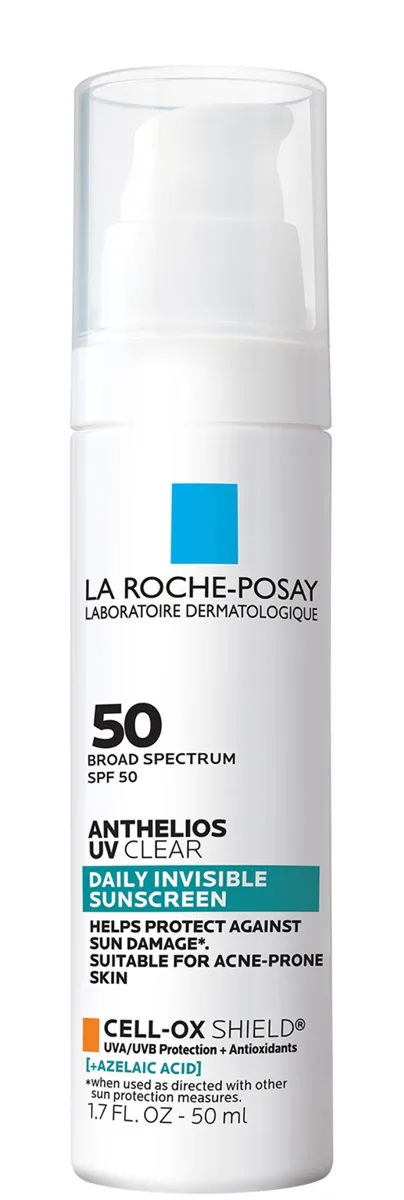
 Anthelios UV Clear Sunscreen SPF 50
One of the only US chemical sunscreens that genuinely earns its 'for sensitive and breakout-prone skin' positioning. A photostable Anthelios filter system paired with a legitimate azelaic acid dose in a lightweight serum-fluid that disappears on every skin tone. Excellent for rosacea, acne, and post-inflammatory hyperpigmentation — and probably the single best daily sunscreen in the La Roche-Posay US lineup for those conditions.
 K-Beauty Daily SPF Standout
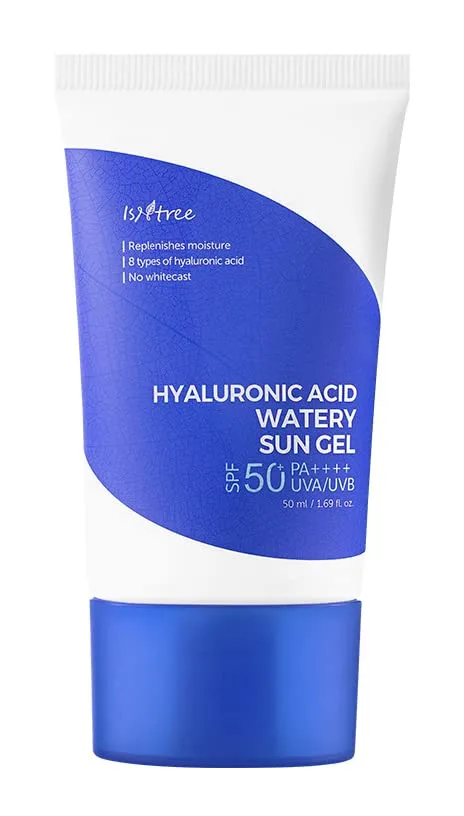
 Hyaluronic Acid Watery Sun Gel SPF 50+
One of the strongest everyday K-beauty sunscreens in the international market — modern European filters, no white cast, fragrance-free, niacinamide-boosted, and built around the brand's signature six-weight HA complex. At twenty-two dollars for 50ml, it's a case study in how much better a daily sunscreen can be when the formulator cares about both protection and wearability.
 Derm Office Staple
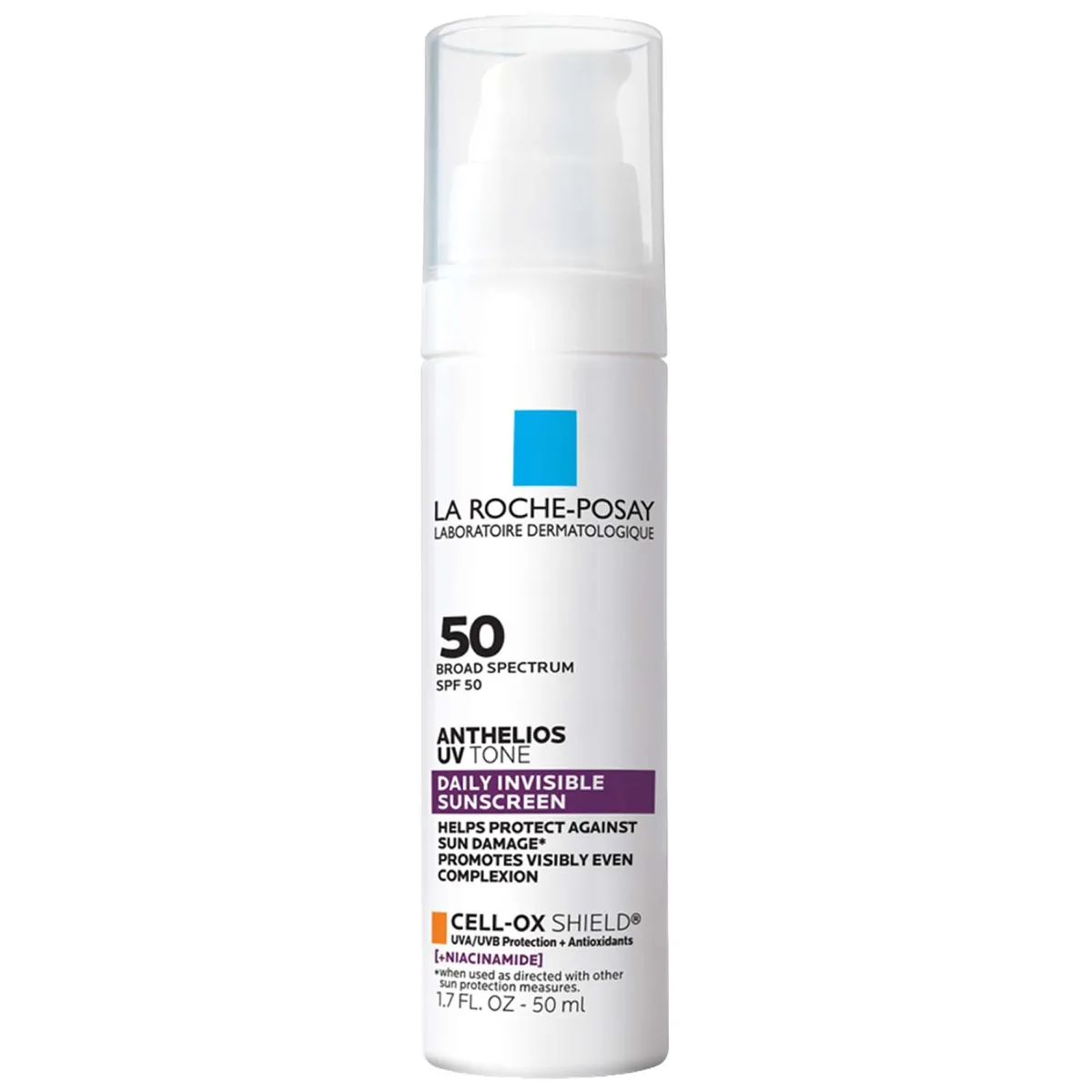
 Anthelios UV Tone Daily Invisible Sunscreen SPF 50
La Roche-Posay's most thoughtful answer yet for hyperpigmentation-prone skin that needs daily SPF. A photostable avobenzone system reinforced with Oxynex ST, paired with a meaningful dose of niacinamide, in a serum-fluid base that goes on invisible on every skin tone. Expensive for 1.7 oz but legitimately well-built — and a rare chemical sunscreen that earns its 'for dark spots' marketing.
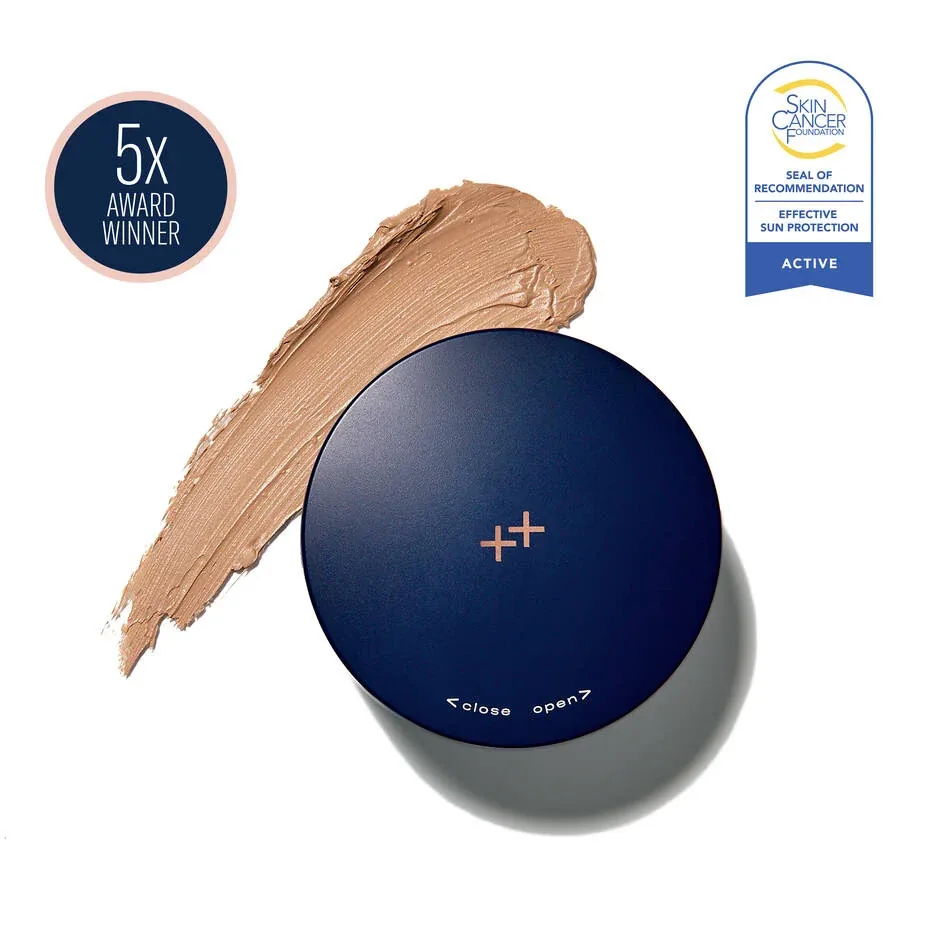 Melasma-Grade Mineral Sunscreen
 sunbetter TONE SMART SPF 68
One of the most clinically useful tinted mineral sunscreens in the professional category. SPF 68 from a 100% mineral formula, iron oxide tint that blocks visible light for melasma protection, and an unusually lightweight texture that doesn't feel like you're wearing high-concentration zinc. For patients with melasma or post-inflammatory hyperpigmentation, this is the category benchmark — and it's earned its Allure Best of Beauty wins.
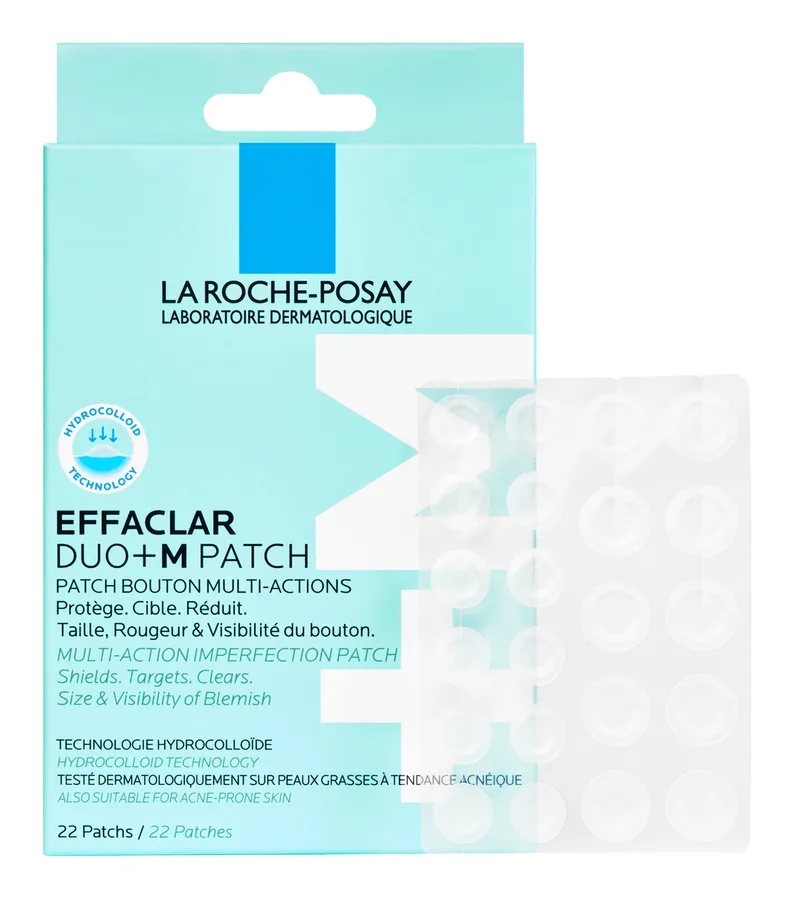 Derm Office Staple
 Effaclar Multi-Target Blemish Patches
One of the few hydrocolloid pimple patches that actually stays on overnight without curling off at 3am. At 420 microns thick with two size options in one pack and zero actives to irritate sensitive skin, this is the Effaclar line's quiet overachiever — and a legitimately good answer for anyone whose acne routine has been sabotaged by thinner patches that refuse to stay put.
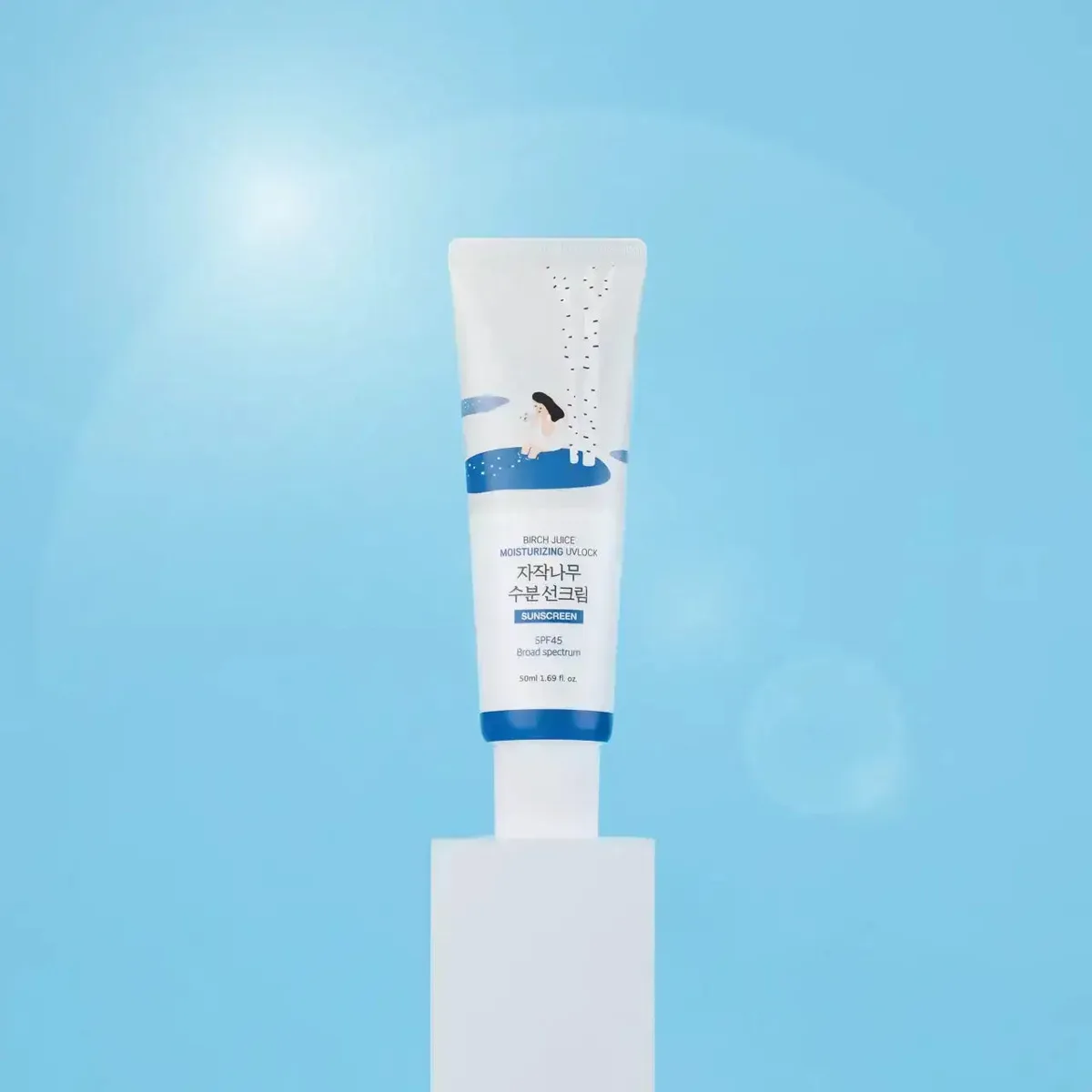 K-Beauty Cult Favorite
 Birch Juice Moisturizing Sun Cream SPF 50+
One of the best hybrid sunscreens in K-beauty right now — a 70% birch sap base, modern UVA filters you can't get in the US, and a finish that wears like a lightweight moisturizer. Broadly compatible, well-priced, and genuinely pleasant to apply, with minor tradeoffs for oily and fungal-acne-prone users.
This review reflects our independent analysis of publicly available ingredient data, manufacturer claims, and verified user reviews. We are reader-supported — Amazon links may earn us a commission at no cost to you. We do not accept paid placements; rankings are based solely on the evidence.