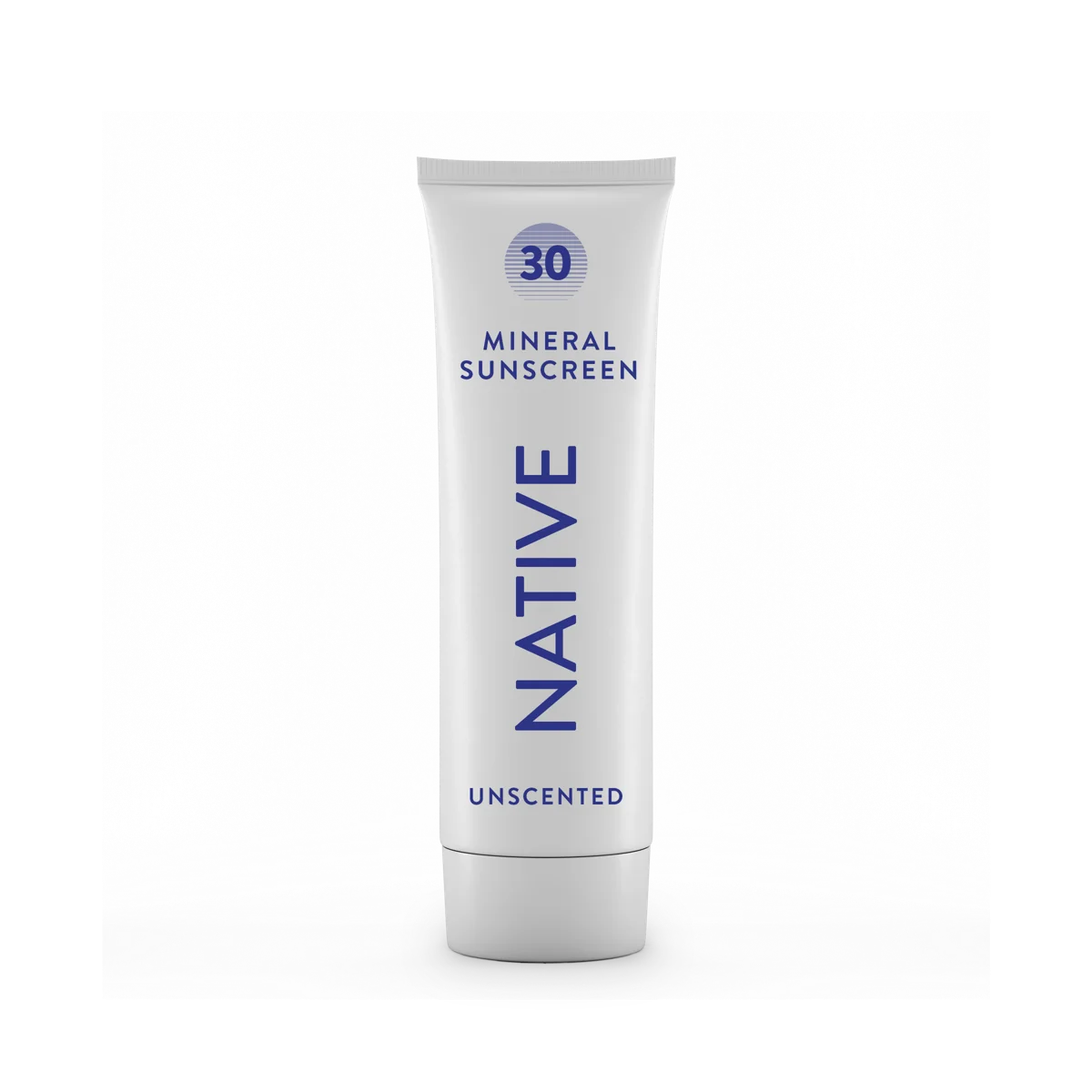
Native's Mineral Face Sunscreen delivers clean, gentle sun protection with a pleasantly lightweight texture and minimal white cast — exactly what you'd want from a daily mineral SPF. The small tube burns through quickly at this price point, though, and the lack of water resistance means it's strictly a casual-wear sunscreen, not an outdoor adventure companion.
Mineral Face Sunscreen SPF 30
Native's Mineral Face Sunscreen delivers clean, gentle sun protection with a pleasantly lightweight texture and minimal white cast — exactly what you'd want from a daily mineral SPF. The small tube burns through quickly at this price point, though, and the lack of water resistance means it's strictly a casual-wear sunscreen, not an outdoor adventure companion.
Score Breakdown
Where this product gains points and where it loses them — broken down across the four scoring pillars.
A clean, gentle mineral sunscreen with a solid zinc oxide concentration and minimal irritant potential, but the small size, premium price for what you get, and lack of water resistance limit its overall value proposition.
Pros & Cons
- ✓20% zinc oxide provides robust broad-spectrum UVA/UVB protection as a single active
- ✓Completely unscented — ideal for sensitive and reactive facial skin
- ✓Lightweight texture that's notably more pleasant than typical mineral sunscreens
- ✓Silicone-free, fragrance-free, and paraben-free with only 17 total ingredients
- ✓Hawaii reef-safe compliant — no oxybenzone or octinoxate
- ✓Cruelty-free and vegan with Leaping Bunny certification
- ✗Small 1.7 oz tube at $15.99 provides poor per-ounce value for daily use
- ✗Not water or sweat resistant — unsuitable for outdoor sports or swimming
- ✗May still show white cast on medium-deep to deep skin tones
- ✗Can pill when layered over silicone-based products underneath
- ✗Only SPF 30 — some dermatologists prefer SPF 50 for daily facial protection
Full Review
There is something slightly audacious about a brand that became famous for natural deodorant launching a mineral face sunscreen. Deodorant and sun care are entirely different formulation challenges, and the history of personal care brands overextending into unfamiliar categories is littered with mediocre products that trade on brand loyalty rather than genuine expertise. So when Native introduced its mineral sunscreen line around 2022, the question wasn't whether people would buy it — they would, because the brand has excellent distribution and a loyal following — but whether the formula would actually be good.
The answer, happily, is that it's quite competent. The formula centers on 20% zinc oxide as its sole UV filter, which is a solid, no-compromise approach to mineral sun protection. Zinc oxide provides true broad-spectrum coverage against both UVA and UVB radiation, and at 20% concentration, you're getting robust protection that doesn't cut corners. There are no chemical filters to worry about, no oxybenzone, no octinoxate — just a physical mineral barrier between your skin and the sun.
The inactive ingredient list is refreshingly short: seventeen ingredients total, which is lean for a sunscreen. The base is built on caprylic/capric triglyceride and coconut alkanes — lightweight, coconut-derived emollients that help the zinc oxide disperse evenly and reduce that dreaded chalky quality mineral sunscreens are known for. Glycerin provides hydration. Avocado oil and sunflower seed oil add nourishing emolliency. Tocopherol (vitamin E) contributes antioxidant support. And that's essentially it. No silicones, no fragrance, no essential oils, no unnecessary botanical extracts.
The texture is genuinely pleasant for a mineral sunscreen, which is not something you can say about every zinc oxide formula. It's a lightweight, creamy lotion — thinner and more fluid than the thick, pasty mineral sunscreens that give the category a bad reputation. It spreads relatively easily across the face without excessive tugging or pulling, and it sets within a minute or two to a soft, slightly dewy finish. It doesn't feel heavy, greasy, or suffocating.
The white cast situation is better than average but not perfect. On light to medium skin tones, the zinc oxide blends in well after a minute of gentle rubbing, leaving minimal visible residue. On deeper skin tones, however, some white cast is likely still noticeable — this is a fundamental challenge with untinted zinc oxide at 20% concentration, and no amount of coconut alkanes completely eliminates it. If you have a deeper complexion, a tinted mineral sunscreen will serve you better.
Being unscented is a genuine advantage here. Many sunscreens, even mineral ones marketed as 'gentle,' sneak in fragrance that can irritate sensitive facial skin. Native leaves it out entirely, which makes this a smart choice for people with reactive skin, rosacea, or fragrance sensitivities. The only scent is a very faint, natural smell from the zinc oxide and plant oils that dissipates immediately.
The most significant limitation is that this sunscreen is not water or sweat resistant. For a face sunscreen used during daily commuting, office work, or running errands, that's acceptable — you're not exactly diving into a pool at your desk. But for any outdoor activity involving sweating or water exposure, you'll need something with water-resistant claims. This is strictly a casual-wear, daily-use sunscreen.
The value proposition is where things get a little tense. At $15.99 for 1.7 fl oz, you're paying a meaningful premium per ounce compared to many mineral sunscreens that offer similar or better formulations in larger sizes. If you're using the recommended amount for facial application (about a nickel-sized amount) and reapplying during the day as recommended, this tube could last just three to four weeks. That adds up over a year of daily use. The price reflects Native's clean-beauty positioning and the P&G-backed brand premium, but there are mineral sunscreens with more sophisticated formulations — better zinc oxide dispersion, added antioxidants, tinted options — available at comparable or lower per-ounce prices.
Some users report occasional pilling when this sunscreen is layered over certain serums or moisturizers. The xanthan gum in the formula can interact poorly with silicone-based products underneath. If you experience pilling, try applying the sunscreen to bare moisturized skin rather than over a multi-step serum routine, and pat rather than rub.
Native's Mineral Face Sunscreen is a solid entry into a crowded category. It does the fundamental job well — protects your skin from UV damage with a clean, gentle formula that's comfortable to wear daily. It's not innovative, and the price-to-size ratio is tough to love, but for someone already in the Native ecosystem who wants a mineral face sunscreen that aligns with the brand's simple, clean philosophy, it's a reliable everyday choice.
Formula
Key Ingredients
The hero actives that drive this product's performance.
| Ingredient | Function | Evidence |
|---|---|---|
| Zinc Oxide 20% (20%) | The sole active UV filter in this sunscreen, providing broad-spectrum UVA and UVB protection at a robust 20% concentration. As a physical/mineral blocker, zinc oxide sits on the skin surface and reflects UV radiation rather than absorbing it, making it the preferred choice for sensitive skin. At this concentration, it delivers reliable SPF 30 protection without the need for chemical UV filters. | well-established |
| Glycerin | Provides essential hydration to prevent the drying effect that zinc oxide sunscreens can sometimes cause. In this formula, glycerin works alongside the coconut-derived emollients to keep the skin comfortable and moisturized under the mineral sun protection layer. | well-established |
| Vitamin E (Tocopherol) | Serves dual duty as both an antioxidant that provides supplementary photoprotection and a stabilizer for the avocado and sunflower oils in the formula. Research has shown that topical vitamin E can help neutralize free radicals generated by UV exposure, adding a layer of defense beyond the zinc oxide's physical barrier. | well-established |
| Avocado Oil | An emollient rich in oleic acid and phytosterols that helps the zinc oxide formula spread more smoothly on the face. Avocado oil's heavier molecular weight contributes to the formula's ability to create a uniform protective film while also nourishing the skin barrier. | well-established |
Full INCI List
Active Ingredient: Zinc Oxide 20%. Inactive Ingredients: Water, Caprylic/Capric Triglyceride, Coconut Alkanes, Glycerin, Cetearyl Alcohol, Coco-Glucoside, Arachidyl Alcohol, Behenyl Alcohol, Arachidyl Glucoside, Polyhydroxystearic Acid, Benzyl Alcohol, Xanthan Gum, Coco-Caprylate/Caprate, Tocopherol, Persea Gratissima (Avocado) Oil, Helianthus Annuus (Sunflower) Seed Oil
Product Flags
✓ Fragrance Free✓ Alcohol Free✗ Oil Free✓ Silicone Free✓ Paraben Free✓ Sulfate Free✓ Cruelty Free✓ Vegan✗ Fungal Acne Safe
Comedogenic Ingredients
Persea Gratissima (Avocado) Oil
Compatibility
Skin Match
Best For
Works For
Not Ideal For
Addresses These Conditions
Use With Caution
Routine Step
sunscreen
Time of Day
AM
Pregnancy Safe
Yes ✓
Layering Tips
Apply as the last step of your morning skincare routine, after moisturizer but before makeup. Wait 1-2 minutes for the sunscreen to set before applying makeup. Reapply every 2 hours during sun exposure. Not water-resistant — reapply after sweating or swimming.
Results Timeline
Immediate UV protection upon application. The formula sets within a couple of minutes. No long-term skin transformation expected — this is a daily protective product. Consistent use prevents cumulative sun damage over months and years.
Pairs Well With
lightweight moisturizervitamin C serumniacinamide serum
Sample AM Routine
- Gentle cleanser
- Hydrating serum or moisturizer
- Native Mineral Face Sunscreen SPF 30
Sample PM Routine
- Gentle cleanser
- Treatment serum
- Night moisturizer
Evidence
Science & Expert Perspective
The Science
Zinc oxide is one of two FDA-approved mineral UV filters (alongside titanium dioxide) and remains the only single ingredient that provides true broad-spectrum protection against both UVA and UVB radiation. At 20% concentration — the maximum typically used in cosmetic sunscreens — it delivers an SPF around 30 depending on the formulation base, which blocks approximately 97% of UVB rays.
The mechanism of action is primarily physical: zinc oxide particles sit on the skin surface and scatter, reflect, and absorb UV photons before they can penetrate the stratum corneum. Unlike chemical UV filters that require a 15-20 minute absorption period, mineral sunscreens provide protection immediately upon application. A 2019 study published in the Journal of the American Academy of Dermatology confirmed that zinc oxide sunscreens do not enter systemic circulation the way chemical filters can, addressing growing consumer concerns about sunscreen chemical absorption.
The formula's coconut alkanes and caprylic/capric triglyceride serve a critical function beyond simple emolliency — they help disperse zinc oxide particles more uniformly across the skin surface, which both improves protection consistency and reduces visible white cast. Polyhydroxystearic acid, listed in the formula, is a common zinc oxide dispersant used specifically to coat mineral particles and improve their spreadability in the emulsion base.
Tocopherol (vitamin E) provides supplementary antioxidant defense that complements the physical UV barrier. Research has demonstrated that UV exposure generates free radicals even when sunscreen is applied, and topical antioxidants can help neutralize these reactive species, adding a secondary layer of photoprotection.
References
- Effect of Sunscreen Application Under Maximal Use Conditions on Plasma Concentration of Sunscreen Active Ingredients — Journal of the American Medical Association (JAMA) (2019)
Dermatologist Perspective
Dermatologists broadly recommend mineral sunscreens containing zinc oxide for patients with sensitive skin, rosacea, or those who prefer to avoid chemical UV filters. The 20% zinc oxide concentration in this formula is considered robust and appropriate for daily facial use. Board-certified dermatologists note that while SPF 30 provides adequate protection for routine daily exposure, patients who spend extended time outdoors may benefit from SPF 50. The fragrance-free, silicone-free formulation is generally well-tolerated by dermatology patients, and the lack of chemical filters makes it a safe choice during pregnancy and for those with contact sensitivity to common chemical sunscreen ingredients like avobenzone or oxybenzone.
Guidance
Usage Guide
How to Use
Apply a nickel-sized amount to the face and neck as the last step of your morning skincare routine, after moisturizer. Gently pat and spread evenly — don't rub aggressively, as this can cause pilling and uneven coverage. Allow 1-2 minutes to set before applying makeup. Reapply every 2 hours during sun exposure, or immediately after toweling off. Since this is not water-resistant, reapply more frequently during sweating or water exposure.
Value Assessment
At $15.99 for 1.7 fl oz ($9.41/oz), this is a pricey daily sunscreen. The small tube lasts roughly a month with proper daily application, putting the annual cost around $190 for face-only use. The formula is clean and competent, but it's not exceptional — established mineral sunscreen brands offer comparable or superior zinc oxide formulations at better per-ounce value, sometimes with added benefits like tinting, antioxidant complexes, or water resistance. What you're paying for is Native's brand trust and clean-ingredient positioning. For an occasional-use face sunscreen, the price is manageable. As a daily essential, the cost adds up.
Who Should Buy
People with sensitive, reactive, or rosacea-prone skin looking for a gentle, fragrance-free mineral sunscreen with a clean ingredient list. Also well-suited for pregnant or nursing individuals who want to avoid chemical UV filters.
Who Should Skip
Anyone needing water-resistant protection for sports or outdoor activities. People with deep skin tones who want zero white cast should opt for a tinted mineral sunscreen instead. Budget-conscious daily sunscreen users may find better per-ounce value elsewhere.
Ready to try Native Mineral Face Sunscreen SPF 30?
Details
Details
Texture
Lightweight, creamy lotion that's thinner than many mineral sunscreens. Spreads easily without much tugging. Sets to a soft, slightly dewy finish rather than a heavy, chalky one.
Scent
Unscented — no detectable fragrance. A very faint, natural base scent from the zinc oxide and oils, but nothing that lingers.
Packaging
Small white squeeze tube with flip-top cap. Compact and travel-friendly at 1.7 fl oz. Clean, minimal design consistent with Native's branding. Easy to control dispensing.
Finish
naturaldewylightweight
What to Expect on First Use
Applies smoothly for a mineral sunscreen and blends in within a minute or two. The white cast is minimal on light to medium skin tones but may be noticeable on deeper complexions. Feels moisturizing without greasiness. No stinging or irritation on first use.
How Long It Lasts
3-4 weeks with daily facial application and proper reapplication
Period After Opening
12 months
Best Season
All Year
Certifications
Dermatologist TestedHawaii Reef-Safe CompliantLeaping Bunny Certified Cruelty-FreeVegan
Background
The Why
Native's move into sunscreen in 2022 represented a significant category expansion for a brand built on deodorant. The mineral face sunscreen was developed to align with the brand's clean-beauty ethos — simple ingredients, no chemical UV filters, and Hawaii reef-safe compliance. It filled a gap for consumers who wanted a clean-label mineral option from a brand they already trusted for personal care.
About Native Established Brand (5–20 years)
Native was founded in 2015 and acquired by Procter & Gamble in 2017. While the brand built its reputation in deodorant, its expansion into sunscreen is relatively recent. The mineral sunscreen line is dermatologist-tested and uses a straightforward zinc oxide formula, though Native lacks the decades of sun care research that legacy sunscreen brands bring.
Brand founded: 2015 · Product launched: 2022
Myth vs. Reality
Myths & Misconceptions
Myth
Mineral sunscreens always leave a thick white cast that's impossible to blend.
Reality
While zinc oxide sunscreens are more prone to white cast than chemical filters, modern formulations like this one use particle dispersion technology and emollient bases to significantly reduce visible residue. The 20% zinc oxide in this formula blends into light and medium skin tones with minimal white cast, though deeper skin tones may still notice some.
Myth
SPF 30 isn't strong enough — you need at least SPF 50 for real protection.
Reality
SPF 30 blocks approximately 97% of UVB rays, while SPF 50 blocks about 98%. The difference is marginal. What matters far more is proper application amount (a nickel-sized amount for the face) and consistent reapplication every two hours. SPF 30 applied correctly outperforms SPF 50 applied sparingly.
FAQ
Frequently Asked Questions
Does Native Mineral Face Sunscreen leave a white cast?
The formula is designed to minimize white cast using coconut-derived emollients that help the zinc oxide blend more smoothly. On light to medium skin tones, the white cast is minimal after proper blending. On deeper skin tones, some residual white cast may still be visible, which is a common limitation of 20% zinc oxide formulas.
Is Native Mineral Face Sunscreen water resistant?
No, this sunscreen is not water or sweat resistant. If you're swimming, exercising, or sweating heavily, you'll need to reapply more frequently. For water activities, a dedicated water-resistant sunscreen is recommended.
Can I wear makeup over Native Mineral Face Sunscreen?
Yes, the lightweight formula sets to a natural finish that works as a base for makeup. Allow 1-2 minutes for the sunscreen to fully absorb before applying foundation or powder. Some users report occasional pilling when layered over certain serums — if this happens, try patting rather than rubbing during application.
Is Native Mineral Face Sunscreen safe for sensitive skin?
Yes, this formula is well-suited for sensitive skin. It uses zinc oxide as its only UV filter (which is among the least irritating options), is fragrance-free, silicone-free, and has been dermatologist tested. The short ingredient list also minimizes the number of potential sensitizers.
Is Native sunscreen reef safe?
Yes, this sunscreen is Hawaii reef-safe compliant. It uses only zinc oxide as its UV filter and does not contain oxybenzone or octinoxate, which have been identified as potentially harmful to coral reef ecosystems. The formula meets Hawaii's reef-safe sunscreen requirements.
Community
Community Voices
Common Praise
"Minimal white cast compared to many mineral sunscreens"
"Unscented formula is great for sensitive skin"
"Clean, simple ingredient list"
"Lightweight texture that doesn't feel heavy on the face"
"Works well as a daily sunscreen under makeup"
Common Complaints
"Small bottle for the price — runs out quickly"
"Not water or sweat resistant"
"Can pill when layered over certain serums or moisturizers"
"Some users still notice a slight white cast on deeper skin tones"
"SPF 30 may not be sufficient for extended outdoor activities"
Notable Endorsements
Dermatologist testedEWG rated
Appears In
best sunscreen for sensitivity best mineral sunscreen for daily use best sunscreen for sensitive skin best clean sunscreen
Related Conditions
Related Ingredients
You Might Also Like
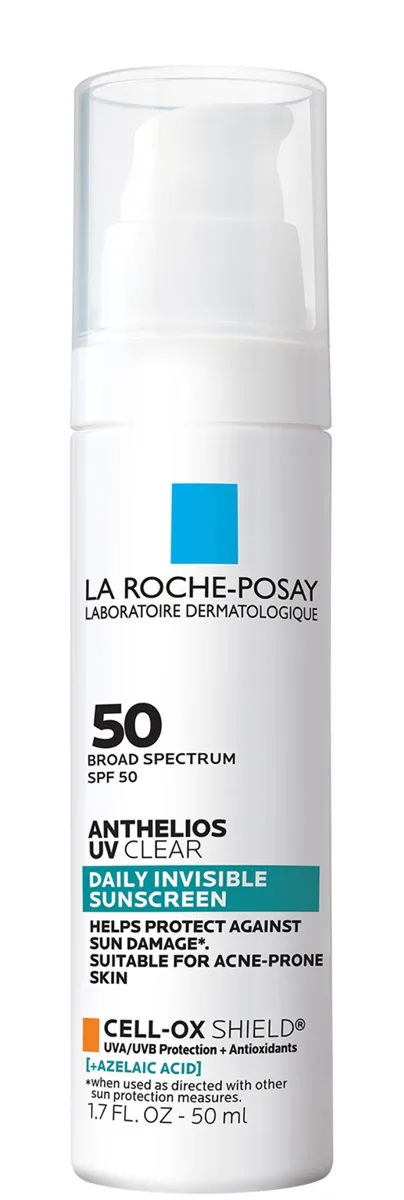 Derm Office Staple
 Anthelios UV Clear Sunscreen SPF 50
One of the only US chemical sunscreens that genuinely earns its 'for sensitive and breakout-prone skin' positioning. A photostable Anthelios filter system paired with a legitimate azelaic acid dose in a lightweight serum-fluid that disappears on every skin tone. Excellent for rosacea, acne, and post-inflammatory hyperpigmentation — and probably the single best daily sunscreen in the La Roche-Posay US lineup for those conditions.
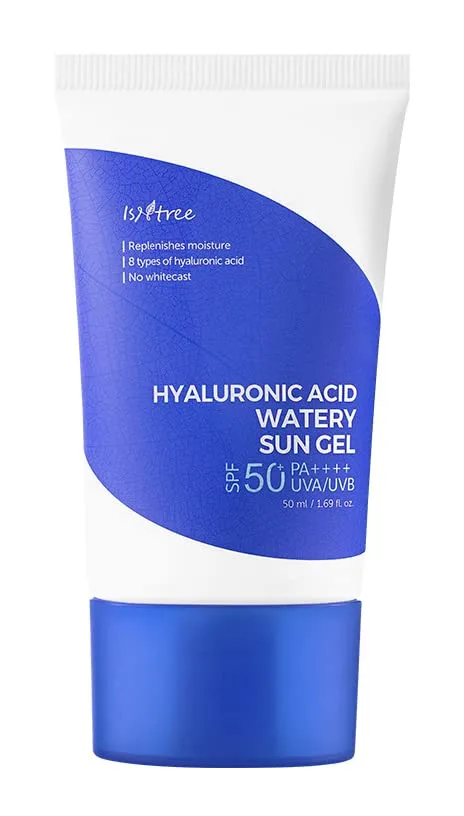 K-Beauty Daily SPF Standout
 Hyaluronic Acid Watery Sun Gel SPF 50+
One of the strongest everyday K-beauty sunscreens in the international market — modern European filters, no white cast, fragrance-free, niacinamide-boosted, and built around the brand's signature six-weight HA complex. At twenty-two dollars for 50ml, it's a case study in how much better a daily sunscreen can be when the formulator cares about both protection and wearability.
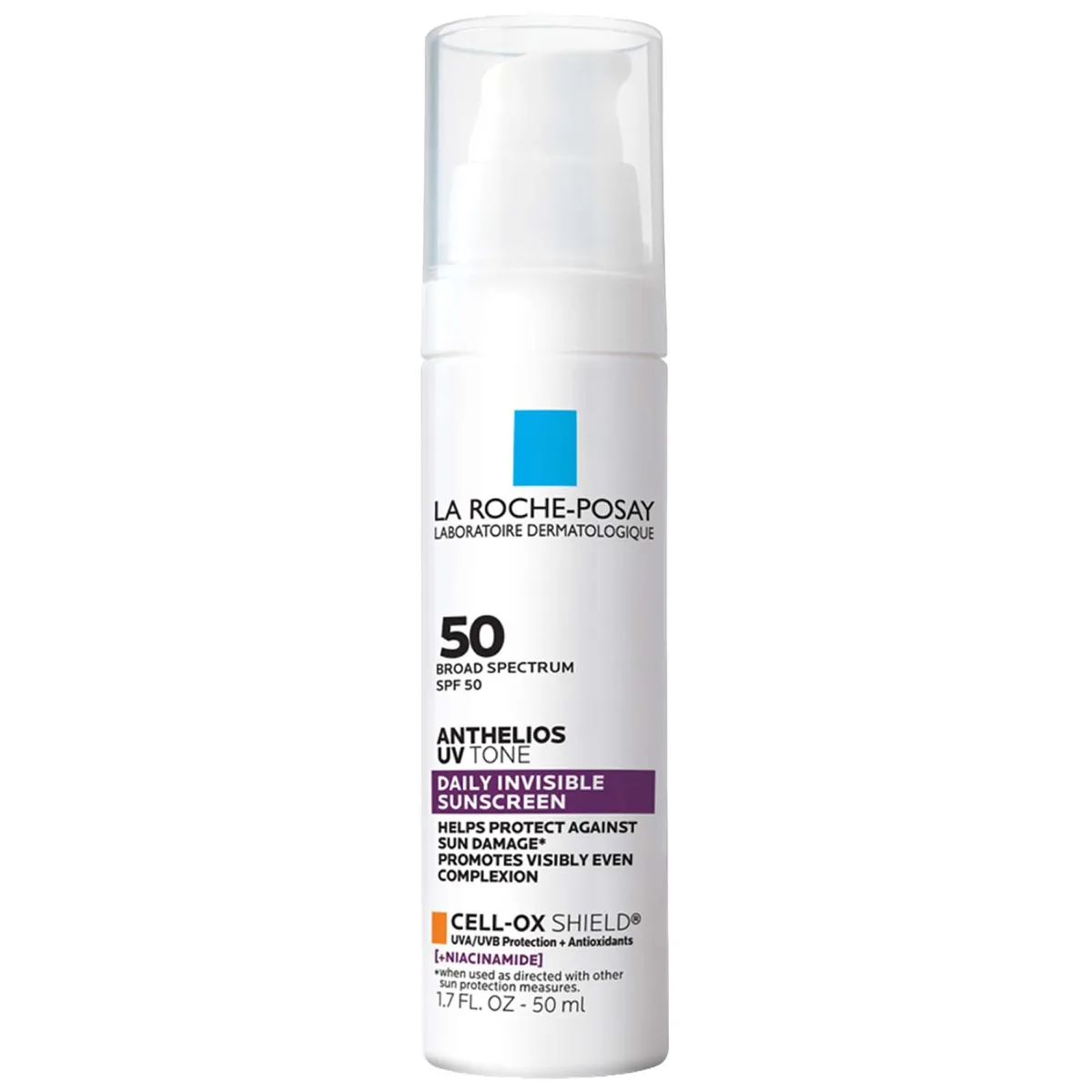 Derm Office Staple
 Anthelios UV Tone Daily Invisible Sunscreen SPF 50
La Roche-Posay's most thoughtful answer yet for hyperpigmentation-prone skin that needs daily SPF. A photostable avobenzone system reinforced with Oxynex ST, paired with a meaningful dose of niacinamide, in a serum-fluid base that goes on invisible on every skin tone. Expensive for 1.7 oz but legitimately well-built — and a rare chemical sunscreen that earns its 'for dark spots' marketing.
 Melasma-Grade Mineral Sunscreen
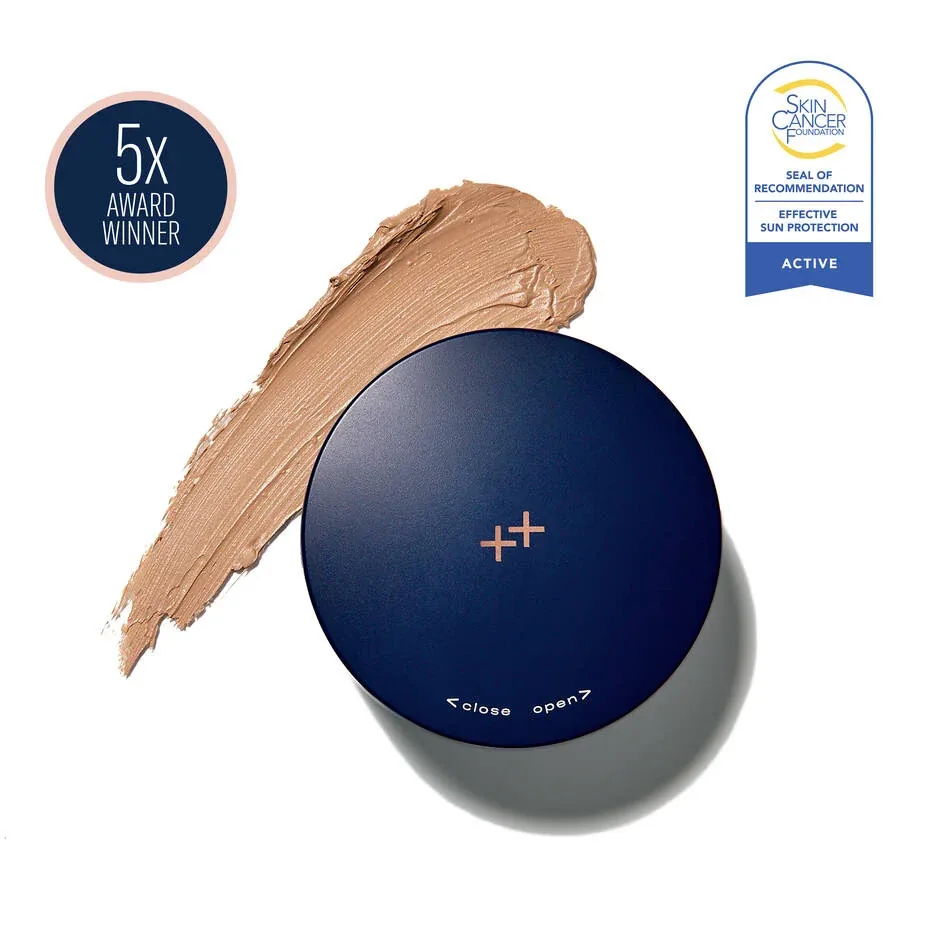
 sunbetter TONE SMART SPF 68
One of the most clinically useful tinted mineral sunscreens in the professional category. SPF 68 from a 100% mineral formula, iron oxide tint that blocks visible light for melasma protection, and an unusually lightweight texture that doesn't feel like you're wearing high-concentration zinc. For patients with melasma or post-inflammatory hyperpigmentation, this is the category benchmark — and it's earned its Allure Best of Beauty wins.
 K-Beauty Cult Favorite
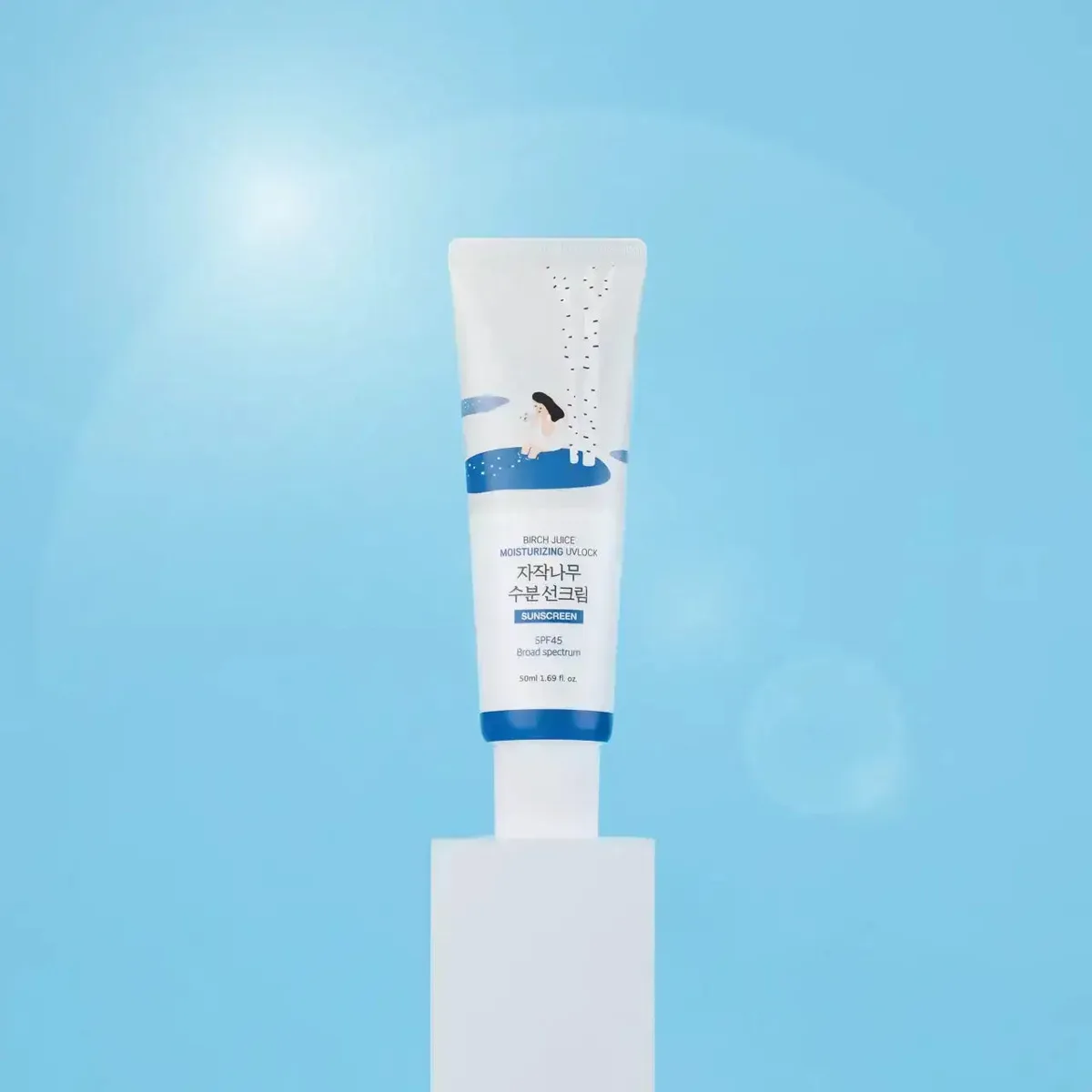
 Birch Juice Moisturizing Sun Cream SPF 50+
One of the best hybrid sunscreens in K-beauty right now — a 70% birch sap base, modern UVA filters you can't get in the US, and a finish that wears like a lightweight moisturizer. Broadly compatible, well-priced, and genuinely pleasant to apply, with minor tradeoffs for oily and fungal-acne-prone users.
 The K-Beauty Sunscreen That Changed Everything
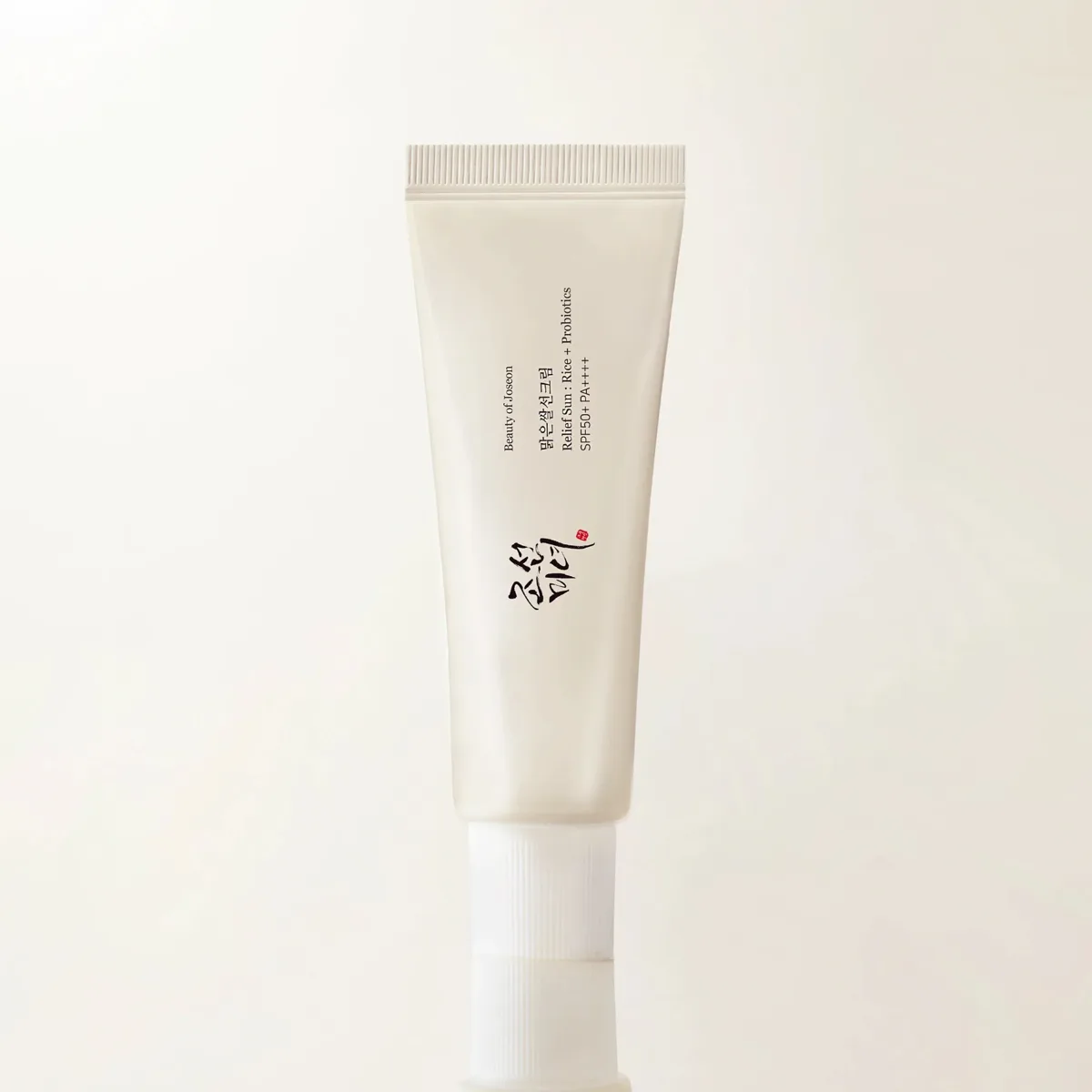
 Relief Sun: Rice + Probiotics SPF 50+
The sunscreen that rewrote the rules for what a $14 product could deliver. With independently verified SPF 50+, 30% rice extract, niacinamide, and a probiotic ferment complex, it offers protection and skincare benefits that rival products three times its price. The texture that feels like wearing nothing on your face is the reason it went viral — and stayed there.