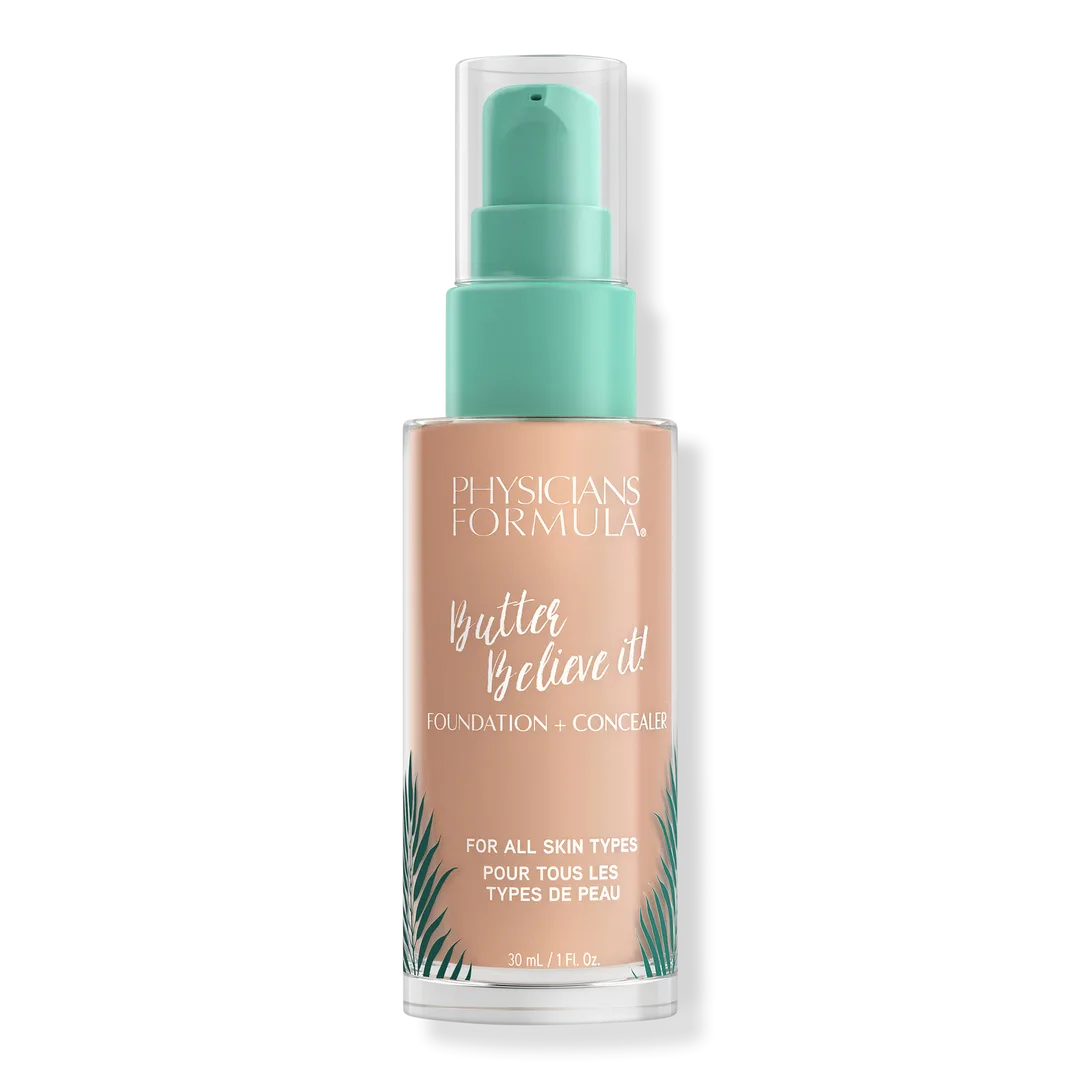
A genuinely invisible SPF 60+ face serum that delivers on its core promise — high protection with zero white cast in a texture that feels like skincare. The proprietary feverfew antioxidant adds legitimate science beyond basic UV filtration. But alcohol denat., synthetic dyes, and menthyl lactate undermine the experience for sensitive skin, and the eye-stinging reports are too consistent to ignore.
Invisible Daily Defense Face Serum SPF 60+
A genuinely invisible SPF 60+ face serum that delivers on its core promise — high protection with zero white cast in a texture that feels like skincare. The proprietary feverfew antioxidant adds legitimate science beyond basic UV filtration. But alcohol denat., synthetic dyes, and menthyl lactate undermine the experience for sensitive skin, and the eye-stinging reports are too consistent to ignore.
Score Breakdown
Where this product gains points and where it loses them — broken down across the four scoring pillars.
Strong UV protection from a four-filter system with genuine antioxidant innovation (feverfew extract), but the alcohol denat. content, synthetic dyes, menthyl lactate, and high homosalate concentration create meaningful irritation risk that limits suitability.
Pros & Cons
- ✓Genuinely invisible on all skin tones — zero white cast from the chemical UV filter system
- ✓SPF 60+ broad-spectrum protection provides a meaningful safety margin for under-application
- ✓Proprietary feverfew antioxidant has published research showing it outperforms vitamin C for free radical scavenging
- ✓Lightweight serum texture feels like skincare and layers smoothly under makeup
- ✓Oil-free formula works well for oily and combination skin without adding shine
- ✓Fragrance-free formulation removes one common irritation trigger
- ✓Excellent drugstore value at $11-16 for 1.7 oz of high-SPF face protection
- ✗Alcohol denat. high in the formula can dry and irritate sensitive or compromised skin
- ✗Consistent reports of eye stinging when product migrates into the eye area
- ✗Yellow 5 and Red 40 dyes serve no functional purpose and add allergen risk
- ✗Homosalate at 13.5% exceeds the EU-recommended maximum of 7.34% for facial products
- ✗Menthyl lactate cooling agent can sensitize reactive skin
- ✗Takes 30-60 minutes for full dry-down — initial application feels greasy
Full Review
The sunscreen serum is one of those product categories that barely existed five years ago and now feels indispensable. The premise is simple: take the high-SPF protection of a traditional sunscreen, strip away everything that makes people hate wearing sunscreen — the white cast, the heaviness, the greasy film, the smell of vacation guilt — and put it in a format that feels like putting on a serum. Neutrogena's Invisible Daily Defense Face Serum SPF 60+ is one of the more ambitious entries in this space, and it mostly delivers.
The headline feature is genuinely compelling: SPF 60+ broad-spectrum protection in a lightweight serum that leaves zero white cast on any skin tone. This is a chemical sunscreen, meaning it absorbs UV radiation rather than reflecting it, so the invisibility is inherent to the filter technology. Avobenzone at 3% handles UVA absorption, stabilized by octocrylene at 10% to prevent the photodegradation that historically made avobenzone unreliable for all-day protection. Homosalate at 13.5% and octisalate at 5% drive the UVB protection to the SPF 60+ level. It is a well-engineered four-filter system with sound photochemistry.
Where this product separates from the crowd is the feverfew extract. Chrysanthemum parthenium — feverfew — is a plant that has been used medicinally for centuries, but Neutrogena's innovation was developing a parthenolide-depleted version. Parthenolide is an irritant, and removing it allows the beneficial antioxidant compounds to work without triggering skin reactions. Published research in the Journal of Dermatological Science showed this specific extract activates the Nrf2/ARE antioxidant pathway and induces DNA repair in skin cells. An earlier study in the Archives of Dermatological Research demonstrated antioxidant activity surpassing vitamin C, reduced UV-induced hydrogen peroxide formation, and significantly decreased UV-triggered erythema in clinical trials.
This is not marketing-speak dressed up as science. These are peer-reviewed, indexed studies describing a genuine mechanism of action. The feverfew extract provides a layer of photoprotection that the UV filters alone cannot — mopping up the reactive oxygen species that UV radiation generates even when sunscreen is applied correctly. It turns this from a sunscreen that blocks radiation into a sunscreen that blocks radiation and repairs the damage that gets through.
The texture is fluid and genuinely serum-like — it does not feel like you are applying sunscreen in the traditional sense. It spreads easily, does not leave the skin looking painted, and is completely invisible once set. Under makeup, it layers well. On bare skin, it provides a satin finish with a slight dewiness.
Now for the parts that require honesty. Alcohol denat. sits fourth on the inactive ingredient list — early enough to suggest a meaningful concentration, estimated around seven to ten percent. Denatured alcohol provides the quick-drying cosmetic elegance that makes the serum feel lightweight, but it is a known irritant for sensitive skin and can compromise the skin barrier with daily use. This is the trade-off: the reason the serum feels so light is partly because the alcohol evaporates quickly, taking some of your skin's natural moisture with it.
The eye stinging is the most consistent user complaint, and it is not trivial. Chemical UV filters can migrate with sweat or natural product movement into the eye area, and the combination of avobenzone, alcohol, and menthyl lactate (a cooling agent that can also sensitize) creates a formula that some people cannot wear near their eyes without discomfort. If you are prone to sunscreen-related eye irritation, test carefully.
Then there are the dyes. Yellow 5 (tartrazine) and Red 40 (Allura Red) appear at the end of the ingredient list. They serve no UV protection purpose, no skincare function, and no discernible cosmetic function in a product that dries down invisible. Tartrazine is a known allergen. Their inclusion in a product marketed for facial use is difficult to defend.
Homosalate at 13.5% is worth noting in the context of evolving regulatory science. The EU Scientific Committee on Consumer Safety has recommended restricting homosalate to 7.34% in facial products due to potential endocrine-disrupting properties. This formula uses nearly double that limit. The systemic absorption of chemical UV filters has been documented in FDA-commissioned studies published in JAMA, though the clinical significance at real-world usage levels remains under investigation. These are not reasons to avoid sunscreen — the evidence overwhelmingly favors sun protection over sun damage — but they are facts that informed consumers deserve to know.
The value equation is strong. At roughly eleven to sixteen dollars for 1.7 ounces of SPF 60+ serum with genuine antioxidant research behind it, this significantly undercuts prestige SPF serums that cost four to five times as much for comparable or inferior UV filter systems. For people with normal to oily skin who need invisible, high-SPF daily protection at an accessible price point, the Invisible Daily Defense Face Serum delivers real protection backed by real science. Just keep it away from your eyes.
Formula
Key Ingredients
The hero actives that drive this product's performance.
| Ingredient | Function | Evidence |
|---|---|---|
| Avobenzone 3% (3%) | The primary UVA filter in this four-filter system, providing the broad-spectrum protection that prevents photoaging and hyperpigmentation. Stabilized by octocrylene at 10% to maintain UVA efficacy during extended sun exposure — without this stabilization, avobenzone would degrade within hours of UV contact. | well-established |
| Octocrylene 10% (10%) | Serves dual duty as a UVB filter and the critical photostabilizer for avobenzone. At 10%, it ensures the UVA protection remains effective throughout the day rather than degrading after the first hour of sun exposure — the photochemical backbone of this SPF 60+ formulation. | well-established |
| Homosalate 13.5% (13.5%) | A high-concentration UVB filter that drives much of the SPF 60+ rating. Near the FDA maximum of 15%, it provides robust UVB absorption. The EU Scientific Committee has flagged homosalate for potential endocrine-disrupting properties and restricted it to 7.34% in facial products — this formula uses nearly double that limit. | well-established |
| Parthenolide-Depleted Feverfew Extract | Neutrogena's proprietary antioxidant that distinguishes this from generic chemical sunscreens. Published research shows this specific feverfew extract scavenges reactive oxygen species with greater potency than vitamin C, reduces UV-induced erythema, and activates the Nrf2/ARE DNA repair pathway — providing photoprotection beyond what the UV filters alone deliver. | promising |
| Tocopheryl Acetate | A stable vitamin E derivative that works alongside the feverfew extract to neutralize UV-generated free radicals. Provides a second layer of antioxidant defense that complements the UV filter system — the filters block radiation while the antioxidants mop up any oxidative damage that gets through. | well-established |
Full INCI List
Active Ingredients: Avobenzone 3%, Homosalate 13.5%, Octisalate 5%, Octocrylene 10%. Inactive Ingredients: Water, Butyloctyl Salicylate, Glycerin, Alcohol Denat., Silica, Dimethicone, Aluminum Starch Octenylsuccinate, Polyurethane-62, Phenoxyethanol, Pentylene Glycol, Sodium Acryloyldimethyltaurate/VP Crosspolymer, Acrylates/Dimethicone Copolymer, Glyceryl Stearate, Chlorphenesin, Styrene/Acrylates Copolymer, Zingiber Officinale (Ginger) Root Extract, Menthyl Lactate, Tocopheryl Acetate, Disodium EDTA, Trideceth-6, Chrysanthemum Parthenium (Feverfew) Flower/Leaf/Stem Juice, Sodium Hydroxide, Yellow 5, Red 40
Product Flags
✓ Fragrance Free✗ Alcohol Free✓ Oil Free✗ Silicone Free✓ Paraben Free✓ Sulfate Free✗ Cruelty Free✗ Vegan✗ Fungal Acne Safe
Comedogenic Ingredients
Glyceryl Stearate
Potential Irritants
Alcohol Denat.Menthyl LactateYellow 5Red 40
Common Allergens
Yellow 5 (Tartrazine)Chrysanthemum Parthenium (ragweed family cross-reactivity)
Compatibility
Skin Match
Best For
Works For
Not Ideal For
Addresses These Conditions
sun damage aging hyperpigmentation dark spots
Use With Caution
Avoid With
Routine Step
sunscreen
Time of Day
AM
Pregnancy Safe
Unknown
Layering Tips
Apply as the final step of your morning skincare routine, after moisturizer. The serum texture layers smoothly under makeup. Apply approximately 1/4 teaspoon for the face. Reapply every 2 hours during extended sun exposure.
Results Timeline
Immediate UV protection upon application. The antioxidant complex (feverfew + vitamin E) provides ongoing free radical neutralization throughout the day. Long-term benefits of consistent daily SPF use — reduced photoaging, fewer dark spots, lower skin cancer risk — become visible over months to years.
Pairs Well With
Moisturizer underneath (essential for dry skin — the alcohol content can be drying)Vitamin C serum (enhanced antioxidant defense)Hydrating toner or serum (buffer against alcohol content)
Sample AM Routine
- Gentle cleanser
- Hydrating serum or moisturizer
- Neutrogena Invisible Daily Defense Face Serum SPF 60+
Sample PM Routine
- Gentle cleanser
- Treatment serum (retinol, AHA, niacinamide)
- Moisturizer
Evidence
Science & Expert Perspective
The Science
The Neutrogena Invisible Daily Defense Face Serum SPF 60+ combines a four-chemical-filter UV protection system with Neutrogena's proprietary parthenolide-depleted feverfew antioxidant complex.
The UV filter system pairs avobenzone (3%) for UVA protection with octocrylene (10%) as a photostabilizer, plus homosalate (13.5%) and octisalate (5%) for UVB absorption. Research published in the International Journal of Pharmaceutics (Gaspar and Campos, 2006) demonstrated that octocrylene significantly improves the photostability of avobenzone-containing formulations — a critical finding for a product designed for all-day facial protection.
The feverfew component represents Neutrogena's most distinctive scientific contribution. Research published in the Archives of Dermatological Research (Martin et al., 2008) showed that parthenolide-depleted feverfew extract demonstrated antioxidant activity surpassing vitamin C, reduced UV-induced hydrogen peroxide formation, decreased UV-triggered skin thickening and DNA damage in animal models, and significantly reduced UV-induced erythema versus placebo in clinical trials. A subsequent study in the Journal of Dermatological Science (Rodriguez et al., 2013) revealed the mechanism: the extract activates the Nrf2/ARE antioxidant pathway via PI3-kinase signaling and induces DNA repair in skin cells exposed to oxidative damage.
The systemic absorption of the UV filters warrants mention. A randomized clinical trial published in JAMA (Matta et al., 2020) — commissioned by the FDA — found that all four chemical UV filters used in this product (avobenzone, homosalate, octisalate, and octocrylene) exceeded the FDA threshold for systemic absorption requiring further safety evaluation. This does not establish harm but has prompted ongoing GRASE (Generally Recognized as Safe and Effective) evaluation. The dermatological consensus remains that the proven benefits of UV protection far outweigh the theoretical risks of systemic absorption at normal use levels.
References
- Evaluation of the photostability of different UV filter combinations in a sunscreen — International Journal of Pharmaceutics (2006)
- Parthenolide-depleted Feverfew protects skin from UV irradiation and external aggression — Archives of Dermatological Research (2008)
- A purified feverfew extract protects from oxidative damage by inducing DNA repair in skin cells via a PI3-kinase-dependent Nrf2/ARE pathway — Journal of Dermatological Science (2013)
- Effect of Sunscreen Application on Plasma Concentration of Sunscreen Active Ingredients: A Randomized Clinical Trial — JAMA (2020)
Dermatologist Perspective
Dermatologists recognize the Invisible Daily Defense Face Serum as a solid option for patients who need invisible, high-SPF protection without white cast — particularly those with darker skin tones who have historically been underserved by sunscreen formulations. Board-certified dermatologists note that the feverfew antioxidant complex provides a genuine evidence-based advantage over commodity chemical sunscreens. However, the alcohol denat. content and chemical filter load limit recommendations for patients with sensitive, rosacea-prone, or barrier-compromised skin, where mineral sunscreens remain the preferred option.
Guidance
Usage Guide
How to Use
Apply approximately 1/4 teaspoon to the face as the final step of your morning skincare routine, after moisturizer. Spread evenly and allow 5-10 minutes for initial absorption before applying makeup. Reapply every 2 hours during extended sun exposure, and immediately after swimming or heavy sweating. For the eye area, apply carefully and consider a mineral sunscreen stick for the immediate orbital contour if you experience stinging.
Value Assessment
At $11-16 for 1.7 ounces — lasting 2-3 months with daily facial application — the Invisible Daily Defense serum offers excellent value for a high-SPF face sunscreen with antioxidant technology. Prestige SPF serums with similar protection levels typically cost $40-60 for comparable volumes. A 14ml travel size is also available. For consumers who need daily face sunscreen at a drugstore budget, the price-to-protection ratio is hard to beat.
Who Should Buy
Anyone seeking invisible, high-SPF daily face protection in a lightweight serum format — especially those with normal, combination, or oily skin who hate heavy sunscreens and white cast. Ideal for people with darker skin tones, makeup wearers who need a smooth base, and those who want antioxidant protection beyond basic UV filtration.
Who Should Skip
Those with sensitive, rosacea-prone, or barrier-compromised skin — the alcohol denat. and chemical filter load create unnecessary irritation risk. Skip if you experience sunscreen-related eye stinging, as this product has consistent reports of migration irritation. Also avoid if you are pregnant and following the precautionary approach of using mineral-only sunscreens.
Ready to try Neutrogena Invisible Daily Defense Face Serum SPF 60+?
Details
Details
Texture
A lightweight, fluid serum that feels more like skincare than traditional sunscreen. Slightly greasy on initial application but dries down to a satin finish over 30-60 minutes. Not thick or paste-like — genuinely fluid and easy to spread.
Scent
Fragrance-free with no added scent. Some users detect a faint chemical/sunscreen-like smell from the UV filters, but it is subtle and dissipates quickly.
Packaging
1.7 fl oz plastic squeeze bottle with twist cap. Compact and portable. Also available in a 14ml travel tube. Standard drugstore packaging — functional without luxury touches.
Finish
satindewylightweightfast-absorbing
What to Expect on First Use
On first application, the serum spreads easily with a slightly slippery, dewy feel. There is an initial greasy phase that lasts 30-60 minutes before the product fully sets into a satin finish. No white cast on any skin tone. The menthyl lactate provides a very subtle cooling sensation. Most users tolerate it well, though those with sensitive eyes may notice stinging if the product migrates.
How Long It Lasts
2-3 months with daily face-only application
Period After Opening
12 months
Best Season
All Year
Certifications
Broad Spectrum SPF 60+80-minute water resistanceNon-comedogenicHSA/FSA eligibleOxybenzone-free
Background
The Why
Launched in 2020 as part of Neutrogena's modernization of its sun care range, the Invisible Daily Defense line responded to consumer demand for sunscreens that feel like skincare and disappear on all skin tones. The serum format targeted the growing number of consumers — particularly those with darker skin tones — who avoided sunscreen because of white cast and heavy textures. Neutrogena leveraged its proprietary feverfew research to differentiate the product beyond simple UV filtration.
About Neutrogena Legacy Brand (20+ years)
Neutrogena was founded in 1930 and is the number-one dermatologist-recommended sun care brand in the US. The brand developed proprietary Helioplex technology and parthenolide-depleted feverfew antioxidant research in collaboration with Johnson & Johnson labs.
Brand founded: 1930 · Product launched: 2020
Myth vs. Reality
Myths & Misconceptions
Myth
Chemical sunscreen serums don't work immediately — you need to wait 15-30 minutes before sun exposure.
Reality
Modern chemical sunscreens begin absorbing UV radiation upon application. The historical 15-minute wait recommendation was based on older formulations. Current evidence suggests immediate protection, though allowing a few minutes for the film to set improves uniformity and water resistance.
Myth
SPF 60 provides dramatically better protection than SPF 30.
Reality
SPF 60 blocks approximately 98.3% of UVB rays vs SPF 30's 96.7%. The real-world advantage is the safety margin — since most people under-apply by 50% or more, SPF 60 delivers effective protection closer to SPF 30 even with imperfect application.
Myth
A serum-format sunscreen provides less protection than a lotion or cream sunscreen.
Reality
SPF ratings are standardized — an SPF 60+ serum provides the same tested protection as an SPF 60+ lotion when applied at the same thickness (2mg/cm²). The serum format is designed for ease of facial application and cosmetic elegance, not reduced protection.
FAQ
Frequently Asked Questions
Does Neutrogena Invisible Daily Defense Face Serum leave a white cast?
No — this is a chemical sunscreen that absorbs UV radiation rather than reflecting it, so it leaves zero white cast on any skin tone. It dries down to a transparent, slightly dewy finish that is genuinely invisible on the skin.
Can I use this sunscreen serum under makeup?
Yes — the serum texture layers smoothly under makeup and primer. Allow 30-60 minutes for the product to fully set to its final satin finish before applying foundation. The oil-free formula does not cause pilling with most makeup formulations.
Why does this sunscreen sting my eyes?
The alcohol denat. and chemical UV filters can migrate into the eye area with sweat or product movement, causing a stinging sensation. This is a common complaint with chemical sunscreens at high SPF levels. Avoid applying too close to the eye area, and consider a mineral sunscreen stick for the immediate eye contour.
Is Neutrogena Invisible Daily Defense sunscreen safe during pregnancy?
The safety of chemical UV filters during pregnancy is debated. This formula contains homosalate at 13.5% and other chemical filters that FDA studies have shown are absorbed systemically. Many dermatologists recommend mineral sunscreens (zinc oxide or titanium dioxide) as the most cautious option during pregnancy. Consult your healthcare provider.
What is the feverfew extract in this sunscreen?
Neutrogena's parthenolide-depleted feverfew extract is a proprietary antioxidant developed in collaboration with J&J labs. Published research shows it scavenges free radicals more effectively than vitamin C and activates DNA repair pathways in skin cells. It provides antioxidant protection beyond what the UV filters alone deliver — neutralizing the oxidative damage that UV radiation generates even with sunscreen applied.
Community
Community Voices
Common Praise
"Truly invisible on all skin tones — zero white cast"
"Lightweight serum texture feels like skincare rather than sunscreen"
"Layers perfectly under makeup without pilling or greasiness"
"High SPF 60+ protection at a drugstore price point"
"Oil-free formula works well for oily and combination skin"
"Fragrance-free for those avoiding scented sunscreens"
Common Complaints
"Can sting eyes — several users report burning when product migrates into eye area"
"Contains alcohol denat. which can be drying and irritating for sensitive skin"
"Dewy finish can lean greasy on oily skin before fully drying down"
"Contains Yellow 5 and Red 40 dyes — unnecessary cosmetic additives"
"Some users experienced breakouts or pustules"
"Takes 30-60 minutes to fully dry down to final finish"
Notable Endorsements
Neutrogena is the #1 dermatologist-recommended sun care brand in the USHSA/FSA eligible
Appears In
best sunscreen for no white cast best drugstore face sunscreen best spf serum best sunscreen for oily skin
Related Conditions
sun damage aging hyperpigmentation dark spots
Related Ingredients
You Might Also Like
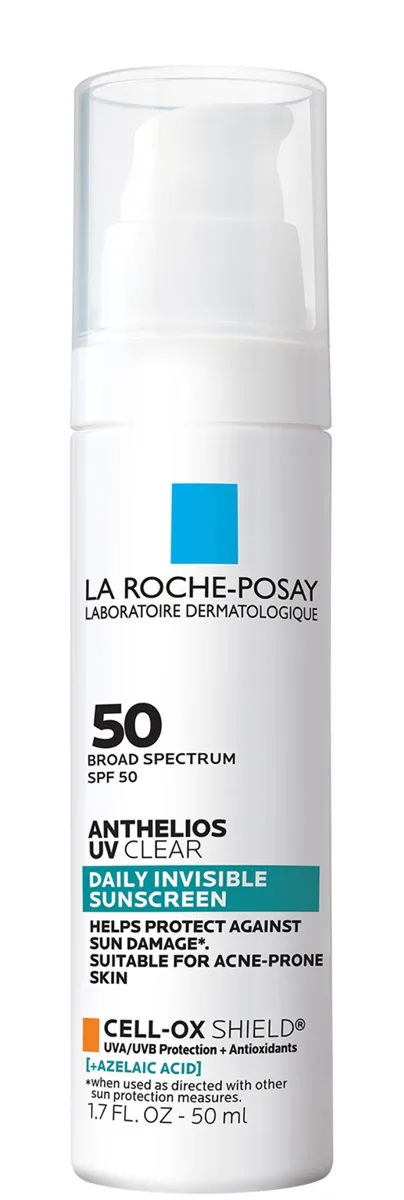 Derm Office Staple
 Anthelios UV Clear Sunscreen SPF 50
One of the only US chemical sunscreens that genuinely earns its 'for sensitive and breakout-prone skin' positioning. A photostable Anthelios filter system paired with a legitimate azelaic acid dose in a lightweight serum-fluid that disappears on every skin tone. Excellent for rosacea, acne, and post-inflammatory hyperpigmentation — and probably the single best daily sunscreen in the La Roche-Posay US lineup for those conditions.
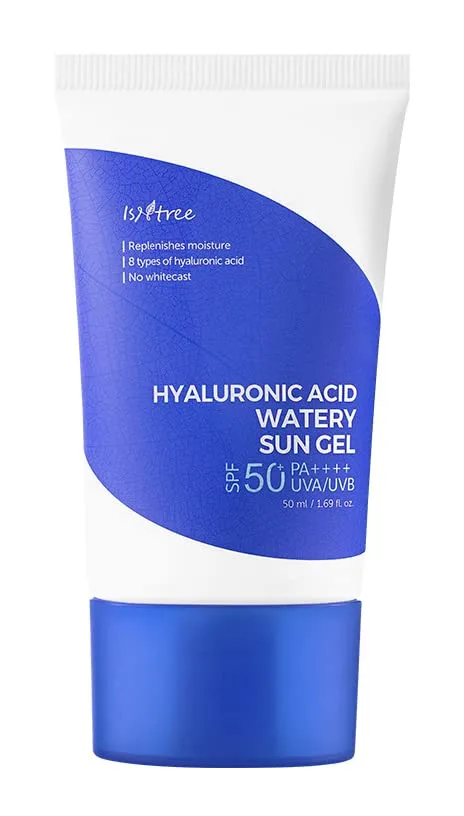 K-Beauty Daily SPF Standout
 Hyaluronic Acid Watery Sun Gel SPF 50+
One of the strongest everyday K-beauty sunscreens in the international market — modern European filters, no white cast, fragrance-free, niacinamide-boosted, and built around the brand's signature six-weight HA complex. At twenty-two dollars for 50ml, it's a case study in how much better a daily sunscreen can be when the formulator cares about both protection and wearability.
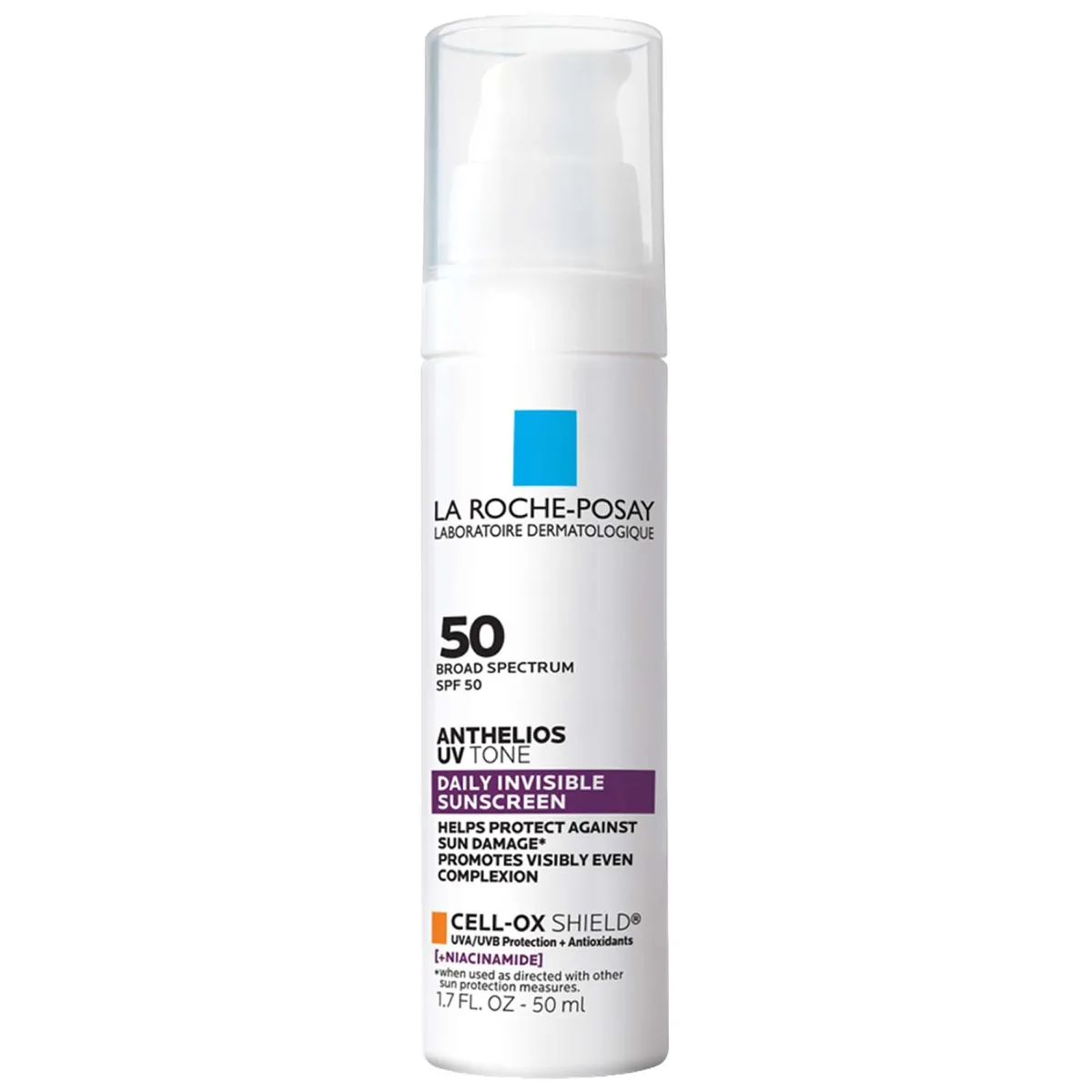 Derm Office Staple
 Anthelios UV Tone Daily Invisible Sunscreen SPF 50
La Roche-Posay's most thoughtful answer yet for hyperpigmentation-prone skin that needs daily SPF. A photostable avobenzone system reinforced with Oxynex ST, paired with a meaningful dose of niacinamide, in a serum-fluid base that goes on invisible on every skin tone. Expensive for 1.7 oz but legitimately well-built — and a rare chemical sunscreen that earns its 'for dark spots' marketing.
 Melasma-Grade Mineral Sunscreen
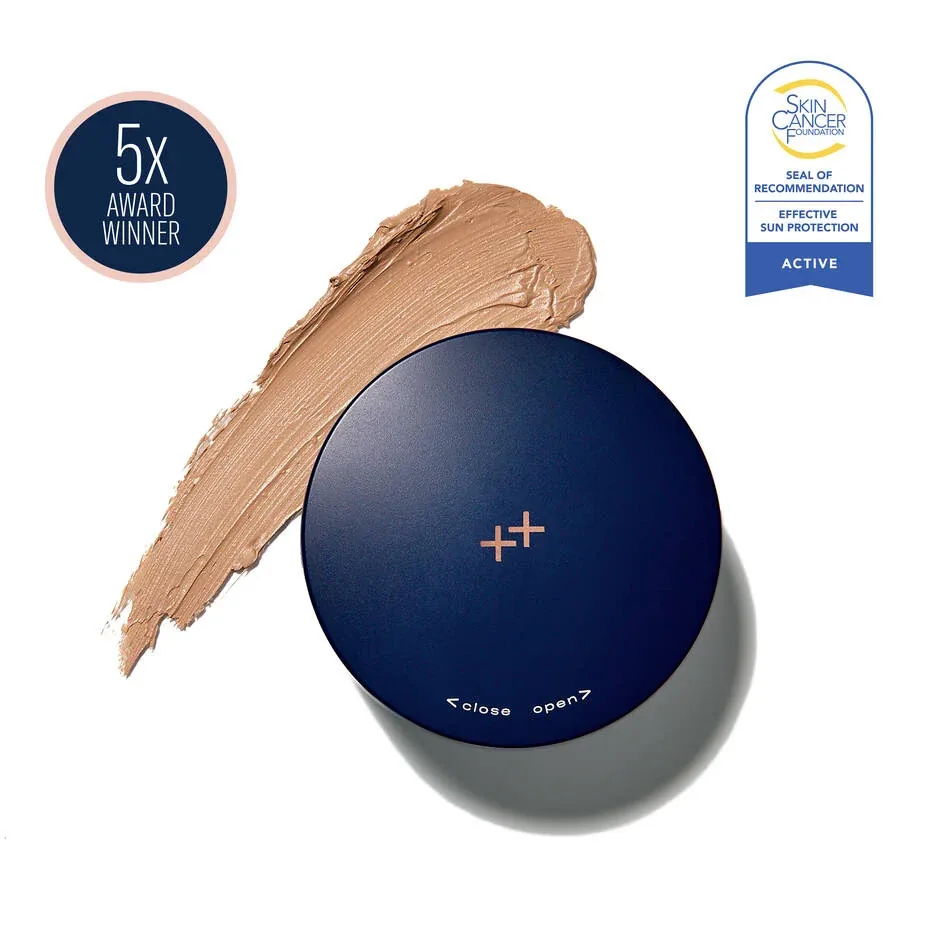
 sunbetter TONE SMART SPF 68
One of the most clinically useful tinted mineral sunscreens in the professional category. SPF 68 from a 100% mineral formula, iron oxide tint that blocks visible light for melasma protection, and an unusually lightweight texture that doesn't feel like you're wearing high-concentration zinc. For patients with melasma or post-inflammatory hyperpigmentation, this is the category benchmark — and it's earned its Allure Best of Beauty wins.
 K-Beauty Cult Favorite
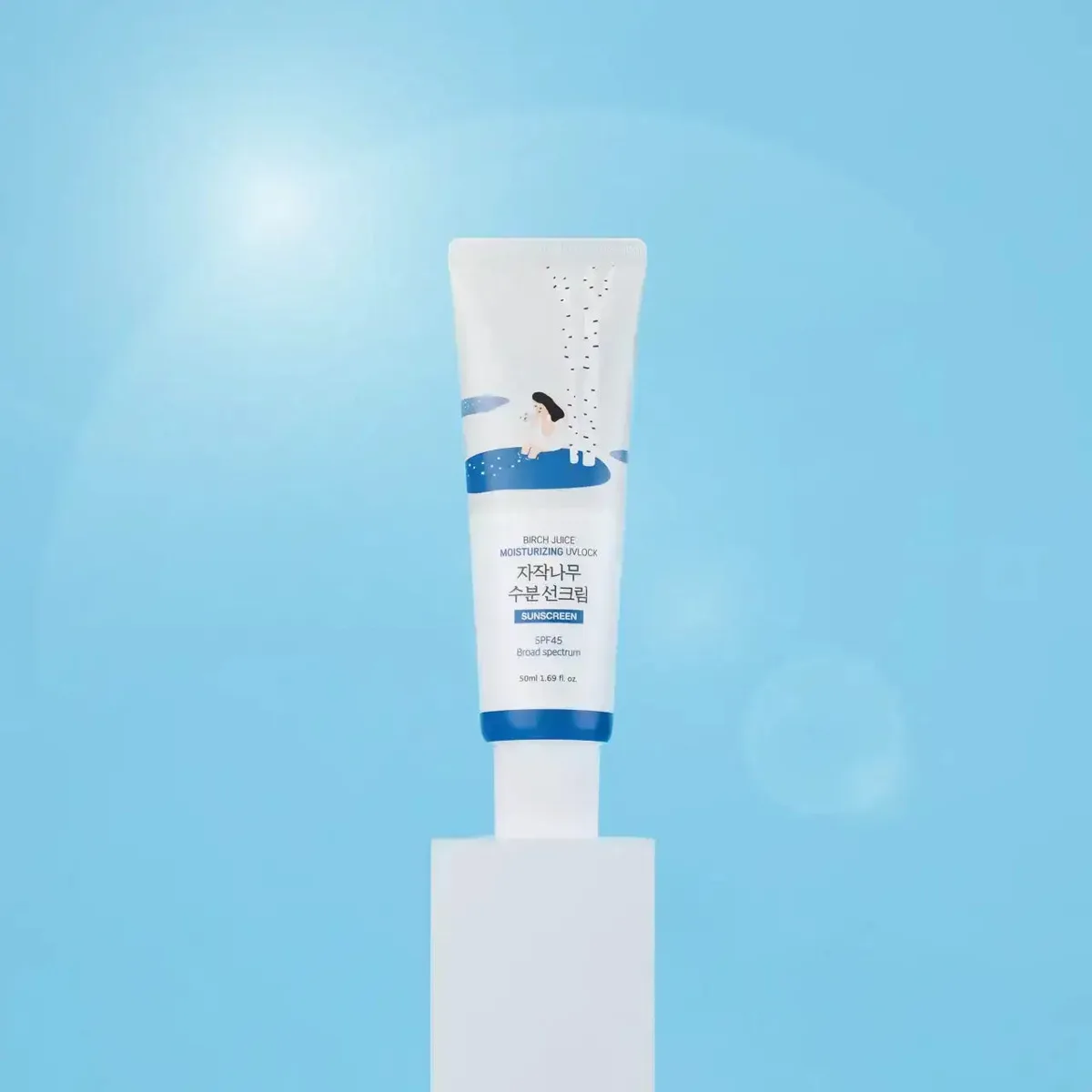
 Birch Juice Moisturizing Sun Cream SPF 50+
One of the best hybrid sunscreens in K-beauty right now — a 70% birch sap base, modern UVA filters you can't get in the US, and a finish that wears like a lightweight moisturizer. Broadly compatible, well-priced, and genuinely pleasant to apply, with minor tradeoffs for oily and fungal-acne-prone users.
 The K-Beauty Sunscreen That Changed Everything
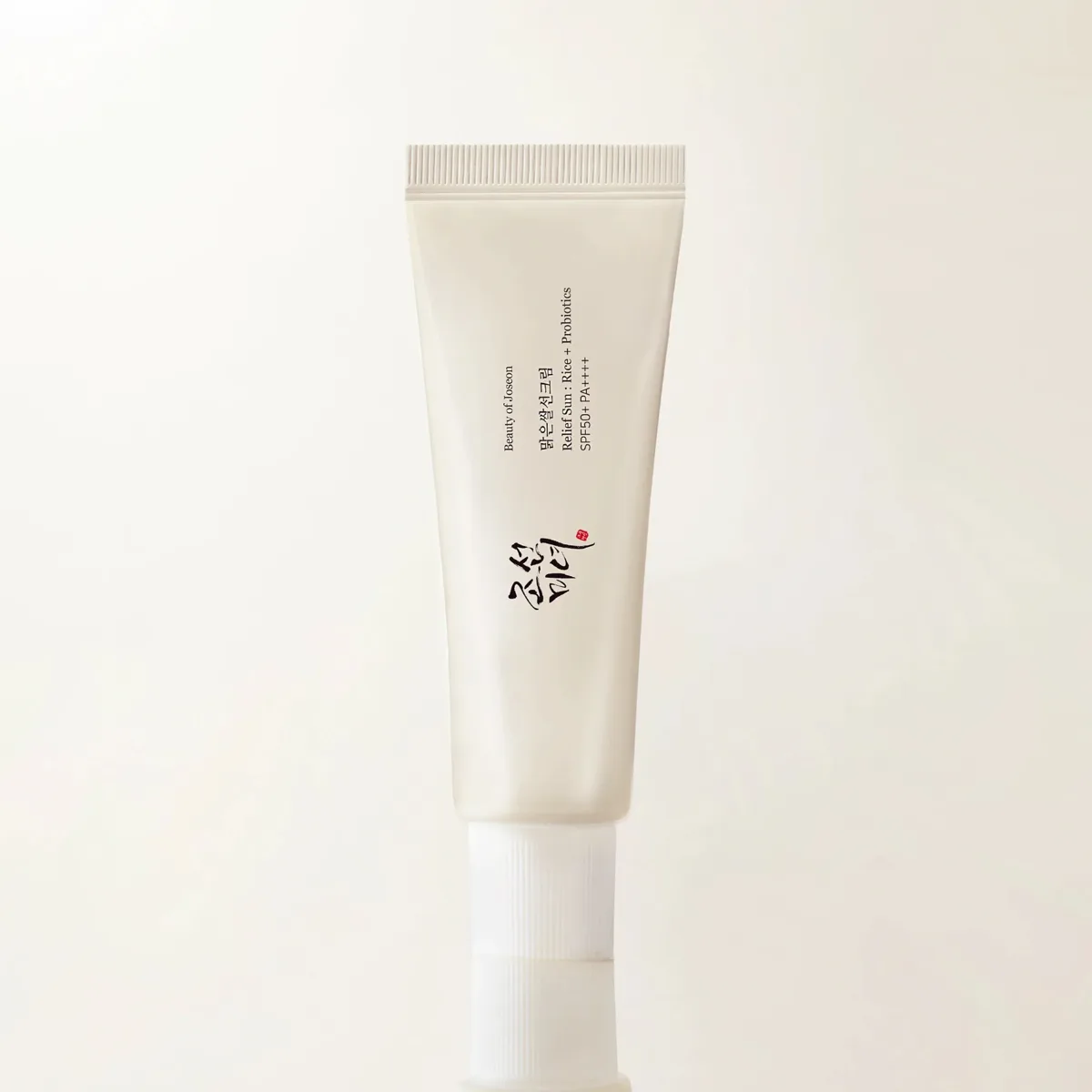
 Relief Sun: Rice + Probiotics SPF 50+
The sunscreen that rewrote the rules for what a $14 product could deliver. With independently verified SPF 50+, 30% rice extract, niacinamide, and a probiotic ferment complex, it offers protection and skincare benefits that rival products three times its price. The texture that feels like wearing nothing on your face is the reason it went viral — and stayed there.