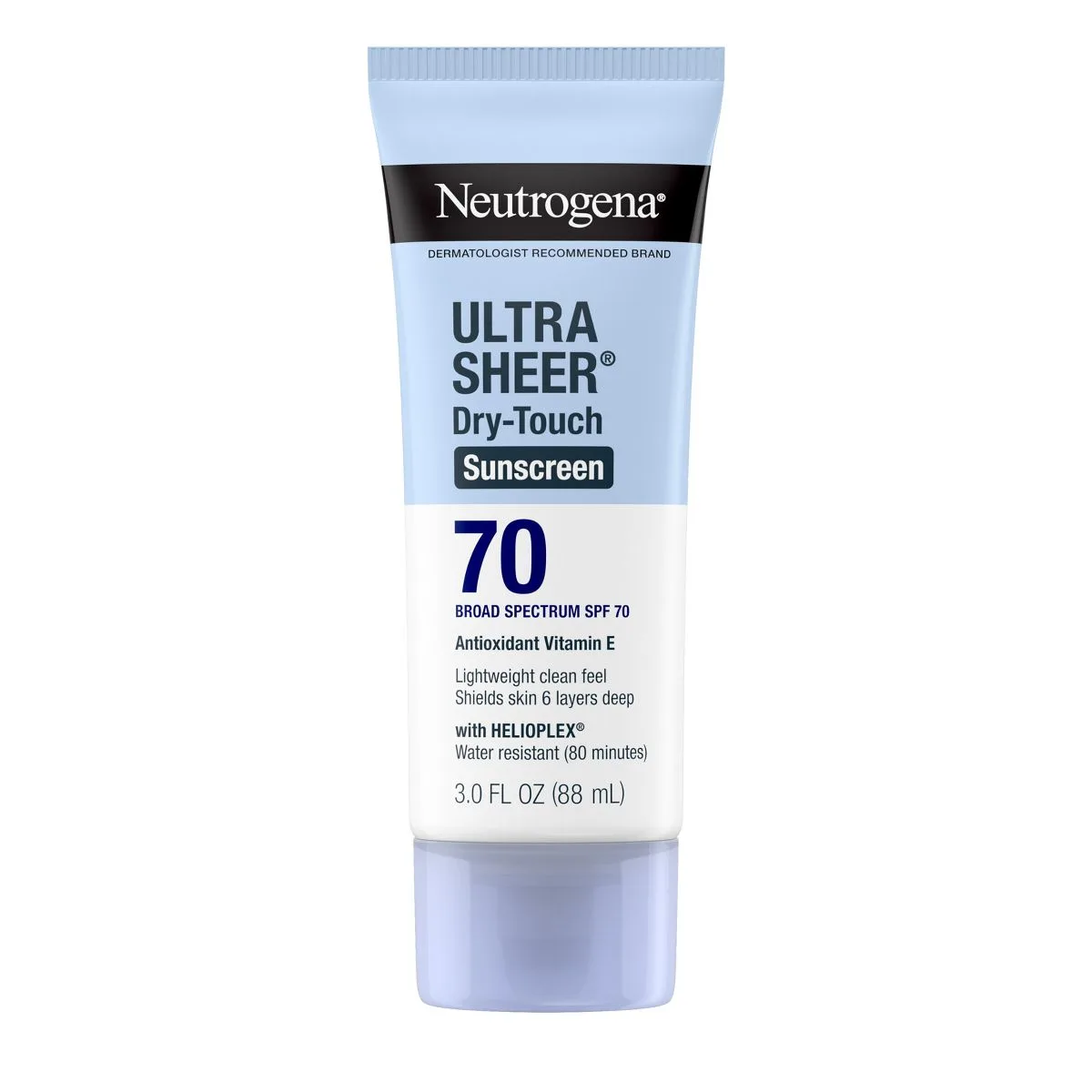
The workhorse of Neutrogena's Ultra Sheer line — a reliable, matte-finish chemical sunscreen at SPF 70 that provides serious protection at a drugstore price, especially in the 5 oz body size that makes generous application financially painless. The fragrance is the main reason to consider the SPF 100+ version instead, but for daily body and face protection, this is one of the most cost-effective high-SPF options available.
Ultra Sheer Dry-Touch Sunscreen SPF 70
The workhorse of Neutrogena's Ultra Sheer line — a reliable, matte-finish chemical sunscreen at SPF 70 that provides serious protection at a drugstore price, especially in the 5 oz body size that makes generous application financially painless. The fragrance is the main reason to consider the SPF 100+ version instead, but for daily body and face protection, this is one of the most cost-effective high-SPF options available.
Score Breakdown
Where this product gains points and where it loses them — broken down across the four scoring pillars.
A reliable high-SPF chemical sunscreen with the proven Helioplex stabilization system and a genuinely matte finish, available at an excellent price point. The fragrance and benzyl alcohol are unnecessary additions that lower the irritation score compared to the fragrance-free SPF 100+ reformulation.
Pros & Cons
- ✓Available in a 5 fl oz body size that offers excellent per-ounce value for full-body protection
- ✓Genuinely matte Dry-Touch finish that feels dry and non-greasy despite 33% active UV filters
- ✓Helioplex technology maintains avobenzone UVA protection stability during extended exposure
- ✓SPF 70 provides a strong real-world safety margin for typical consumer underapplication
- ✓Oil-free, non-comedogenic formula suitable for both face and body use
- ✓Water-resistant for 80 minutes during swimming and outdoor sports
- ✓Oxybenzone-free reformulation addresses environmental and safety concerns
- ✗Contains fragrance — a notable gap versus the fragrance-free SPF 100+ reformulation
- ✗Slight white cast possible on medium to dark skin tones from mattifying agents
- ✗Eye stinging during sweating from chemical UV filter migration at high concentrations
- ✗Contains benzyl alcohol which can sensitize some reactive skin types
- ✗Can pill when layered over certain skincare products or under some makeup formulas
Full Review
In a sunscreen line that stretches from SPF 30 to SPF 100+, the SPF 70 occupies the pragmatist's position. It's not the maximum protection — that distinction belongs to the SPF 100+, complete with its JAAD clinical trial and Helioplex360 technology. And it's not the most cosmetically elegant everyday option — the SPF 30 and 45 have lighter filter loads and feel more like skincare. The SPF 70 sits in between, and that middle ground turns out to be surprisingly practical.
The active ingredient profile is identical to the SPF 100+: avobenzone at 3%, homosalate at 15%, octisalate at 5%, and octocrylene at 10%, for a total active load of 33%. The same four filters at the same concentrations. The difference in SPF comes from the inactive ingredients — specifically, the SPF 100+ adds ethylhexyl methoxycrylene, a UV booster that amplifies the filter system's efficiency without adding a fifth active ingredient. The SPF 70 achieves its protection through the classic Helioplex stabilization alone.
What the SPF 70 has that the SPF 100+ doesn't is a 5 fl oz size. At roughly twelve dollars for five ounces versus fifteen dollars for three ounces, the per-ounce economics strongly favor the SPF 70 for body application. When you're slathering sunscreen on arms, legs, chest, and shoulders — as dermatologists constantly remind us we should — cost per application matters enormously. A single generous full-body application uses about an ounce, meaning the 5 oz tube gives you five proper applications. At the SPF 100+ price, that same coverage would cost roughly two and a half times more.
The Dry-Touch technology remains the line's defining feature, and it works as well at SPF 70 as at any other level. Aluminum starch octenylsuccinate and silica absorb surface oil, while a silicone blend (dimethicone, caprylyl methicone, cetyl dimethicone) creates slip during application that converts to a matte finish as the formula sets. The result is a high-SPF sunscreen that genuinely feels dry to the touch — not tacky, not greasy, not like you're wearing a product at all. For anyone who's ever skipped reapplication because their sunscreen felt unbearable, this texture is a meaningful compliance tool.
The Helioplex technology stabilizing the avobenzone has been validated since 2005. Neutrogena's data shows the system maintains over 85% of UVA protection after five hours of simulated UV exposure — a substantial improvement over unstabilized avobenzone, which can lose most of its protective capacity in the same timeframe. For a sunscreen designed for extended outdoor use, this photostability is essential.
Now for the honest assessment of where this formula falls short of the SPF 100+ reformulation. It contains fragrance. The SPF 100+ doesn't. For a product applied to sun-exposed, potentially sensitized skin, this is a meaningful difference. Fragrance is a documented sensitizer, and its presence here serves no functional purpose. If Neutrogena can make the SPF 100+ fragrance-free, the absence of that consideration in the SPF 70 is simply a product update that hasn't happened yet.
The slight white cast on medium to darker skin tones is another limitation. It's not dramatic — the formula is primarily chemical UV filters that absorb clear — but the mattifying agents that create the Dry-Touch finish can leave a faint cast that takes a few minutes to settle. This is less of an issue with the SPF 100+ version, which uses a slightly different mattifying system.
Eye stinging during sweating affects this product just as it does every chemical sunscreen in Neutrogena's portfolio. At 33% active ingredients, the chemical filter load is substantial, and when perspiration carries these ingredients into the eyes, the burning is real and immediate. If you exercise outdoors or spend time in heat, either use a separate mineral sunscreen stick around the eye area or accept that you'll be reaching for a towel periodically.
The reformulation to remove oxybenzone is welcome. The current formula uses the same four active filters as the SPF 100+ and complies with Hawaii's reef protection legislation. It's not fully reef-safe by the strictest definitions — homosalate and octocrylene remain — but it's a meaningful improvement over the original formula.
SPF 70 provides roughly 98.6% UVB blockage at perfect application. At the typical real-world half-application, that translates to approximately SPF 20-25 — comfortably above the SPF 15 minimum that dermatologists consider the threshold for meaningful protection. This makes it a practical choice for people who know they underapply but want real protection anyway.
The bottom line is utilitarian. This isn't the most exciting sunscreen in Neutrogena's lineup or the most protective. But its combination of high SPF, proven photostability, genuinely matte texture, 5 oz body size, and sub-twelve-dollar pricing makes it arguably the most practical daily-use sunscreen for people who need reliable body and face protection at a price that encourages generous application. The fragrance should go, the white cast is a minor issue, and the eye stinging is an inherent limitation of chemical sunscreens. Within those constraints, this is honest, effective sun protection that doesn't ask much of you in return.
Formula
Key Ingredients
The hero actives that drive this product's performance.
| Ingredient | Function | Evidence |
|---|---|---|
| Avobenzone (3%) | Primary UVA filter stabilized by Neutrogena's Helioplex technology via octocrylene, maintaining broad-spectrum UVA protection over extended sun exposure — critical for a sunscreen positioned as a high-SPF outdoor protection product. | well-established |
| Homosalate (15%) | UVB filter at the FDA maximum concentration, providing the bulk of the SPF 70 protection alongside octisalate and octocrylene in a formula with 33% total active UV filters. | well-established |
| Octocrylene (10%) | Dual-function ingredient serving as both a UVB/short UVA absorber and the key photostabilizer for avobenzone in the Helioplex system, preventing the UVA filter from degrading under sunlight. | well-established |
| Tocopheryl Acetate | Vitamin E derivative providing antioxidant defense against UV-generated free radicals, supplementing the UV filtration with photoprotective support. | well-established |
Full INCI List
Active Ingredients: Avobenzone 3%, Homosalate 15%, Octisalate 5%, Octocrylene 10%. Inactive Ingredients: Water, Butyloctyl Salicylate, Styrene/Acrylates Copolymer, Silica, Dimethicone, Potassium Cetyl Phosphate, Benzyl Alcohol, Beeswax, Caprylyl Methicone, Aluminum Starch Octenylsuccinate, Glyceryl Stearate, PEG-100 Stearate, Cetyl Dimethicone, Caprylyl Glycol, Ethylhexylglycerin, Behenyl Alcohol, Acrylates/Dimethicone Copolymer, Xanthan Gum, Chlorphenesin, Dimethicone/PEG-10/15 Crosspolymer, Sodium Polyacrylate, Hydrolyzed Jojoba Esters, Fragrance, Disodium EDTA, Ethylhexyl Stearate, Tocopheryl Acetate, BHT, Jojoba Esters, Trideceth-6
Product Flags
✗ Fragrance Free✗ Alcohol Free✓ Oil Free✗ Silicone Free✓ Paraben Free✓ Sulfate Free✗ Cruelty Free✗ Vegan✗ Fungal Acne Safe
Comedogenic Ingredients
Ethylhexyl Stearate
Potential Irritants
FragranceBenzyl AlcoholHomosalateOctocryleneAvobenzone
Common Allergens
FragranceBenzyl AlcoholBeeswax
Compatibility
Skin Match
Best For
Works For
Not Ideal For
Addresses These Conditions
Use With Caution
Routine Step
sunscreen
Time of Day
AM
Pregnancy Safe
Yes ✓
Layering Tips
Apply as the final step of your morning routine. The matte Dry-Touch finish makes it one of the better high-SPF options for wearing under makeup. Allow 1-2 minutes to set before applying primer or foundation. Available in both 3 oz and 5 oz sizes — the larger size is better value for regular body application.
Results Timeline
Sun protection is immediate upon application. The matte dry-touch finish develops within 1-2 minutes. Consistent daily use prevents cumulative UV damage, photoaging, and dark spot formation over weeks and months.
Pairs Well With
Lightweight moisturizersVitamin C serumsOil-free makeup primers
Sample AM Routine
- Gentle cleanser
- Antioxidant serum
- Lightweight moisturizer
- Neutrogena Ultra Sheer Dry-Touch Sunscreen SPF 70
Sample PM Routine
- Oil cleanser (to remove sunscreen)
- Water-based cleanser
- Treatment serum
- Night moisturizer
Evidence
Who Should Skip
- Contains fragrance — a notable gap versus the fragrance-free SPF 100+ reformulation
- Slight white cast possible on medium to dark skin tones from mattifying agents
- Eye stinging during sweating from chemical UV filter migration at high concentrations
- Contains benzyl alcohol which can sensitize some reactive skin types
Science & Expert Perspective
The Science
The four-filter system in this formula provides overlapping UVA and UVB coverage. Avobenzone at 3% absorbs UVA I radiation (340-400nm), the wavelength range most associated with photoaging and DNA damage. Homosalate at 15% and octisalate at 5% cover the UVB range (280-320nm), while octocrylene at 10% absorbs UVB and short UVA while serving as the critical photostabilizer for avobenzone.
Neutrogena's Helioplex technology, introduced in 2005, was one of the first commercially successful avobenzone stabilization systems. Research published in Photochemistry and Photobiology demonstrated that octocrylene quenches the excited triplet state of UV-irradiated avobenzone, preventing the irreversible structural rearrangement (photodegradation) that causes unstabilized avobenzone to lose its UVA-absorbing capacity. Neutrogena's data indicates that Helioplex-stabilized formulations maintain over 85% of UVA protection after five hours of simulated UV irradiation.
The SPF 70 rating at these active concentrations reflects the optimized ratios and vehicle design rather than simply higher filter loading. Research in the International Journal of Cosmetic Science has shown that UV filter synergy, vehicle optimization, and film-forming properties can significantly affect SPF outcomes at equivalent active concentrations. The styrene/acrylates copolymer in this formula forms a uniform film on the skin surface, improving the evenness of UV filter distribution and boosting SPF efficiency.
The Dry-Touch technology represents a formulation solution to a significant compliance problem. Research published in the British Journal of Dermatology has demonstrated that sensory properties — particularly greasiness — are among the primary reasons consumers underapply or skip sunscreen reapplication. By achieving a matte, non-greasy finish at 33% active ingredients, this formula directly addresses the tactile barrier to consistent sunscreen use.
Dermatologist Perspective
Dermatologists frequently recommend SPF 70 as a practical daily-use protection level that provides a meaningful safety margin for the underapplication that virtually all consumers exhibit. Board-certified dermatologists note that the Dry-Touch finish addresses one of the biggest barriers to sunscreen compliance — the greasy, heavy feel that causes people to skip application or reduce the amount they use. For patients who resist high-SPF sunscreens due to texture concerns, this product is commonly cited as an example that high protection doesn't have to mean uncomfortable wear. Dermatologists advise applying generously 15 minutes before sun exposure and reapplying every two hours regardless of the SPF level.
Guidance
Usage Guide
How to Use
Apply generously to all exposed skin 15 minutes before sun exposure. Use a nickel-sized amount for the face and approximately one ounce (a shot glass) for full body coverage. Allow 1-2 minutes for the Dry-Touch finish to develop before applying makeup or clothing. Reapply every two hours during sun exposure, or immediately after 80 minutes of swimming or sweating. Remove at night with an oil-based cleanser or micellar water followed by your regular cleanser.
Value Assessment
At approximately $10 for 3 fl oz and $12 for 5 fl oz, this is one of the most cost-effective high-SPF sunscreens available from a major brand. The 5 oz body size is particularly noteworthy — at roughly $2.40 per ounce, generous full-body application becomes financially painless, which directly impacts protection quality since the amount applied matters as much as the SPF number. Multi-packs on Amazon further reduce the per-tube cost. The main value consideration versus the SPF 100+ is that the SPF 70 costs less per ounce and comes in a larger size, while the SPF 100+ offers fragrance-free formulation and Helioplex360 technology at a higher per-ounce price.
Who Should Buy
The best choice for anyone who wants reliable high-SPF protection for both face and body at a price that encourages generous application. Particularly well-suited for oily and combination skin types who appreciate the matte finish, outdoor enthusiasts who need the 5 oz body size for regular reapplication, and budget-conscious consumers who want strong protection without premium pricing.
Who Should Skip
Skip this if you need a fragrance-free sunscreen — the SPF 100+ version is fragrance-free and offers higher protection. Also avoid if you have sensitive skin that reacts to chemical UV filters or benzyl alcohol, or if you have darker skin and are concerned about potential white cast.
Ready to try Neutrogena Ultra Sheer Dry-Touch Sunscreen SPF 70?
Details
Details
Texture
Lightweight lotion with Neutrogena's Dry-Touch technology that creates a matte, non-greasy finish. Absorbs quickly and leaves a clean, almost powdery feel on skin despite the 33% active ingredient load.
Scent
Light fragrance that's noticeable during application. The scent is a common point of division — some users find it pleasant while others wish for a fragrance-free option.
Packaging
White squeeze tube with blue/teal accent graphics and flip-top cap. Available in 3 fl oz (travel/TSA-friendly) and 5 fl oz tubes. Standard opaque plastic packaging.
Finish
mattenon-greasylightweight
What to Expect on First Use
On first application, the lotion spreads easily and absorbs within a minute or two, converting to a distinctly matte finish that feels dry to the touch — quite different from most sunscreens. The light fragrance is noticeable but fades quickly. Skin feels clean rather than coated. Some users on deeper skin tones may notice a faint white cast that settles after a few minutes.
How Long It Lasts
4-6 weeks with daily facial application (3 oz); 2-3 weeks with body application (5 oz)
Period After Opening
12 months
Best Season
spring summer
Certifications
Non-comedogenicOil-freeOxybenzone-freePABA-freeParaben-freeWater-resistant (80 minutes)HSA/FSA eligible
Background
The Why
The Ultra Sheer Dry-Touch line launched in the mid-2000s as Neutrogena brought its Helioplex photostabilization technology to a range of SPF levels. The SPF 70 variant quickly became one of the most popular options in the range — high enough to provide serious protection with a meaningful underapplication safety margin, while being available in the 5 oz body size that the even higher SPF variants don't offer. The oxybenzone-free reformulation addressed environmental and safety concerns while maintaining the SPF 70 rating.
About Neutrogena Legacy Brand (20+ years)
Neutrogena was founded in 1930 and is the #1 dermatologist-recommended suncare brand in the United States. The Ultra Sheer Dry-Touch line, featuring proprietary Helioplex avobenzone stabilization technology introduced in 2005, has been one of the bestselling sunscreen ranges in the US for nearly two decades.
Brand founded: 1930 · Product launched: 2007
Myth vs. Reality
Myths & Misconceptions
Myth
SPF 70 and SPF 50 provide essentially the same protection.
Reality
At perfect application, the difference is small (98.6% vs 98% UVB blocking). But at real-world underapplication of 50%, SPF 70 provides roughly SPF 20-25 protection vs SPF 50's roughly SPF 15-18. That gap widens further at the typical quarter-application that most consumers actually use. Higher SPF is a practical safety net for imperfect human behavior.
Myth
Matte-finish sunscreens provide less protection than greasy ones.
Reality
The matte finish is a property of the vehicle (the base ingredients carrying the UV filters), not the UV filters themselves. The Dry-Touch technology uses aluminum starch octenylsuccinate and silica to absorb oil and create a matte feel without affecting the UV protection performance of the active ingredients.
FAQ
Frequently Asked Questions
What's the difference between Ultra Sheer SPF 70 and SPF 100+?
Both use the same four active UV filters at identical concentrations, but the SPF 100+ version adds ethylhexyl methoxycrylene (a UV booster/stabilizer) for higher protection and uses the newer Helioplex360 technology. The SPF 100+ is also fragrance-free and paraben-free, while the SPF 70 contains fragrance. The SPF 70 is available in a 5 oz body size that the SPF 100+ doesn't offer.
Does Neutrogena Ultra Sheer SPF 70 leave a white cast?
Some users with medium to dark skin tones report a slight white cast, though it typically settles after a few minutes. The formula is primarily chemical UV filters (which absorb clear), but the aluminum starch octenylsuccinate and silica used for the matte finish can create a faint cast. The SPF 100+ version generally produces less white cast.
Is this sunscreen waterproof?
No sunscreen is truly waterproof — the FDA no longer allows that claim. This product is water-resistant for 80 minutes, meaning it maintains its SPF protection during 80 minutes of swimming or sweating. After that, you must reapply immediately.
Can I use this on my face?
Yes — it's non-comedogenic and oil-free, making it suitable for facial use. The matte Dry-Touch finish actually works better on the face than many facial-specific sunscreens. However, it does contain fragrance, so if your facial skin is sensitive to scent, consider the fragrance-free SPF 100+ version instead.
How much should I apply for proper protection?
Use a nickel-sized amount for the face and a shot glass (approximately 1 ounce) for the full body. Most people underapply by 50-75%, which dramatically reduces real-world protection. The SPF 70 rating provides a safety margin for underapplication — at half the recommended amount, you still get roughly SPF 20-25 protection.
Community
Community Voices
Common Praise
"Genuinely matte dry-touch finish that doesn't feel like typical sunscreen"
"Effective sun protection — prevents sunburn reliably at SPF 70"
"Lightweight and non-greasy — absorbs quickly into skin"
"Good under makeup with minimal interference"
"Affordable pricing especially in the 5 oz body size"
"Water-resistant for 80 minutes during outdoor activities"
Common Complaints
"Can leave a slight white cast on medium to dark skin tones"
"Contains fragrance which irritates some sensitive skin users"
"Eye stinging during sweating from chemical UV filter migration"
"Some reports of pilling when layered over certain products"
"Product can sometimes separate in the tube"
"Benzyl alcohol may sensitize some reactive skin types"
Notable Endorsements
#1 dermatologist-recommended suncare brand in the U.S.
Appears In
best matte sunscreen best body sunscreen best sunscreen for oily skin best drugstore sunscreen
Related Conditions
Related Ingredients
You Might Also Like
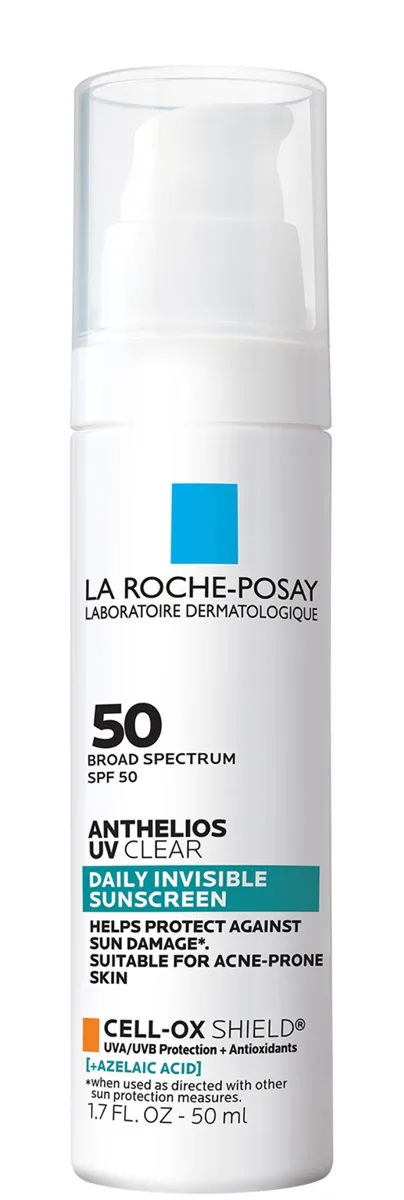 Derm Office Staple
 Anthelios UV Clear Sunscreen SPF 50
One of the only US chemical sunscreens that genuinely earns its 'for sensitive and breakout-prone skin' positioning. A photostable Anthelios filter system paired with a legitimate azelaic acid dose in a lightweight serum-fluid that disappears on every skin tone. Excellent for rosacea, acne, and post-inflammatory hyperpigmentation — and probably the single best daily sunscreen in the La Roche-Posay US lineup for those conditions.
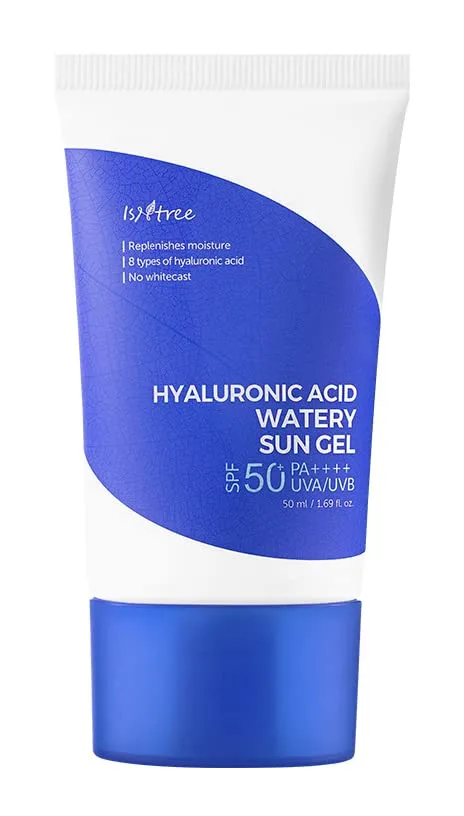 K-Beauty Daily SPF Standout
 Hyaluronic Acid Watery Sun Gel SPF 50+
One of the strongest everyday K-beauty sunscreens in the international market — modern European filters, no white cast, fragrance-free, niacinamide-boosted, and built around the brand's signature six-weight HA complex. At twenty-two dollars for 50ml, it's a case study in how much better a daily sunscreen can be when the formulator cares about both protection and wearability.
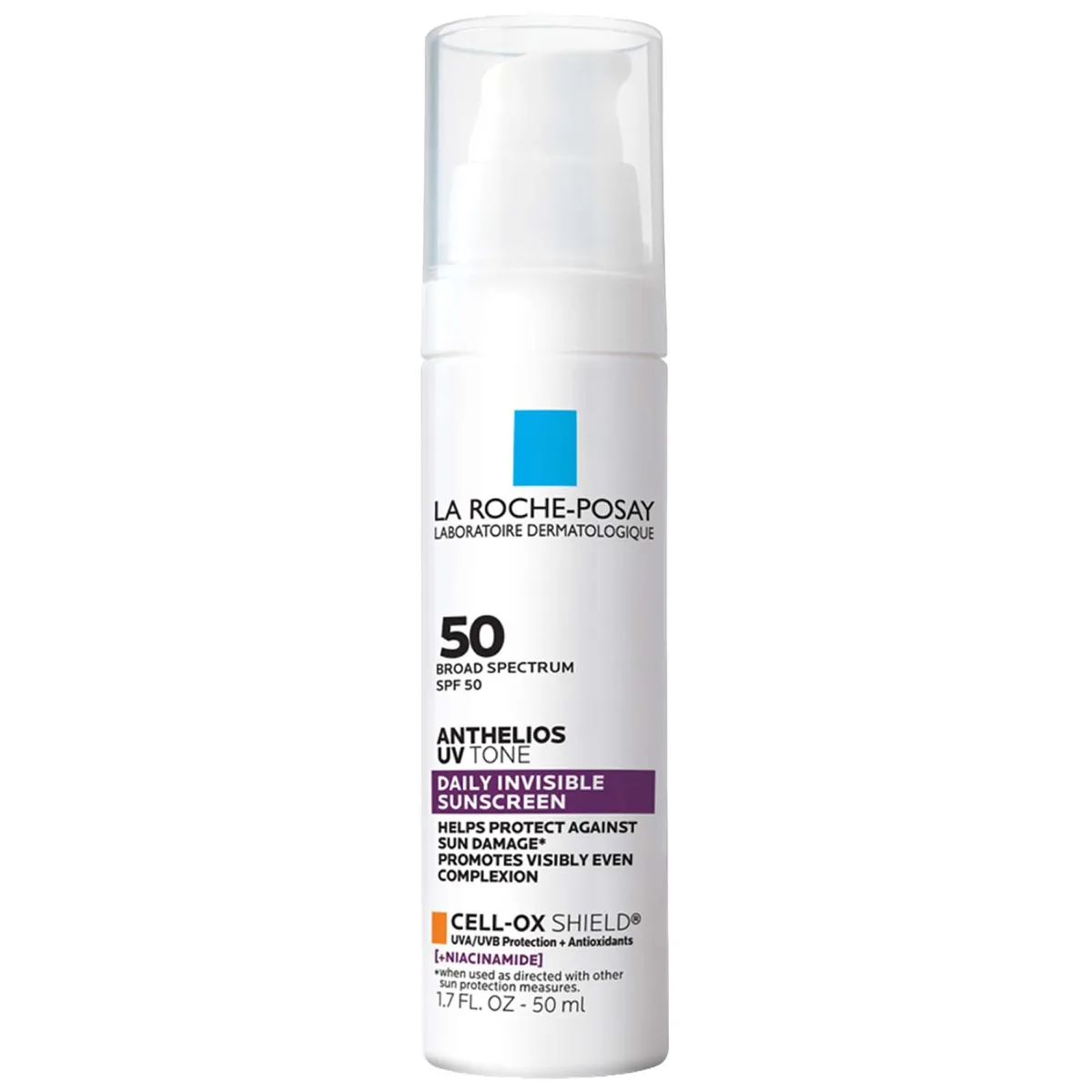 Derm Office Staple
 Anthelios UV Tone Daily Invisible Sunscreen SPF 50
La Roche-Posay's most thoughtful answer yet for hyperpigmentation-prone skin that needs daily SPF. A photostable avobenzone system reinforced with Oxynex ST, paired with a meaningful dose of niacinamide, in a serum-fluid base that goes on invisible on every skin tone. Expensive for 1.7 oz but legitimately well-built — and a rare chemical sunscreen that earns its 'for dark spots' marketing.
 Melasma-Grade Mineral Sunscreen
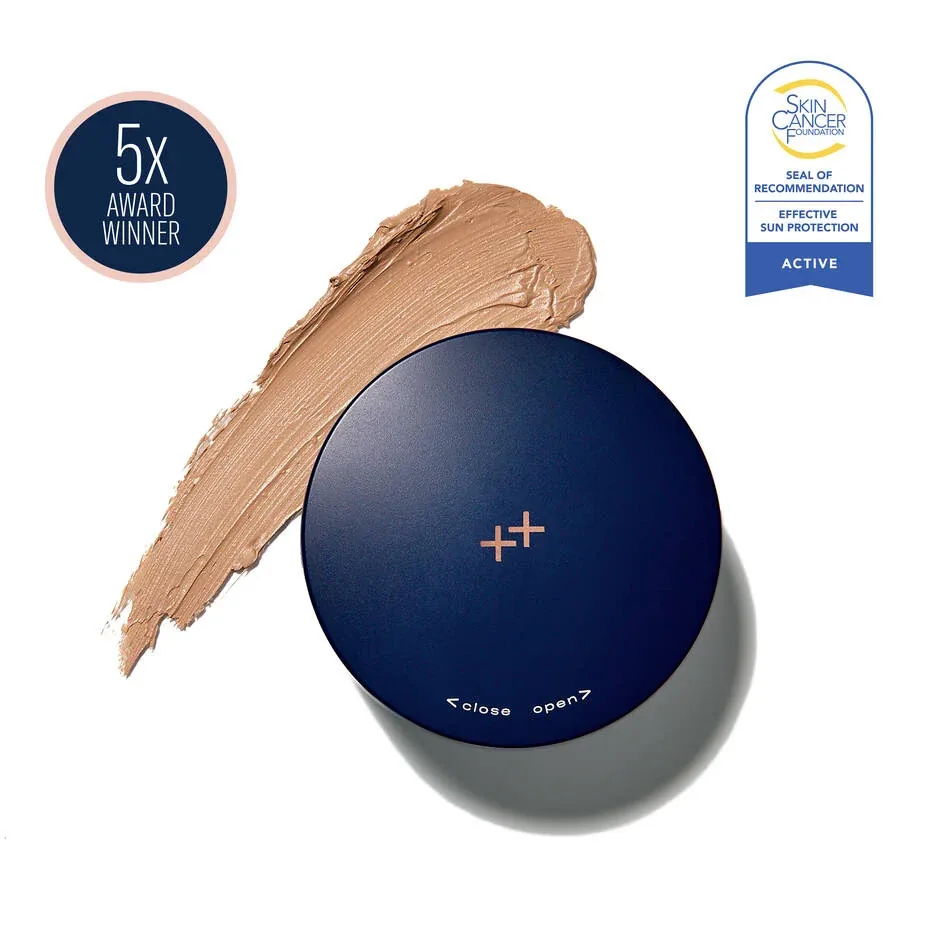
 sunbetter TONE SMART SPF 68
One of the most clinically useful tinted mineral sunscreens in the professional category. SPF 68 from a 100% mineral formula, iron oxide tint that blocks visible light for melasma protection, and an unusually lightweight texture that doesn't feel like you're wearing high-concentration zinc. For patients with melasma or post-inflammatory hyperpigmentation, this is the category benchmark — and it's earned its Allure Best of Beauty wins.
 K-Beauty Cult Favorite
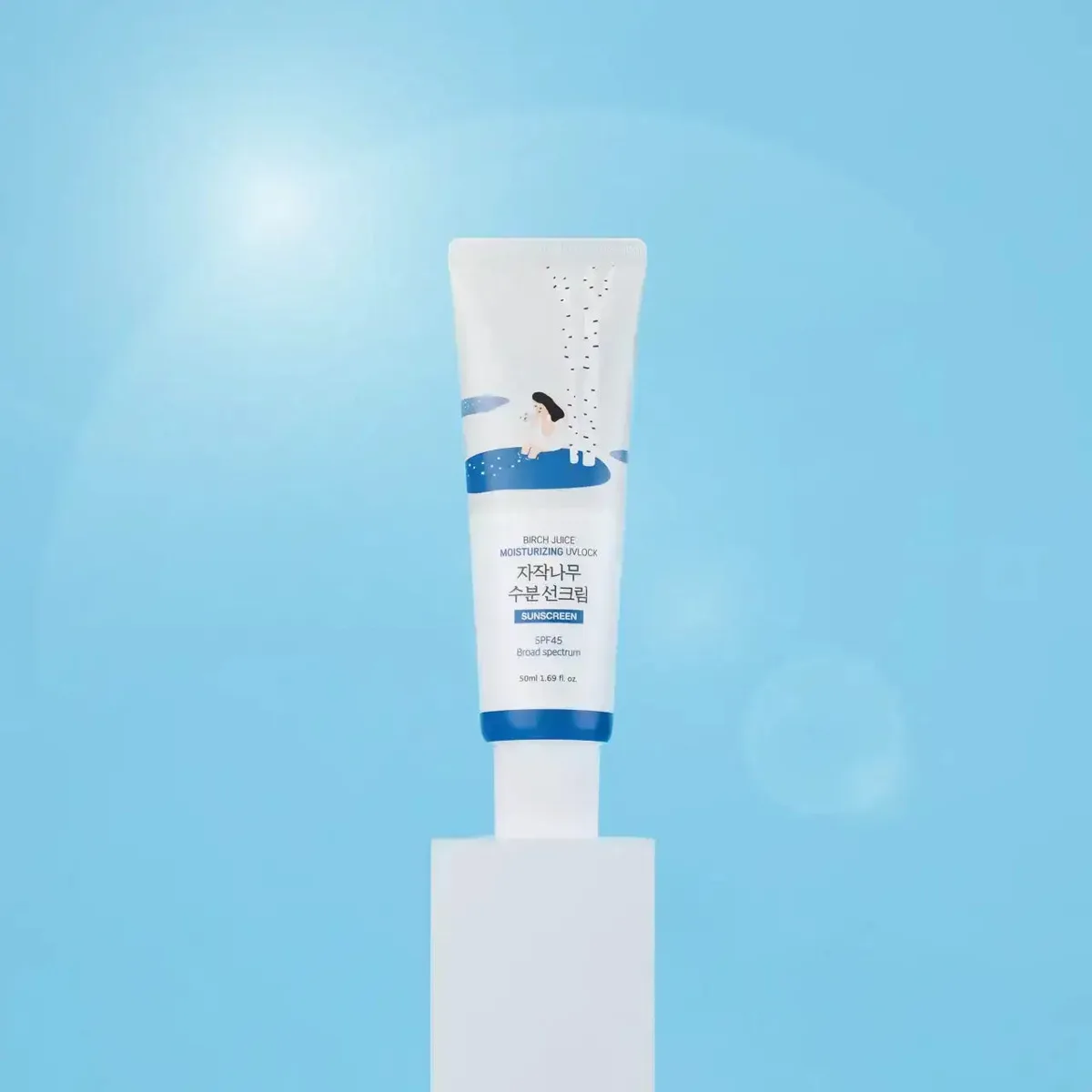
 Birch Juice Moisturizing Sun Cream SPF 50+
One of the best hybrid sunscreens in K-beauty right now — a 70% birch sap base, modern UVA filters you can't get in the US, and a finish that wears like a lightweight moisturizer. Broadly compatible, well-priced, and genuinely pleasant to apply, with minor tradeoffs for oily and fungal-acne-prone users.
 The K-Beauty Sunscreen That Changed Everything
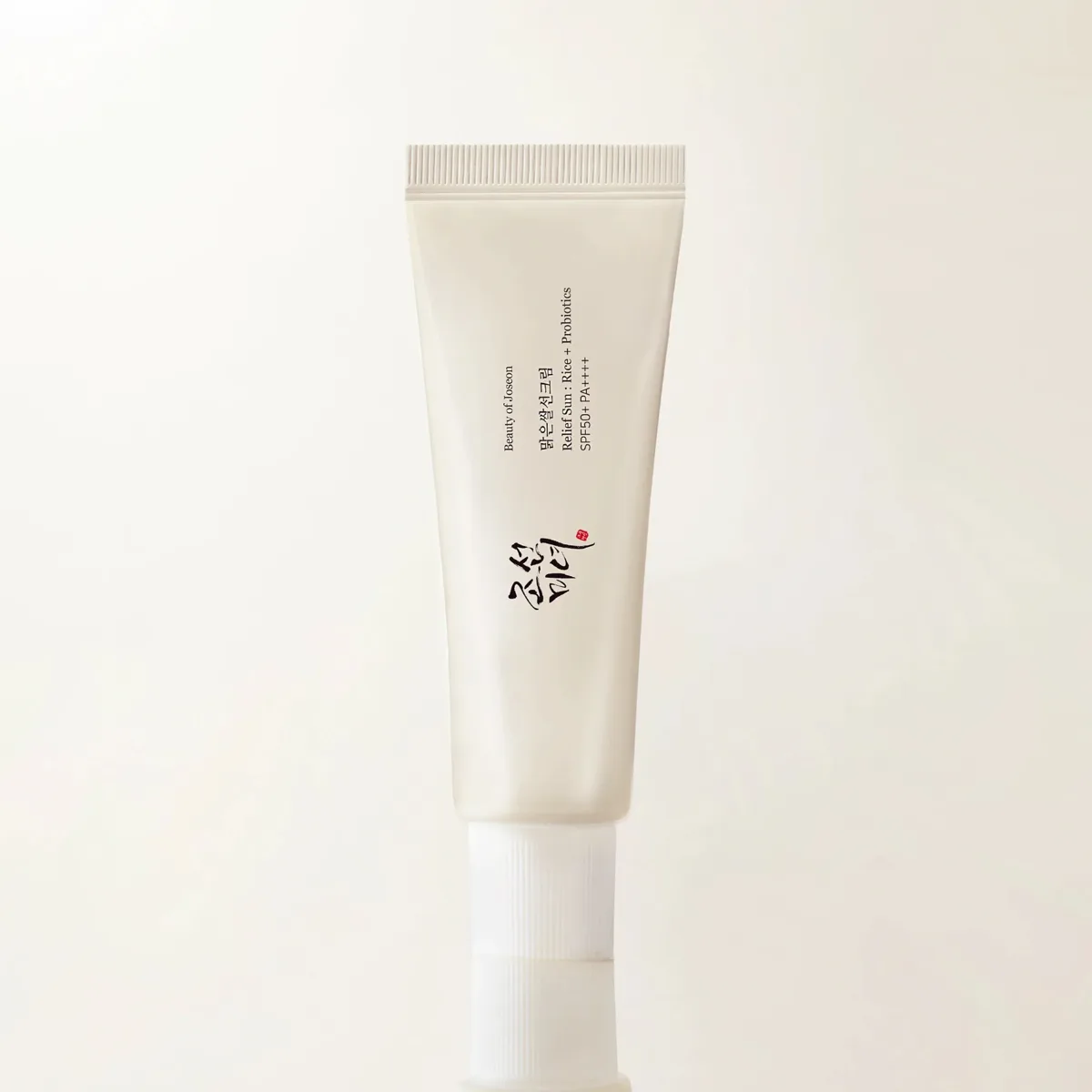
 Relief Sun: Rice + Probiotics SPF 50+
The sunscreen that rewrote the rules for what a $14 product could deliver. With independently verified SPF 50+, 30% rice extract, niacinamide, and a probiotic ferment complex, it offers protection and skincare benefits that rival products three times its price. The texture that feels like wearing nothing on your face is the reason it went viral — and stayed there.
This review reflects our independent analysis of publicly available ingredient data, manufacturer claims, and verified user reviews. We are reader-supported — Amazon links may earn us a commission at no cost to you. We do not accept paid placements; rankings are based solely on the evidence.