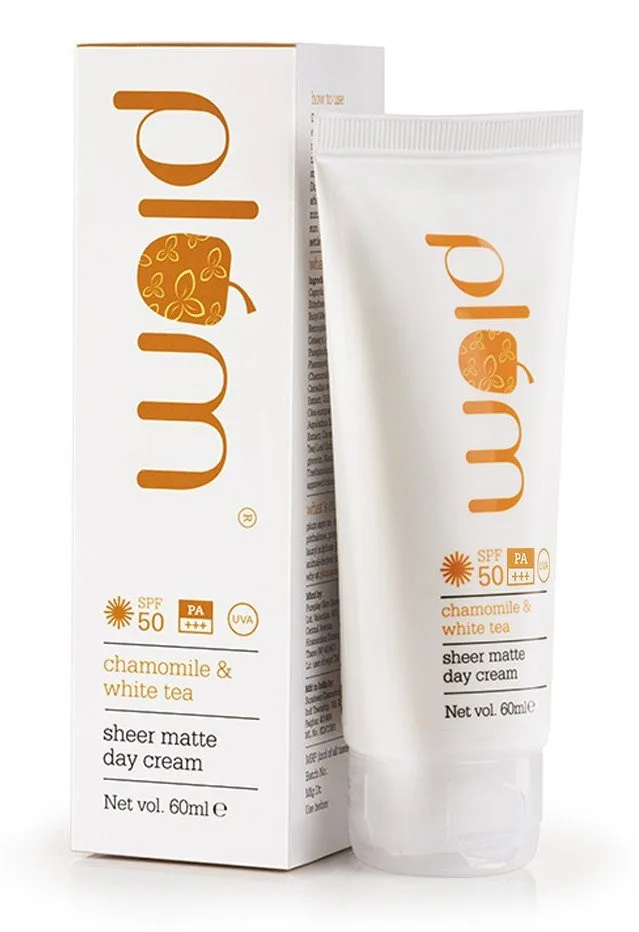
One of the better chemical sunscreens in the Indian D2C market, built around genuinely modern filters like Tinosorb S and Uvinul A Plus and finished with a silica-driven matte effect suited to humid climates. Fragrance and the lack of water resistance are the main drawbacks.
Chamomile & White Tea Sheer Matte Sunscreen SPF 50
One of the better chemical sunscreens in the Indian D2C market, built around genuinely modern filters like Tinosorb S and Uvinul A Plus and finished with a silica-driven matte effect suited to humid climates. Fragrance and the lack of water resistance are the main drawbacks.
Score Breakdown
Where this product gains points and where it loses them — broken down across the four scoring pillars.
Strong filter selection with Tinosorb S and Uvinul A Plus at an accessible price. Points off for added fragrance and slightly elevated irritation risk from the octocrylene content.
Pros & Cons
- ✓Modern UV filter system with Tinosorb S and Uvinul A Plus
- ✓Genuinely matte silica-based finish suited to humid climates
- ✓No white cast — works across the full range of skin tones
- ✓Niacinamide and panthenol support under daily sunscreen use
- ✓Affordable chemical sunscreen with modern broad-spectrum coverage
- ✓Works well as a makeup base for most foundation types
- ✗Added fragrance limits use for sensitive or rosacea-prone skin
- ✗Not water-resistant — unsuitable for swimming or heavy sweat
- ✗50ml tube is modest for daily twice-application use
- ✗Contains octocrylene, which some users prefer to avoid
- ✗Occasional pilling reported under heavy full-coverage foundation
Full Review
Anyone who's spent a summer in Mumbai, Chennai, or Bangalore has a mental list of sunscreens they've given up on. The ones that left a white cast visible on camera. The ones that melted into a greasy sheen by 10 a.m. The ones that stung when they mixed with sweat. The ones that felt fine in a Delhi winter and became unwearable in June. Sunscreen is the skincare step most brutally tested by tropical climate, and for a long time the options for Indian consumers were either imported Asian formulas at premium prices or domestic brands with outdated filter systems. Plum's Chamomile & White Tea Sheer Matte SPF 50 landed in 2021 as a serious attempt to solve that specific frustration, and for a meaningful slice of the Indian skincare audience, it worked.
The formulation is the reason. Most affordable sunscreens in the Indian market historically relied on avobenzone plus basic UVB filters, which leaves the UVA1 coverage — the long-wavelength UVA that penetrates deepest and drives photoaging and pigmentation damage — relatively thin. Plum's filter selection includes Bis-Ethylhexyloxyphenol Methoxyphenyl Triazine (Tinosorb S) and Diethylamino Hydroxybenzoyl Hexyl Benzoate (Uvinul A Plus), both newer-generation filters that deliver robust broad-spectrum protection across the full UVA range. This isn't a formulation that relies on a single filter doing too much work; it's a coherent filter stack with good photostability, supported by octocrylene to keep the avobenzone stable.
For context: Tinosorb S and Uvinul A Plus have been approved and widely used in Europe and Asia for more than a decade, but they aren't FDA-approved in the United States, which is why American consumers have been stuck with older filter options for years. Indian regulatory standards allow them, and more Indian brands have been incorporating them in the past few years. Plum was relatively early in doing so at a budget-friendly price point, and that's one of the main reasons this product earned its reputation.
The sensory profile is the other reason. The matte finish is the headline — silica does most of the work here, creating a genuinely powdery, shine-free dry-down within about a minute of application. On camera, under fluorescent lighting, in the middle of an August afternoon in Chennai, this sunscreen doesn't turn into an oil slick the way older chemical sunscreens do. That's not a marketing claim; it's the most consistent praise in several thousand user reviews. The supporting ingredients — glycerin, niacinamide, panthenol — keep the underlying skin from feeling parched, which is a common failure mode of matte sunscreens built around silica and nothing else.
The cast-free finish is another selling point. Chemical filters don't produce the white or purple undertone that zinc oxide and titanium dioxide mineral sunscreens can leave on deeper skin tones. For the Indian market, where skin tones range across a wide spectrum and white cast is a persistent complaint about Western sunscreens, a truly invisible formula is a significant advantage. This product applies and disappears.
The honest limitations start with the fragrance. Plum added a light herbal-floral scent from chamomile and white tea extracts, and for users with fragrance sensitivity or rosacea, that's a dealbreaker. The fragrance is subtle by cosmetics standards — nothing like a perfumed body lotion — but it's present, and in a daily-use product worn for years, even subtle fragrance exposure matters for some users. A fragrance-free version of this formula would be a stronger product.
Water resistance is the second limitation. This isn't marketed as a water-resistant sunscreen, and it will run and need reapplication during sweating, swimming, or intense outdoor activity. For office wear, daily commute, and general outdoor errands, that's fine. For the beach or a long outdoor workout, you want a different product.
The 50ml tube is modest by standards of daily sunscreen use. The general guidance — two finger-lengths for face and neck, reapplied every 2-3 hours for sun exposure — means a tube disappears in roughly 5-6 weeks of proper use. The price is reasonable enough that restocking isn't a major burden, but the per-ounce math makes this less impressive on a pure value basis than it first appears.
For the right user — someone in a warm climate, with oily or combination skin, looking for a cast-free, matte-finish, broad-spectrum chemical sunscreen at an accessible price — this is one of the better options available in India. It's not perfect, but it's meaningfully better than what the Indian market had before it, and the filter selection puts it above many imported sunscreens that rely on older systems. As a daily driver, it earns its place.
Formula
Key Ingredients
The hero actives that drive this product's performance.
| Ingredient | Function | Evidence |
|---|---|---|
| Bis-Ethylhexyloxyphenol Methoxyphenyl Triazine (Tinosorb S) | A broad-spectrum photostable UV filter that provides strong UVA protection across the full UVA1-UVA2 range — the key filter that elevates this formula above older Indian sunscreens built primarily on avobenzone alone. | well-established |
| Diethylamino Hydroxybenzoyl Hexyl Benzoate (Uvinul A Plus) | Works alongside Tinosorb S in this formulation to stabilize avobenzone and deliver strong long-wave UVA1 protection — the wavelengths most responsible for photoaging and pigment-related damage. | well-established |
| Octocrylene | Stabilizes the avobenzone (Butyl Methoxydibenzoylmethane) in this formula and contributes UVB absorption — essential for keeping the filter system photostable over a full day of wear. | well-established |
| Silica | Provides the matte, shine-controlling finish that defines this product's sensory profile — the primary reason oily-skinned users in humid climates reach for this particular sunscreen. | well-established |
| Niacinamide | Added in a small supporting role to reinforce barrier function under daily sunscreen use and contribute mild sebum-regulating effects that complement the matte silica finish. | well-established |
Full INCI List · pH 6.5
Aqua, Ethylhexyl Methoxycinnamate, Butyl Methoxydibenzoylmethane, Diethylamino Hydroxybenzoyl Hexyl Benzoate, Ethylhexyl Salicylate, Bis-Ethylhexyloxyphenol Methoxyphenyl Triazine, Octocrylene, Propylene Glycol, Silica, Glycerin, Cyclopentasiloxane, Dimethicone, Cetearyl Alcohol, Glyceryl Stearate, PEG-100 Stearate, Chamomilla Recutita (Matricaria) Flower Extract, Camellia Sinensis (White Tea) Leaf Extract, Tocopheryl Acetate, Allantoin, Panthenol, Niacinamide, Xanthan Gum, Phenoxyethanol, Ethylhexylglycerin, Disodium EDTA, Fragrance
Product Flags
✗ Fragrance Free✓ Alcohol Free✓ Oil Free✗ Silicone Free✓ Paraben Free✓ Sulfate Free✓ Cruelty Free✓ Vegan✗ Fungal Acne Safe
Potential Irritants
fragranceoctocrylene
Common Allergens
fragrance
Compatibility
Skin Match
Best For
Works For
Not Ideal For
Addresses These Conditions
oiliness sun damage aging hyperpigmentation
Use With Caution
Routine Step
sunscreen
Time of Day
AM
Pregnancy Safe
Yes ✓
Layering Tips
Final step of morning routine. Apply two finger-lengths for the face and neck to achieve the labeled SPF level. Reapply every 2-3 hours for sun-exposed activities.
Results Timeline
Immediate: matte finish, no white cast. Daily consistent use provides the primary long-term anti-aging and hyperpigmentation-prevention benefits over months and years.
Pairs Well With
vitamin c serumsniacinamidehyaluronic acidceramide moisturizers
Sample AM Routine
- Gentle cleanser
- Vitamin C serum
- Lightweight moisturizer
- Plum Chamomile & White Tea Sheer Matte Sunscreen SPF 50
Sample PM Routine
- N/A — AM use only
Evidence
Science & Expert Perspective
The Science
The filter system in this sunscreen is the most scientifically meaningful part of the formulation. Bis-Ethylhexyloxyphenol Methoxyphenyl Triazine, marketed as Tinosorb S by BASF, is one of the most photostable broad-spectrum UV filters currently available in cosmetic sunscreens. Research published in journals including the British Journal of Dermatology has documented its ability to maintain its protective effect throughout extended sun exposure and its strong absorption across both UVB and UVA ranges. Its inclusion in a formulation typically elevates the UVA protection significantly compared to formulas that rely on avobenzone alone.
Diethylamino Hydroxybenzoyl Hexyl Benzoate, also known as Uvinul A Plus, is another long-wavelength UVA filter with strong photostability. Clinical studies comparing filter systems have consistently shown that formulations combining Tinosorb S and Uvinul A Plus deliver higher PPD (Persistent Pigment Darkening) values — a measure of UVA protection — than formulations limited to older filter systems. The UVA range, particularly UVA1 from 340-400 nanometers, is the portion of the sun's spectrum most responsible for photoaging, deep dermal damage, and pigmentation worsening, which is why UVA protection has become a more central focus of sunscreen development in recent years.
Octocrylene's role is primarily as a stabilizer for avobenzone (butyl methoxydibenzoylmethane), which degrades rapidly in sunlight on its own. Research has shown that octocrylene-avobenzone combinations remain stable over several hours of sun exposure, while avobenzone alone can lose significant efficacy within the first hour. The trade-off is that octocrylene has raised some concerns about potential degradation into benzophenone over time in aging products, which has prompted some formulators to move toward alternative stabilization strategies. For fresh, within-PAO-date sunscreen, this is not typically a practical concern.
The silica in this formulation provides the matte finish through surface oil absorption, and the niacinamide contributes its well-documented barrier support and sebum-regulating effects. Neither is the primary mechanism of sun protection — that's entirely the filter stack — but both contribute to the tolerability and wearability of the formulation over a full day.
Dermatologist Perspective
Dermatologists frequently emphasize daily broad-spectrum sunscreen use as the single most effective anti-aging intervention available, and the specific filter selection has become an increasingly important factor in that recommendation. Board-certified dermatologists often note that older sunscreens relying solely on avobenzone for UVA coverage provide less photostable protection than formulations incorporating Tinosorb S or Uvinul A Plus. This sunscreen's inclusion of both filters places it in the category dermatologists generally consider well-designed for daily use. For oily or combination skin in humid climates, the matte finish is often cited as a practical advantage that improves compliance — a sunscreen that feels uncomfortable isn't one patients consistently apply. Dermatologists commonly advise against relying on fragranced sunscreens for patients with known sensitivities and would typically recommend a fragrance-free alternative in those cases.
Guidance
Usage Guide
How to Use
Apply as the final step of your morning routine, after moisturizer and any other treatments. Use approximately two finger-lengths (about 1/4 teaspoon) for the face and neck to achieve the labeled SPF level — underapplication is the most common reason sunscreens underperform in real use. Let it dry down for 30-60 seconds before applying makeup. Reapply every 2-3 hours for sustained outdoor exposure or after heavy sweating. For office or indoor use, a single morning application is typically sufficient.
Value Assessment
At roughly $16 for 50ml, this sunscreen sits firmly in the affordable-but-quality-forward bracket of the Indian market. Comparable broad-spectrum filter systems from European pharmacy brands like La Roche-Posay or Avène typically run twice the price per ounce. The 50ml size is modest — a larger format would improve the value proposition — but the filter quality, matte finish, and niacinamide support add up to a reasonable per-use cost for daily wear. As a daily sunscreen to replace something older or less photostable, it's an easy recommendation. For users who apply sunscreen twice daily across face and neck, expect to restock every 5-6 weeks.
Who Should Buy
Oily, combination, or normal skin in warm or humid climates looking for a genuinely matte, no-white-cast daily sunscreen with modern filter coverage. Anyone upgrading from older Indian sunscreens with dated filter systems. Users who want broad-spectrum protection at a budget-friendly price.
Who Should Skip
Fragrance-sensitive users, rosacea-prone skin, or anyone managing a compromised barrier. Those needing water resistance for swimming or intensive outdoor activity. Users who prefer mineral sunscreens or reef-safe formulations.
Ready to try Plum Chamomile & White Tea Sheer Matte Sunscreen SPF 50?
Details
Details
Texture
Lightweight lotion that dries down to a smooth, powdery matte finish
Scent
Light herbal-floral fragrance from chamomile and white tea infusion
Packaging
Plastic tube with flip-top cap
Finish
mattenon-greasylightweight
What to Expect on First Use
Applies creamy, dries matte within 30-60 seconds. First-time users are often surprised by how genuinely shine-free the finish is compared to other Indian sunscreen options.
How Long It Lasts
Approximately 5-6 weeks with daily face and neck application at adequate dosing
Period After Opening
12 months
Best Season
All Year
Certifications
PETA cruelty-free
Background
The Why
Plum developed this sunscreen to address a specific Indian market complaint: most affordable domestic sunscreens either left a white cast, felt heavy in humid weather, or used outdated filter systems. The launch in 2021 positioned it as the brand's answer to both imported Asian sunscreens and mineral-based options that didn't suit warmer climates.
About Plum Emerging Brand (2–5 years)
Plum launched its sunscreen line as a response to Indian consumer demand for lightweight, non-white-cast options suited to warmer tropical climates. The brand is well-reviewed domestically, though its sunscreen formulations are not tested to PPD or critical wavelength standards required in regions like the EU.
Brand founded: 2013 · Product launched: 2021
Myth vs. Reality
Myths & Misconceptions
Myth
SPF 50 is always better than SPF 30.
Reality
SPF 50 blocks about 98% of UVB rays versus 97% for SPF 30. The real difference lies in UVA protection and filter stability, which depend on the specific filter mix — not just the SPF number.
Myth
Matte sunscreens dry out the skin.
Reality
The matte effect comes from silica absorbing surface oil, not from dehydrating the skin. This formula's glycerin and niacinamide content keeps the underlying skin appropriately hydrated.
FAQ
Frequently Asked Questions
Does it leave a white cast?
No. This is one of the features that made it popular in the Indian market. The formula uses chemical filters rather than zinc oxide, so it applies and dries down without any visible residue.
Is it reef-safe?
Octocrylene and octinoxate in the formula are not considered reef-safe by current Hawaiian regulations. Use a mineral sunscreen if reef safety is a priority.
Can I wear it under makeup?
Yes. The matte finish works well as a primer-like base, though a small number of users report pilling under heavy full-coverage foundation. Layering a setting spray between sunscreen and foundation helps.
Is it water-resistant?
No, it isn't marketed as water-resistant. For swimming or heavy sweat, use a dedicated water-resistant formula or reapply frequently.
How often should I reapply?
Every 2-3 hours for sustained sun exposure. For indoor office wear with limited direct sun exposure, a single morning application is typically sufficient.
Can I use it if I have acne?
Yes, and the matte finish plus niacinamide support make it a reasonable choice for acne-prone skin. The formulation is not specifically fungal-acne safe due to certain emollients.
Does it sting the eyes?
Occasional stinging can occur with chemical sunscreens if the product migrates into the eye area during sweating. Keep application just above the upper eyelid to avoid this.
Community
Community Voices
Common Praise
"genuinely matte finish"
"no white cast"
"lightweight feel"
"works in humid weather"
Common Complaints
"fragrance bothers some users"
"tube is small"
"can pilling under heavy makeup"
Appears In
best sunscreen for oily skin india best matte sunscreen spf 50 best no white cast sunscreen budget best sunscreen humid weather best affordable chemical sunscreen india
Related Conditions
sun damage aging hyperpigmentation oiliness
Related Ingredients
You Might Also Like
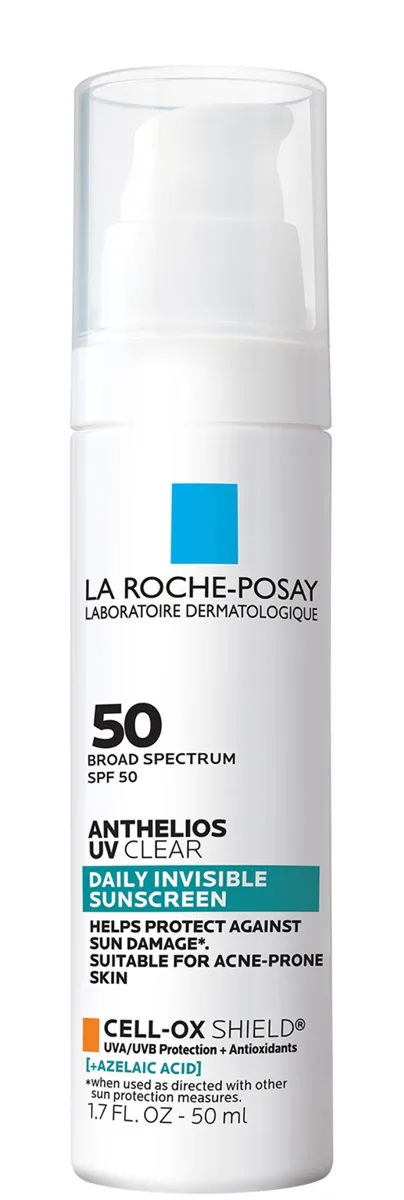 Derm Office Staple
 Anthelios UV Clear Sunscreen SPF 50
One of the only US chemical sunscreens that genuinely earns its 'for sensitive and breakout-prone skin' positioning. A photostable Anthelios filter system paired with a legitimate azelaic acid dose in a lightweight serum-fluid that disappears on every skin tone. Excellent for rosacea, acne, and post-inflammatory hyperpigmentation — and probably the single best daily sunscreen in the La Roche-Posay US lineup for those conditions.
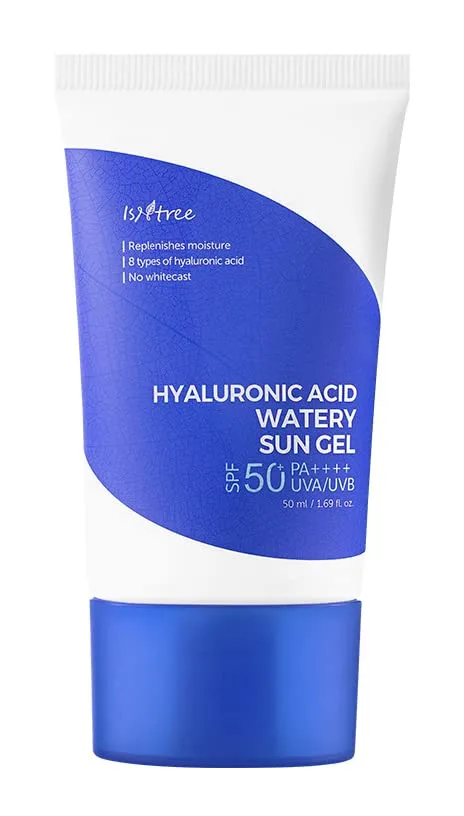 K-Beauty Daily SPF Standout
 Hyaluronic Acid Watery Sun Gel SPF 50+
One of the strongest everyday K-beauty sunscreens in the international market — modern European filters, no white cast, fragrance-free, niacinamide-boosted, and built around the brand's signature six-weight HA complex. At twenty-two dollars for 50ml, it's a case study in how much better a daily sunscreen can be when the formulator cares about both protection and wearability.
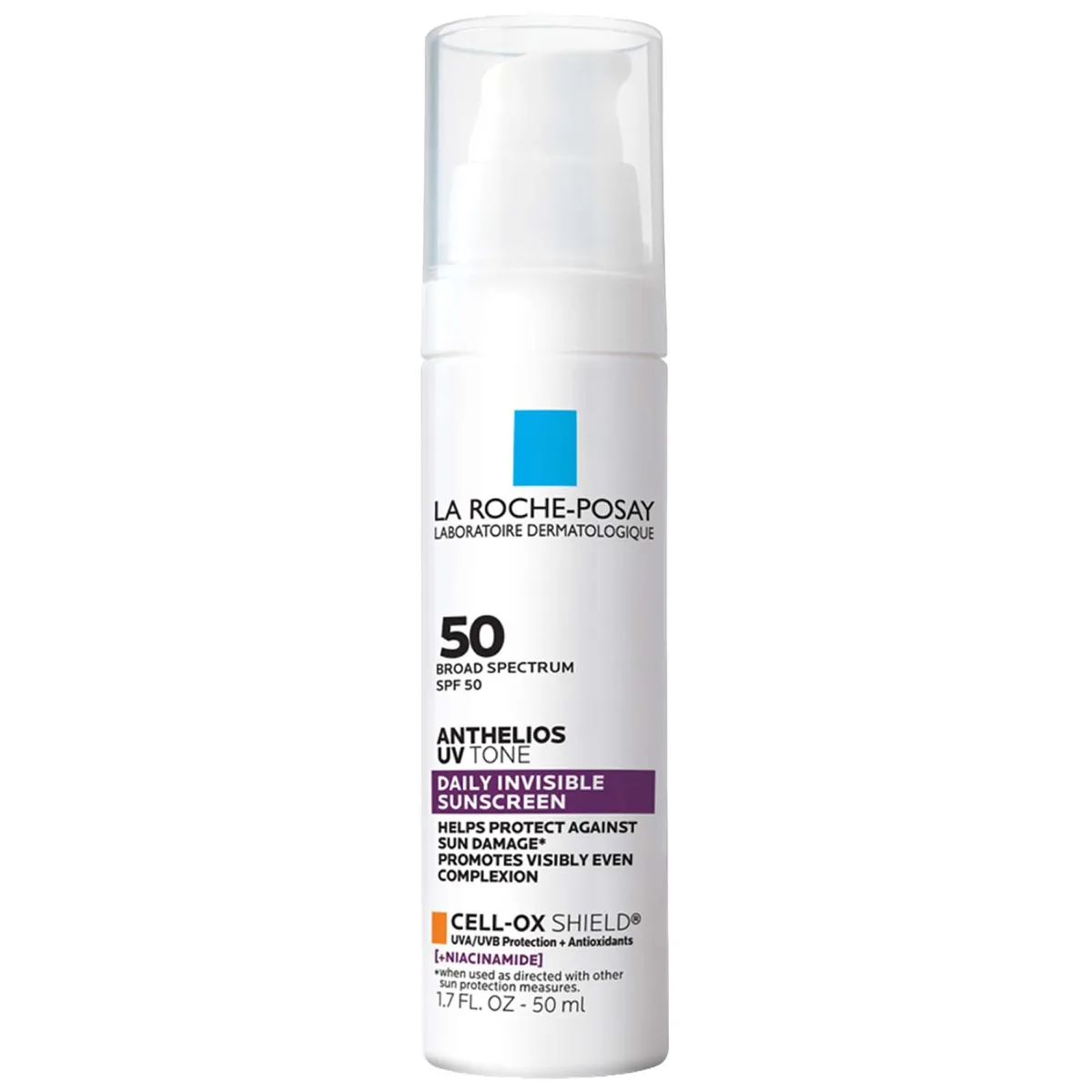 Derm Office Staple
 Anthelios UV Tone Daily Invisible Sunscreen SPF 50
La Roche-Posay's most thoughtful answer yet for hyperpigmentation-prone skin that needs daily SPF. A photostable avobenzone system reinforced with Oxynex ST, paired with a meaningful dose of niacinamide, in a serum-fluid base that goes on invisible on every skin tone. Expensive for 1.7 oz but legitimately well-built — and a rare chemical sunscreen that earns its 'for dark spots' marketing.
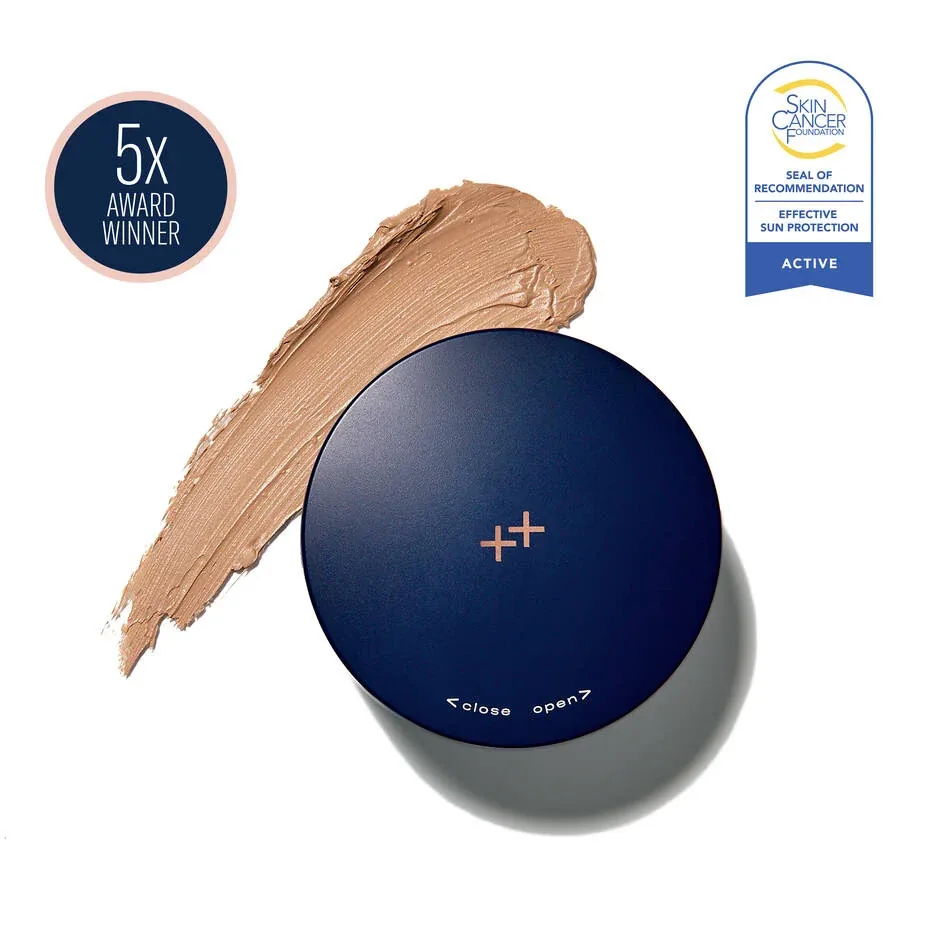 Melasma-Grade Mineral Sunscreen
 sunbetter TONE SMART SPF 68
One of the most clinically useful tinted mineral sunscreens in the professional category. SPF 68 from a 100% mineral formula, iron oxide tint that blocks visible light for melasma protection, and an unusually lightweight texture that doesn't feel like you're wearing high-concentration zinc. For patients with melasma or post-inflammatory hyperpigmentation, this is the category benchmark — and it's earned its Allure Best of Beauty wins.
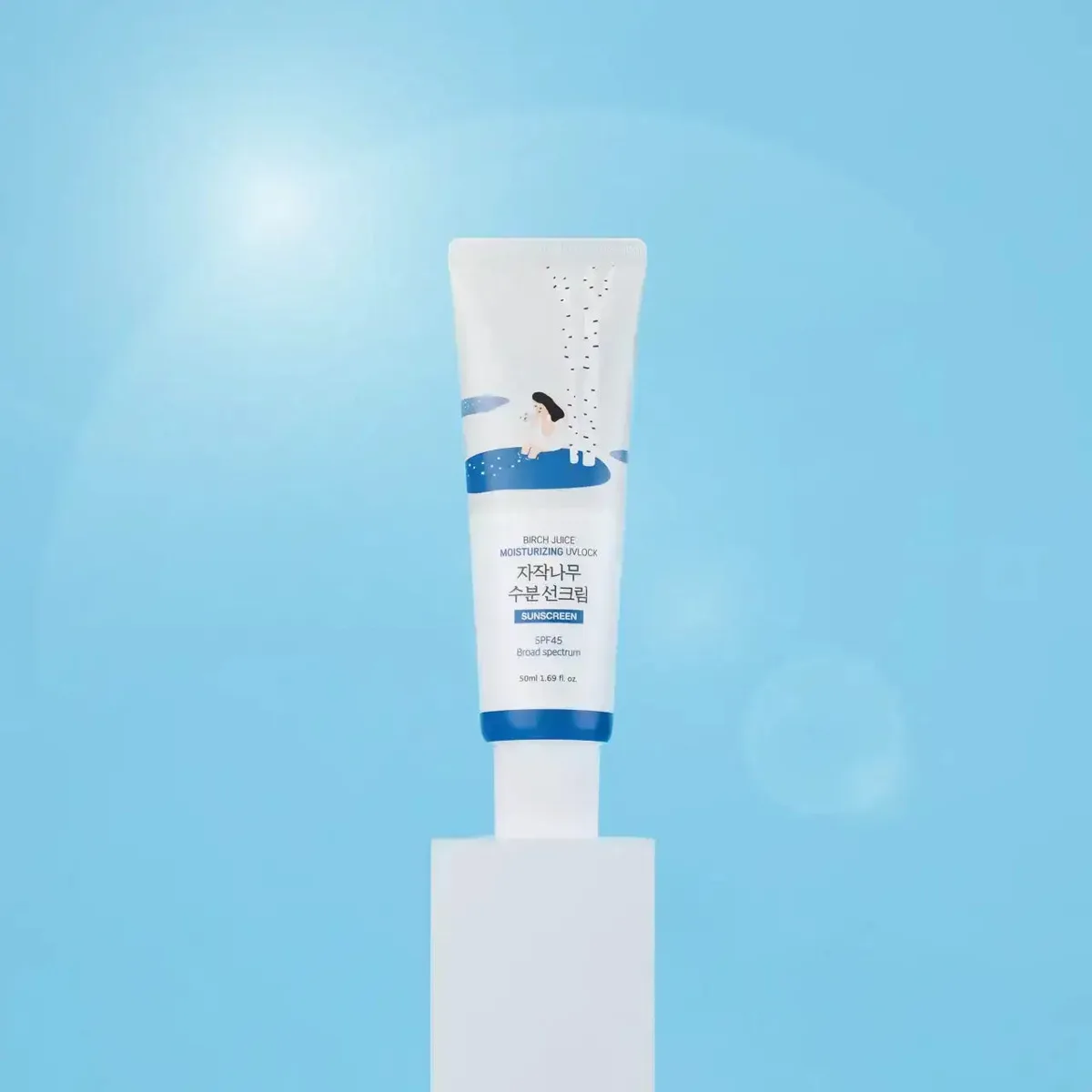 K-Beauty Cult Favorite
 Birch Juice Moisturizing Sun Cream SPF 50+
One of the best hybrid sunscreens in K-beauty right now — a 70% birch sap base, modern UVA filters you can't get in the US, and a finish that wears like a lightweight moisturizer. Broadly compatible, well-priced, and genuinely pleasant to apply, with minor tradeoffs for oily and fungal-acne-prone users.
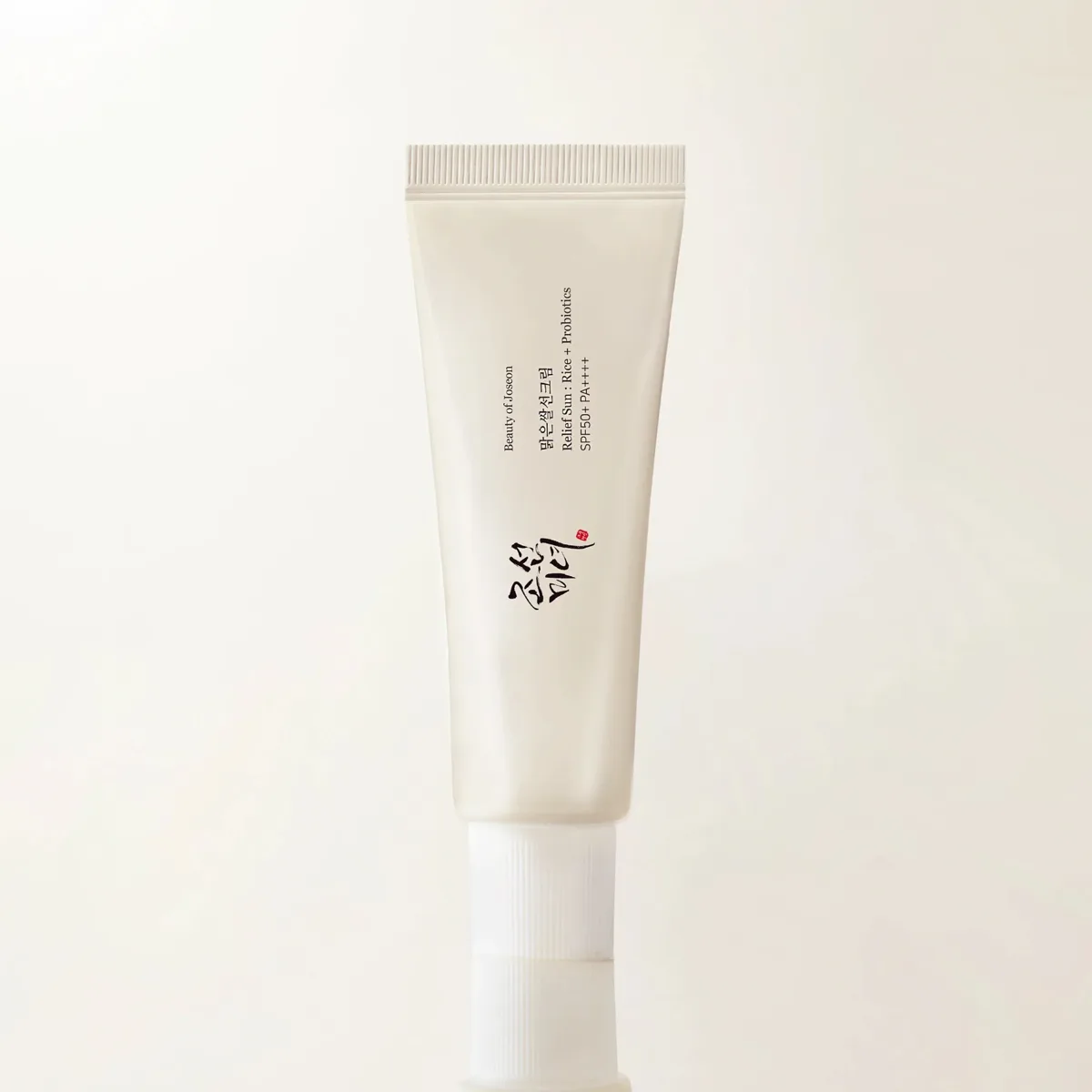 The K-Beauty Sunscreen That Changed Everything
 Relief Sun: Rice + Probiotics SPF 50+
The sunscreen that rewrote the rules for what a $14 product could deliver. With independently verified SPF 50+, 30% rice extract, niacinamide, and a probiotic ferment complex, it offers protection and skincare benefits that rival products three times its price. The texture that feels like wearing nothing on your face is the reason it went viral — and stayed there.