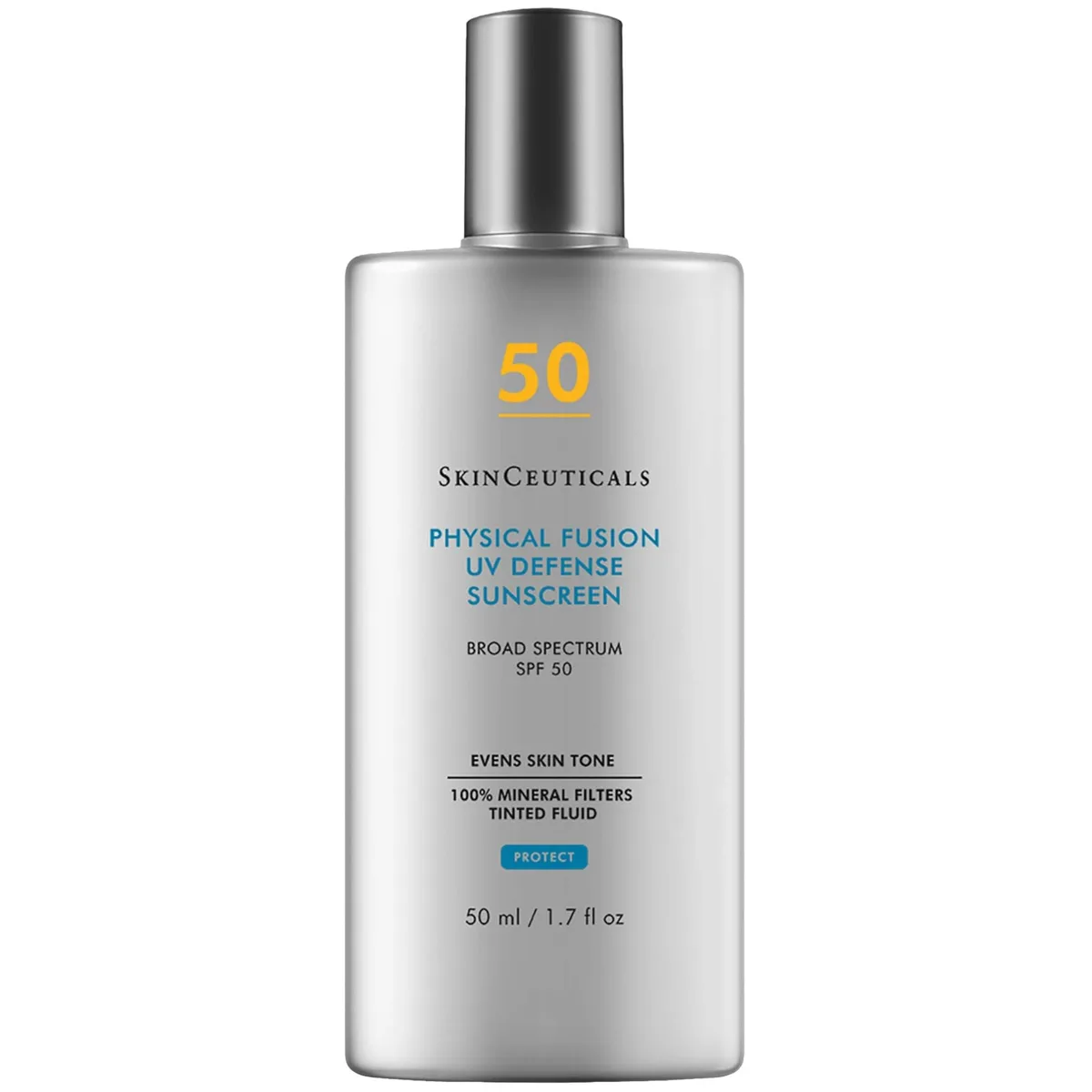
Physical Fusion UV Defense is SkinCeuticals' 100% mineral tinted SPF 50, built around titanium dioxide and zinc oxide with a universal iron oxide tint. It is one of the most consistently recommended sunscreens in dermatology for melasma and rosacea patients — genuinely well-built, broadly suitable, and capable of replacing foundation for many users.
Physical Fusion UV Defense SPF 50
Physical Fusion UV Defense is SkinCeuticals' 100% mineral tinted SPF 50, built around titanium dioxide and zinc oxide with a universal iron oxide tint. It is one of the most consistently recommended sunscreens in dermatology for melasma and rosacea patients — genuinely well-built, broadly suitable, and capable of replacing foundation for many users.
Score Breakdown
Where this product gains points and where it loses them — broken down across the four scoring pillars.
One of the most consistently recommended tinted mineral SPFs in dermatology — 100% mineral filters, universal tint, and strong photoprotection for melasma and hyperpigmentation patients. Price is high versus drugstore alternatives but defensible for the category.
Pros & Cons
- ✓100% mineral filter system safe for sensitive skin and rosacea
- ✓Iron oxide tint provides visible light and blue light protection
- ✓Universal tint blends across a wide range of skin tones
- ✓No white cast despite being mineral SPF 50
- ✓Fragrance-free and pregnancy-friendly
- ✓Can replace foundation for many users
- ✓Clinically validated for melasma sun protection
- ✗Tint is too dark for very fair skin tones
- ✗Tint is too light and warm for very deep skin tones
- ✗Expensive compared to drugstore mineral sunscreens
- ✗1.7 oz bottle runs out within 6-8 weeks of daily use
- ✗Can pill with certain silicone-rich serums underneath
Full Review
For decades, mineral sunscreen was a cruel joke played on anyone whose skin was not porcelain-fair. The options were genuinely bad: either accept a heavy white cast that made you look like you had dusted your face with flour, or use a tinted mineral sunscreen that matched one specific shade and clashed horribly with everyone outside that narrow range. Dermatologists recommended mineral sunscreens for sensitive skin, rosacea, and especially melasma — all conditions where chemical filters were not ideal — but then patients would come back and quietly abandon the sunscreen because they could not bear to look at themselves in the mirror. That was the state of the category until around 2011, when SkinCeuticals launched Physical Fusion and solved the problem in a way that was not obvious anyone could solve.
The trick turns out to be iron oxides. Not as a color trick, although the color helps, but as a specific cosmetic pigment strategy: a carefully tuned blend of red, yellow, and black iron oxides dispersed through the mineral sunscreen base in a way that produces a single universal tint that blends across a wide range of skin tones rather than matching any one of them exactly. The science of why this works involves both basic color theory and the fact that iron oxides themselves absorb visible light — which is separately important for melasma patients, because visible light (including the blue light from screens and the high-energy visible light in sunlight) is now recognized as a significant trigger for melasma and post-inflammatory hyperpigmentation. A standard non-tinted mineral sunscreen protects against UV but does nothing against visible light. Physical Fusion protects against both.
The filter system is straightforward and well-executed: 6% titanium dioxide paired with 5% zinc oxide, delivering broad-spectrum SPF 50 coverage that includes deep UVA-I protection. The formulation uses a silicone and isododecane base to create a fluid, blendable texture that is dramatically lighter than the heavy paste most mineral SPFs used to be. Artemia extract and small amounts of vitamin E and vitamin C derivatives appear in the supporting cast — they are not doing heavy lifting, but they contribute to the brand's broader photoprotection positioning. The overall formulation is clean, minimal, and focused on doing the sunscreen job well rather than trying to be a serum and SPF hybrid.
On skin, the experience is genuinely impressive. It squeezes out as a light tan fluid that spreads across the face with minimal resistance and blends into a universal warm-neutral tone that works surprisingly well on light-medium to medium-deep skin. The finish is natural — not matte, not dewy, just skin — and it settles within a minute into something that looks like healthy skin rather than a sunscreen layer. Many users find it can replace foundation entirely for light makeup days, which is not a small thing when you consider how often sunscreen and foundation fight each other. It layers cleanly under concealer and powder for users who want more coverage.
The melasma use case is where Physical Fusion has become genuinely load-bearing in dermatology practice. Treatment for melasma is a long game involving hydroquinone or other pigment-inhibiting agents, strict sun avoidance, and religious daily sunscreen use — and the sunscreen has to protect against visible light to meaningfully move the needle, because UV avoidance alone is not enough. Physical Fusion's iron oxide content makes it one of the handful of products dermatologists can recommend for this specific purpose, and the consistency of the formulation over fourteen years on market means patients can count on the same product being available when they need to reorder.
The real limits of this sunscreen are at the extremes of the skin tone spectrum. Very fair skin will find the tint slightly too dark and slightly too warm — it can create a faintly tanned appearance that some users like and others find off. Very deep skin tones will find the tint too light and too warm, and will see a grayish cast that is better avoided. For those users, the mineral SPF market has improved dramatically since 2011 and there are better options: Black Girl Sunscreen, Unsun, Supergoop Mineral Mattescreen in darker shades, and several of the Asian tinted options in pharmacy brands. Physical Fusion's universal tint is a middle-of-the-road solution, and that is both its strength and its boundary.
The price — forty-two dollars for 1.7 ounces — is higher than drugstore mineral sunscreens but reasonable within the clinical brand category and honestly reasonable for the category generally. Supergoop Mineral Mattescreen is similar pricing. Colorescience mineral SPFs are comparable or higher. Compared to drugstore options like La Roche-Posay Anthelios Mineral or EltaMD UV Elements, Physical Fusion is more expensive but also more consistent in the tint-blending department. For the right buyer — sensitive skin, rosacea, melasma, or just someone who wants a mineral SPF that does not leave a cast — the price is earned.
The honest verdict is that Physical Fusion is one of the genuinely excellent SkinCeuticals products where the price makes sense. It solves a specific, important problem for a specific, important set of users, and it has been solving it reliably for fourteen years. The only reason not to buy it is if you are outside its skin tone range or if you prefer chemical sunscreens for cosmetic reasons. Otherwise, this is one of the easier clinical-brand recommendations in the SPF category.
Formula
Key Ingredients
The hero actives that drive this product's performance.
| Ingredient | Function | Evidence |
|---|---|---|
| Titanium Dioxide (6.0%) | The primary mineral UV filter in this sunscreen, providing broad-spectrum protection across UVA and UVB wavelengths. Its slightly more refined particle size is what allows the tinted formulation to avoid the heavy white cast typical of older mineral sunscreens. | well-established |
| Zinc Oxide (5.0%) | The second mineral filter, paired with titanium dioxide to extend UVA coverage deeper into the UVA-I range. This combination is why Physical Fusion qualifies as broad-spectrum mineral SPF 50 rather than requiring any chemical filters. | well-established |
| Iron Oxides | The tint ingredient — iron oxides are included both for cosmetic blending and, more importantly, for their ability to block visible light (particularly blue light), which is relevant for patients with melasma and post-inflammatory hyperpigmentation. | well-established |
| Artemia Extract | A marine-derived ingredient included to help skin cope with heat and UV stress — it is not the primary UV defense but contributes to the brand's positioning around photoprotection as a broader concept than just filter SPF numbers. | emerging |
Full INCI List
Active: Titanium Dioxide 6.0%, Zinc Oxide 5.0%. Inactive: Water, Isododecane, Styrene/Acrylates Copolymer, Cyclopentasiloxane, Dicaprylyl Ether, Butyloctyl Salicylate, Glycerin, Silica, Polyhydroxystearic Acid, Dimethicone, Aluminum Hydroxide, Stearic Acid, Nylon-12, Disteardimonium Hectorite, Iron Oxides, PEG-9 Polydimethylsiloxyethyl Dimethicone, Sorbitan Oleate, Propylene Carbonate, Ethylhexyl Palmitate, Artemia Extract, Tocopherol, Tocopheryl Acetate, Ascorbyl Glucoside, Glycine Soja (Soybean) Oil, Phenoxyethanol, Triethoxycaprylylsilane, Sodium Chloride, Caprylyl Glycol, Disodium EDTA, Citric Acid
Product Flags
✓ Fragrance Free✓ Alcohol Free✓ Oil Free✗ Silicone Free✓ Paraben Free✓ Sulfate Free✗ Cruelty Free✗ Vegan✓ Fungal Acne Safe
Compatibility
Skin Match
Best For
sensitive normal combination dry
Works For
Not Ideal For
Addresses These Conditions
sun damage melasma hyperpigmentation rosacea aging
Routine Step
sunscreen
Time of Day
AM
Pregnancy Safe
Yes ✓
Layering Tips
Shake well before use — the tinted mineral pigments can settle. Apply generously as the final morning step, ideally 15 minutes before sun exposure. Reapply every 2 hours with outdoor exposure.
Results Timeline
Immediate photoprotection on application. The tint provides same-day visible evening of skin tone. Long-term benefits — reduced melasma, hyperpigmentation prevention, photoaging support — develop with daily year-round use.
Pairs Well With
skinceuticals-ce-ferulicskinceuticals-phloretin-cfretinoids
Sample AM Routine
- Cleanser
- Phloretin CF
- Hydrating B5 Gel
- SkinCeuticals Physical Fusion UV Defense SPF 50
Sample PM Routine
- Cleanser
- Retinol
- Moisturizer
Evidence
Who Should Skip
- Tint is too dark for very fair skin tones
- Tint is too light and warm for very deep skin tones
- Expensive compared to drugstore mineral sunscreens
- 1.7 oz bottle runs out within 6-8 weeks of daily use
Science & Expert Perspective
The Science
The filter system here is a standard and well-validated mineral SPF 50: titanium dioxide at 6% and zinc oxide at 5%. Both minerals have extensive clinical evidence supporting their use as broad-spectrum UV filters, and the combination is particularly well-suited for achieving deeper UVA-I coverage than chemical-only formulations. Titanium dioxide is especially effective in the UVB range, while zinc oxide extends protection into the UVA-I range (320-400 nm), making the combination one of the most photostable options available. What makes Physical Fusion clinically interesting is not the mineral filters themselves but the iron oxide content. Published research on melasma and post-inflammatory hyperpigmentation has established that visible light — particularly the high-energy blue wavelengths — can trigger and worsen pigmentation in susceptible skin, independently of UV exposure. Iron oxides are one of the few cosmetic pigments that effectively block visible light, which is why tinted sunscreens containing iron oxides are now considered standard of care in melasma treatment protocols. Studies comparing tinted and non-tinted sunscreens in melasma patients have shown meaningfully better pigmentation control with the tinted versions. The artemia extract, a marine-derived ingredient, contributes a supporting antioxidant and heat shock protein story that is plausible but has less robust independent evidence than the filter system itself. The overall formulation is well-validated at both the ingredient and category level for its intended use cases.
Dermatologist Perspective
Board-certified dermatologists commonly recommend Physical Fusion UV Defense as a first-line mineral sunscreen for patients with melasma, rosacea, sensitive skin, and post-inflammatory hyperpigmentation. It is frequently mentioned in dermatology practice as one of the handful of tinted mineral sunscreens with both excellent tolerability and meaningful visible light protection from its iron oxide content. Dermatologists treating melasma often make this sunscreen a non-negotiable part of the treatment protocol, alongside pigment-inhibiting agents and strict sun avoidance, because UV protection alone does not adequately manage the condition without visible light protection as well. For pregnant patients, it is often recommended because of its 100% mineral filter system and the absence of any pregnancy-restricted ingredients. Patients with very fair or very deep skin tones are sometimes redirected to alternatives with better shade matching.
Guidance
Usage Guide
How to Use
Shake the tube well before each use — the mineral pigments can settle over time. Apply a generous amount (at least a quarter-teaspoon for face, more for neck and chest) as the final step of your morning routine, ideally 15 minutes before sun exposure. Blend across face and neck, paying attention to areas prone to melasma (cheeks, upper lip, forehead). Let it set for a minute before layering makeup if desired. Reapply every two hours with outdoor exposure, or use a powder or stick sunscreen over makeup for touch-ups during the day. Not designed for sport or water-resistant use — swap for a water-resistant sunscreen for beach or swim days.
Value Assessment
At $42 for 1.7 oz, Physical Fusion UV Defense is priced competitively within the clinical mineral sunscreen category. It is more expensive than drugstore mineral options like La Roche-Posay Anthelios Mineral or EltaMD UV Elements, but comparable to Supergoop Mineral Mattescreen and Colorescience mineral SPFs. Given the iron oxide tint content, the universal shade-matching, and the fourteen-year track record in dermatology offices, the price is earned for the specific use cases this sunscreen was built for. The per-bottle lifespan of 6-8 weeks at the recommended application dose is reasonable for the category. Compared to cheaper alternatives, Physical Fusion's specific advantages are the tint quality and the iron oxide visible light protection — for melasma patients specifically, these justify the premium.
Who Should Buy
Sensitive skin, rosacea-prone skin, and anyone managing melasma or post-inflammatory hyperpigmentation. Also ideal for pregnant users seeking a mineral SPF, and for anyone who wants a sunscreen that can replace or layer under foundation. Best suited for light-medium to medium-deep skin tones.
Who Should Skip
Very fair users may find the tint too dark, and very deep skin tones will find it too light and warm — choose a shade-matched mineral SPF instead. Users who strictly want no tint at all should choose Light Moisture UV Defense or another untinted option.
Ready to try SkinCeuticals Physical Fusion UV Defense SPF 50?
Details
Details
Texture
Fluid tinted lotion that spreads easily and absorbs into a natural finish
Scent
Essentially unscented
Packaging
White tube with flip-top cap
Finish
naturalnon-greasyfast-absorbing
What to Expect on First Use
Blends into skin with a universal beige tint that adjusts to most skin tones within the mid-range. Skin immediately looks more even. No stinging, no white cast, and the finish settles into a natural appearance that works under makeup or alone.
How Long It Lasts
6-8 weeks with daily full-face application at the recommended dose
Period After Opening
12 months
Best Season
All Year
Background
The Why
Physical Fusion UV Defense launched in 2011 as SkinCeuticals' answer to the longstanding problem of mineral sunscreens leaving a white cast on anything but the fairest skin. The formulation combined titanium dioxide and zinc oxide with a carefully selected iron oxide tint blend designed to disappear across a range of skin tones, and it quickly became a staple in dermatology offices for patients with melasma, rosacea, and sensitive skin.
About SkinCeuticals Legacy Brand (20+ years)
SkinCeuticals was founded in 1997 based on Dr. Sheldon Pinnell's antioxidant research at Duke University. Its sunscreen portfolio is widely distributed through dermatology offices and commonly recommended for sensitive skin and rosacea patients.
Brand founded: 1997 · Product launched: 2011
Myth vs. Reality
Myths & Misconceptions
Myth
Mineral sunscreens are less effective than chemical sunscreens.
Reality
At SPF 50 with titanium dioxide and zinc oxide, Physical Fusion provides the same level of broad-spectrum UV protection as chemical SPF 50 sunscreens. The main tradeoff is cosmetic feel, not efficacy — and the iron oxide tint in this formulation actually provides additional visible-light protection that chemical sunscreens do not.
FAQ
Frequently Asked Questions
Does Physical Fusion UV Defense work for melasma?
Yes — this is one of the most commonly recommended sunscreens for melasma patients, specifically because the iron oxide tint provides visible light and blue light protection in addition to the UV protection. Visible light is a known trigger for melasma, and tinted mineral sunscreens are considered standard of care for the condition.
Is Physical Fusion tinted universally or does it match skin tones?
It has a single universal tint designed to blend across a range of skin tones in the medium range. It works for light-medium to medium-deep tones but is too dark for very fair skin and may be too light for very deep skin tones.
Is Physical Fusion good for sensitive skin?
Yes — the 100% mineral filter system (titanium dioxide + zinc oxide) makes it a common recommendation for sensitive, rosacea-prone, and reactive skin. It contains no chemical UV filters, no fragrance, and no common sensitizers.
Can I use Physical Fusion under makeup?
Yes — it layers well under foundation and powder, and many users find it can replace foundation entirely thanks to the universal tint. Apply generously, let it set for a minute, then layer makeup if desired.
Is Physical Fusion pregnancy-safe?
Yes — mineral sunscreens with titanium dioxide and zinc oxide are widely considered the safest option during pregnancy. No chemical UV filters, no retinoids, no common pregnancy-restricted ingredients.
How does Physical Fusion compare to Light Moisture UV Defense?
Physical Fusion is a 100% mineral sunscreen with a universal tint, best for sensitive skin and melasma. Light Moisture UV Defense is a chemical sunscreen with no tint and a lighter finish, best for makeup layering and users who want no color. Both hit SPF 50 but serve different preferences.
Community
Community Voices
Common Praise
"Tint works on a wide range of skin tones"
"No white cast despite being 100% mineral"
"Good for sensitive and rosacea skin"
"Helps with melasma under sun protection"
"Layers well under makeup"
Common Complaints
"Expensive for a sunscreen"
"Tint too dark for very fair skin"
"Tint too light for deep skin tones"
"Small bottle"
"Can pill with certain serums"
Notable Endorsements
Widely recommended for rosacea, melasma, and sensitive skin patientsCommonly used in dermatology office melasma protocols
Appears In
best mineral sunscreen for melasma best tinted sunscreen spf 50 best sunscreen for rosacea best sunscreen for sensitive skin
Related Conditions
sun damage melasma hyperpigmentation rosacea aging
Related Ingredients
You Might Also Like
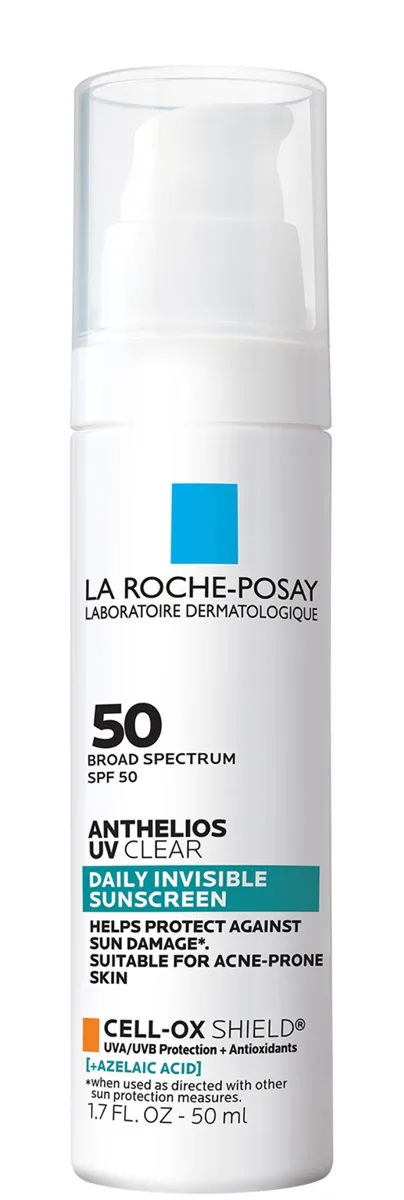 Derm Office Staple
 Anthelios UV Clear Sunscreen SPF 50
One of the only US chemical sunscreens that genuinely earns its 'for sensitive and breakout-prone skin' positioning. A photostable Anthelios filter system paired with a legitimate azelaic acid dose in a lightweight serum-fluid that disappears on every skin tone. Excellent for rosacea, acne, and post-inflammatory hyperpigmentation — and probably the single best daily sunscreen in the La Roche-Posay US lineup for those conditions.
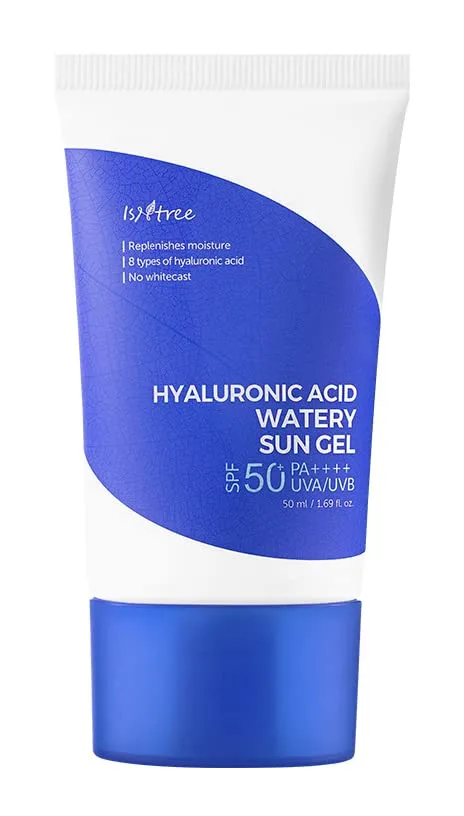 K-Beauty Daily SPF Standout
 Hyaluronic Acid Watery Sun Gel SPF 50+
One of the strongest everyday K-beauty sunscreens in the international market — modern European filters, no white cast, fragrance-free, niacinamide-boosted, and built around the brand's signature six-weight HA complex. At twenty-two dollars for 50ml, it's a case study in how much better a daily sunscreen can be when the formulator cares about both protection and wearability.
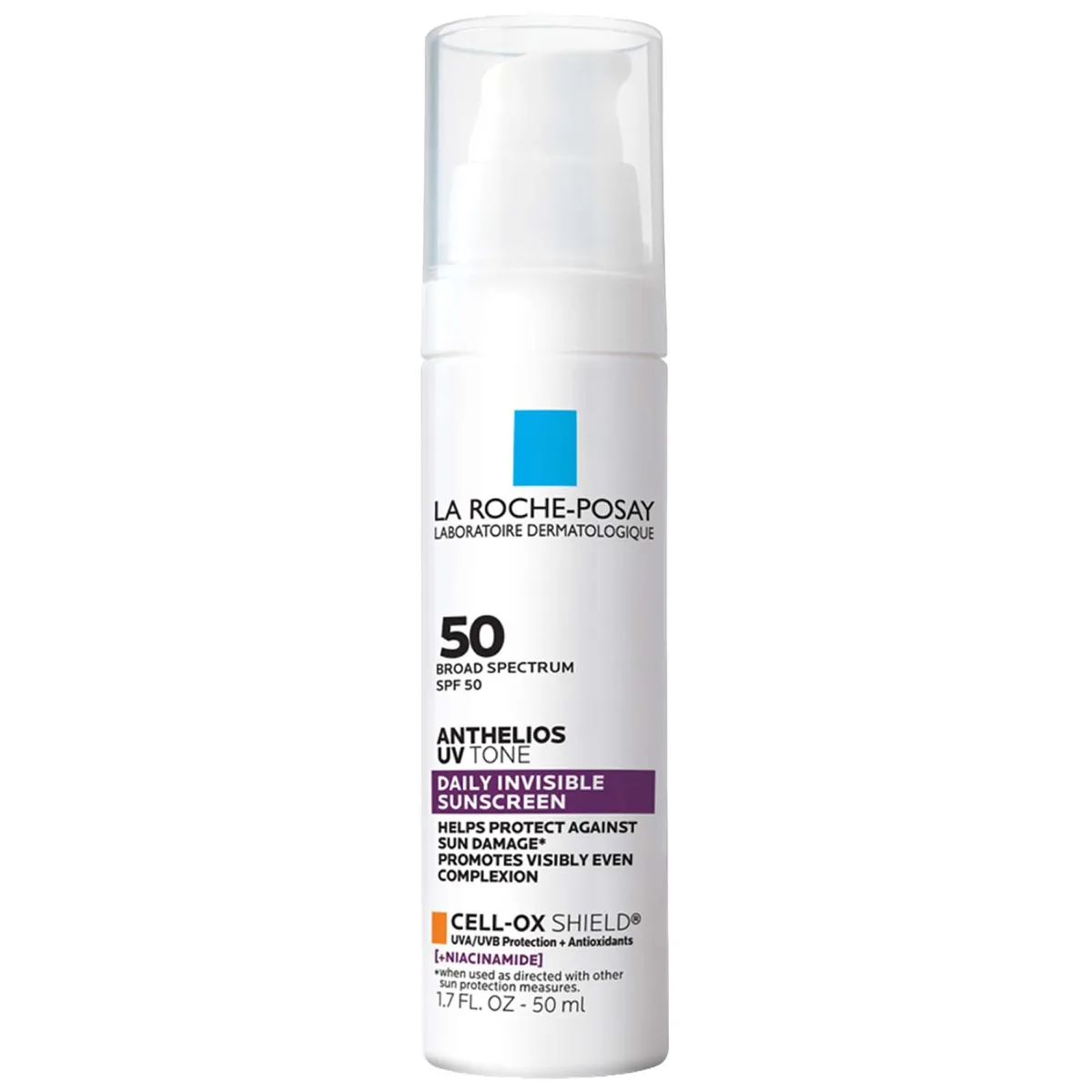 Derm Office Staple
 Anthelios UV Tone Daily Invisible Sunscreen SPF 50
La Roche-Posay's most thoughtful answer yet for hyperpigmentation-prone skin that needs daily SPF. A photostable avobenzone system reinforced with Oxynex ST, paired with a meaningful dose of niacinamide, in a serum-fluid base that goes on invisible on every skin tone. Expensive for 1.7 oz but legitimately well-built — and a rare chemical sunscreen that earns its 'for dark spots' marketing.
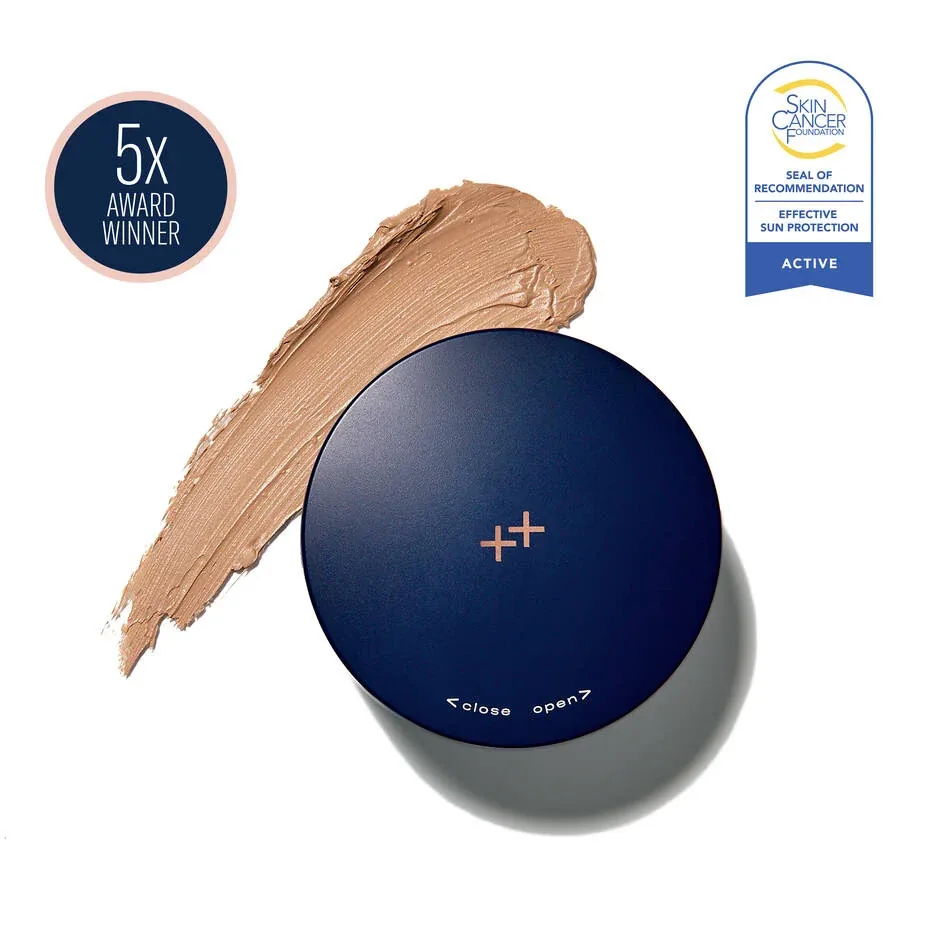 Melasma-Grade Mineral Sunscreen
 sunbetter TONE SMART SPF 68
One of the most clinically useful tinted mineral sunscreens in the professional category. SPF 68 from a 100% mineral formula, iron oxide tint that blocks visible light for melasma protection, and an unusually lightweight texture that doesn't feel like you're wearing high-concentration zinc. For patients with melasma or post-inflammatory hyperpigmentation, this is the category benchmark — and it's earned its Allure Best of Beauty wins.
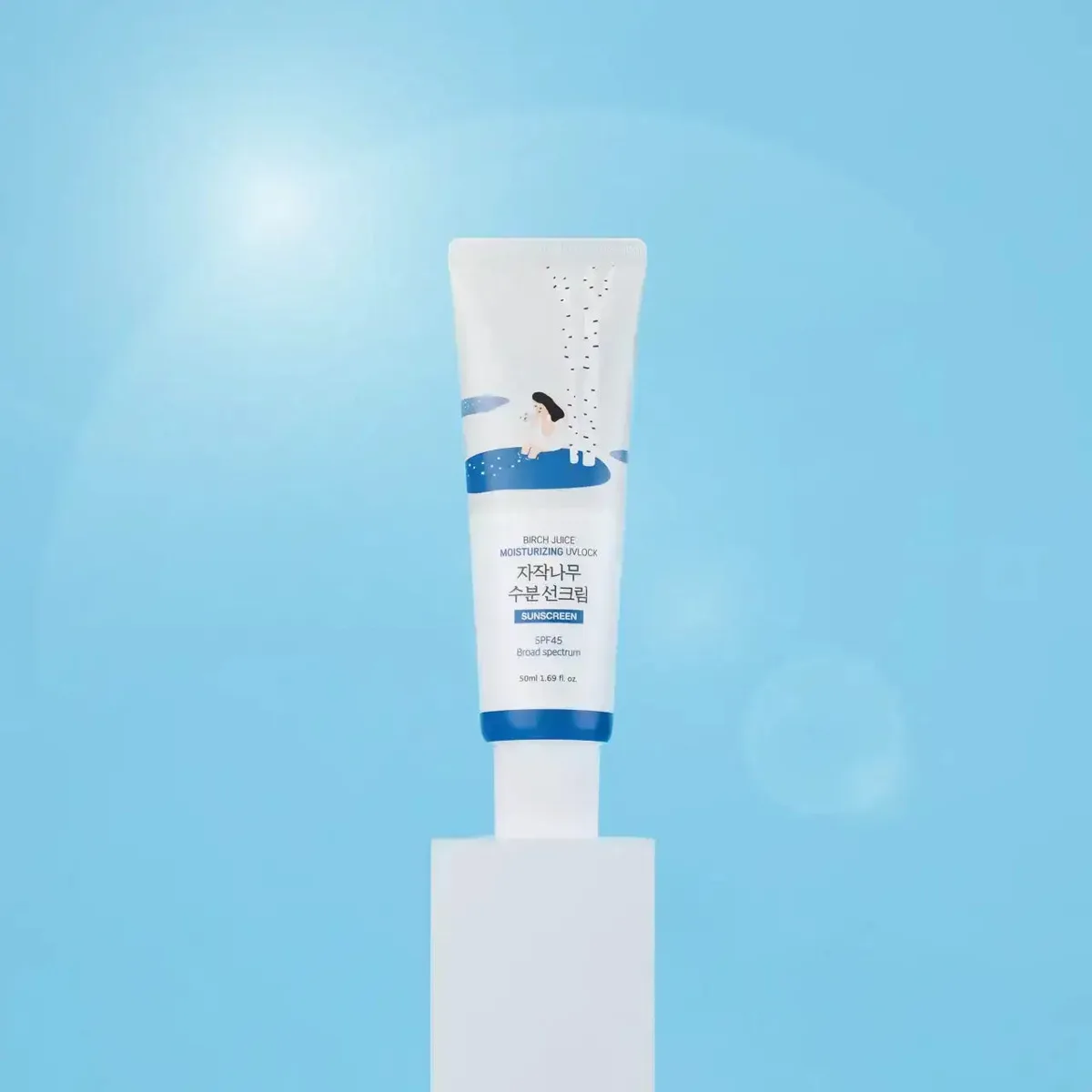 K-Beauty Cult Favorite
 Birch Juice Moisturizing Sun Cream SPF 50+
One of the best hybrid sunscreens in K-beauty right now — a 70% birch sap base, modern UVA filters you can't get in the US, and a finish that wears like a lightweight moisturizer. Broadly compatible, well-priced, and genuinely pleasant to apply, with minor tradeoffs for oily and fungal-acne-prone users.
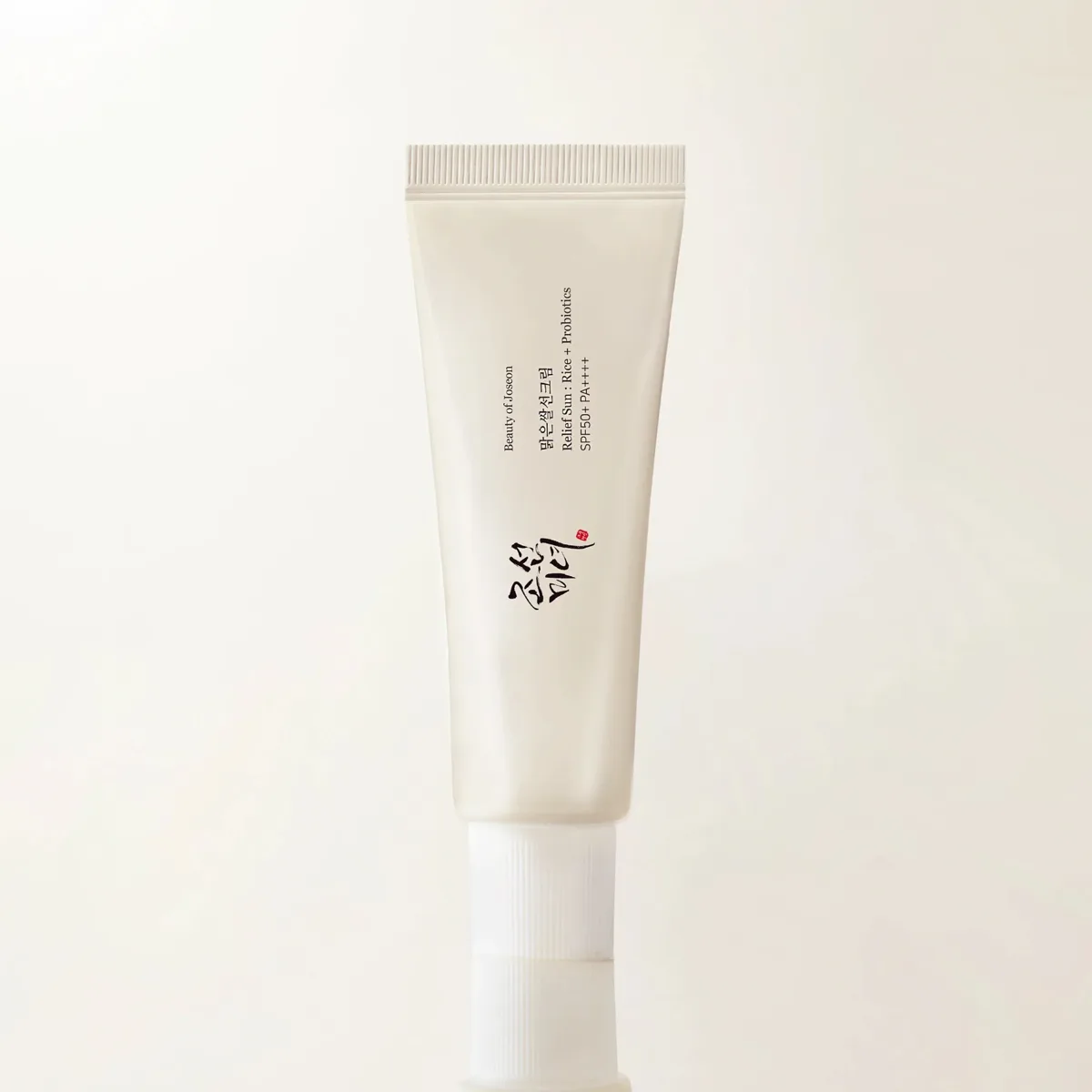 The K-Beauty Sunscreen That Changed Everything
 Relief Sun: Rice + Probiotics SPF 50+
The sunscreen that rewrote the rules for what a $14 product could deliver. With independently verified SPF 50+, 30% rice extract, niacinamide, and a probiotic ferment complex, it offers protection and skincare benefits that rival products three times its price. The texture that feels like wearing nothing on your face is the reason it went viral — and stayed there.
This review reflects our independent analysis of publicly available ingredient data, manufacturer claims, and verified user reviews. We are reader-supported — Amazon links may earn us a commission at no cost to you. We do not accept paid placements; rankings are based solely on the evidence.