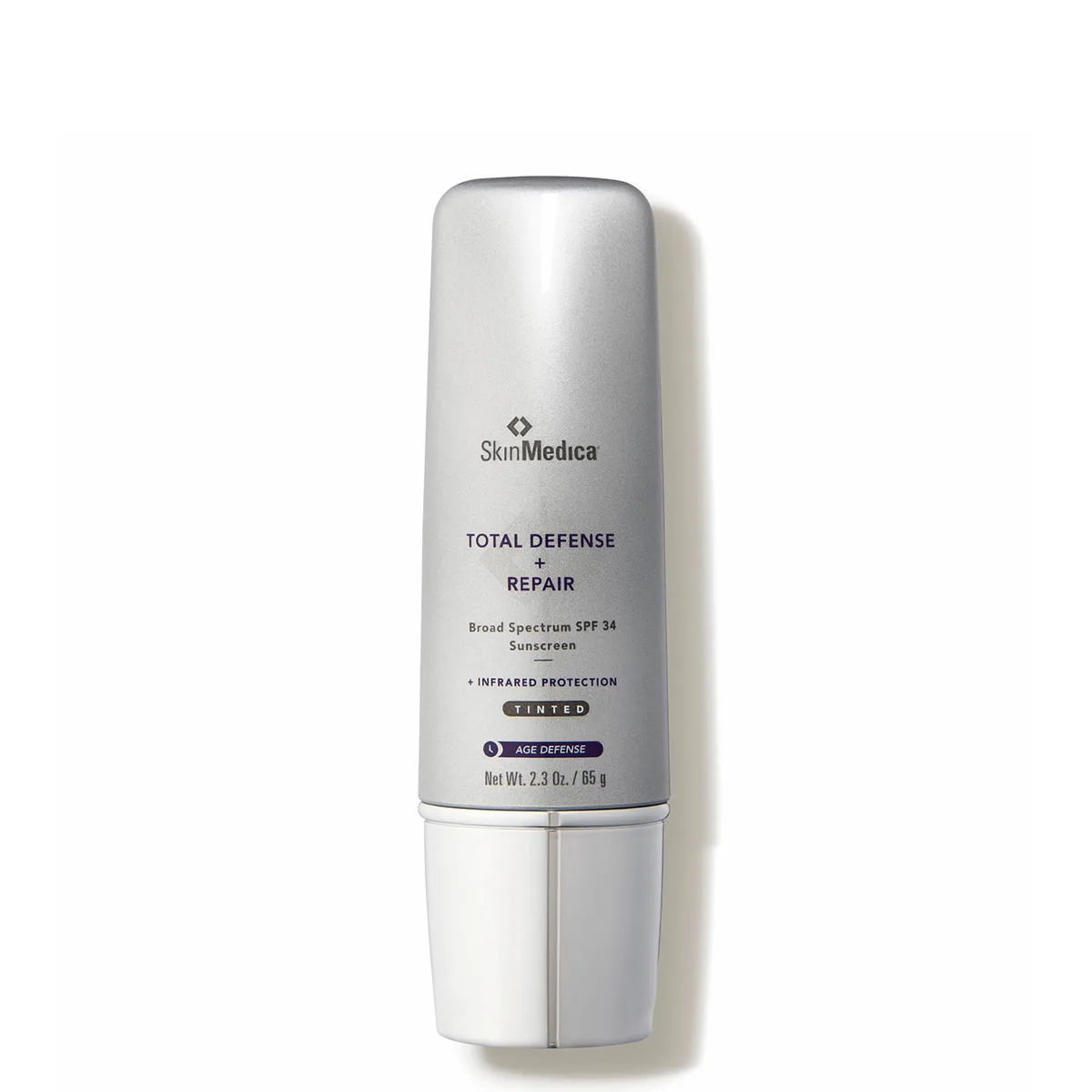
The tinted version of Total Defense + Repair is the one to reach for if you are dealing with melasma or hyperpigmentation. Iron oxides, topical melanin, and niacinamide combine to give this formula real visible-light protection the untinted skips. It still carries the octinoxate and SPF 34 caveats, and the tint is limited in shade range.
Total Defense + Repair SPF 34 Tinted
The tinted version of Total Defense + Repair is the one to reach for if you are dealing with melasma or hyperpigmentation. Iron oxides, topical melanin, and niacinamide combine to give this formula real visible-light protection the untinted skips. It still carries the octinoxate and SPF 34 caveats, and the tint is limited in shade range.
Score Breakdown
Where this product gains points and where it loses them — broken down across the four scoring pillars.
The tinted version is noticeably better than the untinted for anyone dealing with melasma or hyperpigmentation, thanks to the iron oxide visible-light defense. The octinoxate content and SPF 34 rating remain drawbacks, and the tint is limited to light-to-medium skin tones.
Pros & Cons
- ✓Iron oxide pigments provide real visible light protection, the gold standard for melasma defense
- ✓Four-filter hybrid system with 8% zinc and 3.5% titanium for broad UVA and UVB coverage
- ✓Topical melanin and niacinamide reinforce the pigment-defense story from multiple angles
- ✓SOL-IR antioxidant complex addresses oxidative damage from infrared and visible light
- ✓Cosmetically elegant — sheer tint that blurs tone without looking like foundation
- ✓Works as a standalone daytime complexion product or under makeup
- ✗Tint only suits light to medium skin tones — no expanded shade range
- ✗Contains octinoxate, not reef-friendly and restricted in Hawaii
- ✗SPF 34 is below the current SPF 50 baseline
- ✗$70 for 2.3 oz is expensive compared to newer tinted mineral options
- ✗Not ideal during pregnancy due to octinoxate
Full Review
For years, dermatologists recommending sunscreen to melasma patients had a quiet frustration: the best UV filters in the world could not fully stop pigmentation from getting worse in the summer, because melasma is not driven by UV alone. High-energy visible light — the blue-ish wavelengths of visible light you see all day from sunlight and even from screens — turns out to be a major contributor to melasma worsening, and most sunscreens do essentially nothing about it. Chemical filters work on UV. Mineral filters work on UV. Antioxidant complexes help with oxidative stress downstream, but they are a secondary line of defense. The one thing that had real published evidence for blocking visible light topically was a set of pigments you would already have in your cosmetics drawer: iron oxides. The tinted version of SkinMedica's Total Defense + Repair, launched shortly after the original untinted formula, is built around exactly that insight. It takes the same four-filter hybrid sunscreen base as the untinted version — zinc oxide, titanium dioxide, octinoxate, octisalate — and adds iron oxides (red, yellow, and black, the standard trio), topical melanin, and niacinamide to specifically target the pathways that contribute to melasma and post-inflammatory hyperpigmentation. This is not a cosmetic tint with incidental color. It is a pigment-protection system that happens to also look good on the skin. Cosmetically, the tint is sheer and mostly neutral, designed to work as a universal light-to-medium shade. On fair skin it reads as a subtle warm glow; on medium skin it blurs minor redness and tone unevenness without looking like foundation. Deeper skin tones are where the product runs into its limit — the tint can read slightly ashy or grey, and readers with deeper complexions are better served by brands like Supergoop, Paula's Choice, or EltaMD Elements that offer expanded shade ranges or by dedicated tinted mineral sunscreens in darker tones. SkinMedica has not meaningfully updated the shade range since the original launch, and that is the most significant aging issue with the product. Texturally, the formula is close to the untinted version: a lightweight cream-lotion that spreads smoothly, absorbs in about a minute, and leaves a natural soft-satin finish. It works well under makeup — better than many heavier tinted mineral options — and the iron oxides blur skin texture in a way that functions almost like a skin-finishing primer. On its own, it replaces light coverage foundation for most users who want an even, low-maintenance daytime look. Under foundation, it serves as a subtle color-correcting base that softens redness and evens tone before coverage goes on. The active story is where this version earns its place. Niacinamide has strong evidence for reducing melanosome transfer, which is one of the mechanisms by which skin develops visible hyperpigmentation. Iron oxides block visible light. Topical melanin adds a second layer of visible light defense. The SOL-IR Advanced Antioxidant Complex — ubiquinone, tocopherol, Dunaliella salina, Physalis, green tea, silver ear mushroom — addresses the oxidative damage downstream of any light exposure that does reach the skin. Stacking these mechanisms in one product gives the tinted version a case that the untinted simply does not have: if your primary goal is pigment control, this is the SKU to reach for. Now the caveats, because the base formula still has them. It still contains octinoxate, which is banned in Hawaii and restricted in other jurisdictions over coral reef concerns. It is still SPF 34, which is fine for controlled daily use but below the SPF 50 norm for aggressive photoprotection. It is still $70 for 2.3 ounces, which is steep. And it still is not the best choice during pregnancy or for readers who strictly prefer mineral-only sunscreens. The value math improves versus the untinted version, however, specifically because the iron oxides bring real added functionality — this version is not just the untinted formula with color, it is a meaningfully more protective product for pigment-prone skin. One more note worth making: if you have melasma and are reading this, consider it as part of a broader regimen rather than a standalone fix. A dedicated melasma protocol typically includes a daily tinted mineral or hybrid sunscreen, an evening tyrosinase inhibitor (hydroquinone, tranexamic acid, azelaic acid, or cysteamine), and strict sun avoidance during peak hours. This sunscreen handles one piece of that puzzle well, but it is not going to erase existing pigmentation on its own — that is the work of the leave-on actives you layer underneath.
Formula
Key Ingredients
The hero actives that drive this product's performance.
| Ingredient | Function | Evidence |
|---|---|---|
| Iron Oxides (CI 77491, 77492, 77499) | The defining addition of the tinted version, and the reason dermatologists often specifically recommend this SKU over the untinted. Iron oxides are the only widely available topical pigment that provides meaningful protection against high-energy visible light, which is a major driver of melasma and post-inflammatory hyperpigmentation. In this formula they provide both the light sheer tint and the visible-light defense layer. | well-established |
| Zinc Oxide 8% + Titanium Dioxide 3.5% + Octinoxate 7.5% + Octisalate 3% (8% zinc oxide, 3.5% titanium dioxide, 7.5% octinoxate, 3% octisalate) | Four-filter hybrid system. The addition of titanium dioxide alongside zinc oxide in the tinted version slightly strengthens the UVB side of the mineral component, while the chemical filters keep the cosmetic finish usable. Broader spectrum coverage than the untinted version. | well-established |
| SOL-IR Advanced Antioxidant Complex | The same proprietary blend used in the untinted version — ubiquinone, tocopherol, Dunaliella salina, Physalis angulata, green tea, and silver ear mushroom — positioned as supplementary defense against oxidative damage from infrared and visible light. Works alongside the iron oxide pigments for a more complete photoaging defense picture. | promising |
| Niacinamide | Included at a meaningful level for post-UV barrier support and as an adjunct to the melasma-prevention story. Niacinamide has evidence for reducing melanosome transfer, which makes it a particularly appropriate inclusion in a tinted sunscreen aimed at pigment-prone skin. | well-established |
| Topical Melanin | Absorbs visible light in the blue range, contributing a second layer of HEV defense alongside the iron oxides. In a tinted sunscreen aimed at hyperpigmentation, it reinforces the visible-light protection story that is the whole point of choosing this version over the untinted. | emerging |
Full INCI List
Active: Zinc Oxide 8.0%, Octinoxate 7.5%, Titanium Dioxide 3.5%, Octisalate 3.0%. Inactive: Aqua, Caprylic/Capric Triglyceride, Squalane, Silica, Glycerin, Niacinamide, Dimethicone, Glyceryl Stearate, PEG-100 Stearate, Cetostearyl Alcohol, Butyrospermum Parkii (Shea) Butter, Phenoxyethanol, Ceteareth-20, Batyl Alcohol, Iron Oxides (CI 77492), Hydroxyacetophenone, Polyhydroxystearic Acid, DL-Alpha-Tocopheryl Acetate, Physalis Angulata Extract, Butylene Glycol, Xanthan Gum, DL-Panthenol, C12-15 Alkyl Benzoate, Iron Oxides (CI 77491), Betaine, Ethylhexylglycerin, Disodium EDTA, Aminomethyl Propanol, Isostearic Acid, Camellia Sinensis Leaf Extract, Iron Oxides (CI 77499), Potassium Sorbate, Polygonum Aviculare Extract, PEG-12 Dimethicone, Ubiquinone Q10, Hydrolyzed Tremella Fuciformis Sporocarp Extract, Melanin, Dunaliella Salina Extract, Caprylyl Glycol, Tocopherols, Sorbic Acid
Product Flags
✓ Fragrance Free✓ Alcohol Free✗ Oil Free✗ Silicone Free✓ Paraben Free✓ Sulfate Free✗ Cruelty Free✗ Vegan✗ Fungal Acne Safe
Potential Irritants
octinoxate
Compatibility
Skin Match
Best For
Works For
Not Ideal For
Addresses These Conditions
melasma hyperpigmentation sun damage aging dark spots
Routine Step
sunscreen
Time of Day
AM
Pregnancy Safe
Unknown
Layering Tips
Apply as the last skincare step in the morning, over serums and moisturizer. The tint works best on light to medium skin tones — deeper skin tones should test before committing. Use enough to get visible coverage (roughly one-quarter to one-third teaspoon for the face) and reapply every two hours during sun exposure.
Results Timeline
Immediate protection and instant skin-evening effect from the tint. Over months of consistent daily use, most users with melasma or post-inflammatory hyperpigmentation report less darkening during sunny months and more stable pigment over time.
Pairs Well With
vitamin C serumniacinamide serumtranexamic acid serumTNS Advanced+ Serum
Sample AM Routine
- Cleanser
- Vitamin C serum
- TNS Advanced+ Serum
- Moisturizer
- Total Defense + Repair SPF 34 Tinted
Sample PM Routine
- Cleanser
- Tranexamic acid or retinol
- Moisturizer
Evidence
Science & Expert Perspective
The Science
The role of high-energy visible light in melasma and post-inflammatory hyperpigmentation has become one of the more important conversations in photoprotection research. Multiple published studies have shown that visible light — particularly the blue wavelengths around 415 nanometers — can induce persistent pigmentation in melanocompetent skin, and that standard UV filters provide little to no protection against these wavelengths. Iron oxide pigments, which have been used in cosmetics for decades primarily as colorants, have been demonstrated in dermatology literature to block visible light meaningfully, and are now considered the most practical topical defense against HEV-induced pigmentation. A 2014 study published in Photodermatology, Photoimmunology & Photomedicine compared sunscreens with and without iron oxide pigments in patients with melasma and found significantly better pigment control in the iron oxide arm. Niacinamide has established evidence for reducing melanosome transfer from melanocytes to keratinocytes, which translates to less visible surface pigmentation over time. Topical melanin is a newer adjunct with smaller published evidence, positioned as a supplementary visible light absorber. The combination of these three mechanisms — physical light blocking via iron oxides, melanosome transfer reduction via niacinamide, and visible light absorption via topical melanin — gives this tinted formula a substantively different protection profile from its untinted counterpart for pigment-prone patients.
Dermatologist Perspective
Dermatologists specifically recommend tinted sunscreens with iron oxides for patients with melasma, post-inflammatory hyperpigmentation, and sensitivity to visible light, and SkinMedica's tinted version is one of the frequently stocked options in US dermatology practices serving those patients. Board-certified dermatologists often note that iron-oxide-containing sunscreens are a non-negotiable part of any melasma treatment plan, and that sunscreen choice is often the single biggest variable in whether a patient's pigmentation improves or worsens over months of treatment. This product is typically paired with an evening pigment-correcting active like hydroquinone, tranexamic acid, or azelaic acid for a full melasma protocol.
Guidance
Usage Guide
How to Use
Apply as the final step of your morning routine over serums and moisturizer. Use roughly one-quarter to one-third teaspoon for the face — more than most people apply — to get both adequate SPF coverage and even tint distribution. Blend outward from the center of the face. Allow 60 seconds before applying makeup, or wear it alone for a natural finish. Reapply every two hours during outdoor sun exposure; powder sunscreens are a practical reapplication option over makeup.
Value Assessment
At $70 for 2.3 ounces, the tinted version of Total Defense + Repair is priced in line with the untinted version and represents a real upgrade in protection for anyone with pigment concerns. The per-ounce cost is still steep — comparable tinted mineral sunscreens exist at half the price, though they often lack the SOL-IR antioxidant complex or the topical melanin inclusion. The best case for paying full price is readers with moderate-to-severe melasma who want the full SkinMedica platform or whose dermatologist specifically recommends the brand. Readers on a budget can get most of the iron oxide benefit from more affordable tinted mineral sunscreens and spend the savings on a separate pigment-correcting serum.
Who Should Buy
Readers with melasma, post-inflammatory hyperpigmentation, dark spots, or sensitivity to visible light who want a professional-channel tinted sunscreen with real HEV protection. A strong fit for readers with light to medium skin tones who want a single product that functions as both sunscreen and daytime complexion evener, and for those already in the SkinMedica ecosystem.
Who Should Skip
Deeper skin tones that will not match the sheer universal tint, pregnant or breastfeeding readers who prefer mineral-only formulas, anyone who prioritizes reef safety, and readers on a tight budget who can get comparable iron oxide protection from more affordable tinted mineral sunscreens.
Ready to try SkinMedica Total Defense + Repair SPF 34 Tinted?
Details
Details
Texture
Sheer tinted cream-lotion that blends into a natural-looking soft-satin finish.
Scent
No added fragrance; faint neutral cosmetic note.
Packaging
2.3 oz squeeze tube in a branded SkinMedica carton.
Finish
satinnaturalnon-greasy
What to Expect on First Use
Blends out to a barely-there universal tint on light to medium skin. The sheer coverage evens redness and minor discoloration instantly, and users with melasma often notice within the first few weeks that their pigmentation is less reactive to sun exposure than when using an untinted sunscreen.
How Long It Lasts
About 2-3 months with proper daily application.
Period After Opening
12 months
Best Season
All Year
Background
The Why
SkinMedica added the tinted version to its Total Defense + Repair lineup shortly after the original, as emerging dermatology research on visible light contributions to melasma drove demand for iron-oxide-containing sunscreens. The inclusion of iron oxides, topical melanin, and niacinamide made it one of the first professional-channel sunscreens specifically positioned as a pigment-defense product rather than simply a UV-protection product.
About SkinMedica Established Brand (5–20 years)
SkinMedica was founded in 1999 by dermatologist Dr. Richard Fitzpatrick and is part of Allergan Aesthetics. Its sunscreen line is widely stocked in US dermatology offices and is built around the SOL-IR Advanced Antioxidant Complex, with company-sponsored research on broader spectrum photoprotection.
Brand founded: 1999 · Product launched: 2013
Myth vs. Reality
Myths & Misconceptions
Myth
A tinted sunscreen is just a sunscreen with color added for cosmetic reasons.
Reality
Iron oxide tints are one of the only topical ingredients with meaningful protection against high-energy visible light, which drives melasma worsening. A tinted sunscreen with iron oxides is functionally different from an untinted version — the tint itself is part of the protection.
Myth
This tint matches all skin tones.
Reality
The sheer universal tint works best on light to medium skin tones. Deeper skin tones may see a slight ashy or grey cast and should look at alternatives with darker iron oxide shade ranges or more extensive matching.
FAQ
Frequently Asked Questions
Is the tinted version better than the untinted Total Defense + Repair?
For anyone dealing with melasma, hyperpigmentation, or post-inflammatory dark spots, yes. The iron oxide pigments in the tinted version provide meaningful visible light protection that the untinted formula does not offer. For cosmetic aging without pigment concerns, either version works, and personal preference on finish should drive the choice.
What skin tones does the tint match?
The sheer universal tint is designed to work on light to medium skin tones. Fair skin may find the tint adds a subtle warmth; medium skin generally gets a natural blur effect. Deeper skin tones may notice a slight grey or ashy cast and should consider brands with expanded tint ranges.
Does iron oxide really protect against visible light?
Yes. Published dermatology research has shown that iron oxide pigments provide meaningful protection against visible light, particularly the blue high-energy visible wavelengths implicated in melasma. This is one of the few evidence-backed ways to address visible light contributions to hyperpigmentation topically.
Can I wear it alone or do I need foundation over it?
It is designed to be worn alone or under makeup. On its own, the sheer tint provides enough coverage for an even, natural finish. Layered under makeup, it functions as a sunscreen primer with subtle color correction.
Is it safe during pregnancy?
The formula contains octinoxate, which some dermatologists recommend pregnant patients avoid as a precaution despite limited human data. A mineral-only alternative is generally preferred during pregnancy. Check with your OB before use.
Can I use this instead of foundation?
Yes, many users do. The sheer tint is not opaque enough to cover significant blemishes or dark spots, but it is enough to even out overall complexion and reduce the appearance of mild redness on its own.
Community
Community Voices
Common Praise
"Evens skin tone immediately with a sheer, natural tint"
"Feels lightweight and non-greasy"
"Great base under makeup or worn alone"
"Iron oxide tint helps control melasma flares"
Common Complaints
"Tint only works for light to medium skin tones"
"Contains octinoxate"
"Only SPF 34"
"Expensive for the size"
Notable Endorsements
Frequently recommended in US dermatology offices for melasma and hyperpigmentation patientsPositioned as the pigment-friendly version of the SkinMedica SOL-IR line
Appears In
best tinted sunscreen for melasma best iron oxide sunscreen best dermatologist tinted sunscreen best sunscreen for hyperpigmentation
Related Conditions
melasma hyperpigmentation sun damage aging dark spots
Related Ingredients
You Might Also Like
 Derm Office Staple
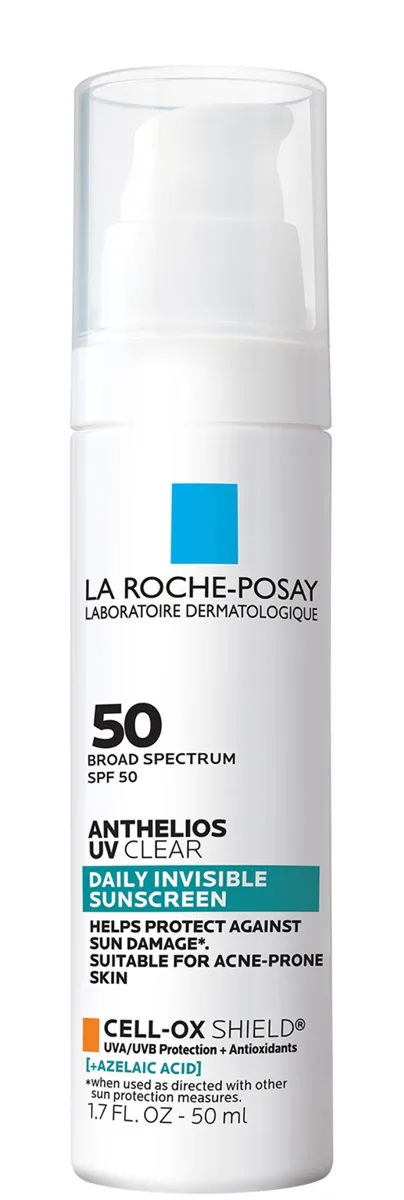
 Anthelios UV Clear Sunscreen SPF 50
One of the only US chemical sunscreens that genuinely earns its 'for sensitive and breakout-prone skin' positioning. A photostable Anthelios filter system paired with a legitimate azelaic acid dose in a lightweight serum-fluid that disappears on every skin tone. Excellent for rosacea, acne, and post-inflammatory hyperpigmentation — and probably the single best daily sunscreen in the La Roche-Posay US lineup for those conditions.
 K-Beauty Daily SPF Standout
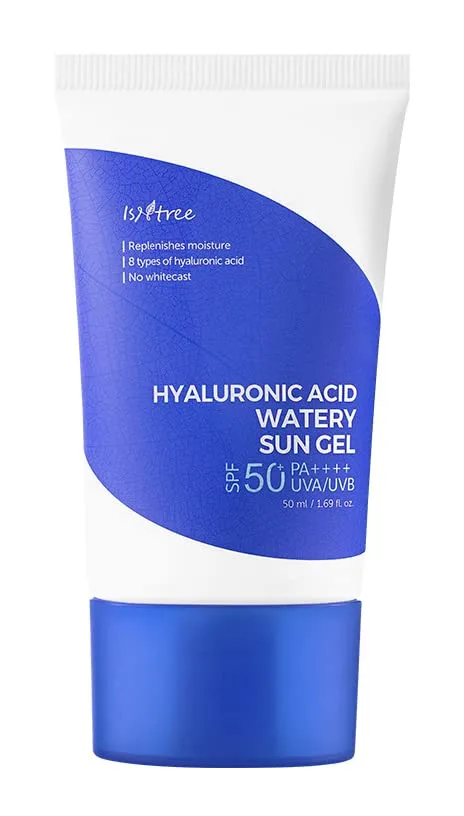
 Hyaluronic Acid Watery Sun Gel SPF 50+
One of the strongest everyday K-beauty sunscreens in the international market — modern European filters, no white cast, fragrance-free, niacinamide-boosted, and built around the brand's signature six-weight HA complex. At twenty-two dollars for 50ml, it's a case study in how much better a daily sunscreen can be when the formulator cares about both protection and wearability.
 Derm Office Staple
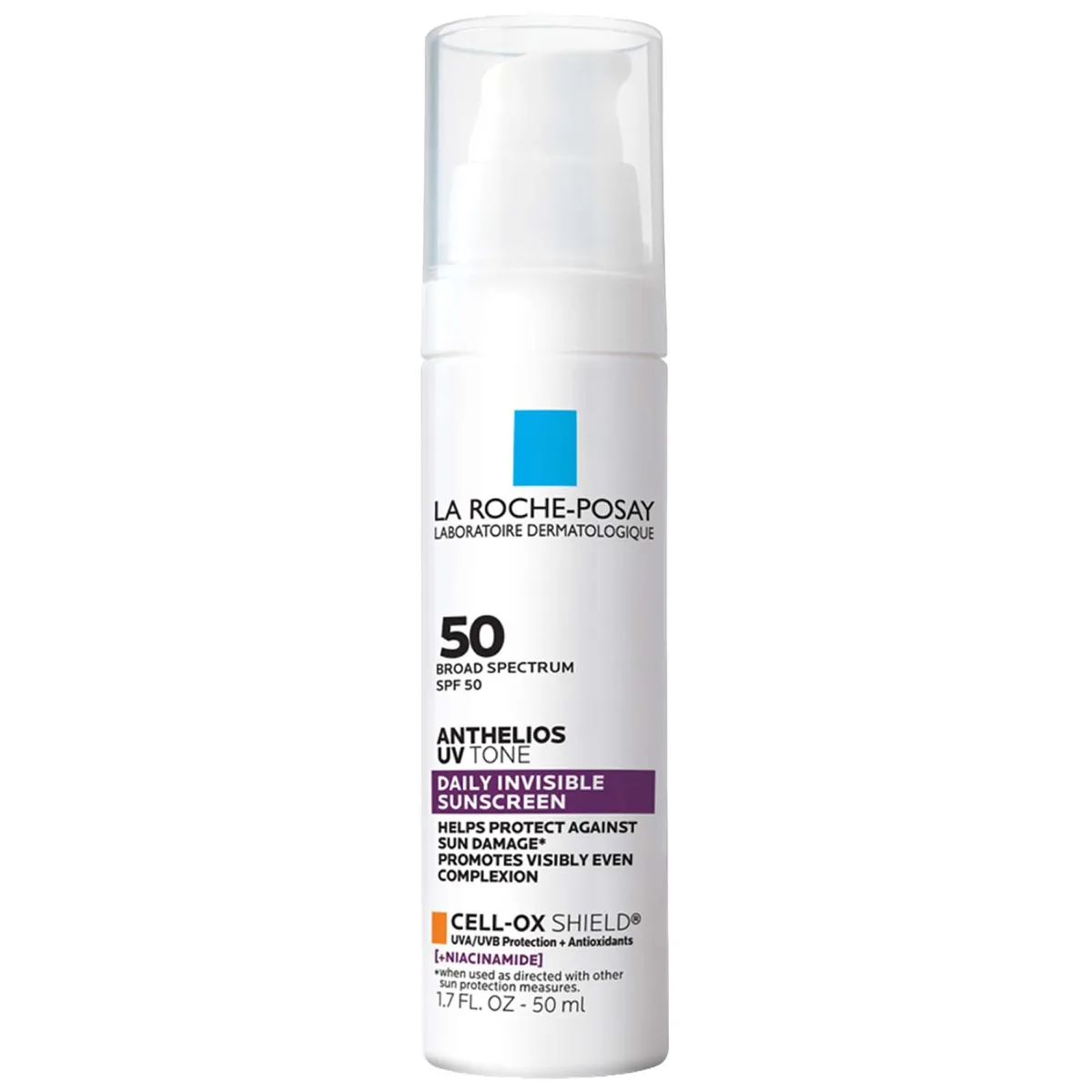
 Anthelios UV Tone Daily Invisible Sunscreen SPF 50
La Roche-Posay's most thoughtful answer yet for hyperpigmentation-prone skin that needs daily SPF. A photostable avobenzone system reinforced with Oxynex ST, paired with a meaningful dose of niacinamide, in a serum-fluid base that goes on invisible on every skin tone. Expensive for 1.7 oz but legitimately well-built — and a rare chemical sunscreen that earns its 'for dark spots' marketing.
 Melasma-Grade Mineral Sunscreen
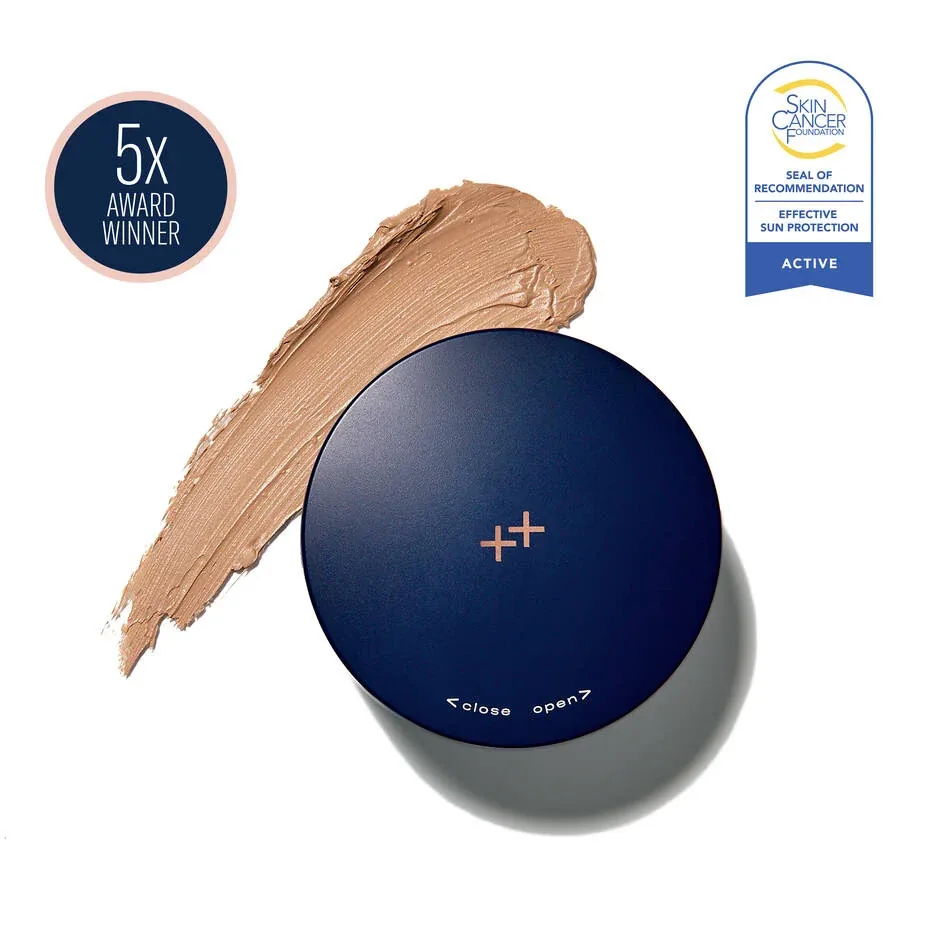
 sunbetter TONE SMART SPF 68
One of the most clinically useful tinted mineral sunscreens in the professional category. SPF 68 from a 100% mineral formula, iron oxide tint that blocks visible light for melasma protection, and an unusually lightweight texture that doesn't feel like you're wearing high-concentration zinc. For patients with melasma or post-inflammatory hyperpigmentation, this is the category benchmark — and it's earned its Allure Best of Beauty wins.
 K-Beauty Cult Favorite
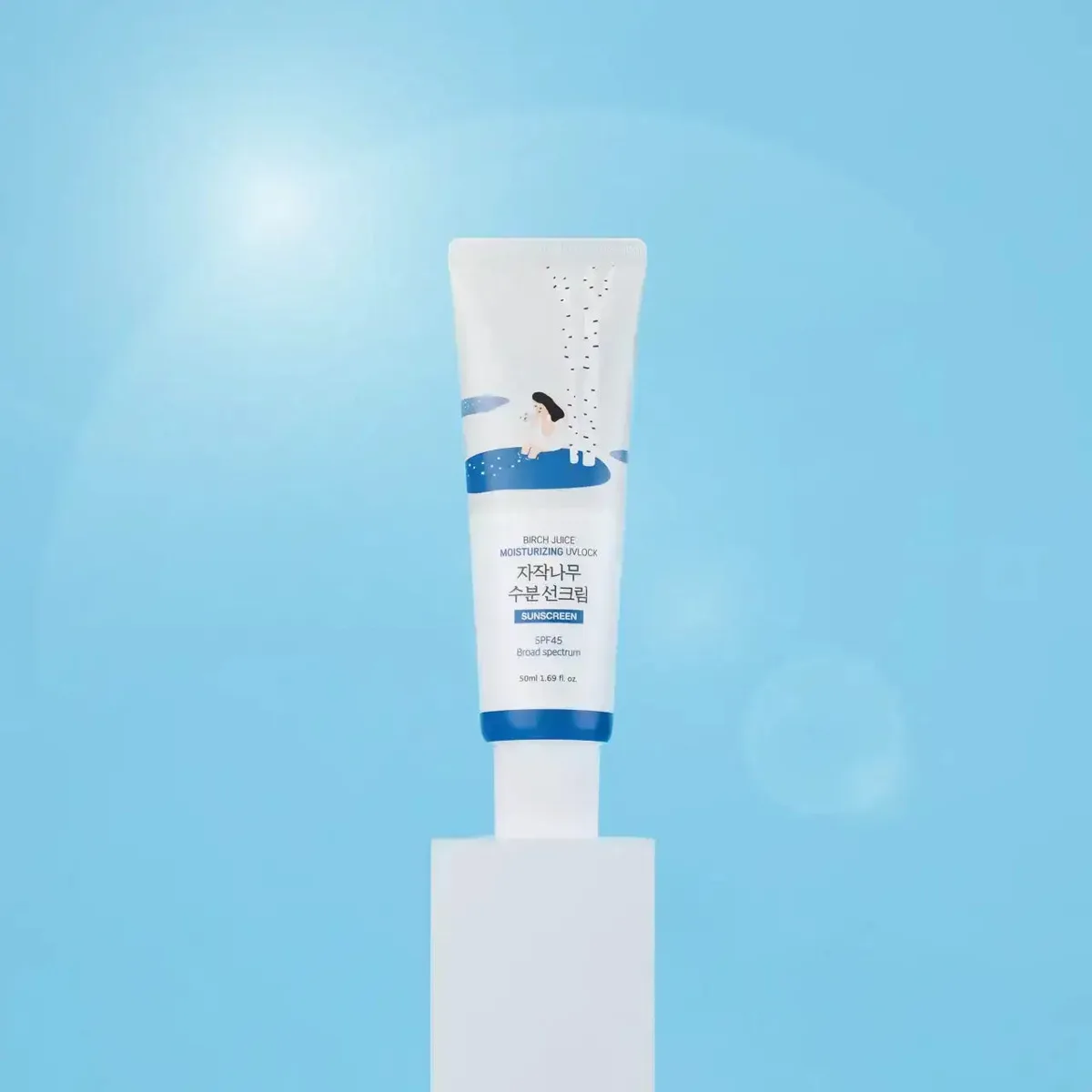
 Birch Juice Moisturizing Sun Cream SPF 50+
One of the best hybrid sunscreens in K-beauty right now — a 70% birch sap base, modern UVA filters you can't get in the US, and a finish that wears like a lightweight moisturizer. Broadly compatible, well-priced, and genuinely pleasant to apply, with minor tradeoffs for oily and fungal-acne-prone users.
 The K-Beauty Sunscreen That Changed Everything
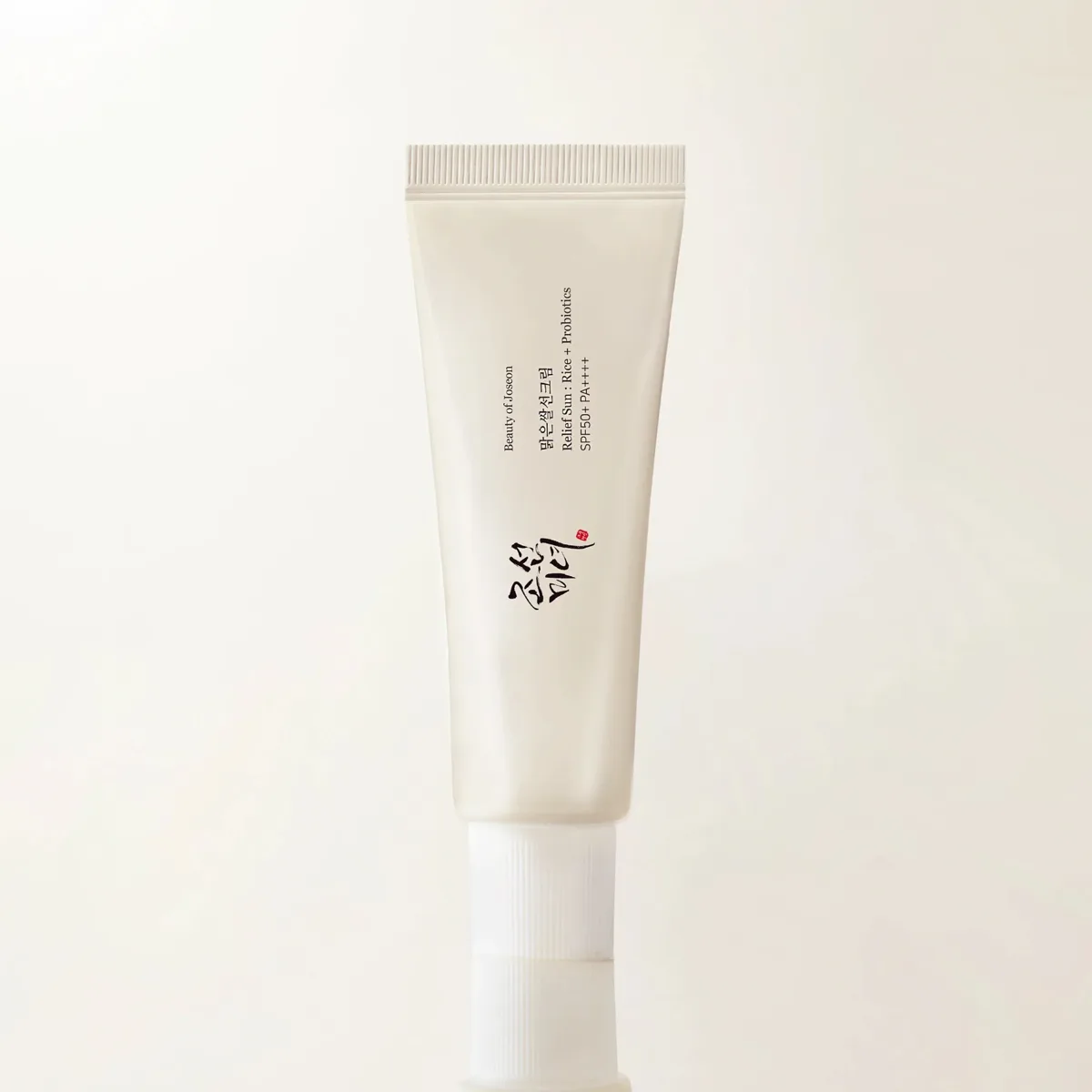
 Relief Sun: Rice + Probiotics SPF 50+
The sunscreen that rewrote the rules for what a $14 product could deliver. With independently verified SPF 50+, 30% rice extract, niacinamide, and a probiotic ferment complex, it offers protection and skincare benefits that rival products three times its price. The texture that feels like wearing nothing on your face is the reason it went viral — and stayed there.