Daily Dose is a genuinely innovative SPF product that treats dry, barrier-compromised skin while protecting it — but the chemical UV filter formula, oil-only format, and $46 price tag for 1 oz make it a niche product rather than an everyday sunscreen for everyone.
Daily Dose Hydra-Ceramide Boost SPF 40
Daily Dose is a genuinely innovative SPF product that treats dry, barrier-compromised skin while protecting it — but the chemical UV filter formula, oil-only format, and $46 price tag for 1 oz make it a niche product rather than an everyday sunscreen for everyone.
Score Breakdown
Where this product gains points and where it loses them — broken down across the four scoring pillars.
An innovative SPF oil with excellent ceramide and botanical oil support for barrier health. The chemical UV filters provide reliable protection and the formula is genuinely hydrating, but the oil format limits suitability for oily skin and the $46 price for 1 oz is steep.
Pros & Cons
- ✓Combines barrier-repair ceramide, squalane, and botanical oils with SPF 40 in one step
- ✓Absorbs remarkably fast for an oil — lightweight, non-greasy finish within minutes
- ✓Fragrance-free and silicone-free with a gentle, minimal-irritant ingredient list
- ✓Oil-based delivery may enhance lipophilic ceramide integration into the skin barrier
- ✓Replaces hydrating serum and sunscreen in the AM routine for dry skin types
- ✓Dropper allows precise dosing for consistent application
- ✗Too oily and dewy for combination-to-oily skin types — will cause visible shine
- ✗Chemical UV filters (avobenzone, homosalate, octocrylene) — not suitable for mineral-only seekers
- ✗Expensive at $46 for 1 oz — premium pricing for a daily-use sunscreen
- ✗Dropper format makes it easy to under-apply, reducing effective SPF below 40
- ✗Not ideal for use under matte foundation — the dewy base can cause sliding
Full Review
There is a morning routine inefficiency that nobody talks about: if you have dry or barrier-compromised skin, you are likely applying a hydrating serum, then a ceramide moisturizer, then a sunscreen — three separate products layered on top of each other, each with its own absorption time, potential pilling issues, and cumulative cost. Supergoop! looked at this stack and asked a reasonable question: what if the sunscreen was the serum?
Daily Dose Hydra-Ceramide Boost launched in 2021 as the brand's first SPF oil, and it represents a genuinely different approach to sun protection. The formula dissolves four chemical UV filters — avobenzone at 2%, homosalate at 9%, octisalate at 5%, and octocrylene at 10% — into a base of ceramide NP, squalane, rosehip seed oil, jojoba seed oil, and oat kernel oil. The result is a product that provides SPF 40 broad-spectrum protection while simultaneously delivering the barrier-repair ingredients that dry skin actually needs.
The ceramide story is where Daily Dose gets interesting from a formulation perspective. Ceramides are lipophilic molecules — they naturally exist in the lipid matrix between skin cells, and they dissolve readily in oil-based systems. Most ceramide products are formulated as water-based creams or lotions where the ceramide must be emulsified, which can limit how much actually integrates into the stratum corneum's lipid layers. In Daily Dose, the ceramide NP is already dissolved in a lipid environment (squalane, jojoba, caprylic/capric triglyceride) that mirrors the skin's own intercellular lipids. Whether this translates to measurably better ceramide delivery than a well-formulated cream is unproven, but the logic is elegant.
Texture is the product's most pleasant surprise. Given the laundry list of oils in the formula, you might expect something heavy and greasy. Instead, Daily Dose absorbs within a minute or two to a glowy, lightweight finish. The dicaprylyl ether and butyloctyl salicylate contribute to this fast absorption — they are dry-touch emollients that reduce the oily afterfeel without compromising the hydration. The result is a product that feels like a concentrated serum-oil hybrid rather than a traditional facial oil.
The glow factor is real and noticeable. Daily Dose leaves skin looking luminous and well-hydrated in a way that reads as healthy rather than greasy — at least on dry to normal skin. On oily or combination skin, this same glow can tip into visible shine by midday. This is not a product for people who want a matte finish or who struggle with excess oil production. It was designed for dry skin, and it makes no apologies about it.
The chemical UV filter package — avobenzone stabilized by octocrylene — provides reliable broad-spectrum protection at SPF 40. This is not a mineral sunscreen, which may be a dealbreaker for those who specifically need mineral filters for pregnancy, post-procedure skin, or environmental concerns. The inclusion of homosalate and octocrylene has drawn scrutiny from some consumers concerned about hormonal disruption, though regulatory bodies in the US and EU continue to consider these filters safe at current concentrations.
At $46 for one ounce in a dropper bottle, Daily Dose is priced as a prestige serum rather than a sunscreen. The dropper format limits how much product you apply per use — 4-5 drops is the recommended amount, and it is easy to under-apply, which reduces the effective SPF. The bottle lasts approximately two to three months at proper daily dosing, making it competitive with other prestige SPF serums but significantly more expensive than a standard sunscreen lotion.
The supporting ingredients elevate Daily Dose beyond a simple SPF oil. Rosehip seed oil brings linoleic acid and trace amounts of trans-retinoic acid. Jojoba oil closely mimics human sebum composition. Oat kernel oil provides anti-inflammatory support. Sodium hyaluronate draws moisture into the upper layers of skin. Bacillus ferment adds prebiotic support for the skin microbiome. This is a genuinely skincare-forward formula that happens to include sunscreen, rather than a sunscreen with token skincare ingredients.
For dry, dehydrated, or barrier-compromised skin, Daily Dose solves a real problem elegantly. It condenses the hydrating serum, ceramide treatment, and sunscreen steps into a single application that feels luxurious and performs visibly. For everyone else, it is an interesting but unnecessary premium over more accessible SPF options.
Formula
Key Ingredients
The hero actives that drive this product's performance.
| Ingredient | Function | Evidence |
|---|---|---|
| Ceramide NP | A key lipid identical to those found naturally in the skin barrier, Ceramide NP helps replenish the intercellular cement between corneocytes. In this oil-based sunscreen, the ceramide is dissolved in a lipid-rich matrix of squalane and jojoba oil that mimics the skin's own lipid environment — potentially improving ceramide delivery compared to water-based formulas. | well-established |
| Squalane | A plant-derived emollient that mirrors the skin's own squalene (which decreases with age). In this formula, squalane serves dual duty — it provides lightweight hydration without greasiness and acts as a carrier that helps dissolve the ceramide and chemical UV filters into a smooth, absorbable oil. | well-established |
| Rosehip Seed Oil (Rosa Canina) | Rich in linoleic acid, alpha-linolenic acid, and trans-retinoic acid, rosehip seed oil provides antioxidant support and essential fatty acids that complement the ceramide's barrier-repair function. In this sunscreen oil, it adds skin-nourishing benefits that go beyond UV protection. | promising |
| Jojoba Seed Oil (Simmondsia Chinensis) | A liquid wax ester that closely resembles human sebum in composition. In this formula, jojoba oil helps regulate oil production (it signals skin to produce less sebum) while providing non-comedogenic moisture. It also helps the oil spread evenly and absorb quickly. | well-established |
| Sodium Hyaluronate | The low-molecular-weight salt of hyaluronic acid, included here to attract and retain moisture in the skin beneath the oil layer. In this ceramide-rich formula, hyaluronic acid provides humectant hydration that complements the occlusive moisture-locking effects of the oils and ceramide. | well-established |
Full INCI List
Active Ingredients: Avobenzone 2%, Homosalate 9%, Octisalate 5%, Octocrylene 10%. Inactive Ingredients: Caprylic/Capric Triglyceride, C12-15 Alkyl Benzoate, Dicaprylyl Ether, Butyloctyl Salicylate, Polybutene, Ethyl Olivate, Rosa Canina Seed Oil, Jojoba Oil/Macadamia Seed Oil Esters, Hydrogenated Polycyclopentadiene, Squalane, Glycine Soja (Soybean) Oil, Simmondsia Chinensis (Jojoba) Seed Oil, Squalene, Polyglyceryl-3 Diisostearate, Tocopherol, Oryza Sativa (Rice) Extract, Oryza Sativa (Rice) Germ Extract, Avena Sativa (Oat) Kernel Oil, Phytosteryl Macadamiate, Ceramide NP, Olea Europaea (Olive) Leaf Extract, Bacillus Ferment, Phytosterols, Ricinus Communis (Castor) Seed Oil, Sodium Hyaluronate, Helianthus Annuus (Sunflower) Seed Wax
Product Flags
✓ Fragrance Free✓ Alcohol Free✗ Oil Free✓ Silicone Free✓ Paraben Free✓ Sulfate Free✓ Cruelty Free✓ Vegan✗ Fungal Acne Safe
Potential Irritants
AvobenzoneOctocrylene
Compatibility
Skin Match
Best For
Works For
Not Ideal For
Addresses These Conditions
dryness dehydration compromised skin barrier aging
Use With Caution
Routine Step
sunscreen
Time of Day
AM
Pregnancy Safe
Unknown
Layering Tips
Apply 4-5 drops to clean, moisturized skin as the last step of your AM skincare routine. Can replace both serum and sunscreen for dry skin types. Pat into skin rather than rubbing for best absorption. Wait 1-2 minutes before applying makeup. Can be mixed with foundation for a dewy finish.
Results Timeline
Immediate hydration and luminosity from the oil base. Barrier-strengthening benefits from the ceramide become noticeable within 1-2 weeks of daily use. Long-term UV protection prevents photoaging with consistent application.
Pairs Well With
hyaluronic acid serummoisturizerretinol (PM)vitamin C serum
Sample AM Routine
- Gentle cleanser
- Hyaluronic acid serum
- THIS PRODUCT (4-5 drops)
Sample PM Routine
- Double cleanse
- Treatment serum
- Ceramide moisturizer
Evidence
Who Should Skip
- Too oily and dewy for combination-to-oily skin types — will cause visible shine
- Chemical UV filters (avobenzone, homosalate, octocrylene) — not suitable for mineral-only seekers
- Expensive at $46 for 1 oz — premium pricing for a daily-use sunscreen
- Dropper format makes it easy to under-apply, reducing effective SPF below 40
Science & Expert Perspective
The Science
Ceramide NP (formerly Ceramide 3) is one of the most abundant ceramide species in the human stratum corneum, where it forms the lipid matrix between corneocytes that prevents transepidermal water loss. Depletion of ceramides is associated with barrier dysfunction, dry skin, eczema, and accelerated aging. A study by Imokawa et al. published in the Journal of Investigative Dermatology demonstrated that topical application of ceramides can restore barrier function in ceramide-depleted skin, reducing TEWL and improving hydration.
The oil-based delivery system in Daily Dose is notable because ceramides are lipophilic molecules with poor water solubility. In conventional oil-in-water emulsions, ceramides must be emulsified — a process that can limit their integration into the stratum corneum's lipid lamellae. In an anhydrous or oil-heavy vehicle like Daily Dose, the ceramide exists in a lipid environment that more closely resembles the intercellular lipid matrix it aims to replenish.
Squalane, a hydrogenated form of squalene, is a key supporting ingredient. Human skin naturally produces squalene as approximately 12% of total surface lipids, but production decreases significantly after age 30. Topical squalane supplements this depletion while providing an emollient film that reduces TEWL without occluding pores.
The UV filter combination — avobenzone (UVA1), homosalate (UVB), octisalate (UVB), and octocrylene (UVB + avobenzone stabilizer) — provides a balanced broad-spectrum protection profile. Octocrylene serves the dual purpose of UVB absorption and photostabilization of avobenzone, which is inherently photolabile and degrades rapidly under UV exposure without stabilizing agents.
Dermatologist Perspective
Dermatologists recognize the value of combining barrier-repair ingredients with sun protection, particularly for patients with dry skin conditions, post-procedure skin, or compromised barriers from retinoid use. Board-certified dermatologists note that the ceramide-in-oil delivery concept is sound, though clinical data comparing this specific formulation's barrier-repair efficacy to standalone ceramide products is not available. Dermatologists typically recommend this product for patients who struggle with sunscreen compliance due to the drying or irritating effects of conventional formulas — the skincare benefits provide motivation for consistent daily SPF application.
Guidance
Usage Guide
How to Use
Apply 4-5 drops to clean skin in the morning as the last step of your skincare routine. Press and pat into the face and neck — do not rub vigorously, as this can disrupt the UV filter film. Allow 1-2 minutes for absorption before applying makeup. Can be layered over a hydrating serum for very dry skin or used alone for normal to dry skin. Reapply every two hours during extended sun exposure. Double cleanse in the evening to remove the oil-based sunscreen.
Value Assessment
At $46 for 1 oz, Daily Dose is positioned as a prestige SPF serum-oil hybrid. The per-ounce cost is higher than most standalone sunscreens, but the formula replaces both a hydrating serum and a sunscreen for dry skin types, improving the effective value. The dropper bottle provides approximately 60-90 days of product at 4-5 drops daily. Supergoop! is an established SPF brand with 17+ years in the category. For dry skin types who would otherwise layer a ceramide serum ($30-50) under a separate sunscreen ($15-40), Daily Dose offers comparable cost at greater convenience.
Who Should Buy
This is ideal for dry, dehydrated, or barrier-compromised skin types who want sun protection and ceramide-based barrier repair in a single, luxurious oil step. Particularly valuable for those on retinoid regimens who need barrier support and SPF in the morning.
Who Should Skip
Skip this if you have oily or acne-prone skin, if you specifically require mineral-only UV filters, if you prefer a matte finish, or if the $46 price point for 1 oz of sunscreen feels unsustainable.
Ready to try Supergoop! Daily Dose Hydra-Ceramide Boost SPF 40?
Details
Details
Texture
Lightweight, dry-touch oil that feels silky on application. Absorbs within 1-2 minutes to a glowy, non-greasy finish. More like a concentrated oil serum than a heavy facial oil.
Scent
No fragrance — neutral, clean scent with a very faint oiliness that dissipates quickly.
Packaging
Amber glass dropper bottle. The dropper allows precise dosing (4-5 drops for the face). The dark glass protects the avobenzone from light degradation in storage.
Finish
dewyglowylightweight
What to Expect on First Use
The oil feels lightweight and absorbs surprisingly fast for a product with so many botanical oils. Skin immediately looks hydrated and luminous. No stinging, irritation, or strong scent. Works well under makeup without pilling when allowed to absorb for 1-2 minutes. Dry skin types may notice improved comfort and less tightness by the end of the first day.
How Long It Lasts
2-3 months with daily use of 4-5 drops
Period After Opening
12 months
Best Season
fall winter
Certifications
Leaping Bunny Cruelty-FreeVeganSephora Clean
Background
The Why
Launched in 2021, Daily Dose was Supergoop!'s answer to a growing consumer demand for SPF products that also deliver genuine skincare benefits. The brand recognized that dry and mature skin types were struggling with most sunscreens — finding them either too drying, too heavy, or too basic to replace a serum step. Daily Dose was designed to replace both a hydrating serum and a sunscreen in the morning routine.
About Supergoop! Established Brand (5–20 years)
Supergoop! was founded in 2007 and has become a leading SPF-focused brand with over 17 years of market presence. The brand is Leaping Bunny certified cruelty-free. Daily Dose is an FDA-registered OTC drug sunscreen with four chemical UV filters.
Brand founded: 2007 · Product launched: 2021
Myth vs. Reality
Myths & Misconceptions
Myth
Oil-based sunscreens provide less reliable UV protection than cream or lotion formats.
Reality
Daily Dose uses the same FDA-approved chemical UV filters (avobenzone, homosalate, octisalate, octocrylene) found in traditional sunscreen lotions, at concentrations that meet SPF 40 standards. The oil vehicle does not reduce their efficacy — it simply changes the sensorial experience and adds skincare benefits.
Myth
Ceramides in a sunscreen are just a marketing gimmick — they can't work through an SPF layer.
Reality
The ceramide in Daily Dose is dissolved in the oil phase alongside the UV filters, meaning it contacts the skin directly upon application before any film-forming occurs. Oil-based delivery may actually enhance ceramide penetration compared to water-based formulas, as ceramides are lipophilic molecules that integrate naturally into oil matrices.
FAQ
Frequently Asked Questions
Can I use Supergoop Daily Dose as my only moisturizer?
For dry skin types, yes — the combination of squalane, jojoba oil, rosehip oil, ceramide NP, and sodium hyaluronate provides substantial hydration and barrier support. However, very dry or winter-affected skin may still benefit from a moisturizer underneath. For normal to combination skin, Daily Dose provides ample hydration on its own.
Is Supergoop Daily Dose mineral or chemical sunscreen?
Daily Dose uses chemical (organic) UV filters — avobenzone, homosalate, octisalate, and octocrylene. It is not a mineral sunscreen. If you specifically need mineral-only protection (for pregnancy, post-procedure skin, or personal preference), look at Supergoop's mineral options like Unseen Sunscreen or CC Screen.
Does Supergoop Daily Dose work under makeup?
Yes — once it absorbs for 1-2 minutes, Daily Dose creates a smooth, hydrated base that makeup adheres to well. The dewy finish provides a luminous base for light-coverage products. Avoid over-applying, as too much oil can cause foundation to slide. Pat (don't rub) makeup over it for best results.
Is Supergoop Daily Dose good for oily skin?
Daily Dose is best suited for dry, normal, and dehydrated skin types. The oil-based formula with multiple botanical oils will likely feel too heavy and shiny on oily skin and may contribute to congestion. Oily skin types should consider Supergoop Unseen Sunscreen (oil-free, matte finish) instead.
How many drops of Supergoop Daily Dose should I use?
Apply 4-5 drops for the face and neck area. This amount provides a thin, even layer. For adequate SPF protection, you need to apply generously — skimping on drops reduces the effective SPF. The bottle lasts approximately 2-3 months at this dosage with daily use.
Community
Community Voices
Common Praise
"Leaves skin feeling genuinely moisturized and nourished all day"
"Absorbs quickly for an oil — no greasy residue after a few minutes"
"Ceramide and squalane provide real barrier support beyond basic SPF"
"Works beautifully as a makeup base with a dewy, luminous glow"
"Fragrance-free and silicone-free — ideal for sensitive, dry skin"
Common Complaints
"Too oily for acne-prone or combination-to-oily skin types"
"Expensive at $46 for just 1 oz — smaller bottle than most sunscreens"
"Chemical UV filters (avobenzone, octocrylene) may concern those seeking mineral-only"
"Can pill under certain moisturizers or foundations if not layered correctly"
"SPF 40 is adequate but some users prefer SPF 50+ for daily wear"
Notable Endorsements
Sephora Clean beauty designationFeatured in Refinery29 and Reviewed
Appears In
best sunscreen for dryness best sunscreen for dehydration best spf oil best sunscreen for compromised skin barrier
Related Conditions
dryness dehydration compromised skin barrier aging
Related Ingredients
You Might Also Like
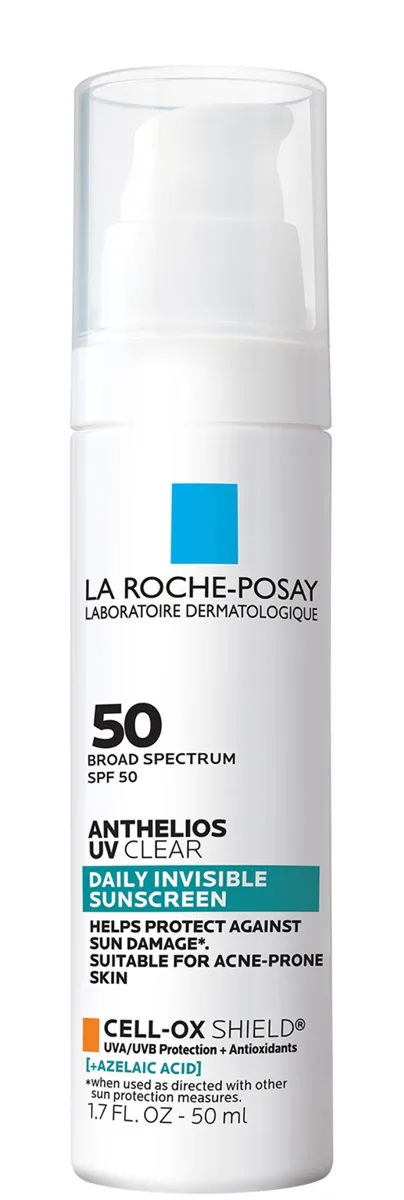 Derm Office Staple
 Anthelios UV Clear Sunscreen SPF 50
One of the only US chemical sunscreens that genuinely earns its 'for sensitive and breakout-prone skin' positioning. A photostable Anthelios filter system paired with a legitimate azelaic acid dose in a lightweight serum-fluid that disappears on every skin tone. Excellent for rosacea, acne, and post-inflammatory hyperpigmentation — and probably the single best daily sunscreen in the La Roche-Posay US lineup for those conditions.
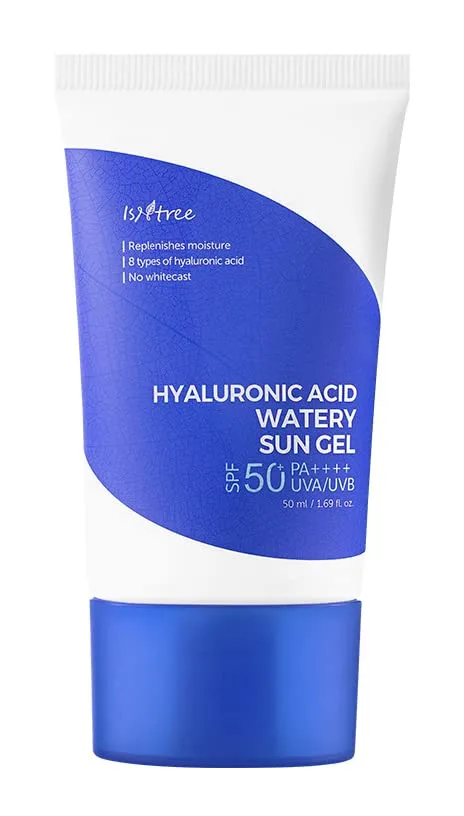 K-Beauty Daily SPF Standout
 Hyaluronic Acid Watery Sun Gel SPF 50+
One of the strongest everyday K-beauty sunscreens in the international market — modern European filters, no white cast, fragrance-free, niacinamide-boosted, and built around the brand's signature six-weight HA complex. At twenty-two dollars for 50ml, it's a case study in how much better a daily sunscreen can be when the formulator cares about both protection and wearability.
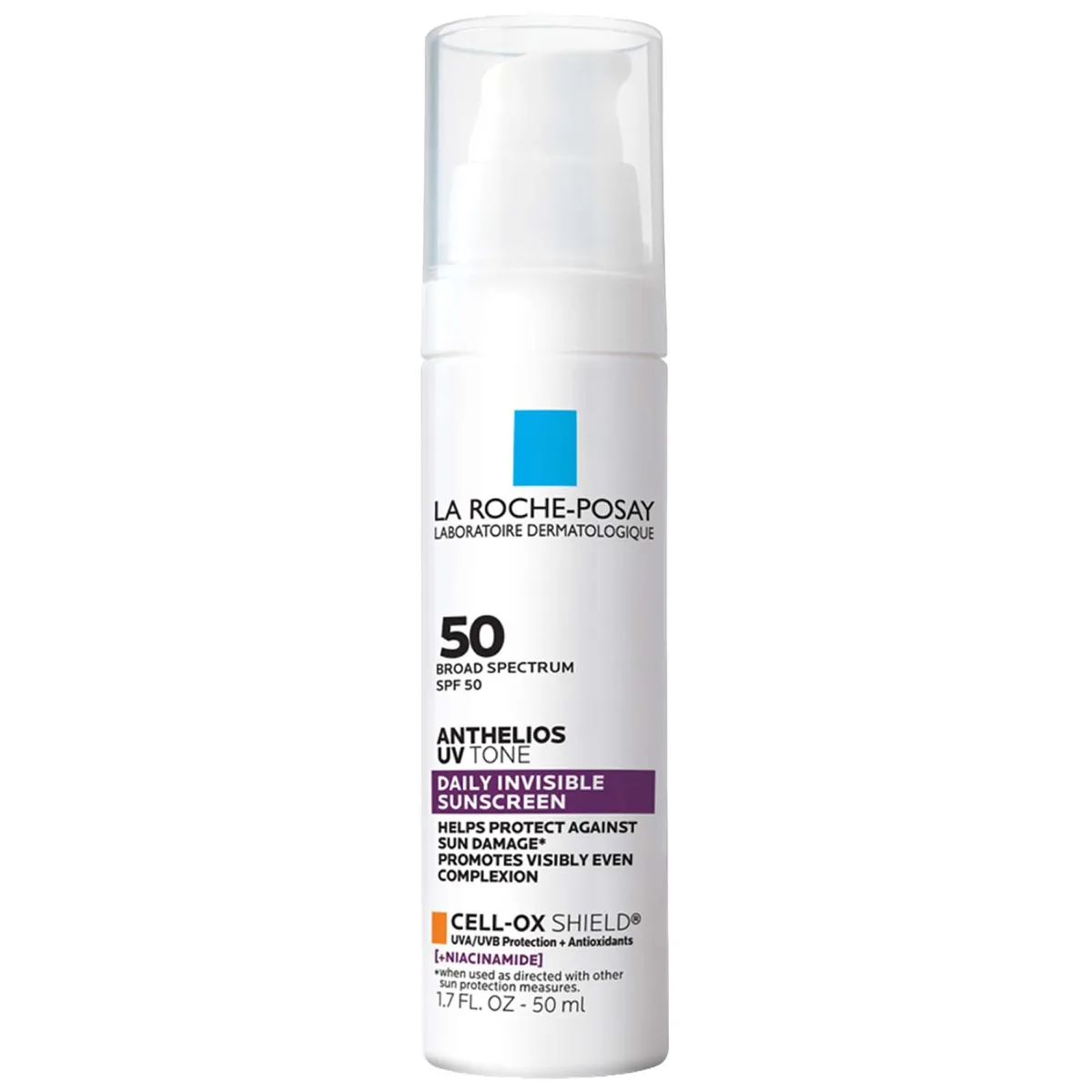 Derm Office Staple
 Anthelios UV Tone Daily Invisible Sunscreen SPF 50
La Roche-Posay's most thoughtful answer yet for hyperpigmentation-prone skin that needs daily SPF. A photostable avobenzone system reinforced with Oxynex ST, paired with a meaningful dose of niacinamide, in a serum-fluid base that goes on invisible on every skin tone. Expensive for 1.7 oz but legitimately well-built — and a rare chemical sunscreen that earns its 'for dark spots' marketing.
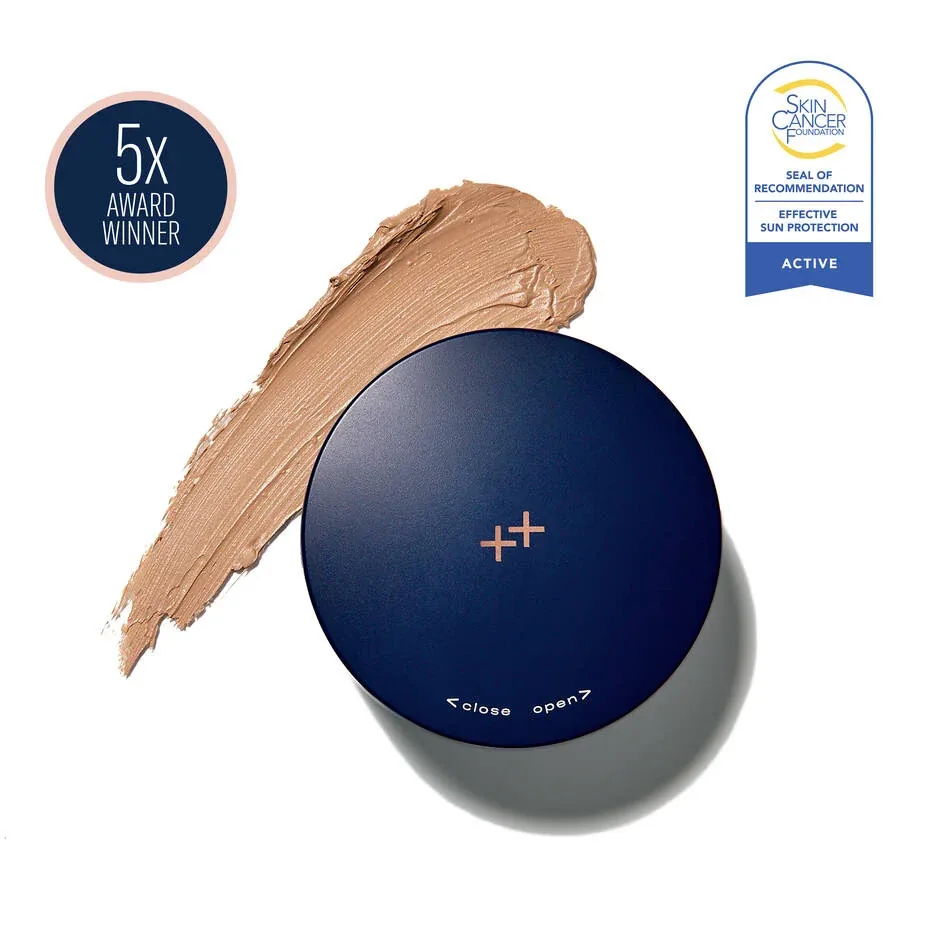 Melasma-Grade Mineral Sunscreen
 sunbetter TONE SMART SPF 68
One of the most clinically useful tinted mineral sunscreens in the professional category. SPF 68 from a 100% mineral formula, iron oxide tint that blocks visible light for melasma protection, and an unusually lightweight texture that doesn't feel like you're wearing high-concentration zinc. For patients with melasma or post-inflammatory hyperpigmentation, this is the category benchmark — and it's earned its Allure Best of Beauty wins.
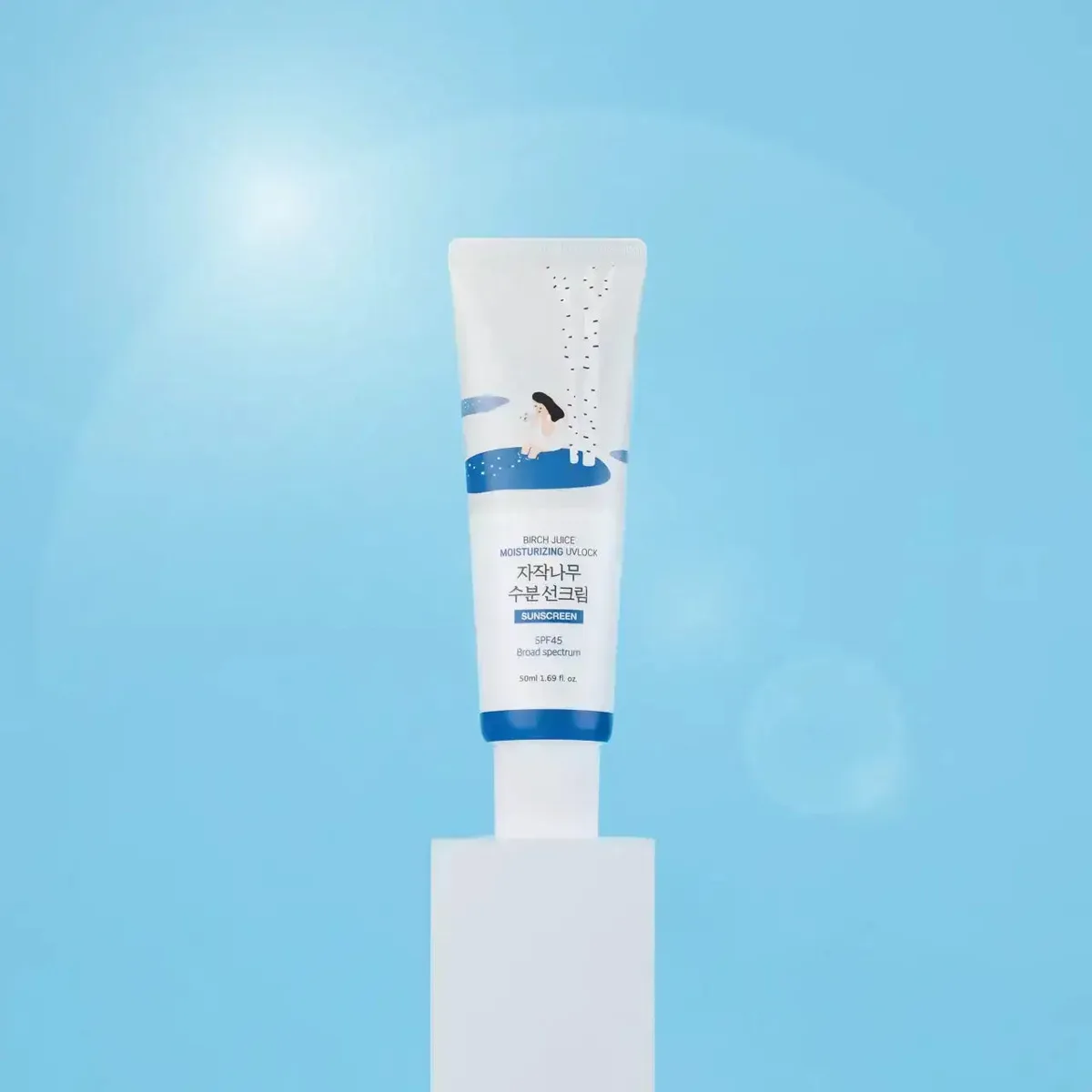 K-Beauty Cult Favorite
 Birch Juice Moisturizing Sun Cream SPF 50+
One of the best hybrid sunscreens in K-beauty right now — a 70% birch sap base, modern UVA filters you can't get in the US, and a finish that wears like a lightweight moisturizer. Broadly compatible, well-priced, and genuinely pleasant to apply, with minor tradeoffs for oily and fungal-acne-prone users.
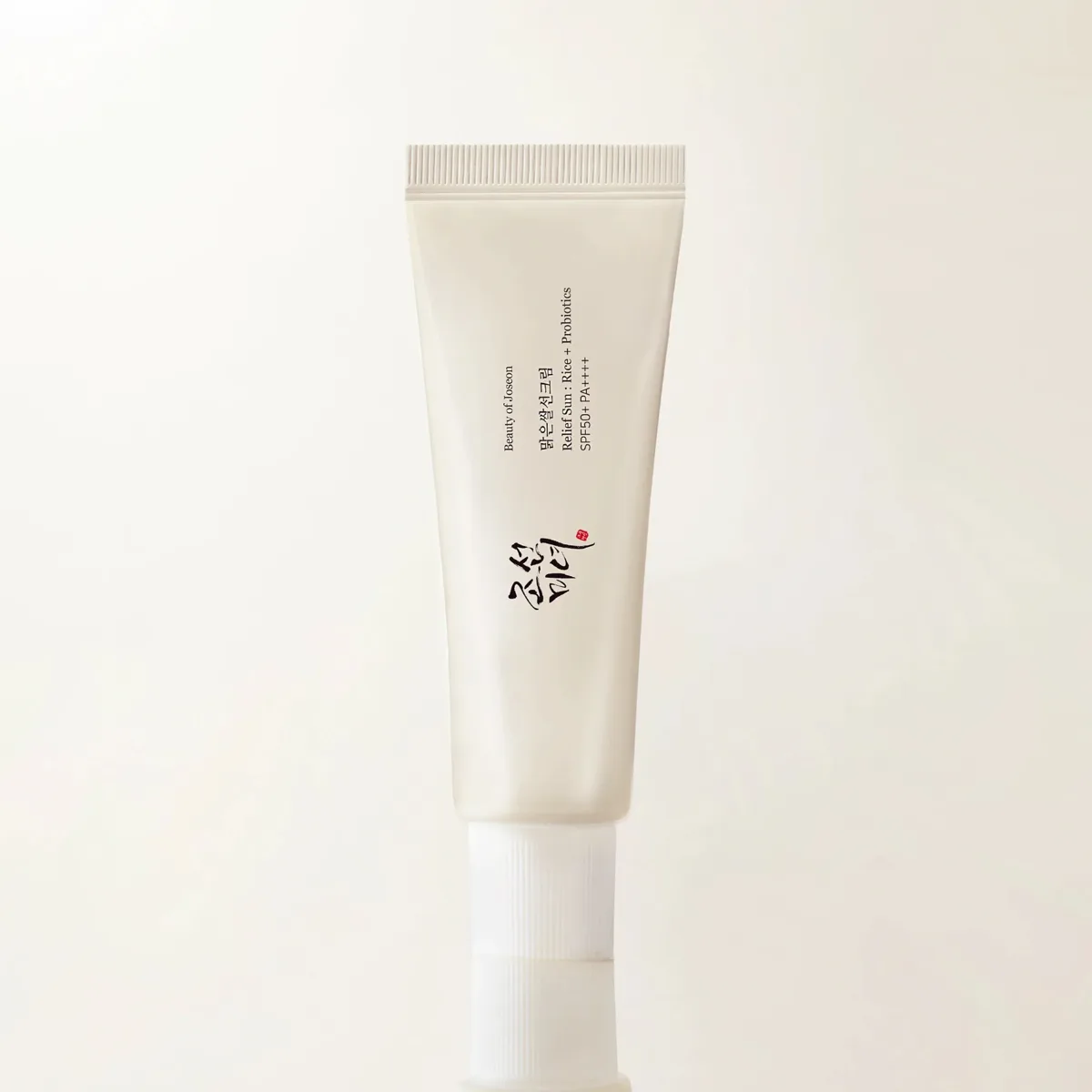 The K-Beauty Sunscreen That Changed Everything
 Relief Sun: Rice + Probiotics SPF 50+
The sunscreen that rewrote the rules for what a $14 product could deliver. With independently verified SPF 50+, 30% rice extract, niacinamide, and a probiotic ferment complex, it offers protection and skincare benefits that rival products three times its price. The texture that feels like wearing nothing on your face is the reason it went viral — and stayed there.
This review reflects our independent analysis of publicly available ingredient data, manufacturer claims, and verified user reviews. We are reader-supported — Amazon links may earn us a commission at no cost to you. We do not accept paid placements; rankings are based solely on the evidence.