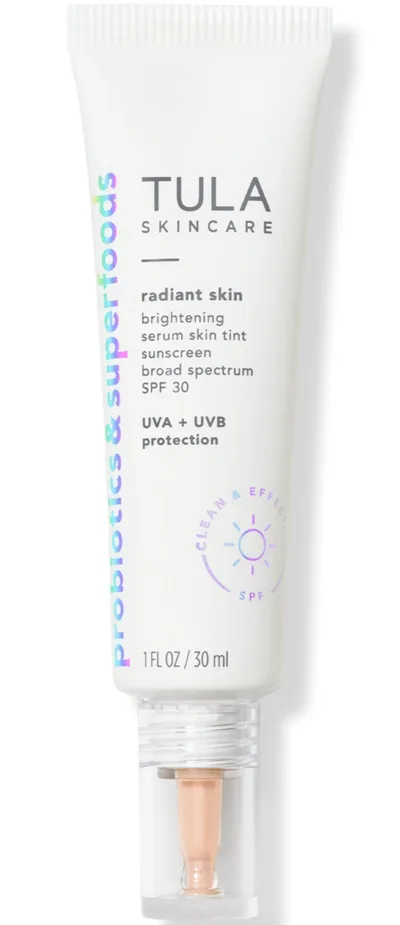
A genuinely well-formulated hybrid tinted SPF that delivers UV protection, visible light protection from iron oxides, and brightening from tetrahexyldecyl ascorbate and niacinamide all in one step. The light serum texture wears beautifully under makeup and the tint blends naturally — the main caveats are the older US-approved chemical filters and the limited shade range.
Radiant Skin Brightening Serum Skin Tint SPF 30
A genuinely well-formulated hybrid tinted SPF that delivers UV protection, visible light protection from iron oxides, and brightening from tetrahexyldecyl ascorbate and niacinamide all in one step. The light serum texture wears beautifully under makeup and the tint blends naturally — the main caveats are the older US-approved chemical filters and the limited shade range.
Score Breakdown
A genuinely well-formulated tinted SPF that delivers both UV and visible-light protection alongside meaningful skincare actives. Slightly capped because it uses older US filters rather than newer-generation European ones, and $42 for 30ml is premium for the format.
Data Confidence: high
This product has been on market since 2022 with thousands of reviews across Sephora, Amazon, Ulta, and Tula's own site, plus extensive coverage from beauty press and dermatologist creators.
0/100
Overall Score
Ingredient Quality 0
Value for Money 0
Suitability Breadth 0
Irritation Risk (↑ = safer) 0
Assessment
Pros
- Iron oxides provide meaningful visible light protection
- Tetrahexyldecyl ascorbate adds stable vitamin C alongside SPF
- Niacinamide and ceramide NP support barrier function
- Lightweight serum texture wears beautifully under makeup
- Natural-looking buildable coverage
- Doesn't pill or oxidize dramatically
- Cruelty-free and vegan certified
- Specifically beneficial for melasma and pigmentation patients
Cons
- Uses older US-approved chemical filters
- Limited shade range for the deepest skin tones
- $42 for 30ml is premium for the format
- Avobenzone safety during pregnancy debated
- Light-to-medium coverage only — not a foundation replacement
Full Review
There's a quietly important piece of dermatology research that most consumers haven't heard about: high-energy visible light — the part of the spectrum just past UVA on the wavelength scale — contributes meaningfully to melasma worsening and hyperpigmentation in melanin-rich skin. This is the reason your phone screen and overhead lighting can technically nudge pigmentation along, and it's the reason dermatologists treating melasma patients increasingly recommend tinted sunscreens specifically. The tint isn't just cosmetic decoration. The iron oxides that create the natural skin-color blending also block visible light, which standard chemical and even some mineral sunscreens completely miss. The Tula Radiant Skin Brightening Serum Skin Tint is one of the better hybrid products in this category — a daily SPF that takes the iron oxide protection seriously while also delivering meaningful skincare actives in the same step.
The SPF system itself is a US-standard chemical filter pair: avobenzone at 3% for UVA protection and octisalate at 5% for UVB and avobenzone stabilization. This is the workhorse American sunscreen filter combination, and it gets the job done at SPF 30 broad-spectrum. The honest critique is that it's older-generation technology — European and Asian markets have access to newer filters like Tinosorb S, Uvinul A Plus, and Mexoryl XL that offer better photostability, broader spectrum coverage, and more elegant cosmetic feel. The FDA's slow approval process means American formulators are still working with the same filter palette they've had for two decades, and Tula is doing its best within that constraint. The iron oxide visible light protection partially compensates for the spectrum gap.
Where the formula gets interesting is the active skincare cast layered into the SPF base. Tetrahexyldecyl ascorbate sits at a meaningful position on the INCI — it's an oil-soluble vitamin C derivative that's substantially more stable than pure L-ascorbic acid and can be formulated alongside chemical UV filters without the pH conflicts that derail most C-plus-SPF combinations. It delivers brightening and antioxidant action that compounds beautifully with daily UV protection, since UV-induced free radical damage is one of the primary drivers of the pigmentation this product is trying to prevent. Niacinamide adds barrier-supporting action and contributes to the brightening claim through melanosome transfer blockade. Ceramide NP rounds out the supporting cast with a small but meaningful barrier-repair contribution.
The tint and coverage are the cosmetic differentiators. The texture is a lightweight serum-fluid with a silky satin feel that absorbs in seconds, leaving a natural skin-finish that covers minor redness, evens out subtle tone variations, and gives the kind of soft-focus glow that most users want from a daily product. It's not a foundation replacement — the coverage is light to medium and it doesn't conceal serious blemishes or significant uneven tone — but it works beautifully as either a standalone skin tint for low-makeup days or as a tinted base under additional foundation. It doesn't pill, doesn't pile up in expression lines, and doesn't oxidize dramatically over a normal workday for most users.
The shade range is where the product earns its most legitimate critique. Tula offers a moderate range that covers the light-to-medium-deep spectrum reasonably well, but the deepest skin tones are not as well represented as they would be in a brand built specifically around inclusivity. This is a category-wide problem — tinted sunscreens in general have lagged on shade range — but it's still a real limitation for the deepest users. If you can find your shade, the formula performs; if you can't, the formula is academic.
Results from the active ingredient cast are gradual and require consistent daily use. Most users report immediate improvements in skin appearance from the tint and finish, with longer-term tone improvements at the four-to-eight-week mark from the vitamin C and niacinamide working alongside the daily UV protection. The biggest results are in what doesn't happen — the pigmentation that doesn't develop, the melasma that doesn't worsen, the dark spots that don't form. Sustained daily SPF use is one of the highest-impact things any skincare routine can do, and a tinted hybrid product that the user actually wants to wear is more valuable than a more potent untinted one that gets skipped on weekends.
The forty-two dollar price for thirty milliliters is mid-to-upper premium for the format. There are excellent tinted SPFs in the prestige range — ILIA Super Serum Skin Tint, Saie Slip Tint, Supergoop Daily Dose Tinted — that offer comparable or slightly different value propositions at similar price points. The Tula version's distinct strength is the active skincare cast and the brand's probiotic positioning. For users who specifically want tinted SPF with brightening actives in one step, this is one of the better options available. For users focused purely on cost-per-ounce SPF protection, dedicated untinted sunscreens deliver more product for less money.
Formula
Ingredients
The hero actives that drive this product's performance.
| Ingredient | Function | Evidence |
|---|---|---|
| Avobenzone 3% + Octisalate 5% (3% + 5%) | The chemical UV filter system in this hybrid product. Avobenzone provides UVA protection (the long-wave aging rays) while octisalate handles UVB and stabilizes the avobenzone, which is otherwise photo-degradable. Together they form a US-approved broad-spectrum filter pair, though the formula lacks the latest-generation filters available in European or Asian sunscreens. | well-established |
| Tetrahexyldecyl Ascorbate | An oil-soluble vitamin C derivative that's substantially more stable than pure L-ascorbic acid and can be formulated alongside SPF actives without conflict. Adds antioxidant and brightening support that compounds with the daily UV protection — a smart pairing because UV-induced free radical damage is one of the main drivers of pigmentation. | well-established |
| Niacinamide | Sits in the mid-INCI position alongside other treatment actives. Supports barrier function and contributes to the brightening claim through its mechanism of blocking melanosome transfer to surface keratinocytes — works synergistically with the vitamin C derivative and the daily UV protection. | well-established |
| Iron Oxides | Provide both the natural-looking tint and meaningful protection against visible light, which has been shown in research to contribute to melasma worsening and hyperpigmentation in skin of color. The tint isn't just cosmetic — it's functional photoprotection that goes beyond what the chemical filters alone provide. | well-established |
| Probiotic Ferments | Tula's signature lactococcus, lactobacillus, and inulin ferment cast. Theoretically supports skin microbiome balance during daily UV exposure, when the surface ecology can be disrupted by oxidative stress and chemical filter exposure. | emerging |
Full INCI List
Active: Avobenzone 3%, Octisalate 5%. Inactive: Aqua/Water/Eau, C9-12 Alkane, Butyloctyl Salicylate, Caprylic/Capric Triglyceride, Ethylhexyl Palmitate, Triethylhexanoin, Polyglyceryl-6 Polyhydroxystearate, Polyglyceryl-6 Polyricinoleate, Isododecane, Silica, Butylene Glycol, Disteardimonium Hectorite, Trimethylsiloxysilicate, VP/Eicosene Copolymer, Glycerin, Argania Spinosa Kernel Oil, Tocopheryl Acetate, Lactococcus Ferment Lysate, Lactobacillus Ferment, Lactobacillus, Kappaphycus Alvarezii Extract, Tetrahexyldecyl Ascorbate, Niacinamide, Sodium Hyaluronate, Ceramide NP, Pongamia Glabra Seed Oil, Dunaliella Salina Extract, Haematococcus Pluvialis Extract, Acacia Seyal Gum Extract, Caesalpinia Spinosa Fruit Extract, Alpha-Glucan Oligosaccharide, Bisabolol, Beta Vulgaris Root Extract, Cystoseira Tamariscifolia Extract, Inulin, Lactic Acid, Polymnia Sonchifolia Root Juice, Curcuma Longa Root Extract, VP/Hexadecene Copolymer, Octyldodecyl Neopentanoate, Sodium Chloride, Magnesium Sulfate, Boron Nitride, Sorbitan Oleate, Polyglycerin-6, Octyldodecanol, Safflower Oil/Palm Oil Aminopropanediol Esters, Mica, Hydrogenated Lecithin, Ascorbyl Palmitate, Pentaerythrityl Tetra-Di-T-Butyl Hydroxyhydrocinnamate, Simethicone, Tocopherol, Maltodextrin, Ethylhexylglycerin, Aluminum Hydroxide, Citric Acid, 1,2-Hexanediol, Caprylyl Glycol, Phenoxyethanol, Sodium Benzoate, Potassium Sorbate. May Contain: Titanium Dioxide (CI 77891), Iron Oxides (CI 77492, 77491, 77499)
Product Flags
✓ Fragrance Free✓ Alcohol Free✗ Oil Free✗ Silicone Free✓ Paraben Free✓ Sulfate Free✓ Cruelty Free✓ Vegan✗ Fungal Acne Safe
Potential Irritants
avobenzone
Compatibility
Skin Match
Best For
Works For
Not Ideal For
Addresses These Conditions
dullness hyperpigmentation sun damage dark spots melasma
Use With Caution
Routine Step
sunscreen
Time of Day
AM
Pregnancy Safe
Unknown
Layering Tips
Apply as the final morning skincare step before makeup or as a one-step tinted SPF on its own. Use the standard two-finger length quantity for full SPF protection — most users under-apply tinted sunscreens.
Results Timeline
Immediate light-medium coverage and brightening on first use. Tone improvement from sustained UV protection and brightening actives at 4-8 weeks. Long-term pigmentation prevention with consistent daily use over months and years.
Pairs Well With
vitamin-c-serumniacinamidehyaluronic-acid
Sample AM Routine
- Gentle cleanser
- Hydrating toner
- Vitamin C serum
- Moisturizer
- Tula Skincare Radiant Skin Brightening Serum Skin Tint SPF 30
Sample PM Routine
- Cleanser
- Treatment serum
- Moisturizer
Evidence
Science
The Science
The role of high-energy visible light (HEVL) in pigmentation has become one of the more important developments in dermatology research over the past decade. Studies published in journals including Pigment Cell & Melanoma Research and the Journal of Investigative Dermatology have documented that visible light exposure, particularly in the 400-500 nm blue-violet range, can trigger melanogenesis in skin of color and worsen melasma in susceptible patients. Standard chemical and most mineral sunscreens provide little to no protection against this part of the spectrum. Iron oxides, however, have been shown to absorb in the visible light range and provide meaningful HEVL protection — which is why dermatologists increasingly recommend tinted sunscreens specifically for patients dealing with melasma, post-inflammatory hyperpigmentation, and pigmentary disorders.
A particularly relevant body of research has explored the use of iron-oxide-pigmented sunscreens for melasma management, with studies suggesting that tinted formulations outperform untinted equivalents in preventing melasma worsening and reducing pigmentation severity. This is the key clinical justification for choosing a tinted SPF over a clear one in patients with hyperpigmentation concerns.
The tetrahexyldecyl ascorbate component is one of the more interesting active inclusions in a sunscreen format. Research published in cosmetic science literature has documented its stability, oil solubility, and ability to deliver vitamin C benefits without the pH conflicts that complicate co-formulation of L-ascorbic acid with sunscreen actives. Studies on its conversion to active ascorbic acid in skin support its role as a functional vitamin C delivery vehicle.
Niacinamide adds another well-studied active to the formula. Research in the British Journal of Dermatology has documented its effects on barrier function, sebum modulation, and pigmentation pathways at concentrations starting around 2%. The combination of vitamin C, niacinamide, and daily UV protection is one of the more effective evidence-based approaches to long-term pigmentation prevention and brightening.
Dermatologist Perspective
Dermatologists frequently recommend tinted sunscreens for patients dealing with melasma, post-inflammatory hyperpigmentation, and pigmentary disorders, specifically because of the visible light protection that iron oxides provide. Board-certified dermatologists note that the iron oxide tinting is not cosmetic decoration but functional photoprotection, and that this benefit is particularly important for patients with melanin-rich skin. This product's combination of broad-spectrum chemical SPF, iron oxide tint, tetrahexyldecyl ascorbate, niacinamide, and ceramides reflects current evidence-based thinking about hybrid sun protection and brightening. The chemical filter base is conventional US-approved technology rather than the newer-generation filters available internationally, and the limited shade range may not accommodate the deepest skin tones — both are realistic limitations to consider.
Guidance
Usage Guide
How to Use
Apply as the final morning skincare step before makeup. Use the standard two-finger length quantity for full SPF protection — most users dramatically under-apply tinted sunscreens, which compromises the SPF claim. Squeeze a generous amount onto fingertips and pat gently onto face and neck, building coverage in areas that need it. Allow 60 seconds for absorption before applying additional makeup. Reapply every 2 hours during extended outdoor exposure. Pair with a vitamin C serum underneath in the morning routine for compounding antioxidant and brightening benefits. Always remove thoroughly at night with a gentle cleanser.
Value Assessment
At $42 for 30ml, this lands in upper-mid premium pricing for tinted SPF. Comparable hybrid products like ILIA Super Serum Skin Tint, Saie Slip Tint, and Supergoop Daily Dose Tinted offer similar price points with slightly different active and filter profiles. What you're paying for is the unusually thoughtful active skincare cast (vitamin C derivative, niacinamide, ceramides), the iron oxide visible light protection, and the brand polish. Only one size is offered. For users specifically seeking tinted SPF with meaningful brightening actives in one step, the price is justified. For users focused purely on UV protection, dedicated untinted sunscreens deliver more product for less.
Who Should Buy
Anyone dealing with melasma, post-inflammatory hyperpigmentation, dullness, or general dark spot concerns who wants tinted SPF and brightening skincare in a single product. Particularly good for users with light-to-medium-deep skin tones who can find their shade match, and for daily-driver routines where the visible light protection matters.
Who Should Skip
Users with the deepest skin tones who can't find a shade match in the available range. Skip if you prefer mineral sunscreens, if you want maximum coverage from a foundation rather than a skin tint, if you're pregnant and prefer to avoid avobenzone, or if you have known sensitivity to chemical UV filters.
Ready to try Tula Skincare Radiant Skin Brightening Serum Skin Tint SPF 30?
Details
Details
Texture
Lightweight serum-fluid with a silky satin feel that builds easily
Scent
Fragrance-free with a faint cosmetic neutrality
Packaging
Pearl-blue plastic squeeze tube, 30ml
Finish
satinnaturallightweight
What to Expect on First Use
First application feels lightweight and absorbs into a satin natural finish within seconds. No white cast at any shade level due to the iron oxide tinting. Covers minor redness and uneven tone immediately, with brightening benefits building over weeks of consistent daily use.
How Long It Lasts
2-3 months with daily morning face application using the recommended quantity
Period After Opening
12 months
Best Season
All Year
Certifications
Cruelty-free (Leaping Bunny)Vegan
Background
The Why
Released in 2022 as part of Tula's expansion into hybrid skincare-makeup products. The brand identified that consumers wanted daily SPF that doubled as light coverage with active brightening — particularly users dealing with melasma and post-inflammatory hyperpigmentation, where visible light protection from iron oxides matters more than most consumers realize.
About Tula Skincare Established Brand (5–20 years)
Tula Skincare launched in 2014, founded by gastroenterologist Dr. Roshini Raj with a probiotic-focused brand positioning. Its formulations rely on prebiotic and probiotic ferments alongside conventional actives, with a moderate independent clinical evidence base.
Brand founded: 2014 · Product launched: 2022
Myth vs. Reality
Myths
Myth
Tinted sunscreens are just cosmetic — the tint doesn't add real protection.
Reality
Iron oxides have published research showing meaningful protection against visible light, which contributes to melasma worsening and hyperpigmentation in melanin-rich skin. The tint isn't decorative — it's functional photoprotection that pure chemical sunscreens don't provide.
FAQ
FAQ
Does the Tula Radiant Skin Brightening Serum Skin Tint actually protect against visible light?
Yes — the iron oxide tinting provides meaningful protection against high-energy visible light, which has been shown to contribute to melasma worsening and pigmentation in melanin-rich skin. This is a benefit that pure chemical filter sunscreens miss, and it's why dermatologists frequently recommend tinted SPFs for melasma patients specifically.
Is SPF 30 enough for daily use?
For most daily use scenarios — office work, commuting, brief outdoor exposure — SPF 30 is sufficient when applied at the correct quantity (about a quarter teaspoon for the face). For extended outdoor activity, beach days, or high-altitude environments, a higher SPF is preferable.
Can I wear it under foundation?
Yes — the serum-light texture layers cleanly under most foundations and primers without pilling. Allow 60 seconds for absorption before applying additional makeup. For fuller coverage, treat this as a tinted base and apply foundation on top; for a no-makeup look, wear it on its own.
Does it work on all skin tones?
Tula offers a moderate shade range for this product. The iron oxide tinting blends well across light to medium-deep tones, but users with the deepest skin tones may find the available shade range limited. Always check shade swatches before purchasing.
How does it compare to ILIA Super Serum Skin Tint SPF 40?
Both are hybrid tinted SPFs with skincare actives. ILIA uses non-nano zinc oxide for mineral SPF protection, which is preferred by some users with chemical filter sensitivities. Tula uses chemical filters (avobenzone and octisalate) which can feel lighter on the skin but rely on the iron oxide tint for visible light protection. Both are good options — choose based on your filter preference and shade availability.
Is it safe during pregnancy?
Avobenzone safety during pregnancy is debated, with some dermatologists recommending pregnant patients prefer mineral sunscreens (zinc oxide and titanium dioxide) instead. Check with your OB or dermatologist for personal guidance.
Can I use it on my body?
It's formulated for facial use and the 30ml size is too small to be practical for body application. For neck, chest, and hands — yes, by all means. For larger body areas, use a dedicated body sunscreen instead.
Community
Community
Common Praise
"Natural-looking buildable coverage"
"Iron oxide tint protects against visible light"
"Brightens dullness over time"
"Doesn't pill under makeup"
"Limited shade range still works for most skin tones"
Common Complaints
"Limited shade range"
"Premium price for 30ml"
"Avobenzone-based filters less elegant than newer options"
"Some shades oxidize during the day"
"Not enough coverage for full foundation needs"
Notable Endorsements
Featured in Allure, Byrdie, and Cosmopolitan tinted SPF roundupsFrequently recommended for melasma and hyperpigmentation patients
Appears In
best tinted sunscreen best tinted spf for melasma best brightening sunscreen best spf for hyperpigmentation best serum skin tint
Related Conditions
dullness hyperpigmentation melasma sun damage dark spots
Related Ingredients
You Might Also Like
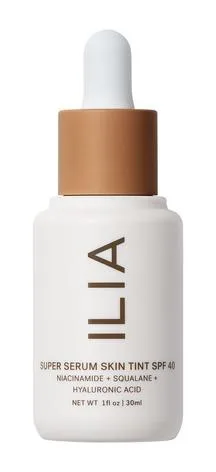 Clean Beauty Cult Classic
 Super Serum Skin Tint SPF 40
The product that finally made mineral tinted SPF desirable instead of medicinal. At 12% non-nano zinc with iron oxide visible-light protection, niacinamide, and a squalane-based glowy finish, this bottle does the impossible — it delivers real sun protection, real skincare, and real makeup in a single step without any one of them feeling compromised. The $54 price stings, but almost nothing else in the category does all three jobs this well.
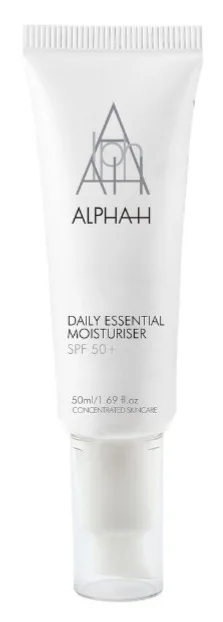 Australian SPF Standard
 Daily Essential Moisturiser SPF 50+
An excellent multi-active daily SPF that meets Australia's stricter TGA SPF 50+ standard and includes modern UVA filters that put it well ahead of most US sunscreens. Niacinamide, centella, and hyaluronate make it a genuine moisturizer rather than just a sunscreen step. Premium-priced but uniquely well-formulated.
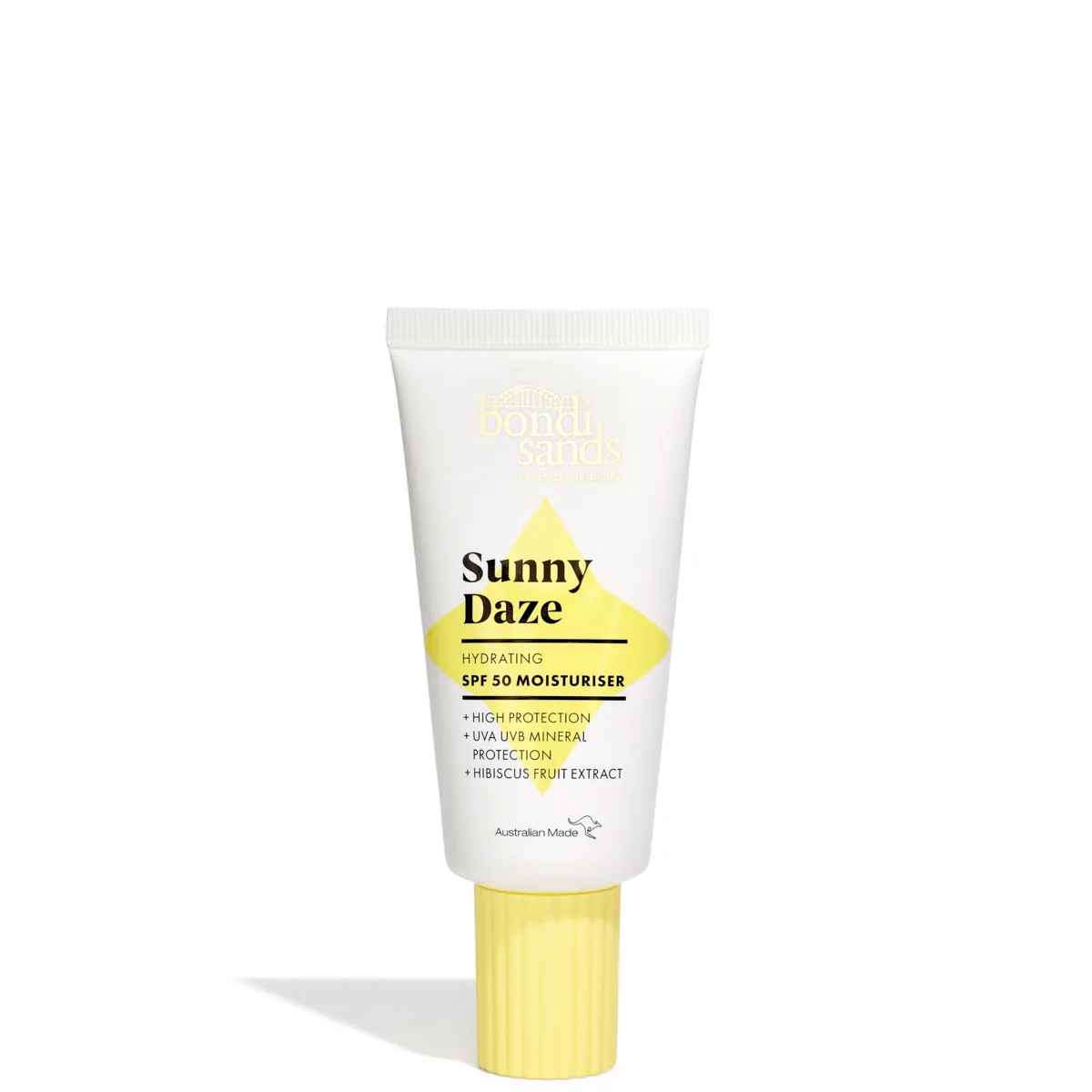 Mineral SPF for Melasma
 Sunny Daze SPF 50 Moisturiser
A 25% zinc oxide mineral face moisturizer with a built-in universal tint that provides both visible-light protection and white-cast neutralization — one of the better-engineered mineral SPF moisturizers in its price tier. The single universal shade is a real limitation, but for anyone managing melasma or reactive skin, this is a surprisingly thoughtful drugstore option.
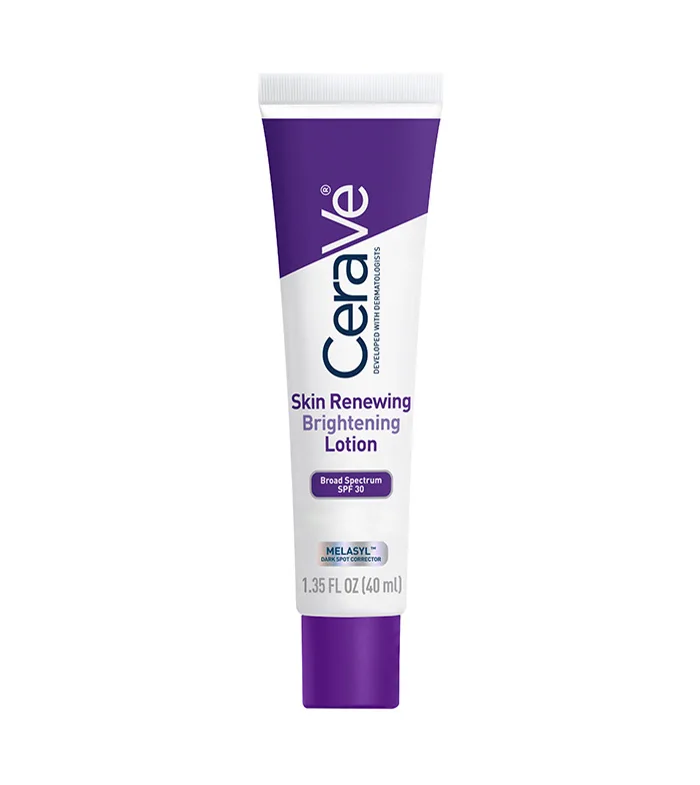 Brightening Multitasker
 Skin Renewing Brightening Lotion SPF 30
CeraVe's first product to use L'Oréal's Melasyl pigmentation molecule is also a competent SPF 30 day cream and a barrier-supporting lotion in one step. The size is small for the price, but the formula is genuinely impressive — this is CeraVe taking a real swing at the dark spot treatment category.
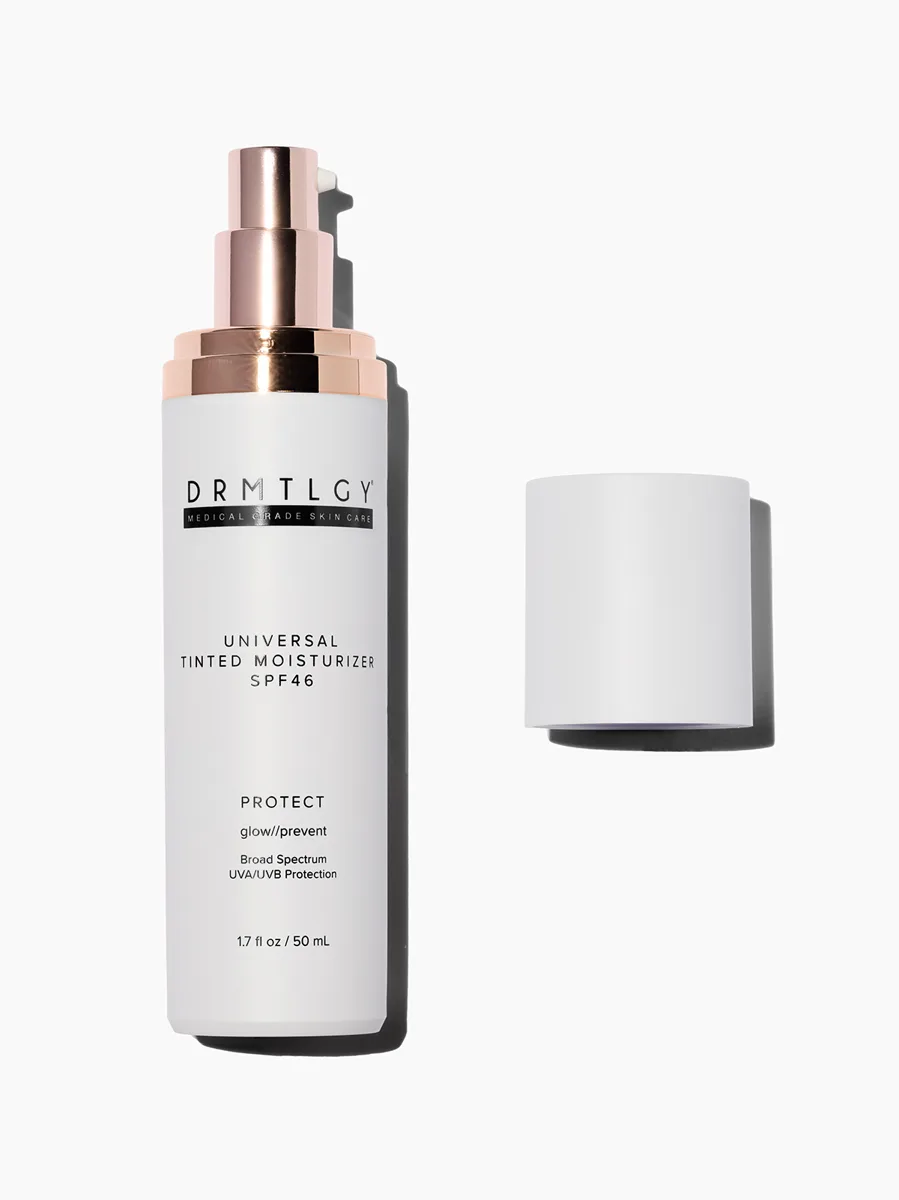 Budget Tinted SPF Pick
 Tinted Moisturizer SPF 46
One of the most-recommended tinted SPFs in dermatologist-focused online communities, and for good reason — a hybrid SPF 46 with iron oxide visible-light protection, niacinamide treatment benefits, and a universal satin tint at roughly half the price of the Elta MD product it closely resembles. The fragrance and the octinoxate are the only meaningful asks for forgiveness.
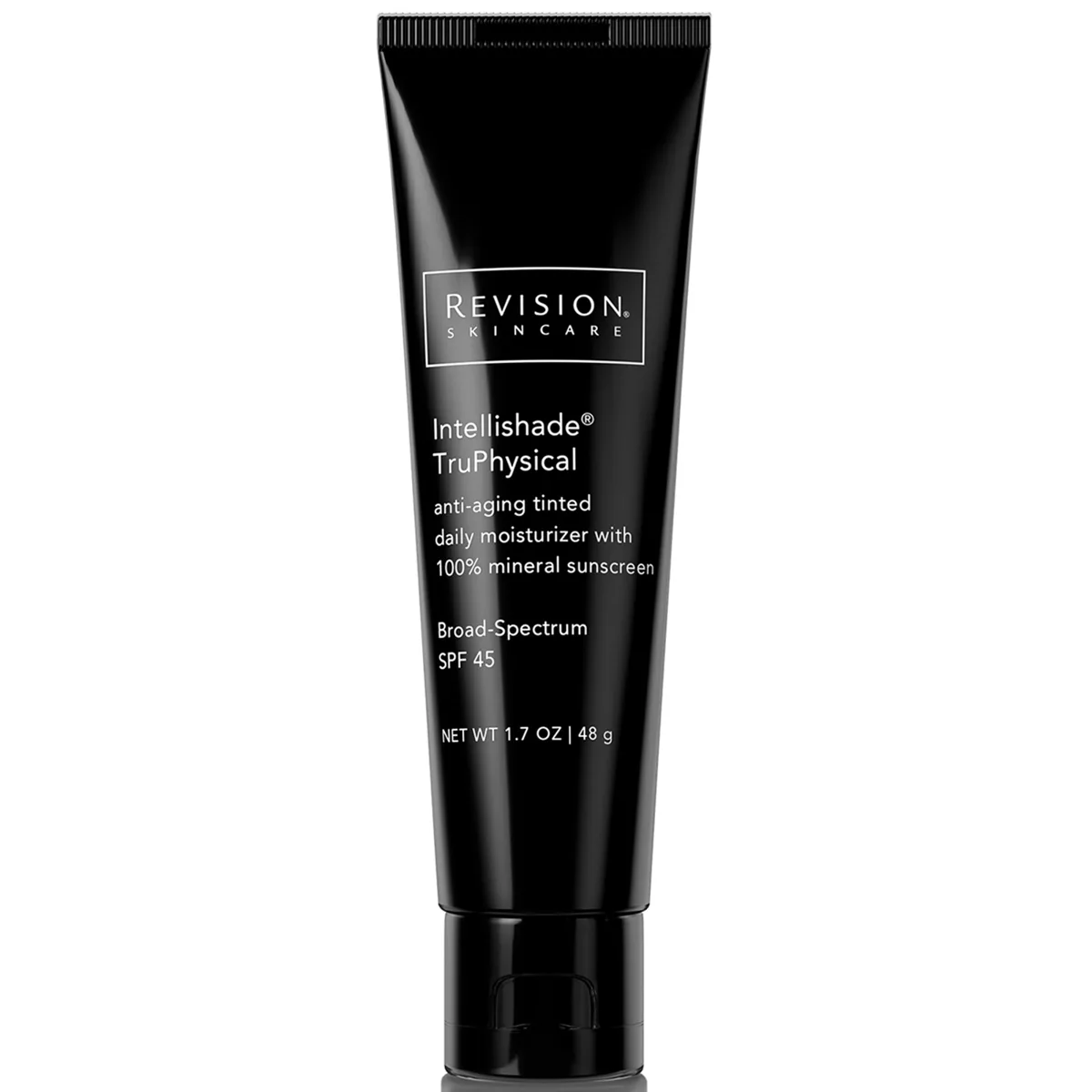 5-in-1 Mineral SPF Multitasker
 Intellishade TruPhysical SPF 45
A genuinely impressive multi-tasking mineral sunscreen that packs meaningful anti-aging actives into a wearable tinted formula. It replaces foundation for many users while delivering SPF 45 mineral protection and peptide-driven corrective benefits — though the thick texture requires patience and may not suit oily skin.